
Stand-Alone Radio Receivers Market – Industry Structure Evaluation, Demand Drivers Analysis, Regional Growth Analysis and Identification, Competitive Positioning Review & Global Market Size Forecast to 2032
Overview
Global Stand-Alone Radio Receivers Market size was valued at USD 282.5Mn. in 2024 and the total Stand-Alone Radio Receivers revenue is expected to grow by 1.3 % from 2025 to 2032, reaching nearly USD 313.25 Mn.
Stand-Alone Radio Receivers Market Overview:
Stand-alone radio receivers are the standalone devices that can receive, and process radio signals, and Traditional AM/FM radios, digital radio receivers (such as DAB), and advancing technologies were all included. The demand for digital receivers due to the higher audio quality is increased. The emergence of streaming services and internet radio was changing consumer choices and having an effect on traditional radio sales. In response, manufacturers added cutting-edge features including Bluetooth compatibility and smartphone compatibility.
Major key players operating in the stand-alone radio receiver industry are aiming on emerging easy-to-use and high-performing devices because of the steady demand from the consumer side. The appearance of the latest devices and spread of technology is anticipated to be the major driving factor for the growth during the forecast period.
 To know about the Research Methodology :- Request Free Sample Report
Stand-Alone Radio Receivers Market Dynamics
Stand-Alone Radio Receivers Market Drivers
The switch to digital radio Product Form Factor has been a major force. The demand for digital radio receivers, such as DAB and HD Radio, has increased as nations throughout the world continue to modernize their broadcasting infrastructure. These systems tempt customers to switch by providing better audio quality and extra functions. The market has changed as a result of the development of streaming services and internet radio. More and more customers choose gadgets that give them access to a wide variety of internet music and entertainment in addition to traditional radio. Due to this change, standalone radio receivers now include internet access and app compatibility. Innovation has been fueled by the demand for flexible, multifunctional electronics.
Producers have added voice assistant compatibility, Bluetooth connectivity, and smartphone integration to their goods. These features make stand-alone radio receivers more useful and more user-friendly for a wider range of people. The need for automotive radio receivers has been sustained by the continued use of radio in vehicles, which has further fueled the market's expansion. The stand-alone radio receivers market is still changing as a result of new technological developments and shifting customer tastes, with important factors such as digitalization, internet connectivity, and multifunctionality acting as significant drivers.
Stand-Alone Radio Receivers Market Restraints
While the market for standalone radio receivers has seen strong growth drivers recently, it has also come up against a number of significant roadblocks. The continuous shift from classic analog radio to digital formats is one significant obstacle. It will be expensive for governments and broadcasters to make the necessary infrastructure and broadcasting equipment investments. Some areas have been slower to adopt digital radio, which has limited the market potential for digital radio receivers. The growing competition from alternative entertainment sources, particularly streaming services and mobile devices, is another constraint. The appeal of conventional radio receivers declines as consumers move toward on-demand streaming and customized playlists, which has an influence on sales.
The Stand-Alone Radio Receivers Market may be impacted by alterations in consumer spending and economic uncertainty. Consumers may put off non-essential purchases, like standalone radio receivers, during economic downturns, which lowers demand. As electronic waste management and sustainability become more important factors, environmental concerns and legislation also present difficulties. Old radio receivers can be difficult to get rid of, especially if they have hazardous components inside. Stand-alone radio receivers are still used, but they confront challenges from digitalization, competitiveness, economics, and sustainability that makers and broadcasters must carefully navigate.
Stand-Alone Radio Receivers Market Opportunities
The ongoing growth of digital radio broadcasting represents a significant opportunity. There is plenty of space for manufacturers to create and market sophisticated digital radio receivers with improved features and capabilities as more nations engage in updating their radio infrastructure to digital standards like DAB and HD Radio. The incorporation of smart Product Form Factors into radio receivers is an additional interesting direction. Radio receivers can join connected ecosystems as a result of the Internet of Things (IoT) and smart homes. Stand-alone radio receivers can be made more functional and enticing to tech-savvy customers by integrating voice assistants, app integration, and connectivity with other smart devices.
The automotive industry has a lot of room for growth. There is a desire for premium, integrated radio systems as automakers work to improve in-car connectivity and entertainment. This offers a chance for radio receiver producers to work with automakers to create cutting-edge in-car radio systems. Emphasizing ecologically friendly designs and sustainable methods can be in line with customer demands for environmentally friendly items, perhaps creating a niche market for eco-aware radio receivers. Opportunities presented by digitization, smart Product Form Factor integration, automotive alliances, and sustainability initiatives can be taken advantage of by the market for standalone radio receivers in order to maintain relevance and promote growth in a changing media landscape.
Stand-Alone Radio Receivers Market Challenge
The continuous switchover from analog to digital radio Product Form Factor is the main challenge. Although digital radio has better audio quality and more features, the market's development potential is constrained by the Product Form Factor's high infrastructure investment costs and regionally inconsistent acceptance rates. The growing popularity of streaming services and internet radio has altered consumer listening preferences. Smartphones and smart speakers, which provide a wider variety of content and convenience, are a threat to traditional radio receivers. Market influence also comes from changes in consumer buying habits and the economy. The demand for non-essential electronics, such as radio receivers, may fall during economic downturns. Environmental issues and laws governing electronic waste also present difficulties for industry sustainability and disposal.
Stand-Alone Radio Receivers Market Trends
1. Digitalization: One key development was the switch from analog to digital radio transmission. Due to better sound quality and extra features like song metadata and many channels on a single frequency, Digital Audio Broadcasting (DAB) and HD Radio were becoming more and more popular.
2. Internet Connectivity: The incorporation of streaming services and Internet radio was expanding. Wi-Fi and app capabilities were being added to standalone radio receivers, enabling users to access internet resources like podcasts and streaming services.
3. Smart Features: Manufacturers are introducing smart features like Bluetooth connectivity and voice assistants (like Amazon Alexa or Google Assistant). This increased the functionality of radio receivers by enabling voice control and connectivity with other devices.
4. Sustainability: Manufacturers are putting more of an emphasis on eco-friendly designs and materials as a result of growing environmental awareness. Recycling and decreasing electronic waste are two sustainable activities that are becoming more and more important.
5. Automotive Integration: The market for radio receivers is still quite important in the automotive industry. Key trends were the integration of cutting-edge infotainment systems and enhanced in-car radio experiences.
6. Personalization and customization are becoming more and more important. Users anticipated that radio receivers would provide customized interfaces and content recommendations.
7. Local material: As consumers sought more specialized and niche programming, there was an increase in the demand for hyper-local material, such as podcasts and community radio stations.
Stand-Alone Radio Receivers Market: Competitive Landscape
A combination of established players and up-and-coming rivals define the stand-alone radio receivers market's competitive environment globally. Leading manufacturers of high-quality audio devices, such as stand-alone radio receivers, such as Sony, Panasonic, Bose, and Pioneer, have historically controlled this market. To keep a competitive edge, they make use of their distribution networks, technological know-how, and brand recognition. Smaller manufacturers and inventive startups have also entered the market, though. To distinguish themselves from the competition, these entrants frequently concentrate on specialized markets or highlight distinctive qualities, including cutting-edge connection options or eco-friendly designs.
The competitive environment has become more difficult due to the incorporation of smart technologies like voice assistants and app compatibility. Amazon and Google, two tech behemoths, have joined the market with smart speakers that include Shortwave Radio Receivers, and radio receiver Product Form Factor, posing a threat to established radio makers. As businesses compete to fulfill changing customer wants, embrace digitalization, and innovate in Product Form Factor and design to maintain their market share and relevance, competition in the market for stand-alone radio receivers is escalating.
Stand-Alone Radio Receivers Market Segment Analysis:
Based on By End User, The Stand-Alone Radio Receivers market is driven by diverse end-user segments, each with unique requirements and applications. Individual Consumers primarily seek portable and home-based radio receivers for entertainment, news, and emergency communication. This segment benefits from advancements in digital and satellite radio technology, enhancing audio quality and signal reception. The Automotive Industry integrates stand-alone radio receivers into vehicle infotainment systems, ensuring seamless access to AM/FM, DAB, and satellite radio services for drivers and passengers. In the Aviation & Maritime Industry, radio receivers play a crucial role in navigation, weather updates, and emergency communication, relying on high-frequency (HF) and very-high-frequency (VHF) bands for secure and uninterrupted transmissions. The Government & Defense sector demands high-performance radio receivers for surveillance, military communication, and disaster management, ensuring secure and encrypted signal reception. Other industries, including broadcasting and public safety organizations, also leverage stand-alone radio receivers for efficient and reliable communication, making this market dynamic and essential across multiple domains.

Stand-Alone Radio Receivers Market Regional Insights:
Asia Pacific region dominated the market in the year 2024 and is expected to dominate the market during the forecast period. Early users of digital radio technology with established markets for DAB and DRM (Digital Radio Mondiale) include Japan and South Korea. Advanced digital radio receivers with attributes like digital screens and numerous channels were in demand in these countries. Due to infrastructural issues and a slower consumer acceptance of digital alternatives, analog radios continued to predominate in emerging markets throughout the Asia Pacific region. There have been changes in how individuals get radio material as a result of the widespread integration of FM/AM radios into mobile phones. The expansion of infrastructure, governmental regulations, and shifting consumer preferences, which may encourage increased use of digitalization and smart features, will all have an impact on the future trajectory of the Asia Pacific Stand-Alone Radio Receivers Market.
The market for standalone radio receivers in North America has recently shown a complex structure. The market has been impacted by the increasing acceptance of smartphone integration and digital streaming services, even though traditional radio is still a common fixture in many homes and automobiles. But as more people switch to digital radio, HD Radio in particular has gained popularity in the US, delivering greater sound quality and more capabilities. The need for radio receivers is largely driven by sophisticated in-car entertainment systems, which further contribute to automotive integration.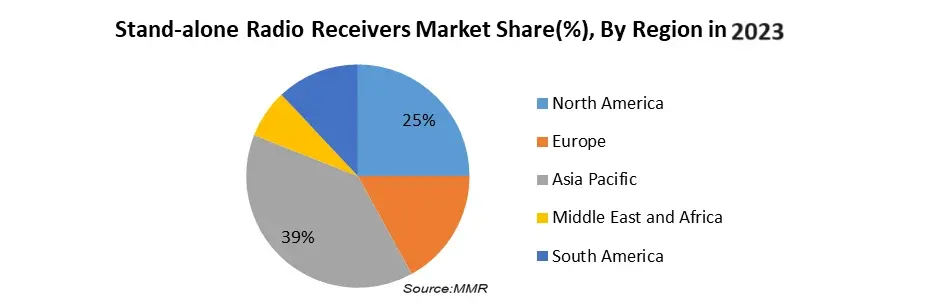 The objective of the report is to present a comprehensive analysis of the Stand-Alone Radio Receivers Market including all the stakeholders of the Product Form Factor. The past and current status of the Product Form Factor with forecasted market size and trends are presented in the report with the analysis of complicated data in simple language. The report covers all the aspects of the Product Form Factor with a dedicated study of key players that includes market leaders, followers, and new entrants by region. PORTER, SVOR, and PESTEL analysis with the potential impact of micro-economic factors by region on the market have been presented in the report. External as well as internal factors that are supposed to affect the business positively or negatively have been analyzed, which will give a clear futuristic view of the Product Form Factor to the decision-makers.
The report also helps in understanding the Stand-Alone Radio Receivers Market dynamics, and structure by analyzing the market segments and projecting the Stand-Alone Radio Receivers Market size. Clear representation of competitive analysis of key players By Type of Receiver, price, financial position, Type of Receiver Product Form Factor portfolio, growth strategies, and regional presence in the Stand-Alone Radio receiver market makes the report an investor’s guide.
Global Stand-Alone Radio Receivers Market Scope: Inquire before buying
| Global Stand-Alone Radio Receivers Market | |||
|---|---|---|---|
| Report Coverage | Details | ||
| Base Year: | 2024 | Forecast Period: | 2025-2032 |
| Historical Data: | 2019 to 2024 | Market Size in 2024: | USD 282.5 Mn. |
| Forecast Period 2025 to 2032 CAGR: | 1.3% | Market Size in 2032: | USD 313.25 Mn. |
| Segments Covered: | by Type | AM Radio Receivers FM Radio Receivers Shortwave Radio Receivers Others |
|
| by Frequency Range | Low-Frequency (LF) Radios Medium-Frequency (MF) Radios High-Frequency (HF) Radios Others |
||
| by Distribution Channel | Online Offline |
||
| by End Users | Individual Consumers Automotive Industry Aviation & Maritime Industry Government & Defense Others |
||
Stand-Alone Radio Receivers Market, by Region
North America (United States, Canada and Mexico)
Europe (UK, France, Germany, Italy, Spain, Sweden, Austria and Rest of Europe)
Asia Pacific (China, South Korea, Japan, India, Australia, Indonesia, Malaysia, Vietnam, Taiwan, Bangladesh, Pakistan and Rest of APAC)
Middle East and Africa (South Africa, GCC, Egypt, Nigeria and Rest of ME&A)
South America (Brazil, Argentina Rest of South America)
Stand-Alone Radio Receivers Market, Key Players
1. Sony Corporation
2. Panasonic Corporation
3. Philips
4. Bose Corporation
5. Pioneer Corporation
6. LG Electronics Inc.
7. Samsung Electronics Co., Ltd
8. Yamaha Corporation
9. Onkyo Corporation
10. Denon Electronics
11. Harman International Industries, Inc.
12. Kenwood Corporation
13. Sangean Electronics, Inc.
14. Tivoli Audio
15. Roberts Radio Ltd.
16. TEAC Corporation
17. Marantz America, LLC
18. Sherwood America Inc.
19. Cambridge Audio
20. Ruark Audio
21. Ocean Digital
22. Grace Digital Inc.
23. Crosley Radio
24. iBiquity Digital Corporation
25. Frontier Silicon Ltd.
26. Other Key Players
Frequently Asked Questions:
1] What segments are covered in the Global Stand-Alone Radio Receivers Market report?
Ans. The segments covered in the Stand-Alone Radio Receivers Market report are based on the Type of Receiver, Frequency Bands, Product Form Factor, Application, and Region.
2] Which region is expected to hold the highest share of the Global Stand-Alone Radio Receivers Market?
Ans. The Asia Pacific region is expected to hold the highest share of the Stand-Alone Radio Receivers Market. Countries such as Japan and South Korea are the early users of digital radio technology with established markets for DAB and DRM.
3] What is the market size of the Global Stand-Alone Radio Receivers Market by 2032?
Ans. The market size of the Stand-Alone Radio Receivers Market by 2032 is expected to reach USD 313.25 Mn.
4] What is the forecast period for the Global Stand-Alone Radio Receivers Market?
Ans. The forecast period for the Stand-Alone Radio Receivers Market is 2025-2032.
5] What was the market size of the Global Stand-Alone Radio Receivers Market in 2024?
Ans. The market size of the Stand-Alone Radio Receivers Market in 2024 was valued at USD 282.5Mn.