
Sleep Tourism Market Size – Industry Structure Evaluation, Demand Drivers Analysis, Regional Growth Analysis and Identification, Competitive Positioning Review & Global Market Size Forecast to 2032
Overview
The Sleep Tourism Market was valued at USD 75.71 Billion in 2024, and the total revenue is expected to grow at a CAGR of 8.2% from 2025 to 2032, reaching nearly USD 142.22 Billion by 2032.
Sleep Tourism Market Overview:
Sleep tourism, a growing niche within wellness tourism, caters to health-conscious individuals looking to escape daily stress and recharge in scientifically designed sleep-enhancing environments. Facilities such as sleep clinics, luxury spas offering sleep-inducing treatments, and high-tech sleep-focused hotels are key attractions. The appeal of sleep tourism is further strengthened by its potential to combat sleep deprivation, a widespread issue in today’s fast-paced world. As travellers become more health-conscious, sleep tourism is gaining popularity, offering relaxation-focused getaways designed to improve sleep quality. This niche travel segment features wellness programs, premium bedding, and pleasant environments to help guests rest better. Hotels and resorts are curating specialized sleep packages, incorporating elements like sound therapy, aromatherapy, sleep-friendly meals, and personalized consultations. The trend appeals to a broad audience, from busy professionals to wellness enthusiasts seeking relief from sleep issues and daily stress.
The rising focus on mental well-being and holistic health is fueling the demand for sleep-focused travel. More people are choosing sleep retreats, wellness hotels, and tailored programs to address sleep disorders and improve their overall well-being. North America currently leads the Sleep Tourism Market, driven by high awareness and access to wellness-focused accommodations. Europe follows closely with its established wellness tourism industry, while the Asia-Pacific region is rapidly expanding due to rising disposable incomes, urbanization, and a growing interest in self-care travel. Emerging economies in this region are also investing in sleep-focused tourism to attract wellness-conscious travellers.
With sleep quality playing a crucial role in guest satisfaction, hotels are enhancing their offerings. A 2024 Hilton report found that two-thirds of Americans sleep better in hotels than at home, encouraging the hospitality sector to develop sleep-enhancing amenities. Sleep clinics, luxury spas with sleep-inducing treatments, and high-tech sleep-focused hotels are becoming key attractions in this growing market.
The Sleep Tourism Market trends align with the booming wellness industry and is particularly popular among Gen Z and millennials, who prioritize health and relaxation in their travel plans. Rising global stress levels—63% of people in the UK report weekly stress, highlight the need for effective stress relief solutions like sleep tourism.
Governments are also recognizing its economic and public health benefits, with investments and policies supporting wellness tourism. Regulatory frameworks aimed at maintaining service quality and consumer confidence are expected to drive further Sleep Tourism Market growth.
According to MMR, there is demand for sleep-centric travel, majority of people experience sleep deprivation, creating a vast audience for this sector. These insights suggest that sleep tourism is more than just a passing trend—it’s a growing industry with long-term potential in global travel. To know about the Research Methodology :- Request Free Sample Report
Sleep Tourism Market Dynamics:
Growing Awareness of Sleep Health to Fuel Sleep Tourism Market growth
The increasing awareness of sleep’s essential role in overall health and well-being is a key driver of growth in the sleep tourism market. As stress, anxiety, and other mental health challenges become more prevalent worldwide, more individuals are turning to sleep tourism as a means of restoration and mental rejuvenation. This rising demand aligns closely with the broader wellness tourism trend, where travellers seek experiences that promote both physical and mental well-being. Additionally, advancements in sleep-enhancing technologies, such as innovative sleep trackers, therapeutic sound systems, and specialized sleep pods, are making sleep-focused vacations more appealing. These technological innovations provide travellers with sophisticated tools and environments designed to improve sleep quality, making sleep tourism an increasingly attractive option for those looking to invest in their health through restful travel experiences.
High Costs Limit Broader Adoption of Sleep Tourism
Despite its growing popularity, the sleep tourism market faces remarkable challenges, particularly due to the high costs associated with specialized sleep-focused travel packages. Many of these retreats and vacations incorporate advanced therapeutic techniques and cutting-edge technologies, resulting in premium pricing that can be prohibitive for a wider audience. Additionally, the niche nature of sleep tourism limits its availability, as not all travel destinations offer these specialized services. This restricted accessibility not only slows Sleep Tourism industry growth but also prevents many potential consumers from benefiting from sleep tourism. While the demand for restorative sleep experiences continues to rise, cost and limited service availability remain significant barriers to making sleep tourism more accessible to the general public.
Growth Opportunities: Sleep-Focused Hotels and Resorts
The sleep tourism sector presents substantial growth opportunities, particularly through the development of accommodations specifically designed to enhance sleep quality. Specialized sleep-focused hotels and resorts, featuring optimized sleep environments, can attract travellers seeking restorative experiences. Moreover, strategic collaborations with well-known wellness and health brands further expand the capabilities of sleep tourism providers, drawing in a broader customer base eager for quality sleep solutions. Another promising avenue is the incorporation of sleep therapy clinics and wellness retreats into popular tourist destinations, combining specialized treatments with local attractions. Additionally, the incorporation of advanced sleep-tracking technologies, such as wearable monitors and in-room sensors, can significantly enhance guest experiences. By leveraging these innovations, sleep tourism providers can not only improve individual rest and recovery but also appeal to tech-savvy travellers looking for personalized sleep solutions, thereby boosting market engagement and participation.
Social media and influencer marketing are playing a significant role in expanding the reach of sleep tourism. Wellness influencers and bloggers are increasingly promoting these unique travel experiences, broadening consumer interest and market appeal. Another noteworthy trend is the development of sleep-focused travel experiences tailored for families, ensuring restful sleep for both parents and children—an area that has previously been underserved. Furthermore, specialized travel packages that integrate sleep therapy with relaxation treatments and accommodations optimized for restorative sleep are gaining traction. These comprehensive offerings provide travellers with a holistic approach to relaxation and rejuvenation, reinforcing the functional benefits of improved sleep while on vacation.
Sleep Tourism Market Recent Developments:
| Sr. No | Group or Hotel | Year | Details |
| 1 | Hyatt Group | February 2025 | $2.6 billion acquisition of Playa Hotels & Resorts, marking a significant expansion into the luxury all-inclusive market. |
| 2 | Hilton | March 2024 | Introduced new sleep retreats at select properties worldwide, this initiative promotes t he importance of quality sleep. |
| 3 | Oman Company & Santani Wellness Resorts | March 2024 | Announced a strategic partnership at the Internationale Tourismus -Borse (ITB) Berlin 2024, this develop a transformative wellness destination in Oman. |
| 4 | ASI Reisen | August 2024 | Acquired the luxury tour operator WINDROSE to enhance its offerings in the luxury segment. |
In June 2024, Saudi Arabia announced a massive luxury tourism initiative, projecting an investment of USD 3.2 trillion to boost its position as a luxury destination. This investment reflects the country’s Vision 2030 goals to diversify its economy and increase its appeal as a global tourism hotspot.
Sleep Tourism Market Segment Analysis:
By Accomodation Type Insights:
Luxury Hotels: A Leading Segment in Sleep Tourism
Luxury hotels are expected to contribute 33.7% for the sleep tourism market in 2025, driven by increasing demand for high-end amenities and personalized services. These hotels offer spacious rooms with premium furnishings, memory foam mattresses, luxury bath products, and 24/7 assisted service. Guests also have access to spa centres, salons, outdoor pools, state-of-the-art gyms, yoga studios, and fine dining experiences. The growing number of high-net-worth individuals and affluent millennials is fueling demand for luxury wellness retreats. Renowned hotel brands like Four Seasons, The Taj, Aman Resorts, and Dorchester Collection have built strong reputations by providing exceptional service, thoughtfully designed rooms, and signature wellness programs. With an increasing focus on work-life balance and stress relief, more travellers are choosing boutique luxury hotels that offer peaceful environments and tailored sleep therapies to enhance relaxation and well-being.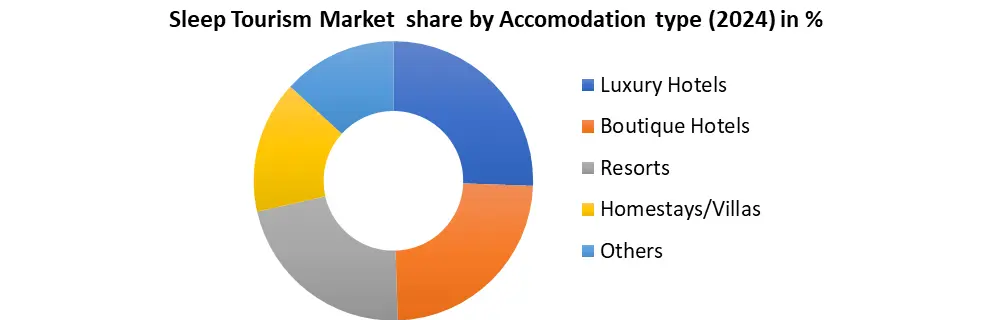
By Activity/Experience:
Alternative Healing: A Key Driver in Sleep Tourism
Sleep therapies are expected to contribute 38.2% for the sleep tourism market in 2025, as more people turn to natural solutions for sleep and mental health issues. These therapies include meditation, aromatherapy, sound healing, acupuncture, massage, counselling, and personalized nutrition plans to help with insomnia, stress, anxiety, and depression. Therapeutic spa resorts are integrating both traditional and modern sleep techniques as part of holistic wellness programs that focus on physical, emotional, and spiritual healing. Some resorts use yoga nidra, breathing exercises, floatation therapy, etc to treat chronic sleep issues and improve overall well-being. As more people seek alternatives to conventional medications, experiential sleep retreats are becoming popular. These retreats help guests develop better sleep habits, reduce dependency on medication, and improve their quality of life naturally.
By Purpose of Visit:
Medical and Therapeutic Travel: A Growing Market Segment
Medical and therapeutic sleep tourism is expected to contribute 41.6% for the market in 2025, driven by a rise in mental health concerns after the pandemic. Issues like stress-induced insomnia, anxiety, and burnout have increased due to job uncertainties, economic instability, and social isolation. As a result, more people are choosing therapeutic travel to receive professional sleep counseling and natural treatments that improve mental resilience. Specialized sleep centers offer personalized programs that include cognitive behavioral therapy, structured daily routines, stress management techniques, nutrition guidance, exercise, and supportive sleep aids to restore healthy sleep patterns. These multi-disciplinary treatment approaches address the root causes of sleep disorders and have proven to be effective. This has led to greater demand for long-term, professionally managed sleep programs, as people prioritize sustainable solutions over short-term leisure trips to improve their overall well-being.
Sleep Tourism Market Regional Analysis:
North America is the leading region in the global sleep tourism market, expected to account for 35.1% of the Sleep Tourism market share in 2025. The U.S. and Canada have well-developed medical infrastructures with healthcare facilities that cater to medical tourists seeking specialized sleep treatments. These countries host a variety of international clinics and hospitals offering advanced therapies, such as oral appliance treatments, at competitive prices. Medical insurance also covers sleep disorder treatments abroad. Additionally, major retail brands like Sleep Country and Mattress Firm play a key role in promoting sleep-related products and services. High consumer awareness of sleep's health benefits has further boosted the region's market share.
Asia Pacific is another rapidly growing region for sleep tourism, with countries like Thailand, Malaysia, and Indonesia seeing an increase in "sleep travellers" seeking wellness and medical programs that combine sleep therapies with traditional treatments. Bangkok has become a central destination for those looking for alternative sleep remedies, as well as options like spa treatments and massage. Hospitals like Bumrungrad and Samitivej now offer packaged wellness programs that blend Western diagnostics with Eastern medicine, attracting both local and international visitors. Additionally, major cities have upgraded their hotel infrastructures to offer soundproof rooms and optimized sleep environments. Governments are also supporting medical tourism by simplifying visa processes and improving medical facilities, which is helping the region's sleep tourism market grow. With rising incomes and affordable pricing, this growth is expected to continue.
Sleep Tourism Market Scope: Inquire before buying
| Sleep Tourism Market | |||
|---|---|---|---|
| Report Coverage | Details | ||
| Base Year: | 2024 | Forecast Period: | 2025-2032 |
| Historical Data: | 2019 to 2024 | Market Size in 2024: | USD 75.71 Bn. |
| Forecast Period 2025 to 2032 CAGR: | 8.2% | Market Size in 2032: | USD 142.22 Bn. |
| Segments Covered: | by Accomodation type | Luxury Hotels Boutique Resorts Homestay/Villas Others |
|
| by Activity/Experience | Wellness Meditation Holistic Sleep therapies Others |
||
| by Purpose of Visit | Medical/Therapeutic Leisure Educational Others |
||
Sleep Tourism Market by Region:
North America (United States, Canada and Mexico)
Europe (UK, France, Germany, Italy, Spain, Sweden, Russia and Rest of Europe)
Asia Pacific (China, S. Korea, India, Japan, Australia, Indonesia, Malaysia, Philippians, Thailand, Vietnam, Rest of Asia Pacific)
Middle East and Africa (South Africa, GCC, Egypt, Nigeria, Rest of MEA)
South America (Brazil, Argentina, Colombia, Chile, Rest of South America)
Sleep Tourism Market Key Players:
North America:
1. Four Seasons Hotels and Resorts (Canada)
2. The Ritz-Carlton Hotel Company (Maryland, USA)
3. Rosewood Hotels & Resorts (Texas, USA)
4. Auberge Resorts Collection (California, USA)
5. Montage Hotels & Resorts ( California, USA)
Europe:
1. Aman Resorts (Baar, Switzerland)
2. Belmond Ltd. (London, United Kingdom)
3. Kempinski Hotels (Geneva, Switzerland)
4. Oetker Collection (Baden-Baden, Germany)
5. Rocco Forte Hotels (London, United Kingdom)
Asia-Pacific:
1. Hoshino Resorts ( Nagano, Japan)
2. Shangri-La Hotels and Resorts (Hong Kong, China)
3. Mandarin Oriental Hotel Group (Hong Kong, China)
4. Taj Hotels (Mumbai, India)
5. Oberoi Hotels & Resorts (Delhi, India)
Middle East & Africa:
1. Jumeirah Group (Dubai, United Arab Emirates)
2. One & Only Resorts (Dubai, United Arab Emirates)
3. Kempinski Hotels (Geneva, Switzerland)
4. Anantara Hotels, Resorts & Spas (Abu Dhabi, United Arab Emirates)
5. Serena Hotels (Nairobi, Kenya)
South America:
1. Fasano Group (Sao Paulo, Brazil)
2. Explora (Santiago, Chile)
3. Awasi (Santiago, Chile)
4. Inkaterra (Lima, Peru)
Frequently Asked Questions:
1. What is the expected compound annual growth rate (CAGR) for the global sleep tourism market from 2025-2032?
Ans: The total revenue is expected to grow at a CAGR of 8.2% from 2025 to 2032, reaching nearly USD 142.22 Billion by 2032.
2. What are the main factors driving the growth of the global sleep tourism market?
Ans: The increasing awareness of sleep’s essential role in overall health and well-being is a key driver of growth in the sleep tourism market
3. What are the key challenges that could slow the growth of the global sleep tourism market?
Ans: The sleep tourism market faces remarkable challenges, particularly due to the high costs associated with specialized sleep-focused travel packages.
4. Who are the major players in the global sleep tourism market?
Ans: Four Seasons Hotels and Resorts (Toronto, Canada),The Ritz-Carlton Hotel Company (Bethesda, Maryland, USA),Rosewood Hotels & Resorts (Dallas, Texas, USA),etc are the major players in the global sleep tourism market.
5. Which region is expected to lead the global sleep tourism market in 2025?
Ans: North America region is expected to lead the global sleep tourism market in 2025.