
Single-Use Assemblies Market Product Type, Solution, Application, End-User, and Region – Global Market Size Estimation, Industry-Wide Analysis, Competitive Landscape Assessment & Long-Term Forecast to 2030
Overview
The Single Use Assemblies Market size was valued at USD 11.2 Billion in 2023 and the total Single Use Assemblies Market revenue is expected to grow at a CAGR of 18.8% from 2024 to 2030, reaching nearly USD 40.5 Billion.
Single-Use Assemblies Market Overview:
A single-use assembly is a self-contained and preassembled plastic fluid pathway manufactured from a variety of standard components that have been gamma-irradiated for sterility and are ready to use. Single-use assemblies can be customized to fulfill the requirements of individual applications and unit activities. Single-use assemblies are essential in carrying out various procedures in manufacturing and R&D.
Single-use assemblies have evolved in the global biopharmaceutical community as reducers of cross-contamination risks, simplified cleaning processes, and available customized solutions. This aids in the acceleration of medication research and manufacture to use single-use assembly. Major players are increasingly investing in R&D because of its rapid and easy deployment and very little risk of cross-contamination.
Thanks to its advantages, single-use assembly is widely used over traditional techniques. Single-use assemblies, for example, decrease the danger of cross-contamination and leaks, eliminate cleaning and downtime, maintain quality and documentation control, boost efficiency, save labor, money, and time for end users, are simple to deploy, and use less water and energy. An increase in R&D investment by biopharmaceutical companies is one of the key growth drivers driving the single-use assemblies market growth.
R&D investment and the introduction of new pharmaceuticals have both increased during the previous two decades. For example, the pharmaceutical industry spent 83 billion USD on research and development in 2019, according to the Congressional Budget Office, a federal organization under the legislative department of the United States government that provides budget and economic statistics to Congress. As a result, the benefits of single-use assembly over traditional techniques, as well as expanded biopharmaceutical R&D efforts, are driving single-use assembly market growth. To know about the Research Methodology:- Request Free Sample Report
Single-Use Assemblies Market Dynamics:
Rising adoption of single-use assemblies and technologies in Biopharmaceuticals
The biopharmaceutical industry is rapidly adopting single-use assembly systems for vaccine research and manufacturing of a wide range of vaccines, therapeutic proteins, and Mabs. Biopharmaceutical processes entail several phases and a plethora of process intermediates, each with its own set of process parameters and objectives. Single Use Systems (SUS) provide several benefits such as decreased capital investment, less change over time, and enhanced process flexibility while eliminating the costly and time-consuming CIP/ SIP processes and validation requirements associated with reusable stainless steel systems.
Single-use assemblies have not only permitted continuous processing, but have also allowed research scientists and process owners to work with various substances such as antibodies, proteins, vaccines, and so on in the same facility. All of this has resulted in a rapid lab-to-market migration of novel biopharmaceutical medications, increasing the single-use assemblies industry's overall growth.
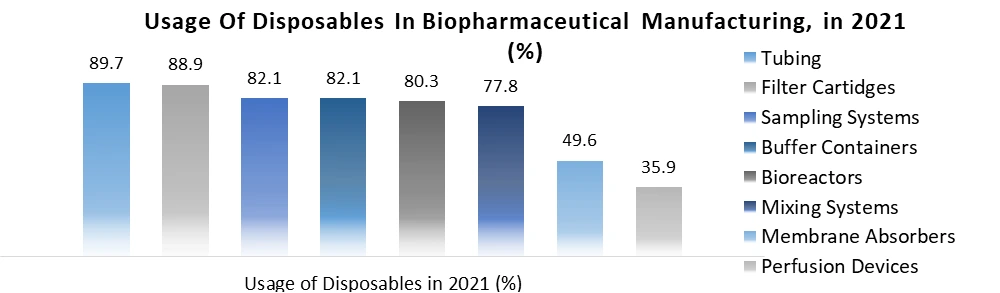 Increasing Biopharmaceutical R&D investments to drive single-use assemblies Market
To decrease risk and enhance operational efficiencies, the biotherapeutic industry has been increasingly implementing single-use technologies. The global single-use assembly market's key players are increasingly focusing on developing and monetizing technologically advanced single-use assembly solutions with optimized processes, simplicity of operation, and quick installation. Because single-use assemblies contribute significantly too small and large-scale biopharmaceutical production, increased expenditures in biopharmaceutical R&D for product development are ascribed to single-use assembly market growth.
The benefits of single-use assemblies, such as the reduced risk of product cross-contamination and the removal of extra sterilizing processes, are driving single-use assembly market growth. For example, in 2022, the 15 top pharmaceutical corporations will invest a record USD 133 billion in R&D. as a result, the rising R&D investments by Biopharmaceutical organizations are expected to drive the single-use assemblies market growth during the forecast period.
Rising concerns about the extractability and leachability of disposable components
Many end users, such as huge research institutes and pharmaceutical corporations, require a large number of single-use assemblies to carry out several research projects and production activities at the same time. These investigations and processes are carried out in extreme temperatures and environments. Single-use assemblies consist of polymers and plastics that include different preservatives that are extractable and leachable in minuscule quantities. This increases the possibility of material cross-contamination. As a result, extractable and leachable materials are major challenges that are restricting the single-use assemblies market growth.
Emerging economies offer the lucrative potential to the Single-use assemblies market
The adoption of single-use assemblies has grown significantly during the last decade in emerging economies because of its wide advantages to the end-users. Apart from the favorable regulatory environment and cost advantages in emerging markets such as China, India, and South Korea, many pharmaceutical and biopharmaceutical organizations are expected to increase their single-use manufacturing plants in these countries, transforming them into bioprocess outsourcing hubs. This is also backed by an increase in investments in emerging economies by significant market participants. For example, Cytiva extended its production capacity in China in conjunction with Wego Pharmaceutical to enhance its APAC supply chain.
Single-Use Assemblies Market Segment Analysis:
Based on End-User, the Biopharmaceutical and Pharmaceutical companies segment dominated the Single-use Assemblies market with the highest share in terms of value and volume in 2023. The segment is further expected to grow at a CAGR of about 18.55% and maintain its dominance at the end of the forecast period. The availability of current Single use assemblies has benefited new biopharmaceutical start-ups, in particular, allowing them to invest significantly less capital and advance the creation of innovative drugs considerably more rapidly.
Single-use assemblies may thereby boost competitiveness in the biopharmaceutical manufacturing business as a whole, allowing smaller and medium-sized enterprises to obtain a rapid presence where they would have previously been blocked by large up-front facility expenses.
Biopharmaceutical and Pharmaceutical Companies extensively use single-use assemblies and consumables including aseptic bottle transfers, single-use manifolds, and custom tube kits to streamline the upstream process. The amount of money spent on research and development by biopharmaceutical and pharmaceutical companies has significantly grown in recent years.
According to the Congressional Budget Office, a federal institution in the United States, pharmaceutical companies spent around one-quarter of their revenues on R&D in 2019, roughly twice as much as they did in 2000. The $240 billion biologics business is directly supported by biopharmaceutical production, and small improvements in manufacturing costs can result in extremely large savings. However, unlike in other industries where new technology is often rapidly adopted, progress in bioprocessing is gradual.
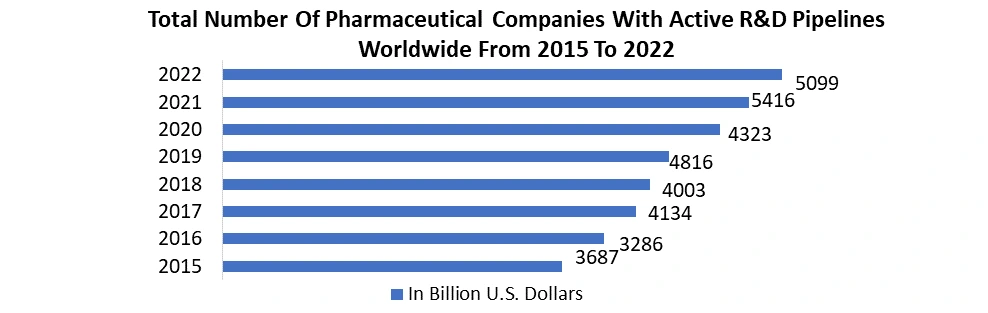 From 2000 to 2019, the Food and Drug Administration (FDA) authorized an average of 38 new medications per year (up 59 in 2019), 60% more than the preceding decade's average. Many of the drugs that have been approved in recent years have been designated as "specialty pharmaceuticals." Specialty medications are used to treat chronic, difficult, or unusual conditions that may need special patient management or monitoring. Many specialty medications are biologics (large-molecule pharmaceuticals based on live cell lines), which are difficult to replicate and expensive to produce.
As a result, biopharmaceutical companies are focusing more on developing low-cost biologics. For example, according to a 2019 study released by the Department of Biotechnology, Indian biopharmaceutical companies led the pack with over 98 biosimilars approved as of September 2019. Single-use assemblies have a wide range of applications at each stage of the manufacturing process, and their use is growing significantly with the increased production of biologics and biosimilars. As a result, the segment is expected to hold the largest market share at the end of the forecast period.
Single-Use Assemblies Market Regional Insights:
The North American region held the largest market share of xx% in 2023. The region is expected to grow at a CAGR of 18.80% during the forecast period. The region's large market share is attributed to its well-established biopharmaceutical sector, extensive availability of single-use assemblies supplied by regional market players, and increasing biologics and biosimilar production in the region. In addition, Evolving life science research, rising demand for disposable biopharmaceuticals, high spending on healthcare, and technological development in the single-use assemblies are also boosting North America's single-use assemblies market during the forecast period.
The North American single-use assemblies market growth is further expected to grow with an increase in demand for biopharmaceuticals due to factors such as an increase in the number of chronic diseases and an increase in research and development activities in the region. The rapid use of disposable technologies, reduced risk of product cross-contamination, increased energy efficiency, and fewer floor space requirements are all expected to drive the North American market during the forecast period.
Disposable equipment has gained popularity among contract manufacturing organizations (CMOs), and this region has been identified as a potential market for contract service providers. This factor acts as a driver for domestic and international organizations to continue investing in disposables in contract development and manufacturing organizations and manufacturing plants. As a result, the North American single-use assemblies market is a potential market for the key competitors.
The North American government invested heavily in the development of COVID-19 vaccines, medicines, and diagnostic tests. This benefited the overall market growth. Furthermore, automation in single-use assemblies has led to the incorporation of big data-based machine learning, which will increase production efficiency.
The ability to achieve maximum productivity and efficiency in terms of process and a mainstream approach by many biopharmaceutical manufacturers are all driving the single-use assembly market. The Single-use assemblies Market is further expected to develop with the rising need for flexible equipment. Furthermore, rising geriatric demand for biopharmaceutical medications and biologics patient expiries are two more factors that are propelling the entire regional market forward to a large extent. The greater speed and flexibility of these products do not come at a higher cost; rather, keeping total operating costs low will create opportunities for the North America Single-use assembly Market.
The United States is the world's largest biopharmaceutical market, accounting for nearly one-third of global sales, as well as the world's leader in biopharmaceutical research and development, According to the International Trade Administration (ITA), which is managed by the United States Department of Commerce to promote and facilitate business investment in the United States. According to the Pharmaceutical Research and Manufacturers Association (PhRMA), American companies invested approximately USD 95 billion in R&D activities in 2023, accounting for more than half of the world's pharmaceutical R&D investment, and own the majority of most new drugs' intellectual property rights.
The United States offers one of the most favorable residential environments in the world for pharmaceutical development and commercialization, with few market obstacles. The domestic climate is favorable, and the advanced biopharmaceutical and pharmaceutical sectors are favored to provide the largest proportion to the single-use assembly market during the forecast period.
Single-use assemblies have lately extended to all corners of the world, including some of the less developed emerging economies of South America, the Middle East, Asia, and Africa. These regions are expected to offer lucrative Single-use Assemblies market opportunities during the forecast period. The Asia-Pacific region is expected to grow at a CAGR of xx% during the forecast period. The growing healthcare infrastructure, rising demand for disposable equipment, rising government initiatives, and investments in the healthcare industry are the factors expected to drive the Asia-Pacific Single-use Assembly market during the forecast period.
In addition, the strategic activities of key players are expected to be the key growth driver for the single-use assembly market. Sartorius, for example, made significant investments in China and Beijing in 2023, where extra cleanroom space was developed to make bags and single-use filters. Additionally, Cytiva stated in September 2023 that it will invest USD 56.5 million in the construction of a disposable manufacturing plant in South Korea. This initiative aims to provide single-use bags to the bioprocessing sector, which are utilized in the manufacture of the COVID-19 vaccine.
Single-Use Assemblies Industry Ecosystem
Single-Use Assemblies Market Scope: Inquire before buying
| Single-Use Assemblies Market | |||
|---|---|---|---|
| Report Coverage | Details | ||
| Base Year: | 2023 | Forecast Period: | 2024-2030 |
| Historical Data: | 2018 to 2023 | Market Size in 2023: | USD 11.2 Billion |
| Forecast Period 2024 to 2030 CAGR: | 18.8% | Market Size in 2030: | USD 40.5 Billion |
| Segments Covered: | by Product Type | Filtration Assemblies Bag Assemblies Bottle Assemblies Mixing System Assemblies Tubing Assemblies Other Products |
|
| by Solution | Customized Solutions Standard Solutions |
||
| by Application | Cell Culture and Mixing Filtration Storage Sampling Fill-Finish application Other Applications (Aseptic Transfer and Fluid Management) |
||
| by End-User | Biopharmaceutical and Pharmaceutical companies Contract Research and Contract Manufacturing Organizations Academic and Research Institutes |
||
Single-Use Assemblies Market, by Region
North America (United States, Canada and Mexico)
Europe (UK, France, Germany, Italy, Spain, Sweden, Austria and Rest of Europe)
Asia Pacific (China, South Korea, Japan, India, Australia, Indonesia, Malaysia, Vietnam, Taiwan, Bangladesh, Pakistan and Rest of APAC)
Middle East and Africa (South Africa, GCC, Egypt, Nigeria and Rest of ME&A)
South America (Brazil, Argentina Rest of South America)
Single-Use Assemblies Market, Key Players are
1. Thermo Fisher Scientific, Inc. . (US)
2. Sartorius Stedim Biotech (France)
3. Danaher Corporation (US)
4. Merck KGaA (Germany)
5. Avantor, Inc (US)
6. Parker-Hannifin Corporation (US)
7. Saint-Gobain (France)
8. Repligen Corporation (US)
9. Corning Incorporated (US)
10. Entegris, Inc. (US)
11. Meissner Filtration Products (US)
12. NewAge Industries (US)
13. Antylia Scientific (US)
14. Lonza (Basel)
15. Romynox B.V (Hague)
16. FlexBiosys, Inc. (US)
17. Keofitt A/S (Denmark)
18. Intellitech, Inc. (US)
19. Dover Corporation (US)
20. Foxx Life Sciences (US)
21. TSE Industries Inc. (US)
22. Fujimori Kogyo Co. Ltd (Japan)
23. Michelin (France)
24. Cellexus International Ltd (UK)
25. Fluid Flow Products (US)
FAQs:
1. What are the growth drivers for the Single-Use Assemblies market?
Ans. The benefits of single-use assembly over traditional techniques, as well as expanded biopharmaceutical R&D efforts, are expected to be the major driver for the Single-Use Assemblies market.
2. What is the major restraint for the Single-Use Assemblies market growth?
Ans. The Rising concerns about the extractability and leachability of disposable components are expected to be the major restraining factor for the Single-Use Assemblies market growth.
3. Which region is expected to lead the global Single-Use Assemblies market during the forecast period?
Ans. The North American market is expected to lead the global Single-Use Assemblies market during the forecast period due to its well-established biopharmaceutical sector, extensive availability of single-use assemblies supplied by regional market players, and increasing biologics and biosimilar production in the region.
4. What is the projected market size & growth rate of the Single-Use Assemblies Market?
Ans. The Single-Use Assemblies Market size was valued at USD 11.2 Billion in 2023 and the total Single-Use Assemblies revenue is expected to grow at a CAGR of 18.8% from 2024 to 2030, reaching nearly USD 40.5 Billion.
5. What segments are covered in the Single-Use Assemblies Market report?
Ans. The segments covered in the Single-Use Assemblies market report are Product Type, Solution, Application, End-User, and Region.