
Prescription Dermatology Therapeutics Market Size by Product, Distribution Channel, Route of Administration, Drug Class, Region, Industry-Wide Analysis, Competitive Landscape Assessment & Long-Term Forecast to 2032
Overview
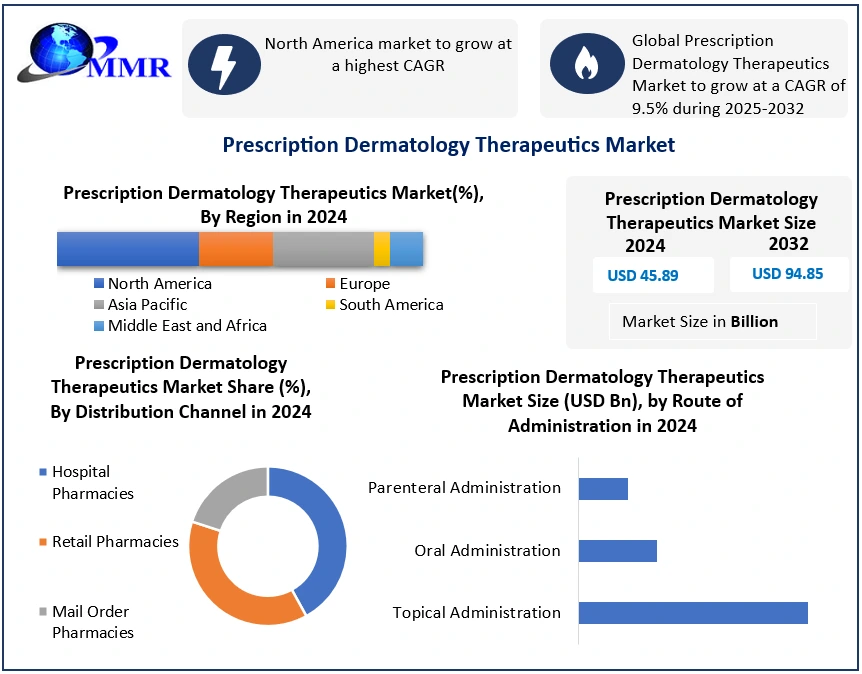
Global Prescription Dermatology Therapeutics Market size was valued at USD 45.89 Bn. in 2024 and the total Prescription Dermatology Therapeutics Market revenue is expected to grow by 9.5% from 2025 to 2032, reaching nearly USD 94.85 Bn, this growth is primarily driven by the rising prevalence of chronic skin conditions such as psoriasis, acne, and dermatitis, along with increasing adoption of advanced biologics and targeted therapies.
Prescription Dermatology Therapeutics Market Drivers and Restrains:
The prescription dermatology therapeutics market witnessed a significant growth rate owing to high incidence and an increase in the prevalence rate of infectious and chronic dermatological disorders, and novel drug development across the world. Skin is the largest and most exposed organ body part to a wide variety of toxins and microbes. Lengthy exposure of skin to toxins effects in various kinds of skin disorders. Skin disease is one of the leading causes of non-fatal disease burden globally, affecting millions of people.
 To know about the Research Methodology :- Request Free Sample Report
Aging, trauma, and environmental and genetic factors can result in the development of skin diseases, which are impelling the demand for dermatology treatment worldwide. Study of the World Health Organization (WHO), skin diseases are among the most common human health disorders and affect almost xx million people across the world. Some of the most common types of skin diseases reported worldwide are pyoderma, scabies, acne, eczema, and warts.The report study has analyzed revenue impact of COVID -19 pandemic on the sales revenue of market leaders, market followers and market disrupters in the report and same is reflected in our analysis.
Acne treatment drugs are the most common type of prescription drugs, which are used to improve the skin’s texture and color. According to the American Academy of Dermatology, acne is the most prevalent skin condition, which affects almost xx million Americans yearly. Dermatology drugs used to treat baldness are also very common. Hair loss can be caused by various factors, such as hormonal causes, stress, chemotherapy, radiation, etc. High prevalence and rise in incidence rates of chronic dermatological disorders with significant unmet medical needs are driving the market growth.
However stringent regulations for approval of dermatology drugs are restraining the market growth at global level. The key manufacturers to move their focus towards the dermatological segment which leads them to provide good business opportunities in prescription dermatology therapeutics market.
Prescription Dermatology Therapeutics Market Segment Analysis:
Based on the distribution channels, the prescription dermatology therapeutics market has been segmented into hospital pharmacies, retail pharmacies, and mail order pharmacies. The hospital pharmacies segment dominated the prescription dermatology therapeutics market in 2024 and is likely to continue this trend during the forecast period. Long-term management of chronic dermatological disorders, increase in rate of hospitalization, and availability of high cost biologic drugs are anticipated to witness a significant segment growth during the forecast period.
Based on Product, the Prescription Dermatology Therapeutics Market is segmented into Acne and Rosacea Drugs, Fungal Infection Drugs, Psoriasis Drugs Hyperpigmentation/Melisma Drugs, Skin Cancer Drugs, Hair Loss and Hair Removal Drugs, Antiaging and Photo Damage Drugs and Dermatitis and Seborrhea Drugs. Among these the Psoriasis Drugs segment has dominated the Prescription Dermatology Therapeutics market in 2024. This is mainly due to the high global prevalence of psoriasis, its chronic nature requiring long-term treatment, and the significant advancements in targeted biologics and small-molecule therapies developed specifically for this condition. These innovative drugs have transformed patient outcomes, driving strong demand and higher treatment costs compared to other dermatological conditions. As a result, psoriasis therapeutics contribute the largest share to market revenue, outpacing segments like acne, fungal infections, and hyperpigmentation.
Prescription Dermatology Therapeutics Market Regional Insights:
Geographically, the prescription dermatology therapeutics market has been segmented into North America, Europe, Asia Pacific, Latin America, and Middle East & Africa. North America held the largest market share of xx% in 2023. High prevalence of chronic skin disorders, increase in adoption of biologic drugs for the treatment of moderate to severe plaque psoriasis, and anticipated new product approvals are expected to drive the growth of the prescription dermatology therapeutics market in North America. The market in Asia Pacific is expected to expand at a high CAGR of xx% during the forecast period. Increase in awareness about various skin disorders, rapidly changing health care infrastructure, rise in access to skin care treatments in the developing countries such as China and India. Well-established pharmaceutical market in Japan, and surge in adoption of biologic drugs in Australia and New Zealand are anticipated to impel the market growth in Asia Pacific during the forecast period.
A report covers the recent development for market in the prescription dermatology therapeutics market like, Aurobindo Pharma had nearby 38 products under development in dermatology therapeutics in topical forms. The company has around 24 products in the portfolio that requires clinical trials.
Prescription Dermatology Therapeutics Market Competitive landscape
Major Key players operating in this market are AbbVie, Inc., Janssen Biotech, Inc., Novartis AG, Amgen, Inc., Celgene Corporation, Pfizer, Inc. Manufacturers in the prescription dermatology therapeutics are focusing on competitive pricing as the strategy to capture significant market share. Moreover, strategic mergers and acquisitions and technological innovations are also the key focus areas of the manufacturers.
The objective of the report is to present comprehensive analysis of market including all the stakeholders of the industry. The past and current status of the industry with forecasted market size and trends are presented in the report with the analysis of complicated data in simple language. The report covers the all the aspects of industry with dedicated study of key players that includes market leaders, followers and new entrants by region.
PORTER, SVOR, PESTEL analysis with the potential impact of micro-economic factors by region on the market have been presented in the report. External as well as internal factors that are supposed to affect the business positively or negatively have been analyzed, which will give clear futuristic view of the industry to the decision makers.
The report also helps in understanding market dynamics, structure by analyzing the market segments, and project the market size. Clear representation of competitive analysis of key players by product type, price, financial position, product portfolio, growth strategies, and regional presence in the market make the report investor’s guide.
Prescription Dermatology Therapeutics Market Scope: Inquire before buying
| Global Prescription Dermatology Therapeutics Market | |||
|---|---|---|---|
| Report Coverage | Details | ||
| Base Year: | 2024 | Forecast Period: | 2025-2032 |
| Historical Data: | 2019 to 2024 | Market Size in 2024: | USD 45.89 Bn. |
| Forecast Period 2025 to 2032 CAGR: | 9.5% | Market Size in 2032: | USD 94.85 Bn. |
| Segments Covered: | by Product | Acne and Rosacea Drugs Fungal Infection Drugs Psoriasis Drugs Hyperpigmentation/Melisma Drugs Skin Cancer Drugs Hair Loss and Hair Removal Drugs Antiaging and Photo Damage Drugs Dermatitis and Seborrhea Drugs |
|
| by Distribution Channel | Hospital Pharmacies Retail pharmacies Mail order pharmacies |
||
| by Route of Administration | Topical Administration Oral Administration Parenteral Administration |
||
| by Drug Class | Anti-infectives Corticosteroids Anti-acne Calcineurin Inhibitors Retinoids Other Drug Classes |
||
Prescription Dermatology Therapeutics Market, by Region
North America (United States, Canada and Mexico)
Europe (UK, France, Germany, Italy, Spain, Sweden, Austria and Rest of Europe)
Asia Pacific (China, South Korea, Japan, India, Australia, Indonesia, Malaysia, Vietnam, Taiwan, Bangladesh, Pakistan and Rest of APAC)
Middle East and Africa (South Africa, GCC, Egypt, Nigeria and Rest of ME&A)
South America (Brazil, Argentina Rest of South America)
Prescription Dermatology Therapeutics Market, Key Players are:
AbbVie, Inc.
Janssen Biotech, Inc.
Novartis AG,
Amgen, Inc.
Celgene Corporation
Pfizer, Inc.
LEO Pharma A/S
Eli Lilly and Company
Bausch Health Companies, Inc.
Sun Pharmaceuticals Ltd.
Aclaris Therapeutics, Inc.
Aurobindo Pharma Ltd.
Allergan Inc.
Bayer AG
Bristol-Myers Squibb Company
F. Hoffmann-La Roche Ltd.
Genentech, Inc.
GlaxoSmithKline Plc
Merck & Company, Inc.
SkinMedica
Stiefel Laboratories, Inc.
Valeant Pharmaceuticals, Inc.
Frequently Asked Questions:
1. Which region has the largest share in Global Prescription Dermatology Therapeutics market?
Ans: North America region held the highest share in 2024.
2. What is the growth rate of Global Prescription Dermatology Therapeutics market?
Ans: The Global market is growing at a CAGR of 9.5% during forecasting period 2025-2032.
3. What is scope of the Global Prescription Dermatology Therapeutics market report?
Ans: Global market report helps with the PESTEL, PORTER, COVID-19 Impact analysis, Recommendations for Investors & Leaders, and market estimation of the forecast period.
4. Who are the key players in Global Prescription Dermatology Therapeutics market?
Ans: The important key players in the Global market are – AbbVie, Inc., Janssen Biotech, Inc., Novartis AG, Amgen, Inc., Celgene Corporation, Pfizer, Inc., LEO Pharma A/S, Eli Lilly and Company, Bausch Health Companies, Inc., Sun Pharmaceuticals Ltd., Aclaris Therapeutics, Inc., Aurobindo Pharma Ltd., Allergan Inc., Bayer AG, Bristol-Myers Squibb Company, F. Hoffmann-La Roche Ltd., Genentech, Inc., GlaxoSmithKline Plc, Merck & Company, and Inc.
5. What is the study period of Prescription Dermatology Therapeutics market?
Ans: The Global market is studied from 2024 to 2032.