
Global Prepreg Market - Industry Structure Evaluation, Demand Drivers Analysis, Regional Growth Analysis and Identification, Competitive Positioning / Landscape Review & Global Market Size Forecast to 2032
Overview
The Prepreg Market size was valued at USD 15.07 Billion in 2024 and the total Prepreg revenue is expected to grow at a CAGR of 10.3% from 2025 to 2032, reaching nearly USD 33.03 Billion.
Prepreg Market Overview:
Prepreg refers to composite materials that have been "pre-impregnated" with resins and subsequently cured, such as carbon, graphite, or glass fibers. The term "prepreg" is an acronym for "pre-impregnated," which means the material has already been reinforced. Reinforcement materials improve the mechanical, physical, and chemical properties of composites. That is the case with prepreg materials, which provide high-quality homogeneous material qualities but are quite costly. As a result, prepregs are mostly utilized in high-performance applications such as aviation, military, automotive, sports, and wind energy.
Prepregs can be either thermoplastic or thermoset. Thermoplastic prepregs are pre-impregnated composite reinforcements containing thermoplastic resins such as polypropylene, polyethylene terephthalate, polyethylene, polyphenylene sulfide, and polyether ether ketone. Thermoset prepregs, on the other hand, contain reinforcements such as epoxy, bismaleimide (BMI), or phenolic resins. The most frequent production procedure for prepregs is the use of thermoset epoxy resins.
Report Scope:
The Prepreg market is segmented based on Fiber, Resin, Manufacturing Process, Application, and Region. The growth of various segments helps report users in acquiring knowledge of the many growth factors expected to be prevalent throughout the market and develop different strategies to help identify core application areas and the gap in the target market. The report provides an in-depth analysis of the market and contains meaningful insights, facts, historical data, and statistically supported and industry-validated market statistics. It also includes estimates based on an appropriate set of assumptions and methodologies.
A bottom-up approach has been used to estimate the market size. Key Players in the Prepreg market are identified through secondary research and their market revenues are determined through primary and secondary research. Secondary research included a review of annual and financial reports of leading manufacturers, while primary research included interviews with important opinion leaders and industry experts such as skilled front-line personnel, entrepreneurs, and marketing professionals. Some of the leading key players in the global Prepreg market include Mitsubishi Rayon Co. Ltd., PRF Composite Materials, Barrday Corporation, and GMS Composites.
The report is not only a representation of global players but also covers the market holding of local players in each country. Market structure by country with market holding by market leaders, market followers, and local players make this report a comprehensive and insightful industry outlook. The report has covered the mergers and acquisitions, strategic alliances, joint ventures, and partnerships happening in the market by region, by investment, and their strategic intent.
 To know about the Research Methodology :- Request Free Sample Report
Prepreg Market Dynamics:
The broad scope of prepreg applications creates portfolio diversification opportunities for key players:
Resins such as phenolic, fiber, and epoxy are used in the production of both military and commercial aircraft. Preimpregnated fiber reinforcements allow for the production of low-cost commodities with excellent product performance, greater throughput, and enhanced quality and worker safety. Additionally, the prepreg is commonly used in the production of reinforcement fiber for ballistic purposes in the military industry. Increasing R&D for automation and assembly of complex-shaped objects and huge structures for the marine and wind energy sectors is expected to substantially increase Prepreg market revenue growth.
For example, In January 2021, DNV GL Type Approval Certification was granted to Hexcel HexPly M9 prepreg materials. Due to its fast cure cycles at 100 degrees Celsius, HexPly M9 prepreg would give ship and boat builders with superior prepreg processing choices, enhancing build rates. The DNV GL certification of HexPly M9 is estimated to boost demand for type-approved high-performance prepreg materials for large complex structures in commercial maritime vessels such as masts and wing sails.
Growing demand for prepreg materials within the automotive industry:
Prepreg properties like lightness, strength and the ability to be molded into complicated forms are causing a surge in demand in the automobile sector for higher aesthetic grade prepreg with high-quality lamination. Prepreg has a wide range of uses, including sporting goods, racing equipment, and gear, aerospace components and applications, commercial products, and pressure vessels. Mounting environmental concerns are driving significant improvements and breakthroughs in the development of more lightweight parts and components for vehicle applications to minimize carbon emissions.
For example, In May 2022, TRB Lightweight Structures partnered with Kordsa to produce composite materials that would aid in the development of sustainable lightweight composites for the automotive industry. Growing environmental concerns have also increased demand for green energy sources and improved cost efficiency, resulting in growth prospects for the prepreg market.
Key players in Prepreg Market are implementing enhanced production control strategies to lower manufacturing costs:
Because of its superior mechanical qualities, fiber-reinforced plastic (FRP) parts, particularly those constructed from pre-impregnated fibers (prepregs), are utilized in lightweight goods to improve product attributes. Because of high production costs, which may account for up to 72% of total part prices, prepregs' application areas are confined, for example, to the aeronautics sector, where they predominate.
In addition to the trend of sustainability and lightweight goods, producers of prepreg components, like all other manufacturers, are heavily impacted by the so-called turbulent environment. This means that customer and market behavior has become less predictable. Also, the individualization tendency contributes to the increased delivery time and delivery reliability needs.
Companies implement an enhanced production control approach that addresses specifically the manufacturing of prepreg parts to favor more prepreg applications by lowering manufacturing costs and to address the cited trends that put high pressure on the manufacturing of prepreg parts not only in terms of costs. This method is based on factoring the short lifetime of prepreg materials into control choices and taking into account intermediate cold storage.
Prepreg Market Segment Analysis:
Prepreg Market by Fiber, the carbon segment is expected to grow at a CAGR of 7.8% during the forecast period. Concerns about fuel consumption and CO2 emissions have prompted manufacturers to utilize carbon fiber composite materials as metal component alternatives. This is expected to drive demand for carbon fibers throughout the forecast period. Carbon fiber has outstanding qualities such as stiffness, lightweight, high tensile strength, chemical resistance, high-temperature tolerance, and minimal thermal expansion. Carbon fiber is expected to gain acceptability in a variety of industries, including aerospace and military, automotive, sports equipment, construction, and others.
Glass fiber is a popular reinforcing fiber for polymeric resins such as unsaturated polyester and epoxy. It is also utilized as a reinforcing material in the production of tent poles, crossbows, automotive bodywork, hockey sticks, paper honeycomb, and boat hulls. Aramid fiber has great strength, strong resistance to abrasion and organic solvents, low flammability, and good fabric integrity at high temperatures. This encourages its use in the production of equipment, protective clothes, and accessories for use in industries such as the military and construction.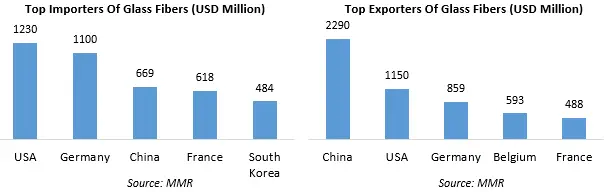 Prepreg Market by Resin, the thermoset segment is expected to grow at a CAGR of 8.2% during the forecast period. At room temperature, thermoset resins are liquid, allowing for simple impregnation of reinforcing fibers. Also, unlike thermoplastic resins, these resins are coupled by a three-dimensional network, making the fiber stronger. Superior features of thermoset resins include great resistance to corrosives and solvents, resistance to heat and high temperatures, excellent adhesion, high strength, and flexibility. This is expected to increase its utilization across a variety of application sectors, boosting segment growth.
The thermoplastic segment is expected to grow at a CAGR of 7.9% during the forecast period. These resins are in high demand because they can be molded into a variety of structures and shapes. Packaging containers, water and soda bottles, safety glass lenses, toys, shopping bags, pipework, airline armrests, window frames, and footwear are all common uses for these resins. Also, they provide outstanding aesthetic finishing, strong chemical resistance, and a hard crystalline or rubbery surface, making them ideal for applications such as drainpipes, gutters, and vinyl siding.
Prepreg Market By Application, the aerospace and defense segment is expected to grow at a CAGR of 10.4% during the forecast period. Because of the growing demand for highly durable and lightweight aviation parts, prepreg fibers are in great demand in this industry. It's a popular material for manufacturing various parts and components in the aerospace sector because it allows for a consistent resin ratio across the completed product, which improves the mechanical and physical qualities of the component. Also, increased commercial aircraft manufacturing due to higher passenger traffic is expected to drive segment growth.
Prepreg fibers, which offer better mechanical qualities than conventional synthetic fibers, are rapidly being adopted as an alternative to metal wire and organic fiber in structural composite applications in vehicles. Also, the growing need for batteries in the automotive industry is likely to drive product demand even higher. The wind energy segment is expected to grow at a CAGR of 7.6% during the forecast period. The rising need for renewable energy sources, combined with the usage of high-strength materials in the production of wind turbine parts, is expected to boost product demand. Also, its advantages, such as low maintenance, long shelf life, high strength-to-weight ratio, and corrosion resistance, are expected to boost demand even higher.
Prepreg Market Regional Insights:
North America accounted for the highest market share of 35% in total Prepreg Market in 2024 and is expected to grow at a CAGR of 6.8% during the forecast period. This growth can be ascribed to North America's rapidly developing aviation sector. The region is expected to meet approximately one-third of global operational fleet demand, leading to increased manufacturing of airframes and aircraft parts throughout the decade. As demand for new-generation aircraft grows, the aircraft manufacturing industry is likely to grow boosting the regional market growth throughout the forecast period.
The APAC Prepreg market is expected to grow at a CAGR of 8.6% during the forecast period. This growth can be ascribed to fast-growing application sectors in developing nations such as China, India, and Japan. The wind energy application segment is forecast to grow at the fastest CAGR of 7.6% during the forecast period, while the aerospace and defense segment accounts for the majority of the APAC regional market.
Europe's Prepreg market is expected to grow at a CAGR of 8.3% during the forecast period. Process innovation, improved R&D, and increased vehicle manufacturing in nations such as Germany, the United Kingdom, Spain, and France are expected to boost the region's automotive sector growth. Thus, strong growth in the automotive industry, combined with increased demand for lightweight materials, is expected to drive market growth in Europe. The increased number of wind energy projects in countries such as Germany and the Czech Republic is also expected to boost product demand.
Prepreg Market Scope: Inquire before buying
| Prepreg Market | |||
|---|---|---|---|
| Report Coverage | Details | ||
| Base Year: | 2024 | Forecast Period: | 2025-2032 |
| Historical Data: | 2019 to 2024 | Market Size in 2024: | USD 15.07 Bn. |
| Forecast Period 2025 to 2032 CAGR: | 10.3% | Market Size in 2032: | USD 33.03 Bn. |
| Segments Covered: | by Fiber | Carbon Glass Aramid |
|
| by Resin | Thermoset Thermoplastic |
||
| by Manufacturing Process | Hot-melt Solvent dip |
||
| by Application | Aerospace & Defense Automotive Wind Energy Sporting Goods Others |
||
Prepreg Market, by Region
North America (United States, Canada and Mexico)
Europe (UK, France, Germany, Italy, Spain, Sweden, Austria and Rest of Europe)
Asia Pacific (China, South Korea, Japan, India, Australia, Indonesia, Malaysia, Vietnam, Taiwan, Bangladesh, Pakistan and Rest of APAC)
Middle East and Africa (South Africa, GCC, Egypt, Nigeria and Rest of ME&A)
South America (Brazil, Argentina Rest of South America)
Prepreg Market, Key Players are
1. Mitsubishi Rayon Co. Ltd.
2. PRF Composite Materials
3. Barrday Corporation
4. GMS Composites
5. Hankuk Carbon
6. ABC Composites
7. Solvay
8. Teijin Limited
9. Park Electrochemical Corporation
10. Axiom Materials
11. Hc Composite
12. Kineco
13. Taiwan First Li-Bond Co., Ltd.
14. North Thin Ply Technology
15. TCR Composites
16. Toray Industries Inc.
17. Hexcel Corporation
18. Gurit Holding Ag
19. Royal Tencate N.V.
20. SGL Group
FAQs:
1. Which region is expected to dominate the Prepreg Market at the end of the forecast period?
Ans. Europe is expected to dominate the Prepreg market at the end of the forecast period.
2. What is the growth rate of the APAC Prepreg Market?
Ans. The Asia Pacific Prepreg Market is expected to grow at a CAGR of 8.3% during the forecast period.
3. What is expected to drive the growth of the Prepreg Market in the forecast period?
Ans. Growing demand for prepreg materials within the automotive industry
4. What is the projected market size & growth rate of the Prepreg Market?
Ans. The Prepreg Market size was valued at USD 15.07 Billion in 2024 and the total Prepreg revenue is expected to grow at a CAGR of 10.3% from 2025 to 2032, reaching nearly USD 33.03 Billion.
5. What segments are covered in the Prepreg Market report?
Ans. The segments covered are Fiber, Resin, Manufacturing Process, Application, and Region.