
Pediatric Palliative Care Market Size by Disease Condition, End User, Provider Type, Age Group, Region – Segment-Level Market Assessment, Growth Opportunity Analysis, Competitive Mapping & Forecast to 2032
Overview
Global Pediatric Palliative Care Market size was valued at USD 11.52 Bn. in 2024 and the total Pediatric Palliative Care market revenue is expected to grow at CAGR of 11.6% from 2025 to 2032, reaching nearly USD 27.72 Bn.
Pediatric Palliative Care Market Overview:
Pediatric palliative care is specialized medical support for children with serious illnesses, aimed at alleviating symptoms and stress to enhance quality of life for both the child and their family. A dedicated team of healthcare professionals collaborates with the child’s doctors to provide comprehensive care at any age or illness stage. It addresses various medical conditions and focuses on symptom relief, improving family well-being through effective communication and care coordination. Early intervention is crucial, as palliative care is based on need, not prognosis.
The pediatric palliative care market is expanding due to the rising demand for specialized care for life-limiting conditions, heightened awareness, and improved diagnosis. Advocacy efforts, better healthcare infrastructure in developing areas, and increased government funding are also contributing. Furthermore, advances in telemedicine and provider training are enhancing care quality. A growing preference for home-based and holistic care models is further supporting market growth.
North America region dominated the Pediatric Palliative Care market in 2023 with advanced healthcare infrastructure, high demand for specialized pediatric care, and growing awareness. The market is robust, particularly in the U.S. and Canada, where there is significant awareness and established programs. High healthcare spending and advancements in care models contribute to a growing demand for pediatric palliative services. As awareness and infrastructure continue to grow, the pediatric palliative care market is expected to expand, offering better quality and more accessible services for children and their families.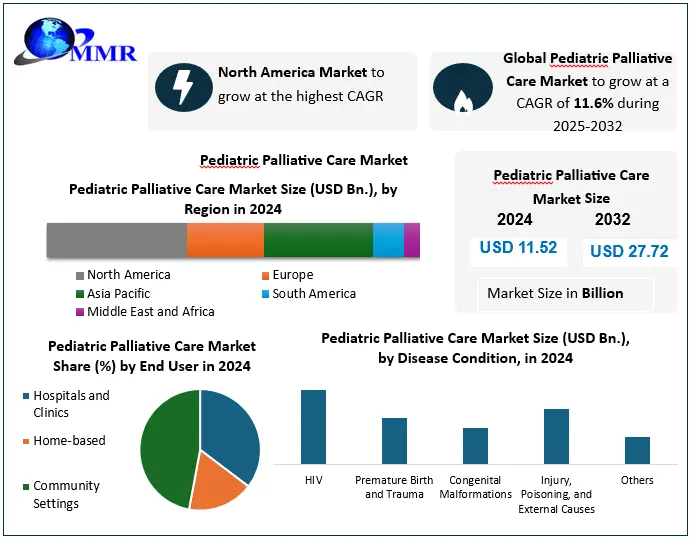 To know about the Research Methodology :- Request Free Sample Report
Pediatric Palliative Care Market Dynamics:
Drivers
Increasing Prevalence of Life-Limiting Pediatric Conditions
The demand for pediatric palliative care services is largely driven by an increase in the diagnosis and awareness of complex, life-limiting conditions among children, such as cancer, congenital anomalies, neurological disorders, and genetic diseases. As diagnostic capabilities advance, more children are being identified with conditions that may significantly impact their quality of life, require prolonged medical care, or have limited treatment options. For instance, childhood cancers often necessitate intensive treatments like chemotherapy, radiation, or surgery, which can lead to prolonged hospital stays, pain, and a range of emotional and physical challenges for both children and their families. Palliative care provides essential support in these cases by focusing on symptom management, pain relief, and emotional support, helping children cope with the side effects of treatment and improving their quality of life. Similarly, congenital anomalies and genetic disorders can lead to complex, long-term health challenges that require continuous monitoring, specialized care, and, in some cases, multidisciplinary approaches that go beyond standard treatment. Neurological disorders, such as cerebral palsy or muscular dystrophy, may impact motor function, cognitive abilities, and other aspects of health, requiring ongoing care to manage symptoms and enhance daily life. Pediatric palliative care services offer a holistic approach to these conditions, providing physical, emotional, and psychosocial support to both the patient and their families. This rise in awareness and the ability to diagnose these conditions earlier has led to a growing understanding among families and healthcare providers of the importance of palliative care in managing chronic conditions from a young age.
Challenges
The pediatric palliative care market faces significant challenges that hinder its growth. Limited awareness and understanding of pediatric palliative care among both healthcare providers and families often delay or prevent access to these services. There’s also a shortage of trained specialists, particularly in rural and underserved regions, which limits the availability and quality of care.

Pediatric Palliative Care Market Segment Analysis
Based on disease condition, HIV segment dominated the Pediatric Palliative Care Market in 2024. This is largely due to the global rise in pediatric HIV cases, which requires long-term care strategies to manage the disease and improve the quality of life for young patients. These ensure that individuals receive the emotional, psychological, and physical support they need during their HIV journey. HIV in pediatric patients is a major concern, particularly in regions with higher prevalence rates. These children require ongoing management to improve quality of life, as HIV is a lifelong condition.
The injury, poisoning, and external causes segment is expected to grow rapidly due to high rates of accidental injuries and poisonings in children. Increased mobility and curiosity lead to falls and harmful substance ingestion. Rising cases of child abuse elevate the demand for specialized services. Additionally, advancements in medicine necessitate comprehensive care to meet the long-term needs of affected children and their families.
Based on Age Group, the age group segment in the pediatric palliative care market is divided into neonates (0–28 days), infants (1–12 months), toddlers and preschoolers (1–5 years), children (6–12 years), and adolescents (13–18 years). Among these, the children (6–12 years) segment typically dominated the Pediatric Palliative Care Market in 2024. This dominance is attributed to the higher incidence of chronic and life-threatening illnessessuch as certain types of pediatric cancers, neurological disorders, and congenital conditionsdiagnosed and managed more actively in this age range. Children in this group are more likely to receive structured palliative interventions due to increased school-age healthcare monitoring, greater clinical attention to quality of life and symptom management, and more frequent integration of multidisciplinary care approaches. Moreover, they often require long-term support, which sustains demand for palliative services over a prolonged period.

Pediatric Palliative Care Market Regional Insights:
The pediatric palliative care market shows significant regional variation, driven largely by differences in healthcare infrastructure, awareness, and regulatory support across regions. North America currently dominates the market due to advanced healthcare facilities, robust palliative care programs, and high awareness among patients and caregivers. The United States, in particular, benefits from government initiatives, specialized care programs, and well-established insurance coverage, which boost the adoption of pediatric palliative care services. Europe follows closely, with countries like the UK, Germany, and France investing in comprehensive palliative care frameworks and training for specialized healthcare providers. In the Asia-Pacific region, the market is growing steadily as countries like China, Japan, and India work to enhance their healthcare infrastructure and increase awareness around pediatric palliative care. Overall, the market is projected to grow as global awareness rises, and more countries prioritize pediatric palliative care as an essential component of their healthcare systems.
Competitive Landscape:
The Pediatric Palliative Care Market is highly competitive with leading companies like Adventist Health, Baptist Health, The Johns Hopkins University, Agape Care Group, Boston Children's Hospital, and Children's Hospital Los Angeles.
Adventist Health has been expanding its role in pediatric palliative care, aiming to address the complex needs of children with life-limiting or chronic conditions and their families. Their pediatric palliative care services focus on providing compassionate, individualized care that emphasizes quality of life and symptom management. This care model includes not only physical care but also emotional, spiritual, and social support for patients and families, often involving interdisciplinary teams to provide comprehensive care both in clinical settings and at home when feasible. While the Baptist Health, a major non-profit healthcare organization in the United States, serves patients across multiple states, primarily in the southeastern region. The organization provides a broad range of medical services, including specialized pediatric care, which encompasses pediatric palliative care. In this market, Baptist Health plays a significant role, particularly in enhancing the quality of life for children with serious, chronic, or life-limiting conditions.
PORTER, PESTEL analysis with the potential impact of micro-economic factors of the market has been presented in the report. External as well as internal factors that are supposed to affect the business positively or negatively have been analyzed, which gives a clear futuristic view of the industry to the decision-makers.
The reports also help in understanding the Global Pediatric Palliative Care Market dynamic, and structure by analyzing the market segments and projecting the Global Pediatric Palliative Care Market size. Clear representation of competitive analysis of key players By Price Range, price, financial position, product portfolio, growth strategies, and regional presence in the Global Pediatric Palliative Care Market make the report an investor’s guide.
Recent Developments in Healthcare Industry
• In May 2024, 1Care Health Companies acquired Reset Behavior Health, a Las Vegas-based provider of ABA behavior assessment, support, professional training, and child education services. The acquisition, whose financial details were not disclosed, aims to bolster 1Care's presence in pediatric hospice and palliative care in Las Vegas while also entering the behavioral health sector.
• In April 2024, Niloufer Hospital formed a partnership with the Pain Relief and Palliative Care Society (PRPCS) to advance pediatric palliative care, including perinatal and neonatal services, as well as pediatric training, research, and capacity building in Hyderabad. This collaboration seeks to streamline and enhance the network between PRPCS and Niloufer Hospital, ensuring consistent care for pediatric patients and their families across various service environments.
Pediatric Palliative Care Market Scope:Inquire Before Buying
| Pediatric Palliative Care Market | |||
|---|---|---|---|
| Report Coverage | Details | ||
| Base Year: | 2024 | Forecast Period: | 2025-2032 |
| Historical Data: | 2019 to 2024 | Market Size in 2024: | USD 11.6 Bn. |
| Forecast Period 2025 to 2032 CAGR: | 11.6% | Market Size in 2032: | USD 27.72 Bn. |
| Segments Covered: | by Disease Condition | HIV Premature Birth and Trauma Congenital Malformations Injury, Poisoning, and External Causes Others |
|
| by End User | Hospitals and Clinics Home-based Community Settings |
||
| by Provider Type | Hospitals Pediatric Specialty Clinics Home Healthcare Providers Hospice Organizations Non-profit and Charitable Organizations Government and Public Health Institutions |
||
| by Age Group | Neonates (0–28 days) Infants (1–12 months) Toddlers and Preschoolers (1–5 years) Children (6–12 years) Adolescents (13–18 years) |
||
Pediatric Palliative Care Market, by Region
North America (United States, Canada, and Mexico)
Europe (UK, France, Germany, Italy, Spain, Sweden, Austria, and the Rest of Europe)
Asia Pacific (China, South Korea, Japan, India, Australia, ASEAN, and the Rest of APAC)
Middle East & Africa (South Africa, GCC, Nigeria, Rest of ME&A)
South America (Brazil, Argentina Rest of South America)
Pediatric Palliative Care Market, Key Players
1. Adventist Health
2. Baptist Health
3. The Johns Hopkins University
4. Agape Care Group
5. Boston Children's Hospital
6. Children's Hospital Los Angeles
7. Pediatric Oncology Group of Ontario
8. Genesis HealthCare System
9. Banksia Palliative Care Service Inc.
10. The University of Oklahoma College of Medicine
Frequently Asked Questions:
1. Which region has the largest share in the Global Pediatric Palliative Care Market?
Ans: The North America region held the highest share in 2024.
2. What is the growth rate of the Global Pediatric Palliative Care Market?
Ans: Growth rate of the Global Pediatric Palliative Care Market is 11.6%.
3.What is the scope of the Global Pediatric Palliative Care Market report?
Ans: The Global Pediatric Palliative Care Market report helps with the PESTEL, PORTER, Recommendations for Investors & Leaders, and market estimation of the forecast period.
4. Who are the key players in the Global Pediatric Palliative Care Market?
Ans: Adventist Health, Baptist Health, the Johns Hopkins University, Agape Care Group, Boston Children's Hospital, Children's Hospital Los Angeles are the key players of the Global Pediatric Palliative Care Market.
5. What is the study period of Pediatric Palliative Care market?
Ans: The Global Pediatric Palliative Care Market is studied from 2024 to 2032.