
Intravenous Immunoglobulin Market By Immunoglobulin Class, By Therapeutic Application, By Dosage Form, By End-User and Forecast 2034
Overview
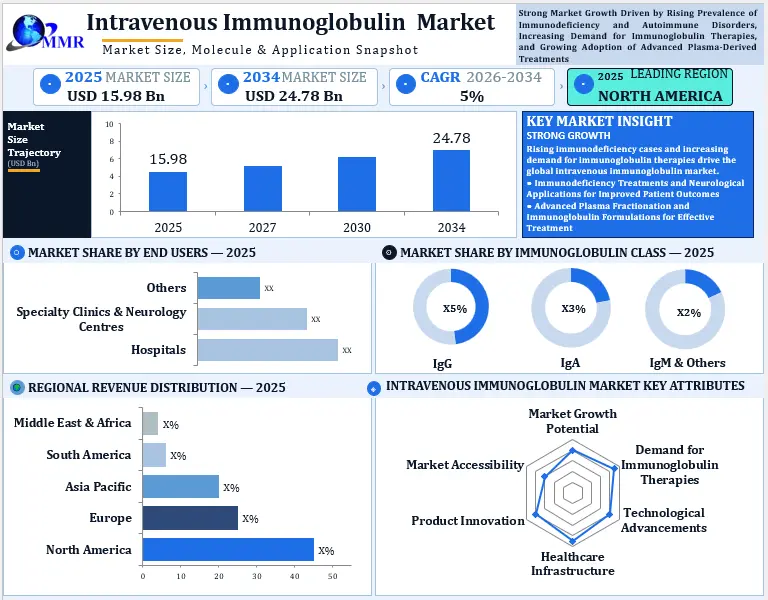
The global Intravenous Immunoglobulin Market is valued at USD 15.98 billion in 2025 and is projected to reach USD 24.78 billion by 2034, growing at a CAGR of 5% during the forecast period of 2026–2034.
Global Intravenous Immunoglobulin Market Overview
The Intravenous Immunoglobulin (IVIG) Market focuses on the production and distribution of immunoglobulin therapies administered intravenously to support immune function and treat various immune-related and neurological disorders. IVIG products contain antibodies derived from pooled human plasma and are used to manage conditions such as primary immunodeficiency, immune thrombocytopenia, chronic inflammatory demyelinating polyneuropathy (CIDP), and Guillain–Barré syndrome. The market is driven by the increasing prevalence of immunological disorders, rising demand for plasma-derived therapies, and advancements in immunoglobulin manufacturing and purification technologies. Furthermore, improvements in plasma collection infrastructure, growing awareness of immune deficiencies, and expanding access to specialized treatments support market development. However, dependence on human plasma donations, complex manufacturing processes, high treatment costs, and stringent regulatory requirements influence market supply and accessibility.
Global Intravenous Immunoglobulin Market Key Highlights
• Market Growth: The Global Intravenous Immunoglobulin Market is valued at USD 15.98 billion in 2025 and is projected to reach USD 24.78 billion by 2034, registering a CAGR of 5% during the forecast period.
• Key Growth Drivers: Rising prevalence of immunodeficiency and autoimmune disorders, increasing utilization of plasma-derived therapies, and expanding clinical applications in neurological and haematological conditions drive market growth. Global immunoglobulin consumption increases from 40.4 grams per 1,000 inhabitants in 2010 to 94.6 grams per 1,000 inhabitants in 2021.
• Regional Leadership: North America dominates the Global Intravenous Immunoglobulin Market, supported by advanced healthcare infrastructure, established plasma collection networks, strong demand for plasma-derived therapies, and access to specialized infusion services. Asia Pacific represents a rapidly growing regional market.
• Market Segmentation: The market is segmented by therapeutic application, dosage form, and end-user. Key categories include primary and secondary immunodeficiency disorders, neurological disorders, liquid and lyophilized formulations, hospitals, and specialty clinics and neurology centres.
• Competitive Landscape and Industry Challenges: Major players include CSL Behring, Grifols S.A., Octapharma AG, Takeda Pharmaceutical Company Limited, Kedrion Biopharma, LFB Group, and Biotest AG. Market participants focus on manufacturing capacity expansion, plasma collection infrastructure, and purification technologies, while dependence on human plasma donations, high production costs, and stringent regulatory requirements remain key challenges.
Intravenous Immunoglobulin Market Size, Growth & Share Analysis
To know about the Research Methodology :- Request Free Sample Report
Global Intravenous Immunoglobulin Market Dynamics
Global Intravenous Immunoglobulin Market Drivers
Rising Prevalence of Immunodeficiency and Autoimmune Disorders
The increasing prevalence of primary and secondary immunodeficiency disorders, autoimmune diseases, and neurological conditions drives the global intravenous immunoglobulin (IVIG) market. IVIG therapies provide antibodies derived from pooled human plasma and support the treatment of primary immunodeficiency, immune thrombocytopenia, chronic inflammatory demyelinating polyneuropathy (CIDP), and Guillain–Barré syndrome. Global immunoglobulin consumption increases from 40.4 grams per 1,000 inhabitants in 2010 to 94.6 grams per 1,000 inhabitants in 2021, reflecting increased utilization of immunoglobulin therapies. Improved disease recognition, expanded diagnostic capabilities, and growing awareness of immune-related disorders support treatment demand across hospitals and specialized healthcare facilities.
Expanding Clinical Applications of Immunoglobulin Therapy
The expanding clinical applications of immunoglobulin therapy strengthen demand across immunology, neurology, and haematology. Healthcare professionals use IVIG to provide antibody replacement and regulate abnormal immune responses in patients with eligible immune-mediated conditions. Immunoglobulin G (IgG) remains the primary antibody class used in IVIG formulations because of its established role in immune protection and disease management. The expanding use of IVIG in conditions such as primary immunodeficiency, CIDP, multifocal motor neuropathy, and Guillain–Barré syndrome supports recurring treatment demand. Furthermore, advances in clinical diagnosis, treatment protocols, and immunoglobulin formulations strengthen the role of IVIG in specialized medical care.
Global Intravenous Immunoglobulin Market Restraints
Dependence on Human Plasma Supply
The global IVIG market faces supply constraints because manufacturers rely on human plasma as the primary raw material for production. Plasma collection, donor screening, fractionation, purification, and pathogen-reduction procedures require specialized infrastructure and extensive quality controls. Approximately 65% of global plasma collection takes place in the United States, creating a geographical concentration in the supply chain and increasing the dependence of other regions on US plasma supplies. Rising demand for plasma-derived therapies places additional pressure on collection networks and processing capacity. These constraints can contribute to product shortages, affect treatment continuity, and limit the ability of manufacturers to respond rapidly to increasing demand.
High Treatment and Manufacturing Costs
High manufacturing and treatment costs restrict access to IVIG therapies in several healthcare systems. The production process involves donor screening, plasma collection, protein fractionation, purification, pathogen reduction, and rigorous product testing. These procedures require substantial investment in manufacturing facilities, specialized equipment, and regulatory compliance. Patients with chronic immunodeficiency and certain neurological conditions also require repeated infusions, increasing the overall cost of treatment. Differences in healthcare reimbursement, insurance coverage, and purchasing capacity influence the affordability of IVIG products. Consequently, production expenses and treatment costs remain important barriers to wider market access, particularly in healthcare systems with limited resources.
Global Intravenous Immunoglobulin Market Opportunities
Expansion of Plasma Collection and Fractionation Capacity
Investment in plasma collection centres, fractionation facilities, and advanced manufacturing technologies creates opportunities for the global IVIG market. Manufacturers strengthen plasma sourcing networks and expand processing capabilities to improve product availability and support growing treatment requirements. Increased regional plasma collection also helps reduce dependence on concentrated supply networks. Improvements in manufacturing efficiency, plasma utilization, and purification technologies support production optimization and supply-chain resilience. These investments create opportunities to improve access to immunoglobulin therapies across established and emerging healthcare markets while supporting the long-term requirements of patients who depend on regular treatment.
Development of Improved Immunoglobulin Formulations
Advances in immunoglobulin formulations create opportunities to improve treatment options for patients with immune deficiencies and related disorders. Manufacturers develop formulations with specific characteristics to meet clinical requirements, including low-IgA options for eligible patients. On June 27, 2025, the US Food and Drug Administration approved GAMMAGARD LIQUID ERC for replacement therapy in adults and children aged two years and older with primary humoral immunodeficiency. This approval expands the available treatment options for eligible patients and demonstrates continued product development in the immunoglobulin segment. Further improvements in formulation design, treatment delivery, and patient management support innovation in the global IVIG market.
Global Intravenous Immunoglobulin Market Challenges
Stringent Regulatory Requirements and Product Safety
The global IVIG market faces stringent regulatory requirements because products originate from human plasma and require extensive safety controls. Manufacturers implement donor eligibility assessments, infectious-agent screening, purification procedures, pathogen-reduction measures, and batch-level quality testing. Regulatory authorities also require product documentation, manufacturing consistency, and post-marketing safety monitoring. These measures protect patients but increase production complexity, compliance costs, and the time required to manufacture and release products. Maintaining consistent product quality across batches and complying with different regulatory frameworks across countries remain significant challenges for IVIG manufacturers.
Balancing Treatment Demand with Manufacturing Capacity
Balancing increasing treatment requirements with available manufacturing capacity remains a major challenge for the global IVIG market. Patients with chronic immunodeficiency and certain neurological conditions require regular treatment, creating sustained demand for immunoglobulin products. However, production depends on plasma donation volumes, collection infrastructure, and complex fractionation processes. Supply shortages can lead healthcare providers to prioritize treatment according to clinical need and may interrupt therapy for some patients. Manufacturers therefore focus on strengthening plasma sourcing, improving production efficiency, and developing more resilient distribution networks to maintain reliable product availability.
Intravenous Immunoglobulin Market Segment Analysis:
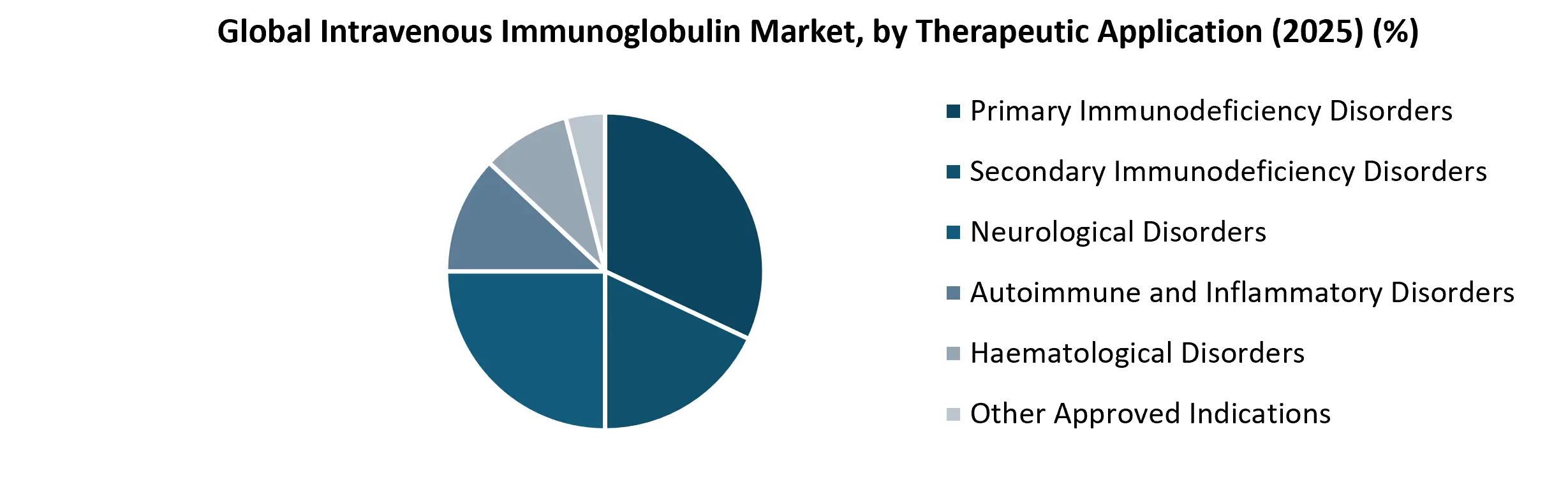
By Therapeutic Application, the market is segmented into Primary Immunodeficiency Disorders, Secondary Immunodeficiency Disorders, Neurological Disorders, Autoimmune and Inflammatory Disorders, Haematological Disorders, and Other Approved Indications. Primary immunodeficiency disorders contribute significantly to market demand because IVIG provides antibody replacement for patients with impaired immune function. Secondary immunodeficiency disorders also drive demand due to reduced antibody levels associated with certain diseases and medical treatments. Neurological disorders, including chronic inflammatory demyelinating polyneuropathy (CIDP) and Guillain–Barré syndrome (GBS), support the use of IVIG for immunomodulatory treatment. Autoimmune and inflammatory disorders contribute to demand through the management of abnormal immune responses, while haematological disorders, including immune thrombocytopenia (ITP), support the use of IVIG in specialized treatment protocols.
 By Dosage Form, the market is divided into Liquid Formulations and Lyophilized Formulations. Liquid formulations support market demand because they are ready for administration and eliminate the need for reconstitution before infusion. Their convenient preparation supports use across hospitals and specialized treatment facilities. Lyophilized formulations offer storage and transportation advantages under appropriate conditions but require reconstitution before administration. Demand for both formulations depends on product availability, storage requirements, clinical preferences, and healthcare facility infrastructure.
By End-User, the market is categorized into Hospitals, Specialty Clinics & Neurology Centres, and Others. Hospitals account for substantial IVIG utilization because they provide infusion facilities, patient monitoring, and medical support for managing potential infusion-related reactions. Specialty clinics and neurology centres support demand through the diagnosis, treatment, and ongoing management of patients with neurological and immune-mediated disorders. The Others segment includes additional healthcare facilities that administer IVIG according to patient needs and clinical requirements. The continued need for specialized immunological care and long-term treatment for chronic conditions supports IVIG utilization across these healthcare settings.
Global Intravenous Immunoglobulin Market Regional Insights:
North America dominates the Global Intravenous Immunoglobulin (IVIG) Market, driven by advanced healthcare infrastructure, extensive plasma collection networks, high diagnosis rates of immunodeficiency disorders, and strong demand for plasma-derived therapies. The United States leads the regional market through established plasma collection facilities, advanced pharmaceutical manufacturing capabilities, and well-developed healthcare reimbursement systems. The region also experiences increasing demand for IVIG to treat primary immunodeficiency, chronic inflammatory demyelinating polyneuropathy (CIDP), Guillain–Barré syndrome (GBS), and immune thrombocytopenia (ITP). High healthcare expenditure, strong treatment awareness, and access to specialized infusion services further strengthen North America's market position.
Europe holds a significant share of the Global Intravenous Immunoglobulin Market, supported by established healthcare systems, increasing diagnosis of immune-related disorders, and strong demand for specialized immunoglobulin therapies. Germany, the United Kingdom, France, and Italy contribute to regional demand through hospital-based treatment, specialist healthcare services, and established pharmaceutical distribution networks. The region emphasizes product safety, quality standards, and reliable access to plasma-derived medicines. Growing demand for immunomodulatory therapies and improvements in clinical diagnosis support market expansion across Europe.
Asia Pacific represents a rapidly growing region in the Global Intravenous Immunoglobulin Market, driven by expanding healthcare infrastructure, rising awareness of immunodeficiency disorders, and improving access to advanced biological therapies. China, Japan, and India contribute to regional demand through expanding hospital networks, increasing healthcare expenditure, and greater recognition of immune-mediated and neurological conditions. Improvements in diagnostic capabilities and the development of specialized treatment facilities support IVIG adoption. Rising demand for effective immunoglobulin therapies and expanding access to specialized healthcare services strengthen the region's growth prospects.
South America demonstrates steady growth in the Global Intravenous Immunoglobulin Market, supported by improving healthcare access, increasing awareness of immunological disorders, and rising demand for specialized hospital treatments. Brazil and Argentina contribute significantly to regional demand through public and private healthcare facilities. However, treatment affordability, reimbursement limitations, and dependence on imported IVIG products influence market accessibility. Improvements in pharmaceutical distribution networks, healthcare infrastructure, and the availability of specialized therapies support the development of the intravenous immunoglobulin market across South America.
The Middle East & Africa region experiences gradual growth in the Global Intravenous Immunoglobulin Market, supported by investments in healthcare infrastructure, increasing awareness of immune deficiencies, and expanding access to specialized medical treatments. Saudi Arabia, the United Arab Emirates, and South Africa contribute to regional demand through hospital infrastructure and specialist healthcare services. However, high treatment costs, limited access to advanced therapies in some countries, and dependence on imported immunoglobulin products constrain wider adoption. Continued healthcare investment and improvements in diagnostic services support regional market development.
Global Intravenous Immunoglobulin Market Competitive landscape
The Global Intravenous Immunoglobulin (IVIG) Market features strong competition among established plasma-derived therapy manufacturers, including Baxter International Inc., CSL Limited, Grifols S.A., Octapharma AG, Kedrion Biopharma, LFB Group, and Biotest AG. These companies strengthen their market positions through product portfolio expansion, manufacturing capacity enhancement, plasma collection network development, and improvements in purification technologies. Competitive strategies focus on ensuring a reliable plasma supply, maintaining product quality, expanding geographical presence, and improving treatment accessibility. In 2025 and 2026, product innovation, strategic collaborations, manufacturing efficiency, and supply chain optimization remain important factors influencing competition in the market.
Market participants emphasize investments in plasma collection infrastructure and fractionation capacity to address the growing demand for immunoglobulin therapies. Companies also focus on improving production efficiency, maintaining regulatory compliance, and strengthening distribution networks to ensure consistent product availability. Expanding clinical applications of IVIG in immunodeficiency disorders, neurological conditions, autoimmune diseases, and haematological disorders further encourage manufacturers to strengthen their product portfolios and market presence. High manufacturing costs, dependence on human plasma donations, and stringent quality requirements continue to influence competitive strategies.
The competitive landscape reflects differences in product portfolios, manufacturing capabilities, plasma sourcing networks, geographical presence, and research and development activities. Established manufacturers leverage their production infrastructure and distribution networks, while ongoing technological improvements support manufacturing efficiency and product development. Pricing strategies, supply reliability, regulatory compliance, and access to plasma resources remain key competitive factors throughout the industry.
Overall, the Global Intravenous Immunoglobulin Market in 2025 and 2026 demonstrates a competitive environment shaped by rising demand for plasma-derived therapies, manufacturing capacity expansion, product innovation, and efforts to strengthen supply chain resilience. Companies that maintain consistent product quality, secure reliable plasma supplies, expand production capabilities, and improve access to IVIG therapies strengthen their competitive positions in the global market.
Intravenous Immunoglobulin (IVIG) Market Recent Developments
| Date | Company | Development | Impact |
| January 22, 2026 | Takeda Pharmaceutical Company Limited | Launches GAMMAGARD LIQUID ERC in the United States, offering a ready-to-use 10% immunoglobulin solution with low IgA content for eligible patients aged two years and older with primary immunodeficiency. | Expands treatment options for patients requiring immunoglobulin replacement therapy and supports demand for specialized IVIG formulations. |
| March 6, 2026 | Kedrion Biopharma | Activates nationwide U.S. commercial distribution of QIVIGY, its FDA-approved 10% intravenous immunoglobulin therapy, through specialty pharmacies, infusion centres, hospitals, and other healthcare facilities. | Strengthens product accessibility, expands distribution reach, and supports broader availability of IVIG across U.S. healthcare settings. |
| May 4, 2026 | ADMA Biologics | Receives FDA approval to expand the ASCENIV label to include paediatric patients aged two years and older with primary humoral immunodeficiency. | Broadens the eligible patient population and strengthens access to IVIG treatment for children with primary immunodeficiency. |
| May 7, 2026 | Grifols S.A. | Reports continued growth in its immunoglobulin franchise during the first quarter of 2026, supported by demand for GAMUNEX-C and the U.S. launch of Yimmugo. | Strengthens its immunoglobulin portfolio and supports commercial expansion in the United States and core European markets. |
| June 11, 2026 | Takeda Pharmaceutical Company Limited | Receives FDA approval for HYQVIA, an immunoglobulin therapy with recombinant human hyaluronidase, for maintenance treatment of adults with chronic inflammatory demyelinating polyneuropathy (CIDP). | Expands approved immunoglobulin treatment options for CIDP and strengthens the company's position in the neurological immunotherapy segment. |
| July 16, 2026 | Grifols S.A. | Initiates patient dosing in the Phase 3 SIGMA trial evaluating GAMUNEX-C for infection prevention in patients with secondary immunodeficiency. The company also initiates the XPERT trial to evaluate XEMBIFY in CIDP. | Generates clinical evidence to support potential indication expansion and strengthens the company's long-term immunoglobulin development strategy. |
| October 15, 2026 | ADMA Biologics | Publishes peer-reviewed findings on its optimized IVIG manufacturing process, demonstrating improved removal of procoagulant impurities while maintaining immunoglobulin quality and increasing IgG yield across three commercial-scale lots. | Supports manufacturing improvements focused on product quality, impurity control, production efficiency, and management of potential thromboembolic risks. |
Intravenous Immunoglobulin Market Scope: Inquire before buying
| Intravenous Immunoglobulin Market | |||
|---|---|---|---|
| Report Coverage | Details | ||
| Base Year: | 2025 | Forecast Period: | 2026-2034 |
| Historical Data: | 2020 to 2025 | Market Size in 2025: | 15.98 USD Billion |
| Forecast Period 2026-2034 CAGR: | 5% | Market Size in 2034: | 24.78 USD Billion |
| Segments Covered: | by Immunoglobulin Class | IgG IgA IgM Others |
|
| by Therapeutic Application | Primary Immunodeficiency Disorders Secondary Immunodeficiency Disorders Neurological Disorders Autoimmune and Inflammatory Disorders Haematological Disorders Other Approved Indications |
||
| by Dosage Form | Liquid Formulations Lyophilized Formulations |
||
| by End-User | Hospitals Specialty Clinics & Neurology Centres Others |
||
Intravenous Immunoglobulin Market, by Region:
North America (United States, Canada and Mexico)
Europe (UK, France, Germany, Italy, Spain, Sweden, Austria and Rest of Europe)
Asia Pacific (China, South Korea, Japan, India, Australia, Indonesia, Malaysia, Vietnam, Taiwan, Bangladesh, Pakistan and Rest of APAC)
Middle East and Africa (South Africa, GCC, Egypt, Nigeria and Rest of ME&A)
South America (Brazil, Argentina Rest of South America)
Intravenous Immunoglobulin Market, Key Players:
1. Baxter International Inc.
2. CSL Behring
3. Grifols S.A.
4. Octapharma AG
5. Kedrion Biopharma
6. LFB Group
7. Biotest AG
8. Takeda Pharmaceutical Company Limited
9. China Biologic Products Holdings, Inc.
10. Shanghai RAAS Blood Products Co., Ltd.
11. Hualan Biological Engineering Inc.
12. ADMA Biologics, Inc.
13. Bio Products Laboratory Limited
14. GC Biopharma Corp.
15. Kamada Ltd.
16. Intas Pharmaceuticals Limited
17. Bharat Serums and Vaccines Limited
18. Panacea Biotec Ltd.
19. Sichuan Yuanda Shuyang Pharmaceutical Co., Ltd.
20. Emergent BioSolutions Inc.
21. Sanquin Plasma Products B.V.
22. Prothya Biosolutions B.V.
23. Boya Bio-Pharmaceutical Group Co., Ltd.
24. Beijing Tiantan Biological Products Co., Ltd.
25. Shuanglin Bio-Pharmacy Co., Ltd.
26. Weiguang Biological Products Co., Ltd.
27. KM Biologics Co., Ltd.
28. Green Cross WellBeing Corporation
29. Nihon Pharmaceutical Co., Ltd.
30. Mitsubishi Tanabe Pharma Corporation
31. Fresenius Kabi AG
32. Pfizer Inc.
33. Johnson & Johnson
34. Bharat Biotech International Limited
35. LFB Biotechnologies
36. Octapharma Plasma, Inc.
37. Grifols Biologicals Inc.
38. Kedrion S.p.A.
39. National Bioproducts Institute
40. South African National Blood Service
41. Shanghai RAAS Yongcheng Plasma Products Co., Ltd.
42. China Resources Boya Bio-Pharmaceutical Group Co., Ltd.
43. Hunan Nanyue Biopharmaceutical Co., Ltd.
44. Bio Farma
45. Instituto Butantan
46. Laboratorio de Hemoderivados (Universidad Nacional de Córdoba)
47. Intas Biopharmaceuticals
48. GC Pharma
49. PlasmaGen BioSciences
50. Option Care Health, Inc.
Frequently Asked Questions:
1. Which region has the largest share in Global Intravenous Immunoglobulin Market?
Ans: North America region holds the highest share in 2025.
2. What is the growth rate of Global Intravenous Immunoglobulin Market?
Ans: The Global Intravenous Immunoglobulin Market is growing at a CAGR of 5% during forecasting period 2026-2024.
3. What is scope of the Global Intravenous Immunoglobulin market report?
Ans: Global Intravenous Immunoglobulin Market report helps with the PESTEL, PORTER, COVID-19 Impact analysis, Recommendations for Investors & Leaders, and market estimation of the forecast period.
4. Who are the key players in Global Intravenous Immunoglobulin market?
Ans: The important key players in the Global Intravenous Immunoglobulin Market are – Baxter international Inc., CSL Ltd., Grifols S.A, Octapharma AG, Kedrion Biopharma Inc., LFB group, Biotest AG, China Biologics Products, Inc., Takeda Pharmaceuticals, Bayer Healthcare, Hualan Biological Engineering Inc., Omrix Biopharmaceuticals Ltd., Behring GmbH, Shanghai RAAS Blood Products Co., Ltd., Option Care Enterprises, Inc., ADMA Biologics, Inc., BioScrip, Inc., Bio Products Laboratory Limited, ABEONA THERAPEUTICS, BDI Pharma, and Biotest AG
5. What is the study period of this market?
Ans: The Global Intravenous Immunoglobulin Market is studied from 2020 to 2034.