
Hard Tea Market Size by Flavor, Abv %, Distribution Channel, Region, Industry-Wide Analysis, Competitive Landscape Assessment & Long-Term Forecast to 2030
Overview
The Global Hard Tea Market size was valued at USD 2.76 Bn. in 2023 and is expected to reach USD 13.61 Bn. by 2030, at a CAGR of 25.6%.
Hard Tea Market Overview
The "Hard Tea Market" refers to a specific segment within the beverage industry that specializes in the production and sale of alcoholic beverages based on tea. Hard tea, categorized as an alcoholic beverage, is created by blending brewed tea with alcohol, typically utilizing spirits such as vodka, rum, or whiskey. These beverages are commonly positioned in the market as a refreshing and lighter alternative to conventional beers and spirits. The market comprises both large-scale beverage companies and craft producers, offering a diverse selection of brands and product options. The Market is thoroughly elaborated by offering several pieces of information such as Hard Tea Market size, key players and their market value, their recent developments as well as their partnerships, mergers, and acquisitions.
The graphical representation and structural exclusive information showed dominating region of the Market. The detailed and constructive formation of key drivers, opportunities, and unique segmentation outputs structural and optimistic data. Validated using primary as well as secondary research methodology and scope of the Hard Tea Market.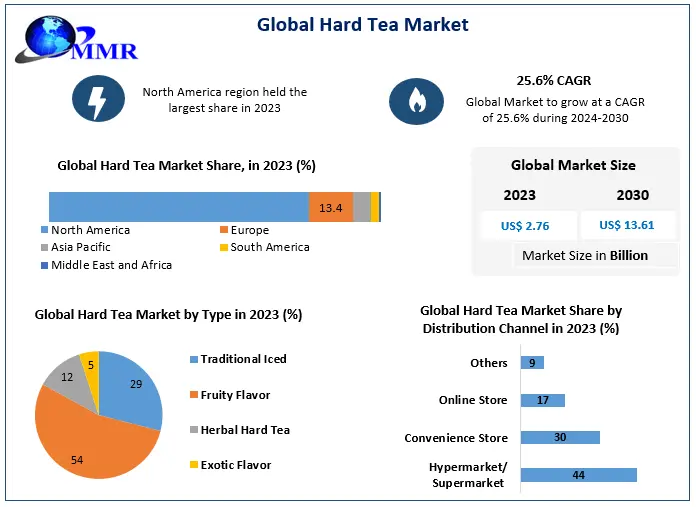 To know about the Research Methodology :- Request Free Sample Report
Hard Tea Market Dynamics
Shifting Consumer Preferences, Marketing, and Branding Strategies are the major drivers of the hard tea market
Increasingly, consumers are seeking out innovative and flavourful alcoholic beverages. Hard tea offers a refreshing and unique option that appeals to individuals who desire a lighter alternative to conventional beers or spirits. The demand for new taste experiences and a broader range of beverage choices has been instrumental in driving the growth of the hard tea market. Millennial and Generation Z Influence Younger generations, particularly millennials, and Generation Z, have played a pivotal role in driving the growth of the market. These demographics highly value authenticity, unique experiences, and the opportunity to explore different flavors. Hard tea aligns with their preferences and provides a trendy and socially appealing beverage option.
The popularity of tea as a beverage and the expanding consumer base of tea enthusiasts have significantly influenced the development of the market. Tea lovers who appreciate the taste and variety of teas are drawn to the unique flavor profiles offered by hard tea. The fusion of tea and alcohol creates an enticing combination that resonates with this specific demographic in the hard tea market.
Effective marketing and branding campaigns have significantly contributed to the success of the market. Companies have focused on positioning hard tea as a fashionable and lifestyle-oriented product, attracting a broader consumer base beyond traditional tea or alcohol consumers. Attention-grabbing packaging, engaging social media presence, and collaborations with influencers and celebrities have further fueled the hard tea market growth.
Expansion of Flavor Varieties, Craft and Artisanal Offerings showcases the trends and opportunities in the hard tea market
The hard tea market has the potential to broaden its flavor offerings to cater to evolving consumer preferences. Meeting the demand for unique and diverse flavor profiles attracts a wider consumer base. Introducing innovative combinations such as exotic fruits, herbs, spices, and botanicals capitalize on this opportunity and stimulate hard tea market growth. The popularity of craft and artisanal products presents an opportunity for the market to offer unique and high-quality beverages. Emphasizing handcrafted brewing techniques, premium tea blends, and attention to detail appeal to consumers seeking a sense of craftsmanship and authenticity. Sharing the brand's story and heritage further enhances the perceived value of these products.
Consumer demand for convenient beverage options provides an opportunity for the hard tea market to expand its ready-to-drink offerings. Capitalizing on the popularity of canned beverages and the portability they offer can attract on-the-go consumers. Increasing the availability of hard teas in RTD formats through strategic partnerships, online platforms, and distribution in convenience stores can tap into a larger consumer base seeking convenience and enjoyment.
Hard Tea Market Segment Analysis
Based on Alcohol by Volume (ABV): The Hard Tea market is segmented into Below 4%, 4% ABV, 6% ABV, 8% ABV and 12% ABV.
The ABV percentage of hard teas ranges from low to moderate, typically falling between 4% and 8% ABV. This range allows for a balance between the tea flavors and the alcoholic content in the hard tea industry. Some specialty or craft hard teas have higher ABV percentages, reaching 12% or more, providing a more potent alcoholic experience. The range of ABV percentages in hard teas allows consumers to choose products that align with their preferred alcohol content. Some individuals may prefer lower ABV options, seeking a lighter and more drinking experience.
Hard teas with ABV percentages between 4% and 8% cater to this consumer segment by providing a balance between the tea flavors and the alcoholic content. On the other hand, consumers who desire a stronger alcoholic experience opt for specialty or craft hard teas with higher ABV percentages, often exceeding 12%. This flexibility in ABV options accommodates a wide range of consumer preferences and drinking occasions.
Regional Insights of the Hard Tea Market
North America, specifically the United States, comprises a significant position as one of the superior market holders in the hard tea industry. The demand for hard tea in the United States is driven by the popularity of iced tea and the rising interest in flavored alcoholic beverages. The market is classified by a diverse range of brands, flavors, and distribution channels, including a notable presence of craft and artisanal hard tea options. Europe, mainly focused on countries such as the United Kingdom, Germany, and France, emerges as the second-largest market holder in the hard tea industry. European consumers, influenced by tea-drinking cultures, indicate a preference for tea-based alcoholic beverages.
The European hard tea market offers a variety of hard tea flavors, encompassing traditional, fruit-infused, and botanical options. Craft and specialty hard teas have gained prominence, catering to consumers seeking premium and unique offerings. Asia Pacific, covering countries like China, Japan, and India, holds a significant position in the market.
These regions, deeply rooted in tea culture, provide a natural fit for tea-based alcoholic beverages. The market in Asia Pacific is characterized by the incorporation of traditional tea flavors and brewing techniques into hard tea products. Fruit-infused and botanical hard teas that align with local preferences have gained popularity. Hard Tea Market growth in this region is driven by the rise of younger demographics who show a keen interest in novel flavor experiences. Latin America, including countries like Mexico and Brazil, represents a growing market for hard tea. Consumers in these regions exhibit a rising demand for innovative and refreshing alcoholic beverages. The Hard Tea market in Latin America offers traditional tea flavors as well as regional fruit infusions, reflecting local preferences and tastes.
Competitive Landscape of Hard Tea Market
Anheuser-Busch InBev have BON VIV Spiked Seltzer formerly known as Spiked Seltzer is their flagship product line that includes a variety of hard tea flavors. In 2019, Anheuser-Busch InBev acquired the Cutwater Spirits brand, expanding its portfolio to include ready-to-drink (RTD) canned cocktails, which may include hard tea offerings. The Boston Beer Company showcases its variety of hard tea flavors such as Twisted Tea a popular brand offering a range of hard tea flavors, including Original, Half & Half, Raspberry, and Peach. The Boston Beer Company continues to innovate and expand its hard tea portfolio, introducing limited-edition seasonal flavors and new product variations.
In 2021, Beam Suntory and The Boston Beer Company have formed a long-term, strategic partnership to extend select iconic brands into some of the fastest-growing beverage alcohol segments in the hard tea market. Constellation Brands have Palm Breeze a line of sparkling alcoholic beverages that includes tropical-inspired hard tea flavors like Ruby Citrus and Pineapple Mandarin.
Recent Developments: In recent years, Constellation Brands has focused on expanding its hard seltzer portfolio but may continue to introduce new offerings within the hard tea market segment.
Constellation Brands form a multi-year partnership with Tastemade to create a first-of-its-kind content studio. “Constellation and Tastemade launch to move the wine & spirits category forward through a modern, video-led marketing approach to engage consumers globally. Diageo has Smirnoff Ice a popular brand offering a range of flavored malt beverages, including hard tea variants like Smirnoff Ice Tea. Diageo has been actively expanding its presence in the flavored malt beverage hard tea market, although specific developments within the hard tea segment may vary. Guinness and Grand Metropolitan merged to form Diageo. Diageo partners with SAP and IBM on a five-year global digital transformation program.
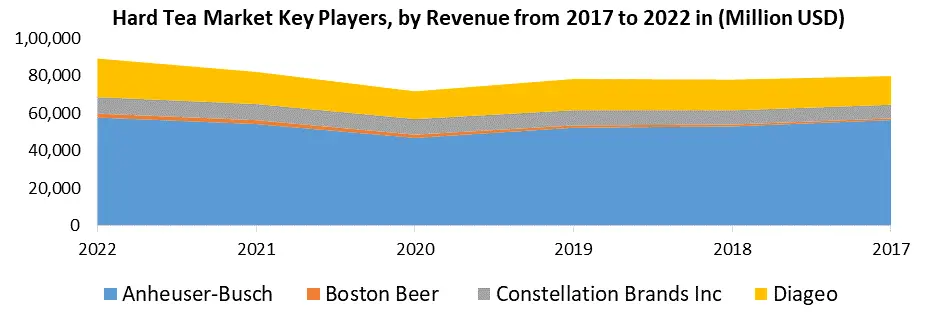 The collaboration leverages SAP and IBM’s expertise to modernize Diageo’s IT environment and standardize its business operations across 180 countries. Craft and local breweries often offer their own unique hard tea creations, catering to regional tastes and preferences. These products vary widely depending on the brewery and its creative offerings. Craft and local breweries continuously introduce new hard tea flavors and experiment with different ingredients to offer distinct and innovative options in the hard tea market.
Hard Tea Market Scope: Inquire before buying
| Global Hard Tea Market | |||
|---|---|---|---|
| Report Coverage | Details | ||
| Base Year: | 2023 | Forecast Period: | 2024-2030 |
| Historical Data: | 2018 to 2023 | Market Size in 2023: | US $ 2.76 Bn. |
| Forecast Period 2024 to 2030 CAGR: | 25.6% | Market Size in 2030: | US $ 13.61 Bn. |
| Segments Covered: | By Flavor | Traditional Iced Fruity Flavor Herbal Hard Tea Exotic Flavor |
|
| By ABV % | Below 4% 4% ABV 6% ABV 8% ABV 12% ABV |
||
| By Distribution Channel | Hypermarket/ Supermarket Convenience Store Online Store Others |
||
Hard Tea Market, by Region
North America (United States, Canada and Mexico)
Europe (UK, France, Germany, Italy, Spain, Sweden, Austria and Rest of Europe)
Asia Pacific (China, South Korea, Japan, India, Australia, Indonesia, Malaysia, Vietnam, Taiwan, Bangladesh, Pakistan and Rest of APAC)
Middle East and Africa (South Africa, GCC, Egypt, Nigeria and Rest of ME&A)
South America (Brazil, Argentina Rest of South America)
Key Players of the Hard Tea Market
1. Anheuser-Busch InBev
2. The Boston Beer Company
3. Constellation Brands
4. Diageo
5. Cutwater Spirits
6. Mike's Hard Lemonade Co.
7. White Claw Hard Seltzer
8. Truly Hard Seltzer
9. Smirnoff Ice (Diageo)
10. Palm Breeze (Constellation Brands)
11. Henry's Hard Sparkling Water
12. Arizona Beverages
13. Twisted Tea (The Boston Beer Company)
14. Vizzy Hard Seltzer (Molson Coors Beverage Company)
15. Bon & Viv Spiked Seltzer (Anheuser-Busch InBev)
Frequently Asked Questions and Answers about Hard Tea Market
1. What is driving the growth of the hard tea market?
Ans: The growth of the hard tea market is driven by factors such as consumer demand for innovative and flavorful alcoholic beverages, health and wellness trends, the popularity of tea as a beverage, and the influence of younger generations seeking new taste experiences.
2. What is the alcohol content typically found in hard tea?
Ans: The alcohol by volume (ABV) percentage in hard tea can range from low to moderate. It usually falls between 4% and 8% ABV, striking a balance between the tea flavors and the alcoholic content. Some specialty or craft hard teas may have higher ABV percentages, reaching 12% or more.
3. What are some popular hard tea brands?
Ans: Popular hard tea brands include Twisted Tea, Palm Breeze, Bon & Viv Spiked Seltzer, Smirnoff Ice, and White Claw Hard Seltzer, among others. These brands offer a range of hard tea flavors to cater to different consumer preferences.
4. Are there any regulations or age restrictions for purchasing hard tea?
Ans: Regulations regarding the sale and consumption of hard tea vary by country and region. In most jurisdictions, hard tea is considered an alcoholic beverage and is subject to legal age restrictions, typically 18 or 21 years of age.
5. Are there non-alcoholic versions of hard tea available?
Ans: Yes, there are non-alcoholic versions of tea-based beverages available in the market, often referred to as "mocktails" or "tea-infused drinks." These products offer the flavors of tea without the alcohol content.