Global Very Light Jet Market By Engine Configuration, By Aircraft Ownership Model, By Aircraft Condition, By Passenger Capacity, By Maximum Takeoff Weight (MTOW), By Flight Range, By Application, By Sales Channel, by Region and Forecast 2034

6.5%
CAGR (2026-2034)
2.40 USD Bn.
Forecast Market Size
300
Report Pages
140
Market Tables

Overview

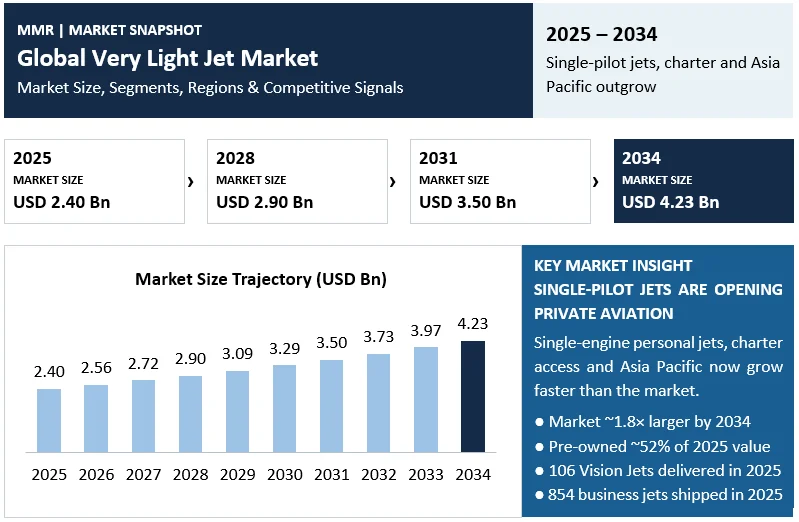
The Global Very Light Jet Market was valued at USD 2.40 billion in 2025 and is projected to reach USD 4.23 billion by 2034, growing at a CAGR of 6.5% during 2026–2034, according to Maximize Market Research (MMR). Very light jets (VLJs) are compact turbofan aircraft, generally at or below 10,000 lb maximum takeoff weight and certified for single-pilot operation, that give private owners, corporate flight departments and charter operators jet speed and pressurised comfort at a lower cost than larger business jets.

This Very Light Jet Market analysis answers both sides of the search: what the Very Light Jet Industry is worth for manufacturers, operators, lessors and investors, and what buyers want to know, from how a single-pilot jet aircraft works and what a Vision Jet or HondaJet costs to buy and operate, to pre-owned pricing, charter access and where to buy in the US, UK, Europe, Asia and India.

New and pre-owned aircraft anchor the VLJ aircraft market and North America is the largest buyer, but growth is shifting toward single-engine personal jets, charter and fractional access, online aircraft marketplaces and Asia Pacific, with emergency autoland and advanced avionics now shaping purchase decisions.

Maximize Market Research provides comprehensive analysis of the global very light jet market size, share, engine configuration, ownership model, aircraft condition, passenger capacity, maximum takeoff weight, flight range, application, sales channel and regional segmentation, the Very Light Jet competitive landscape, strategic scenarios and growth opportunities. The report helps very light jet manufacturers, engine and avionics suppliers, charter and fractional operators, lessors, brokers and investors decide which segments, channels and countries to prioritise through 2034.

2025 | BASE YEAR

2034 | FORECAST

GROWTH RATE

LARGEST REGION

USD 2.40 Bn

USD 4.23 Bn

6.5%

North America

Global Very Light Jet Market Overview:

Size, Share, Trends and Outlook to 2034

The Very Light Business Jet Market is measured at aircraft-value level across new and pre-owned very light jets sold worldwide for private, business, charter, training, medical and government use, including single-engine and twin-engine jets certified for single-pilot operation at or below 10,000 lb maximum takeoff weight, the convention used by the National Business Aviation Association (NBAA). Entry light jets just above that line, such as the HondaJet Elite II, are tracked as adjacent comparators because buyers cross-shop them, and the supporting maintenance, leasing and management services are covered in the ecosystem sections.

Three shifts shape 2026–2034: demand is broadening from owner-flown purchases into charter, fractional and air-taxi access, value is moving from new-build deliveries toward pre-owned transactions, upgrades and services, and growth is rotating toward Asia Pacific and the Middle East, reshaping the Very Light Jet Industry and the wider Private Aviation Market. Safety technology is also becoming a purchase criterion, with emergency autoland arriving on the Cirrus Vision Jet G3 and the HondaJet Elite II in 2026.
Very Light Jet Market Growth (1)

To know about the Research Methodology :- Request Free Sample Report
by region (4)

Very Light Jet Quick Answers: 20 Most-Searched Questions About Very Light Jets, Answered in One Line

This report is built around what buyers, operators and investors actually search for. Use this table for instant answers, then jump to the section named in the last column.

Question people search

Short answer

Section

How big is
the very light jet market?

USD 2.40 Bn
in 2025 (MMR); USD 4.23 Bn by 2034 at 6.5% CAGR

Market Size

How fast is
the very light jet market growing?

6.5% CAGR on
MMR’s base; published estimates range from about 4.6% to 10.7%

Market Size

Which region
buys the most very light jets?

North America
leads with 52.0% share; Asia Pacific is fastest at 8.4% CAGR

Regional

What is a
very light jet?

A turbofan
jet at or below 10,000 lb takeoff weight, certified for single-pilot
operation (NBAA convention)

Overview

How many very
light jets were delivered in 2025?

GAMA shows
106 Cirrus Vision Jets and 12 HondaJets (a heavier light jet) among 854
business jets

Demand

What is the
best-selling very light jet?

The Cirrus
Vision Jet (SF50), with more than 700 delivered worldwide since certification

Competitive

Single-engine
or twin-engine VLJ?

Twin-engine
leads with 54% of 2025 value; single-engine is fastest at 7.6% CAGR

Segmentation

How much does
a very light jet cost?

A new Vision
Jet G3 lists at about USD 3.4 Mn; used SF50 G2 asks average about USD 2.6 Mn

Pricing

How much does
a VLJ cost to operate?

About USD
2,000 per flight hour for a Vision Jet on GlobalAir/AviaCost figures, roughly
USD 0.8 Mn a year

Pricing

Can one pilot
fly a very light jet?

Yes. These
are single-pilot jet aircraft, but they need a jet type rating and approved
training

Regulatory

How big is
the VLJ share of private aviation?

Vision Jet
deliveries were about 12% of GAMA’s 854 business jet shipments in 2025

Overview

Who are the
leading very light jet manufacturers?

Cirrus
Aircraft, Honda Aircraft, Textron Aviation, Embraer and Eclipse Aerospace
lead the lists

Competitive

Which segments
are growing fastest?

Online sales
platforms 10.8%, air charter and air taxi 9.3%, fractional ownership 8.6%

Segmentation

New or
pre-owned: which is bigger?

Pre-owned
holds 52% of 2025 value; new aircraft grow faster at 7.2% CAGR

Segmentation

Do very light
jets have a parachute or autoland?

The Vision
Jet G3 has the CAPS parachute and Safe Return Emergency Autoland; HondaJet
Elite II adds Garmin autoland

Safety

How far can a
very light jet fly?

Typically
1,000–1,500 nm; the Vision Jet G3 is rated at about 1,275 nm

Technology

What is the
difference between a VLJ and a light jet?

VLJs are
single-pilot jets at or below 10,000 lb; light jets such as the Phenom 300
are heavier with longer range

Overview

What are the
main very light jet market trends?

Autoland
safety, larger cabins, charter and fractional access, pre-owned liquidity and
sustainable fuels

Trends

Can very
light jets use sustainable aviation fuel?

Turbofan VLJs
can fly approved SAF blends; hybrid-electric propulsion remains at research
stage

Sustainability

Where can I
buy a very light jet?

OEM direct,
authorised dealers, brokers, online aircraft marketplaces and leasing
companies

Channels

Key Findings: Eight Insights Shaping the Global Very Light Jet Market

MMR’s analysis of published market data, GAMA shipment statistics, company announcements and industry reporting points to eight findings that explain where very light jet value is created through 2034.

1. The market grows about 1.8× by 2034
• The market is projected to grow from USD 2.40 Bn in 2025 to USD 4.23 Bn by 2034, at a CAGR of 6.5%.
• Supply chains, delivery slots, and service capacity must scale approximately 1.8× by 2034.

2. Single-engine personal jets are the growth edge
• Single-engine jets grow at a 7.6% CAGR, compared with 5.6% for twin-engine jets.
• 106 Vision Jets were delivered in 2025.
• Owner-flown, single-pilot jets bring first-time jet buyers into private aviation.

3. North America is the largest region
• North America accounted for 52.0% of the market in 2025.
• The region contributed 64.9% of business jet deliveries in 2025, according to GAMA.
• US demand sets product standards, pricing, and resale values.

4. Asia Pacific is the fastest-growing region
• Asia Pacific is projected to grow at an 8.4% CAGR, starting from a 12.5% market share base.
• Infrastructure development and licensing reforms determine how quickly new demand converts into actual purchases.

5. Pre-owned aircraft carry the volume
• Pre-owned aircraft accounted for 52% of market value in 2025.
• Used SF50 G2 aircraft had average asking prices of approximately USD 2.6 Mn.
• Resale values, brokers, and online marketplaces shape the entry-level ownership ladder.

6. Access models are widening the buyer base
• Air charter is projected to grow at a 9.3% CAGR, while fractional ownership grows at 8.6%.
• Operators that monetise aircraft utilisation are creating more opportunities to sell aircraft to owners.

7. Safety technology now differentiates
• The Vision Jet G3 and HondaJet Elite II offer emergency autoland capabilities in 2026.
• Emergency autoland systems and airframe parachutes are increasingly becoming expected safety features rather than optional differentiators.

8. The business aviation cycle is supportive
• GAMA reported 854 business jet deliveries in 2025, representing an 11.8% increase.
• Business jet aircraft billings reached USD 35.7 Bn in 2025.
• Record industry backlogs support expansion in supplier capacity and service infrastructure for very light jets (VLJs).

Very Light Jet Market Trends and Dynamics:

Growth Drivers, Restraints and Opportunities

Very Light Jet Market Growth Drivers: Private Aviation Demand, Single-Pilot Jets, Safety Technology and Charter Access

The Very Light Jet Market Growth outlook is supported by a Business Aviation Industry in strong condition. The General Aviation Manufacturers Association (GAMA) reported 854 business jet shipments in 2025, up 11.8% from 764 in 2024, and USD 35.7 billion of total aircraft billings, the highest in the history of the report. Within that, Cirrus delivered 106 Vision Jets, the only single-engine very light jet in production. The Private Aviation Market is broadening as time-pressed owners, small and medium enterprises and high-net-worth individuals look for a jet that is cheaper to buy and run than a traditional light jet. Single-Pilot Jet Aircraft remove the cost of a second crew member, and GlobalAir and AviaCost put the Vision Jet at roughly USD 2,000 per flight hour, below the roughly USD 2,500 for a HondaJet Elite II. VLJs can also use shorter runways and regional airports, which supports point-to-point travel between cities that airlines serve poorly. High-net-worth wealth creation, corporate travel budgets and demand for second-home connectivity add to the base, although purchase decisions still depend on mission range, cabin size and total cost of ownership.

Safety technology, product refreshes and shared-access models are adding further layers of demand. Cirrus unveiled the Generation 3 Vision Jet in February 2026 with seating for six adults and one child, air traffic control datalink, the Cirrus Airframe Parachute System and Safe Return Emergency Autoland, and Honda Aircraft added Garmin Emergency Autoland to the HondaJet Elite II the same month. These features address the main objection to single-pilot operation and can lower insurance and training barriers over time. On the demand side, air charter, air taxi, fractional ownership and membership program let operators and brokers put owner aircraft into revenue service; for example, charter brokerage ECS Jets took delivery of a 2026 Vision Jet G3 in October 2026. Flight training and aircraft demonstration add steady utilization, while pre-owned liquidity gives first-time buyers an entry route, with used SF50 G2 jets advertised at an average of about USD 2.6 million in November 2026. Together these drivers make the Very Light Jet Industry less dependent on any single buyer group.

Very Light Jet Market Restraints: Acquisition Cost, Operating Economics, Limited Model Choice and Competition from Light Jets

High acquisition and ownership cost remains a material restraint. A new Vision Jet G3 lists at about USD 3.4 million and a HondaJet Elite II at about USD 6.95 million, before training, insurance, hangarage, maintenance programmes, engine reserves and financing. Annual ownership at comparable utilization is estimated at roughly USD 0.8 million for the Vision Jet and USD 1.0 million for the HondaJet, which keeps the segment concentrated among wealthy individuals and corporate users with regular missions. Model choice is also narrow: industry trackers count only four of the seven jets sold or described as very light jets as meeting the 10,000 lb single-pilot definition, and the Eclipse 500 and Citation Mustang are out of production, so supply of new aircraft rests largely on one manufacturer. Small cabins, limited baggage space and ranges around 1,000–1,500 nautical miles restrict missions, and pilot training and insurance requirements for owner-pilots add friction to first-time purchases.

The Very Light Business Jet Market also faces competitive and cyclical pressure. Entry light jets such as the Phenom 300 and Citation CJ series offer more range and cabin, while turboprops such as the Pilatus PC-12 and Daher TBM compete on short-field and operating-cost grounds, which limits pricing power for very light jet manufacturers. Purchases are exposed to interest rates, aircraft financing and leasing conditions, fuel prices, equity markets and foreign-exchange movements. Certification, supply-chain and engine availability can delay deliveries, and new entrants face high capital needs and long flight-test programmes, as the history of earlier VLJ start-ups shows. Airport access, FBO fees, hangar availability and noise and emissions rules add operating constraints, and a shortage of qualified pilots and technicians can limit fleet utilization, particularly for charter operators trying to scale.

What Are the Biggest Very Light Jet Market Opportunities Through 2034?

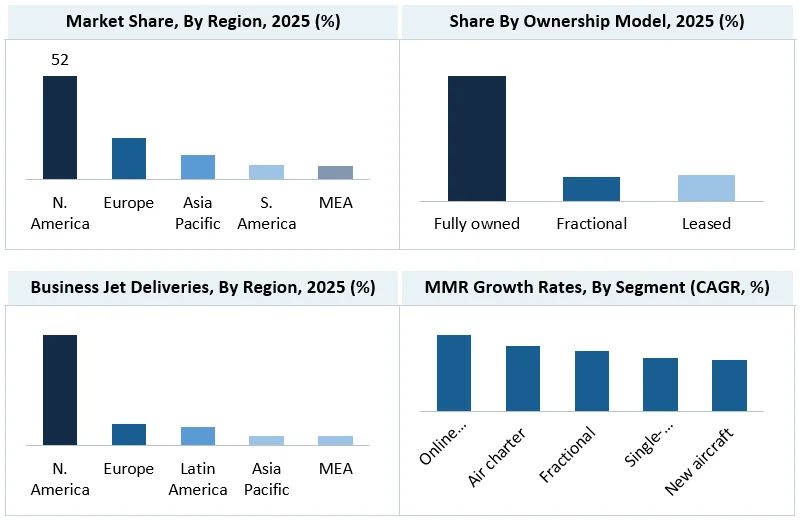
For the Private Aviation Market and the wider VLJ Aircraft Market, charter, fractional and subscription access represent the largest opportunity because they convert one aircraft into many users. Air charter and air taxi services are projected to grow at 9.3% CAGR and fractional ownership at 8.6%, ahead of the 6.5% market. Online aircraft marketplaces, the fastest channel at about 10.8% CAGR, can improve price discovery for pre-owned aircraft and reduce broker friction. Pre-owned aircraft already hold about 52% of market value, so certified pre-owned programmes, refurbishment and avionics upgrades are a profitable route for dealers and maintenance providers. Maintenance, repair and overhaul, engine programmes, digital monitoring and predictive maintenance can turn each delivered aircraft into a long annuity, and the installed base of more than 700 Vision Jets alone supports that service pool. Suppliers that can show reliable autoland, connected-aircraft and cost-per-hour performance may be better placed to retain owners through replacement cycles.

Regional expansion and new propulsion offer additional routes for Very Light Jet Market Growth in the Very Light Business Jet Market. Asia Pacific is projected to be the fastest-growing region at 8.4% CAGR, with China, India, Japan, Australia and Southeast Asia opening general aviation airspace and building private aviation infrastructure, although certification and airport access will pace conversion. Latin America took 10.8% of 2025 business jet deliveries in GAMA data, up from 4.8% in 2024, and the Middle East offers premium hospitality, government and executive demand in the UAE and Saudi Arabia. Sustainability is an opportunity as well as a requirement: turbofan VLJs can operate on approved sustainable aviation fuel blends, composite airframes improve fuel efficiency, and hybrid-electric propulsion research could create a next-generation very light jet platform in the 2030s. Medical transport, government, flight training and aerial survey roles give manufacturers further specialized niches.

Global Very Light Jet Market Share and Segmentation Analysis:

By Engine Configuration, Ownership Model, Aircraft Condition, Passenger Capacity, MTOW, Flight Range, Application and Sales Channel

Very Light Jet Market by Engine Configuration and Passenger Capacity: Single-Engine, Twin-Engine and Cabin Size
by passenger capacity (1)

Very Light Jet Market by Ownership Model, Aircraft Condition, MTOW, Flight Range and Sales Channel

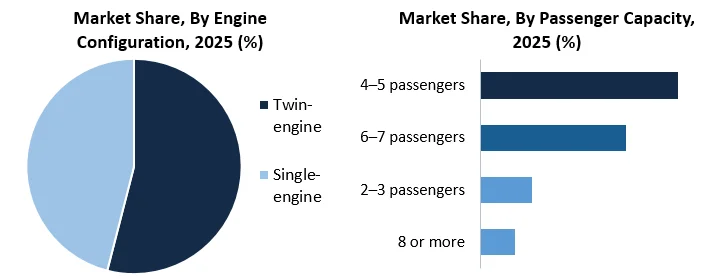
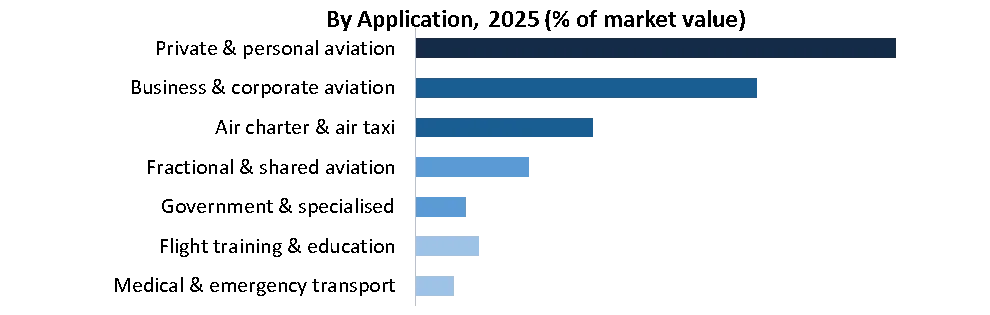
The Very Light Jet Market is dominated by twin-engine aircraft, accounting for 54% of market value in 2025, while single-engine jets represent 46% and are the fastest-growing engine configuration at a 7.6% CAGR. Fully owned aircraft lead the ownership model with a 71% share, whereas fractional ownership is growing fastest at 8.6% CAGR, reflecting increasing demand for flexible aircraft access. Pre-owned aircraft dominate by condition with 52% of market value, while new aircraft are growing at a 7.2% CAGR, supported by refreshed models and technological upgrades. Aircraft with 4–5 passenger capacity lead with a 46% share, while 6–7 passenger aircraft are growing fastest at 7.8% CAGR as larger cabins offer greater mission flexibility. By MTOW, the 5,000–6,999 lbs category accounts for 52% of market value, while 7,000–8,999 lbs aircraft are growing fastest at 7.9% CAGR, driven by demand for increased cabin space and range. Aircraft with a 1,000–1,499 nm range dominate with a 49% share, while the 1,500–1,999 nm segment grows fastest at 7.6%, reflecting demand for longer routes. Private and personal aviation leads application demand with a 38% share, while air charter and air taxi grow fastest at 9.3%, supported by aircraft utilization and shared-access models. Direct OEM sales dominate distribution with a 44% share, whereas online platforms are the fastest-growing sales channel at 10.8% CAGR, reflecting increasing digital aircraft discovery and online engagement alongside OEM and broker fulfilment.

Application Mix: Where Very Light Jet Demand Sits
by application (1)

Very Light Jet Market Share by Region:

North America, Europe, Asia Pacific, Middle East & Africa and South America

North America is the largest regional market and holds the largest Very Light Jet Market Share, accounting for 52.0% of global value in 2025. The United States is the principal demand anchor, supported by the world’s largest private aircraft fleet, an extensive network of regional airports and FBOs, established OEMs such as Cirrus, Honda Aircraft and Textron Aviation, active charter and fractional operators and a deep pre-owned market. North America took 64.9% of business jet deliveries in 2025 according to GAMA. Canada contributes through corporate and remote-access flying, while Mexico is a smaller developing opportunity tied to executive and leisure travel. The region is expected to reach USD 2.11 billion by 2034, reflecting a 6.0% CAGR, supported by fleet replacement, Generation 3 upgrades and growth in charter and owner-flown demand.

Asia Pacific is projected to be the fastest-growing region, with a 8.4% CAGR through 2034. China, India, Japan, South Korea and Australia offer growing wealth and corporate demand, while Singapore, Indonesia, Thailand and Malaysia add island-hopping and regional connectivity needs, although airspace, licensing and airport access remain constraints. Europe is a mature market, accounting for 12.9% of 2025 business jet deliveries, with demand linked to EASA certification, cross-border business travel and private aviation in Germany, the UK, France, Italy and Switzerland. Middle East & Africa is smaller but benefits from premium, government and tourism demand in the UAE, Saudi Arabia and South Africa. South America is emerging, led by Brazil, Argentina, Chile and Colombia, with Latin America’s share of business jet deliveries rising to 10.8% in 2025, though growth depends on financing, import duties and airport infrastructure.

Region

2025 share

2025
(USD Bn)

2034
(USD Bn)

CAGR

Notes

North America

52.0%

1.25

2.11

6.0%

US is the
anchor; owner-flown, charter and pre-owned demand; 64.9% of 2025 business jet
deliveries (GAMA)

Europe

XX

XX

XX

5.7%

EASA-certified
fleet; cross-border business travel in Germany, UK, France, Italy and
Switzerland

Asia Pacific

XX

XX

XX

8.4%

Fastest
region; China, India, Japan and Australia open airspace and private aviation
infrastructure

South America

XX

XX

XX

7.3%

Brazil,
Argentina, Chile and Colombia lead; Latin America reached 10.8% of 2025 jet
deliveries

Middle East
& Africa

XX

XX

XX

8.0%

Premium and
government demand, led by the UAE and Saudi Arabia

Very Light Jet Competitive Landscape: Who Are the Top Very Light Jet Manufacturers and Players?

This Very Light Jet Market Analysis shows that the Very Light Jet Competitive Landscape includes several distinct groups rather than one set of directly comparable manufacturers. Single-engine very light jet makers are led by Cirrus Aircraft, whose Vision Jet is the only single-engine VLJ in current production. Twin-engine and entry light-jet makers include Honda Aircraft Company, Textron Aviation (Cessna Citation), Embraer (Phenom) and Eclipse Aerospace, whose legacy fleets and support networks shape the pre-owned market. Emerging developers such as Stratos Aircraft and Diamond Aircraft Industries have pursued very light jet programmes but have not matched the delivery scale of the established Very Light Jet Manufacturers. Engine and avionics suppliers, including Williams International, Pratt & Whitney Canada, GE Honda Aero Engines and Garmin, supply the propulsion and flight-deck layers, while charter operators, brokers and MRO providers sit downstream. This distinction matters when assessing market share and company revenue: an airframe maker, an engine supplier and a charter operator participate at different points in the value chain and should not be ranked as though they sell the same product.

Competition is increasingly shaped by the ability to combine low operating cost, cabin flexibility, safety technology and a reliable service network. Cirrus delivered 797 aircraft in 2025, including 106 Vision Jets, for USD 1.18 billion of billings, and introduced the G3 Vision Jet in February 2026. Honda Aircraft delivered 12 HondaJets in 2025 and added emergency autoland to the Elite II, positioning it at a higher speed and price point. Textron Aviation delivered 639 aircraft in 2025, including 122 Citation jets, while Embraer’s Phenom 300 was again the best-selling business jet and its Phenom 300EV with Emergency Autoland was certified in August 2026 for service entry in 2028. These moves show that very light jet manufacturers now compete with entry light jets on safety and comfort as well as price, and that incumbents with large service networks hold an advantage in the Business Aviation Industry and the VLJ Aircraft Market.

Top Very Light Jet Manufacturers: Single-Engine OEMs, Twin-Engine OEMs, Developers, Suppliers and Service Providers

MMR separates participants by role, because an airframe maker, an engine supplier and a charter operator do not compete with each other.

Group

Examples

Role

Single-engine
very light jet OEMs

Cirrus
Aircraft (Vision Jet G3)

Owner-flown
single-pilot personal jets

Twin-engine
and entry light-jet OEMs

Honda
Aircraft, Textron Aviation (Citation), Embraer (Phenom), Eclipse Aerospace

Twin-engine
comparators, legacy fleets and support networks

Emerging
aircraft developers

Stratos
Aircraft, VisionAire Jets, Diamond Aircraft Industries

Next-generation
and programme-stage designs

Engine,
avionics and component suppliers

Williams
International, Pratt & Whitney Canada, GE Honda Aero Engines, Garmin

Propulsion,
flight decks and systems

Charter,
fractional, brokerage and MRO providers

Charter
brokers such as ECS Jets, fractional programmes, FBOs, MRO providers

Access,
utilisation and aftermarket revenue

Regulators,
standards and data bodies

FAA, EASA,
ICAO, GAMA, NBAA

Certification,
safety rules, shipment and definition data

Very Light Jet Company Benchmark: Disclosed 2025 Results and Strategic Signals

Company

Strategic
signal

Cirrus
Aircraft

797 aircraft
and USD 1.18 Bn billings in 2025; 106 Vision Jets; G3 launched Feb 2026

Honda
Aircraft Company

12 HondaJets
delivered in 2025; Elite II adds Garmin Emergency Autoland

Textron
Aviation

639 aircraft
in 2025 including 122 Citation jets; Mustang out of production

Embraer

Phenom 300
top-selling business jet; Phenom 300EV with autoland certified Aug 2026

Eclipse
Aerospace

Eclipse 550
used at about USD 2.0 Mn; new-build status unclear

Very Light Jet Market Trends: Recent Developments, Aircraft Launches and Industry News | 2026

Date

Development

Why it matters

3 Feb 2026

Cirrus
unveils the Generation 3 Vision Jet with six-plus-one seating, ATC datalink
and Safe Return Emergency Autoland

Refreshes the
only single-engine VLJ in production

Feb 2026

Honda
Aircraft adds Garmin Emergency Autoland to the HondaJet Elite II

Autoland
becomes expected in owner-flown jets

18 Feb 2026

GAMA reports
854 business jet shipments in 2025, up 11.8%, and USD 35.7 Bn total aircraft
billings

Confirms a
record demand base for business aviation

Feb 2026

GAMA data
shows 106 Cirrus Vision Jets and 12 HondaJets delivered in 2025

Quantifies
very light jet volume

Aug 2026

Embraer’s Phenom
300EV with Emergency Autoland is certified, entering service in 2028

Light-jet
rivals match VLJ safety technology

26 Oct 2026

Charter
brokerage ECS Jets acquires a new 2026 Vision Jet G3

Charter
operators are adding very light jets

2 Nov 2026

GlobalAir
lists used SF50 G2 jets at an average asking price of about USD 2.6 Mn

Pre-owned
pricing sets the entry ladder

Global Very Light Jet Market Scope: Inquire before buying

Global Very Light Jet Market

Report Coverage

Details

Base
Year:

2025

Forecast Period:

2026-2034

Historical
Data:

2020 to 2025

Market Size in 2025:

USD 2.40 Billion

Forecast
Period 2026 to 2034 CAGR:

8.5%

Market Size in 2034:

USD 4.23 Billion

Segments
Covered:

By Engine Configuration

Single-Engine Very Light Jets; Twin-Engine
Very Light Jets

By Aircraft Ownership Model

Fully Owned Aircraft; Fractionally Owned
Aircraft; Leased Aircraft

By Aircraft Condition

New Very Light Jets; Pre-Owned Very Light
Jets

By Passenger Capacity

2–3 Passenger Capacity; 4–5 Passenger
Capacity; 6–7 Passenger Capacity; 8 or More Passenger Capacity

By Maximum Takeoff Weight (MTOW)

Below 5,000 lbs; 5,000–6,999 lbs;
7,000–8,999 lbs; 9,000–10,000 lbs

By Flight Range

Below 1,000 Nautical Miles; 1,000–1,499
Nautical Miles; 1,500–1,999 Nautical Miles; 2,000 Nautical Miles and Above

By Application

Private and Personal Aviation; Business and
Corporate Aviation; Air Charter and Air Taxi Services; Fractional Ownership
and Shared Aviation; Flight Training and Aviation Education; Medical and
Emergency Transportation; Government and Specialized Aviation Operations

By Sales Channel

Direct OEM Sales; Authorized Dealers and
Distributors; Aircraft Brokers and Independent Dealers; Online Aircraft Sales
Platforms; Leasing and Aircraft Financing Companies

Global Very Light Jet Market, By Region

North America (United States, Canada, Mexico)
Europe (Germany, United Kingdom, France, Italy, Spain, Netherlands, Switzerland, Sweden, Denmark, Belgium, Austria, Poland, Rest of Europe)
Asia Pacific (China, Japan, India, South Korea, Australia, New Zealand, Singapore, Indonesia, Thailand, Malaysia, Rest of Asia Pacific)
Middle East & Africa (United Arab Emirates, Saudi Arabia, Israel, Turkey, South Africa, Egypt, Rest of Middle East & Africa)
South America (Brazil, Argentina, Chile, Colombia, Rest of South America)

Global Very Light Jet Market, Key Players

North America
1. Cirrus Aircraft
2. Honda Aircraft Company
3. Textron Aviation
4. Eclipse Aerospace
5. Embraer Executive Jets
6. Stratos Aircraft
7. VisionAire Jets
8. One Aviation
9. Piper Aircraft
10. Beechcraft
Europe
11. Pilatus Aircraft
12. Dassault Aviation
13. Airbus
14. Leonardo S.p.A.
15. Daher
16. Diamond Aircraft Industries
17. Grob Aircraft
18. Aero Vodochody
Asia Pacific
19. Honda Motor Co., Ltd.
20. Mitsubishi Heavy Industries
21. Korea Aerospace Industries
22. Hindustan Aeronautics Limited
23. China Aviation Industry Corporation (AVIC)
24. Comac
25. TAI (Turkish Aerospace Industries)
Middle East & Africa
26. Strata Manufacturing
27. Saudi Arabian Military Industries (SAMI)
28. Denel Aviation
South America
29. Embraer S.A.
30. Novaer Craft

Global Very Light Jet Market FAQs: Frequently Asked Questions

What is the size and forecast of the global very light jet market?
MMR values the global very light jet market at USD 2.40 billion in 2025, USD 2.56 billion in 2026 and USD 4.23 billion by 2034, a 6.5% CAGR over 2026–2034. Published estimates for 2025 range from about USD 1.8 billion to USD 6.4 billion because of differing scope, so MMR defines the market at aircraft-value level.

Which region and country is the largest very light jet market?
North America holds the largest share at 52.0% in 2025, anchored by the United States, and took 64.9% of business jet deliveries in 2025 according to GAMA. Asia Pacific is the fastest-growing region at about 8.4% CAGR.

Which very light jet segments and channels are growing fastest?
Twin-engine jets are the largest engine configuration at 54% of 2025 value, while single-engine jets grow fastest at about 7.6% CAGR. Air charter and air taxi leads applications at 9.3%, fractional ownership leads ownership models at 8.6% and online platforms lead channels at 10.8%.

Who are the leading very light jet manufacturers?
Leading names include Cirrus Aircraft, Honda Aircraft Company, Textron Aviation, Embraer and Eclipse Aerospace, supported by engine and avionics suppliers such as Williams International, Pratt & Whitney Canada, GE Honda Aero Engines and Garmin. Cirrus is the only maker of a single-engine very light jet in current production.

How does a single-pilot very light jet work, and how safe is it?
A single-pilot jet aircraft is certified to be flown by one qualified pilot using integrated avionics, autopilot, flight management and terrain and traffic systems. The Cirrus Vision Jet adds a whole-airframe parachute and Safe Return Emergency Autoland, and the HondaJet Elite II offers Garmin Emergency Autoland, but pilots still need a jet type rating and recurrent training.

How much does a very light jet cost?
A new Cirrus Vision Jet G3 lists at about USD 3.4 million in 2026, and used SF50 G2 jets averaged about USD 2.6 million in asking price in November 2026. The HondaJet Elite II, a heavier light jet, lists at about USD 6.95 million. Operating cost is about USD 2,000 per flight hour for a Vision Jet on GlobalAir and AviaCost figures, plus training, insurance, hangarage and financing.

Is owning or chartering a very light jet worth it?
It depends on utilisation and mission. Owner-flown VLJs suit frequent trips of 300 to 1,200 nautical miles, while charter, fractional and subscription programmes suit lower usage. Pre-owned aircraft and charter income can reduce cost of ownership, but buyers should compare total cost of ownership against light jets, turboprops and airline travel before committing.

Global Very Light Jet Market Research Methodology

MMR sized the market top-down from a 2025 base of USD 2.40 billion and a 6.5% CAGR for 2026–2034, then triangulated against published market reports (2025 estimates of about USD 1.8 to 6.4 billion and CAGRs of about 4.6% to 10.7%), General Aviation Manufacturers Association shipment and billing data for 2025, company announcements and press releases (Cirrus, Honda Aircraft, Textron Aviation, Embraer) and industry reporting through November 2026. The market is defined at aircraft-value level for single-pilot jets at or below 10,000 lb maximum takeoff weight; adjacent light jets are used only as comparators. Segment shares and regional shares are MMR estimates anchored to published delivery splits (for example North America at about 52% of value and 64.9% of business jet deliveries) and are normalized so every segment set sums to the market total. Annual values are constant-CAGR interpolation.

Table of Contents

1. Executive Market Landscape and Industry Overview 1.1. Global Very Light Jet Market Size (Value USD Billion & Volume in Units), 2025–2034 1.2. Evolution of Very Light Jets from Experimental Aircraft to Advanced Business Aviation Platforms 1.3. Definition, Scope and Classification of Very Light Jets 1.4. Role of Very Light Jets in Private Aviation, Business Travel and Regional Connectivity 1.5. Integration of Advanced Avionics, Lightweight Materials and Digital Flight Systems 1.6. Growing Adoption of Personal Aviation and On-Demand Air Mobility Solutions 1.7. CAGR Analysis of Global Very Light Jet Market During 2025–2034 2. Very Light Jet Market Dynamics 2.1. Very Light Jet Market Trends 2.2. Very Light Jet Market Dynamics 2.2.1. Drivers 2.2.2. Restraints 2.2.3. Opportunities 2.2.4. Challenges 2.3. PORTER's Five Forces Analysis 2.4. PESTLE Analysis 3. Very Light Jet Market Macroeconomic Factors 3.1. Global GDP Growth and Business Aviation Investment Trends 3.2. High-Net-Worth Individual Population and Wealth Creation Trends 3.3. Corporate Travel Expenditure and Executive Aviation Spending 3.4. Interest Rates, Aircraft Financing and Aviation Leasing Conditions 3.5. Aviation Fuel Prices and Aircraft Operating Cost Fluctuations 3.6. International Trade Policies and Aerospace Manufacturing Investments 3.7. Foreign Exchange Movements and Global Aircraft Procurement Trends 4. Very Light Jet Industry Trends & Emerging Technology Requirements 4.1. Increasing Demand for Cost-Efficient Private Aviation Solutions 4.2. Growing Preference for Point-to-Point Regional Air Connectivity 4.3. Expansion of On-Demand Business Aviation and Air Charter Services 4.4. Increasing Adoption of Single-Pilot Certified Aircraft Platforms 4.5. Integration of Advanced Digital Cockpits and Flight Management Systems 4.6. Development of Fuel-Efficient Engines and Lightweight Aircraft Structures 4.7. Growing Demand for Sustainable Aviation and Reduced Carbon Emissions 5. Very Light Jet Technology Architecture & Aircraft Ecosystem Landscape 5.1. Aerodynamic Design and Aircraft Configuration Engineering 5.2. Fuselage Design, Wing Structures and Structural Optimization 5.3. Jet Engine Architecture and Propulsion Integration 5.4. Flight Control Systems and Aircraft Stability Technologies 5.5. Cockpit Architecture and Integrated Avionics Systems 5.6. Landing Gear, Braking and Ground Handling Technologies 5.7. Aircraft Certification, Flight Testing and Airworthiness Engineering 6. Very Light Jet Aircraft Design, Configuration & Product Landscape 6.1. Single-Engine Very Light Jet Aircraft Configurations 6.2. Twin-Engine Very Light Jet Aircraft Configurations 6.3. Low-Wing and High-Wing Aircraft Design Configurations 6.4. Conventional and Advanced Composite Airframe Structures 6.5. Pressurized and Unpressurized Cabin Configurations 6.6. Fixed and Retractable Landing Gear Configurations 6.7. Single-Pilot and Multi-Pilot Operational Cockpit Configurations 7. Very Light Jet Engine & Propulsion Systems 7.1. Turbofan Engine Technologies for Very Light Jets 7.2. Single-Engine Propulsion Systems and Integration 7.3. Twin-Engine Propulsion Systems and Redundancy Architecture 7.4. Small Turbofan Engine Performance and Thrust Optimization 7.5. Fuel Injection, Combustion and Engine Efficiency Technologies 7.6. Engine Monitoring, Diagnostics and Health Management Systems 7.7. Engine Maintenance, Overhaul and Lifecycle Performance Optimization 8. Very Light Jet Airframe, Structural Materials & Manufacturing Technologies 8.1. Aluminum Alloy Airframe Structures and Manufacturing Processes 8.2. Carbon Fiber Composite Materials and Lightweight Aircraft Structures 8.3. Fiberglass and Advanced Polymer Composite Applications 8.4. Fuselage Manufacturing and Structural Assembly Technologies 8.5. Wing Manufacturing and Aerodynamic Surface Integration 8.6. Cabin Interior Manufacturing and Lightweight Component Engineering 8.7. Structural Fatigue Testing, Inspection and Airframe Durability Assessment 9. Very Light Jet Avionics, Navigation & Flight Management Systems 9.1. Integrated Glass Cockpit and Digital Flight Display Systems 9.2. Flight Management Systems and Automated Navigation Technologies 9.3. GPS-Based Navigation and Satellite Communication Systems 9.4. Autopilot and Flight Director Technologies 9.5. Weather Radar and Real-Time Meteorological Information Systems 9.6. Traffic Collision Avoidance and Terrain Awareness Systems 9.7. Electronic Flight Bag and Connected Aircraft Technologies 10. Very Light Jet Cabin, Interior & Passenger Experience Systems 10.1. Passenger Seating Arrangements and Cabin Layout Configurations 10.2. Cabin Pressurization and Environmental Control Systems 10.3. Heating, Ventilation and Air Conditioning Technologies 10.4. Noise Reduction and Cabin Acoustic Insulation Technologies 10.5. Passenger Connectivity, Entertainment and Communication Systems 10.6. Cabin Storage, Baggage Compartments and Interior Optimization 10.7. Luxury Cabin Finishing and Personalized Interior Customization 11. Very Light Jet Safety, Flight Control & Emergency Systems 11.1. Primary and Secondary Flight Control Systems 11.2. Emergency Descent and Cabin Pressurization Safety Systems 11.3. Engine Failure Detection and Emergency Operating Procedures 11.4. Aircraft Fire Detection and Suppression Systems 11.5. Emergency Landing and Evacuation Technologies 11.6. Stall Protection and Aircraft Envelope Protection Systems 11.7. Pilot Training, Safety Management and Operational Risk Assessment 12. Very Light Jet Maintenance, Repair & Overhaul Ecosystem 12.1. Airframe Inspection and Preventive Maintenance Services 12.2. Engine Maintenance, Repair and Overhaul Services 12.3. Avionics Inspection and Electronic System Maintenance 12.4. Landing Gear and Hydraulic System Maintenance 12.5. Component Replacement and Spare Parts Management 12.6. Aircraft Structural Repairs and Composite Material Restoration 12.7. Maintenance Planning, Airworthiness Compliance and Lifecycle Support 13. Very Light Jet Manufacturing, Assembly & Production Ecosystem 13.1. Aircraft Design Engineering and Manufacturing Planning 13.2. Airframe Fabrication and Component Manufacturing 13.3. Engine Integration and Propulsion System Assembly 13.4. Avionics Installation and Electrical System Integration 13.5. Cabin Interior Installation and Final Aircraft Assembly 13.6. Aircraft Ground Testing and Flight Testing Procedures 13.7. Production Automation, Manufacturing Scalability and Quality Assurance 14. Very Light Jet Aircraft Performance & Operational Capabilities 14.1. Maximum Cruise Speed and Aircraft Performance Characteristics 14.2. Maximum Flight Range and Fuel Efficiency Assessment 14.3. Maximum Operating Altitude and Flight Ceiling Capabilities 14.4. Takeoff Distance and Landing Distance Performance 14.5. Payload Capacity and Maximum Takeoff Weight Assessment 14.6. Passenger Capacity and Baggage Accommodation Capabilities 14.7. Aircraft Performance Across Short Runways and Regional Airports 15. Very Light Jet Applications in Private & Personal Aviation 15.1. Personal Aircraft Ownership and Recreational Aviation 15.2. Private Family Travel and Leisure Aviation 15.3. High-Net-Worth Individual Transportation Requirements 15.4. Multi-Destination Travel and Flexible Flight Scheduling 15.5. Second-Home Connectivity and Regional Personal Transportation 15.6. Private Aviation Access Across Remote and Underserved Destinations 15.7. Personalized Aircraft Ownership and Private Flight Experiences 16. Very Light Jet Applications in Business & Corporate Aviation 16.1. Executive Transportation and Corporate Business Travel 16.2. Small and Medium Enterprise Aviation Requirements 16.3. Corporate Management and Senior Executive Mobility 16.4. Intercity Business Connectivity and Regional Corporate Travel 16.5. Industrial Site Visits and Remote Business Operations 16.6. Multi-Location Corporate Operations and Time-Sensitive Transportation 16.7. Corporate Aircraft Ownership and Business Aviation Investments 17. Very Light Jet Applications in Air Charter & On-Demand Aviation 17.1. Private Jet Charter and On-Demand Flight Services 17.2. Air Taxi Operations and Short-Distance Passenger Transportation 17.3. Fractional Aircraft Ownership and Shared Aviation Services 17.4. Aircraft Management and Third-Party Charter Operations 17.5. Membership-Based Private Aviation and Subscription Services 17.6. Empty-Leg Flights and Aircraft Utilization Optimization 17.7. Regional Charter Networks and Point-to-Point Aviation Connectivity 18. Very Light Jet Applications in Specialized Aviation Operations 18.1. Pilot Training and Advanced Flight Familiarization Programs 18.2. Aircraft Demonstration and Aviation Training Operations 18.3. Air Ambulance and Non-Emergency Medical Transportation 18.4. Government and Administrative Transportation Operations 18.5. Aerial Surveying and Specialized Observation Missions 18.6. Aircraft Testing and Aviation Research Applications 18.7. Special-Purpose Commercial and Institutional Aviation Operations 19. Very Light Jet Flight Operations, Airports & Infrastructure 19.1. Regional Airport Infrastructure and VLJ Accessibility 19.2. Fixed-Base Operators (FBOs) and Private Aviation Terminals 19.3. Flight Planning, Route Optimization and Air Traffic Management 19.4. Hangar Facilities and Aircraft Ground Handling Infrastructure 19.5. Aviation Fuel Availability and Refueling Infrastructure 19.6. Airport Slot Availability and Regional Flight Connectivity 19.7. Pilot Availability, Flight Crew Management and Operational Readiness 20. Very Light Jet Services, Aircraft Management & Operational Support 20.1. Aircraft Management and Fleet Administration Services 20.2. Flight Planning and Dispatch Management Services 20.3. Aircraft Maintenance Management and Technical Support 20.4. Pilot Recruitment, Training and Crew Management Services 20.5. Charter Brokerage and Aircraft Scheduling Services 20.6. Aircraft Insurance and Risk Management Solutions 20.7. Aircraft Tracking, Operational Monitoring and Digital Support Services 21. Very Light Jet Manufacturing Supply Chain & Component Ecosystem 21.1. Aerospace Raw Material Procurement and Supplier Networks 21.2. Aircraft Engine Manufacturers and Propulsion Component Suppliers 21.3. Avionics, Navigation and Electronic Component Supply Chains 21.4. Landing Gear, Hydraulic and Mechanical Component Suppliers 21.5. Composite Materials and Specialized Aircraft Structure Suppliers 21.6. Cabin Interior, Seating and Passenger Equipment Suppliers 21.7. Global Aerospace Logistics, Inventory Management and Supply Chain Resilience 22. Very Light Jet Pricing, Ownership Models & Cost Economics 22.1. New Very Light Jet Aircraft Acquisition Pricing 22.2. Pre-Owned Very Light Jet Aircraft Pricing and Resale Valuations 22.3. Aircraft Leasing, Financing and Fractional Ownership Economics 22.4. Fuel Consumption and Direct Operating Cost Assessment 22.5. Maintenance, Insurance and Annual Ownership Expenditure 22.6. Aircraft Depreciation and Residual Value Assessment 22.7. Total Cost of Ownership (TCO) and Cost-Benefit Analysis 23. Very Light Jet Distribution, Sales & Procurement Landscape 23.1. Direct Aircraft Sales Through Original Equipment Manufacturers 23.2. Authorized Aircraft Dealers and Regional Sales Representatives 23.3. Aircraft Brokers and Independent Aviation Consultants 23.4. Online Aircraft Marketplaces and Pre-Owned Aircraft Sales Platforms 23.5. Corporate and Private Aircraft Procurement 23.6. Aircraft Leasing Companies and Aviation Financing Institutions 23.7. After-Sales Support, Customer Relationship Management and Dealer Networks 24. Very Light Jet Market Adoption, Utilization & Customer Economics 24.1. Adoption of VLJs Among Private Aircraft Owners and Corporate Customers 24.2. Aircraft Fleet Utilization and Annual Flight Hour Trends 24.3. Customer Preference for Single-Engine and Twin-Engine Aircraft 24.4. New Aircraft Purchase and Pre-Owned Aircraft Acquisition Trends 24.5. Aircraft Ownership Retention and Replacement Cycles 24.6. Customer Satisfaction, Operational Reliability and Brand Loyalty 24.7. Private Aviation Accessibility and Customer Acquisition Economics 25. Very Light Jet Technology Innovation, R&D & Product Development 25.1. Advancements in Lightweight Aircraft Structures and Aerodynamic Efficiency 25.2. Development of Fuel-Efficient Small Turbofan Engines 25.3. Integration of Advanced Avionics and Automated Flight Systems 25.4. Development of Single-Pilot Operational Technologies 25.5. Research in Hybrid-Electric and Sustainable Aviation Propulsion 25.6. Digital Aircraft Monitoring and Predictive Maintenance Technologies 25.7. Aerospace R&D Investments, Intellectual Property and Technology Collaborations 26. Very Light Jet Market Regulatory, Certification & Technical Standards 26.1. FAA Aircraft Certification and Airworthiness Requirements 26.2. EASA Type Certification and European Aviation Safety Regulations 26.3. Aircraft Type Design Approval and Production Certification Requirements 26.4. Single-Pilot Operation and Pilot Licensing Requirements 26.5. Aircraft Maintenance and Continuing Airworthiness Regulations 26.6. International Civil Aviation Organization (ICAO) Safety Standards 26.7. Noise Emission, Environmental Compliance and Aviation Fuel Regulations 27. Very Light Jet Sustainability, Environmental Impact & Future Propulsion 27.1. Aviation Carbon Emissions and Environmental Performance Assessment 27.2. Sustainable Aviation Fuel (SAF) Adoption in Very Light Jets 27.3. Fuel-Efficient Engine Technologies and Emission Reduction Strategies 27.4. Lightweight Composite Structures and Aircraft Energy Efficiency 27.5. Noise Pollution Reduction and Community Impact Management 27.6. Hybrid-Electric Propulsion Research and Development 27.7. Long-Term Sustainability Requirements for Business Aviation 28. Very Light Jet Regional & Country-Level Market Landscape 28.1. North American Private Aviation, Corporate Travel and Charter Demand 28.2. European Business Aviation and Regional Aircraft Connectivity 28.3. Asia-Pacific Private Jet Ownership and Emerging Aviation Investments 28.4. Middle East & Africa Luxury Aviation and Corporate Transportation Demand 28.5. South American Business Aviation and Regional Charter Opportunities 28.6. United States, Canada, Germany, United Kingdom, France, Switzerland, Italy, China, Japan, India, South Korea, Australia, Brazil and Mexico 28.7. Regional Aviation Infrastructure, Aircraft Financing and Regulatory Development Trends 29. Very Light Jet Market: Market Size and Forecast by Segmentation (Value USD Billion & Volume in Units) (2025–2034) 29.1. Very Light Jet Market Size and Forecast, By Engine Configuration 29.1.1. Single-Engine Very Light Jets 29.1.2. Twin-Engine Very Light Jets 29.2. Very Light Jet Market Size and Forecast, By Aircraft Ownership Model 29.2.1. Fully Owned Aircraft 29.2.2. Fractionally Owned Aircraft 29.2.3. Leased Aircraft 29.3. Very Light Jet Market Size and Forecast, By Aircraft Condition 29.3.1. New Very Light Jets 29.3.2. Pre-Owned Very Light Jets 29.4. Very Light Jet Market Size and Forecast, By Passenger Capacity 29.4.1. 2–3 Passenger Capacity 29.4.2. 4–5 Passenger Capacity 29.4.3. 6–7 Passenger Capacity 29.4.4. 8 or More Passenger Capacity 29.5. Very Light Jet Market Size and Forecast, By Maximum Takeoff Weight (MTOW) 29.5.1. Below 5,000 lbs 29.5.2. 5,000–6,999 lbs 29.5.3. 7,000–8,999 lbs 29.5.4. 9,000–10,000 lbs 29.6. Very Light Jet Market Size and Forecast, By Flight Range 29.6.1. Below 1,000 Nautical Miles 29.6.2. 1,000–1,499 Nautical Miles 29.6.3. 1,500–1,999 Nautical Miles 29.6.4. 2,000 Nautical Miles and Above 29.7. Very Light Jet Market Size and Forecast, By Application 29.7.1. Private and Personal Aviation 29.7.2. Business and Corporate Aviation 29.7.3. Air Charter and Air Taxi Services 29.7.4. Fractional Ownership and Shared Aviation 29.7.5. Flight Training and Aviation Education 29.7.6. Medical and Emergency Transportation 29.7.7. Government and Specialized Aviation Operations 29.8. Very Light Jet Market Size and Forecast, By Sales Channel 29.8.1. Direct OEM Sales 29.8.2. Authorized Dealers and Distributors 29.8.3. Aircraft Brokers and Independent Dealers 29.8.4. Online Aircraft Sales Platforms 29.8.5. Leasing and Aircraft Financing Companies 29.9. Very Light Jet Market Size and Forecast, By Region 29.9.1. North America 29.9.1.1. United States 29.9.1.2. Canada 29.9.1.3. Mexico 29.9.2. Europe 29.9.2.1. Germany 29.9.2.2. United Kingdom 29.9.2.3. France 29.9.2.4. Italy 29.9.2.5. Spain 29.9.2.6. Netherlands 29.9.2.7. Switzerland 29.9.2.8. Sweden 29.9.2.9. Denmark 29.9.2.10. Belgium 29.9.2.11. Austria 29.9.2.12. Poland 29.9.2.13. Rest of Europe 29.9.3. Asia Pacific 29.9.3.1. China 29.9.3.2. Japan 29.9.3.3. India 29.9.3.4. South Korea 29.9.3.5. Australia 29.9.3.6. New Zealand 29.9.3.7. Singapore 29.9.3.8. Indonesia 29.9.3.9. Thailand 29.9.3.10. Malaysia 29.9.3.11. Rest of Asia Pacific 29.9.4. Middle East and Africa 29.9.4.1. United Arab Emirates 29.9.4.2. Saudi Arabia 29.9.4.3. Israel 29.9.4.4. Turkey 29.9.4.5. South Africa 29.9.4.6. Egypt 29.9.4.7. Rest of Middle East and Africa 29.9.5. South America 29.9.5.1. Brazil 29.9.5.2. Argentina 29.9.5.3. Chile 29.9.5.4. Colombia 29.9.5.5. Rest of South America 30. Very Light Jet Market Competitive Landscape 30.1. MMR Competition Matrix 30.2. Competitive Positioning of Leading Key Players [Revenue and Market Share (%)] 30.3. Key Players Benchmarking 30.3.1. Company Name 30.3.2. Headquarters 30.3.3. Very Light Jet Aircraft Portfolio 30.3.4. Aircraft Engine Configuration and Propulsion Technologies 30.3.5. Passenger Capacity and Cabin Configuration 30.3.6. Aircraft Range, Speed and Performance Capabilities 30.3.7. Avionics and Flight Management Systems 30.3.8. Total Company Revenue (2025) 30.3.9. Very Light Jet-Related Revenue (2025) 30.3.10. Geographic Presence 30.3.11. Distribution and Commercial Network 30.3.12. Strategic Partnerships and Technology Collaborations 30.4. Market Structure 30.4.1. Established Market Leaders 30.4.2. Market Followers 30.4.3. Emerging Aircraft Manufacturers 30.4.4. Specialized Very Light Jet Manufacturers 30.5. Growth Rate / Y-o-Y (%) of Companies 30.6. Profit Margin (%) of Companies 30.7. R&D Investments (%) of Companies 30.8. Revenue Vs. Net Earnings – Financial Health Benchmarking (2025) 30.9. Revenue Performance and Financial Analysis (2025) 30.10. Mergers and Acquisitions Details 30.11. Recent Key Developments 31. Very Light Jet Aircraft Manufacturers & OEM Landscape 31.1. Single-Engine Very Light Jet Aircraft Manufacturers 31.2. Twin-Engine Very Light Jet Aircraft Manufacturers 31.3. Established Business Aviation Aircraft Manufacturers 31.4. Emerging Very Light Jet Aircraft Developers 31.5. Aircraft Portfolio Expansion and New Model Development 31.6. Production Capacity and Aircraft Delivery Benchmarking 31.7. Aircraft Performance, Range and Passenger Capacity Benchmarking 32. Very Light Jet Engine & Propulsion System Providers 32.1. Small Turbofan Engine Manufacturers 32.2. Aircraft Propulsion System Developers 32.3. Engine Component and Combustion Technology Suppliers 32.4. Engine Control and Monitoring System Providers 32.5. Aircraft Engine Maintenance and Overhaul Providers 32.6. Engine Efficiency, Thrust and Reliability Benchmarking 32.7. Propulsion Technology Innovation and Future Development 33. Very Light Jet Avionics, Navigation & Flight Control Providers 33.1. Integrated Glass Cockpit System Manufacturers 33.2. Flight Management and Navigation Technology Providers 33.3. Autopilot and Flight Control System Manufacturers 33.4. Weather Radar and Communication Equipment Providers 33.5. Aircraft Safety and Collision Avoidance System Providers 33.6. Digital Flight Monitoring and Aircraft Connectivity Providers 33.7. Avionics Performance, Integration and Reliability Benchmarking 34. Very Light Jet Airframe, Materials & Component Providers 34.1. Aircraft Structural Component Manufacturers 34.2. Aerospace Composite Material Manufacturers 34.3. Aluminum Alloy and Lightweight Material Suppliers 34.4. Aircraft Wing and Fuselage Component Manufacturers 34.5. Landing Gear and Hydraulic System Suppliers 34.6. Cabin Interior and Passenger Seating Manufacturers 34.7. Structural Quality, Durability and Component Performance Benchmarking 35. Very Light Jet Maintenance, Repair & Operational Service Providers 35.1. Aircraft Maintenance and Repair Service Providers 35.2. Engine Overhaul and Component Repair Companies 35.3. Avionics Maintenance and Upgrade Service Providers 35.4. Aircraft Inspection and Airworthiness Support Companies 35.5. Aircraft Management and Fleet Support Providers 35.6. Aircraft Spare Parts and Replacement Component Suppliers 35.7. Maintenance Quality, Service Capacity and Technical Capability Benchmarking 36. Very Light Jet Charter, Leasing & Aircraft Management Providers 36.1. Private Jet Charter and Air Taxi Operators 36.2. Fractional Aircraft Ownership Companies 36.3. Aircraft Leasing and Financing Providers 36.4. Aircraft Brokerage and Resale Companies 36.5. Aircraft Management and Fleet Administration Providers 36.6. Aviation Membership and Subscription-Based Service Providers 36.7. Charter Availability, Fleet Utilization and Service Performance Benchmarking 37. Very Light Jet Manufacturers' Strategies & Expansion Plans 37.1. Expansion of Very Light Jet Aircraft Product Portfolios 37.2. Development of Advanced Single-Engine and Twin-Engine Platforms 37.3. Investments in Fuel-Efficient Engines and Lightweight Structures 37.4. Integration of Advanced Avionics and Autonomous Flight Assistance 37.5. Expansion of Aircraft Production and Manufacturing Facilities 37.6. Strategic Partnerships with Aerospace Component Manufacturers 37.7. Geographic Expansion Across Established and Emerging Aviation Markets 37.8. Mergers, Acquisitions and Strategic Technology Collaborations 38. Very Light Jet Industry SWOT, Investments & Strategic Developments 38.1. Competitive Strengths of Established Very Light Jet Manufacturers 38.2. Aircraft Acquisition Costs and Operational Limitations 38.3. Emerging Opportunities in Private and Corporate Aviation 38.4. Competitive Threats from Conventional Light Jets and Turboprop Aircraft 38.5. Strategic Investments in Aircraft Manufacturing and Engine Technologies 38.6. Investments in Sustainable Aviation and Advanced Flight Systems 38.7. Major Aircraft Launches, Partnerships and Industry Developments 39. Very Light Jet Competitive Outlook & Market Positioning 39.1. Competitive Dynamics Across Single-Engine and Twin-Engine VLJ Platforms 39.2. Market Concentration Across Private, Corporate and Charter Aviation 39.3. Aircraft Differentiation Through Range, Speed and Operating Economics 39.4. Competitive Positioning of Established Manufacturers and Emerging Developers 39.5. Expansion of Very Light Jets Across Regional Aviation Markets 39.6. Future Aircraft Innovation and Sustainable Propulsion Technologies 39.7. Long-Term Competitive Positioning of Leading Very Light Jet Manufacturers 40. Company Profile: Key Players 40.1 Detailed Profile Considering the Parameters 40.2 Overview 40.3 Business Portfolio 40.4 Very Light Jet Aircraft Portfolio 40.5 Aircraft Specifications and Performance Capabilities 40.6 Engine and Propulsion Technologies 40.7 Avionics and Flight Management Systems 40.8 Manufacturing and Production Capabilities 40.9 Financial Overview 40.10 Geographic Presence 40.11 SWOT Analysis 40.12 Strategic Analysis 40.13 Recent Developments 40.14 North America 1. Cirrus Aircraft 2. Honda Aircraft Company 3. Textron Aviation 4. Eclipse Aerospace 5. Embraer 6. Stratos Aircraft 7. VisionAire Jets 8. One Aviation 9. Piper Aircraft 10. Beechcraft 10.1 Europe 11. Pilatus Aircraft 12. Dassault Aviation 13. Airbus 14. Leonardo S.p.A. 15. Daher 16. Diamond Aircraft Industries 17. Grob Aircraft 18. Aero Vodochody 18.1 Asia Pacific 19. Honda Aircraft Company 20. Mitsubishi Heavy Industries 21. Korea Aerospace Industries 22. Hindustan Aeronautics Limited 23. China Aviation Industry Corporation (AVIC) 24. Comac 25. TAI (Turkish Aerospace Industries) 25.1 Middle East & Africa 26. Strata Manufacturing 27. Saudi Arabian Military Industries (SAMI) 28. Denel Aviation 28.1 South America 29. Embraer 30. Novaer Craft 41. Key Findings 42. Strategic Moves & Industry Outlook 43. Research Methodology

Custom Market Research Services

We Will Customise The Research For You, In Case The Report Listed Above Does Not Meet With Your Requirements