
Textured Soy Protein Market Size by Product, Application, Source, Region – Revenue Pool Analysis, Margin Structure Assessment, Capital Flow Trends, Competitive Benchmarking & Forecast to 2032
Overview
Textured Soy Protein Market size was valued at USD 3.38 Billion in 2024 and the Textured Soy Protein Market revenue is expected to reach USD 6.95 Billion by 2032, at a CAGR of 9.4 % over the forecast period.
Textured Soy Protein Market Overview
Textured soy protein (TSP) is a processed food product manufactured from either soymeal flakes, soy flour, or soy protein concentrate. It can be uncolored or caramel color and contains at least 52 percent protein on a dry basis. The global trend toward healthier lifestyles and a preference for natural and organic products has boosted the demand for Textured Soy Proteins. Consumers are seeking nutritional supplements that align with their health goals.
The Textured Soy Protein market offers a variety of Textured Soy Protein products, including Protein powders, snacks, and oils. This diversity allows consumers to choose products that suit their preferences and dietary habits. Textured Soy Proteins are not limited to a specific geographical region. The market has a global presence, with consumers across different continents showing interest in these supplements. This Textured Soy Protein Market Report offers a specific and detailed market overview with statistical as well as pre-sized trendy data.
This Textured Soy Protein Market report showcases the Textured Soy Protein market situation with Dynamics, Market Segment, Regional Analysis, and Top competitor's Market Position.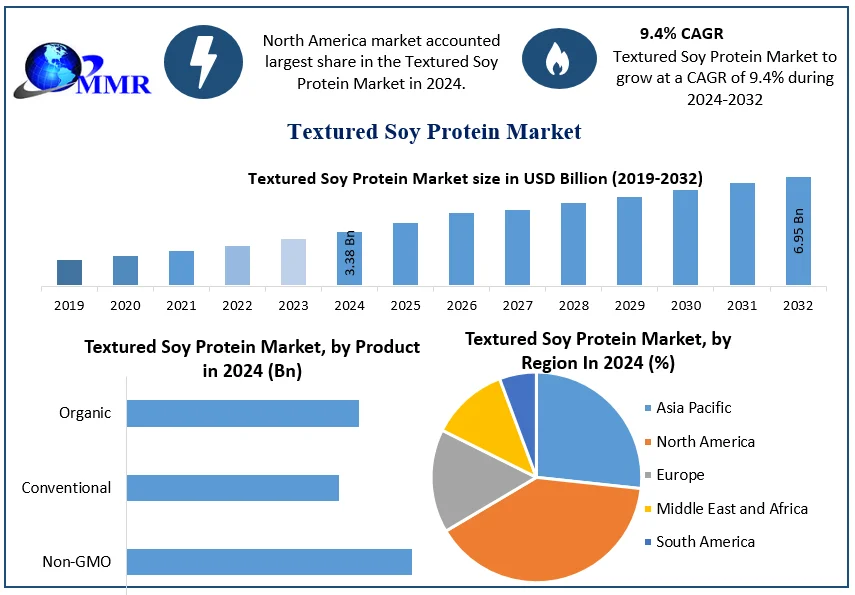 To know about the Research Methodology :- Request Free Sample Report
Textured Soy Protein Market Dynamics
Animal care and welfare and Health-conscious consumers with Demand for plant-based diets driving the Textured Soy Protein Market
A low-cost source of protein augmented soy crop farming in emerging regions such as South America and Asia Pacific, in addition to the already extensive cultivation of soybean across the globe, has increased the availability of soy products such as textured soy proteins. Raw materials for deriving textured soy protein are therefore easy to obtain from contract farmers or oilseed crushers offering soy meal.
The low processing costs associated with textured soy proteins are suitable for the operational demands of manufacturers and thereby allow the processors to spend adequately on product development as a result of these trends the cost of textured soy protein is cheaper when as a result of these trends, the cost of textured soy protein is cheaper when compared to that of other protein sources such as meat, dairy, and whey proteins. Also, the prices of conventional dairy products have increased in the recent past, and textured soy protein, being one of the major plant sources of protein, is one of the most suitable alternatives considered in the market.
Consumer awareness of the availability of low-cost protein is a crucial element driving the global textured soy protein market forward. Another significant factor expected to drive demand for textured soy protein in the global market is the growing vegan and vegetarian population. Consumer demand is increasing. Individuals' preference for high-protein foods is another aspect driving the target market's rise. Textured soy protein is utilized as a flavor binder in a variety of cuisines because it absorbs oil, preserves moisture, and has a better texture, all of which are factors that are expected to boost its demand in the food business. Growing consumer health consciousness is expected to drive the global market during the forecast period.
Stringent government regulations for genetically modified crops and the cultivation of genetically modified crops may be hampered by government laws. It's a factor that could stifle the global textured soy protein market's growth. Still, the introduction of flavored soy protein and the rising demand for plant-based proteins could result in significant revenue growth for businesses in the target Textured Soy Protein market.
Textured Soy Protein Market Segment Analysis:
Based on product type, the global textured soy protein market is sub-segmented into non-gmo, conventional, and organic. The non-GMO segment held a huge market share of 55.8 % in 2024, owing to growing public consciousness of the dangers of genetically modified (GM) crops, as well as demand for non-GMO products is expected to boost market growth in the forecast period. Also, limitations on genetically modified soya beans in India, China, and other nations have increased demand for non-GMO crops.
The organic segment is a second-dominant segment and it is expected to grow at a CAGR of XX% during the forecasting period. The growing demand for organic food products around the world is propelling this market forward. Demand for organic foods and beverages containing textured soy protein has risen as a result of people's hectic work schedules. Furthermore, as people become more health-conscious, there is a greater desire for items that are free of preservatives and additives.
Based on application, the global textured soy protein market is sub-segmented into food, and feed. The food segment is the dominant segment and it held xx% of the share in 2024, owing to the growth in the number of vegan customers looking for plant-based proteins to replace meat. For healthy functioning, growth, reproduction, and metabolism, humans require a constant supply of proteins. As a result, nutritional diets with sufficient protein fibers are required in the food. As a result, the need for textured soy protein in food is increased. Soya proteins are a good source of complementary and additional proteins because they improve solubility, water absorption, viscosity, emulsification, texture, and anti-oxidation, which increases demand.
Based on the source, the global textured soy protein market is sub-segmented into soy protein concentrates, soy protein isolates, and soy flour. The Soy protein concentrates segment held a large share of xx% in 2024, owing to being easily digestible, available in granule, low cost or cheaper, cholesterol-free, and spray-dried forms. They are appropriate for customers of all ages, including youngsters, pregnant and nursing ladies, and the elderly. The soy protein isolates segment was the second-largest in terms of volume because of its higher protein composition (90%), it helps to lose weight, boost energy, or build muscle. Soy protein isolate may also manage hormonal balance and lower the risk of breast cancer and heart disease. In terms of both value and volume, soy protein isolates are expected to grow at a CAGR of xx% during the forecast period.
Textured Soy Protein Market Regional Analysis
The North American market accounts for the major market share in terms of revenue and is expected to rapid growth during the estimated period. North America holds 41.32% share of the global market and demand for this region is increasing due to growing vegan adoption, combined with rising demand for vegan food products and rising soy production, particularly in emerging economies like China and India, which are driving the textured soy protein market's growth in this region. China is a major player in the global market for textured soy protein, processing 50% of the world's supply. The market is growing due to increased demand from health-conscious consumers, growing use in animal feed, and rising soybean production. The market is also expanding due to regional production of goods containing protein, and increasing exports.
The Asia Pacific is expected to have the highest CAGR during the forecasting period of 2025-2032. The regional market is growing due to rising soya bean output and increased awareness of the health advantages of soya beans. China is one of the region's top consumers. It has a market share of more than 20% in the Asia Pacific region. India is a major producer and consumer of textured soy protein (TSP), also known as textured vegetable protein (TVP) or soy nuggets. TSP is made from defatted soy flour, a byproduct of soybean oil production. The flour is processed using an extrusion and drying process. The process involves de-hulling, flaking, extracting, desolventizing/drying, and grinding in a pneumatic mill to get a fine powder of white to creamish color.
This powder is then passed through an extrusion and granulation system to obtain desired sizes, shapes, colors, and texture. The objective of the report is to present a comprehensive analysis of the global market to the stakeholders in the industry. The past and current status of the industry with the forecasted market size and trends are presented in the report with the analysis of complicated data in simple language. The report covers all the aspects of the industry with a dedicated study of key players that include market leaders, followers, and new entrants.
Global Textured Soy Protein Market Scope: Inquire before buying
| Global Textured Soy Protein Market | |||
|---|---|---|---|
| Report Coverage | Details | ||
| Base Year: | 2024 | Forecast Period: | 2025-2032 |
| Historical Data: | 2019 to 2024 | Market Size in 2024: | US $ 3.38 Bn. |
| Forecast Period 2025 to 2032 CAGR: | 9.4% | Market Size in 2032: | US $ 6.95 Bn. |
| Segments Covered: | by Product | Non-GMO Conventional Organic |
|
| by Application | Food Feed |
||
| by Source | Soy protein concentrates Soy protein isolates Soy flour |
||
Global Textured Soy Protein Market, by Region
North America (United States, Canada and Mexico)
Europe (UK, France, Germany, Italy, Spain, Sweden, Austria, Turkey, Russia and Rest of Europe)
Asia Pacific (China, India, Japan, South Korea, Australia, ASEAN and Rest of APAC)
Middle East and Africa (South Africa, GCC, Egypt, Nigeria and Rest of ME&A)
South America (Brazil, Argentina, Columbia and Rest of South America)
Leading Textured Soy Protein Key Players Includes
The textured soy protein (TSP) market reflects investments and innovations by key industry players. Bunge is constructing a new facility in Indiana, expected to be operational by mid-2025, to enhance its capabilities in soy protein concentrate and textured soy protein concentrate production. This facility will support the rising demand for plant-based foods and other protein-rich products while creating new job opportunities. This approach improves supply chain efficiency and supports the production of nutrient-dense, clean-label textured soy protein, catering to the growing market for plant-based alternatives and cleaner label options.
1. ADM (USA)
2. Abbott Nutritionals (USA)
3. Bunge (USA)
4. Bremil Group (Brazil)
5. Cargill (USA)
6. Crown Soya Protein Group (China)
7. Roquette Frères (France)
8. Ingredion (US)
9. The Scoular Company (US)
10. Beneo (Germany)
11. DuPont de Nemours, Inc. (USA)
12. Wilmar International Limited (Singapore)
13. Victoria Group (Serbia)
14. LIVING FOODS. (India)
15. Sonic Biochem (India)
Frequently Asked Questions:
1. What is textured soy protein (TSP)?
Ans: Textured soy protein is a versatile meat substitute made from soybeans.
2. What are the key factors driving the growth of the textured soy protein market?
Ans: Factors such as increasing consumer preference for plant-based proteins, rising awareness about health benefits, and growth in the vegan population are driving the textured soy protein market.
3. What are the market trends and emerging developments in the textured soy protein industry?
Ans: The key drivers include growing health consciousness, the rich nutrient profile of Moringa, rising demand for plant-based products, global availability, and diverse product formats.
4. What challenges does the Textured Soy Proteins Market face?
Ans: Challenges include maintaining quality control and standardization, sourcing issues, regulatory compliance, and increasing competition and market saturation.
5. What opportunities exist in the Textured Soy Proteins Market?
Ans: Opportunities include innovative product formulations, expansion into new markets, research and development, and partnerships and collaborations with other industry players.