
Sugar Market By Sugar Type, By Source, By Product Form, By Nature, Distribution Channel, By End User and Regional Insights 2034
Overview
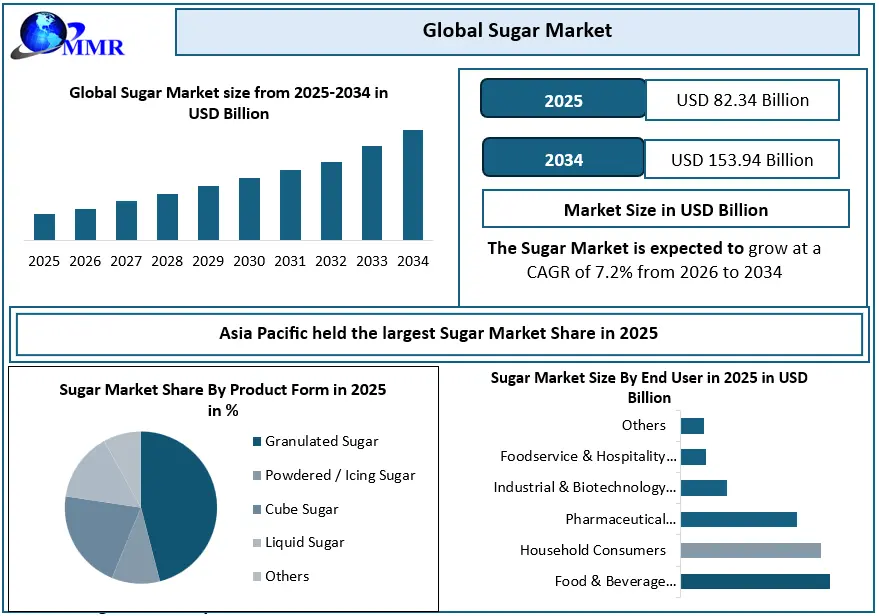
The Global Sugar Market was valued at USD 82.34 billion in 2025 and is expected to reach USD 153.94 billion by 2034, growing at a CAGR of 7.2% during 2026–2034.
Global Sugar Market Overview
Sugar is a natural sweetener primarily extracted from sugarcane and sugar beet. It is widely used in food and beverage manufacturing, bakery and confectionery production, dairy processing, packaged foods, pharmaceuticals, foodservice and industrial applications. The market includes multiple product categories, such as white sugar, brown sugar, raw sugar, granulated sugar, powdered sugar, icing sugar, sugar cubes and liquid sugar. These products serve different requirements related to sweetness, solubility, purity, texture, processing efficiency and end-product formulation.
The Global Sugar Market is shaped by agricultural output, weather conditions, crop yields, irrigation availability, fertilizer prices, labour costs, processing capacity and international commodity prices. Sugarcane-producing countries benefit from integrated milling and refining infrastructure, while sugar beet production supports the industry across temperate agricultural regions. Manufacturers are also strengthening value-chain integration through distillery operations, ethanol production, bagasse-based cogeneration and by-product utilization.
The report provides a structured assessment of the Global Sugar Market, including market size and forecast, key growth drivers, restraints, emerging trends, supply-demand analysis, pricing patterns, regulatory developments, trade movements and competitive positioning. It evaluates the contribution of individual market segments and regions, identifies major manufacturers and examines their product portfolios, production capabilities, expansion strategies and commercial activities. The analysis supports business planning, investment assessment, market-entry decisions and competitive strategy development.
Key Global Sugar Market Insights
1. Biofuel Integration: India achieved 19.24% ethanol blending in petrol during Ethanol Supply Year 2024/25, creating additional commercial opportunities for integrated sugar manufacturers with distillery operations.
2. Raw Material Utilization: Sugarcane and sugar beet remain the two principal agricultural feedstocks for global sugar production. Their relative contribution varies according to regional cultivation conditions, crop productivity and processing infrastructure.
3. Renewable Energy Generation: Brazil generated 20,409 GWh of bagasse-based electricity in 2025, highlighting the role of cogeneration in improving energy utilization and creating additional revenue opportunities for sugar mills.
4. Specialty Sugar Development: Refined sugar generally requires a minimum sucrose content of 99.5%, while raw sugar is commonly traded using polarization specifications. Product grades support different refining, food manufacturing and industrial requirements.
5. Product Diversification: Granulated, powdered, brown, raw, cube and liquid sugar formats serve different household, institutional and industrial applications.
6. International Trade: Brazil, Thailand and India remain important participants in global sugar exports. USDA estimates for the 2025/26 marketing year place Brazil's exports at 35.7 million metric tons, Thailand's at 7 million metric tons and India's at 4.5 million metric tons.
7. Industry Integration: Sugar manufacturers are expanding beyond conventional sugar production into ethanol, bioelectricity, molasses processing and other value-added activities to diversify revenue streams.
Sugar Market Growth and Share Analysis
To know about the Research Methodology :- Request Free Sample Report
Global Sugar Market Dynamics
Expansion of International Sugar Trade and Industrial Procurement to Drive Sugar Market Growth
International sugar trade supports market development by connecting major producing countries with food manufacturers, beverage companies, refineries and industrial buyers. Brazil, Thailand, India and Australia maintain established export networks, supported by sugar mills, bulk storage facilities, port infrastructure and international trading relationships. Industrial customers require consistent sugar grades and reliable procurement for bakery, confectionery, beverage and processed food production. Brazil's sugar exports reached 34.89 million metric tons in 2024/25, while Thailand exported 5.85 million metric tons during the same period, according to the figures included in the report.
Trade Regulations and Their Impact
| Trade Regulation | Regulatory Framework | Trade Impact |
| Tariff-Rate Quota (TRQ) | U.S. Sugar Import Quota System | Allows eligible countries to supply sugar at lower in-quota tariffs, while imports exceeding allocated limits face higher duties. |
| WTO Agricultural Agreement | WTO Agreement on Agriculture | Establishes international commitments for agricultural market access and tariff-rate quotas, influencing cross-border sugar trade. |
| Sugar Import Licensing | EU Regulation 2020/760 | Requires import licences for specified sugar tariff quotas and establishes eligibility and documentation requirements. |
| Rules of Origin | EU Preferential Trade Agreements | Determines eligibility for preferential sugar tariffs and duty-free access based on the country of origin. |
| Sugar Quality Standards | EU Directive 2001/111/EC | Establishes quality and composition requirements for sugars intended for human consumption, supporting product standardisation. |
| Customs Documentation and Certification | U.S. Customs and Border Protection (CBP) Sugar Quota Program | Requires applicable quota eligibility certificates and customs documentation for qualifying sugar imports. |
Global Sugar Market Opportunity – Growth of Sugarcane-Based Ethanol and Bioenergy Integration
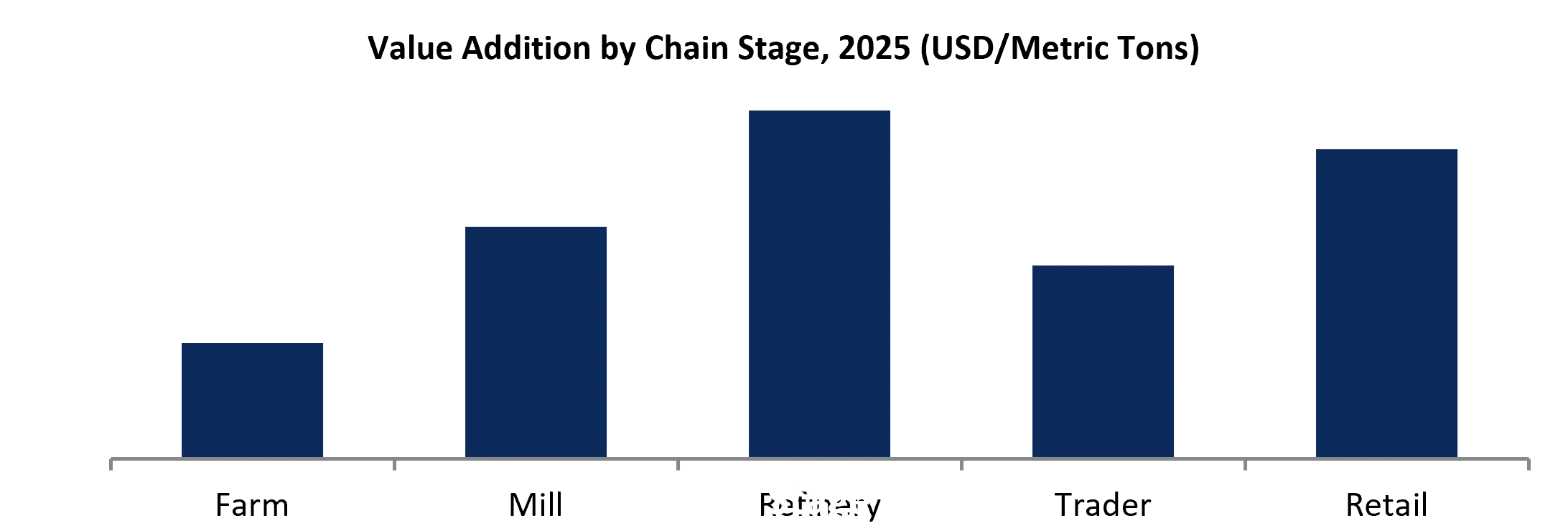
Value Addition Through Bagasse and Molasses Utilization
Sugarcane processing generates by-products such as bagasse, molasses and press mud. Manufacturers can utilize bagasse for cogeneration, molasses for ethanol and fermentation, and press mud for agricultural applications. This integrated utilization improves resource efficiency and creates additional commercial opportunities beyond conventional sugar production. India's installed bagasse-based cogeneration capacity reached 9,806 MW as of December 2024, demonstrating the scale of the country's sugar-industry energy infrastructure.
Specialty Sugar and Customized Product Development
Demand for organic, brown, raw, liquid and customized sugar products creates opportunities for manufacturers to serve differentiated food and beverage applications. Liquid sugar supports automated beverage production, while powdered and icing sugar are used in bakery and confectionery formulations. Specialty varieties such as organic, demerara and muscovado sugar serve premium food applications. Manufacturers can strengthen their market positioning through product differentiation, consistent quality specifications and specialized industrial formulations.
India achieved 19.24% ethanol blending in petrol during Ethanol Supply Year 2024/25 against the 20% blending target for 2025/26. India's ethanol production capacity reached 19,530 million litres (ML) as of 30 October 2025. These developments create opportunities for integrated sugar companies to strengthen distillery infrastructure, improve operational integration and diversify revenue streams, drives Sugar Market Growth.
The utilization of sugarcane by-products in renewable energy generation creates additional business opportunities for integrated sugar manufacturers. Bagasse, the fibrous residue obtained during crushing, can generate electricity, steam and industrial heat, while molasses and press mud support biofuel and bio-based product development.
Global Sugar Market Challenge
International Price Volatility and Export Policy Changes
Sugar manufacturers face fluctuations in international benchmark prices, transportation expenses, agricultural input costs, energy requirements and government export regulations. Changes in export permissions, domestic pricing policies and trade restrictions can affect shipment schedules, customer contracts and international competitiveness. India's sugar exports declined from 3.97 million metric tons in 2023/24 to 2.59 million metric tons in 2024/25, reflecting the impact of changing supply and trade conditions. Such variations influence export-oriented manufacturers, commodity traders and international buyers.
Global Sugar Market Segment Analysis
By Sugar Type
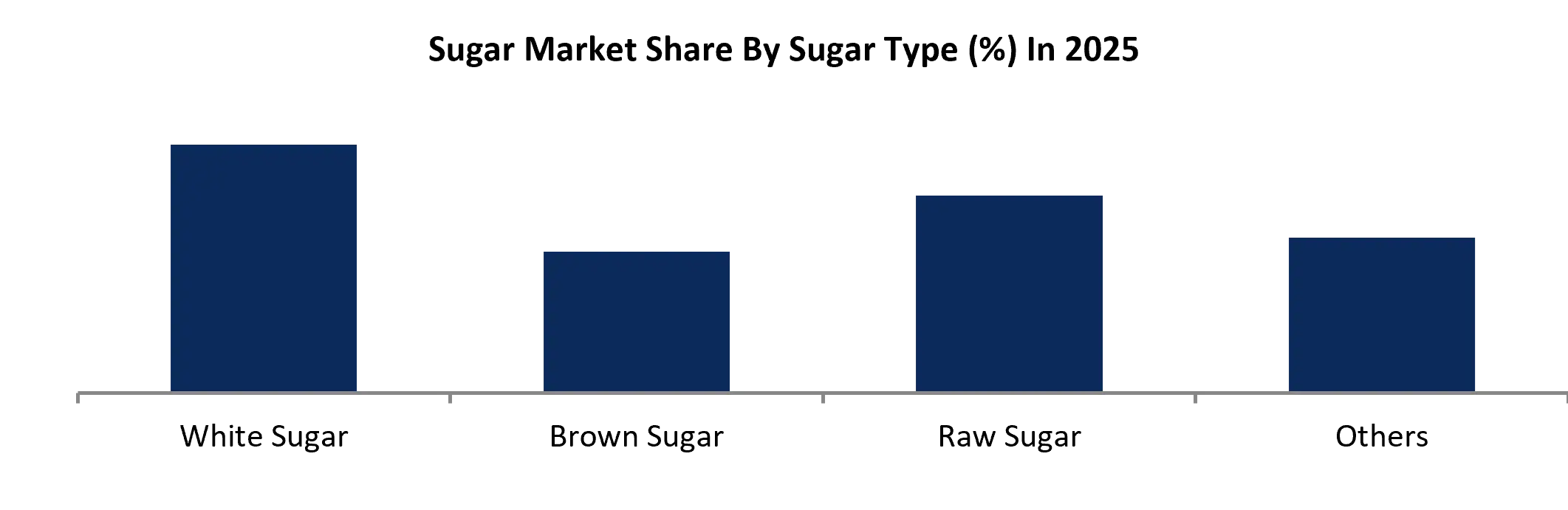
The global sugar market is segmented into white sugar, brown sugar, raw sugar and specialty varieties. White sugar dominated the sugar industry in 2025 and is widely used in household and industrial food processing, with refined grades typically containing at least 99.5% sucrose. Brown sugar, containing nearly 95–99% sucrose and up to 5% moisture, is preferred in bakery, confectionery, sauces and specialty food formulations. Raw sugar generally has a minimum polarization of 96.5°Z and undergoes further refining. Specialty varieties, including organic, demerara and muscovado sugar, serve premium food and beverage applications.
 By Source
Sugarcane held the largest share for Sugar Market in 2025. Sugarcane is a major raw material cultivated across tropical and subtropical regions, with an average growing cycle of 10–18 months, depending on climate and variety. Brazil, India, Thailand and Australia are important sugarcane-producing countries. Sugar beet is primarily cultivated in temperate regions, with a typical growing period of 5–6 months, particularly across Europe and North America. Crop suitability, climatic conditions, agricultural infrastructure, procurement networks and processing technologies influence raw material availability and refining efficiency.
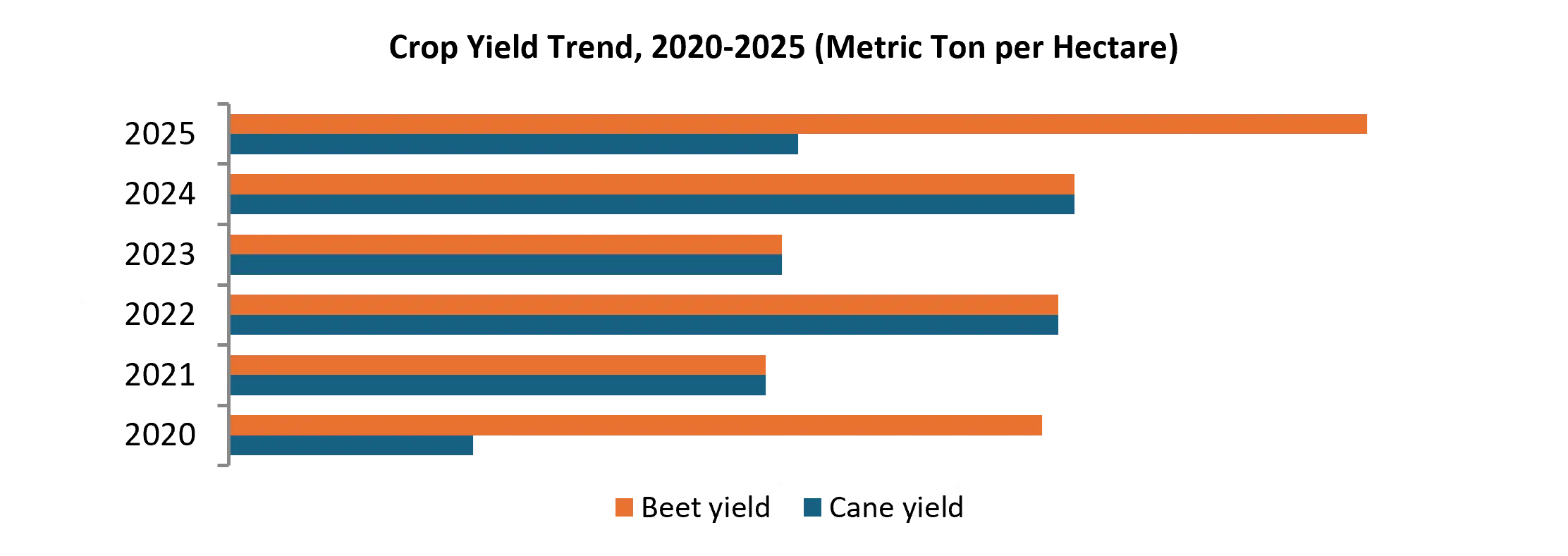
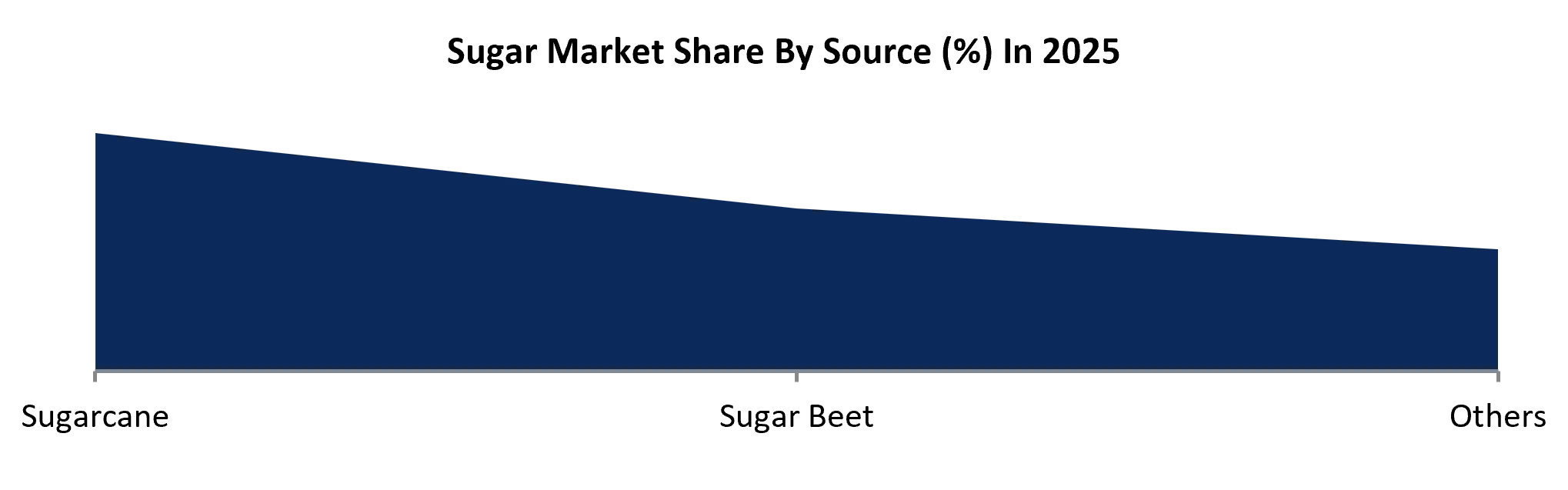 Sugar production depends on the availability and quality of agricultural raw materials, particularly sugarcane and sugar beet. Climatic conditions, soil fertility, irrigation facilities, harvesting practices and technological improvements influence crop quality and processing efficiency. Manufacturers increasingly focus on high-yield crop varieties, mechanized harvesting, efficient farming practices and sustainable agricultural methods to improve raw material availability, reduce procurement costs and maintain consistent sugar quality.
 By Product Form
Based on product form, the market includes granulated sugar, powdered or icing sugar, sugar cubes, liquid sugar and others. Granulated sugar is widely used in household and industrial applications. Powdered and icing sugar are preferred in bakery decoration, confectionery and dessert preparation. Sugar cubes serve household, hospitality, and beverage applications, while liquid sugar offers convenient handling and dissolution for beverage manufacturing and automated food processing.
By Application
Major applications in the global sugar market include food and beverage processing, household use, pharmaceuticals, industrial processing and fermentation. In 2025, food and beverage applications accounted for nearly 82% of the industrial sugar market, supported by demand from bakery, confectionery, dairy, beverages and packaged foods. Pharmaceutical applications include sucrose-based excipients, syrups and formulation ingredients, while industrial uses cover biotechnology, fermentation and chemical processing. These applications drive demand for refined sugar, liquid sugar, specialty sugar and pharmaceutical-grade sucrose.
Global Sugar Market Regional Analysis
Asia Pacific dominated the Global Sugar Market in 2025, supported by major sugar-producing countries, extensive agricultural networks and growing food processing industries. The region includes India, China, Japan, Thailand, Australia, Indonesia and Malaysia. India and Thailand are important participants in international sugar trade, while China and other regional economies contribute to production and consumption. Demand from bakery, confectionery, beverage, packaged food and hospitality industries supports regional market activity. Sugar manufacturers also benefit from established milling infrastructure, agricultural procurement networks and integrated ethanol operations.
The North America sugar market, covering the United States, Canada and Mexico, benefits from established sugar refining infrastructure, advanced food processing facilities, extensive retail distribution networks and strong industrial procurement. The region’s competitive landscape is shaped by demand for refined white sugar, brown sugar, liquid sugar, specialty sugar and customized sweetener solutions across bakery, confectionery, beverages and packaged food applications. Canada exported 93,277 tonnes of refined sugar to the United States in 2025, compared with 71,478 tonnes in 2024, reflecting cross-border trade activity. Sugar Manufacturers are increasingly emphasizing operational efficiency, product quality, food safety certification and supply-chain reliability to serve food and beverage manufacturers, pharmaceutical companies and industrial customers.
The European Sugar Market is supported by an established sugar beet cultivation and processing industry. Germany, France, the United Kingdom, Poland, Belgium and the Netherlands are important regional markets. During the 2025/26 campaign, sugar beet processing was undertaken across 83 factories in 17 EU member states, highlighting the region's manufacturing infrastructure. Market performance is influenced by agricultural supply networks, EU food safety regulations, traceability requirements, Common Agricultural Policy measures, energy costs and sustainability initiatives. Manufacturers are investing in processing efficiency, refining technologies and specialty sugar products.
South America is a major participant in global sugar production and trade, with Brazil serving as the region's leading sugar producer. São Paulo, Minas Gerais, Goiás and Paraná are important sugarcane-producing states. The region benefits from extensive sugarcane cultivation, large-scale processing facilities, integrated sugar-ethanol operations and established export infrastructure. Bagasse-based cogeneration, ethanol production, agricultural mechanization and refinery modernization strengthen the regional industry's competitive position. Argentina, Colombia and Chile also contribute to the regional sugar industry.
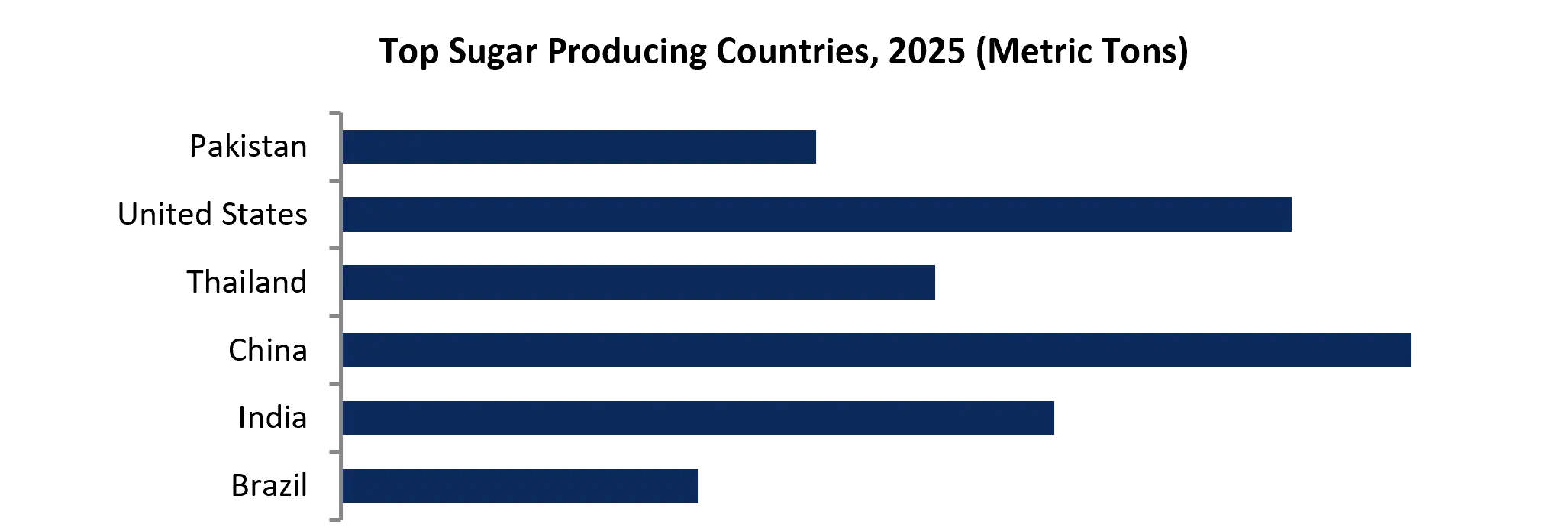 Regional sugar industry performance in 2025 was influenced by agricultural conditions, sugarcane and sugar beet availability, processing infrastructure and government policies. Asia Pacific and South America remain important sugar-producing regions, supported by established cultivation networks and large-scale processing facilities. Europe benefits from developed sugar beet processing capabilities, while North America and the Middle East & Africa rely on established refining infrastructure, agricultural supply chains and international sourcing networks.
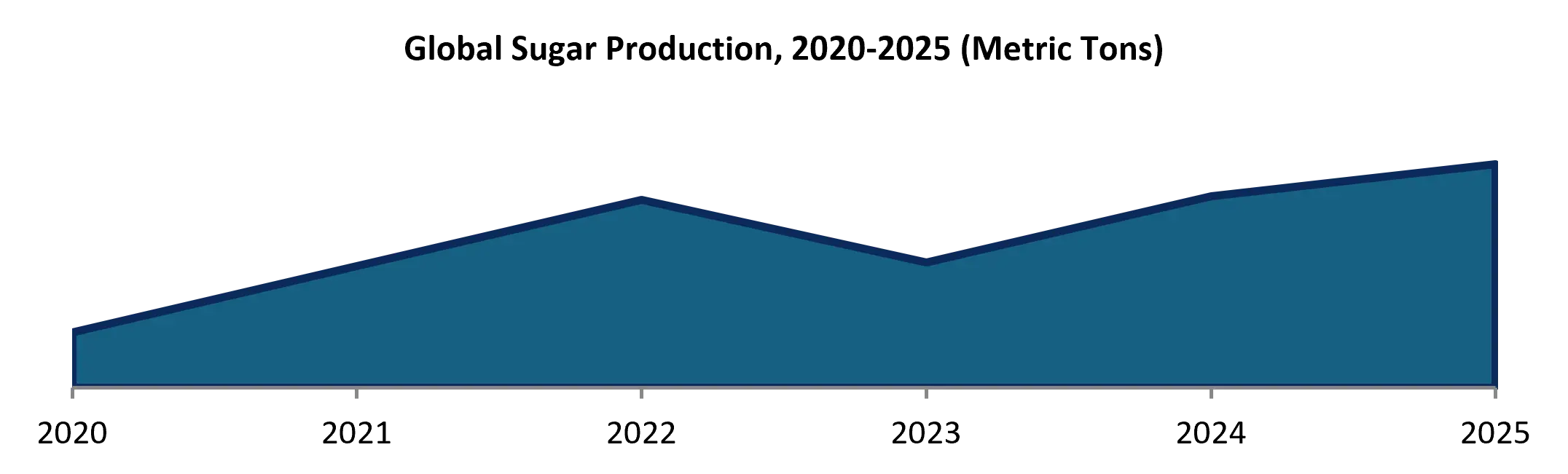
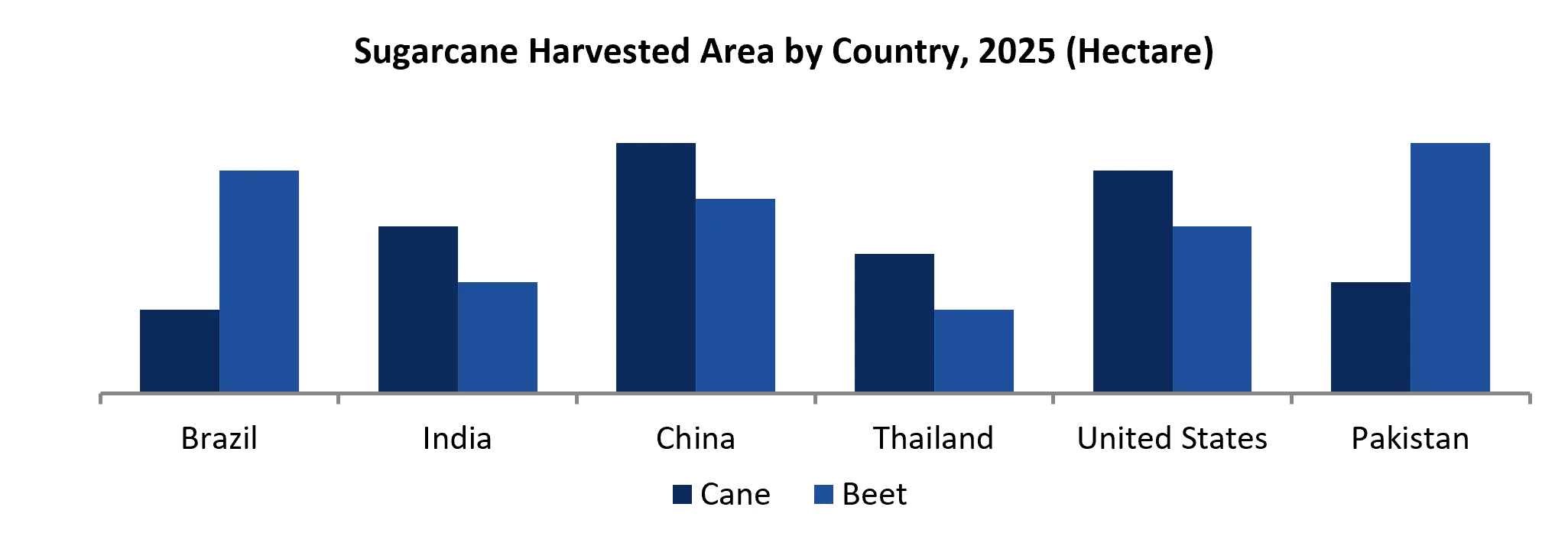
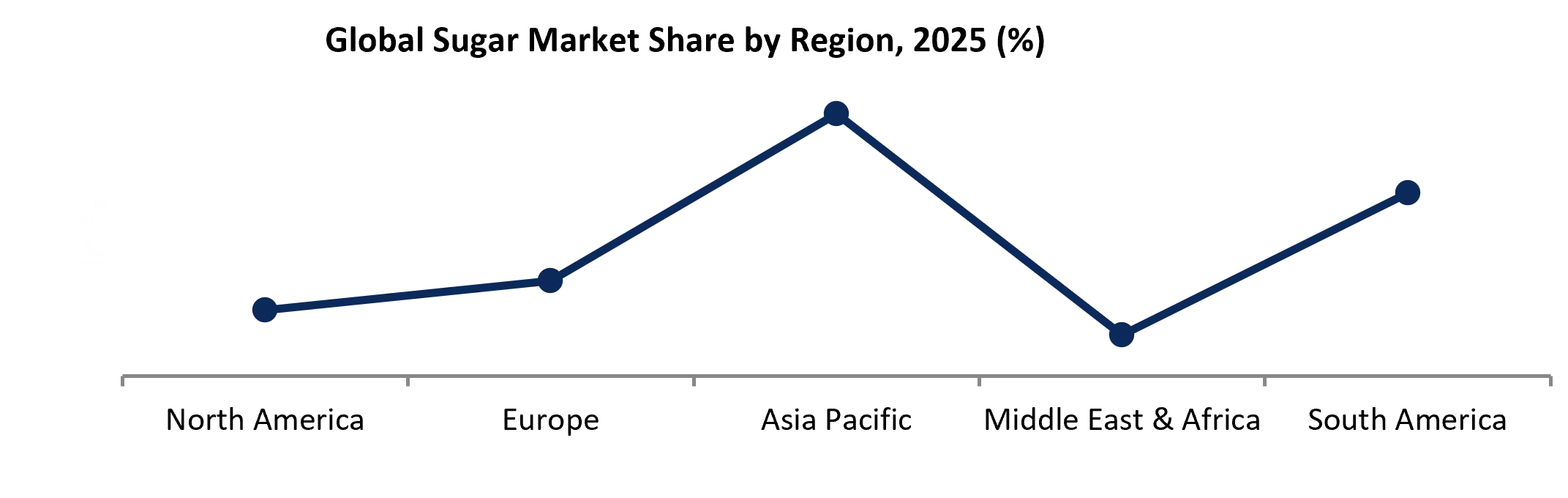 Harvested area plays an important role in the global sugar market by determining the availability of sugarcane and sugar beet for processing. Cultivation acreage is influenced by climatic conditions, soil quality, irrigation infrastructure, agricultural policies and competing crop economics. Sugar manufacturers increasingly focus on improving agricultural productivity, expanding contract farming networks and adopting mechanized harvesting to ensure consistent raw material supply and strengthen processing efficiency.
 Global Sugar Market Competitive Landscape
The Global Sugar Market comprises integrated sugar manufacturers, sugarcane processors, sugar beet companies, independent refineries, agricultural cooperatives and diversified agribusiness groups. Competition is shaped by raw material procurement, agricultural partnerships, refining technology, production capacity, product quality, processing efficiency, distribution infrastructure, export relationships and customer coverage.
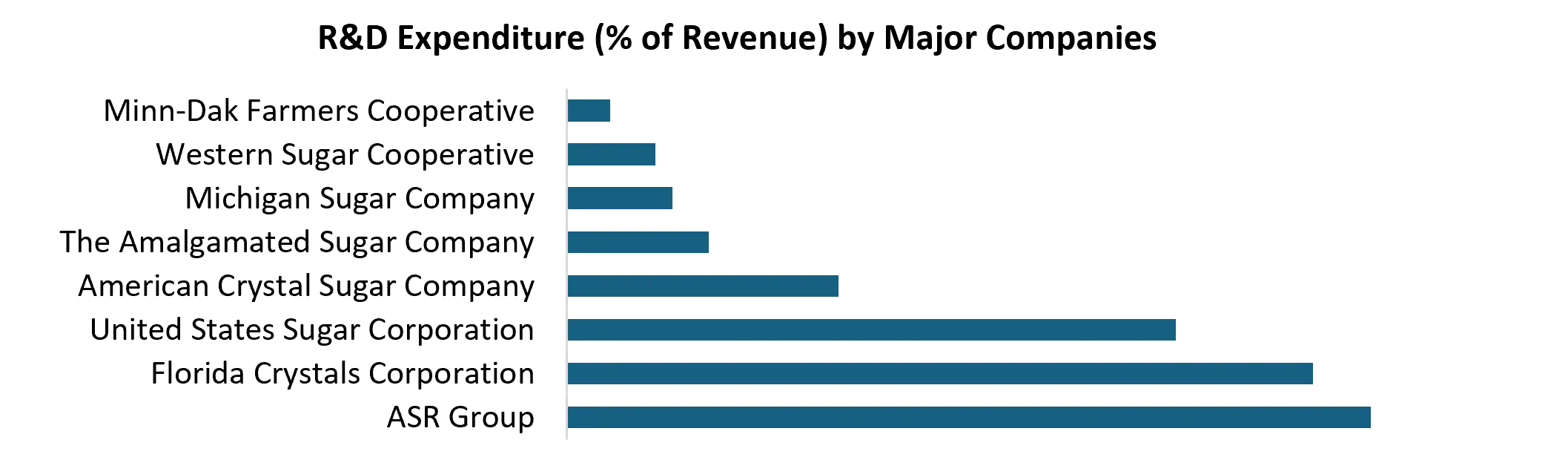
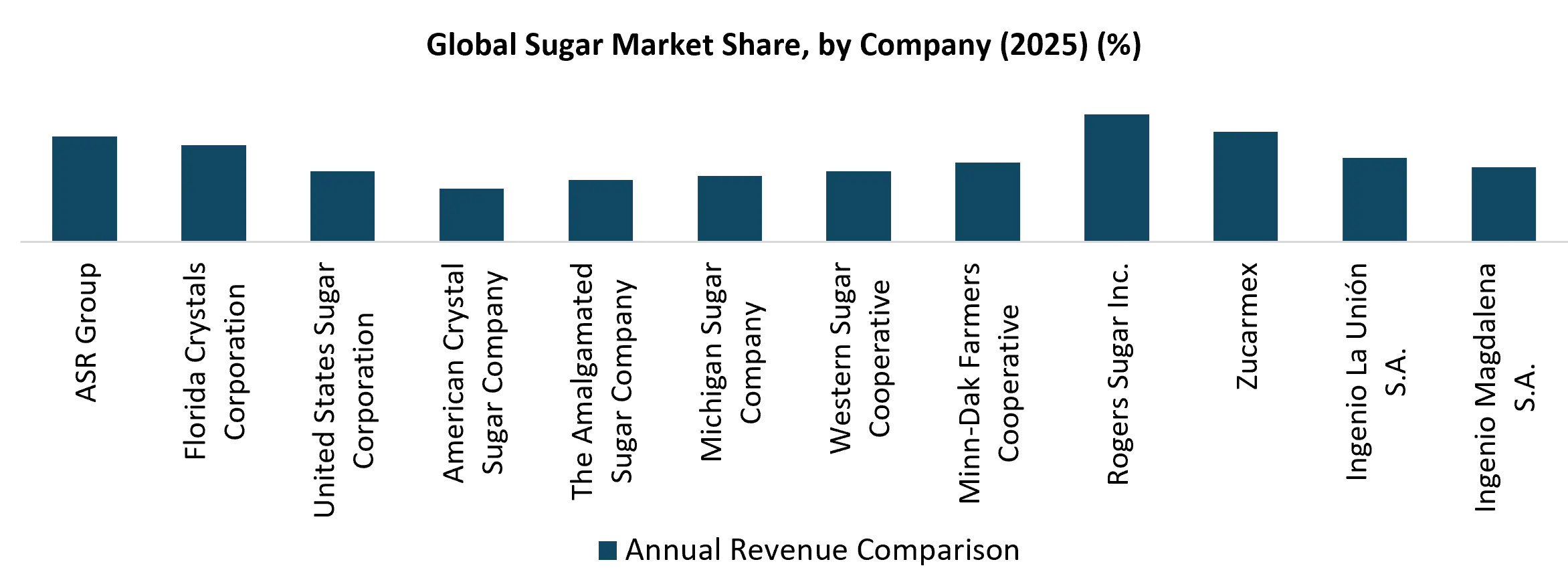 Major manufacturers are focusing on operational modernization, specialty sugar development, automated packaging, integrated ethanol facilities, cogeneration and sustainable agricultural sourcing. Strategic partnerships with sugarcane growers, sugar beet cooperatives, food manufacturers, distributors and international trading companies remain important for strengthening commercial reach and supply reliability.
Global Sugar Market Recent Developments
| Company Name | Date | Recent Developments |
| ASR Group | 29-Apr-2026 | Domino Sugar and C&H Sugar launched limited-edition America250 packaging through a partnership with America250, introducing special 4 lb. sugar bags and sugar packets to commemorate the 250th anniversary of the United States. |
| American Crystal Sugar Company | 01-Jul-2026 | Received a 2026 Dual Training Grant from the Minnesota Office of Higher Education to support employee training and workforce development initiatives. |
| American Crystal Sugar Company | 06-Oct-2026 | Celebrated 100 years of sugar beet processing at its East Grand Forks factory, marking a century of manufacturing operations at the facility. |
| U.S. Sugar Corporation | 01-Oct-2026 | Highlighted continued investment in domestic food production through agricultural infrastructure, technological innovation, environmental stewardship and workforce development initiatives in South Florida. |
Global Sugar Market Scope:Inquire before buying
| Sugar Market | |||
|---|---|---|---|
| Report Coverage | Details | ||
| Base Year: | 2025 | Forecast Period: | 2026-2034 |
| Historical Data: | 2020 to 2025 | Market Size in 2025: | 82.34 USD Billion |
| Forecast Period 2026-2034 CAGR: | 7.2% | Market Size in 2034: | 153.94 USD Billion |
| Segments Covered: | by Sugar Type | White Sugar Brown Sugar Light Brown Sugar Dark Brown Sugar Others Raw Sugar Others |
|
| by Source | Sugarcane Sugar Beet Others |
||
| by Product Form | Granulated Sugar Powdered / Icing Sugar Cube Sugar Liquid Sugar Others |
||
| by Nature | Food & Beverage Processing Bakery Products Confectionery Products Dairy Products Beverages Processed & Packaged Foods Others Household Consumption Pharmaceutical Applications Industrial & Fermentation Applications Others |
||
| by Distribution Channel | Direct Business-to-Business Sales Distributors & Wholesalers Retail Channels Supermarkets & Hypermarkets Convenience & Grocery Stores Traditional Retail Stores Online Retail Others Others |
||
| by End User | Food & Beverage Manufacturers Household Consumers Pharmaceutical Manufacturers Industrial & Biotechnology Companies Foodservice & Hospitality Operators Others |
||
Key players/Competitors profiles covered in the Sugar Market report from a strategic perspective
North America
1. ASR Group
2. Florida Crystals Corporation
3. United States Sugar Corporation
4. American Crystal Sugar Company
5. The Amalgamated Sugar Company
6. Michigan Sugar Company
7. Western Sugar Cooperative
8. Minn-Dak Farmers Cooperative
9. Rogers Sugar Inc.
10. Zucarmex
11. Ingenio La Unión S.A.
12. Ingenio Magdalena S.A.
Europe
13. Südzucker AG
14. Nordzucker AG
15. Pfeifer & Langen GmbH & Co. KG
16. Tereos SCA
17. Cristal Union
18. British Sugar plc
19. Cosun Beet Company
20. AGRANA Beteiligungs-AG
21. Krajowa Grupa Spożywcza S.A.
22. Azucarera
23. Sucre Suisse SA
24. COPROB
Asia Pacific
25. Balrampur Chini Mills Limited
26. Bajaj Hindusthan Sugar Limited
27. Shree Renuka Sugars Limited
28. Triveni Engineering & Industries Limited
29. E.I.D.-Parry (India) Limited
30. Dalmia Bharat Sugar and Industries Limited
31. Dhampur Sugar Mills Limited
32. Dwarikesh Sugar Industries Limited
33. Mitr Phol Group
34. Thai Roong Ruang Group
35. Khon Kaen Sugar Industry Public Company Limited
36. Kaset Thai International Sugar Corporation
37. Wilmar Sugar Australia
38. Mackay Sugar Limited
39. MSM Malaysia Holdings Berhad
40. Central Sugars Refinery Sdn. Bhd.
41. Nissin Sugar Co., Ltd.
42. Universal Robina Corporation
South America
43. Raízen S.A.
44. São Martinho S.A.
45. Usina Coruripe Açúcar e Álcool
46. Jalles Machado S.A.
47. Usina São Manoel S.A.
48. Usina Batatais S.A.
49. Usina Santa Adélia S.A.
50. Usina Colombo S.A.
51. Ledesma S.A.A.I.
52. Seaboard Energías Renovables y Alimentos
Middle East and Africa
53. Illovo Sugar Africa
54. Tongaat Hulett Sugar
55. RCL Foods
56. Al Khaleej Sugar
57. United Sugar Company
58. Cevital SPA
59. Dangote Sugar Refinery Plc
60. BUA Foods Plc