1.SECTION A –GLOBAL SOLID STATE TRANSFORMER MARKET INTRODUCTION
1.1. Executive Market Landscape and Industry Overview
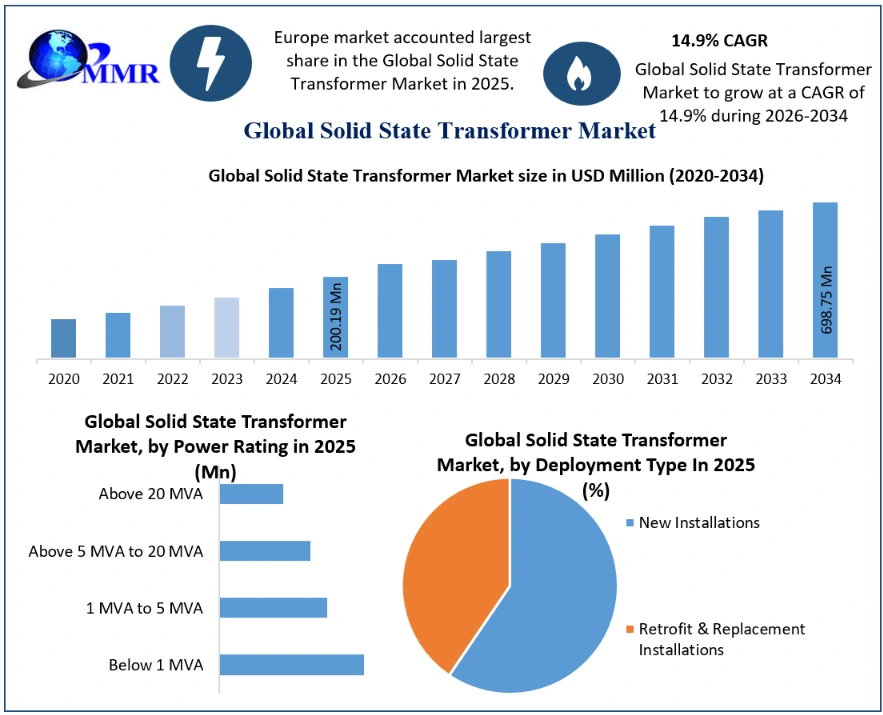
1.1.1. Global Solid State Transformer Market Size and Growth Forecast, 2026–2034 (Value in USD Billion and Volume in Units)
1.1.2. Historical Evolution of Solid-State Transformers Across Modern Power Distribution Applications
1.1.3. Market Adoption Across Utilities, Renewable Energy, Electric Vehicles and Industrial Infrastructure
1.1.4. Assessment of Design Capacity, Voltage Ratings and Power Conversion Architectures
1.1.5. Analysis of Power Electronics, Automation Technologies and Intelligent Grid Integration Developments
1.1.6. Evaluation of Market Trends, Investments, Regulations and Emerging Commercialization Opportunities
1.2. Global Solid State Transformer Market Dynamics
1.2.1. Global Solid State Transformer Market Trends
1.2.2. Global Solid State Transformer Market Analysis
1.2.3. Market Drivers
1.2.4. Market Restraints
1.2.5. Market Opportunities
1.2.6. Market Challenges
1.2.7. PORTER’s Five Forces Analysis
1.2.8. PESTLE Analysis
1.3. Global Solid-State Transformer Macroeconomic and Investment Factors
1.3.1. Global Economic Growth and Its Influence on Solid State Transformer Demand
1.3.2. Electricity Consumption Growth and Grid Modernization Investments Across Major Economies
1.3.3. Renewable Energy Expansion and Electrification Trends Influencing Transformer Technology Adoption
1.3.4. Semiconductor Pricing, Raw Material Inflation and Manufacturing Cost Competitiveness Assessment
1.3.5. Government Incentives, Infrastructure Spending and Private Investment Across Power Electronics
1.3.6. Industrial Automation Investments and Digital Infrastructure Expansion Supporting Market Development
1.4. Solid State Transformer Technologies and Product Landscape
1.4.1. Distribution, Power and Traction Solid State Transformer Technologies and Applications
1.4.2. Single-Stage, Two-Stage and Three-Stage Power Conversion Architecture Comparisons
1.4.3. Medium-Voltage and High-Voltage Transformer Designs Across Electrical Distribution Applications
1.4.4. Modular Multilevel Conversion Systems and Bidirectional Power Transfer Capabilities Assessment
1.4.5. Power Semiconductor Integration Across Silicon, Silicon Carbide and Gallium Nitride Technologies
1.4.6. Intelligent Solid State Transformer Designs Supporting Automation and Smart Grid Integration
1.5. Solid State Transformer Design Capacity and Voltage Rating Assessment
1.5.1. Transformer Design Capacity Classification Across Kilovolt-Ampere and Megavolt-Ampere Ratings
1.5.2. Low-Voltage, Medium-Voltage and High-Voltage Input Configuration Assessment Across Applications
1.5.3. Output Voltage Ratings and Compatibility with Distribution Networks and Industrial Loads
1.5.4. Rated Power Capacity Requirements Across Utilities, Transportation and Renewable Energy Installations
1.5.5. Voltage Conversion Ratios, Electrical Isolation and Power Density Design Considerations
1.5.6. Capacity Scalability, Modular Design Flexibility and Future System Expansion Requirements
1.6. Solid State Transformer Power Electronics and Automation Technologies
1.6.1. Power Semiconductor Modules Supporting High-Efficiency Switching and Electrical Energy Conversion
1.6.2. Automated Power Flow Control Across Bidirectional AC–DC and DC–DC Conversion Systems
1.6.3. Intelligent Control Platforms Supporting Voltage Regulation and Dynamic Load Management
1.6.4. Programmable Controllers, Embedded Processors and Digital Signal Processing System Integration
1.6.5. Automated Fault Detection, Protection Coordination and Real-Time Operational Monitoring Capabilities
1.6.6. Artificial Intelligence Integration Supporting Predictive Maintenance and Adaptive Power Management
1.7. Advanced Solid State Transformer Technology Assessment
1.7.1. Advanced Transformer Architectures Enabling Improved Power Density and Conversion Performance
1.7.2. Wide-Bandgap Semiconductor Innovations Supporting High-Frequency Switching Applications
1.7.3. Advanced Thermal Management Solutions for High-Power Transformer Systems
1.7.4. Fault-Tolerant Architectures and Advanced Protection Mechanisms for Enhanced System Reliability
1.7.5. High-Frequency Magnetic Materials Supporting Compact Transformer Design and Reduced Losses
1.7.6. Emerging Technology Readiness and Commercialization Potential of Next-Generation Transformer Systems
1.8. Solid State Transformer Manufacturing and Production Economics
1.8.1. Global Manufacturing Capacity by Country, Facility and Production Technology
1.8.2. Production Volumes, Factory Utilization Rates and Manufacturing Capacity Expansion Plans
1.8.3. Manufacturing Machinery Requirements for Magnetic Components and Electronic Power Integration
1.8.4. Automated Assembly, Calibration Systems and Electrical Testing Infrastructure Capability Assessment
1.8.5. Production Lead Times, Manufacturing Bottlenecks and Quality Control Cost Analysis
1.8.6. Manufacturing Economics Across Facility Scale, Automation Levels and Production Efficiency
1.9. Solid State Transformer Supply Chain and Component Sourcing Assessment
1.9.1. End-to-End Supply Chain Mapping from Raw Materials to Finished Equipment
1.9.2. Supplier Networks Covering Semiconductors, Magnetic Materials and Electronic Components
1.9.3. Critical Component Availability and International Sourcing Dependency Assessment
1.9.4. Procurement Lead Times, Inventory Requirements and Supply Continuity Risk Evaluation
1.9.5. Import Dependency, Export Flows and Cross-Border Component Trade Analysis
1.9.6. Supply Chain Localization Opportunities and Alternative Supplier Development Strategies
1.10. Procurement Strategy and Supplier Relationship Assessment
1.10.1. Manufacturer Purchasing Decisions Influenced by Quality, Price and Availability
1.10.2. Supplier Qualification Processes for Critical Electrical and Electronic Components
1.10.3. Long-Term Supply Agreements and Strategic Supplier Partnership Structures Assessment
1.10.4. Component Shortages, Procurement Bottlenecks and Delivery Delays Evaluation
1.10.5. Supplier Performance Benchmarking Across Cost, Reliability and Delivery Timelines
1.10.6. Procurement Risk Mitigation and Strategic Sourcing Improvement Opportunities Assessment
1.11. Demand–Supply Gap and Equipment Availability Analysis
1.11.1. Regional Demand Compared with Available Manufacturing Capacity and Production Output
1.11.2. Country-Level Equipment Shortages and Project Procurement Delays Assessment
1.11.3. Demand Forecasts Compared with Manufacturer Production Plans and Expansion Commitments
1.11.4. Component Availability Constraints Affecting Equipment Manufacturing and Delivery Timelines
1.11.5. Identification of Unmet Demand Across Utility and Industrial Infrastructure Projects
1.11.6. Capacity Expansion Opportunities Across Underserved Markets and Emerging Geographic Regions
1.12. Installed Base Lifecycle and Replacement Ratio Analysis
1.12.1. Installed Equipment Base Across Commercial Projects and Operating Infrastructure
1.12.2. Equipment Service Life Under Different Operating Conditions and Utilization Patterns
1.12.3. Asset Age Distribution and Identification of Aging Transformer Installations
1.12.4. Annual Replacement Demand Estimation Based on Retirement and Failure Rates
1.12.5. Replacement Ratio Analysis Across Regions and Equipment Operating Environments
1.12.6. Repair, Refurbishment and Replacement Decisions Across Equipment Owners and Operators
1.13. Maintenance, Repair and Operations Services Assessment
1.13.1. Preventive Maintenance Requirements Across Installed Solid State Transformer Equipment
1.13.2. Inspection, Diagnostics and Functional Testing Requirements for Operating Systems
1.13.3. Repair Demand for Power Modules, Cooling Systems and Control Components
1.13.4. Maintenance Expenditure, Technician Availability and Service Turnaround Time Benchmarking
1.13.5. Field Service Coverage, Technical Expertise and Maintenance Quality Evaluation
1.13.6. Operational Downtime Reduction and Reliability Improvement Opportunities Assessment
1.14. Aftermarket Parts and Refurbishment Opportunities Assessment
1.14.1. Replacement Parts Demand for Semiconductor Modules and Electronic Control Boards
1.14.2. Aftermarket Requirements for Cooling Assemblies, Sensors and Power Conversion Components
1.14.3. Refurbishment Opportunities Extending Equipment Life and Improving Operational Reliability
1.14.4. Original Equipment Manufacturers and Independent Service Provider Competition Assessment
1.14.5. Spare Parts Pricing, Availability and Procurement Lead Time Analysis
1.14.6. Recurring Service Revenue Opportunities Across Installed Equipment and Operating Assets
1.15. Logistics and Distribution Network Performance Assessment
1.15.1. Global Distribution Networks Connecting Manufacturing Facilities and Customer Installation Sites
1.15.2. Transportation Requirements for Heavy Equipment and Sensitive Electronic Assemblies
1.15.3. Regional Warehousing, Inventory Allocation and Finished Equipment Distribution Efficiency Assessment
1.15.4. Import Procedures, Customs Documentation and Cross-Border Equipment Movement Requirements
1.15.5. Delivery Lead Times, Freight Costs and Distribution Bottleneck Identification
1.15.6. Installation Coordination, Equipment Handling and Final Delivery Performance Assessment
1.16. Customer Procurement Behaviour and Purchasing Economics Analysis
1.16.1. Customer Evaluation Criteria Covering Reliability, Efficiency and Equipment Lifecycle Costs
1.16.2. Procurement Decisions Influenced by Capital Budgets and Infrastructure Modernization Priorities
1.16.3. Technical Qualification Procedures and Vendor Approval Requirements Across Utilities
1.16.4. Tendering Processes, Contract Structures and Equipment Purchase Negotiation Practices
1.16.5. Customer Financing Constraints and Project Investment Return Expectations Assessment
1.16.6. Supplier Switching Behaviour, Purchase Timelines and Long-Term Relationship Development Analysis
1.17. Installation Integration and Commissioning Performance Assessment
1.17.1. Site Preparation Requirements for Solid State Transformer Equipment Installation
1.17.2. Grid Compatibility Assessments and Electrical Infrastructure Integration Challenges
1.17.3. Installation Costs, Commissioning Timelines and Technical Resource Requirements Analysis
1.17.4. Testing Procedures for Operational Reliability and Electrical Performance Verification
1.17.5. Installation Delays, Project Coordination Risks and Contractor Availability Assessment
1.17.6. Post-Installation Monitoring, Performance Validation and Operational Handover Requirements
1.18. Renewable Energy Integration and Data Center Applications Assessment
1.18.1. Solid State Transformer Applications Across Solar and Wind Power Integration Projects
1.18.2. Grid Interconnection Requirements for Renewable Energy Generation and Distributed Energy Resources
1.18.3. Solid State Transformer Adoption Across Hyperscale, Colocation and Enterprise Data Centers
1.18.4. Power Density, Voltage Conversion and Power Quality Requirements for Data Center Infrastructure
1.18.5. Deployment Opportunities for Solid State Transformers in Renewable-Powered Data Centers and High-Density Computing Facilities
1.18.6. Bidirectional Power Conversion Requirements for Battery Energy Storage and Hybrid Renewable Systems
1.19. Regulatory Compliance and Technical Standards Assessment
1.19.1. International Standards Governing Electrical Safety and Equipment Performance Requirements
1.19.2. Grid Interconnection Procedures and Utility Qualification Requirements Assessment
1.19.3. Electromagnetic Compatibility, Thermal Safety and Reliability Testing Requirements
1.19.4. Product Certification Procedures and Compliance Costs Across Major Markets
1.19.5. Government Policies Supporting Advanced Power Electronics and Grid Modernization
1.19.6. Regulatory Barriers, Approval Timelines and Market Entry Requirements Across Countries
1.20. Digitalization and Manufacturing Technology Innovation Analysis
1.20.1. Digital Monitoring Systems Supporting Equipment Performance and Operational Visibility
1.20.2. Predictive Maintenance Applications Using Sensor Data and Condition Monitoring
1.20.3. Artificial Intelligence Applications in Fault Detection and Performance Optimization
1.20.4. Automated Manufacturing, Digital Testing and Production Quality Improvement Technologies
1.20.5. Research Collaborations Supporting Advanced Power Conversion and Control Systems
1.20.6. Technology Commercialization Barriers and Emerging Innovation Investment Opportunities Assessment
1.21. Sustainability and Energy Efficiency Performance Assessment
1.21.1. Energy Loss Reduction Opportunities Across Electrical Conversion and Distribution Systems
1.21.2. Environmental Performance Improvements Through Advanced Power Electronics Integration
1.21.3. Material Efficiency, Equipment Durability and Manufacturing Waste Reduction Assessment
1.21.4. Cooling System Energy Consumption and Thermal Management Optimization Opportunities
1.21.5. Lifecycle Environmental Impact Across Manufacturing, Operation and Equipment Disposal
1.21.6. Sustainability Regulations and Investment Opportunities Across Low-Loss Electrical Infrastructure
1.22. Investment Trends and Capital Allocation Analysis
1.22.1. Historical Investments Across Manufacturing Facilities and Commercialization Initiatives
1.22.2. Capital Expenditure for Production Machinery, Testing Systems and Infrastructure
1.22.3. Research Investments in Semiconductor Technologies and Power Conversion Architectures
1.22.4. Mergers, Acquisitions and Strategic Partnerships Across Industry Participants
1.22.5. Project Financing, Government Incentives and Corporate Funding Structures Assessment
1.22.6. Investment Opportunities Across Manufacturing Expansion and Grid Modernization Projects
1.23. Global Solid State Transformer Market Size and Forecast by Segmentation (By Value in USD Billion and Volume in Units), 2025–2034
1.23.1. Global Solid State Transformer Market Size and Forecast, by Product Type
1.23.1.1. Distribution Solid State Transformers
1.23.1.2. Power Solid State Transformers
1.23.1.3. Traction Solid State Transformers
1.23.1.4. Other Specialized Solid-State Transformers
1.23.2. Global Solid State Transformer Market Size and Forecast, by Component
1.23.2.1. Power Semiconductor Devices and Modules
1.23.2.1.1. Silicon-Based Power Devices
1.23.2.1.2. Silicon Carbide (SiC) Devices
1.23.2.1.3. Gallium Nitride (GaN) Devices
1.23.2.1.4. Other Power Semiconductor Devices
1.23.2.2. High-Frequency Magnetic Components
1.23.2.2.1. High-Frequency Transformers
1.23.2.2.2. Inductors and Other Magnetic Components
1.23.2.3. Passive and Energy Storage Components
1.23.2.3.1. Capacitors
1.23.2.3.2. DC-Link Components
1.23.2.3.3. Other Passive Components
1.23.2.4. Control, Gate-Drive and Protection Electronics
1.23.2.5. Cooling, Insulation and Mechanical Components
1.23.2.6. Other Components
1.23.3. Global Solid State Transformer Market Size and Forecast, by Power Rating
1.23.3.1. Below 1 MVA
1.23.3.2. 1 MVA to 5 MVA
1.23.3.3. Above 5 MVA to 20 MVA
1.23.3.4. Above 20 MVA
1.23.4. Global Solid State Transformer Market Size and Forecast, by Voltage Level
1.23.4.1. Medium Voltage to Low Voltage (MV/LV)
1.23.4.2. Medium Voltage to Medium Voltage (MV/MV)
1.23.4.3. High Voltage to Medium Voltage (HV/MV)
1.23.4.4. High Voltage to Low Voltage (HV/LV)
1.23.4.5. Medium Voltage to High Voltage (MV/HV)
1.23.4.6. Other Voltage Configurations
1.23.5. Global Solid State Transformer Market Size and Forecast, by Semiconductor Device Type
1.23.5.1. Silicon-Based SSTs
1.23.5.2. Silicon Carbide (SiC)-Based SSTs
1.23.5.3. Gallium Nitride (GaN)-Based SSTs
1.23.5.4. Mixed Semiconductor SSTs
1.23.5.4.1. Silicon and SiC
1.23.5.4.2. Silicon and GaN
1.23.5.4.3. SiC and GaN
1.23.5.4.4. Other Mixed Technologies
1.23.5.5. Other Semiconductor Technologies
1.23.6. Global Solid State Transformer Market Size and Forecast, by Deployment Type
1.23.6.1. New Installations
1.23.6.2. Retrofit and Replacement Installations
1.23.7. Global Solid State Transformer Market Size and Forecast, by Application
1.23.7.1. Smart Grid and Power Distribution
1.23.7.2. Renewable Energy Integration
1.23.7.3. Electric Vehicle Charging Infrastructure
1.23.7.4. Railway and Transportation Traction
1.23.7.5. Data Center Power Infrastructure
1.23.7.6. Industrial Power Conversion and Distribution
1.23.7.7. Energy Storage Integration
1.23.7.8. Other Applications
1.23.8. Global Solid State Transformer Market Size and Forecast, by End User
1.23.8.1. Electric Utilities
1.23.8.2. Renewable Energy Developers and Operators
1.23.8.3. EV Charging Infrastructure Operators
1.23.8.4. Railway and Transportation Operators
1.23.8.5. Industrial Enterprises
1.23.8.6. Data Center Operators
1.23.8.7. Other Commercial and Institutional Users
1.23.8.8. Government and Defense Organizations
1.23.8.9. Other End Users
1.23.9. Global Solid State Transformer Market Size and Forecast, by Region
1.23.9.1. North America
1.23.9.2. Europe
1.23.9.3. Asia Pacific
1.23.9.4. Middle East and Africa
1.23.9.5. South America
2.SECTION B – COMPETITIVE INTELLIGENCE & GLOBAL SOLID STATE TRANSFORMER INDUSTRY ECOSYSTEM
2.1. Competitive Landscape
2.1.1. MMR Competition Matrix
2.1.2. Key Players Benchmarking
2.1.3. Company Name
2.1.4. Headquarters
2.1.5. Year of Establishment
2.1.6. SST Product Portfolio
2.1.7. SST Research and Development Capabilities
2.1.8. SST Patents and Proprietary Technologies
2.1.9. Regulatory Approvals and Technical Certifications
2.1.10. Manufacturing Facilities and Production Capacity
2.1.11. SST Commercialization and Deployment Status
2.1.12. Total Company Revenue (2025)
2.1.13. SST Segment Revenue (2025)
2.1.14. SST Market Share (%)
2.1.15. Revenue Growth Rate (Y-o-Y, 2025)
2.1.16. Operating Profit Margin (2025)
2.1.17. Geographic Presence
2.1.18. Market Structure
2.1.18.1. Market Leaders
2.1.18.2. Market Followers
2.1.18.3. Emerging Players
2.1.19. Recent Key Developments
2.1.20. Sustainability and ESG Positioning
2.2. Solid State Transformer Product Portfolio and Technology Capability Benchmarking
2.2.1. Comparative Assessment of Solid-State Transformer Product Portfolios and Technical Capabilities Across Leading Global Manufacturers
2.2.2. Comparative Assessment of Distribution, Power and Traction Solid State Transformer Configurations
2.2.3. Design Capacity, Rated Power Output and Voltage Rating Capabilities Across Transformer Platforms
2.2.4. Silicon Carbide, Gallium Nitride and Hybrid Semiconductor Technology Capabilities Across Transformer Platforms
2.2.5. Power Conversion Efficiency, Power Density, Thermal Performance and Operating Voltage Benchmarking
2.2.6. Advanced Converter Architectures, Automated Control Systems and Intelligent Power Management
2.3. Solid State Transformer Manufacturing Infrastructure and Operational Capability Benchmarking
2.3.1. Comparative Assessment of Manufacturing Infrastructure, Production Resources and Operational Capabilities Across Leading Manufacturers
2.3.2. Availability and Scale of Manufacturing Plants, Assembly Facilities and Electrical Testing Centres
2.3.3. Manufacturing and Engineering Infrastructure Supporting Solid State Transformer Production Across Major Global Markets
2.3.4. Availability of Semiconductor Modules, Magnetic Materials, Power Converters and Electronic Control Components
2.3.5. Production Capacity, Manufacturing Throughput, Automation Levels and Quality Control Capabilities Across Facilities
2.3.6. Regional Manufacturing Hubs, Assembly Networks and Production Capabilities Supporting Global Market Demand
2.4. Solid State Transformer Technology Innovation and Digitalization Benchmarking
2.4.1. Comparative Assessment of Technology Adoption, Digital Capabilities and Innovation Strategies Across Leading Developers
2.4.2. Adoption of Advanced Power Electronics for Improved Efficiency and Electrical System Flexibility
2.4.3. Artificial Intelligence and Predictive Analytics Applications for Equipment Monitoring and Maintenance Planning
2.4.4. Digital Monitoring, Automated Power Conversion Optimization and Electrical Performance Management Technologies
2.4.5. Integration of Transformer Monitoring Platforms with Smart Grid and Energy Management Systems
2.4.6. Advanced Control Systems Enabling Real-Time Monitoring, Automated Fault Detection and Performance Optimization
2.5. Global Solid State Transformer Ecosystem and Strategic Partnership Assessment
2.5.1. Strategic Partnerships Among Transformer Manufacturers, Semiconductor Suppliers, Utilities and Technology Developers Worldwide
2.5.2. Strategic Relationships Between Solid State Transformer Developers and Power Electronics Manufacturers
2.5.3. Partnerships Between Semiconductor Manufacturers, Converter Suppliers and Electrical Equipment Engineering Companies
2.5.4. Collaborations Supporting Renewable Energy Integration, Electric Vehicle Charging and Grid Modernization Projects
2.5.5. Partnerships with Utilities, Research Institutions and Infrastructure Development Organizations Across Major Markets
2.5.6. Technology Partnerships Supporting Advanced Semiconductors, Automated Controls and Power Conversion Innovation
2.6. Solid State Transformer Competitive Landscape and Strategic Positioning Assessment
2.6.1. Comprehensive Assessment of Competitive Positioning Across Global Manufacturers and Technology Developers
2.6.2. Competitive Positioning Based on Design Capacity, Voltage Ratings and Geographic Market Reach
2.6.3. Assessment of Differentiation Through Efficiency, Reliability, Power Density and Technical Performance
2.6.4. Assessment of Competitive Advantage Through Proprietary Technologies, Patents and Manufacturing Capabilities
2.6.5. Comparison of Commercialization Strategies, Strategic Partnerships and Customer Acquisition Approaches
2.6.6. Comparison of Technology Maturity, Automation Capabilities and Deployment Experience Across Major Industry Participants
2.7. Solid State Transformer Supply Chain and Strategic Sourcing Benchmarking
2.7.1. Comparative Assessment of Supply-Side Structures Covering Semiconductor Sourcing, Component Manufacturing and Equipment Assembly Worldwide
2.7.2. Silicon Carbide, Gallium Nitride, Magnetic Materials and Electronic Component Procurement Models
2.7.3. Raw Material and Specialized Component Sourcing Practices Adopted by Solid State Transformer Manufacturers
2.7.4. Supplier Networks for Semiconductor Modules, Power Converters and High-Frequency Transformer Components
2.7.5. Strategic Sourcing of Automated Control Systems, Cooling Equipment and Electrical Protection Components
2.7.6. Local Versus Imported Component Sourcing Across Major Solid State Transformer Manufacturing Markets
2.8. Company Profiles: Key Global Solid State Transformer Market Players (20+ Companies)
2.8.1. Company Profile Framework
2.8.1.1. Company Overview
2.8.1.2. Business Portfolio
2.8.1.3. Financial Overview
2.8.1.4. SWOT Analysis
2.8.1.5. Strategic Analysis
2.8.1.6. Recent Developments
2.8.2. North America
2.8.2.1. Eaton
2.8.2.2. GE Vernova
2.8.2.3. GridBridge
2.8.2.4. RCT Systems
2.8.2.5. DG Matrix
2.8.3. Europe
2.8.3.1. Siemens Energy
2.8.3.2. Schneider Electric
2.8.3.3. Amantys
2.8.3.4. Infineon Technologies
2.8.3.5. STMicroelectronics
2.8.3.6. Maschinenfabrik Reinhausen
2.8.4. Asia Pacific
2.8.4.1. Mitsubishi Electric
2.8.4.2. Fuji Electric
2.8.4.3. Toshiba Energy Systems & Solutions
2.8.4.4. Delta Electronics
2.8.4.5. NARI Group
2.8.4.6. TBEA
2.8.4.7. Kirloskar Electric
2.8.4.8. Bharat Heavy Electricals Limited (BHEL)
2.8.5. South America
2.8.5.1. WEG
2.8.6. Other Key Market Participants
3.SECTION C– KEY INSIGHTS, STRATEGIC OUTLOOK & METHODOLOGICAL FRAMEWORK
3.1. Key Findings
3.1.1. Summary of Major Global Solid State Transformer Market Findings
3.1.2. Key Market Growth Drivers and Emerging Industry Trends
3.1.3. Regional and Country-Level Market Opportunities
3.1.4. Key Competitive Intelligence Findings and Market Positioning Insights
3.1.5. Technology Innovation and Manufacturing Developments
3.1.6. Supply Chain and Component Sourcing Insights
3.1.7. Investment Opportunities and Future Market Potential
3.2. Strategic Moves and Industry Outlook
3.2.1. Strategic Recommendations for Solid State Transformer Manufacturers
3.2.2. Market Entry and International Expansion Recommendations
3.2.3. Product Development and Technology Innovation Strategies
3.2.4. Manufacturing Expansion and Supply Chain Optimization Strategies
3.2.5. Strategic Partnership, Merger and Acquisition Opportunities
3.2.6. Long-Term Global Solid State Transformer Industry Outlook
3.3. Research Methodology
3.3.1. Research Objectives and Scope Definition
3.3.2. Market Research Framework and Study Approach
3.3.3. Primary Research Methodology and Industry Stakeholder Interviews
3.3.4. Secondary Research Methodology and Information Sources
3.3.5. Market Size Estimation and Forecasting Methodology
3.3.6. Bottom-Up and Top-Down Market Estimation Approaches
3.3.7. Data Validation, Triangulation and Cross-Verification
3.3.8. Market Segmentation and Regional Analysis Framework
3.3.9. Assumptions, Limitations and Research Considerations
3.3.10. Forecast Period, Base Year and Historical Data Coverage

 To know about the Research Methodology :- Request Free Sample Report