
Ride-hailing Market Size By Type, Vehicle type, Commuting distance and Region - Segment-Level Market Assessment, Growth Opportunity Analysis, Competitive Mapping & Forecast to 2032
Overview
The Ride-hailing Market size was valued at USD 130.46 Billion in 2024 and the total Ride-hailing revenue is expected to grow at a CAGR of 14.36% from 2025 to 2032, reaching nearly USD 381.66 Billion.
Ride-hailing Market Overview:
The ride-hailing market encompasses a segment within the transportation industry where companies offer on-demand transportation services to individuals via mobile applications or websites. In this model, customers utilize the app to request rides from nearby drivers, who operate as independent contractors. These drivers then fulfil the requests, transporting passengers to their desired destinations. Payment for the ride is typically conducted electronically through the app, and both passengers and drivers have the ability to rate each other based on their experiences. This market has witnessed considerable expansion due to the proliferation of smartphone technology and has disrupted conventional taxi services in numerous cities worldwide.  To know about the Research Methodology :- Request Free Sample Report
Ride-hailing Market Dynamics
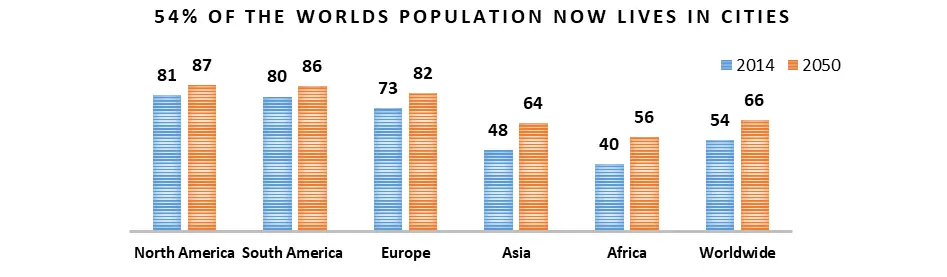
Rapid urbanization profoundly shapes the ride-hailing market
The ride-hailing market has been significantly impacted by rapid urbanization, shaping its trajectory and operational dynamics in several ways. With cities worldwide experiencing exponential population growth and urban sprawl, there has been a surge in demand for convenient and flexible transportation solutions. Ride-hailing services have emerged as a pivotal player in urban mobility, offering on-demand transportation accessible through mobile applications.
Rapid urbanization has driven the expansion of ride-hailing services by enlarging the pool of potential customers. As more individuals migrate to cities in search of employment opportunities and enhanced living standards, the necessity for efficient transportation options becomes increasingly crucial. Ride-hailing platforms capitalize on this demand, providing urban residents with convenient access to transportation without the burdens associated with car ownership or reliance on traditional taxi services. Additionally, urbanization induces shifts in consumer preferences and lifestyle habits, particularly among younger demographics accustomed to digital platforms and on-demand services. Ride-hailing services align with these preferences by offering flexible scheduling, personalized experiences, and diverse vehicle options, including eco-friendly alternatives like electric and hybrid vehicles.
Rapid urbanization profoundly shapes the ride-hailing market by expanding its customer base, addressing urban transportation challenges, driving technological innovation, and accommodating evolving consumer preferences. As cities continue to evolve, ride-hailing services are poised to assume an increasingly influential role in shaping urban mobility ecosystems globally.
 Vehicle boom fuels growth in ride-hailing market
The surge in vehicle sales presents a significant opportunity for the ride-hailing market. With more individuals acquiring cars specifically for ride-hailing purposes, there is a notable increase in the pool of potential drivers available for ride-hailing platforms. This influx of drivers not only leads to shorter wait times and improved accessibility for passengers but also intensifies competition among drivers. This competition serves to elevate service standards and compels ride-hailing companies to offer more enticing benefits to both attract and retain drivers, thereby enhancing the overall experience for consumers in the ride-hailing market.
Distribution of global car sales by region 2022-2023
| Region | 2022 | 2023 |
| China | 32% | 33.2% |
| US | 18.4% | 17% |
| Japan | 5.4% | 5.1% |
| India | 4.4% | 5.4% |
| Western Europe | 15.2% | 14.5% |
| Eastern Europe | 5% | 3.6% |
| Others | 19.6% | 21.2% |
| Total | 100% | 100% |
The rise in vehicle ownership prompts ride-hailing companies to expand their operational footprint into previously untapped geographical regions. Particularly in areas where car ownership rates are high, ride-hailing services can effectively bridge transportation gaps, notably in suburban or rural locales with limited access to public transit. This geographical expansion not only broadens the market reach of ride-hailing services but also introduces them to new customer demographics, thereby fostering additional growth prospects for ride-hailing market.
Moreover, the escalating trend of vehicle sales empowers ride-hailing companies to diversify their vehicle fleets, thereby offering customers a broader array of options. Whether investing in environmentally sustainable vehicles, luxurious car models, or specialized vehicles catering to specific customer preferences, this diversification enriches the overall customer experience and appeals to various segments of the market. Consequently, it fuels heightened demand for ride-hailing services. The surge in vehicle sales manifests a multitude of positive impacts on the ride-hailing market. It catalyzes driver recruitment, fosters vigorous competition among industry players, encourages geographical expansion, and facilitates fleet diversification. Collectively, these factors contribute to an enhanced quality and accessibility of ride-hailing services, reinforcing their prominence within the transportation landscape for consumers. The ride-hailing market benefits from these trends, positioning itself as a flexible and accessible solution for urban mobility needs.
Ride-hailing market thrives as gaps in public transport drive demand for on-demand, personalized travel.
The extended wait times experienced with public transport and the absence of alternative transportation options have indeed catalysed the growth of the ride-hailing market. In numerous urban areas, public transportation systems are plagued by inefficiencies, unreliability, and inadequate coverage, leaving certain areas underserved. This often leads to prolonged wait times, overcrowded vehicles, and inconvenient routes, prompting travellers and passengers to seek alternative means of transportation. Ride-hailing services adeptly address these challenges by offering on-demand transportation that is notably more convenient, flexible, and personalized to individual preferences.
Travellers can easily request a ride at their desired time and location, thereby bypassing the inconvenience of waiting for scheduled public transport or navigating complex routes. Moreover, ride-hailing services frequently operate in areas where public transportation options are limited, ensuring access to transportation in underserved communities. Consequently, the convenience and accessibility of ride-hailing services attract travellers and passengers away from traditional public transport options, effectively fueling the growth of the ride-hailing market and significantly improving urban mobility for individuals worldwide.
A new era of connectivity
The emergence of autonomous driving technology is compelling businesses to reconsider traditional car rental models within the ride-hailing market. By offering the potential for safer and more efficient transportation, particularly in densely populated areas, autonomous vehicles have the capacity to significantly impact the utilization of shared transportation services. This technology has the potential to enhance accessibility and convenience, thereby driving the growth of ride-hailing services. Blockchain technology has garnered interest among manufacturers, indicating its potential to revolutionize car sharing within the ride-hailing market. Through blockchain, individuals may gain greater control over their vehicles when lending them to third parties, fostering trust and security within the car-sharing ecosystem. This could further encourage the adoption of ride-hailing services as a reliable and secure mode of urban mobility.
Furthermore, governmental initiatives aimed at reducing emissions and promoting smart city development intersect with discussions around car rental and ride-hailing services. Potential bans on private vehicles in certain areas may accelerate the adoption of electric fleets through ride-hailing services, positioning them as integral components of future urban mobility solutions. The convergence of these technological advancements and market trends is reshaping the ride-hailing market, making it more efficient, sustainable, and accessible within the ride-hailing market. As consumer preferences evolve and governments prioritize environmentally friendly transportation solutions, ride-hailing services are poised to play a pivotal role in shaping the future of urban mobility within the ride-hailing market.
Ride-hailing Market Segment Analysis
In 2024, the Ride-sharing segment likely holds the maximum share in the ride-hailing market. This dominance can be attributed to several key factors. Ride-sharing services have gained widespread popularity and acceptance among consumers due to their convenience and affordability. By allowing multiple passengers to share a ride, these services effectively reduce individual transportation costs, making them an attractive option for a broad range of users within the ride-hailing market. Additionally, ride-sharing platforms have invested heavily in marketing and brand awareness, establishing themselves as household names and capturing a significant portion of the market share within the ride-hailing market. The combination of affordability, convenience, practicality in urban environments, and environmental benefits positions the ride-sharing segment as the leader in the ride-hailing market in the year 2024.
The leasing car segment is expected to experience a Compound Annual Growth Rate (CAGR) of 16.6% during the forecast period. This growth can be primarily attributed to the significant role that car rental plays in public transportation, offering convenient booking options through both phone and taxi apps. Furthermore, the presence of numerous car operators and the widespread availability of taxi and car services worldwide contribute to the segment's higher market share in the global ride-hailing market.
Ride-hailing Market Regional Analysis:
Asia Pacific is dominating the global ride-hailing market due to rapid urbanization, and high share of automotive industry. Increase in the number of automotive manufacturing industries in emerging nations such as India and China are driving the Ride-hailing market during the forecast period. Presence of ride-hailing services provider companies boost the growth of the ride-hailing market in this region. Besides, the high production of passenger vehicles in this region and rapid expansion of automotive industry in countries like South Korea, China, and India is likely to drive the market. Increasing the per capita income and rising penetration of internet, and rise in usage of smartphones are anticipated to drive the market in this region.
Key Players & Market Share Overview:
The market exhibits the presence of both established players and new entrants, with many major players shifting their focus towards the burgeoning trend of ride-hailing services. To maintain their market share, players are diversifying their service offerings.
1. For example, in April , Gett forged a partnership with Curb to enhance post-pandemic business travel. This collaboration allows the two firms to provide corporate clients on their platform with a range of services including limousine, local taxi, and ride-hailing services such as Lyft.
2. Similarly, in June , Hyundai Motor Group and Grab Holdings Inc. entered a strategic partnership in mobility services. The initial phase of this collaboration aims to accelerate the adoption of electric vehicles in Southeast Asia. Through this partnership, the Group and delivery partners will work together to develop new pilots and initiatives aimed at reducing barriers to entry for partner organizations by minimizing total cost of ownership and alleviating range anxiety.
Ride-hailing Market Scope: Inquire before buying
| Ride-hailing Market | |||
|---|---|---|---|
| Report Coverage | Details | ||
| Base Year: | 2024 | Forecast Period: | 2025-2032 |
| Historical Data: | 2019 to 2024 | Market Size in 2024: | USD 130.46 Bn. |
| Forecast Period 2025 to 2032 CAGR: | 14.36% | Market Size in 2032: | USD 381.66 Bn. |
| Segments Covered: | By Type | Ride sharing Ride sourcing Leasing car |
|
| By Vehicle type | Two wheelers Three wheelers Four wheelers |
||
| By Commuting distance | Intra-city Outer-city |
||
Ride-hailing Market, by Region
North America (United States, Canada and Mexico)
Europe (UK, France, Germany, Italy, Spain, Sweden, Austria and Rest of Europe)
Asia Pacific (China, South Korea, Japan, India, Australia, Indonesia, Malaysia, Vietnam, Taiwan, Bangladesh, Pakistan and Rest of APAC)
Middle East and Africa (South Africa, GCC, Egypt, Nigeria and Rest of ME&A)
South America (Brazil, Argentina Rest of South America)
Ride-hailing Market Key Players:
North America:
1. Lyft, Inc. USA
2. We Trott USA
3. SkedGo Pty Ltd. USA
4. Uber Technologies Inc. USA
5. Wingz, Inc. USA
6. Zipcar USA
7. Curb Mobility USA
Europe:
1. BlaBlaCar, France
2. Cabify, Spain
3. Grab, Singapore
4. TomTom NV Netherlands
Asia-Pacific:
1. Beijing Xiaoju Technology Co, Ltd., China
MEA & Africa:
1. Careem UAE
2. Gett, Israel
3. Taxify OÜ Estonia
FAQs:
1. Which region has the largest share in Global Ride-hailing Market?
Ans: Asia-Pacific region holds the highest share in 2024.
2. What is the growth rate of Global Ride-hailing Market?
Ans: The Global Ride-hailing Market is growing at a CAGR of 14.36% during forecasting period 2025-2032.
3. What segments are covered in Global Ride-hailing market?
Ans: Global Ride-hailing Market is segmented into Type, Vehicle Type, Commuting Distance and region.
4. Who are the key players in Global Ride-hailing market?
Ans: The important key players in the Global Ride-hailing Market are – Lyft, Inc. USA,We Trott USA, SkedGo Pty Ltd. USA, Uber Technologies Inc. USA, Wingz, Inc. USA, Zipcar USA, Curb Mobility USA).
5. What was the Global Ride-hailing Market size in 2024?
Ans: The Global Ride-hailing Market size was USD 130.46 Billion in 2024.