
Procurement Software Market Size – Industry Structure Evaluation, Demand Drivers Analysis, Regional Growth Analysis and Identification, Competitive Positioning Review & Global Market Size Forecast to 2032
Overview
Procurement Software Market size was valued at USD 8.18 billion in 2024, and the total revenue is expected to grow at CAGR of 10.8 % from 2025 to 2032, reaching nearly USD 18.58 billion.
Procurement Software Market Overview
In today's world, businesses can be fully automated with the help of procurement software, which automates supply chain operations. This software can complete all the tasks, like purchase orders, invoice matching, and payment verifications. With the integration of e-procurement, speeding up the procedure is easy, offering features for streamlined inventory management. This is essential for businesses that make large acquisitions, and these software programs optimize purchasing and pricing activities. This technology unlocks ways to automate various procurement functions and enhances efficiency.
The MMR report provides in-depth coverage of the regulatory framework shaping the procurement software market, including region-specific policies, data privacy mandates, and the impact of global standards such as GDPR. It also features a patent analysis, identifying key innovators, geographic trends, and technology development patterns. The report highlights major technological advancements that are transforming procurement operations. The report examines adoption trends from 2019 to 2024, segmented by region, deployment model, and end-user industry, along with detailed price trend analysis comparing subscription, per-user, and deployment-based pricing structures.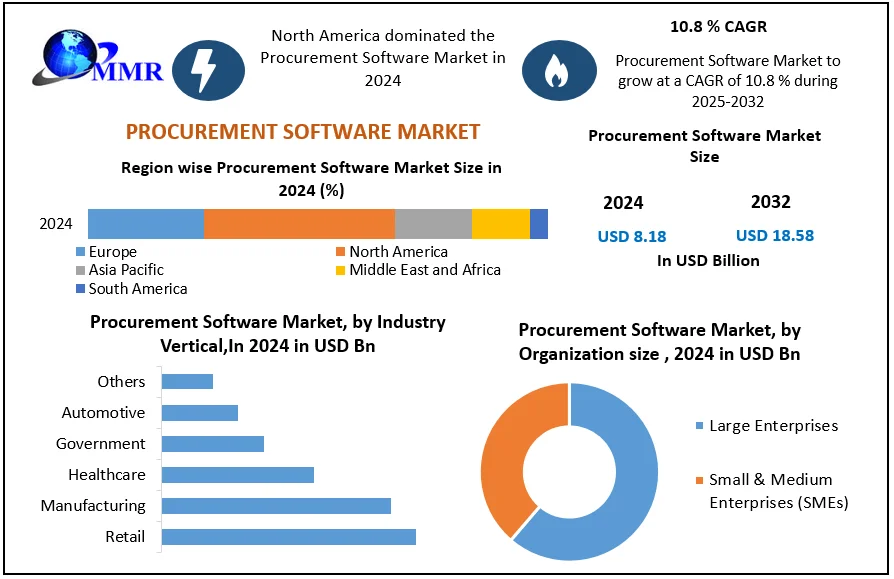 To know about the Research Methodology :- Request Free Sample Report
Procurement Software Market Dynamics
Cost Optimization and Efficiency Gains to boost the Procurement Software
Market growth: Organizations across industries are under constant pressure to reduce costs and enhance operational efficiency. Procurement software helps automate manual processes, streamline workflows, and improve spend visibility, enabling businesses to identify cost-saving opportunities and optimize their procurement strategies. The globalization of supply chains has made procurement more complexand procurement software provides tools for managing suppliers across different regions, currencies, and languages, ensuring supply chain resilience and efficiency, which is expected to boost the Procurement Software Market growth.
Procurement software offers advanced analytics and reporting capabilities. Businesses leverage these tools to gain real-time insights into their procurement operations, track key performance indicators (KPIs), and make data-driven decisions. Effective SRM is crucial for mitigating supply chain risks and ensuring a reliable supply of goods and services. Procurement software helps organizations build and maintain strong supplier relationships, fostering collaboration and innovation. Regulatory compliance and risk management are top priorities for businesses. Procurement software assists in monitoring and managing compliance with various regulations, reducing the risk of legal issues and reputational damage.
Integration with Enterprise Resource Planning (ERP) systems is becoming essential for seamless procurement operations. Procurement software integration enhances data consistency and enables end-to-end visibility, from procurement to payment. Artificial Intelligence (AI) and Machine Learning (ML) capabilities are being integrated into procurement software to enable predictive analytics, demand forecasting, and intelligent automation.
This enhances decision-making and reduces manual tasks. The shift towards remote work has accelerated the need for cloud-based procurement solutions that enable collaboration from anywhere. Procurement software with collaborative features supports remote teams in their procurement activities, and significantly contribute to the Procurement Software Industry growth.
As digital procurement becomes more prevalent, cyber security threats also increase. Procurement software includes security features to protect sensitive procurement data and transactions. Many organizations are prioritizing supplier diversity and inclusion. Procurement software help track and promote diverse supplier networks, fostering inclusivity and social responsibility.
High Initial Cost to Limit the Procurement Software Market Growth
Implementing a comprehensive procurement software solution is expensive, particularly for small and medium-sized enterprises (SMEs). This cost includes software licensing, hardware infrastructure, customization, training, and ongoing maintenance expenses. The deployment of procurement software is complex and time-consuming process. It often involves integrating with existing enterprise systems, which leads to disruptions in procurement workflows and operations and is expected to restrain the Procurement Software Market growth.
Employees and procurement teams resist to adopt new software and changing established procurement processes. Overcoming this resistance and ensuring user adoption is a significant challenge for the Procurement Software Industry growth. The procurement process involves handling sensitive data, such as supplier information, contract details, and financial data. Ensuring data security and compliance with regulations such as GDPR and HIPAA is essential and is challenging.
Managing and maximizing the potential of procurement software requires skilled personnel who understand both the software and procurement processes. The shortage of skilled professionals hinder effective utilization. Integrating procurement software with existing Enterprise Resource Planning (ERP) systems, financial systems, and other software is technically difficult. Incompatibilities and data synchronization issues arise during technical faults.
Customizing procurement software to meet specific business needs is complex and costly. It often requires the expertise of developers or consultants, which adds to the overall expense. Encouraging suppliers to use the same procurement software platform can be a challenge. Suppliers are reluctant to change their processes or invest in new technology, leading to limited collaboration. In multinational organizations, cultural differences and language barriers are complicate the implementation and adoption of procurement software across different regions.
Procurement Software Market Segmentation
Based on the organization size, the Procurement Software Market in 2024 is segmented into Large Enterprises and Small & Medium Enterprises (SMEs). Both segments are expected to experience significant growth during the forecast period (2025–2032), driven by the growing need to streamline procurement processes and improve operational efficiency. Large enterprises dominate the market in 2024, owing to their complex procurement environments and higher budgets for integrated software solutions. Meanwhile, SMEs are increasingly adopting cloud-based and subscription-driven platforms due to their affordability, scalability, and ease of implementation. This widespread adoption across segments reflects a broader shift toward digital procurement transformation.
Based on Industry Vertical, the Procurement Software Market in 2024 is segmented into Manufacturing, Healthcare, Retail, Government, Automotive, and Others. All segments are projected to grow steadily during the 2025–2032 forecast period. Retail leads the adoption due to high-volume purchasing and demand for real-time inventory control, while manufacturing follows closely, driven by complex supplier networks and cost optimization needs. Healthcare and government sectors are increasingly investing in compliance-focused procurement platforms, and automotive players are embracing digital tools to manage global sourcing. The "Others" category includes BFSI, IT, and education, contributing to overall market diversification.
Procurement Software Market Regional Analysis
North America: The USA has dominated the Procurement Software Market in 2024 with a share of 34.3% and is expected to hold the largest market share over the forecast period. The market in North America has experienced significant growth in recent years, driven by various factors that reflect the region's dynamic business landscape. Organizations across North America are embracing digital transformation initiatives to enhance their procurement processes. Procurement software solutions play a crucial role in automating manual tasks, streamlining workflows, and providing real-time insights into procurement operations.
Procurement Software companies are constantly looking for ways to optimize costs and enhance operational efficiency. Procurement software enables better spend visibility, cost analysis, and supplier management, helping organizations identify cost-saving opportunities. The region's complex and globalized supply chains necessitate advanced procurement solutions. Procurement software helps manage suppliers across different regions, currencies, and languages, ensuring supply chain resilience. Regulatory compliance and risk mitigation are paramount.
Procurement software helps organizations adhere to various regulations and manage risks, reducing legal issues and reputational damage. Integration with Enterprise Resource Planning (ERP) systems is becoming essential for seamless procurement operations. Procurement software integration enhances data consistency and end-to-end visibility. Many North American organizations prioritize sustainability and Corporate Social Responsibility (CSR). Procurement software assists in tracking and evaluating supplier sustainability practices, which significantly contribute to the Procurement Software Market growth. The shift to remote work has accelerated the adoption of cloud-based procurement solutions, allowing teams to collaborate from anywhere, which is particularly relevant in a post-pandemic world.
As digital procurement becomes more prevalent, cybersecurity threats increase. Procurement software includes security features to protect sensitive procurement data and transactions. While Asia-Pacific is expected to grow at a CAGR of 4.5 % through the forecast period. The presence of several logistics firms in emerging economies such as India, China, etc. will drive the market growth of procurement software through the forecast period.
Procurement Software Market Competitive Landscape
The ability to serve customers globally is a competitive advantage. Companies that can adapt their software to different languages, currencies, and legal requirements have an edge in reaching international markets. Procurement software providers are competing to offer seamless integration with other enterprise systems like ERP, financial software, and supplier networks. This helps organizations achieve end-to-end visibility and efficiency. The ability to customize software to meet the unique needs of individual organizations is a competitive differentiator. Procurement software providers are working to offer flexible and configurable solutions.
Procurement Software companies with extensive supplier networks and ecosystems have a competitive advantage. These ecosystems facilitate supplier collaboration, electronic procurement, and supplier diversity initiatives. Pricing models and the overall value proposition play a significant role in competition. Companies that offer competitive pricing while delivering substantial value in terms of features and benefits attract customers. Some Procurement Software companies focus on specific industry verticals, such as healthcare or manufacturing, and provide tailored procurement solutions designed for the unique needs of those industries.
Procurement Software Market Scope: Inquiry Before Buying
| Procurement Software Market | |||
|---|---|---|---|
| Report Coverage | Details | ||
| Base Year: | 2024 | Forecast Period: | 2025-2032 |
| Historical Data: | 2019 to 2024 | Market Size in 2024: | USD 8.18 Billion |
| Forecast Period 2025 to 2032 CAGR: | 10.8 % | Market Size in 2032: | USD 18.58 Billion |
| Segments Covered: | by Deployment Type | On premises Cloud based |
|
| by Organization size | Large Enterprises Small & Medium Enterprises (SMEs) |
||
| by Industry Vertical | Manufacturing Healthcare Retail Government Automotive Others |
||
Procurement Software Market by Region
North America (United States, Canada, and Mexico)
Europe (UK, France, Germany, Italy, Spain, Sweden, Austria and Rest of Europe)
Asia Pacific (China, South Korea, Japan, India, Australia, Indonesia, Malaysia, Vietnam, Taiwan, Bangladesh, Pakistan and Rest of APAC)
Middle East and Africa (South Africa, GCC, Egypt, Nigeria and Rest of ME&A)
South America (Brazil, Argentina Rest of South America)
Procurement Software Key Players Include:
1. SAP Ariba
2. Coupa Software
3. Oracle Corporation
4. Epicor Software Corporation
5. GEP
6. Jaggaer
7. IBM Corporation
8. HCL Technologies Limited (India)
9. Ivalua
10. PlanetBids, LLC.
11. Zycus
12. Basware
13. Vroozi
14. Proactis
15. Tradeshift
16. SynerTrade
17. Bonfire
18. Scanmarket
19. Vrozi
20. Keelvar
21. Quotiss
22. Procurify Technologies Inc.
23. SynerTrade
24. Mavenvista Technologies Pvt. Ltd
25. Insight
26. Others
Frequently Asked Questions:
1] What segments are covered in the Procurement Software Market report?
Ans. The segments covered in the Procurement Software Market report are based on Deployment Mode, Organization Size, Industry Vertical, and region
2] Which region is expected to hold the highest share of the Procurement Software Market?
Ans. The North America region is expected to hold the highest share of the Procurement Software Market.
3] What is the market size of the Procurement Software Market by 2032?
Ans. The market size of the Procurement Software Market by 2032 is USD 18.58 Bn.
4] What is the growth rate of the Procurement Software Market?
Ans. The Global Procurement Software Market is growing at a CAGR of 10.8 % during the forecasting period 2025-2032.
5] What was the market size of the Procurement Software Market in 2024?
Ans. The market size of the Procurement Software Market in 2024 was USD 8.18 Bn.