
OTC Consumer Health Products Market – Industry Structure Evaluation, Demand Drivers Analysis, Regional Growth Analysis and Identification, Competitive Positioning Review & Global Market Size Forecast to 2032
Overview
The OTC Consumer Health Products Market size was valued at USD 51.30 Billion in 2024 and the total OTC Consumer Health Products revenue is expected to grow at a CAGR of 6.38% from 2025 to 2032, reaching nearly USD 84.15 Billion by 2032.
MMR Key Findings:
OTC Consumer Health Products Is A Fragmented But Rapidly Growing Industry
1. The global OTC consumer health products market is experiencing significant growth, driven by various factors such as the Rx to OTC drug switch, increased demand for dietary supplements, and the rapid growth of the digital health market.
2. The transition of prescription drugs to over-the-counter availability is contributing to the OTC Consumer Health Products market's growth, with consumers increasingly seeking accessible and convenient healthcare solutions.
3. Consumers are increasingly investing in dietary supplements, vitamins, and minerals to boost immunity and maintain a healthy lifestyle. The purchase of 1.3 billion packs of vitamins and minerals in Europe alone in 2022 underscores the significant role of supplements in consumer health management.
4. The digital health market is witnessing exponential growth, with a projected CAGR of over 14% from 2025 to 2032. Direct-to-consumer sales of digital health technologies, coupled with the widespread adoption of wearable devices capable of monitoring health parameters, are driving the growth of the OTC consumer health products market.
5. Despite its rapid growth, the OTC consumer health industry remains highly fragmented, with no single company dominating the market. The top ten players collectively hold a modest 27.5% market share, with the largest player commanding just 6%. This fragmentation presents opportunities for agile companies to capitalize on emerging wellness trends and target consumers directly.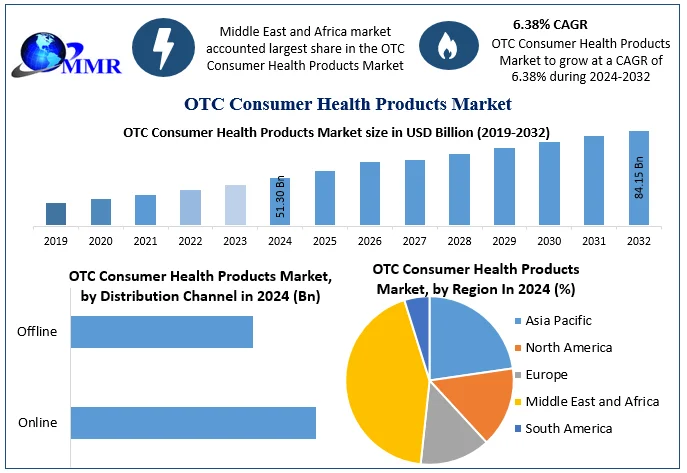 To know about the Research Methodology :- Request Free Sample Report
With increasing awareness of self-care and a growing emphasis on preventive healthcare, the OTC consumer health products industry has been experiencing steady growth globally in recent years. Several factors are contributing to the growth of the OTC consumer health products market. The rising prevalence of chronic diseases such as diabetes, hypertension, and obesity has fueled demand for OTC medications and supplements aimed at managing these conditions. Additionally, the aging population and the desire for active lifestyles among older adults have led to increased consumption of OTC products for joint health, cognitive function, and general well-being. Moreover, advancements in technology and digital healthcare have made it easier for consumers to access information about OTC products and make informed purchasing decisions, further driving the OTC consumer health products market growth.
According to the MMR analysis, Competition in the OTC consumer health products market is intense, with both established pharmaceutical companies and emerging players vying for market share. Key players are continuously innovating and diversifying their product portfolios to stay ahead in this competitive landscape. For instance, in 2020, Johnson & Johnson Consumer Health launched a new line of OTC products called "Dr. C for U," which includes vitamins and supplements targeted at immune support and overall wellness. This initiative reflects the company's strategic response to the growing consumer demand for immune-boosting products, particularly amidst the COVID-19 pandemic.
Key players in the OTC consumer health products market are also focusing on expanding their distribution networks and strengthening their digital presence to reach a broader audience. For example, GlaxoSmithKline (GSK) has been investing in e-commerce platforms and online marketing campaigns to promote its OTC brands such as Sensodyne, Panadol, and Voltaren. By leveraging digital channels, GSK aims to enhance consumer engagement and drive sales growth in the competitive OTC consumer health products market.
GSK Consumer Healthcare's three-year Pharmacist Support Programme, aimed at enhancing resources, mental health provisions, and policy changes for pharmacists, reflects a strategic move to strengthen the role of pharmacies in the age of self-care. By addressing barriers such as workload, remuneration, and health literacy, GSK aims to empower pharmacists and improve public awareness of their expertise. This initiative is expected to positively impact the OTC Consumer Health Products Market growth by fostering greater trust in pharmacists' recommendations, driving increased utilization of OTC products, and facilitating more meaningful self-care conversations between pharmacists and consumers.
OTC Consumer Health Products Market Dynamics:
Generation Z Has Revolutionized OTC Consumer Healthcare Products
The emergence of Generation Z, or Zoomers, is significantly influencing the Over-The-Counter (OTC) consumer health products market. This generation, born between 1997 and 2012, is characterized by its unique approach to health and wellness, driven by digital technology, holistic self-care practices, and social consciousness. The digital nativity of Gen Z has revolutionized how they engage with healthcare information and products. With smartphones in hand from a young age, they rely heavily on technology for accessing information, including health-related queries. This reliance on digital platforms like TikTok, YouTube, and Instagram for health advice underscores the importance of accurate and trustworthy online resources. Therefore, companies in the OTC consumer health products market prioritize digital marketing strategies and ensure their online presence is optimized for search engines to provide reliable information to Gen Z consumers.
Strategies For Effective OTC Pharmaceutical Marketing
| Strategy | Description |
| Get Creative with Mobile | Utilize mobile platforms for enhanced consumer engagement, offering features like diagnostic tools, symptom-based filtering, and localized information. |
| Connect with Health Apps & Wearable Tech | Leverage partnerships and advertising opportunities with health and fitness apps, as well as wearable technology, to reach health-conscious consumers. |
| Invest in Both Seasonal & Continuity Campaigns | Implement continuity programs and seasonal activations to foster brand loyalty and leverage seasonal benefits in marketing campaigns. |
| Create & Disseminate Useful Content Online | Develop educational content such as articles, infographics, and videos to provide valuable information to consumers and establish brand authority in health-related topics. |
| Tap into Social Media | Engage consumers through social media platforms by sharing educational content, hosting interactive events, and leveraging user-generated content to build brand trust and credibility. |
| Package Intelligently | Use packaging as a communication tool to convey product information effectively and leverage augmented reality features for innovative promotions. |
| Incorporate Influencers in Marketing | Collaborate with influencers to promote OTC products authentically and tap into their followers' trust to create affinity with the brand. |
| Co-Branded Loyalty Programs | Partner with other brands or retailers to create co-branded loyalty programs, leveraging data insights for better decision-making and long-term growth. |
In addition, Gen Z's holistic approach to health extends beyond traditional pharmaceutical solutions. They are more inclined towards self-care practices and are wary of conventional healthcare models. Instead, they seek out alternative forms of treatment and prevention, such as plant-based, vegan, organic, and sustainable products. This shift in consumer preferences is driving the demand for non-traditional OTC offerings that align with their values of environmental sustainability and personal wellness. Thus, this factor supported the OTC consumer Health Products Market revenue growth. The rise of pill fatigue among consumers, including Gen Z, is another significant factor influencing the OTC consumer health products market. Traditional tablets and capsules are losing appeal to a generation that seeks more diverse and convenient options for nutritional intake and wellness maintenance. As a result, novel delivery formats such as topicals, gummies, aerosols, and liquids are gaining traction, offering consumers a more palatable and user-friendly experience.
Moreover, Gen Z's heightened awareness of mental health issues is influencing their purchasing decisions in the OTC consumer health products market. With stress and anxiety prevalent among this demographic, there is a growing demand for products that address mental well-being, such as stress-relief supplements and adaptogen-infused shots. This shift towards mental health-focused products underscores the importance of catering to the holistic needs of Gen Z consumers beyond physical ailments. In addition to their focus on personal wellness, Gen Z is also socially conscious and values brands that demonstrate corporate social responsibility. Companies in the OTC consumer health products market align with Gen Z's values of inclusivity, diversity, and sustainability to resonate with this demographic. By emphasizing ethical sourcing, environmental stewardship, and social impact initiatives, brands establish trust and loyalty among Gen Z consumers. Changing Customer Channels Creates New Opportunities
The changing customer channels in the OTC consumer health products industry are significantly impacting the market dynamics and driving growth opportunities. Traditionally, community pharmacies have been the primary distribution channel for OTC products. However, with independent community pharmacies often not fully focused on their front-end business, many top-selling OTC products are only available in a fraction of these stores. To capitalize on the untapped potential, suppliers are exploring alternative distribution channels through strategic partnerships with various healthcare entities. These channels include large health systems' outpatient pharmacies, pharmacy buying groups, mail-order pharmacies, and even direct-to-consumer opportunities. This shift is evident in the evolution of distribution businesses like AmerisourceBergen, where the proportion of consumer product businesses attributed to independent community pharmacies has decreased over the years.
In these changes, selecting the right distribution partner becomes crucial for OTC consumer Health Products manufacturers seeking to unlock new opportunities. A proficient distribution partner acts as a conduit for category management expertise and downstream customer insights. They provide invaluable support in marketing to downstream customers or end-consumer patients, often through outsourced category management services. Leveraging their expertise, a distribution partner facilitates access to diverse customer channels and patient populations, driving the OTC consumer health products market growth. This evolution in distribution strategies translates into scale for suppliers and growth opportunities for healthcare sites. Distributors, by offering professional services and targeted opportunities, contribute to the OTC consumer health products market size growth. They enable manufacturers to implement effective go-to-market plans, including planograms and item selection, thereby increasing accessibility to a broader range of customer channels and patients.
OTC Consumer Health Products Market Segment Analysis:
E-commerce exponentially broadens access:
Based on the distribution channel, the offline segment dominated the global OTC consumer health products market with the highest market share of more than 60% in 2024 and is expected to maintain its dominance by 2032. The established presence of brick-and-mortar pharmacies and retail outlets is expected to be the primary factor driving the segment growth. Consumers often prefer the convenience of purchasing OTC products in person, where they receive immediate assistance from pharmacists and physically inspect the products before buying. Moreover, offline channels offer a sense of trust and reliability, which is crucial for health-related purchases. The growth of the offline segment is further driven by factors such as demographic trends, increasing healthcare awareness, and the prevalence of chronic conditions requiring continuous OTC medication. Additionally, promotional activities, personalized customer service, and the availability of prescription-to-OTC switch products contribute to the offline segment's sustained growth.
In addition, the online segment is expected to grow at a rapid CAGR and offer lucrative growth opportunities for OTC consumer health product manufacturers during the forecast period. The exponential rise of e-commerce platforms, specifically giants like Amazon, has revolutionized the OTC consumer health products market. These platforms offer unprecedented access to consumers by providing a virtual shopping mall environment where products are sold and shipped directly to customers.
Even if certain products are not directly sold and shipped by Amazon, third-party wholesalers serve as profitable intermediaries, leveraging the reach of the web's largest retailers to connect with consumers. Manufacturers in the OTC consumer health products market leverage their primary distributors to capitalize on e-commerce opportunities effectively. These distributors play a crucial role in managing wholesale shipments to e-commerce sites and third-party vendors while ensuring supply chain integrity by monitoring sellers.
In times of urgent need, such as during the COVID-19 pandemic when certain products were in high demand, distributors stepped into the source and shipped specific items, facilitating seamless transactions between manufacturers and consumers. The evolution in e-commerce translates to a paradigm shift in how brands compete and grow in the OTC consumer health products market. By embracing online platforms, manufacturers reach consumers directly, bypassing traditional retail channels and expanding their brand presence. This direct-to-consumer approach not only increases accessibility for customers but also provides manufacturers with greater control over their brand image and consumer experience.
OTC Consumer Health Products Market Regional Insights:
The Middle East region is currently experiencing a significant transformation in the OTC consumer health products market, driven by its rapidly growing population of 300 Billion, extensive digital adoption, and a commitment to economic development. This region, known for its dynamic states and digital advancements, is witnessing a shift in consumer behavior towards proactive health management. Empowered by digital technologies and increased access to health information, consumers are becoming more health-conscious, actively seeking innovative ways to manage their well-being post-pandemic.
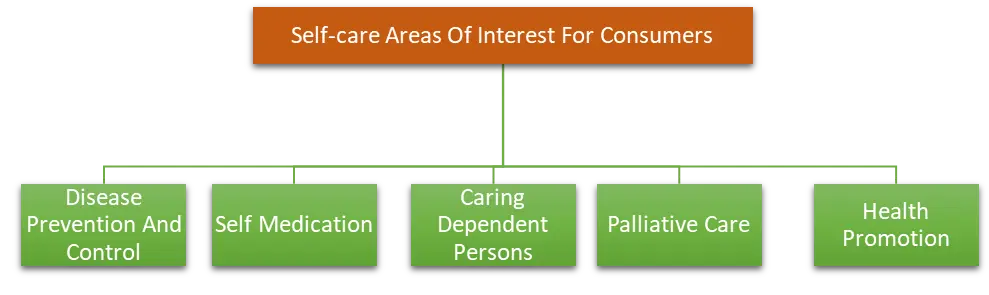
Areas Where Individuals Manage Their Health Care
 In the Gulf Cooperation Council (GCC) countries, the OTC consumer health products market has flourished, reaching nearly USD 9 billion by 2030, propelled by a heightened interest in health and wellness. Notably, the Vitamins, Minerals, and supplements segment exhibited remarkable growth at +19.2%, reflecting a strong emphasis on immune support. As consumers take greater control of their health, the OTC consumer health products market is expected to grow at a CAGR of 8.97%. This growth is marked by a shift towards self-care, where consumers prioritize prevention and holistic well-being, creating opportunities for businesses to adapt to evolving consumer needs and regulatory reforms.
To modernize pharmacy standards for OTC products, the Gulf Cooperation Council (GCC) countries are implementing regulatory reforms in response to changing consumer behavior. These reforms aim to streamline activities, enhance patient safety, spur innovation, and ultimately, provide consumers with more choices. The Health Authorities in the region are advocating for expanded access to OTC products, ensuring regulatory oversight to maintain safety and effectiveness. As a result, these all factors positively benefit the OTC consumer Health Products market in the Middle East region.
OTC Consumer Health Products Market Scope: Inquiry Before Buying
| OTC Consumer Health Products Market | |||
|---|---|---|---|
| Report Coverage | Details | ||
| Base Year: | 2024 | Forecast Period: | 2025-2032 |
| Historical Data: | 2019 to 2024 | Market Size in 2024: | USD 51.30 Bn. |
| Forecast Period 2025 to 2032 CAGR: | 6.38% | Market Size in 2032: | USD 84.15 Bn. |
| Segments Covered: | by Product Type | Cough, Cold, and Flu Remedies Vitamins, Minerals, and Supplements Digestive Health Products Eye Care Products Oral Care Products Dermatological Products Others |
|
| by Age Group | Pediatric OTC Products Adult OTC Products Geriatric OTC Products |
||
| by Distribution Channel | Online Offline |
||
OTC Consumer Health Products Market by Region:
North America (United States, Canada, and Mexico)
Europe (UK, France, Germany, Italy, Spain, Sweden, Austria, and the Rest of Europe)
Asia Pacific (China, South Korea, Japan, India, Australia, Indonesia, Malaysia, Vietnam, Taiwan, Bangladesh, Pakistan, and the Rest of APAC)
Middle East and Africa (South Africa, GCC, Egypt, Nigeria, and the Rest of ME&A)
South America (Brazil, Argentina Rest of South America)
Leading OTC Consumer Health Products Market Key Players:
1. Johnson & Johnson (New Jersey, United States)
2. Colgate Palmolive Mfg. Company (New York, United States)
3. Pfizer Inc. (New York, United States)
4. Abbott Laboratories (Illinois, United States)
5. American Health (New York, United States)
6. Procter & Gamble Corp. (Ohio, United States)
7. Henkel AG & Co. (Düsseldorf, Germany)
8. Merck KGaA (Darmstadt, Germany)
9. DKSH Holding Ltd. (Zurich, Switzerland)
10. GlaxoSmithKline plc. (Brentford, United Kingdom)
11. Sanofi (Paris, France)
12. Bayer AG (Leverkusen, Germany)
13. Nestle Company (Vevey, Switzerland)
14. Croda International Plc. (Snaith, United Kingdom)
15. Angelini Spa (Santa Palomba, Italy)
16. STADA Arzneimittel AG (Bad Vilbel, Germany)
17. Reckitt Benckiser (Slough, United Kingdom)
18. Danone Food Company (Paris, France)
19. Unilever (London, United Kingdom)
20. Teva Pharmaceutical Industries Ltd. (Petah Tikva, Israel)
21. GLENMARK PHARMACEUTICALS LTD. (Mumbai, India)
22. Sun Pharmaceuticals Ltd. (Mumbai, India)
23. Piramal Enterprises Ltd. (Mumbai, India)
FAQs:
1. What are the growth drivers for the OTC Consumer Health Products market?
Ans. Increasing consumer preference for self-medication and convenience, rising healthcare costs, expanding geriatric population, growing awareness about preventive healthcare, advancements in OTC product formulations and innovations, expanding retail pharmacy chains, and the availability of a wide range of OTC products are expected to be the major drivers for the OTC Consumer Health Products market.
2. What are the major restraints for the OTC Consumer Health Products market growth?
Ans. stringent regulatory requirements, concerns about product safety and efficacy, limited availability of certain products in certain regions, and competition from prescription medications are major restraints for the OTC Consumer Health Products market growth. Additionally, pricing pressures, counterfeit products, and challenges in marketing and distribution also hinder market growth.
3. Which region is expected to lead the global OTC Consumer Health Products market during the forecast period?
Ans. North America is expected to lead the global OTC Consumer Health Products market during the forecast period. North America's well-established healthcare infrastructure, high consumer awareness, aging population, favorable regulations, and presence of key market players contribute to its expected leadership in the global OTC Consumer Health Products market.
4. What is the projected market size and growth rate of the OTC Consumer Health Products Market?
Ans. The OTC Consumer Health Products Market size was valued at USD 51.30 Billion in 2024 and the total OTC Consumer Health Products revenue is expected to grow at a CAGR of 6.38% from 2025 to 2032, reaching nearly USD 84.15 Billion by 2032.
5. What segments are covered in the OTC Consumer Health Products Market report?
Ans. The segments covered in the OTC Consumer Health Products market report are Product Type, Age Group, Distribution Channel, and Region.