
Global Organic Pea Protein Market by Product Type, by Form Type, by Brand, by Function, by Application, by Region and Forecast 2034
Overview
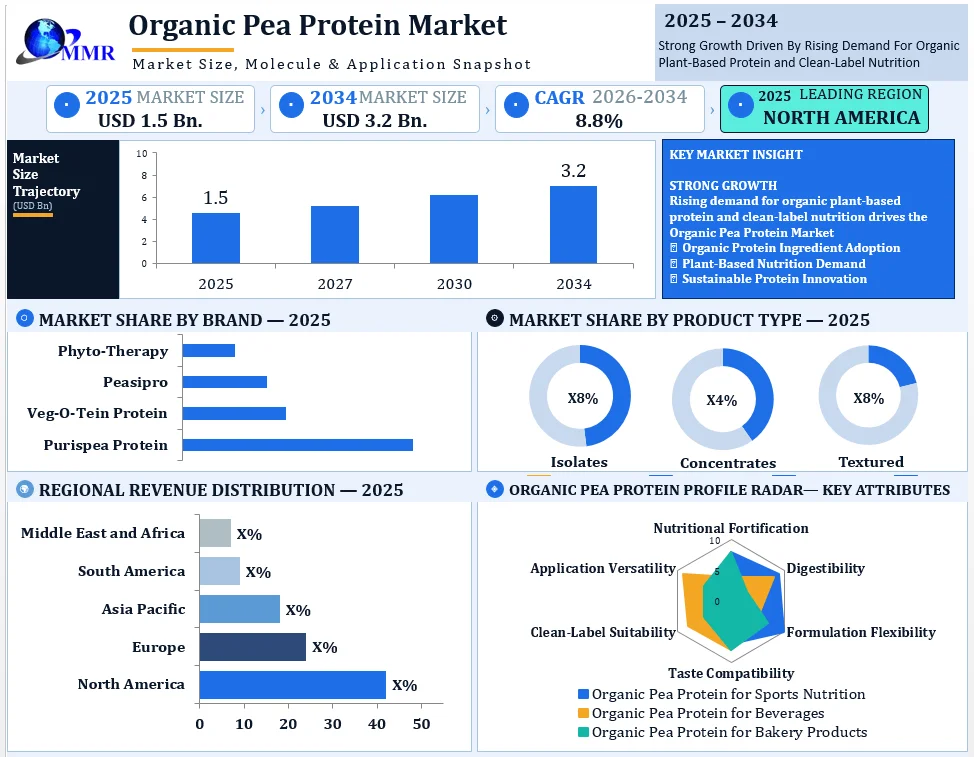
Global Organic Pea Protein Market size was valued at USD 1.5 Bn. in 2025 and the total revenue is expected to grow at a CAGR of 8.8% through 2026 to 2034, reaching USD 3.2 Bn. by 2034.
Organic Pea Protein Market Overview:
The Organic Pea Protein Market comprises the production, processing, and distribution of plant-based protein ingredients extracted from organically grown peas. Organic pea protein serves as a sustainable, dairy-free, and vegan protein source for food and beverage manufacturers, sports nutrition brands, dietary supplement producers, and plant-based food companies. Its functional properties, protein-rich composition, and suitability for clean-label formulations make it an important ingredient in organic protein powder, vegan nutrition products, plant-based meat alternatives, protein bars, and dairy-free beverages.
The Organic Pea Protein Market is gaining momentum as consumers increasingly prefer plant-based nutrition, certified organic ingredients, allergen-conscious food products, and sustainable protein alternatives. Rising demand for vegan protein supplements, organic sports nutrition, fortified foods, and meat-free products encourages manufacturers to improve protein extraction, taste, solubility, and formulation quality. Key players such as Roquette and PURIS contribute to market development through pea protein ingredients and plant-based food solutions. North America is the leading region in the Organic Pea Protein Market, supported by established plant-based food manufacturing, demand for organic nutrition products, and well-developed ingredient distribution networks. Organic certification standards and agricultural guidance from the United States Department of Agriculture also influence ingredient sourcing, traceability, and product quality expectations.
The MMR report examines Organic Pea Protein Market trends, market segmentation, demand drivers, restraints, emerging opportunities, regional performance, and competitive positioning. It evaluates growth opportunities in organic protein supplements, clean-label food products, vegan meat alternatives, functional beverages, and sustainable food ingredients, helping manufacturers, investors, suppliers, and distributors identify evolving consumer demand and potential business expansion areas.
Organic Pea Protein Market Size, Growth and Share Analysis
To know about the Research Methodology :- Request Free Sample Report
Organic Pea Protein Market Key Highlights
| Key Highlight |
Insights |
|---|---|
| Market Size and Growth Forecast | The Organic Pea Protein Market is valued at USD 1.5 billion in 2025 and is projected to reach USD 3.2 billion by 2034, registering a CAGR of 8.8% during the forecast period. |
| Leading Regional Market | North America leads the Organic Pea Protein Market, driven by demand for organic plant-based nutrition, vegan protein supplements, clean-label ingredients, and sustainable food products. |
| Rising Demand for Plant-Based Protein | Increasing consumer preference for dairy-free nutrition, organic protein powders, sports nutrition, and meat alternatives supports demand for organic pea protein ingredients. |
| Product Innovation and Functional Applications | Improvements in protein solubility, taste, texture, and formulation quality are increasing the use of organic pea protein in functional beverages, dietary supplements, plant-based meat alternatives, and protein-enriched snacks. |
| Competitive Landscape and Growth Opportunities | PURIS, Roquette Frères, Ingredion Incorporated, COSUCRA, and Axiom Foods compete through ingredient innovation, product functionality, and sourcing capabilities, while demand for certified organic ingredients creates new opportunities across food, beverage, and specialized nutrition applications. |
Organic Pea Protein Market Dynamics
Organic Pea Protein Market Driver
Rising Consumer Demand for Organic Plant-Based Protein and Clean-Label Nutrition
The growing preference for organic plant-based protein, vegan nutrition, and clean-label food ingredients is a major driver of the Organic Pea Protein Market. Consumers increasingly seek protein sources that align with vegetarian diets, sustainable food choices, and dairy-free nutrition, encouraging food manufacturers to incorporate organic pea protein into protein powders, nutritional bars, meat alternatives, and fortified beverages. According to dietary recommendations from health authorities, protein remains an essential nutrient for muscle maintenance and normal body functions, supporting demand for convenient protein-rich foods across different consumer groups. Organic pea protein typically provides around 20–25 grams of protein per 30-gram serving, depending on the formulation and protein concentration. Increasing participation in fitness activities, rising interest in plant-based sports nutrition, and greater availability of organic products through online retail and specialty stores further support demand for organic pea protein ingredients.
Organic Pea Protein Market Restraint
High Organic Pea Protein Production Costs and Limited Certified Raw Material Supply
High organic pea protein production costs remain a significant restraint on the Organic Pea Protein Market, particularly for manufacturers competing with conventional pea protein, soy protein, and whey protein ingredients. Organic pea cultivation requires compliance with certification standards, careful soil management, crop monitoring, and restrictions on prohibited synthetic agricultural inputs, which can increase sourcing and production expenses. Organic certification, traceability, protein extraction, drying, quality testing, and specialized processing also contribute to the final ingredient cost. Variations in pea crop yields, weather conditions, transportation expenses, and the availability of certified organic peas can create procurement challenges for ingredient manufacturers. These cost pressures may limit the adoption of organic pea protein in price-sensitive food categories, especially where manufacturers need to maintain affordable retail prices while meeting protein content, taste, texture, and organic labeling requirements.
Organic Pea Protein Market Opportunity
Increasing Adoption of Organic Pea Protein in Functional Foods and Vegan Nutrition Products
Rising demand for functional foods, plant-based sports nutrition, and organic dietary supplements creates attractive opportunities for the Organic Pea Protein Market. Manufacturers can develop protein powders, ready-to-drink beverages, high-protein snacks, bakery products, and plant-based meat alternatives that combine organic certification with convenient nutrition. Products delivering around 15–30 grams of protein per serving can target different consumer needs, although the appropriate formulation depends on product type and intended use. Opportunities also exist in blended plant proteins that combine pea protein with rice or other complementary protein sources to improve amino acid balance and product functionality. Investment in improved extraction processes, taste masking, solubility, and texture enhancement can help manufacturers address formulation limitations and enter premium nutrition categories. E-commerce platforms, organic food retailers, fitness nutrition outlets, and private-label brands provide additional routes to reach consumers seeking organic pea protein powder and clean-label protein ingredients.
Organic Pea Protein Market Challenges
Improving Organic Pea Protein Taste, Solubility, and Product Formulation Quality
Maintaining consistent taste, texture, solubility, and nutritional quality is a key challenge for organic pea protein manufacturers serving the food, beverage, and sports nutrition industries. Pea protein can develop earthy or beany flavor notes, while its behavior in liquids may create sedimentation, grittiness, or formulation difficulties in certain applications. These characteristics can affect consumer acceptance, particularly in ready-to-drink protein beverages, dairy-free alternatives, and flavored nutritional products. Manufacturers must optimize processing conditions, ingredient combinations, and formulation techniques without compromising organic certification requirements or clean-label positioning. They also need to maintain consistent protein concentration, microbial safety, allergen management, and batch-to-batch quality while meeting food safety and labeling regulations across different markets. Addressing these technical challenges is essential for strengthening consumer trust, improving repeat purchases, and increasing the commercial suitability of organic pea protein across diverse food and nutrition applications.
Organic Pea Protein Market Key Trends
| Market trend | Description |
|---|---|
| Clean-Label Organic Protein Ingredient Adoption | Food manufacturers are incorporating certified organic pea protein into products with simpler ingredient lists to meet demand for transparent sourcing and recognizable ingredients. Organic certification and traceability help brands differentiate premium protein powders, snack products, and packaged foods from conventional alternatives. |
| High-Solubility Pea Protein for Functional Beverages |
Ingredient producers are improving solubility, dispersion, and flavor characteristics to make organic pea protein more suitable for ready-to-drink protein beverages, powdered drink mixes, and dairy-free formulations. Better suspension and smoother mouthfeel can help manufacturers address common consumer complaints about grittiness and sedimentation. |
| Organic Pea Protein in Hybrid Plant-Based Foods | Manufacturers are combining pea protein with other plant-derived ingredients to improve texture, nutritional balance, and product performance in meat alternatives, bakery products, and prepared meals. These hybrid formulations allow brands to adjust taste, structure, and protein content for different food applications. |
| Specialized Organic Protein for Sports and Active Nutrition |
Sports nutrition brands are using organic pea protein in vegan protein powders, recovery blends, nutrition bars, and performance-focused products. Product development increasingly emphasizes protein quality, amino acid composition, flavor variety, and convenient serving formats for consumers seeking alternatives to dairy-based protein. |
| Farm-to-Ingredient Traceability and Certified Organic Sourcing |
Ingredient buyers are paying closer attention to pea origin, organic certification, supplier documentation, and consistency between batches. Stronger relationships with certified growers and transparent procurement practices can help processors manage raw material quality and meet the sourcing requirements of premium food and nutrition brands. |
| Organic Pea Protein in Premium Pet Nutrition |
Pet food manufacturers are exploring plant-based protein ingredients for selected premium and specialized formulations. Organic pea protein can support protein diversification and ingredient-positioning strategies, although its suitability depends on the animal's nutritional requirements, overall formulation, and product-specific regulatory standards. |
Global Organic Pea Protein Market Segmentation:
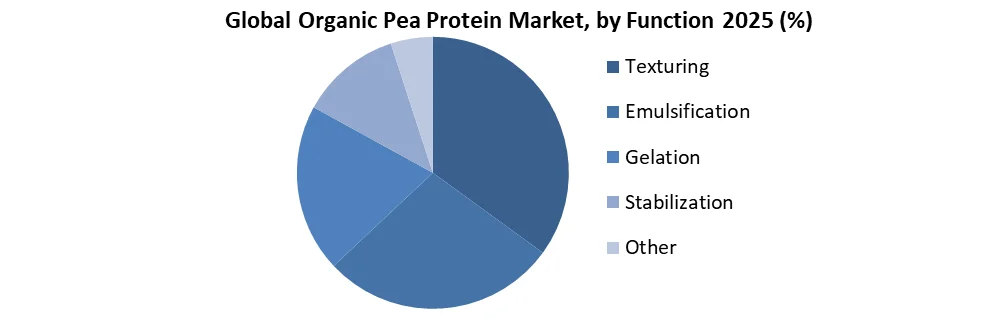
Based on Function, Texturing is an important function in the Organic Pea Protein Market, particularly as food manufacturers use pea protein to develop plant-based meat alternatives with a firmer bite and more meat-like structure. Emulsification also plays a significant role in protein beverages, sauces, dressings, and dairy alternatives by helping oil and water remain evenly distributed. Gelation supports the formation of cohesive structures in meat-free products, protein-rich foods, and selected bakery applications, while stabilization helps maintain consistency and reduce separation during storage. Among these functions, texturing is a strong candidate for the leading segment, supported by demand for plant-based meat and alternative protein foods, while emulsification is an important area of technical development for beverages and other liquid formulations. The actual leading function by market share cannot be confirmed without comparable segment-level sales data.
Based on Brand, Purispea Protein is positioned as a leading candidate among the listed brands in the Organic Pea Protein Market, particularly because PURIS supplies organic pea protein ingredients for plant-based foods, beverages, and sports nutrition applications. Phyto-Therapy also serves the organic plant protein segment through pea protein products targeting nutrition-focused consumers. Peasipro and Veg-O-Tein Protein are included in the specified brand segmentation, but comparable public sales data and verified brand-level market shares are not available to establish their relative positions. Among these brands, Purispea Protein is a reasonable choice to highlight for its ingredient applications and product functionality, while demand for organic certification, improved taste, solubility, and plant-based nutrition supports competition across the segment. However, the actual leading brand by 2025 revenue or market share cannot be confirmed without comparable sales data.
Organic Pea Protein Market Regional Analysis
North America is the leading region in Organic Pea Protein Market, supported by consumer interest in plant-based nutrition, organic food products, vegan protein supplements, and clean-label ingredients. Established food processing capabilities and demand from sports nutrition manufacturers encourage the use of organic pea protein in protein powders, nutritional bars, dairy-free beverages, and meat alternatives. Ingredient suppliers also benefit from established distribution networks and growing interest in sustainable protein sourcing.
Europe represents an important market for organic pea protein, driven by demand for certified organic ingredients, vegetarian diets, plant-based meat alternatives, and environmentally conscious food choices. Food manufacturers incorporate organic pea protein into bakery products, nutritional supplements, ready-to-drink beverages, and meat-free formulations to meet changing consumer preferences. The region also offers opportunities for suppliers that prioritize ingredient traceability, product quality, and compliance with organic food standards.
Asia Pacific presents promising growth opportunities in the Organic Pea Protein Market as consumers show increasing interest in alternative proteins, convenient nutrition, and functional food products. Demand from food and beverage manufacturers supports the use of pea protein in plant-based drinks, protein-enriched snacks, nutritional powders, and meat substitutes. Growing retail access, changing dietary habits, and rising awareness of plant-based diets create opportunities for ingredient suppliers to develop products suited to regional tastes and nutritional requirements.
South America offers opportunities for organic pea protein suppliers through rising interest in plant-based foods, sports nutrition, and alternative protein ingredients. Food processors can incorporate organic pea protein into meat alternatives, snack products, protein blends, and fortified foods to serve consumers seeking additional plant-based options. Improvements in ingredient distribution and greater availability of specialized nutrition products can support regional adoption, although pricing and access to certified organic raw materials influence market development.
The Middle East and Africa region presents emerging opportunities for the Organic Pea Protein Market as demand for specialized nutrition, imported health foods, and plant-based food alternatives develops across selected consumer markets. Organic pea protein can serve as an ingredient in protein supplements, dairy-free beverages, nutritional snacks, and alternative meat products. Market development depends on consumer awareness, product affordability, import and distribution networks, and the availability of certified organic ingredients that meet local food regulations.
Organic Pea Protein Market Competitive Landscape
The Organic Pea Protein features competition among ingredient manufacturers and specialty protein suppliers, with companies focusing on organic ingredient sourcing, protein extraction technology, product quality, and application-specific innovation. Roquette Frères and PURIS are prominent competitors, supplying pea protein ingredients for plant-based foods, sports nutrition, beverages, and other food applications, while Ingredion Incorporated, Cosucra Groupe Warcoing, Emsland Group, Axiom Foods, and The Scoular Company strengthen the competitive landscape through plant-based protein portfolios and ingredient solutions. Competition increasingly centers on improving protein solubility, neutral taste, texture, and formulation performance while maintaining consistent quality and meeting organic sourcing requirements. Manufacturers also seek to build stronger supplier relationships and serve growing demand for vegan protein supplements, clean-label foods, meat alternatives, and functional beverages. Product innovation, reliable supply chains, and the ability to meet the technical requirements of food and nutrition brands remain important factors shaping competitive positioning in the Organic Pea Protein Market.
| Region | Country | Company | Market relevance and competitive positioning |
|---|---|---|---|
| North America | United States | PURIS | Supplies pea protein ingredients for plant-based foods, beverages, and sports nutrition. Its organic ingredient capabilities and focus on taste and functionality support its competitive position. |
| North America |
United States |
Ingredion Incorporated |
Offers plant-based protein and specialty ingredient solutions for food and beverage manufacturers, with capabilities in formulation and ingredient application development. |
| North America | Canada | AGT Food and Ingredients | Has expertise in pulses and plant-based ingredients, connecting agricultural sourcing and ingredient processing with food manufacturing demand. |
| Europe | France | Roquette Frères |
A major plant-based ingredient supplier with pea protein processing capabilities, serving food, nutrition, and alternative protein applications. |
| Europe | Belgium | COSUCRA Groupe Warcoing | Specializes in pulse-derived ingredients, including pea protein, and serves manufacturers seeking plant-based ingredients for food and nutrition formulations. |
| Europe | Germany | Emsland Group |
Supplies plant-based ingredients derived from potatoes and peas, supporting food applications that require functional protein and texture solutions. |
| Asia Pacific | China | Yantai Shuangta Food Co., Ltd. | Produces pea-derived ingredients and serves food ingredient markets, contributing to regional processing capacity and international supply. |
| Asia Pacific |
China | FENCHEM | Supplies food and nutritional ingredients, with plant-based ingredient offerings relevant to manufacturers developing alternative protein products. |
Organic Pea Protein Market Recent Development:
| Month in 2026 | Company | Recent development |
|---|---|---|
| January 2026 | Ripple Foods | Ripple Foods launched its organic plant based milk range made with organic pea protein, offering Original and Vanilla varieties with a focus on protein content, simple ingredients, and allergen conscious nutrition. |
| February 2026 | Roquette | Roquette introduced NUTRALYS Pea 850F, a pea protein isolate developed to improve taste neutrality, solubility, and formulation performance in plant based beverages and specialized nutrition products. |
| February 2026 | KWS and vly | KWS and vly developed an organic pea variety selected for improved taste and texture in plant based milk alternatives. The ingredient is used in vly Bio High Protein and supports innovation in organic pea based beverages. |
| March 2026 | PURIS | PURIS introduced ClearP hydrolyzed pea protein for beverage, snack, and nutrition applications, with an emphasis on clarity, improved solubility, and a smoother sensory profile. |
| May 2026 | ADM | ADM announced eight new soy and pea protein ingredient solutions for customers in North America and Europe, focusing on formulation flexibility and applications in meat alternatives, dairy alternatives, beverages, snacks, and specialized nutrition. |
| September 2026 | BHU Foods | BHU Foods relaunched its refrigerated snack bar portfolio around pea protein, with organic certification and plant based positioning across its product range. The development reflects demand for organic, dairy free, and clean label protein snacks. |
Organic Pea Protein Market Industry Ecosystem
Scope of the Organic Pea Protein Market: Inquire before buying
| Organic Pea Protein Market | |||
|---|---|---|---|
| Report Coverage | Details | ||
| Base Year: | 2025 | Forecast Period: | 2026-2034 |
| Historical Data: | 2020 to 2025 | Market Size in 2025: | USD 1.5 Bn. |
| Forecast Period 2026 to 2034 CAGR: | 8.8% | Market Size in 2034: | USD 3.2 Bn. |
| Segments Covered: | by Product Type | Isolates Textured Concentrates |
|
| by Form Type | Dry Liquid |
||
| by Brand | Peasipro Phyto-Therapy Purispea Protein Veg-O-Tein Protein |
||
| by Function | Texturing Emulsification Gelation Stabilization Other |
||
| by Application | Beverages Dietary Supplements Meat Extenders & Analogs Snacks & Bakery Products Others (Confectionery, Meat-based Products, etc.) |
||
Organic Pea Protein Market, by Region
North America (United States, Canada and Mexico)
Europe (UK, France, Germany, Italy, Spain, Sweden, Austria and Rest of Europe)
Asia Pacific (China, South Korea, Japan, India, Australia, Indonesia, Malaysia, Vietnam, Taiwan, Bangladesh, Pakistan and Rest of APAC)
Middle East and Africa (South Africa, GCC, Egypt, Nigeria and Rest of ME&A)
South America (Brazil, Argentina Rest of South America)
Key players operating in Organic Pea Protein Market are:
1. Zelang Group
2. Farbest Brands
3. Axiom Foods, Inc.
4. AIDP Inc.
5. The Green Labs LLC
6. Phyto-Therapy Pty Ltd
7. The Scoular Company
8. World Food Processing, L.L.C.
9. Bioway (Xi'an) Organic Ingredients Co., Ltd.
10. Shaanxi Fuheng (FH) Biotechnology Co., Ltd.
11. Greenway Organics (Tianjin) Co., Ltd.
12. Vestkorn
13. YT (Xi'an) Biochem Co.
14. PURIS
15. Maxsun Industries, Inc.
16. A&B Ingredients
17. Ingredion Incorporated
18. Roquette Frères
19. Emsland Group
20. FENCHEM
21. DuPont
22. Glanbia plc
23. Burcon NutraScience Corporation
24. COSUCRA
25. AGT Food and Ingredients
26. Yantai Shuangta Food Co., Ltd.
27. Qingdao Yaran Biological Technology Co., Ltd.
28. Nutracean Co., Ltd.
29. DO-IT Organic
30. Yangge Biotech
31. Cargill, Incorporated
32. Kerry Group plc
33. BENEO GmbH
34. Batory Foods
35. Agridient Inc.
36. The Green Labs
37. Organic Partners International
38. AMCO Proteins
39. Prinova Group LLC
40. Brenntag SE
41. Univar Solutions
42. Sosa Ingredients
43. Meelunie B.V.
44. Cosun
45. Emsland America
Frequently Asked Questions:
1. Which region has the largest share in Global Organic Pea Protein Market?
Ans. North America region held the highest share in 2025.
2. What is the growth rate of Global Organic Pea Protein Market?
Ans. The Global Organic Pea Protein Market is growing at a CAGR of 8.8% during forecasting period 2026-2034.
3. What is scope of the Global Organic Pea Protein Market report?
Ans. Global Organic Pea Protein Market report helps with the PESTEL, PORTER, COVID-19 Impact analysis, Recommendations for Investors & Leaders, and market estimation of the forecast period.
4. Who are the key players in Global Organic Pea Protein Market?
Ans. The important key players in the Global Organic Pea Protein Market are – Zelang Group, Farbest Brands, Axiom Foods, Inc., AIDP Inc., The Green Labs LLC, Phyto-Therapy Pty Ltd, The Scoular Company, World Food Processing, L.L.C, Bioway (Xian) Organic Ingredients Co., Ltd., Shaanxi Fuheng (Fh) Biotechnology Co., Ltd., Greenway Organics (Tianjin) Co., Ltd., Vestkorn, YT (XI’AN) Biochem Co., Puris, Maxsun Industries, Inc., A&B Ingredients, Ingredion Incorporated, Roquette Frères, Emsland Group, FENCHEM, DuPont, Glanbia plc, Burcon, and COSUCRA
5. What was the Global Organic Pea Protein Market size in 2025?
Ans: The Global Organic Pea Protein Market size was USD 1.5 Billion in 2025.