
Global Oil Storage Market Size by Product, Material, Application and Region – Segment-Level Market Assessment, Growth Opportunity Analysis, Competitive Mapping & Forecast to 2032
Overview
The Oil Storage Market size was valued at USD 4.84 Billion in 2025 and the total Oil Storage revenue is expected to grow at a CAGR of 4.81% from 2025 to 2032, reaching nearly USD 6.73 Billion.
Oil Storage Market Overview:
Oil storage refers to tanks and terminals that are used in the oil and gas supply chain for storage of processed oil in below-ground or above-ground conveniences. Several stages of oil processing and transportation expose the tanks to the reservoir. The type of oil and its characteristics influence the material and structure of tanks. These oil storage tanks are made of stainless steel, plastic, carbon steel, and reinforced concrete, which are used to store gasoline, aviation fuel, naphtha, liquified petroleum gas (LPG), crude oil, petrol, diesel, and other derivatives. Downstream activities assemble oil in massive storage tanks for further processing and commercialization, oil is transported for further refinement, as a result oil storage is a short-term operation.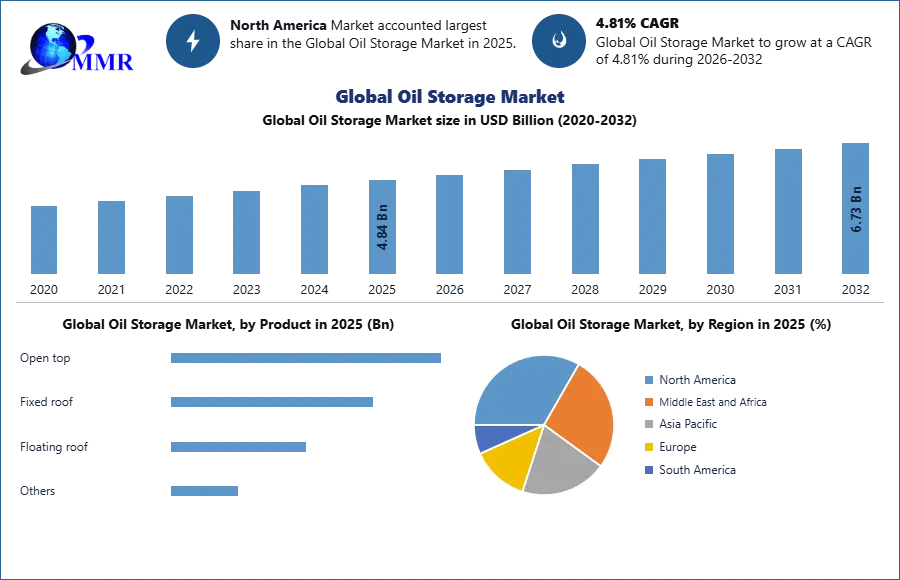 To know about the Research Methodology :- Request Free Sample Report
Oil Storage Market Dynamics:
Oil storage market is continuously showing northward direction growth, thanks to the significant growth in oil and gas industry across the globe. Growing demand the demand for mega refining hubs, import and distribution-related infrastructure grows, especially in developing nations such as Venezuela, Saudi Arabia, Iran and Iraq is led to growing requirement of efficient oil storage facilities. In addition, the growing use of strategic petroleum reserves (SPRs) by government entities for keeping large-scale oil reserves and assuring a steady supply of energy is driving the market growth. There is off-shore and on-shore exploratory activities increasing across the globe, which in turn it crates is a huge growth in demand for oil storage facilities, is expected to uplift the oil gas market growth during the forecast period.
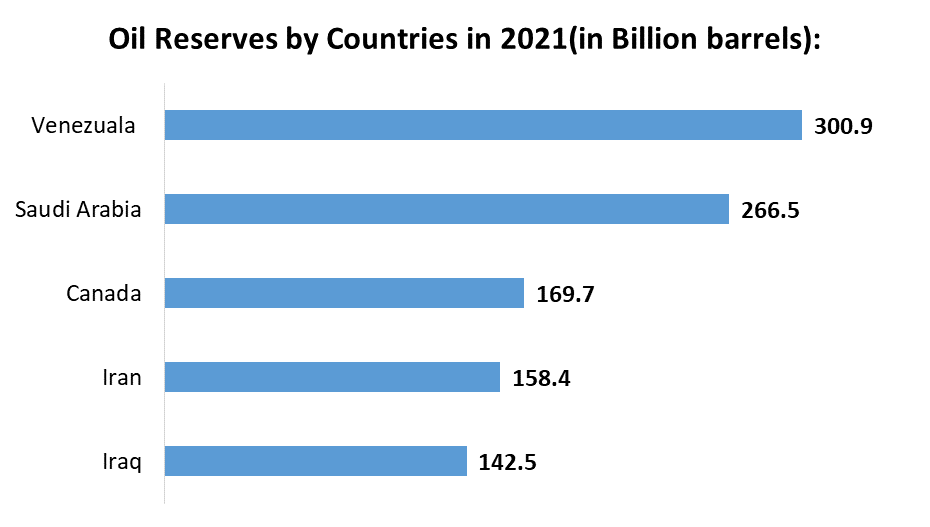 Venezuela has the largest amount of oil reserves across the globe accounting for 300.9 billion barrels, which is 18.2% of global oil reserves in 2025. Despite having the world's largest oil reserves, the majority of Venezuela's oil is offshore or deep underground. As a result, the cost of extracting the oil in Venezuela's reserves is too high to be lucrative, as the price of oil decides whether or not extracting it is profitable. Saudi Arabia's oil reserves, on the other hand, are on land and near to the surface.
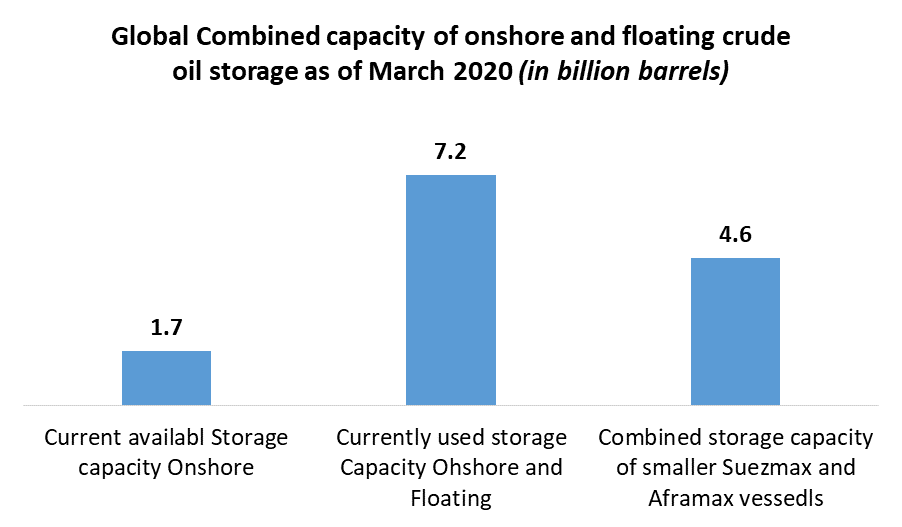 During the last few years, the global energy sector has facing the growing need for crude oil, particularly from developing countries, which has had a significant impact on the global market's growth. The significant increase in stock levels, several major nations, like the United States, China, and India, are progressively examining the prospect of increasing oil storage capacity. For instance, to meet an increase in the market volumes of oil storage, energy departments in North America are increasingly focusing on building new oil storage tanks. Midstream businesses, traders, and oil producers are among the stakeholders in the present oil storage industry who are concentrating on the development of various storage options, which in turn, expected to fuel the market growth during the forecast period.
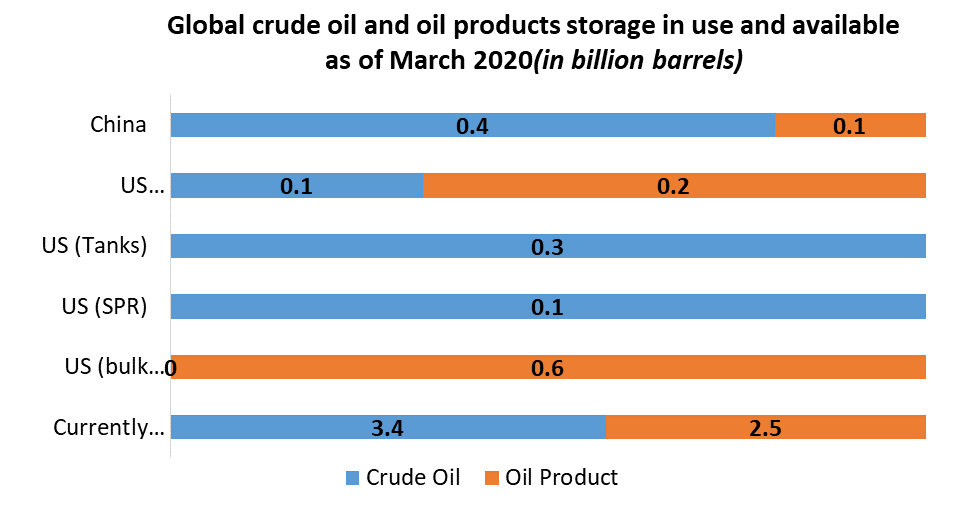 The growing necessities of Strategic Petroleum Reserve (SPR) has forced countries across the globe to prioritize their storage capacity expansion to do the oil demand in case of import failure or crisis. For instance, European countries are obliged to have a strategic petroleum reserve equal to 90 days of average domestic consumption. In addition, Oil trade has been increased between the countries, which in turn certainly required to invest more in storage terminals.
Rising adoption of renewable sources for power generation are resulting in decrease in exploration & production activities along with low investment in production are expected to hamper the market growth. In addition Cost required for construction of storage terminal along with maintenance cost are expected to restrain the market growth during the forecast period.
Oil Storage Market Segment Analysis:
Based on the Product, the Market is segmented into Open Top, Fixed Roof, Floating Roof, and Others. The Fixed Roof segment held the largest market share, accounting for 42% in 2025. The high degree of containment of Fixed Roof, which reduces the chance of a fire occurrence, is primarily driving the segment's growing penetration. The segment's growth is aided by lower installation costs for fixed roof designs. The Floating Roof segment is expected to witness a significant growth at a CAGR of 5.1% during the forecast period. The floating roof's efficient design, which helps to reduce evaporative losses and corrosion are primarily driving the demand of this segment. The continuous growing demand for storage of medium and low flash point hydrocarbons is expected to fuel the market growth for this segment.
Based on the Application, the Oil Storage Market is segmented into Crude Oil, Middle Distillates, Gasoline, Aviation Fuel, and Others. The Crude Oil segment held the largest market share, accounting for 52.7% in 2025. Growing crude oil production combined with decreased demand from the downstream and midstream sectors is expected to increase crude oil storage during the forecast period. According to the US Energy Information Administration, Commercial crude oil inventories in the United States used 62% of the total storage capacity available in June 2025. The Gasoline Oil segment is expected to witness a noteworthy growth at a CAGR of 6.2% during the forecast period. Growing uses of Gasoline oil as automobile fuel, as provide its high combustion energy, is expected to drive the segment growth. It's also used in construction, forestry, landscaping, and farming equipment.
Regional Insights:
North America region held the largest market share accounted for 32.4% and valued at US$ 1.36 billion in 2025. The region’s growth is attributed to the growing demand for energy and petroleum product in the region, which increased the need of storage terminals. In addition growing production and export of oil products are holds several growth opportunities for oil storage terminals construction, which is expected to drive the regional oil storage market growth during the forecast period.
The Middle East and Africa accounted over 25.1 % market share and valued at US$ 1.00 billion in 2025. In countries like the UAE, Saudi Arabia, and Kuwait, growing number efficient refinery and increasing oil output are driving the oil storage market growth in the region
The objective of the report is to present a comprehensive analysis of the global oil storage Market to the stakeholders in the industry. The past and current status of the industry with the forecasted market size and trends are presented in the report with the analysis of complicated data in simple language. The report covers all the aspects of the industry with a dedicated study of key players that include market leaders, followers, and new entrants.
PORTER, PESTEL analysis with the potential impact of micro-economic factors of the market have been presented in the report. External as well as internal factors that are supposed to affect the business positively or negatively have been analyzed, which will give a clear futuristic view of the industry to the decision-makers.
The reports also help in understanding the Oil Storage Market dynamic, structure by analyzing the market segments and projecting the Oil Storage Market size. Clear representation of competitive analysis of key players by product, price, financial position, product portfolio, growth strategies, and regional presence in the Oil Storage Market make the report investor’s guide.
Recent Development :
In July 2025, Koninklijke Vopak N.V. increased its 2025 core profit outlook following a strong performance in the first half of the year. The company reported solid operational results across its global tank storage network, supported by steady demand for energy and chemical storage services in major markets. This improved performance highlights the resilience of Vopak’s storage infrastructure and its ability to capitalize on favorable market conditions. As a result, the company expects to achieve higher earnings in 2025 than initially projected, strengthening its financial outlook and reinforcing its position as a leading provider of independent tank storage solutions worldwide.
Oil Storage Market Scope: Inquire before buying
| Global Oil Storage Market | |||
|---|---|---|---|
| Report Coverage | Details | ||
| Base Year: | 2025 | Forecast Period: | 2026-2032 |
| Historical Data: | 2020 to 2025 | Market Size in 2025: | 4.84 USD Billion |
| Forecast Period 2026-2032 CAGR: | 4.81% | Market Size in 2032: | 6.73 USD Billion |
| Segments Covered: | by Product | Open top Fixed roof Floating roof Others |
|
| by Material | Open Top Fixed Roof Floating Roof Others |
||
| by Application | Crude Oil Middle Distillates Gasoline Aviation Fuel Others |
||
Oil Storage Market, by Region
North America (United States, Canada and Mexico)
Europe (UK, France, Germany, Italy, Spain, Sweden, Austria and Rest of Europe)
Asia Pacific (China, South Korea, Japan, India, Australia, Indonesia, Malaysia, Vietnam, Taiwan, Bangladesh, Pakistan and Rest of APAC)
Middle East and Africa (South Africa, GCC, Egypt, Nigeria and Rest of ME&A)
South America (razil, Argentina Rest of South America)
Key Players:
- Royal Vopak N.V.
- Kinder Morgan Inc.
- Enterprise Products Partners L.P.
- Oiltanking GmbH
- Buckeye Partners L.P.
- Magellan Midstream Partners
- NuStar Energy L.P.
- IMTT (International-Matex Tank Terminals)
- Koole Terminals
- LBC Tank Terminals
- CLH Group (Exolum)
- Odfjell SE
- Horizon Terminals
- Inter Pipeline Ltd.
- TransMontaigne Partners
- Contanda Terminals LLC
- Oman Tank Terminal Company
- Advario
- Sunoco LP
- Phillips 66 Partners
- Energy Transfer LP
- Shell Midstream Partners
- China Petroleum & Chemical Corporation (Sinopec)
- PetroChina Company Limited
- Saudi Aramco
- Indian Oil Corporation Limited
- Bharat Petroleum Corporation Limited
- Hindustan Petroleum Corporation Limited
- Gazprom Neft
- TotalEnergies SE