
Microbial Fermentation Technology Market Size by Application, End Use and Region – Segment-Level Market Assessment, Growth Opportunity Analysis, Competitive Mapping & Forecast to 2030
Overview
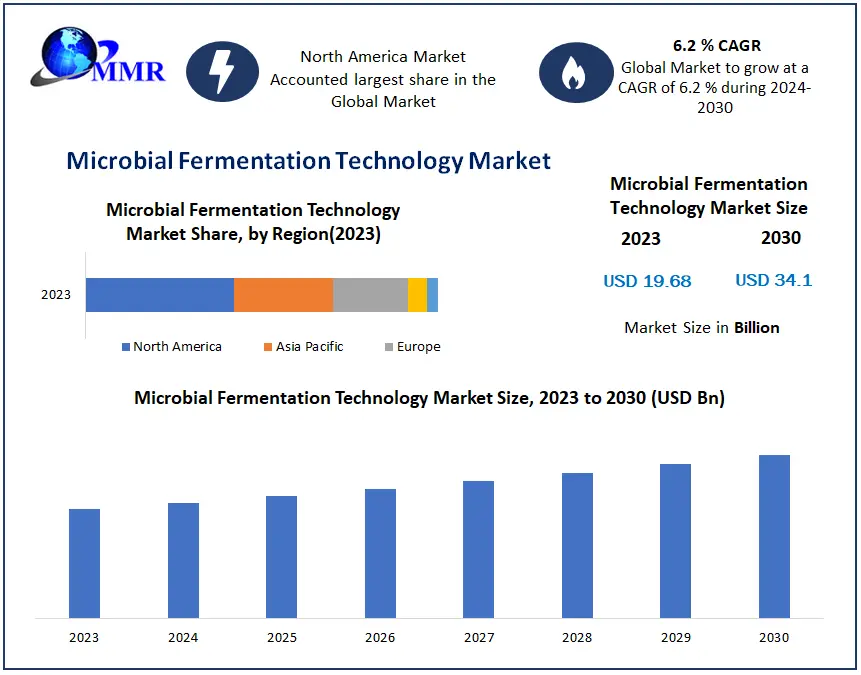
Microbial Fermentation Technology Market size was valued at USD 19.68 Billion in 2023 and the Microbial Fermentation Technology Market revenue is expected to reach USD 34.1 Billion by 2030, at a CAGR of 6.2 % over the forecast period.
Microbial Fermentation Technology Market Overview
Microbial fermentation technology is a cutting-edge area that produces valuable compounds by fermenting microorganisms. Fungi, bacteria, and eukaryotic cells such as insect cells and CHO cells are still being studied for their potential use in the chemical, pharmaceutical, energy, material, and food industries. Fermentation involves the participation of microorganisms such as bacteria, yeasts, fungus, and their enzymes. The biotechnology program selects bacteria strains for fermentation based on DNA sequences.
 To know about the Research Methodology :- Request Free Sample Report
Microbial Fermentation technologies are not limited to a specific geographical region. The Microbial Fermentation Technology Market has a global presence, with consumers across different continents showing interest in these supplements. This Microbial Fermentation Technology Market Report offers a specific and detailed market overview with statistical as well as pre-sized trendy data. This Microbial Fermentation Technology Market report showcases the Microbial Fermentation Technology market situation with Dynamics, Market Segment, Regional Analysis, and Top Competitor's Market Position.
Microbial Fermentation Technology Market Dynamics
The global microbial fermentation technology market is expanding due to the widespread usage of fermentation technology-generated chemicals in a variety of sectors throughout the world due to its natural structure, cheap cost, and higher production. Furthermore, expanding research and development efforts in various domains of fermentation technology, technical innovation, increasing product awareness, and new product introduction are some of the factors that will drive the microbial fermentation technology market shortly.
Rising gasoline prices, as well as the depletion of fossil fuel supplies, have increased the need for alternative goods in the chemical sector such as alcohols, alkaloids, amino acids, and enzymes. These items may be obtained by utilizing solutions from the global microbial fermentation technology market. This trend is expected to drive the market during the forecast period. Solutions in the global microbial fermentation technology market are used in a wide range of industries, including energy, materials, food and drinks, pharmaceuticals, and chemicals. Ethanol, citric acid, and acetic acid are some of the primary products obtained from the use of solutions in the global microbial fermentation technology market.
The global microbial fermentation technology market uses fermentation by microorganisms such as bacteria and fungi, as well as eukaryotic cells such as CHO cells and insect cells, to generate valuable goods for humans. The fermentation process is divided into four sub-segments in the worldwide microbial fermentation technology market: production of extracellular metabolites, synthesis of intracellular components, biomass generation, and substrate transformation using molds, plant cells, or algae. Solutions in the global microbial fermentation technology market are used to manufacture valuable goods for humans through fermentation by microorganisms such as bacteria and fungus, as well as eukaryotic cells such as CHO cells and insect cells. The fermentation process is classified into four sub-segments in the global microbial fermentation technology market: production of extracellular metabolites, production of intracellular components, biomass generation, and substrate transformation using molds, plant cells, or algae.
Microbial Fermentation Technology Market Segment Analysis
By Application:
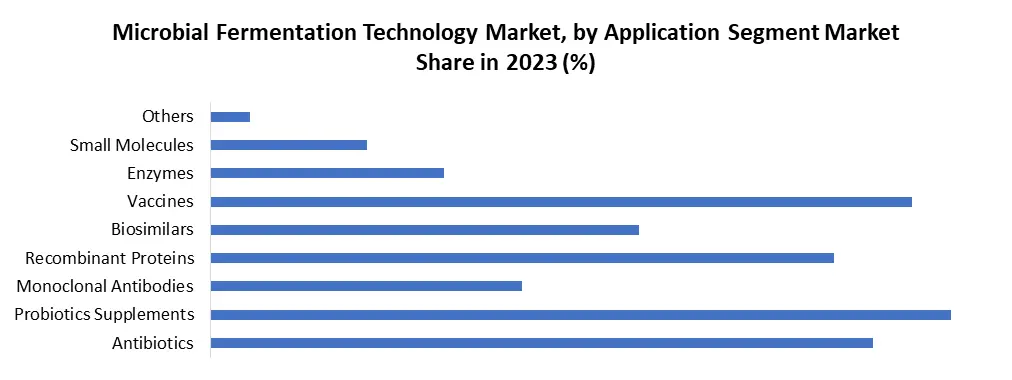
Antibiotics remain a cornerstone in the pharmaceutical industry, vital for combating bacterial infections. With the rise of antibiotic resistance, research and development efforts focus on novel formulations and combination therapies to address evolving challenges. The growing awareness of gut health and its impact on overall well-being propels the demand for probiotic supplements. Manufacturers are innovating to deliver diverse strains and formulations catering to specific health concerns, driving market expansion. Monoclonal antibodies (mAbs) continue to revolutionize treatment across various disease areas, including cancer and autoimmune disorders. Advancements in biotechnology and targeted therapies fuel the development of novel mAbs with enhanced efficacy and reduced side effects.
Recombinant proteins play a crucial role in biopharmaceuticals, serving as therapeutics, diagnostics, and research tools. Increasing applications in personalized medicine and biotechnology drive the demand for recombinant protein production platforms and technologies. Biosimilars offer cost-effective alternatives to biologic drugs, driving market penetration and competition. Regulatory pathways and market acceptance continue to evolve, shaping the landscape for biosimilar development and commercialization. Vaccines play a pivotal role in public health, preventing infectious diseases and reducing healthcare burdens. Ongoing research focuses on developing novel vaccines against emerging pathogens and improving vaccine efficacy and safety profiles.
Enzymes find diverse applications in pharmaceutical manufacturing, from drug synthesis to biocatalysis. Demand for specialty enzymes for bioprocessing and green chemistry drives market growth, with a focus on enzyme engineering and optimization. Small molecule drugs remain essential therapeutics across various disease areas, owing to their versatility and oral bioavailability. Research efforts concentrate on rational drug design and repurposing strategies to enhance efficacy and reduce adverse effects. This segment encompasses various niche applications and emerging trends in the pharmaceutical industry, including cell and gene therapies, nanomedicine, and digital health solutions, reflecting the dynamic nature of pharmaceutical innovation and diversification.
By End Use:
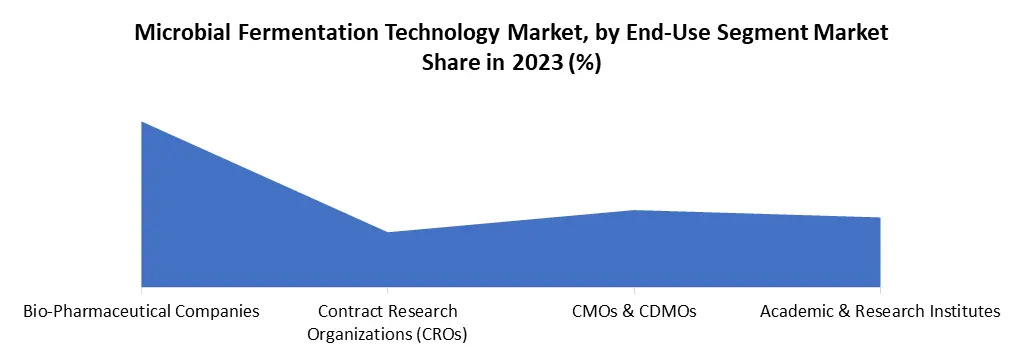
Bio-pharmaceutical companies lead the innovation and commercialization of biologic and small molecule drugs, driving R&D investments and market competition. Strategic collaborations and acquisitions enable companies to expand pipelines and strengthen market positions. CROs play a crucial role in drug development, offering a range of services from preclinical research to clinical trials management. Outsourcing to CROs accelerates drug development timelines and reduces costs, fostering industry growth and efficiency.
Contract manufacturing organizations (CMOs) and contract development and manufacturing organizations (CDMOs) provide essential manufacturing and development services to pharmaceutical companies. The outsourcing trend towards CMOs and CDMOs enables flexibility, scalability, and access to specialized expertise, driving market expansion. Academic and research institutes contribute to pharmaceutical innovation through basic and translational research, drug discovery, and preclinical studies. Collaborations between academia and industry facilitate knowledge exchange and technology transfer, fostering a vibrant ecosystem for drug development and innovation.
Microbial Fermentation Technology Market Regional Analysis
The United States is expected to dominate the global microbial fermentation technology market, with an estimated market share of around 30% during the forecast period. The technological advancements in bioprocessing and the development of new microbial strains for the production of rare compounds are some of the key trends driving growth in this region. In addition, the use of CRISPR-Cas9 technology for microbial strain modification is expected to revolutionize the industry.
Germany is expected to hold an estimated market share of around 20% during the forecast period. Germany is one of the leading countries in the market, with a strong focus on biopharmaceutical production and regulatory compliance.
The country's expertise in fermentation technology and its high-quality standards for production have made it an attractive destination for pharmaceutical companies. The trend toward personalized medicine and the growing demand for biologics is expected to drive the growth of the microbial fermentation technology market in Germany.
Japan's microbial fermentation technology industry is expected to hold a share of around 10% during the forecast period. Japan is a significant player in the global market, with a strong focus on food and beverage production. The country's aging population has led to a growing demand for functional foods and nutraceuticals, driving growth in this industry. The trend towards natural and organic products and the use of high-throughput screening techniques for microbial strain discovery are expected to drive further growth in this region.
Microbial Fermentation Technology Market Scope: Inquire before buying
| Global Microbial Fermentation Technology Market | |||
|---|---|---|---|
| Report Coverage | Details | ||
| Base Year: | 2023 | Forecast Period: | 2024-2030 |
| Historical Data: | 2018 to 2023 | Market Size in 2023: | US $ 19.68 Bn. |
| Forecast Period 2024 to 2030 CAGR: | 6.2% | Market Size in 2030: | US $ 34.1 Bn. |
| Segments Covered: | by Application | Antibiotics Probiotics Supplements Monoclonal Antibodies Recombinant Proteins Biosimilars Vaccines Enzymes Small Molecules Others |
|
| by End Use | Bio-Pharmaceutical Companies Contract Research Organizations (CROs) CMOs & CDMOs Academic & Research Institutes |
||
Microbial Fermentation Technology Market, by Region
North America (United States, Canada and Mexico)
Europe (UK, France, Germany, Italy, Spain, Sweden, Austria and Rest of Europe)
Asia Pacific (China, South Korea, Japan, India, Australia, Indonesia, Malaysia, Vietnam, Taiwan, Bangladesh, Pakistan and Rest of APAC)
Middle East and Africa (South Africa, GCC, Egypt, Nigeria and Rest of ME&A)
South America (Brazil, Argentina Rest of South America)
Leading Microbial Fermentation Technology Key Players Include
1. F. Hoffmann-La Roche AG
2. Koninklijke DSM NV
3. Lonza Group AG
4. Danone Ltd.
5. Amyris Inc.
6. Biocon Ltd.
7. TerraVia Holdings Inc.
8. BioVectra Inc.
9. United Breweries Ltd
10. BASF (Germany)
11. Ajinomoto Company Incorporation (Japan)
12. The Dow Chemical Company (US)
13. Amano Enzyme Inc. (Japan)
14. AB Enzymes (Germany)
15. Archer Daniels Midland Company (US)
16. Du Pont Danisco A/S (Denmark)
17. Cargill Inc. (US)
18. Novozymes A/S (Denmark)
19. Evonik Industries AG (Germany)
20. BIOZEEN
Frequently Asked Questions and Answers in the Market:
1. How big is the Microbial Fermentation Technology market?
Ans: The global Microbial Fermentation Technology market size was estimated at USD 19.68 Billion in 2023.
2. What is the market growth?
Ans: The global market is expected to grow at a compound annual growth rate of 6.2 % from 2024 to 2030 to reach USD 34.1 Billion by 2030.
3. Which segment accounted for the largest market share?
Ans: In 2023, The United States is expected to dominate the global market by holding a 30% market share.
4. Who are the key players in the Microbial Fermentation Technology market?
Ans: Some key market players are F. Hoffmann-La Roche AG, Koninklijke DSM NV, Lonza Group AG, Danone Ltd. and Others.
5. What are the factors driving the market?
Ans: The Microbial Fermentation Technology market is experiencing robust growth, driven by the widespread usage of fermentation technology-generated chemicals in a variety of sectors.