
Medical Imaging Market - Industry Structure Evaluation, Demand Drivers Analysis, Regional Growth Analysis and Identification, Competitive Positioning Review & Global Market Size Forecast to 2032
Overview
The Medical Imaging Market size was valued at USD 35.26 Billion in 2024 and the total Medical Imaging revenue is expected to grow at a CAGR of 4.5% from 2025 to 2032, reaching nearly USD 50.15 Billion.
Medical Imaging Market Overview:
The medical imaging market has undergone rapid evolution, becoming a cornerstone of modern medicine essential for diagnosis and treatment across a spectrum of diseases. Various technologies, including ultrasonography, x-rays, mammography, computed tomography (CT scans), and nuclear medicine, comprise this field. Their significance spans diverse medical settings and all tiers of healthcare, providing indispensable diagnostic capabilities, disease progression assessment, and treatment response monitoring.
Advancements in medical imaging technologies have yielded improved image quality, faster scan times, and enhanced diagnostic capabilities helping to boost the Medical Imaging Market. Integration of artificial intelligence (AI) and machine learning algorithms is revolutionizing medical imaging by enabling automated image analysis, interpretation, and workflow optimization. AI-based tools detect lesions, reconstruct images, and perform predictive analytics, augmenting healthcare providers' capabilities and enhancing patient care.
Despite these advancements, a significant challenge persists in many low and lower-middle-income countries, where the affordability of imaging equipment is prohibitive, compounded by a scarcity of trained healthcare professionals proficient in their operation. To address this issue, the World Health Organization (WHO) collaborates closely with partners and manufacturers to devise technical solutions tailored for enhanced diagnostic imaging services, particularly in remote areas. The WHO and its partners institute training programs to equip healthcare workers with necessary skills in utilizing and managing medical imaging technologies, with a strong emphasis on ensuring patient safety. Through these concerted efforts, strides are being made to bridge the gap in access to quality medical imaging services, ultimately contributing to more equitable healthcare delivery across the world. This factor also significantly helps to escalate the Medical Imaging Market growth.
 To know about the Research Methodology :- Request Free Sample Report
Medical Imaging Market: Dynamics
Driver
Increase in Chronic Diseases Boosts the Medical Imaging Market Growth
The correlation between the rise in chronic diseases and the growth of the medical imaging market makes sense. As chronic conditions become more prevalent, the demand for diagnostic tools like medical imaging increases. These technologies play an important role in the early detection, accurate diagnosis, and monitoring of various chronic illnesses, ranging from cardiovascular diseases to cancer. The advancement of medical imaging technologies, such as MRI, CT scans, ultrasound, and PET scans, has significantly improved ability to detect and diagnose chronic conditions at earlier stages when they are more treatable.
As populations age and lifestyles change, the incidence of chronic diseases tends to increase, further driving the medical imaging services Market. Ongoing technological advancements in medical imaging, such as improved image resolution, faster scanning times, and the development of hybrid imaging modalities, continue to expand the capabilities and applications of these technologies in diagnosing and managing chronic diseases.
The rising incidence of chronic illnesses and the expanding elderly demographic are driving the demand for advanced medical imaging technologies. By 2050, the United States is expected to see a nearly twofold increase in individuals over 50 with at least one chronic condition, along with a substantial rise in those with multiple ailments. This underscores the urgent need for rapid and accurate diagnostic tools to enable timely intervention and treatment. The global population is undergoing a significant demographic shift, with a projected 16% of the world's population aged over 65 by 2050, up from 9% in 2019.
This demographic trend brings heightened health concerns, leading to a growing demand for medical imaging solutions capable of addressing age-related conditions and supporting effective healthcare management. In response to these factors, the Medical Imaging Market is expected to experience substantial growth as it adapts to meet the evolving healthcare needs of an aging population burdened by increasing chronic disease prevalence.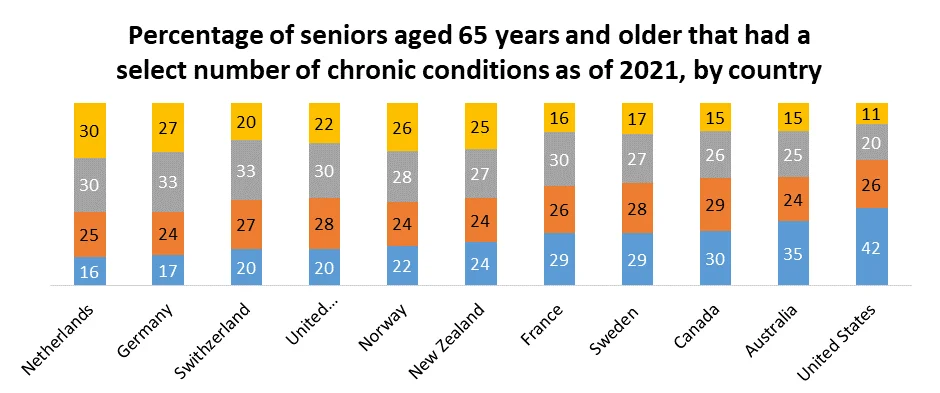 Restrain
Regulatory Compliance Limits the Medical Imaging Market Growth
Regulatory compliance impedes the growth of the medical imaging market by imposing significant costs and administrative burdens on imaging facilities. Compliance requirements, such as FDA approvals and accreditation standards, necessitate substantial investments in equipment, training, and documentation, diverting financial resources from growth initiatives. Stringent regulatory frameworks create barriers to entry for new market entrants and stifle innovation by delaying product development and increasing time-to-market.
Geographic variability in regulatory requirements adds complexity to market entry and distribution strategies, limiting growth opportunities. Non-compliance risks, including fines, legal liabilities, and reputational damage, further deter investment and growth in the imaging market. Despite these challenges, regulatory oversight is crucial for ensuring patient safety and maintaining quality standards. Balancing regulatory requirements with the need for innovation and market growth is essential to fostering a regulatory environment conducive to the sustainable development of the medical imaging market.
Regulatory Overview of Medical Imaging Equipment in the United States
| Regulatory Body | U.S. Food and Drug Administration (FDA) |
| Responsible Division | Division of Radiological Health within the Center for Devices and Radiological Health (CDRH) |
| Equipment Covered | Non-ionizing, radiation-emitting medical devices, including MRI systems and medical x-ray imaging equipment |
| Regulations | Title 21, Subchapter J, Parts 1000 through 1050 of the Code of Federal Regulations |
| Specific Requirements | Compliance with radiological health requirements |
| Performance Standards | Established performance standards and guidelines for medical x-ray imaging equipment |
| Compliance Verification | Manufacturers and importers must follow Electronic Product Radiation Control (EPRC) regulations and procedures or provide a declaration of conformity to equivalent International Electrotechnical Commission (IEC) standards |
| Objective | Ensuring safety and effectiveness of medical imaging equipment |
Opportunity
Technological advancements in medical imaging have revolutionized diagnostic capabilities, leading to improved patient outcomes and enhanced clinical decision-making. Innovations across various imaging modalities, such as MRI, CT scans, ultrasound, and PET scans, have significantly enhanced image quality, resolution, and speed, enabling clinicians to visualize anatomical structures and pathological changes with greater precision and accuracy. The development of high-field MRI systems with stronger magnetic fields and advanced coil designs, resulting in higher spatial resolution, faster scan times, and improved tissue contrast.
These innovations allow for more detailed imaging of the brain, spine, joints, and soft tissues, facilitating early detection and characterization of neurological disorders, musculoskeletal injuries, and oncological conditions. Advancements in CT imaging technology, such as multidetector CT (MDCT) scanners and dual-energy CT (DECT) imaging, have led to faster acquisition times, reduced radiation doses, and enhanced tissue differentiation, which is expected to present an opportunity for the Medical Imaging Market growth. MDCT enables rapid volumetric imaging of organs and blood vessels, while DECT provides additional information on tissue composition and functional parameters, aiding in the diagnosis and staging of cardiovascular diseases, cancer, and other pathologies.
Ultrasound technology has also undergone significant advancements, including the development of high-frequency transducers, 3D/4D imaging capabilities, and contrast-enhanced ultrasound techniques. These innovations enable detailed visualization of fetal anatomy during prenatal screening, precise guidance for interventional procedures, and real-time assessment of cardiac function, liver lesions, and vascular abnormalities. The integration of artificial intelligence (AI) and machine learning algorithms into medical imaging workflows holds promise for automating image analysis, improving diagnostic accuracy, and enhancing clinical productivity.
AI-driven image reconstruction techniques, computer-aided detection systems, and predictive analytics tools have the potential to revolutionize image interpretation, streamline workflow efficiency, and optimize resource utilization in medical imaging departments. Technological advancements in medical imaging continue to drive innovation, expand clinical capabilities, and improve patient care across a wide range of medical specialties, setting the stage for further growth and development in the field.
Medical Imaging Market Segment Analysis
Based on Type, The Ultrasound segment dominated the type segment of the Medical Imaging Market in the year 2024. The ultrasound segment has emerged as a dominant force in the medical imaging industry due to its unique combination of safety, versatility, portability, real-time capabilities, and cost-effectiveness. Ultrasound imaging is non-invasive and does not involve ionizing radiation, making it safer for patients of all ages, including pregnant women and children. Its versatility allows for visualization of various anatomical structures and physiological processes across multiple medical specialties, from obstetrics and gynaecology to cardiology and emergency medicine.
The portability of ultrasound equipment has revolutionized healthcare delivery by enabling point-of-care imaging in diverse clinical settings, including remote and resource-limited areas. Real-time imaging capabilities provide instant feedback, allowing clinicians to visualize dynamic processes such as blood flow and fetal development in real-time, guiding interventions and clinical decision-making.
Ultrasound imaging is cost-effective compared to other imaging modalities like MRI and CT scans, making it accessible to a wide range of healthcare facilities. Technological advancements, such as 3D/4D imaging and contrast-enhanced ultrasound, continue to expand the applications of ultrasound, further solidifying its dominance in the Medical Imaging Market as an indispensable diagnostic and interventional tool.

Medical Imaging Market: Regional Analysis
North America dominated the Medical Imaging Market in the year 2024. North America's supremacy in the medical imaging industry stems from its multifaceted strengths. The region boasts a sophisticated healthcare infrastructure characterized by an extensive network of hospitals, clinics, imaging centers, and research institutions. This Strong foundation facilitates widespread accessibility to medical imaging services, fostering the adoption of advanced technologies across diverse healthcare settings. The United States and Canada stand as global pioneers in technological innovation, particularly in the field of medical imaging. Industry giants such as Siemens Healthineers, GE Healthcare, and Philips Healthcare, headquartered in North America, spearheaded the development and integration of cutting-edge imaging solutions, positioning the region at the forefront of the market.
North America's substantial healthcare expenditure, among the highest globally, underscores its commitment to investing in medical imaging equipment, infrastructure, and research. This significant financial backing, coupled with the region's affluent population and comprehensive health insurance coverage, fuels the demand for diagnostic imaging services, driving market growth. The region’s leadership in medical imaging is further buoyed by its thriving research ecosystem, comprising prestigious academic institutions, renowned medical centers, and dynamic healthcare organizations. Collaborative efforts between industry, academia, and government entities drive innovation and foster groundbreaking advancements in imaging technology.
The region benefits from a conducive regulatory environment, particularly in the United States, where the FDA sets stringent yet transparent standards for the development, approval, and commercialization of medical imaging devices. This regulatory oversight ensures the safety, efficacy, and quality of imaging products, instilling confidence in the Medical Imaging Market.
Medical Imaging Market Scope: Inquire before buying
| Medical Imaging Market | |||
|---|---|---|---|
| Report Coverage | Details | ||
| Base Year: | 2024 | Forecast Period: | 2025-2032 |
| Historical Data: | 2019 to 2024 | Market Size in 2024: | USD 35.26 Bn. |
| Forecast Period 2025 to 2032 CAGR: | 4.5% | Market Size in 2032: | USD 50.15 Bn. |
| Segments Covered: | by Type | X-ray Ultrasound Computed Tomography Magnetic Resonance Imaging Nuclear Imaging |
|
| by Application | Cardiology Neurology Orthopedics Gynecology Oncology Others |
||
| by End-user | Hospitals Diagnostic Imaging Centers Ambulatory Imaging Centers Others |
||
Medical Imaging Market, by Region
North America (United States, Canada and Mexico)
Europe (UK, France, Germany, Italy, Spain, Sweden, Austria and Rest of Europe)
Asia Pacific (China, South Korea, Japan, India, Australia, Indonesia, Malaysia, Vietnam, Taiwan, Bangladesh, Pakistan and Rest of APAC)
Middle East and Africa (South Africa, GCC, Egypt, Nigeria and Rest of ME&A)
South America (Brazil, Argentina Rest of South America)
Medical Imaging Market, Key Players:
North America
1. GE Healthcare (United States)
2. Hologic, Inc. (United States)
3. Carestream Health (United States)
4. Varian Medical Systems (United States)
5. Bruker Corporation (United States)
Europe
1. Siemens Healthineers (Germany)
2. Philips Healthcare (Netherlands)
3. Agfa (Gevaert Group (Belgium)
4. Esaote S.p.A. (Italy)
5. Ziehm Imaging GmbH (Germany)
6. Medtronic plc (Ireland)
Asia Pacific
1. Canon Medical Systems Corporation (Japan)
2. Fujifilm Holdings Corporation (Japan)
3. Hitachi Healthcare (Japan)
4. Samsung Medison (South Korea)
5. Shimadzu Corporation (Japan)
6. Konica Minolta, Inc. (Japan)
7. Mindray Medical International Limited (China)
8. Canon Inc. (Japan)
Frequently Asked Questions
1] What segments are covered in the Global Medical Imaging Market report?
Ans. The segments covered in the Medical Imaging Market report are based on, Type, Application, End User, and Regions.
2] Which region is expected to hold the highest share of the Global Medical Imaging Market?
Ans. The North America region is expected to hold the highest share of the Medical Imaging Market.
3] What is the market size of the Global Medical Imaging Market by 2032?
Ans. The market size of the Medical Imaging Market by 2032 is expected to reach USD 50.15 Bn.
4] What was the Global Medical Imaging Market size in 2024?
Ans: The Global Medical Imaging Market size was USD 35.26 Billion in 2024.
5] Key players in the Medical Imaging Market.
Ans. GE Healthcare (United States), Hologic, Inc. (United States), Carestream Health (United States), Varian Medical Systems (United States) and Bruker Corporation (United States).