
Global Hydrolyzed Whey Protein Market by Form (Capsulated, Powdered), by Application (Dietary supplements, By Degree of Hydrolysis, by Region and Forecast 2034
Overview
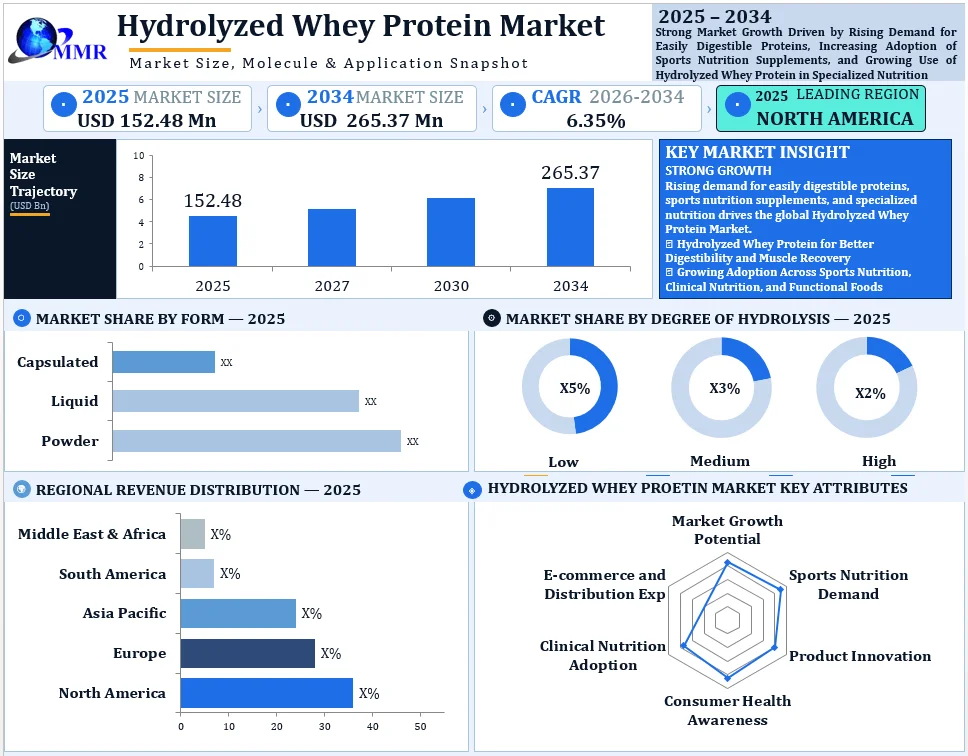
The Global Hydrolyzed Whey Protein Market is valued at USD 152.48 million in 2025 and is projected to reach USD 265.37 million by 2034, registering a CAGR of 6.35% during 2026–2034.
Global Hydrolyzed Whey Protein Market Overview:
The Global Hydrolyzed Whey Protein Market is witnessing steady growth, driven by increasing health consciousness, rising participation in fitness activities, and growing demand for high-quality protein supplements. The expansion of fitness centers, health clubs, and sports nutrition products supports market growth, while the increasing availability of hydrolyzed whey protein through organized retail, specialty nutrition stores, and e-commerce platforms improves consumer accessibility. Hydrolyzed whey protein offers benefits such as rapid digestion and absorption, muscle recovery, muscle development, and weight management, making it popular among athletes, fitness enthusiasts, and health-conscious consumers. Furthermore, growing demand for easily digestible protein products, increasing interest in active lifestyles, and the expanding use of hydrolyzed whey protein in sports nutrition, dietary supplements, and functional food and beverage formulations contribute to market expansion.
Global Hydrolyzed Whey Protein Market Growth and Share Analysis
To know about the Research Methodology :- Request Free Sample Report
Global Hydrolyzed Whey Protein Market: Key Highlights
• Market Size and Growth: The Global Hydrolyzed Whey Protein Market reaches USD 152.48 million in 2025 and is projected to reach USD 265.37 million by 2034, registering a CAGR of 6.35% during 2025–2034.
• Leading Region: North America leads the market in 2025, supported by demand for sports nutrition, dietary supplements, protein-enriched foods, and specialized nutritional formulations.
• Dominant Application: Sports and Performance Nutrition represents a major application, supported by increasing fitness participation and demand for protein supplements that support muscle recovery and development.
• Product Format Trends: Powdered hydrolyzed whey protein remains an important product format because of its storage stability, transportation efficiency, and versatility across nutritional applications.
• Growth Opportunities: Advances in enzymatic hydrolysis, improved flavor formulations, and growing demand for clinical nutrition and functional foods create opportunities for product innovation and market expansion.
Global Hydrolyzed Whey Protein Market Dynamics:
Global Hydrolyzed Whey Protein Market Drivers
Rising Demand for Sports Nutrition and Protein Supplements
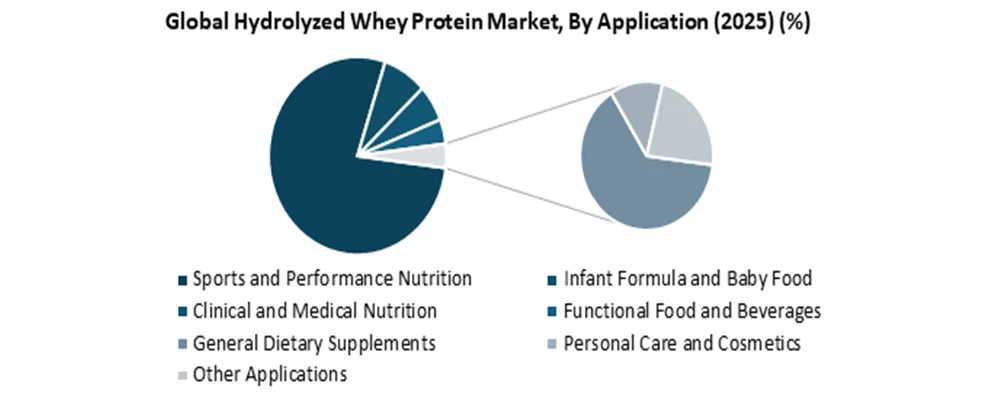
The Global Hydrolyzed Whey Protein Market benefits from increasing participation in fitness activities, growing health consciousness, and rising demand for protein supplements. Hydrolyzed whey protein contains smaller peptide fragments that support rapid digestion and protein absorption, making it suitable for sports nutrition and post-workout recovery products. Sports and performance nutrition accounts for an estimated 78.1% of the market in 2025, highlighting the importance of fitness-related applications. Expanding gym memberships, bodybuilding activities, and consumer interest in muscle development further support demand.
Growing Demand for Easily Digestible and Specialized Nutrition
Increasing demand for easily digestible protein ingredients supports the adoption of hydrolyzed whey protein in specialized nutritional formulations. Its peptide-based composition makes it useful in selected clinical nutrition products and specialized infant formula formulations designed for specific nutritional requirements. Growing interest in active aging, muscle maintenance, and targeted dietary supplementation encourages manufacturers to develop specialized protein ingredients for different consumer groups. Rising demand for functional foods and protein-enriched beverages also creates opportunities across the food and beverage industry.
Global Hydrolyzed Whey Protein Market Restraints
High Production Costs and Premium Product Pricing
The production of hydrolyzed whey protein involves additional processing to break down intact proteins into smaller peptides. Enzymatic hydrolysis, specialized processing equipment, quality control, and drying technologies increase manufacturing complexity and contribute to premium product pricing. These costs can limit adoption among price-sensitive consumers and manufacturers operating in cost-competitive nutrition markets. Maintaining consistent taste, solubility, and functional properties also creates technical challenges, particularly in beverages and ready-to-mix nutritional products. Consequently, manufacturers focus on improving processing efficiency and product quality while controlling production costs.
Taste and Formulation Challenges
Hydrolyzed whey protein can develop bitter or undesirable flavor characteristics depending on the degree of hydrolysis and the resulting peptide composition. These sensory challenges affect consumer acceptance, particularly in flavored beverages, protein powders, and functional food products. Manufacturers invest in enzyme selection, flavor masking, and formulation optimization to improve palatability without compromising nutritional functionality. Balancing digestibility, taste, solubility, and affordability remains an important consideration in product development.
Global Hydrolyzed Whey Protein Market Opportunities
Expansion of Clinical Nutrition and Specialized Protein Formulations
Growing demand for specialized nutritional products creates opportunities for hydrolyzed whey protein manufacturers. Clinical nutrition applications include selected medical nutrition formulations designed to meet specific dietary requirements, while infant nutrition applications use suitable protein hydrolysates in specialized formula products. Increasing attention to healthy aging, muscle maintenance, and nutritional support for individuals with specific dietary needs further encourages product development. Manufacturers that offer consistent quality, controlled hydrolysis, and application-specific formulations can strengthen their presence in these specialized segments.
Growing Adoption in Functional Foods and Beverages
The growing popularity of protein-enriched foods and beverages creates opportunities beyond traditional sports supplements. Hydrolyzed whey protein can be incorporated into selected nutritional beverages, powdered drink mixes, and functional food formulations where digestibility and protein delivery are important product characteristics. Manufacturers focus on improving solubility, flavor, and stability to support broader product applications. The expansion of online retail, specialty nutrition stores, and organized distribution channels also improves product accessibility and enables manufacturers to reach a wider consumer base.
Global Hydrolyzed Whey Protein Market Challenges
Maintaining Consistent Product Quality and Hydrolysis Levels
Maintaining consistent peptide composition, protein quality, solubility, and digestibility presents a significant challenge in the Global Hydrolyzed Whey Protein Market. Variations in raw whey materials, enzyme selection, processing conditions, and hydrolysis levels affect the final product's nutritional and functional properties. Manufacturers require strict quality control and standardized production processes to ensure batch-to-batch consistency. These requirements increase operational complexity, particularly for suppliers serving sports nutrition, clinical nutrition, and specialized food applications.
Managing Raw Material Availability and Price Fluctuations
Hydrolyzed whey protein production depends on the availability and quality of whey protein ingredients derived from dairy processing. Fluctuations in milk production, dairy processing volumes, energy costs, and transportation expenses affect raw material procurement and manufacturing costs. Smaller manufacturers may experience difficulties maintaining competitive pricing when input costs increase. Efficient sourcing, supply chain management, and production planning remain essential for maintaining profitability and ensuring a consistent supply to nutritional supplement and food manufacturers.
Global Hydrolyzed Whey Protein Market Trends
Preference for Powdered Hydrolyzed Whey Protein
Powdered hydrolyzed whey protein remains an important product format because of its storage stability, transportation efficiency, and versatility across nutritional applications. Powdered products account for an estimated 71.3% of the market in 2025. Their use in sports nutrition, dietary supplements, and specialized nutritional formulations supports demand. Manufacturers also focus on improving powder solubility, processing efficiency, and flavor characteristics to strengthen product performance.
Advancements in Enzymatic Hydrolysis and Protein Processing
Manufacturers increasingly focus on optimizing enzymatic hydrolysis to control peptide composition, digestibility, and functional properties. Improvements in processing and formulation technologies help address bitterness, enhance solubility, and support consistent product quality. Different degrees of hydrolysis allow manufacturers to tailor ingredients to specific applications, including sports nutrition and specialized dietary formulations. These developments support product differentiation and enable suppliers to address the technical requirements of food, beverage, and nutritional supplement manufacturers.
Global Hydrolyzed Whey Protein Market Segment Analysis
By Degree of Hydrolysis
The Global Hydrolyzed Whey Protein Market by degree of hydrolysis is segmented into Low Degree of Hydrolysis, Medium Degree of Hydrolysis, and High Degree of Hydrolysis. Low degree of hydrolysis supports applications that require moderate protein breakdown while maintaining desirable taste, texture, and functional properties. Medium degree of hydrolysis offers a balance between peptide formation, digestibility, and sensory characteristics, making it suitable for sports nutrition, dietary supplements, and selected functional foods and beverages. High degree of hydrolysis produces a greater proportion of smaller peptides and supports specialized nutritional formulations that require extensive protein breakdown. Demand across these segments depends on application requirements, peptide composition, digestibility, flavor characteristics, and processing costs.
By Application
The Global Hydrolyzed Whey Protein Market by application is segmented into Sports and Performance Nutrition, Infant Formula and Baby Food, Clinical and Medical Nutrition, Functional Food and Beverages, General Dietary Supplements, Personal Care and Cosmetics, and Other Applications. Sports and performance nutrition uses hydrolyzed whey protein in protein powders, recovery products, and nutritional beverages designed to support protein intake and muscle recovery. Infant formula and baby food incorporate suitable protein hydrolysates into specialized formulations that meet specific nutritional requirements, subject to applicable safety and regulatory standards. Clinical and medical nutrition uses hydrolyzed whey protein in selected nutritional products designed for individuals with specific dietary needs. Functional foods and beverages incorporate hydrolyzed whey protein into protein-enriched drinks, nutritional bars, and fortified food products. General dietary supplements provide convenient options for consumers seeking to supplement their everyday protein intake. Personal care and cosmetics use selected whey-derived protein hydrolysates in hair-care and skin-care formulations for their functional properties, while other applications include specialized food-processing formulations and niche uses of whey-derived peptides.
Global Hydrolyzed Whey Protein Regional Analysis:
North America leads the Global Hydrolyzed Whey Protein Market in 2025, supported by strong demand for sports nutrition, dietary supplements, and protein-enriched functional foods. The United States contributes significantly through widespread fitness participation, established nutritional supplement distribution channels, and growing consumer interest in muscle recovery and protein intake. Increasing demand for premium protein ingredients across sports nutrition and specialized clinical nutrition products further supports regional growth. Advanced food processing capabilities and continuous product formulation improvements strengthen North America's market position.
Europe represents a significant regional market, driven by demand for sports nutrition, specialized infant formula, and clinical nutrition products. Countries such as Germany, the United Kingdom, and France contribute through established food processing industries, growing health consciousness, and demand for high-quality nutritional ingredients. Strong food safety requirements and quality standards support the development of specialized protein hydrolysates. Increasing interest in active aging, functional foods, and premium dietary supplements further contributes to regional market expansion.
Asia Pacific represents a major growth opportunity for the Global Hydrolyzed Whey Protein Market, supported by rising disposable incomes, increasing fitness awareness, and expanding demand for protein supplements. China, India, Japan, and Australia contribute through growing sports nutrition consumption, urbanization, and wider availability of nutritional products. Expanding e-commerce platforms and specialty supplement retailers improve product accessibility. Increasing consumer awareness of protein intake, muscle development, and preventive nutrition supports demand across sports nutrition, functional foods, and specialized dietary formulations.
South America experiences increasing demand for hydrolyzed whey protein as fitness participation, sports nutrition awareness, and interest in protein-rich diets expand. Brazil and Argentina contribute through growing demand for nutritional supplements and functional food products. The expansion of online retail, fitness centers, and specialty nutrition stores improves access to protein-based products. However, price sensitivity, currency fluctuations, and dependence on imported ingredients can influence product affordability and market penetration. Growing consumer interest in muscle recovery and active lifestyles supports further regional development.
The Middle East and Africa region presents emerging opportunities as health awareness, fitness participation, and demand for nutritional supplements increase. The United Arab Emirates, Saudi Arabia, and South Africa contribute through expanding fitness facilities, specialty nutrition retailers, and growing interest in protein-enriched products. Online distribution channels also improve access to international nutritional supplement brands. However, varying purchasing power, limited local processing capacity, and reliance on imported ingredients can constrain market expansion. Increasing demand for sports nutrition and wellness products supports the region's long-term growth potential.
Global Hydrolyzed Whey Protein Market Competitive Landscape
The Global Hydrolyzed Whey Protein Market features competition among established dairy ingredient manufacturers, specialized protein processors, and nutritional ingredient suppliers. Companies compete through product quality, enzymatic hydrolysis technologies, protein digestibility, taste optimization, and application-specific formulations. Manufacturers with integrated dairy processing operations benefit from reliable raw material sourcing, production capabilities, and established distribution networks. Product innovation and customized ingredient solutions support differentiation across sports nutrition, clinical nutrition, infant nutrition, and functional food applications.
Competitive Positioning of Key Companies
| Company | Competitive Positioning | Key Areas of Competition |
|---|---|---|
| Arla Foods Ingredients | Specialized dairy protein ingredient supplier |
Hydrolyzed proteins, clinical nutrition, infant nutrition, and peptide formulation |
| Glanbia plc | Global nutritional ingredient supplier |
Sports nutrition, protein ingredients, and performance nutrition |
| Fonterra Co-operative Group | Integrated dairy ingredient manufacturer |
Whey protein processing, specialized nutrition, and global ingredient supply |
| Hilmar Cheese Company | Dairy and whey protein ingredient manufacturer |
Protein quality, manufacturing efficiency, and ingredient supply |
| FrieslandCampina Ingredients | Specialized dairy nutrition supplier | Early-life nutrition, medical nutrition, and protein hydrolysates |
| Kerry Group | Food and nutrition ingredient supplier |
Taste optimization, functional ingredients, and formulation development |
| Carbery Group | Whey protein ingredient specialist | Hydrolyzed whey protein, sports nutrition, and customized formulations |
| Agropur Cooperative | Dairy ingredient producer | Whey protein processing, product consistency, and nutritional ingredients |
| Lactalis Ingredients | International dairy ingredient supplier |
Whey-based ingredients, nutritional formulations, and distribution |
| Milk Specialties Global | Specialized protein ingredient manufacturer |
Sports nutrition, protein processing, and customized ingredient solutions |
Key Competitive Strategies
1. Product Innovation and Hydrolysis Technology
Manufacturers focus on optimizing enzymatic hydrolysis to achieve targeted peptide profiles, improve digestibility, and maintain consistent protein quality. Advances in processing technologies support the development of hydrolyzed whey protein ingredients for different nutritional applications.
2. Taste and Formulation Optimization
Bitterness and flavor limitations remain important formulation challenges. Companies improve product acceptance through enzyme selection, flavor masking, and formulation adjustments. These strategies support the incorporation of hydrolyzed whey protein into protein powders, nutritional beverages, and functional foods.
3. Expansion into Specialized Nutrition
Companies strengthen their market positions by supplying ingredients for sports nutrition, clinical nutrition, infant nutrition, and specialized dietary products. Application-specific formulations help manufacturers address varying requirements for protein composition, solubility, digestibility, and nutritional functionality.
4. Manufacturing Efficiency and Supply Chain Integration
Established dairy ingredient manufacturers leverage whey sourcing capabilities, processing infrastructure, and distribution networks to maintain consistent ingredient supplies. Efficient manufacturing and supply chain management help control production costs and support long-term customer relationships.
5. Strategic Customer Partnerships
Ingredient suppliers work closely with food manufacturers, nutritional supplement brands, and specialized nutrition companies to develop application-specific solutions. Technical support, formulation expertise, and product customization help manufacturers meet customer requirements and differentiate their offerings.
Overall Competitive Outlook
The Global Hydrolyzed Whey Protein Market increasingly emphasizes product quality, advanced hydrolysis technology, improved taste, and application-specific nutritional solutions. Large dairy ingredient manufacturers compete through production capacity, raw material access, and distribution reach, while specialized suppliers differentiate themselves through customized formulations and technical expertise. Growing demand for sports nutrition, specialized protein supplements, and functional nutritional products supports continued competition in product development, processing efficiency, and ingredient performance.
Global Hydrolyzed Whey Protein Market: Recent Developments
| Date | Company | Development | Impact |
|---|---|---|---|
| October 13, 2026 | Hilmar Cheese Company | Introduces PROtelyze Bio-Brain, a whey-derived bioactive peptide ingredient produced through controlled enzymatic hydrolysis for cognitive wellness applications. |
Expands the application potential of whey-derived peptides in functional foods, beverages, and dietary supplements. |
| September 23, 2026 | Hi-Tech Pharmaceuticals | Expands its Precision Protein hydrolyzed whey protein portfolio with the Dubai Chocolate flavor, strengthening its flavored protein supplement range. |
Supports product differentiation, flavor innovation, and consumer engagement in the hydrolyzed whey protein segment. |
| September 2026 | Hi-Tech Pharmaceuticals | Prepares to introduce Hydro Clear Precision Protein, a seven-product clear hydrolyzed whey protein range using proprietary Embedded Enzyme Technology and specialized filtration. |
Creates opportunities in clear protein beverages and low-viscosity formulations while addressing taste and texture preferences. |
| July 13, 2026 | Nichols plc and THG | Announces Myprotein Clear Whey Protein Water, a ready-to-drink protein beverage range scheduled for launch in September 2026. |
Highlights growing interest in convenient, ready-to-drink protein formats and expands competition in clear whey beverages. |
| June 9, 2026 | Glanbia plc | Expands the Optimum Nutrition portfolio in the United Kingdom with Clear Whey Protein, offering 20 g of whey protein isolate per serving in three fruit flavors. |
Strengthens competition in refreshing protein beverages and encourages innovation in alternative formats for protein consumption. |
Global Hydrolyzed Whey Protein Market Scope: Inquire before buying
| Hydrolyzed Whey Protein Market | |||
|---|---|---|---|
| Report Coverage | Details | ||
| Base Year: | 2025 | Forecast Period: | 2026-2034 |
| Historical Data: | 2020 to 2025 | Market Size in 2025: | USD 152.48 Million |
| Forecast Period 2026-2034 CAGR: | 6.35% | Market Size in 2034: | USD 265.37 Million |
| Segments Covered: | by Form | Powder Liquid Capsulated |
|
| by Degree of Hydrolysis | Low Medium High |
||
| by Application | Sports and Performance Nutrition Infant Formula and Baby Food Clinical and Medical Nutrition Functional Food and Beverages General Dietary Supplements Personal Care and Cosmetics Other Applications |
||
Global Hydrolyzed Whey Protein Market, by Region:
North America (United States, Canada and Mexico)
Europe (UK, France, Germany, Italy, Spain, Sweden, Austria and Rest of Europe)
Asia Pacific (China, South Korea, Japan, India, Australia, Indonesia, Malaysia, Vietnam, Taiwan, Bangladesh, Pakistan and Rest of APAC)
Middle East and Africa (South Africa, GCC, Egypt, Nigeria and Rest of ME&A)
South America (Brazil, Argentina Rest of South America)
Global Hydrolyzed Whey Protein Market Key Players are:
1. Agropur Cooperative
2. AMCO Proteins
3. Arla Foods Ingredients Group P/S
4. Carbery Group
5. Dairy Farmers of America, Inc.
6. Glanbia plc
7. Hilmar Cheese Company, Inc.
8. Ingredia SA
9. Milk Specialties Global
10. Fonterra Co-operative Group Limited
11. Royal FrieslandCampina N.V.
12. Kerry Group plc
13. Lactalis Ingredients
14. Saputo Inc.
15. Leprino Foods Company
16. The Tatua Co-operative Dairy Company Limited
17. DMK Group
18. MILEI GmbH
19. MEGGLE GmbH & Co. KG
20. Euroserum
21. Armor Protéines
22. Dairygold Co-Operative Society Limited
23. Westland Milk Products
24. Valio Ltd.
25. Sachsenmilch Leppersdorf GmbH
26. Prolactal GmbH
27. Lactoprot Deutschland GmbH
28. Foremost Farms USA Cooperative
29. Associated Milk Producers Inc.
30. Land O'Lakes, Inc.
31. Darigold, Inc.
32. Grande Custom Ingredients Group
33. Erie Foods International, Inc.
34. Brewster Cheese Company
35. T.C. Union Agro-Chem Co., Ltd.
36. Michigan Milk Producers Association
37. Agrial Enterprise
38. Costantino & C. S.p.A.
39. EPI Ingredients
40. Proliant Dairy Ingredients
Frequently Asked Questions
1. What is the global hydrolyzed whey protein market size in 2025?
Ans. The Global Hydrolyzed Whey Protein Market is valued at USD 152.48 million in 2025.
2. What is the projected market size by 2034?
Ans. The market is projected to reach USD 265.37 million by 2034, reflecting growing demand for hydrolyzed whey protein ingredients.
3. What is the CAGR of the global hydrolyzed whey protein market?
Ans. The market registers a CAGR of 6.35% during 2026–2034.
4. Which region leads the global hydrolyzed whey protein market?
Ans. North America leads the market, supported by demand for sports nutrition, protein supplements, and specialized nutritional products.
5. Which application represents a major segment of the hydrolyzed whey protein market?
Ans. Sports and Performance Nutrition represents a major application, driven by fitness participation, muscle recovery products, and growing demand for protein supplementation.
6. What are the major factors driving the hydrolyzed whey protein market?
Ans. Key growth drivers include increasing health consciousness, rising fitness participation, growing demand for protein supplements, and expanding applications in sports nutrition, dietary supplements, and functional foods.