Global Hybrid Power Solutions Market By System Type, By Grid Connectivity, By Power Rating, By Installation Type, By End User, by Region and Forecast 2034

8.21%
CAGR (2026-2034)
2.42 USD Bn.
Forecast Market Size
308
Report Pages
145
Market Tables

Overview

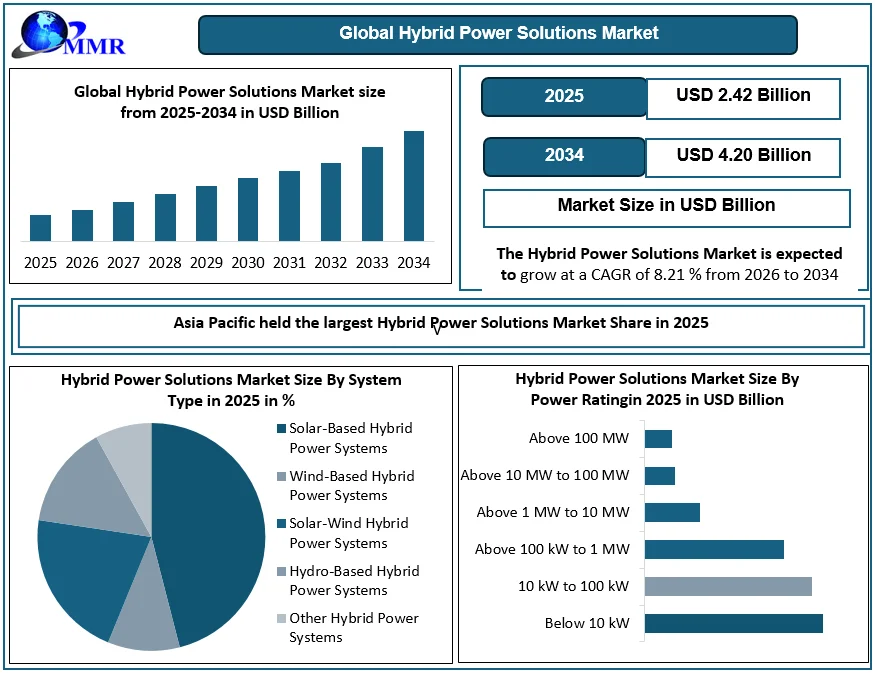
Global Hybrid Power Solutions Market size was valued at USD 2.42 Billion in 2025 and is projected to grow from USD 2.42 Billion in 2026 to USD 4.20 Billion by 2034, registering a CAGR of 8.21% during the forecast period (2026–2034).

Global Hybrid Power Solutions Market Overview

Hybrid Power Solutions are integrated electricity generation systems that combine two or more energy sources, such as solar photovoltaic (PV), wind turbines, diesel generators, natural gas generators, hydropower, and battery energy storage systems (BESS), to deliver reliable and cost-efficient electricity. These solutions are increasingly deployed across remote industrial facilities, mining operations, telecommunications infrastructure, commercial establishments, rural electrification projects, and utility-scale power networks where uninterrupted electricity supply and energy optimization are essential.

The global hybrid power solutions industry is experiencing significant growth, supported by increasing renewable energy integration, rising electricity consumption, grid reliability concerns, and the transition toward decentralized power generation. Configurations such as solar-diesel, wind-diesel, solar-wind, and solar-wind-diesel systems are gaining adoption because they combine renewable electricity generation with dispatchable backup power and energy storage. These systems help reduce diesel consumption, improve power availability, and minimize dependence on conventional grid infrastructure, particularly in remote and off-grid locations.

The growing integration of Battery Energy Storage Systems (BESS), intelligent energy management systems, hybrid inverters, and advanced power conversion technologies is transforming hybrid power generation. Solar-diesel hybrid systems are particularly relevant for mining sites, telecom towers, island communities, and industrial facilities requiring continuous power availability. According to the International Energy Agency (IEA), global renewable capacity additions reached a record 800 GW in 2025, with solar PV contributing more than 600 GW and wind accounting for approximately 160 GW. Battery storage additions also increased by around 40% to nearly 110 GW, strengthening the technology ecosystem supporting renewable-based hybrid power solutions.

Global Hybrid Power Solutions Market Key Insights

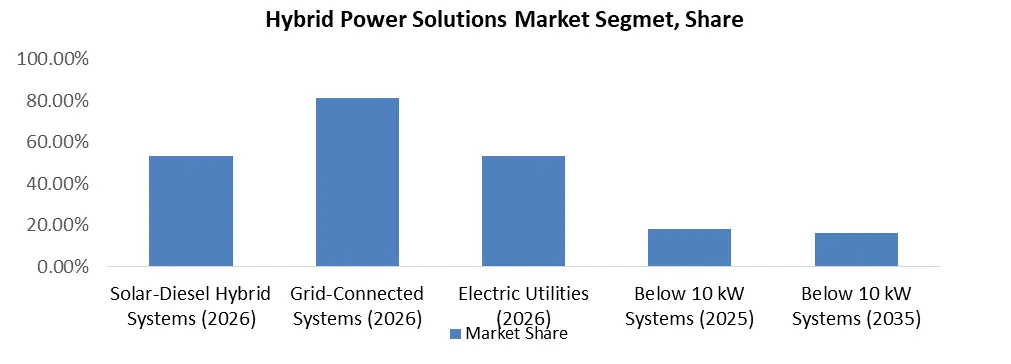
• Configuration Leadership: Solar-diesel hybrid systems are expected to dominate the configuration segment, accounting for 53.33% of the global market in 2026. Their adoption is supported by the ability to combine renewable electricity generation with reliable diesel-based backup across mining, telecom, and remote industrial facilities.
• Grid Type Dominance: On-grid hybrid power solutions are projected to account for 81.05% of the global market in 2026, supported by increasing integration of renewable generation, battery storage, and grid-connected energy management systems. These configurations enable commercial and industrial consumers to optimize electricity procurement while maintaining backup power capabilities.
• Regional Leadership: Asia-Pacific dominated the global hybrid power solutions market in 2025, accounting for 38.07% of the market, with regional market value USD 0.92 Billion. Strong renewable energy deployment, expanding industrial electricity requirements, and investments in decentralized power infrastructure are supporting regional demand.
• Renewable Energy Integration: Global renewable energy capacity additions reached 800 GW in 2025, while solar PV installations exceeded 600 GW. This expansion is creating opportunities for hybrid power solutions combining solar generation, wind energy, conventional generators, and battery storage to improve electricity reliability and renewable energy utilization.
• Energy Storage Advancement: Global battery storage capacity additions increased by approximately 40% in 2025, reaching nearly 110 GW. The expansion of battery storage technologies is strengthening hybrid system capabilities through improved load balancing, renewable energy storage, peak-load management, and reduced dependence on diesel generators.
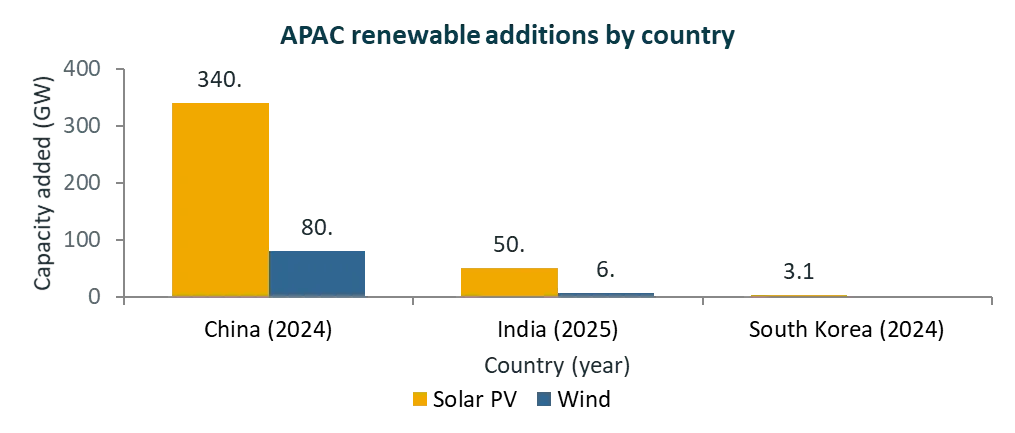
• India's Renewable Energy Expansion: India added nearly 50 GW of solar PV capacity and more than 6 GW of wind capacity in 2025. These installations are creating opportunities for solar-wind hybrid projects, battery-integrated power systems, and renewable-based electricity solutions for industrial and commercial consumers.
Hybrid Power Solutions Market Growth (1)

To know about the Research Methodology :- Request Free Sample Report

Hybrid Power Solutions Market Trend:

Increasing Adoption of AI-Enabled Energy Management and Battery-Integrated Hybrid Power Systems

The integration of Artificial Intelligence (AI), Internet of Things (IoT), advanced battery energy storage systems (BESS), and intelligent energy management platforms is transforming the Hybrid Power Solutions Market. Smart monitoring technologies enable real-time tracking of solar generation, wind power output, battery state of charge, generator fuel consumption, and electricity demand. Predictive energy management can optimize power dispatch between renewable sources, battery storage, and conventional generators, reducing diesel consumption, improving system reliability, and minimizing operating costs.

Manufacturers and hybrid power solution providers are increasingly integrating solar photovoltaic systems, wind turbines, diesel generators, battery storage, and smart inverters with centralized energy management systems. These platforms continuously monitor electricity generation, load demand, battery performance, and grid conditions to determine the most efficient combination of power sources. This approach is particularly valuable for remote mining operations, telecom infrastructure, island communities, and industrial facilities where grid connectivity is limited or electricity interruptions can disrupt operations.

Hybrid power solution developers are responding through the development of AI-enabled energy management systems, modular battery storage solutions, hybrid inverters, and automated microgrid controllers. Advanced control algorithms optimize generator operating schedules, battery charging and discharging cycles, and renewable energy utilization according to changing weather conditions and electricity demand. For example, a 2024 study of an off-grid solar-diesel hybrid system in Indonesia demonstrated that integrating a 170.2 kWp solar PV installation with 1,036 kWh of battery storage reduced diesel fuel consumption by 79.3% compared with the existing diesel-only configuration. Such developments are accelerating the adoption of intelligent hybrid power systems across remote industrial, commercial, and rural electrification applications.

Hybrid Power Solutions Market Dynamics

Increasing Renewable Energy Deployment and Demand for Reliable Decentralized Electricity to Drive Hybrid Power Solutions Market Growth

The expansion of renewable energy installations across utility-scale power generation, industrial facilities, telecommunications infrastructure, mining operations, and remote communities is driving Hybrid Power Solutions Market demand. Hybrid power solution providers increasingly integrate solar photovoltaic systems, wind turbines, diesel generators, and battery energy storage systems to deliver reliable electricity, optimize fuel consumption, and improve power generation efficiency. According to the International Energy Agency (IEA), global renewable power capacity is projected to increase by nearly 4,600 GW between 2025 and 2030, with solar PV accounting for approximately 80% of the total expansion. Distributed solar applications, including commercial, industrial, and off-grid installations, are expected to contribute 42% of overall solar PV capacity growth, creating opportunities for hybrid electricity generation systems.

The development of remote industrial facilities, data centres, telecom networks, and rural electrification projects is increasing requirements for integrated power solutions capable of maintaining uninterrupted electricity supply. Hybrid power solution manufacturers are also investing in solar-wind-diesel configurations, battery-integrated microgrids, and intelligent energy management systems to improve renewable energy utilization and reduce dependence on conventional generators. These developments are supporting demand for hybrid inverters, battery storage systems, power conversion equipment, and microgrid controllers, driving Hybrid Power Solutions Market growth.

High Battery Raw Material Costs and Concentrated Clean Energy Supply Chains to Hamper Hybrid Power Solutions Market Growth

The Hybrid Power Solutions Market faces challenges from raw material supply concentration, particularly the availability and procurement costs of lithium, graphite, cobalt, nickel, and other materials used in battery energy storage systems. Lithium-ion batteries are widely utilized in solar-wind hybrid systems, diesel-battery configurations, and renewable microgrids because of their energy density, charging efficiency, and ability to balance intermittent electricity generation. However, dependence on concentrated battery manufacturing and mineral processing locations creates supply-chain vulnerabilities for hybrid power solution manufacturers.

China accounted for approximately 80% of global battery cell production in 2024, while its share of global anode active material production exceeded 90%. Additionally, China represented approximately 85% of global solar PV manufacturing capacity. Trade restrictions, fluctuations in lithium procurement costs, battery manufacturing concentration, transportation delays, and geopolitical disruptions can increase equipment acquisition and project development expenses. Smaller hybrid power solution providers may face additional difficulties in securing competitively priced battery storage components, maintaining project profitability, and ensuring consistent equipment availability, hampering Hybrid Power Solutions Market growth.

Hybrid Power Solutions Market Segmentation:

By System Type:

Solar-Based Hybrid Power Systems dominated the system-type segment of the Hybrid Power Solutions Market in 2025, driven by increasing integration of solar photovoltaic generation with battery storage and diesel generators. These systems are widely deployed across residential, commercial, telecommunications, mining, and remote industrial facilities. Global solar electricity generation reached approximately 1,323 TWh in 2022, increasing nearly 25% year-over-year. Additionally, Solar-Diesel hybrid configurations accounted for an estimated 53.33% of the global market in 2026, supported by their ability to reduce diesel consumption while maintaining reliable electricity supply.

By Grid Connectivity:

Grid-Connected Systems dominated the grid-connectivity segment of the Hybrid Power Solutions Market in 2025, supported by increasing integration of renewable generation, battery storage, and conventional electricity networks. These systems are extensively deployed across utility-scale renewable projects, industrial facilities, and commercial establishments. The segment is projected to account for approximately 81.05% of global market share in 2026. Meanwhile, Off-Grid Systems are gaining adoption across remote mining facilities, telecommunications towers, and isolated communities requiring independent electricity generation.

By End User:

Electric Utilities and Grid Operators dominated the end-user segment of the Hybrid Power Solutions Market in 2025, driven by investments in renewable integration, grid stabilization, and large-scale energy storage. The utility segment is projected to account for 53.5% of the global market in 2026. Industrial manufacturing, telecommunications, and data center operators also generate demand for hybrid installations to ensure uninterrupted electricity. Global data center electricity consumption reached approximately 415 TWh in 2024 and is projected to reach 945 TWh by 2030, creating additional opportunities for reliable hybrid power infrastructure.

By Power Rating:

Hybrid Power Systems above 100 kW represent an important capacity segment, supported by increasing installations across industrial manufacturing, mining, commercial infrastructure, and utility-scale renewable projects. These systems integrate solar, wind, diesel generation, and battery storage to address higher electricity requirements. Meanwhile, installations below 10 kW and between 10 kW and 100 kW serve residential consumers, telecommunications towers, and small commercial facilities. The below 10 kW segment is projected to account for 16% of market revenue in 2035, compared with 18% in 2025.
hybrid power system segment share

By Installation Type:

New / Greenfield Installations represent a significant deployment category in the Hybrid Power Solutions Market, supported by renewable energy parks, decentralized electricity projects, and new industrial infrastructure. In 2024, global renewable energy capacity additions reached approximately 700 GW, with solar photovoltaic contributing nearly 550 GW, creating opportunities for integrated hybrid installations.

Retrofit and Hybridization of Existing Power Systems are gaining adoption as industrial facilities, mining companies, and telecommunications operators integrate solar generation, wind power, and battery storage into existing diesel-based infrastructure. The U.S. Department of Energy announced approximately USD 26 million in funding for eight projects focused on integrating clean energy technologies into electricity grids, supporting modernization and hybridization initiatives.

Hybrid Power Solutions Market Regional Insights

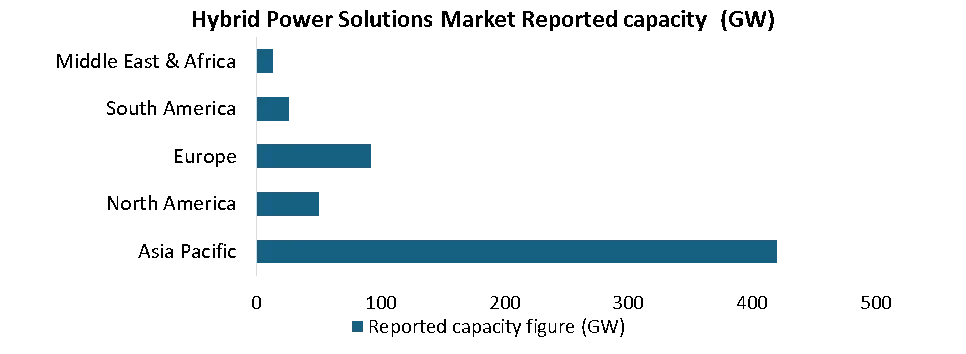
Asia Pacific dominated the global Hybrid Power Solutions Market in 2025, driven by renewable energy expansion, rising electricity demand, and industrial development. China added approximately 340 GW of solar and 80 GW of wind capacity in 2024. Japan recorded 89.6 GW of cumulative solar capacity, while India auctioned 15 GW of hybrid renewable projects in 2025, taking cumulative auctioned capacity to 64 GW. South Korea added nearly 3.1 GW of solar capacity, further supporting regional hybrid power adoption.

North America represented a significant market, supported by investments in renewable energy, battery storage, and microgrids. The United States added nearly 50 GW of solar photovoltaic capacity in 2024, strengthening demand for integrated solar-storage systems and reliable decentralized power generation.

Europe maintained a strong market position, driven by decarbonization targets, energy security initiatives, and renewable integration. The region added approximately 92 GW of renewable capacity in 2024, including nearly 60 GW of solar installations across the European Union, supporting hybrid generation and storage deployment.

Latin America experienced growing adoption of hybrid power solutions, supported by abundant renewable resources and expanding electricity requirements. The region added approximately 26 GW of renewable capacity in 2024, with Brazil contributing nearly 18 GW and strengthening demand for solar-wind hybrid and battery-integrated systems.

Middle East & Africa witnessed increasing opportunities from rural electrification, renewable energy investments, and off-grid power requirements. The region added approximately 13 GW of renewable capacity in 2024, supported by solar developments in Saudi Arabia and growing adoption of solar-diesel hybrid systems across remote locations.
hybrid power system reported capacity

by country

Hybrid Power Solutions Market Competitive Landscape

Global Hybrid Power Solutions Market is moderately competitive, with the presence of multinational energy companies, renewable power technology providers and specialized system integrators. Competition is primarily driven by system efficiency, power reliability, energy management capabilities, technological innovation, project costs and distribution networks. Major companies operating in the market include SMA Solar Technology AG, Schneider Electric SE, Caterpillar Inc., Enphase Energy Inc., Aggreko PLC, Siemens Energy AG, Wärtsilä Corporation, Huawei Digital Power Technologies Co., Ltd., Mitsubishi Heavy Industries and Delta Electronics, Inc. These companies focus on expanding hybrid generation portfolios, integrating battery storage, developing advanced energy management systems and strengthening project execution capabilities. For example, Hitachi Energy acquired eks Energy in October 2023, strengthening its power electronics and hybrid energy management capabilities. Additionally, manufacturers are investing in microgrid technologies, renewable integration and customized hybrid systems to strengthen their competitive positioning across industrial, commercial and utility sectors.

Hybrid Power Solutions Market Recent Developments

Company Name

Date

Recent Development

Strategic Impact

GE Vernova

2025

Expanded its grid
modernization and electrification portfolio to support renewable integration
and reliable power generation.

Strengthens grid
integration and renewable power capabilities.

Cummins Inc.

Jan-26

Installed its first microgrid system at its
new Lagos headquarters, integrating diesel generators and microgrid controls.

Demonstrates integrated microgrid
engineering capabilities.

Caterpillar Inc.

Feb-25

Installed a hybrid
microgrid combining 58 solar panels, 24 kW battery storage and diesel backup
at Tucson Proving Ground.

Reduces diesel
consumption and improves energy efficiency.

Tesla, Inc.

Sep-26

Advanced Hawaii's Waena battery storage
project through installation of the first six Megapack units within a 40 MW
facility.

Strengthens renewable integration and grid
flexibility.

Vertiv Group
Corporation

Oct-26

Completed its
approximately USD 1.45 billion acquisition of UtilityInnovation Group, adding
microgrid controls and onsite generation capabilities.

Expands microgrid
infrastructure and data center power solutions.

Global Hybrid Power Solutions Market Scope: Inquire before buying

Global Hybrid Power Solutions Market

Report
Coverage

Details

Base
Year:

2025

Forecast Period:

2026-2034

Historical
Data:

2020 to 2025

Market Size in 2025:

USD 2.42 Billion

Forecast
Period 2026 to 2034 CAGR:

5.21%

Market Size in 2034:

USD
4.20 Billion


Hybrid Power Solutions Market Segment
Analysis

By System Type

Solar-Based Hybrid
Power Systems

Wind-Based Hybrid
Power Systems

Solar-Wind Hybrid
Power Systems

Hydro-Based Hybrid
Power Systems

Other Hybrid Power
Systems

By Grid Connectivity

Off-Grid Systems

Standalone Off-Grid
Systems

Isolated Microgrid
Systems

Grid-Connected Systems

Grid-Tied Systems
Without Export Capability

Grid-Interactive
Systems

By Power Rating

Below 10 kW

10 kW to 100 kW

Above 100 kW to 1 MW

Above 1 MW to 10 MW

Above 10 MW to 100 MW

Above 100 MW

By Installation Type

New / Greenfield Installations

Retrofit and Hybridization of Existing Power
Systems

By End User

Residential Consumers

Electric Utilities and Grid
Operators

Independent Power Producers
(IPPs)

Commercial and Institutional
Organizations

Industrial Manufacturing
Enterprises

Telecommunications Operators

Mining and Oilfield Companies

Data Center Operators

Government and Public Sector
Agencies

Defense Organizations

Other End Users

Key players/Competitors profiles covered in the Hybrid Power Solutions Market report from a strategic perspective

North America
1. General Electric Company (GE Vernova)
2. Cummins Inc.
3. Caterpillar Inc.
4. Tesla, Inc.
5. Vertiv Group Corporation
6. Polar Power, Inc.
7. SunWize Power & Battery, LLC
8. Hybrid Power Solutions Inc.
Europe
1. Siemens Energy AG
2. SMA Solar Technology AG
3. Wärtsilä Corporation
4. MAN Energy Solutions
5. Aggreko plc
6. Danvest Energy A/S
7. Schneider Electric SE
8. ABB Ltd.
9. Victron Energy B.V.
Asia Pacific
1. Huawei Digital Power Technologies Co., Ltd.
2. Mitsubishi Heavy Industries, Ltd.
3. Doosan Enerbility Co., Ltd.
4. Delta Electronics, Inc.
5. ZTE Corporation
6. Sungrow Power Supply Co., Ltd.
7. Goldwind Science & Technology Co., Ltd.
8. Suzlon Energy Limited
9. ReGen Powertech
10. Teksan Jeneratör
Middle East & Africa
1. Alpha Power Solutions
2. Daystar Power
South America
1. WEG S.A.
2. Enel Green Power
3. Neoenergia S.A.
Others

Frequently Asked Questions (FAQs) – Global Hybrid Power Solutions Market

Q1. What is the global Hybrid Power Solutions Market size in 2025?
Ans: The global Hybrid Power Solutions Market was valued at USD 2.42 billion in 2025, reflecting increasing renewable energy integration and decentralized electricity demand.

Q2. What is the projected market size by 2034?
Ans: The market is projected to reach USD 4.20 billion by 2034, driven by renewable energy deployment and battery storage integration.

Q3. What is the expected CAGR of the Hybrid Power Solutions Market?
Ans: The market is expected to register a CAGR of 8.21% during 2026–2034, supported by growing demand for reliable electricity.

Q4. Which region dominates the global Hybrid Power Solutions Market?
Ans: Asia-Pacific dominated the market in 2025, accounting for 38.07% share, supported by renewable installations and expanding industrial electricity requirements.

Q5. Which configuration dominates the Hybrid Power Solutions Market?
Ans: Solar-diesel hybrid systems dominate the configuration segment, accounting for 53.33% share in 2026 due to reliability and reduced fuel consumption.

Q6. What are the key factors driving the Hybrid Power Solutions Market?
Ans: Increasing renewable energy deployment, rising electricity consumption, grid reliability concerns, and growing battery storage integration are major market growth drivers.

Q7. Who are the major players in the Hybrid Power Solutions Market?
Ans: Major players include GE Vernova, Siemens Energy, Caterpillar, Cummins, SMA Solar Technology, Schneider Electric, Wärtsilä, Huawei Digital Power, and Aggreko.

Table of Contents

1. Executive Market Landscape and Industry Overview 1.1. Global Hybrid Power Solutions Market Size and Growth Forecast, 2026–2034 (Value in USD Billion) 1.2. Historical Development of the Global Hybrid Power Solutions Industry, Including Solar-Diesel Hybrid Systems, Wind-Diesel Hybrid Systems, Solar-Wind Hybrid Systems, Solar-Wind-Diesel Hybrid Systems, Renewable-Battery Hybrid Systems and Advanced Energy Management Technologies 1.3. Assessment of Hybrid Power Solutions Adoption Across Electric Utilities, Independent Power Producers, Residential Consumers, Commercial Enterprises, Industrial Facilities, Telecommunications Infrastructure, Mining Operations, Data Centers and Remote Electrification Projects 1.4. Analysis of Hybrid Power Solutions Market Dynamics Based on System Type, Grid Connectivity, Power Rating, Application, End User and Energy Generation Requirements 1.5. Evaluation of Major Market Trends, Renewable Energy Integration, Battery Storage Innovations, Power Management Technologies, Manufacturing Developments, Supply Chain Conditions, Regulatory Developments, Investment Activities and Overseas Expansion Opportunities Influencing the Global Hybrid Power Solutions Market 2. Global Hybrid Power Solutions Market Dynamics 2.1. Global Hybrid Power Solutions Market Trends 2.2. Global Hybrid Power Solutions Market Analysis 2.3. Drivers 2.4. Restraints 2.5. Opportunities 2.6. Challenges 2.7. PORTER’s Five Forces Analysis 2.8. PESTLE Analysis 3. Global Hybrid Power Solutions Industry Ecosystem and Value Chain Analysis 3.1. Key Stakeholders Across Power Generation Equipment Suppliers, System Integrators and Energy Service Providers 3.2. Value Chain Mapping from Component Sourcing and System Design to Commissioning and Operation 3.3. Commercial Relationships Connecting Equipment Manufacturers, Project Developers and Electricity Purchasers 3.4. Value Creation and Margin Distribution Across Hybrid Power System Development Stages 3.5. Project Ownership Structures and Contractual Relationships Across Hybrid Energy Infrastructure Participants 3.6. Revenue Generation Models Across Equipment Supply, Installation, Maintenance and Energy Services 4. Microeconomic Factors and Hybrid Power Industry Cost Structure 4.1. Customer Purchasing Decisions Influenced by Electricity Costs, Reliability and Energy Savings 4.2. Manufacturing Cost Analysis Covering Generation Equipment, Batteries, Converters and Control Systems 4.3. Operating Expenditure Assessment Across Fuel Consumption, Maintenance and System Monitoring Requirements 4.4. Supplier Negotiations, Equipment Pricing and Customer Bargaining Power Evaluation 4.5. Working Capital Requirements, Project Payment Cycles and Equipment Inventory Financing Challenges 4.6. Lifecycle Cost Comparisons Across Hybrid Configurations, Operating Conditions and Energy Sources 5. Geographic Demand Mapping and Energy Infrastructure Assessment 5.1. Country-Level Mapping of Electricity Demand, Generation Infrastructure and Hybrid Power Opportunities 5.2. Regional Assessment of Renewable Resources, Grid Accessibility and Energy Security Requirements 5.3. Identification of Remote Communities and Industrial Clusters Requiring Reliable Hybrid Electricity 5.4. Mapping of Existing Hybrid Installations, Microgrids and Distributed Generation Infrastructure 5.5. Assessment of Transmission Constraints and Infrastructure Limitations Affecting Regional Project Development 5.6. Evaluation of Regional Investment Attractiveness Based on Energy Demand and Infrastructure Readiness 6. Pricing Trends and Total Ownership Cost Analysis 6.1. Historical Hybrid Power System Prices Across Configurations, Capacities and Installation Environments 6.2. Cost Benchmarking Across Generators, Battery Storage, Inverters and Energy Management Systems 6.3. Installation, Commissioning and Grid Integration Expenditure Comparisons Across Hybrid Power Projects 6.4. Fuel, Maintenance and Replacement Costs Across Different Operating Conditions and System Lifecycles 6.5. Customer Payback Periods and Total Ownership Cost Comparisons Across Hybrid Installations 6.6. Average Selling Price Benchmarking Across Equipment Categories, Regions and Project Configurations 7. Manufacturing Capacity and Production Economics Assessment 7.1. Global Manufacturing Infrastructure Across Hybrid Power Equipment and Component Production Facilities 7.2. Manufacturing Facility Capabilities for Generators, Batteries, Converters and Integrated Power Systems 7.3. Production Equipment Requirements for Assembly, Testing and Hybrid System Integration Processes 7.4. Quality Assurance Infrastructure for Equipment Reliability, Electrical Safety and Operational Performance 7.5. Manufacturing Cost Structures Across Components, Labor, Energy and Production Overheads 7.6. Production Economics Across Facility Scale, Capacity Utilization and Manufacturing Efficiency Improvements 8. Production Output Trends and Capacity Utilization Analysis 8.1. Historical Production Volumes Across Major Hybrid Power Equipment Manufacturing Countries and Regions 8.2. Production Output Distribution Across Generators, Battery Systems, Converters and Control Equipment 8.3. Capacity Utilization Patterns Across Manufacturing Facilities and Hybrid Equipment Product Categories 8.4. Production Fluctuations Associated with Project Demand, Procurement Cycles and Equipment Lead Times 8.5. Differences in Manufacturing Output Between Standardized Equipment and Customized Hybrid Power Systems 8.6. Factors Influencing Production Growth, Output Variability and Future Manufacturing Capacity Requirements 9. Raw Material Availability and Component Sourcing Analysis 9.1. Availability of Steel, Copper, Aluminum and Electrical Materials for Equipment Manufacturing 9.2. Sourcing of Battery Cells, Semiconductor Devices, Inverters and Power Control Components 9.3. Raw Material Price Fluctuations and Their Impact on Hybrid System Manufacturing Costs 9.4. Procurement Practices, Supplier Qualification and Purchasing Agreements for Essential Equipment Components 9.5. Critical Component Availability and International Sourcing Dependencies Across Hybrid System Manufacturers 9.6. Procurement Lead Times, Inventory Requirements and Component Supply Continuity Risk Evaluation 10. Hybrid Power Technology Development and System Integration Assessment 10.1. Development of Solar-Diesel, Wind-Diesel and Renewable-Battery Hybrid Power Configurations 10.2. Advancements in Power Converters, Energy Storage and Integrated Control Technologies 10.3. System Compatibility Assessment Across Generation Equipment, Batteries and Electrical Infrastructure 10.4. Energy Management Algorithms Optimizing Generation Scheduling and Renewable Power Utilization 10.5. Performance Evaluation Across Operating Efficiency, Power Quality and System Reliability Requirements 10.6. Technology Innovation Opportunities Improving Hybrid System Scalability, Flexibility and Operational Performance 11. Demand-Supply Balance and Equipment Availability Analysis 11.1. Regional Hybrid Power Project Demand Compared with Equipment Manufacturing and Supply Capacity 11.2. Country-Level Variations in Electricity Requirements, Project Pipelines and Equipment Availability 11.3. Project Delivery Timelines and Equipment Shortages Affecting Hybrid Power System Deployment 11.4. Supply Constraints Affecting Batteries, Generators, Converters and Specialized Control Equipment 11.5. Inventory Levels, Procurement Schedules and Finished Equipment Availability Across Regional Markets 11.6. Supply-Demand Gaps Assessed Through Project Pipelines, Production Output and Delivery Commitments 12. Energy Consumption Patterns and Operational Requirements Analysis 12.1. Global Hybrid Power Consumption Patterns Across Electricity Generation and Distributed Energy Applications 12.2. Electricity Demand Profiles Influencing Hybrid System Sizing and Generation Scheduling Requirements 12.3. Seasonal Variations in Renewable Generation and Electricity Consumption Across Operating Environments 12.4. Fuel Consumption Patterns Across Hybrid Systems Integrating Conventional and Renewable Energy Sources 12.5. Operational Power Requirements Across Critical Facilities and Remote Electricity Supply Installations 12.6. Energy Utilization Trends Measured Through Generation Output, Load Profiles and System Efficiency 13. Distribution Channels and Hybrid Power Procurement Analysis 13.1. Distribution Networks Connecting Hybrid Equipment Manufacturers with Project Developers and End Users 13.2. Role of Equipment Distributors, Engineering Contractors and Specialist Energy Solution Providers 13.3. Direct Sales Strategies Targeting Utilities, Industrial Customers and Infrastructure Project Developers 13.4. Procurement Models Covering Equipment Purchases, Turnkey Projects and Long-Term Service Agreements 13.5. Regional Supplier Coverage and Equipment Accessibility Across Emerging Hybrid Power Markets 13.6. Channel Margins, Delivery Efficiency and Procurement Coordination Across Hybrid Power Supply Networks 14. Commercial Pricing and Project Procurement Economics Analysis 14.1. Price Trends Across Hybrid Power Equipment, Integrated Systems and Installation Services 14.2. Price Benchmarking Across Generation Technologies, Storage Capacities and System Integration Requirements 14.3. Component Costs and Their Influence on Hybrid System Pricing Strategies 14.4. Customer Purchasing Decisions Based on Reliability, Affordability and Expected Operational Savings 14.5. Price Differences Between Standardized Hybrid Packages and Customized Power Generation Installations 14.6. Pricing Opportunities Associated with Advanced Controls, Storage Integration and Service Contracts 15. Customer Behaviour and Hybrid Power Adoption Analysis 15.1. Customer Awareness of Hybrid Power Systems and Their Operational Advantages 15.2. Factors Influencing Adoption Across Utilities, Commercial Facilities and Remote Installations 15.3. Purchasing Decisions Based on Reliability, Lifecycle Costs and Energy Independence Requirements 15.4. Influence of Engineering Consultants, Project Developers and Equipment Supplier Recommendations 15.5. Customer Perceptions of System Performance, Maintenance Requirements and Investment Payback Periods 15.6. Barriers to Adoption Across Small Enterprises and Large Infrastructure Project Developers 16. International Trade and Equipment Flow Analysis 16.1. Global Hybrid Power Equipment Import and Export Trends Across Major Trading Countries 16.2. International Trade Volumes, Equipment Values and Cross-Border Shipment Movement Patterns 16.3. Major Exporting Countries, Importing Markets and Component Sourcing Dependencies Across Regions 16.4. Finished Equipment Inventory Trends and Delivery Schedules Across International Distribution Networks 16.5. Trade Barriers, Tariffs and Logistics Constraints Affecting International Equipment Availability 16.6. Cross-Border Procurement Opportunities and International Supplier Diversification Strategies for Manufacturers 17. Regulatory Framework and Technical Standards Assessment 17.1. National Regulations Governing Hybrid Power Installations, Electrical Safety and Operational Licensing 17.2. Country-Specific Grid Interconnection Requirements and Distributed Generation Approval Procedures 17.3. Technical Standards Covering Equipment Performance, System Compatibility and Electrical Protection Requirements 17.4. Regulatory Requirements for Importing, Exporting and Commercializing Hybrid Power Equipment 17.5. Environmental Compliance Obligations Covering Emissions, Battery Disposal and Equipment Recycling 17.6. Regulatory Differences Influencing Project Approval Timelines and Commercial Deployment Requirements 18. Energy Management and Digital Monitoring Technology Analysis 18.1. Adoption of Intelligent Energy Management Systems Across Hybrid Power Installations 18.2. Remote Monitoring Technologies Supporting System Diagnostics and Operational Performance Tracking 18.3. Predictive Maintenance Applications Improving Equipment Availability and Reducing Operational Interruptions 18.4. Integration of Smart Meters, Sensors and Digital Energy Monitoring Platforms 18.5. Automation Technologies Optimizing Battery Dispatch, Generator Operation and Renewable Energy Utilization 18.6. Cybersecurity Requirements and Communication Interoperability Across Digitally Managed Hybrid Power Systems 19. Market Entry Barriers and Commercial Expansion Assessment 19.1. Market Entry Challenges Across Established and Emerging Hybrid Power Solution Markets 19.2. Barriers Associated with Technical Certification, Grid Interconnection and Regulatory Compliance Requirements 19.3. Challenges in Establishing Local Partnerships, Service Networks and Customer Relationships 19.4. Commercialization Constraints Related to Project Financing and Technical Expertise Availability 19.5. Expansion Opportunities Across Underserved Electricity Markets and Remote Infrastructure Developments 19.6. Strategies for Improving Market Accessibility and Accelerating Hybrid Power Solution Adoption 20. Sustainability and Environmental Performance Assessment 20.1. Renewable Energy Utilization and Emissions Reduction Potential Across Hybrid Power Configurations 20.2. Fuel Consumption Efficiency and Environmental Performance Across Hybrid Generation Technologies 20.3. Environmental Impacts Associated with Battery Manufacturing, Equipment Operation and Component Disposal 20.4. Water, Energy and Material Consumption Across Hybrid Equipment Manufacturing Processes 20.5. Sustainable Sourcing Practices and Responsible End-of-Life Equipment Management Strategies 20.6. Contribution of Hybrid Power Solutions Toward Energy Access and Decarbonization Objectives 21. Overseas Expansion Strategies and International Energy Market Development Analysis 21.1. Overseas Expansion Strategies and International Business Development Opportunities Across Energy Markets 21.2. Country-Wise Market Entry Strategies for Hybrid Power Solution Providers and Manufacturers 21.3. International Project Development Opportunities Through Strategic Partnerships and Joint Venture Arrangements 21.4. Cross-Border Investment Trends and Foreign Market Regulatory Compliance Requirements 21.5. Expansion Opportunities Across Emerging Energy Markets and Remote Power Infrastructure Developments 21.6. Export Potential, International Procurement and Cross-Border Supply Chain Development Strategies 22. Investment Trends and Strategic Growth Opportunities Analysis 22.1. Investment Trends Across Hybrid Power Manufacturing, Project Development and System Integration 22.2. Capital Allocation Toward Production Expansion and New Hybrid Power Infrastructure Projects 22.3. Research and Development Expenditure Across Advanced Generation, Storage and Control Technologies 22.4. Mergers, Acquisitions and Strategic Partnerships Among Hybrid Power Industry Participants 22.5. Investment Opportunities Across Emerging Electricity Markets and Underserved Infrastructure Segments 22.6. Country-Level Investment Attractiveness Based on Demand Growth, Project Pipelines and Financing Availability 23. Global Hybrid Power Solutions Market Size and Forecast by Segmentation (Value in USD Billion), 2025–2034 23.1. Global Hybrid Power Solutions Market Size and Forecast, by System Type 23.1.1. Solar-Based Hybrid Power Systems 23.1.2. Wind-Based Hybrid Power Systems 23.1.3. Solar-Wind Hybrid Power Systems 23.1.4. Hydro-Based Hybrid Power Systems 23.1.5. Other Hybrid Power Systems 23.2. Global Hybrid Power Solutions Market Size and Forecast, by Grid Connectivity 23.2.1. Off-Grid Systems 23.2.1.1. Standalone Off-Grid Systems 23.2.1.2. Isolated Microgrid Systems 23.2.2. Grid-Connected Systems 23.2.2.1. Grid-Tied Systems Without Export Capability 23.2.2.2. Grid-Interactive Systems 23.3. Global Hybrid Power Solutions Market Size and Forecast, by Power Rating 23.3.1. Below 10 kW 23.3.2. 10 kW to 100 kW 23.3.3. Above 100 kW to 1 MW 23.3.4. Above 1 MW to 10 MW 23.3.5. Above 10 MW to 100 MW 23.3.6. Above 100 MW 23.4. Global Hybrid Power Solutions Market Size and Forecast, by Installation Type 23.4.1. New / Greenfield Installations 23.4.2. Retrofit and Hybridization of Existing Power Systems 23.5. Global Hybrid Power Solutions Market Size and Forecast, by End User 23.5.1. Residential Consumers 23.5.2. Electric Utilities and Grid Operators 23.5.3. Independent Power Producers (IPPs) 23.5.4. Commercial and Institutional Organizations 23.5.5. Industrial Manufacturing Enterprises 23.5.6. Telecommunications Operators 23.5.7. Mining and Oilfield Companies 23.5.8. Data Center Operators 23.5.9. Government and Public Sector Agencies 23.5.10. Defense Organizations 23.5.11. Other End Users 23.6. Global Hybrid Power Solutions Market Size and Forecast, by Region 23.6.1. North America 23.6.2. Europe 23.6.3. Asia Pacific 23.6.4. Middle East and Africa 23.6.5. South America 24. Competitive Landscape 24.1. MMR Competition Matrix 24.2. Key Players Benchmarking 24.3. Company Name 24.4. Headquarters 24.5. Year of Establishment 24.6. Patents and Proprietary Power Generation Technologies 24.7. Regulatory Approvals, Technical Standards and Product Certifications 24.8. Commercialization and Market Presence 24.9. Total Company Revenue (2025) 24.10. Segment Revenue (2025) 24.11. Market Share (%) 24.12. Revenue Growth Rate (Y-o-Y) 24.13. Operating Profit Margin (2025) 24.14. Geographic Presence 24.15. Market Structure 24.16. Market Leaders 24.17. Market Followers 24.18. Emerging Players 24.19. Recent Key Developments 24.20. Sustainability and ESG Positioning 24.21. Top Company Revenues in 2025 in USD Million 24.22. Y-o-Y Revenue Growth Rate (%) – 2025 24.23. Company Profit Margin (%) – 2025 25. Hybrid Power Solutions Product Portfolio and System Capability Benchmarking 25.1. Comparative Assessment of Hybrid Power System Portfolios and Integration Capabilities Across Leading Global Manufacturers 25.2. Comparative Assessment of Solar-Diesel, Wind-Diesel, Solar-Wind and Renewable-Battery Hybrid Power Configurations 25.3. Generation Capacity, Energy Storage Compatibility and Power Management Capabilities Across Hybrid System Portfolios 25.4. System Scalability, Operational Flexibility, Reliability and Compatibility with Different Electricity Demand Requirements 25.5. Specialized Solutions for Remote Electrification, Industrial Facilities and Critical Infrastructure Applications 25.6. Product Customization Capabilities Across Grid-Connected, Off-Grid and Grid-Interactive Hybrid Power Installations 26. Hybrid Power Solutions Manufacturing Infrastructure and Operational Capability Benchmarking 26.1. Comparative Assessment of Manufacturing Infrastructure, Production Resources and Operational Capabilities Across Leading Hybrid Power Manufacturers 26.2. Availability and Scale of Equipment Manufacturing Plants, Assembly Facilities and Quality Testing Laboratories 26.3. Manufacturing Infrastructure Supporting Generators, Battery Systems, Power Converters and Energy Management Equipment 26.4. Availability of Electrical Components, Battery Cells, Semiconductors and Specialized Power System Materials 26.5. Production Capacity, Manufacturing Throughput and Quality Control Capabilities Across Equipment Manufacturing Facilities 26.6. Regional Manufacturing Hubs, Equipment Assembly Facilities and Distribution Networks Supporting Global Hybrid Power Demand 27. Hybrid Power Solutions Technology Innovation and System Development Benchmarking 27.1. Comparative Assessment of Technology Innovation, System Integration and Research Capabilities Across Leading Hybrid Power Manufacturers 27.2. Development of Advanced Hybrid Configurations Combining Renewable Generation, Conventional Generators and Battery Storage 27.3. Application of Intelligent Energy Management Technologies to Optimize Generation Scheduling and Electricity Utilization 27.4. Development of Advanced Battery Integration, Power Conversion and Energy Storage Management Capabilities 27.5. Adoption of Digital Monitoring, Predictive Maintenance and Automation Technologies Across Hybrid Power Installations 27.6. Advanced Control Technologies Improving System Efficiency, Grid Compatibility, Operational Reliability and Performance 28. Global Hybrid Power Solutions Ecosystem and Strategic Partnership Assessment 28.1. Strategic Partnerships Among Equipment Manufacturers, Project Developers, Utilities and Energy Service Providers 28.2. Strategic Relationships Between Generation Equipment Suppliers and Battery Storage Technology Manufacturers 28.3. Partnerships Between System Integrators, Engineering Contractors and Specialized Power Equipment Suppliers 28.4. Collaborations Supporting Microgrid Development, Remote Electrification and Distributed Energy Infrastructure Deployment 28.5. Partnerships with Research Institutions, Technology Developers and Commercial Energy Project Operators 28.6. Technology Partnerships Supporting Advanced Controls, System Integration and Hybrid Power Solution Development 29. Hybrid Power Solutions Competitive Landscape and Strategic Positioning Assessment 29.1. Comprehensive Assessment of Competitive Positioning Across Global Hybrid Power Manufacturers and System Integrators 29.2. Competitive Positioning Based on Product Portfolios, Integration Capabilities and Geographic Market Reach 29.3. Assessment of Differentiation Through System Efficiency, Operational Reliability and Energy Management Capabilities 29.4. Assessment of Competitive Advantages Through Proprietary Technologies, Patents and Manufacturing Capabilities 29.5. Comparison of Pricing Strategies, Project Partnerships and Customer Acquisition Approaches Across Manufacturers 29.6. Comparison of Technological Innovation, Project Deployment and Competitive Positioning Across Major Industry Participants 30. Hybrid Power Solutions Supply Chain and Strategic Sourcing Benchmarking 30.1. Comparative Assessment of Supply-Side Structures Covering Component Sourcing, Equipment Manufacturing and System Distribution Worldwide 30.2. Generator, Battery, Inverter and Power Electronics Procurement Models Across Hybrid Power Manufacturers 30.3. Raw Material and Specialized Component Sourcing Practices Adopted by Hybrid Power Equipment Producers 30.4. Supplier Networks for Semiconductor Devices, Battery Cells and Energy Management System Components 30.5. Strategic Sourcing of Electrical Equipment, Control Systems and Hybrid Power Installation Materials 30.6. Local Versus Imported Component Sourcing Across Major Hybrid Power Equipment Manufacturing Markets 31. Company Profiles: Key Global Hybrid Power Solutions Market Players 31.1. North America 31.1.1. General Electric Company (GE Vernova) 31.1.1.1. Overview 31.1.1.2. Business Portfolio 31.1.1.3. Financial Overview 31.1.1.4. SWOT Analysis 31.1.1.5. Strategic Analysis 31.1.1.6. Recent Developments 31.1.2. Cummins Inc. 31.1.3. Caterpillar Inc. 31.1.4. Tesla, Inc. 31.1.5. Vertiv Group Corporation 31.1.6. Polar Power, Inc. 31.1.7. SunWize Power & Battery, LLC 31.1.8. Hybrid Power Solutions Inc. 31.2. Europe 31.2.1. Siemens Energy AG 31.2.2. SMA Solar Technology AG 31.2.3. Wärtsilä Corporation 31.2.4. MAN Energy Solutions 31.2.5. Aggreko plc 31.2.6. Danvest Energy A/S 31.2.7. Schneider Electric SE 31.2.8. ABB Ltd. 31.2.9. Victron Energy B.V. 31.3. Asia Pacific 31.3.1. Huawei Digital Power Technologies Co., Ltd. 31.3.2. Mitsubishi Heavy Industries, Ltd. 31.3.3. Doosan Enerbility Co., Ltd. 31.3.4. Delta Electronics, Inc. 31.3.5. ZTE Corporation 31.3.6. Sungrow Power Supply Co., Ltd. 31.3.7. Goldwind Science & Technology Co., Ltd. 31.3.8. Suzlon Energy Limited 31.3.9. ReGen Powertech 31.3.10. Teksan Jeneratör 31.4. Middle East and Africa 31.4.1. Alpha Power Solutions 31.4.2. Daystar Power 31.5. South America 31.5.1. WEG S.A. 31.5.2. Enel Green Power 31.5.3. Neoenergia S.A. 31.5.4. Others 32. Overseas Expansion Opportunities and International Market Prioritization 32.1. Country-Wise Assessment of Overseas Hybrid Power Solutions Market Opportunities and Growth Potential 32.2. Identification of High-Demand Markets for Off-Grid and Grid-Connected Hybrid Power Systems 32.3. Regional Evaluation of Renewable Energy Resources, Electricity Access Gaps and Infrastructure Readiness 32.4. Assessment of International Project Pipelines Across Utilities, Industrial Facilities and Remote Electrification 32.5. Prioritization of Overseas Markets Based on Demand Growth, Investment Attractiveness and Deployment Potential 33. International Market Entry and Commercial Expansion Strategies 33.1. Country-Specific Market Entry Strategies for Hybrid Power Solution Manufacturers and System Integrators 33.2. Evaluation of Direct Exports, Local Subsidiaries, Distributors and Strategic Market Representation Models 33.3. Assessment of Foreign Market Entry Barriers, Localization Requirements and Commercial Operating Conditions 33.4. Development of Regional Sales Networks and Overseas Customer Acquisition Strategies 33.5. Market Entry Planning Based on Local Competition, Procurement Practices and Customer Requirements 34. Overseas Project Development and Energy Infrastructure Partnerships 34.1. International Hybrid Power Project Development Across Renewable Energy and Distributed Power Infrastructure 34.2. Strategic Partnerships with Foreign Utilities, Independent Power Producers and Energy Service Companies 34.3. Joint Venture Opportunities with Local Engineering Contractors and Infrastructure Developers 34.4. Cross-Border Collaboration for Microgrids, Remote Electrification and Industrial Power Installations 34.5. Project Pipeline Assessment Across Emerging Energy Markets and Underserved Electricity Networks 35. Cross-Border Investment and International Financing Strategies 35.1. Foreign Direct Investment Opportunities Across Hybrid Power Manufacturing and Energy Infrastructure Projects 35.2. Cross-Border Capital Allocation for Overseas Facilities, Equipment Deployment and Project Development 35.3. International Project Financing Models Involving Utilities, Infrastructure Funds and Private Investors 35.4. Assessment of Foreign Investment Regulations, Ownership Restrictions and Financing Requirements 35.5. Investment Risk Evaluation Across Currency Exposure, Political Conditions and Project Bankability 36. Export Development and International Supply Chain Expansion 36.1. Export Opportunities for Hybrid Power Systems, Generators, Batteries and Power Conversion Equipment 36.2. Identification of International Demand for Integrated Renewable and Conventional Power Solutions 36.3. Cross-Border Sourcing Strategies for Batteries, Inverters, Generators and Energy Management Components 36.4. International Logistics, Import Duties and Customs Requirements Affecting Equipment Commercialization 36.5. Development of Overseas Distribution Networks, Inventory Hubs and Regional Service Capabilities 37. Foreign Market Regulatory Compliance and Localization Requirements 37.1. Assessment of Electrical Safety Standards and Certification Requirements Across International Markets 37.2. Country-Specific Grid Interconnection Regulations and Distributed Generation Approval Procedures 37.3. Environmental Compliance Requirements Covering Emissions, Battery Disposal and Equipment Recycling 37.4. Local Content Requirements, Import Regulations and Foreign Supplier Qualification Procedures 37.5. Product Adaptation Strategies Addressing Voltage Standards, Climate Conditions and Operating Environments 38. International Competitive Positioning and Strategic Alliances 38.1. Competitive Assessment of Global Hybrid Power Solution Providers Across Target Overseas Markets 38.2. Benchmarking of International Product Portfolios, Pricing Strategies and System Integration Capabilities 38.3. Strategic Alliances with Local Distributors, Engineering Firms and Renewable Energy Developers 38.4. Partnership Opportunities with Foreign Utilities, Industrial Customers and Infrastructure Operators 38.5. Competitive Differentiation Through Technology, Financing, After-Sales Support and Project Execution Capabilities 39. Overseas Expansion Roadmap and Long-Term Growth Strategy 39.1. Phased Overseas Expansion Planning Across Priority Countries and Regional Energy Markets 39.2. Establishment of International Manufacturing, Assembly, Distribution and Technical Support Capabilities 39.3. Development of Localized Service Networks and Long-Term Customer Relationship Management Strategies 39.4. Monitoring of Overseas Project Performance, Investment Returns and Market Penetration Progress 39.5. Evaluation of Expansion Risks, Partnership Performance and International Supply Chain Resilience 39.6. Long-Term Growth Planning Across Renewable Integration, Remote Power Infrastructure and Emerging Energy Opportunities 40. Key Findings 41. Strategic Moves and Industry Outlook 42. Research Methodology

Custom Market Research Services

We Will Customise The Research For You, In Case The Report Listed Above Does Not Meet With Your Requirements