
HVAC Valves Market - Industry Structure Evaluation, Demand Drivers Analysis, Regional Growth Analysis and Identification, Competitive Positioning Review & Global Market Size Forecast to 2032
Overview
The Global HVAC Valves Market was valued at USD 5.70 billion in 2025 and is expected to grow at a CAGR of 4.6% from 2026 to 2032, reaching approximately USD 7.82 billion by 2032. Market growth is supported by increasing deployment of energy-efficient HVAC systems, rising smart HVAC penetration, growing air conditioning demand, and tightening building energy efficiency regulations across major economies.
HVAC Valves Market Overview
The HVAC Valves Market represents a critical functional layer within modern HVAC infrastructure, directly influencing flow regulation, thermal stability, energy optimization, and system reliability. HVAC valves—including ball valves, butterfly valves, globe valves, and pressure independent control valves (PICVs)—play a central role in balancing heating and cooling loads while minimizing energy losses.
In 2025, HVAC valves achieved an installation penetration rate of more than 62% within centralized HVAC systems globally, with advanced valves (PICVs and smart control valves). This shift reflects growing preference for performance-driven valve selection based on lifecycle efficiency rather than upfront cost.
Key highlights:
• Asia Pacific dominated the HVAC Valves Market with a market share of over 38% in 2025, driven by rapid urbanization, large-scale installation of centralized air conditioning systems, and growing adoption of energy-efficient HVAC solutions in China and India.
• North America accounted more than 27% of the HVAC valves market share in 2025, supported by stringent building energy efficiency regulations, high retrofit activity in commercial buildings, and strong demand for heating and cooling optimization in extreme climate zones.
• Pressure Independent Control Valves (PICV) dominated the HVAC valve type segment in 2025, owing to their ability to maintain constant flow, reduce system imbalance, and improve energy efficiency in smart HVAC systems.
• Smart HVAC systems are accelerating specification-based valve demand, with increasing integration of HVAC valves with building automation systems and HVAC control platforms, favoring technologically differentiated OEMs.
• HVAC valves Retrofit and replacement demand is gaining momentum in developed markets, as building owners upgrade legacy HVAC valves to achieve measurable energy savings and comply with tightening energy performance standards.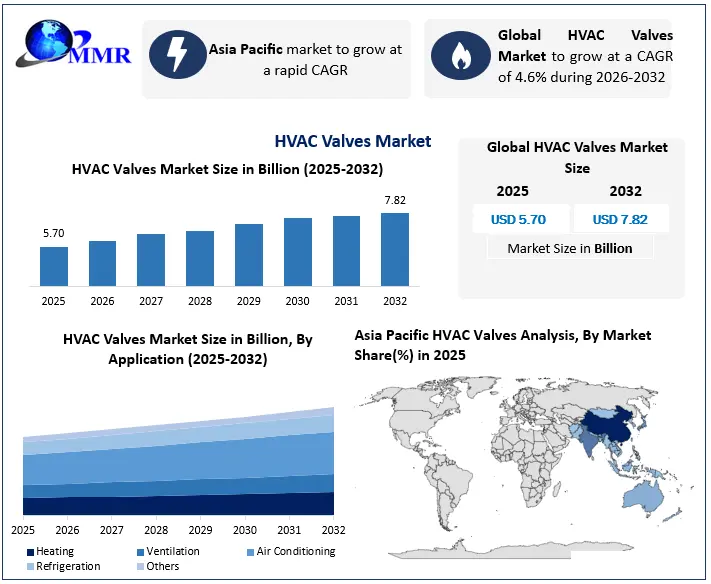 To know about the Research Methodology:- Request Free Sample Report
HVAC Valves Market: Demand Drivers and Growth Catalysts
Growth in the Global HVAC Valves Market is driven by a combination of operational efficiency needs and regulatory pressures:
• Rising adoption of energy-efficient HVAC valves to reduce operating costs and comply with building energy performance standards
• Expansion of centralized HVAC systems in large apartments, office complexes, hospitals, hotels, and educational institutions
• Growing emphasis on indoor air quality and air ventilation, increasing valve usage in air handling and air conditioning systems
• Integration of HVAC valves with smart HVAC systems and building automation platforms, enabling precise flow control and real-time monitoring
• Climate-driven heating and cooling demand, particularly in regions experiencing temperature extremes
While demand fundamentals remain strong, high initial system costs and periodic maintenance requirements continue to act as limiting factors, particularly in cost-sensitive markets.
Regulatory, Sustainability, and Technology Impact on HVAC Valves Market
Energy efficiency regulations and green building certification frameworks are reshaping HVAC system design globally. Governments and municipalities are mandating lower energy consumption per square meter, accelerating the adoption of PICV HVAC valves and digitally controlled valve solutions that optimize flow regardless of pressure variations.
Technological advancement is also playing a key role. The increasing convergence of the HVAC Valves Market with the HVAC Controllers Market and the Building Automation Systems Market is driving demand for valves that are compatible with IoT-enabled platforms, sensors, and intelligent controllers. This interoperability is becoming a key purchasing criterion in commercial and institutional projects.
HVAC Valves Market: Segment Analysis
Adoption and Utilization Trends (2026–2032)
By Type:
• Pressure Independent Control Valves (PICV) held the largest share of the HVAC valves market in 2025, supported by their ability to maintain constant flow, simplify commissioning, and improve energy efficiency. Adoption is highest in commercial buildings and industrial facilities where system balancing and energy optimization are critical.
By Application:
• Air Conditioning remained the dominant application segment in 2025, driven by rapid urbanization, increasing installation of centralized cooling systems, and rising demand for smart air conditioning solutions. Advanced HVAC valves are increasingly required to support variable flow and zoning requirements.
Overall, penetration of advanced HVAC valves is rising steadily as end users shift from basic mechanical valves toward high-performance, energy-efficient HVAC valve solutions.
HVAC Valves Market: Regional Analysis
The Asia Pacific HVAC Valves Market is expected to lead global growth, driven by large-scale urban development, expanding commercial real estate, and increasing adoption of centralized HVAC systems in China and India. Rising awareness of energy efficiency and long-term operating cost reduction is accelerating the uptake of modern HVAC valves in the region.
North America HVAC Valves Market growth is supported by stringent energy efficiency norms, widespread retrofit activity in commercial buildings, and strong demand for heating systems in colder climates.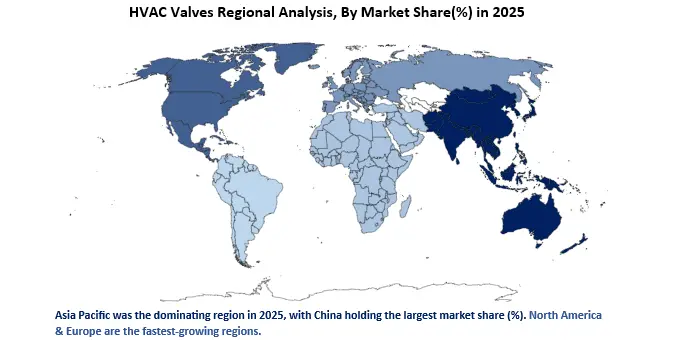
Import - Export Analysis
The global import market is largely dependent on China, India, and the United States as key supplying countries due to their large-scale manufacturing and diversified valve portfolios. On the demand side, Mexico led global valve imports with more than 2,544,100+ shipments, followed by India importing over 1,830,300+ shipments and the United States exceeding 1,560,600+ shipments, reflecting strong HVAC system deployment and industrial replacement demand in 2025.
Global valve exports are similarly concentrated, with the majority of outbound shipments directed toward Mexico, India, and the United States, reinforcing their role as core consumption and redistribution hubs. China dominated global valve exports with more than 2,482,700+ shipments, supported by cost-efficient mass production and scale advantages. India follows with over 2,350,000+ import shipments, driven by expanding OEM supply and export-oriented manufacturing.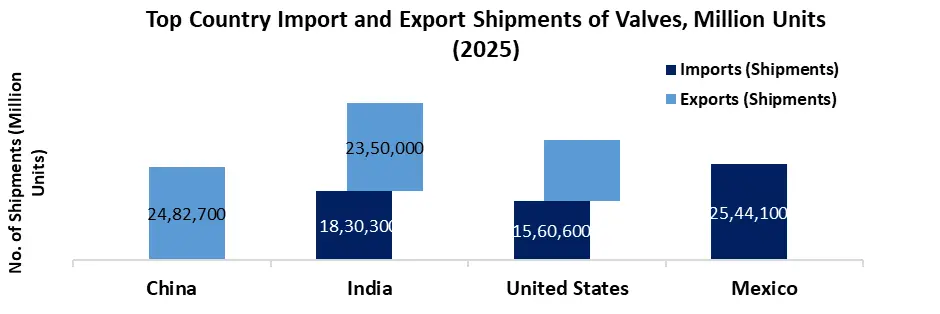
Competitive Landscape Analysis
The HVAC Valves Market is characterized by technology-led competition, with players differentiating through energy efficiency, smart compatibility, and system-level integration. Manufacturers with strong R&D capabilities and established relationships with HVAC contractors and system integrators are better positioned to capture high-value projects.
Danfoss, Honeywell, Siemens, Belimo, and Johnson Controls together operate globally distributed, highly automated manufacturing networks with a combined annual production capacity running into millions of HVAC valves, primarily focused on smart control valves and pressure-independent control valves (PICVs). Collectively, these players account for more than 43% of the global market share, reflecting high penetration rates in commercial, institutional, and smart building HVAC applications.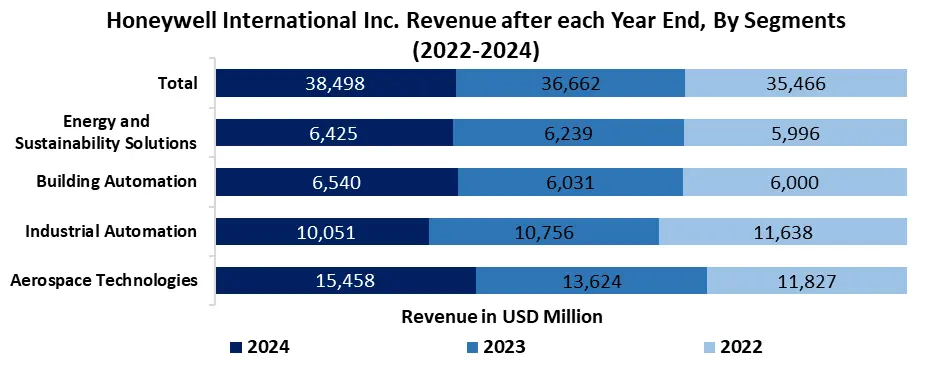
| Date | Company | Development | Impact |
| Mar 2024 | Danfoss | Launched upgraded pressure-independent control valves (PICVs) with digital commissioning and app-based flow verification | Enhances energy efficiency, reduces commissioning time, and strengthens penetration in smart commercial HVAC projects |
| Feb 2024 | Honeywell | Introduced smart HVAC control valves with built-in diagnostics and seamless BMS integration | Improves predictive maintenance, lowers lifecycle operating costs, and boosts adoption in large institutional buildings |
| Nov 2023 | Belimo | Expanded next-generation pressure-independent control valve portfolio for hydronic HVAC systems | Supports pump energy savings, improves flow accuracy, and reinforces leadership in energy-efficient HVAC valve solutions |
Strategic Outlook and Future Prospects
Between 2025 and 2032, the Global HVAC Valves Market is expected to grow steadily, supported by energy efficiency mandates, smart building adoption, and rising HVAC system installations worldwide. As HVAC systems evolve toward digitally managed and energy-optimized architectures, HVAC valves will remain a mission-critical component, closely aligned with growth in the HVAC Controllers Market and Building Automation Systems Market.
HVAC Valves Market Scope: Inquire before buying
| HVAC Valves Market | |||
|---|---|---|---|
| Report Coverage | Details | ||
| Base Year: | 2025 | Forecast Period: | 2026-2032 |
| Historical Data: | 2020 to 2025 | Market Size in 2025: | USD 5.70 Bn. |
| Forecast Period 2026 to 2032 CAGR: | 4.6% | Market Size in 2032: | USD 7.82 Bn. |
| Segments Covered: | by Type | Ball Valves Globe Valves Butterfly Valves Pressure Independent Control Valves (PICV) Others |
|
| by Material | Brass Stainless Steel Carbon Steel Plastic Others |
||
| by Application | Heating Ventilation Air Conditioning Refrigeration Others |
||
| by End-User | Residential Commercial Industrial |
||
HVAC Valves Key Players
1. Honeywell International Inc.
2. Johnson Controls International plc
3. Siemens AG
4. Schneider Electric SE
5. Danfoss A/S
6. Belimo Holding AG
7. Emerson Electric Co.
8. Flowserve Corporation
9. AVK Holding A/S
10. IMI plc
11. Pentair plc
12. Taco Comfort Solutions, Inc.
13. Bray International, Inc.
14. KSB SE & Co. KGaA
15. SAMSON AG
16. Watts Water Technologies, Inc.
17. Zurn Industries, LLC
18. Crane Co.
19. Viega GmbH & Co. KG
20. Mueller Industries, Inc.
21. Fisher (Emerson brand)
22. Rotork plc
23. Asco Valve (Emerson brand)
24. Nexus Valve
25. T&A Hydronics
26. Apollo Valves
27. Armstrong Fluid Technology
28. Glenfield Valves
29. ITT Inc.
30. Carel Industries
31. Others
FAQ:
Q1: What is driving the growth of the global HVAC valves market?
Ans: The HVAC valves market is primarily driven by rising adoption of energy-efficient HVAC systems, increasing smart building penetration, climate-driven heating and cooling demand, and stricter building energy performance regulations. Retrofit demand in mature markets and rapid HVAC infrastructure expansion in emerging economies further support sustained growth.
Q2: Which valve types are gaining the highest adoption rates?
Ans: Pressure Independent Control Valves (PICVs) are witnessing the fastest adoption due to their ability to optimize flow control, reduce energy consumption, and improve system efficiency. Smart and actuator-integrated valves are also gaining traction as building automation and real-time monitoring become standard requirements.
Q3: Which regions offer the strongest growth opportunities during 2026–2032?
Ans: Asia Pacific is expected to register the highest growth rate, driven by urbanization, rising HVAC penetration rates, and expanding commercial infrastructure. North America and Europe remain stable, high-value markets supported by retrofit activity, sustainability mandates, and advanced HVAC system upgrades.
Q4: What are the key challenges and risks faced by market participants?
Ans: Major challenges include raw material price volatility, competitive pricing pressure in standardized valve segments, regulatory compliance costs, and supply chain disruptions.
Q5: Who are the leading players in the HVAC Valves Market?
Ans: Key players include Danfoss, Honeywell International Inc., Siemens AG, Belimo Holding AG, and Johnson Controls International plc.