
Haptic Technology Market– Industry Structure Evaluation, Demand Drivers Analysis, Regional Growth Analysis and Identification, Competitive Positioning Review & Global Market Size Forecast to 2030
Overview
Global Haptic Technology Market size was valued at USD 3.05 Bn in 2023 and is expected to reach USD 6.61 Bn by 2030, at a CAGR of 11.7 % over the forecast period.
Haptic Technology Market Overview
Haptic technology is used to simulate the sensation of touching a physical object, such as pressing a button on a touchscreen or feeling the texture of a virtual surface. This is often used in smartphone screens and gaming controllers. Haptic technology is crucial in virtual reality and augmented reality environments to make digital objects feel more tangible and interactive. It enhances the sense of presence and realism in VR experiences. Haptic technology is used in medical training simulations to provide students with a realistic sense of touch and force feedback when practicing procedures on virtual patients. Haptic technology is employed in remote control systems for machines and robots, allowing operators to feel and control remote environments with precision.
The Haptic Technology market involves the development and deployment of technology that provides tactile feedback or touch sensations to users through electronic devices and interfaces. The Haptic Technology industry is expected to continue expanding with advancements in haptic feedback technology, driven by the demand for more immersive digital experiences across various industries. Innovations in actuators, sensors, and software algorithms are likely to lead to more sophisticated and realistic tactile feedback over the forecast period.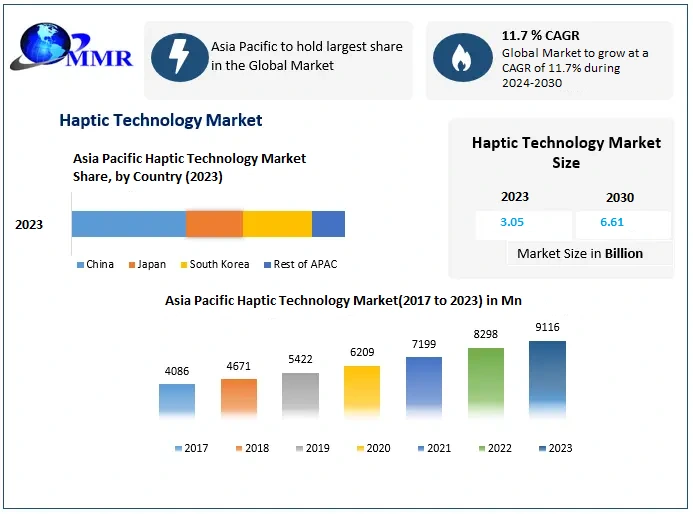 To know about the Research Methodology :- Request Free Sample Report
Haptic Technology Market Dynamics
Enhanced User Experience to boost the Haptic Technology Market growth
Haptic technology significantly enhances the user experience by adding a tactile dimension to digital interactions. It allows users to feel virtual objects, textures, and forces, making digital content more engaging and immersive. Haptic feedback is integrated into infotainment systems, touchscreens, and steering wheels in automobiles. It helps drivers and passengers interact with in-car displays and controls safely, reducing distraction while driving.The healthcare sector uses haptic technology in medical training simulations and surgical robots. It enables medical professionals to practice procedures and surgeries in a realistic virtual environment, improving their skills and enhancing patient safety. Haptic technology plays a crucial role in creating accessible technology for individuals with disabilities. It allows users with visual impairments or other disabilities to interact with digital devices through tactile sensations and feedback.
Haptic feedback is used in medical devices and surgical robotics to provide surgeons with a tactile sense of touch during minimally invasive procedures, enhancing their precision and control. Advances in haptic actuators, sensors, and feedback mechanisms have led to more sophisticated and precise haptic technology, driving its adoption in various applications. As consumers and industries seek more immersive and realistic experiences, there is a growing need for haptic technology to deliver convincing tactile feedback. Increasing awareness of the importance of safety and regulatory standards in industries such as automotive and healthcare is driving the integration of haptic feedback systems to enhance user safety and reduce human errors.
High cost of developing and implementing haptic technology to restrain the Haptic Technology Market growth
Developing and implementing haptic technology is costly, particularly for high-quality, sophisticated haptic feedback systems. The cost of haptic hardware components and software development is a barrier, especially for smaller companies and startups. Haptic feedback systems is power-intensive, which is a concern for portable and battery-powered devices such as smartphones and wearables. Balancing the desire for realistic haptic feedback with the need for energy efficiency is a challenge for the growth of Haptic Technology Market. Achieving precise and effective haptic feedback in small devices with limited space is challenging. Miniaturizing haptic components while maintaining performance is a technical hurdle is expected to restrain the Haptic Technology industry growth. The lack of universal standards for haptic technology lead to compatibility issues and fragmentation in the market.
Different devices and platforms proprietary haptic solutions, making it difficult to create consistent user experiences.
The availability of haptic-enhanced content and applications is not as widespread as other forms of media. Developers need to create content that takes full advantage of haptic feedback, which limit the technology's appeal. Some potential users and industries may not fully understand the capabilities and benefits of haptic technology. Market education is needed to increase awareness and adoption. Like many technology sectors, the Haptic Technology market is affected by supply chain disruptions, as seen in events like the COVID-19 pandemic, which lead to delays in production and delivery of haptic components.
Haptic Technology Market Segment Analysis
Based on Component, the market is segmented into Hardware and Software. The software segment is expected to grow at a CAGR of 3.8% over the forecast period. The haptic software component of the haptic stack regulates the haptic exposure in real time. This segment involves the development, design, and implementation of software that manages and optimizes the tactile sensations and interactions provided by haptic hardware components. The software application must generate command signals that the driver IC may use to operate the device. The virtualization software must contain performance-oriented capabilities to produce high-quality haptic interactions. These tools help identify and address any issues related to haptic feedback, such as irregular vibrations or sensor inaccuracies. Haptic software includes features related to regulatory compliance and safety standards, particularly in applications where precision and reliability are critical, such as medical simulations and automotive interfaces.
Based on Feedback Type, the market is segmented into Tactile Feedback, Force Feedback, and Vibration Feedback. Vibration Feedback segment dominated the market in 2023 and is expected to hold the largest Haptic Technology Market share over the forecast period. Vibration feedback, which includes the use of vibration motors and actuators to provide tactile sensations, was widely integrated into various consumer devices and applications, particularly in smartphones, gaming controllers, and wearables. Vibration feedback has been extensively used in consumer electronics, especially in smartphones. Vibration feedback is relatively cost-effective and straightforward to implement compared to more complex force feedback or tactile feedback technologies.
Based on Application, the market is segmented into Consumer Electronics, Automotive, Gaming and Entertainment, Medical and Healthcare, and Education and Research. Consumer Electronics segment dominated the market in 2023 and is expected to hold the largest Haptic Technology Market share over the forecast period. The Consumer Electronics segment in the Haptic Technology industry encompasses the integration of haptic feedback technology into a wide range of consumer-oriented electronic devices. Haptic feedback enhances user experiences by providing tactile sensations or vibrations, making interactions with these devices more intuitive and engaging.
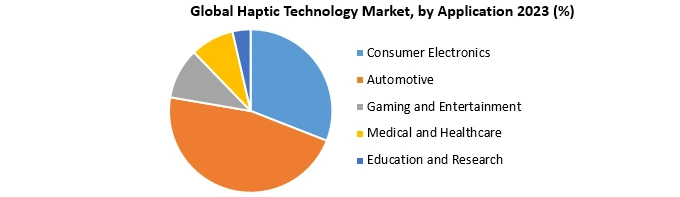 Gaming consoles, controllers, and peripherals often incorporate haptic feedback to create immersive gaming experiences. Vibration motors and actuators within game controllers produce vibrations and forces in response to in-game events, such as collisions, impacts, or environmental effects. This enhances realism and player engagement. Haptic feedback is increasingly integrated into home appliances like washing machines, refrigerators, and ovens. It provides confirmation of settings and actions, making appliance operation more user-friendly, which is expected to boost the Haptic Technology Market growth.
Haptic Technology Market Regional Insight
Emerging vibrant and dynamic hub for the Haptic Technology to boost Asia Pacific Haptic Technology Market growth
Asia Pacific dominated the market in 2023 and is expected to hold the largest Haptic Technology Market share over the forecast period. The Asia Pacific region is emerging as a vibrant and dynamic hub for the Haptic Technology market, driven by rapid technological advancements, a burgeoning consumer electronics industry, and increased adoption of immersive experiences in gaming, automotive, and other sectors. The region's industrial and manufacturing sectors are adopting haptic feedback systems for remote control of machinery and robotic applications. Haptic technology enhances operator control, precision, and safety in various industrial settings. Asia Pacific countries are investing in medical education and healthcare technology. Haptic technology is used in medical training simulations and surgical robotics, helping medical professionals acquire and hone their skills. Haptic technology is finding applications in educational and research institutions, facilitating innovative teaching methods and enabling researchers to study human-computer interaction and sensory feedback.
The rollout of 5G networks in several Asia Pacific countries promises faster and more reliable internet connectivity, which support real-time haptic feedback and remote haptic experiences. The healthcare sector is set to benefit from advancements in haptic technology, with the potential for more realistic medical simulations and minimally invasive surgical procedures. Governments in the Asia Pacific region are increasingly investing in technology innovation and research, creating opportunities for haptic technology companies to collaborate on research projects and receive funding.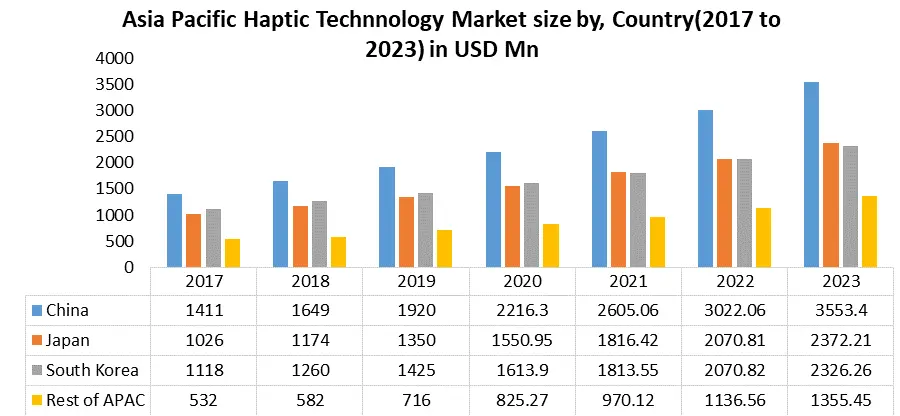
Haptic Technology Market Competitive Landscape
Haptic technology companies collaborate with device manufacturers, gaming companies, and automotive manufacturers to integrate their solutions into a wide range of products. These partnerships strengthen their market presence. Companies such as Immersion, Ultraleap, and HaptX are known for their innovations in haptic feedback technology. They continuously develop new solutions and explore novel applications for touch and force feedback. Mergers and acquisitions have reshaped the competitive landscape. For example, Maxim Integrated is acquired by Analog Desvices, expanding the latter's portfolio in power management, including haptic technology. The haptic technology market continues to attract startups and emerging players with innovative solutions. These companies contribute to the market's dynamism and foster competition. Intellectual property and patents play a significant role in the competitive landscape, with companies like Immersion holding valuable patents related to haptic feedback technology.
Haptic Technology Market Scope: Inquiry Before Buying
| Haptic Technology Market | |||
|---|---|---|---|
| Report Coverage | Details | ||
| Base Year: | 2023 | Forecast Period: | 2024-2030 |
| Historical Data: | 2018 to 2023 | Market Size in 2023: | US $ 3.05 Bn. |
| Forecast Period 2024 to 2030 CAGR: | 11.7% | Market Size in 2030: | US $ 6.61 Bn. |
| Segments Covered: | by Component | Hardware Software |
|
| by Feedback Type | Tactile Feedback Force Feedback Vibration Feedback |
||
| by Application | Consumer Electronics Automotive Gaming and Entertainment Medical and Healthcare Education and Research |
||
| by Technology Type | Resistive Haptics Captive Haptics Piezoelectric Haptics LRAs (Linear Resonant Actuators) |
||
Haptic Technology Market by Region
North America (United States, Canada, and Mexico)
Europe (UK, France, Germany, Italy, Spain, Sweden, Austria and Rest of Europe)
Asia Pacific (China, South Korea, Japan, India, Australia, Indonesia, Malaysia, Vietnam, Taiwan, Bangladesh, Pakistan and Rest of APAC)
Middle East and Africa (South Africa, GCC, Egypt, Nigeria and Rest of ME&A)
South America (Brazil, Argentina Rest of South America)
Haptic Technology Key Players Include:
North America:
1. Immersion Corporation (United States)
2. Tanvas (United States)
3. HaptX Inc. (United States)
4. Texas Instruments (United States)
5. Boréas Technologies (Canada)
Europe:
6. Ultraleap (United Kingdom)
7. Novasentis, Inc. (Switzerland)
8. 3D Systems (United Kingdom)
9. Precision Microdrives Ltd.(United Kingdom)
10. Force Dimension (Switzerland)
11. Digital Catapult (UK)
Asia Pacific:
12. Nidec Corporation (Japan)
13. Alps Alpine Co., Ltd. (Japan)
14. ON Semiconductor (Japan)
15. Microchip Technology Inc. (India)
16. Johnson Electric (Hong Kong)
Frequently Asked Questions:
1] What is the growth rate of the Global Haptic Technology Market?
Ans. The Global Haptic Technology Market is growing at a significant rate of 11.7% over the forecast period.
2] Which region is expected to dominate the Global Haptic Technology Market during the forecast period?
Ans. Asia Pacific region is expected to dominate the Haptic Technology Market over the forecast period.
3] What is the expected Global Haptic Technology Market size by 2030?
Ans. The market size of the Haptic Technology Market is expected to reach USD 6.61Bn by 2030.
4] Who are the top players in the Global Haptic Technology Industry?
Ans. The major key players in the Global Haptic Technology Market are Informatica, Oracle Corporation, TIBCO Software, and Infogix.
5] Which factors are expected to drive the Global Haptic Technology Market growth by 2030?
Ans. Driving Innovation in Consumer Electronics is expected to boost Haptic Technology Market growth over the forecast period (2024-2030).