
Global Hand Dryer Market by Type, Operation, End User, Region – Global Market Size Estimation, Industry-Wide Analysis, Competitive Landscape Assessment & Long-Term Forecast to 2032
Overview
The Hand Dryer Market size was valued at USD 1174.30 Million in 2024 and the total Hand Dryer revenue is expected to grow at a CAGR of 10% from 2025 to 2032, reaching nearly USD 2517.22 Million.
The global hand dryer market is currently experiencing a significant transformation driven by various factors. In the wake of increasing environmental consciousness and hygiene awareness, hand dryers have gained popularity as a sustainable alternative to paper towels. The market is witnessing robust growth due to a surge in demand across various end-user segments, including public restrooms, healthcare facilities, and commercial spaces. The COVID-19 pandemic has further accelerated the adoption of touchless hand dryers to minimize the risk of cross-contamination. Governments and organizations worldwide are promoting the use of energy-efficient hand dryers to reduce paper waste and lower carbon emissions, thus contributing to the market's expansion.
Recent developments in the market include the introduction of advanced technologies such as high-speed, low-noise, and energy-efficient hand dryers by key players like Dyson, Excel Dryer, Mitsubishi Electric, and American Dryer. These innovations aim to enhance the user experience, reduce energy consumption, and improve sanitation, aligning with the growing demand for sustainable and hygienic solutions. The global hand dryer market is poised for continued growth in the coming years, as environmental concerns and health-conscious practices remain at the forefront of consumer and institutional priorities, and as market players continue to innovate and develop more efficient and eco-friendly hand drying solutions to meet these evolving needs.
Hand Dryer Market Scope and Research Methodology:
The hand dryer market is a dynamic and evolving industry with a significant global presence. Research in this field encompasses market size, share, growth projections, and technological advancements. It explores the adoption of hand dryers over traditional paper towels, emphasizing sustainability, hygiene, and energy efficiency as driving factors. Key market players like Dyson, Bobrick, and Askon Hygiene Products Pvt Ltd, continuously innovate to meet these demands. Research methodology involves a combination of quantitative and qualitative approaches. Data sources include market reports, industry analyses, and consumer surveys.
Quantitative data encompasses market size, growth rates, and revenue projections, while qualitative research delves into consumer preferences and industry trends. Market analysis often employs CAGR calculations to predict future market expansion. Additionally, recent developments and innovations, such as high-speed hand dryers and hybrid disinfection units, influence market dynamics. The hand dryer market's research scope spans market size, technological advancements, sustainability, and hygiene, with a methodology combining quantitative and qualitative data from diverse sources to provide comprehensive insights into the industry.
 To know about the Research Methodology:-Request Free Sample Report
Market Dynamics:
Healthcare Sector Adopts Hand Dryers for Infection Control and Savings:
Growing global concern for environmental sustainability is a significant driver for the hand dryer market. Consumers and businesses are shifting away from paper towels due to their environmental impact. For instance, the reduction in paper waste and associated carbon emissions when adopting hand dryers, such as the Dyson Airblade, aligns with eco-conscious practices, driving their adoption. The emphasis on hygiene, especially in the post-COVID-19 era, has fueled the demand for touchless hand dryers. Models like the Excel Dryer's ThinAir have gained popularity for their touchless, hygienic operation, offering a safer alternative to traditional towel dispensers. Governments and organizations globally are advocating energy-efficient hand dryers as part of their sustainability efforts. High-speed, low-energy models like Mitsubishi Electric's Jet Towel Slim are being embraced to reduce power consumption while still delivering fast and effective hand drying.
The healthcare sector, with its strict hygiene requirements, is a substantial market driver. Hand dryers, like the World Dryer SMARTdri Plus, are increasingly integrated into healthcare facilities to promote better infection control and hygiene compliance. Hand dryers offer long-term cost savings over paper towels. A case in point is the Vortex VX21, which, with its competitive price point and energy efficiency, not only reduces operational costs but also minimizes waste disposal expenses. Innovations like high-speed drying and noise-reduction technologies are attracting customers. Dyson's Airblade V hand dryer is a prime example of how technology-driven improvements are boosting market growth by offering rapid, low-noise hand drying. With the refurbishment of public restrooms, hand dryers have become preferred choices.
The Ozwashroom OZ2300 is widely adopted in such renovations for its reliability and robust performance, meeting the high demand in these spaces. Commercial spaces and offices are opting for hand dryers that are not only efficient but also contribute to a cleaner and more appealing environment. The American Dryer eXtremeAir CPC exemplifies this trend, with its emphasis on user experience and cleanliness. Stringent regulations in various regions regarding hygiene and sustainability encourage businesses to invest in hand dryers. The Mitsubishi Electric Jet Towel Smart, meeting these requirements, is an example of how compliance can drive market growth. Hotels and restaurants are increasingly embracing hand dryers to enhance the guest experience. Models like the Jetoz 46, known for their quiet operation and convenience, are gaining traction in the hospitality sector, contributing to market expansion by meeting specific industry needs.
| Market Drivers | Key Indicators |
| Increasing Environmental Awareness | - Reduction in paper towel usage - Carbon emissions reduction - Sustainability initiatives |
| Growing Hygiene Consciousness | - Adoption of touchless and hygienic hand dryers - Pandemic-driven demand for safer solutions |
| Energy Efficiency Initiatives | - Promotion of energy-efficient hand dryers - Energy consumption reduction |
| Healthcare Facilities Demand | - Integration of hand dryers for hygiene compliance - Infection control enhancement |
| Cost Savings | - Long-term cost savings over paper towels - Waste disposal cost reduction |
| Technological Advancements | - High-speed, low-noise, and efficient hand dryers - Improved user experience |
| Public Restrooms Upgrades | - Hand dryers in restroom refurbishments - Increased demand in public spaces |
| Workplace Trends | - Commercial spaces adopting efficient hand dryers - Cleaner and more appealing environment |
| Government Regulations | - Stringent hygiene and sustainability regulations - Compliance with energy-efficient solutions |
| Hospitality Industry Adoption | - Hand dryers in hotels and restaurants - Guest experience enhancement |
The initial investment in installing hand dryers can be a restraint, especially for small businesses or older facilities with limited electrical infrastructure. For instance, upgrading a restroom with electric outlets for hand dryers can be a significant expense, potentially deterring some businesses from making the switch. While hand dryers have lower operational costs than paper towels, they still require maintenance. This includes periodic servicing to ensure their efficiency and hygiene. For instance, if not properly maintained, high-speed hand dryers may become less effective, resulting in longer drying times and potential user dissatisfaction. The noise generated by some hand dryer models can be a challenge. Excessively loud dryers may create discomfort for users and disrupt the peace of public spaces. This issue is exemplified by some older, high-decibel hand dryers that haven't incorporated noise-reduction technology in the Hand dryer market in India.
Some users may still perceive paper towels as a more hygienic option, as they avoid direct contact with the dispenser. Although modern hand dryers incorporate touchless features, these perceptions persist, particularly in healthcare settings where hygiene is of paramount importance. Hand dryer performance varies across models and brands. Inconsistent drying quality may lead to user dissatisfaction and extended restroom wait times, creating challenges for maintaining positive user experiences. While hand dryers are often seen as environmentally friendly, there are concerns about their energy consumption. Some energy-efficient models, such as those without heating elements, may not provide the desired level of hand-drying effectiveness, potentially leading to criticism from users.
Not all restroom users comfortably use hand dryers, particularly people with disabilities or those who require assistance. Accessibility challenges may necessitate the installation of alternative hand drying options in addition to hand dryers. The electric hand dryer market is highly competitive, with numerous manufacturers and models available. This competition leads to pricing pressures and margin erosion for manufacturers, making it challenging to maintain profitability. Personal preferences for hand-drying methods can be a restraint. Some individuals simply prefer paper towels due to familiarity and perceived convenience. Convincing these users to switch to hand dryers can be challenging. Meeting evolving hygiene and safety regulations can be a challenge for hand dryer manufacturers. For example, the need to adhere to standards for touchless operation or noise levels requires ongoing research and development efforts, adding complexity to product design and compliance.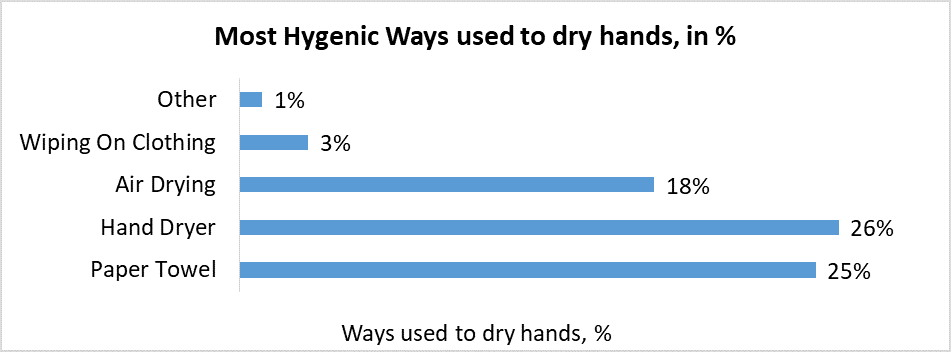 Comparison of Hand Dryer Models: Dry Time, Cost, and Noise Levels:
The global hand dryer market is currently experiencing a significant transformation driven by various factors. In the wake of increasing environmental consciousness and hygiene awareness, hand dryers have gained popularity as a sustainable alternative to paper towels. The market is witnessing robust growth due to a surge in demand across various end-user segments, including public restrooms, healthcare facilities, and commercial spaces. The COVID-19 pandemic has further accelerated the adoption of touchless hand dryers to minimize the risk of cross-contamination. Governments and organizations worldwide are promoting the use of energy-efficient hand dryers to reduce paper waste and lower carbon emissions, thus contributing to the market's expansion.
Recent developments in the market include the introduction of advanced technologies such as high-speed, low-noise, and energy-efficient hand dryers by key players like Dyson, Excel Dryer, Mitsubishi Electric, and American Dryer. These innovations aim to enhance the user experience, reduce energy consumption, and improve sanitation, aligning with the growing demand for sustainable and hygienic solutions. The global electric hand dryer market is poised for continued growth in the coming years, as environmental concerns and health-conscious practices remain at the forefront of consumer and institutional priorities, and as market players continue to innovate and develop more efficient and eco-friendly commercial hand dryer solutions to meet these evolving needs.
| Hand Dryer | Model # | Dry Time (sec) | Approx ($) | Approx Decibels |
| Dyson Airblade | AB 14 | 10 | 1549 | 80 |
| XL228 | XL | 8 | 349 | 95 |
| World Dryer | J-974 | 14 | 322 | 85 |
| Jetoz | 46 | 12 | 420 | 76 |
| Vortex | VX21 | 20 | 244 | 70 |
| Ozwashroom | OZ2300 | 20 | 299 | 72 |
| Ozwashroom | DM1800 | 40 | 100 | 58 |
Hand Dryer Market Segment Analysis:
Based on Product Type, The Global Hand Dryer Market is segmented based on the type of hand dryers, particularly hot hand dryers and jet hand dryers, considering their distinct applications and varying adoption rates. Hot hand dryers have found favor in a wide range of applications, from public restrooms to commercial spaces, owing to their cost-effectiveness and general reliability. They are a popular choice in high-traffic areas where speed is not the primary concern. Jet hand dryers have gained considerable traction due to their exceptional drying speed and hygienic attributes.
They are increasingly adopted in healthcare facilities, where maintaining stringent hygiene standards is critical, as well as in environments where rapid hand drying is a priority, such as airports and busy shopping centers where Commercial Hand Dryer Solutions are used. Jet hand dryers, although initially more expensive, offer long-term cost savings through reduced energy consumption and paper towel expenses. This market segment analysis highlights a growing trend toward the adoption of jet hand dryers in settings that demand both efficiency and sanitation, while hot hand dryers continue to serve well in applications where their conventional advantages remain paramount.
Hand Dryer Market Regional Insights:
The Global Hand Dryer Market exhibits distinct regional insights, with notable differences in large producing and consuming regions. Asia-Pacific stands out as a significant manufacturing hub, driven by countries like China, India, and Japan. These nations host prominent hand dryer manufacturers and benefit from cost-effective production capabilities. In contrast, North America, particularly the United States, also boasts a strong manufacturing sector, known for innovation and technology-driven hand dryer production.
North America is a substantial consumer of Stainless Steel hand dryers, largely due to its advanced commercial and industrial sectors and a strong emphasis on sustainability and hygiene. European countries like the United Kingdom and Germany are showing increasing adoption of eco-friendly hand-drying solutions in public restrooms, offices, and healthcare facilities.
Asia-Pacific, home to many emerging economies, is witnessing rapid growth in hand dryer consumption, as heightened environmental awareness and hygiene concerns drive market expansion. China, in particular, has witnessed a surge in demand for hand dryers, given its burgeoning urban infrastructure and heightened focus on reducing paper waste. In the Middle East and Africa, regions with growing commercial spaces and modern infrastructure developments, hand dryer adoption is on the rise, making it another substantial consuming region. Asia-Pacific, the Middle East, Africa, and Latin America are emerging as dynamic consumer regions, with increasing adoption in commercial and public spaces, indicating a global shift towards eco-friendly and efficient hand-drying solutions.
Competitive Landscape
Key Players of the Hand Dryer Market profiled in the report are Askon Hygiene Products Pvt Ltd., Bio JetDrier, Bobrick Washroom Equipment, Inc., Bradley Corporation, Dyson Technology India Pvt Ltd., Electrostar GmbH, Excel Dryer, Inc., Jaguar Group Sdn. Bhd, Mitsubishi Electric Corporation, Panasonic Corporation, and World Dryer. This provides huge opportunities to serve many End-users and customers and expand the Hand Dryer Market.
In March 2023, Dyson Ltd. extended its presence into Colombia by launching its wide range of products, encompassing hand dryers and vacuum cleaners. Dyson Ltd. remains dedicated to advancing next-generation technologies for hand drying and air purification.
In July 2021, Bobrick Washroom Equipment, Inc. introduced its Pure Hygiene Solutions collection, which includes the PureDri Sanitizing Hand Dryer and PureSphere Air Sanitizer. Both Pure products are proven to effectively eliminate 99 percent of mold, viruses, fungi, and bacteria in under 10 minutes.
In 2021, The Airdri Group pioneered an innovative hand drying and disinfection system known as PureDri, representing a hybrid solution that offers triple protection in restroom hygiene. This strategic move has enabled the company to strengthen its position in the market significantly.
Hand Dryer Market Scope: Inquire before buying
| Global Hand Dryer Market | |||
|---|---|---|---|
| Report Coverage | Details | ||
| Base Year: | 2024 | Forecast Period: | 2025-2032 |
| Historical Data: | 2019 to 2024 | Market Size in 2024: | USD 1174.30 Mn. |
| Forecast Period 2025 to 2032 CAGR: | 10% | Market Size in 2032: | USD 2517.22 Mn. |
| Segments Covered: | by Type | Hot hand dryer Jet hand dryer |
|
| by Operation | Push Button Automatic |
||
| by End User | Hotel Hospitals And Clinics Food Processing And Service Industry Commercial Complexes Office Buildings Others |
||
Hand Dryer Market, by Region
North America (United States, Canada and Mexico)
Europe (UK, France, Germany, Italy, Spain, Sweden, Austria and Rest of Europe)
Asia Pacific (China, South Korea, Japan, India, Australia, Indonesia, Malaysia, Vietnam, Taiwan, Bangladesh, Pakistan and Rest of APAC)
Middle East and Africa (South Africa, GCC, Egypt, Nigeria and Rest)
South America (Brazil, Argentina Rest of South America)
Hand Dryer Market, Key Players
1. Askon Hygiene Products Pvt Ltd.
2. American Dryer, LLC.
3. Aqualoo- West Coast Commercial Industries (WCCI) Pty Ltd.
4. Biodrier
5. Bobrick Washroom Equipment, Inc.
6. Bradley Corporation
7. Dyson Technology India Pvt Ltd.
8. Electrostar GmbH
9. Euronics Industries Pvt Ltd
10. Excel Dryer, Inc.
11. Hokwang Industies
12. Jaguar Group Sdn. Bhd
13. JVD SAS
14. Mitsubishi Electric Corporation
15. Palmer Fixture
16. Panasonic Corporation
17. Saniflow Corporation
18. SPL NZ
19. Taishan Jie Da Electrical Co., Ltd.
20. Toto Ltd.
21. United Technologies Corporation
22. World Dryer
FAQs:
1. What are the growth drivers for the Hand Dryer Market?
Ans. The Healthcare Sector Adopts Hand Dryers for Infection Control and Savings and is expected to be the major driver for the Hand Dryer Market.
2. What is the major Opportunity for the Hand Dryer Market growth?
Ans. Energy Consumption and Accessibility Issues in Hand Dryer Adoption are expected to be the major Opportunities in the Hand Dryer Market.
3. Which country is expected to lead the global Hand Dryer Market during the forecast period?
Ans. The Asia Pacific is expected to lead the Hand Dryer Market during the forecast period.
4. What is the projected market size and growth rate of the Hand Dryer Market?
Ans. The Hand Dryer Market size was valued at USD 1174.30 Million in 2024 and the total Hand Dryer revenue is expected to grow at a CAGR of 10% from 2025 to 2032, reaching nearly USD 2517.22 Million.
5. What segments are covered in the Hand Dryer Market report?
Ans. The segments covered in the Hand Dryer Market report are by Type, Operation, End-Users, and Region.