
Gesture Recognition Market Size by Authentication Type, Touch Type, Application, Region – Revenue Pool Analysis, Margin Structure Assessment, Capital Flow Trends, Competitive Benchmarking & Forecast to 2030
Overview
The Gesture Recognition Market size was valued at USD 20.60 Billion in 2023 and the total Gesture Recognition revenue is expected to grow at a CAGR of 19.1% from 2024 to 2030, reaching nearly USD 70.03 Billion.
Gesture Recognition Market Overview
Gesture recognition is the ability of a computer or device to detect and interpret human gestures as input. Such gestures include hand movements and even finger-written symbols. Gesture recognition technology relies on cameras or sensors to capture human gestures, and then employs advanced machine learning algorithms to meticulously analyze and decipher the collected data. This innovative technology finds versatile applications in daily life, from enhancing entertainment experiences including video games and virtual reality environments to making interactions more intuitive and immersive.
Gesture recognition also provides novel ways of interacting with interfaces, for example controlling a presentation and playing music by gesturing at a device. The ease of adoption for end-users thanks to minimal technological complexity is accelerating its acceptance across the consumer electronics industry. The Gesture Recognition Market is growing as consumer electronics and the Internet of Things become more popular, as well as the demand for comfort and simplicity in product use driving the Market growth.
 To know about the Research Methodology :- Request Free Sample Report
Gesture Recognition Market Trends:
Contactless Interaction
The COVID-19 pandemic has spurred an increase in demand for contactless interaction, with gesture recognition technology taking center stage. It's now widely embraced in industries such as retail, healthcare, and hospitality, offering touchless engagement with screens and devices. As technology evolves, contactless interaction is set to become more precise, incorporating expanded voice command capabilities and seamless integration with augmented and virtual reality for immersive experiences. This transformation is not a passing response to the pandemic; it's here to stay. Safety, convenience, and hygiene have become paramount, shaping the future of digital interactions for both companies and consumers. This trend is a defining force, promising enduring changes in the digital world.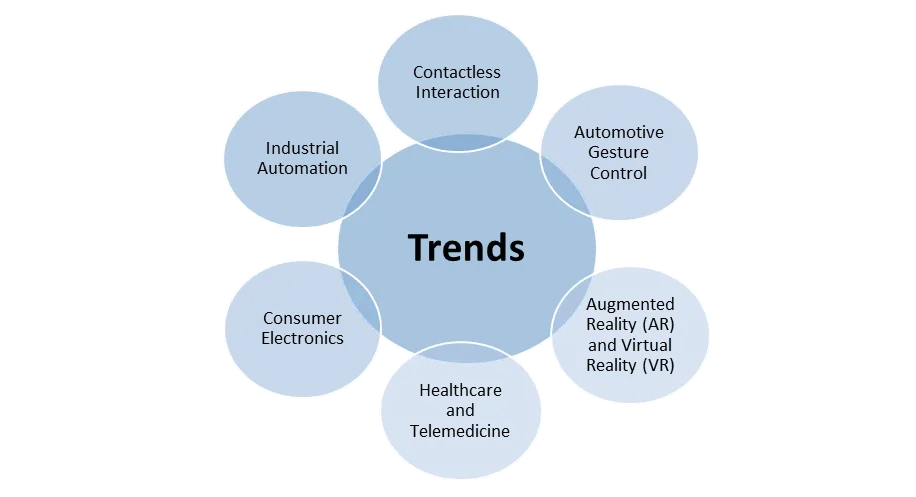
New Technologies in Gesture Recognition
The Sixth Sense Device:
The SixthSense wearable gestural interface innovatively combines hardware and software. This pendant-like device incorporates a pocket projector, mirror, and camera, all linked to a mobile computing device. The projector transforms surfaces into interactive interfaces, while the camera tracks hand gestures and objects through computer vision. Software processes the camera data, recognizing fingertip markers as gestural commands for projected application interfaces. Remarkably, the system accommodates multi-touch and multi-user interactions. SixthSense showcases its utility through various applications, including map navigation via hand gestures and drawing on any surface by tracking finger movements. It also identifies the user's freehand gestures, such as framing to capture photos, and allows easy photo browsing on any available surface. This convergence of hardware and software augments human-computer interaction, heralding a promising future for intuitive and immersive technology experiences.
Gesture Tek
The sensing gesture control interface enables users to navigate interactive content effortlessly on various platforms, including floating panels, multimedia kiosks, multi-touch surface screens, interactive tables, and interactive windows. These surfaces are configured with a multi-touch interface, facilitating multi-touch and multi-point interactions. There are no visible projectors or hardware components, creating an unforgettable experience as GestureTek's dynamic interactive displays respond to every touch or hand gesture, offering a rich and immersive interactive experience. The hand-tracking system empowers users to control multimedia content in novel ways, effectively transforming ordinary surfaces into interactive multi-touch computing platforms. GestureTek offers illuminated surfaces in the form of interactive multi-touch display panels, windows, kiosks, and multi-touch tables. These multi-touch interactive surface displays are available as turnkey solutions and customized to suit nearly any desired shape or size.
Gesture Recognition Market Dynamics:
Rising Digitalization to Boost the Gesture Recognition Market
The rising trend of digitalization is set to significantly boost the Gesture Recognition Market. As more aspects become interconnected and reliant on digital technology, the demand for intuitive and hands-free interfaces is on the rise. Gesture recognition technology allows users to interact with devices and systems using simple hand movements or body gestures, eliminating the need for physical contact or traditional input methods Including keyboards or touchscreens. This technology finds applications in various sectors, including consumer electronics, healthcare, automotive, and gaming, offering enhanced user experiences, convenience, and safety. With the increasing adoption of smart homes and IoT devices, the Gesture Recognition Market is expected to substantial growth.
The need for touchless interfaces in public spaces and workplaces further drives the market's growth. The digitalization wave is propelling gesture recognition technology to play an essential role in shaping the increasingly interconnected and touch-free digital world. After the COVID-19 pandemic, most countries adopted Digitalization this factor is significantly responsible for the rise in demand for Gesture Recognition. For Example, in the year 2023, Denmark secured the top position as the world's leader in digital competitiveness. These rankings assess a country's capacity to embrace digital technologies and effectively integrate them into both businesses and government institutions. Several Nordic nations performed exceptionally well, with Sweden, Finland, and Norway also securing prominent positions within the top fifteen. The United States earned the second-place ranking.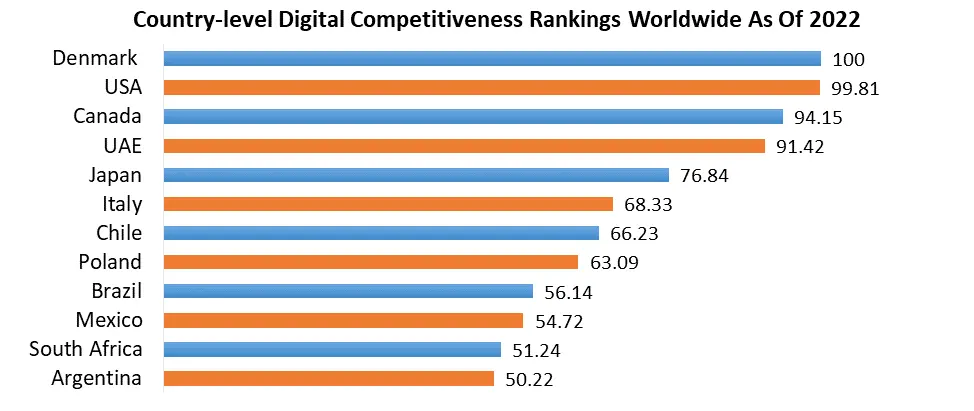
Growing Adoption of Smartphones and Tablets to Drive the Market Growth
The increasing adoption of smartphones and tablets is transforming the way people interact with technology. This trend is driving the growth of the Gesture Recognition Market, which enables computers and devices to interpret human gestures as commands. Smartphones and tablets become essential tools, offering unmatched convenience and portability. The continuous advancements in mobile technology, including faster processors, enhanced displays, and improved battery life, have contributed to their widespread adoption.
The availability of diverse operating systems and app ecosystems further enriches the user experience, providing to various preferences and needs. The COVID-19 pandemic accelerated the adoption of smartphones and tablets, as remote work, virtual learning, and telehealth services became essential. These devices enable seamless connectivity, collaboration, and access to critical resources from virtually anywhere, fostering greater flexibility and productivity. Smartphones and tablets are equipped with built-in gesture recognition capabilities. This integration means people use their hands and fingers to control their devices. People engage in activities such as navigating their screens, playing interactive games, and switching between various content while using smartphones and tablets. The widespread use of these devices has accelerated a surge in the fascination with gesture recognition technology.
As an example, in 2023, China led the globe with the highest number of smartphone users, exceeding 974 million individuals, while India followed closely as the second-largest smartphone user base, totaling approximately 659 million users. This trend underscores the growing interest in and demand for gesture-based control systems. These two countries are expected to continue to lead the smartphone user ranking, as China and India also rank one and two regarding the largest populations worldwide and still have strong growth potential due to a relatively low smartphone penetration rate.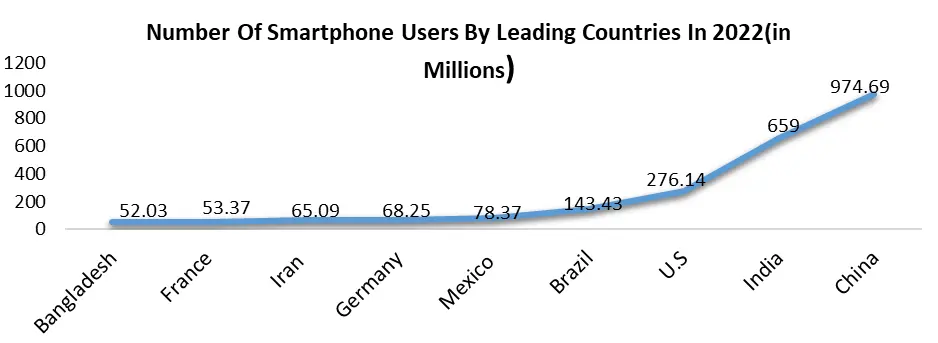
Technical Challenges Limit the Gesture Recognition Market Growth
Technical challenges are a significant factor limiting the growth of the Gesture Recognition Market. These challenges primarily revolve around the complexity and precision required in interpreting human gestures accurately. Achieving high accuracy in gesture recognition, especially in noisy or complex environments, remains a persistent challenge. Variability in lighting conditions, background clutter, and user-specific nuances lead to errors in gesture interpretation. The development and integration of sophisticated sensors, cameras, and software algorithms necessary for gesture recognition is costly. This cost prevents companies from adopting the technology, particularly in price-sensitive markets. Maintaining consistent and reliable performance across a wide range of gestures and user interactions technically demanding. Technical challenges hinder the continuous and widespread adoption of gesture recognition technology, requiring ongoing research and development efforts to overcome these obstacles and drive market growth.
Rising Adoption of Virtual and Augmented Reality Create Lucrative Growth Opportunities for the Market
The interaction between gesture recognition technology and Virtual and Augmented Reality has unlocked growth opportunities. Allowing users to naturally interact with virtual environments and objects through intuitive hand and body movements, gesture recognition enhances immersion and engagement in VR/AR experiences. This technology reduces reliance on physical controllers, simplifying setups and broadening accessibility, while also finding applications in training, simulation, gaming, education, and healthcare. In these fields, gesture recognition enriches training programs, revolutionizes learning, improves medical training and therapy, and facilitates collaborative design. It enhances accessibility for individuals with disabilities. VR/AR technologies continue to advance and gain traction in various industries, the demand for gesture recognition solutions is composed of strong growth, making it a lucrative market for innovators and technology providers. This combination not only elevates user experiences but also helps innovation and market growth in the area of immersive technologies.
Gesture Recognition Challenges
Gesture recognition software encounters numerous challenges that impact its accuracy and utility, particularly in the area of image-based gesture recognition. These challenges arise from limitations in equipment and the presence of image noise. Inconsistent lighting conditions and varying locations disrupt the quality of images or videos, making it difficult to achieve consistent recognition. Factors such as background elements and unique user features further complicate recognition processes. The diverse range of implementations for image-based gesture recognition introduces compatibility issues an algorithm calibrated for one camera not function effectively with another. The prevalence of background noise exacerbates tracking and recognition difficulties, particularly when obstructions occur. Variables such as camera distance, resolution, and quality contribute to variations in recognition accuracy. To effectively capture human gestures using visual sensors, strong computer vision techniques are imperative, encompassing hand tracking, hand posture recognition, and the capture of head movements, facial expressions, and gaze direction.
Gesture Recognition Market Segment Analysis
Based on the Authentication Type, the Face Recognition segment dominates the Gesture Recognition Market in the year 2023. Facial recognition represents a biometric software solution that meticulously scrutinizes and assesses facial features to establish an individual's unique identity or confirm their identity. Although its predominant application lies in the realm of security, there is a burgeoning fascination with its diverse potential. The realm of facial recognition software has garnered significant attention due to its countless possibilities in sectors including law enforcement and various industries. This technology finds extensive utilization in the domains of biometric authentication and security, encompassing tasks such as unlocking smartphones, granting access to secure facilities, and confirming individuals' identities. Its security applications have driven its adoption in various sectors, such as finance, healthcare, and government. This factor is responsible for the growth of this segment.

Based on the Touch Type, The Multi-Touch Systems segment dominated the Gesture Recognition Market in the year 2023. In smartphones, functions including zoom-in, zoom-out, and three-finger screenshots utilize multi-touch-based gesture recognition. On the trackpads of laptops, features such as desktop swap and navigation to the menu in Windows 10 were found. Smartphone manufacturers are currently releasing phones with touch-based gesture detection features such as double tapping to sleep and wake. Multi-touch systems provide an intuitive and user-friendly interface, allowing users to engage with devices through actions including tapping, pinching, swiping, and zooming. This makes them exceptionally accessible and straightforward to operate. Enhanced display technologies, such as capacitive and in-cell touchscreens, improved the overall user experience.

Gesture Recognition Market Regional Analysis
North America dominated the Global Gesture Recognition market in the year 2023. With the presence of large IT companies and start-ups in the country, the United States leads the North American market for gesture recognition. The US spends a lot of money on research and development. The country produces the highest-level science and engineering degrees as well as high-impact scientific articles. It is the world's largest information services supplier. High consumer technology adoption, strong presence of tech giants, and demand for advanced human-machine interfaces. The United States is helping to set the ground for record sales of the latest consumer devices in terms of demand. In 2023, disposable personal income rise by 1.8%, and it is expected to rise by more than 2.0% in 2023. As a result, sales in the consumer electronics industry in the United States are expected to reach USD 72,443 million in 2023. These are the major factors that drive the growth of this region in the Global Gesture Recognition Market.
Gesture Recognition Market Scope: Inquiry Before Buying
| Gesture Recognition Market | |||
|---|---|---|---|
| Report Coverage | Details | ||
| Base Year: | 2023 | Forecast Period: | 2024-2030 |
| Historical Data: | 2018 to 2023 | Market Size in 2023: | USD 20.60 Bn. |
| Forecast Period 2024 to 2030 CAGR: | 19.1% | Market Size in 2030: | USD 70.03 Bn. |
| Segments Covered: | by Authentication Type | Finger Print Recognition Face Recognition Vision and IRIS Recognition Hand and Leg Recognition |
|
| by Touch Type | Single Touch-Based System Multi-Touch Based Systems |
||
| by Application | Gaming Aerospace and Defense Automotive Hospitality Education Medical Centers |
||
Gesture Recognition Market by Region
North America (United States, Canada, and Mexico)
Europe (UK, France, Germany, Italy, Spain, Sweden, Austria, and the Rest of Europe)
Asia Pacific (China, South Korea, Japan, India, Australia, Indonesia, Malaysia, Vietnam, Taiwan, Bangladesh, Pakistan, and the Rest of APAC)
Middle East and Africa (South Africa, GCC, Egypt, Nigeria, and the Rest of ME&A)
South America (Brazil, Argentina Rest of South America)
Gesture Recognition Market, Key Players
1. Microsoft (Washington, USA)
2. Intel Corporation (California, USA)
3. Qualcomm Incorporated (California, USA)
4. Leap Motion, Inc.( California, USA)
5. EyeSight Technologies (Herzliya, Israel)
6. GestureTek (Ontario, Canada)
7. XYZ Interactive (Ontario, Canada)
8. Microchip Technology Inc.( Arizona, USA)
9. Alphabet Inc.( California, USA)
10. Apple Inc.( California, USA)
11. Infineon Technologies AG (Germany)
12. Synaptics Incorporated (California, USA)
13. Microchip Technology Incorporated (Arizona, USA)
14. eyeSight Technologies Ltd (Israel)
15. OMRON Corporation (Japan)
16. Jabil Inc.( Florida)
FAQ
1] What segments are covered in the Global Gesture Recognition Market report?
Ans. The segments covered in the Gesture Recognition Market report are based on Authentication Type, Touch Type, Application, and Regions.
2] What is the growth driver for the Gesture Recognition Market?
Ans. The increasing Digital Transformation is the major driver for the Software market.
2] Which region is expected to hold the highest share in the Global Gesture Recognition Market?
Ans. The North American region is expected to hold the highest share of the Gesture Recognition Market.
3] What is the market size of the Global Gesture Recognition Market by 2030?
Ans. The Gesture Recognition Market size was valued at USD 20.60 Billion in 2023 and the total Gesture Recognition revenue is expected to grow at a CAGR of 19.1% from 2024 to 2030, reaching nearly USD 70.03 Billion.
5] Which are the worldwide major key players covered in the Global Gesture Recognition Market report?
Ans. Microsoft (Washington, USA), Intel Corporation (California, USA), Qualcomm Incorporated (California, USA), Leap Motion, Inc.( California, USA), EyeSight Technologies (Herzliya, Israel), GestureTek (Ontario, Canada), XYZ Interactive (Ontario, Canada), Microchip Technology Inc.( Arizona, USA), Alphabet Inc.( California, USA), Apple Inc.( California, USA).