
Ceramic Tableware Market – Global Market Size, Strategic Growth Drivers, Risk Assessment Framework, Regulatory Landscape Review, Competitive Intensity Mapping & Long-Term Industry Outlook to 2030
Overview
Ceramic Tableware Market size was valued at US$ 18.58 Bn. in 2023. Ceramic Tableware will encourage a great deal of transformation in the Cosmetics and Personal Care Industry.
Ceramic Tableware Market Overview:
Ceramic Tableware composed of clay, such as bone china, porcelain, melamine, and stoneware, is common. Restaurants, hotels, and even residences benefit from the addition of ceramic tableware. This leak-proof ceramic beverageware is ideal for hot and cold beverages such as tea, soup, and curd. Cutlery, plates, glasses, mugs, vases, bowls, and other kitchen items constructed mostly of ceramic materials make up ceramic dinnerware. Ceramic tableware, often known as crockery, offers a wide range of qualities, including corrosion and wear resistance, as well as excellent electrical and thermal insulation. Ceramic tableware is popular among consumers because it is non-sticky, prevents food from burning, and is easy to clean after use.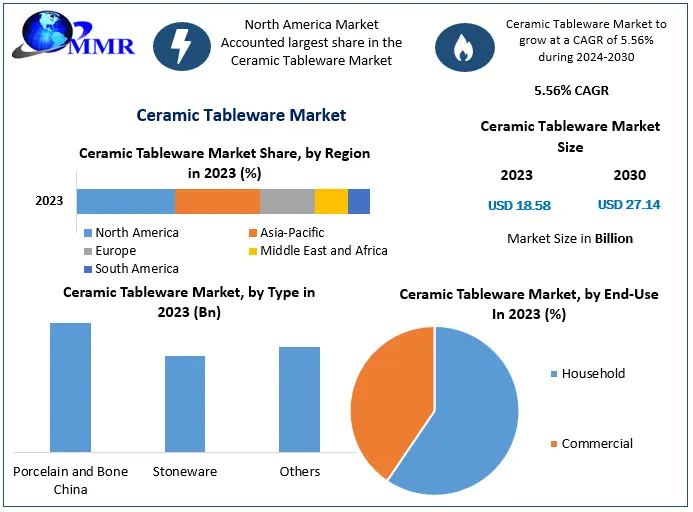 To know about the Research Methodology :- Request Free Sample Report
Ceramic Tableware Market Dynamics:
The market is also strongly influenced by the tremendous rise in consumer expenditure on household goods. Moreover, significant growth in the food and beverage and home decor industries, increased demand for branded ceramic tableware in emerging nations, rising population, and rising disposable incomes are all driving the ceramic tableware market. While ceramics have a hard surface that does not absorb chemicals and prevents chemicals from seeping into food, this tableware is also manufactured of harmless materials, which is another important driver driving the growth of the ceramic tableware market through the forecast period.
Also, the promotion of ceramic tableware through various online channels, as well as the boom in e-commerce and a growing focus on new product innovation and research and development activities, will create numerous opportunities for the ceramic tableware market.
Ceramic tableware's non-toxic nature and many advantages and qualities such as superior electrical insulation, high wear, heat, pressure, and chemical attack resistance, extreme hardness, and relatively lightweight are majorly driving the market growth. The rising number of home renovation projects and the growing popularity of modular kitchen installation are fueling market development. As producers and suppliers of the product focus on sales and marketing on various e-commerce platforms such as Amazon, Flipkart, and Snap deal, the expanding use of e-commerce portals is also an essential element for market growth.
Key Trend of Ceramic Tableware Market:
• Clients are increasingly demanding black and other dark glazes for their new tableware sets since they create a luxurious and intimate atmosphere.
• Another trend is an increase in demand for classic round plates; chefs favor this form of tableware. Rectangular plates are another classic dinnerware trend that can enhance the look and work well when serving a trio of dishes, such as appetizers or desserts.
• Chefs may be more inventive with their dishes and plating skills with contemporary crockery since it provides a current backdrop. In addition, at home or in high-end restaurants, irregular, organically shaped tableware, as well as irregular type plates and bowls, can be employed.
• Some of the popular ceramic dinnerware collections include artisan created, indigo themed, and global folk, all of which have an impact on the market's growth.
Restraints of Ceramic Tableware Market:
• Volatile raw material prices are a major factor restraining the growth of the ceramic dinnerware market. The cash flows and earnings of enterprises in the ecosystem will be impacted by fluctuating commodity prices of raw materials. Ceramic tableware's low durability and the high cost of top-quality items are two further reasons that may hamper the market's growth.
• The availability of counterfeit items that consumers are unable to detect owing to a lack of understanding, as well as the rise of substitute products such as opal glass dinnerware, which is more durable than ceramic tableware, are reasons that could stifle demand for ceramic tableware.
• The rise in popularity of discount stores for dinnerware purchases can be ascribed to the low cost of these items, which are primarily imported from China. Ceramic products developed in Asia are typically low-cost and mass-produced. The rise in the number of such stores dominating the market has resulted in a significant price drop in the tableware sector.
Ceramic Tableware Market Segment Analysis:
By End Use, Commercial is expected to grow at a CAGR of 6.1 % through the forecast period.
Tourism is a significant global economic sector that has grown at a breakneck pace, from 25 million foreign tourist visits. Hotel establishments are part of the tourist system, and leisure, corporate transitory, and corporate groups are three important areas that contribute to the industry's growth. Growing home decor industries and the rising number of hotels, restaurants, and other dining options are some of the major factors propelling the demand for tableware. The demand for tabletop products is being driven by new hotel businesses, which is driving the growth of the ceramic tableware market.
Ceramic Tableware Market Regional Insights:
The Asia Pacific dominated the market with a 41% share in 2023. Due to significant demand from developing countries such as India and China, the Asia Pacific region is one of the fastest-growing regional markets for Ceramics tableware. In the Asia Pacific area, the rise in disposable income and brand awareness has resulted in a significant demand for branded ceramic tableware. The rising number of residences due to population growth and rapid development is also a major driving force.
Europe region is expected to grow at a CAGR of 6.35% through the forecast period. Europe is also one of the most important markets. Germany, the United Kingdom, and France are key producers of ceramic tableware in Europe, and European brands are expected to dominate the worldwide high-end tableware market through the forecast period.
The objective of the report is to present a comprehensive analysis of the Ceramic Tableware market to the stakeholders in the industry. The past and current status of the industry with the forecasted market size and trends are presented in the report with the analysis of complicated data in simple language. The report covers all the aspects of the industry with a dedicated study of key players that include market leaders, followers, and new entrants.
PORTER, PESTEL analysis with the potential impact of micro-economic factors of the market have been presented in the report. External as well as internal factors that are supposed to affect the business positively or negatively have been analyzed, which will give a clear futuristic view of the industry to the decision-makers.
The report also helps in understanding the Ceramic Tableware market dynamics, structure by analyzing the market segments and projecting the Ceramic Tableware market size. Clear representation of competitive analysis of key players by product, price, financial position, product portfolio, growth strategies, and regional presence in the Ceramic Tableware market make the report investor’s guide.
Ceramic Tableware Market Scope: Inquiry Before Buying
| Ceramic Tableware Market | |||
|---|---|---|---|
| Report Coverage | Details | ||
| Base Year: | 2023 | Forecast Period: | 2024-2030 |
| Historical Data: | 2018 to 2023 | Market Size in 2023: | US $ 18.58 Bn. |
| Forecast Period 2024 to 2030 CAGR: | 5.56% | Market Size in 2030: | US $ 27.14 Bn. |
| Segments Covered: | by Type | Porcelain and Bone China Stoneware Others |
|
| by Distribution Channel | Offline Online |
||
| by End-Use | Household Commercial |
||
Ceramic Tableware Market, by Region
North America (United States, Canada and Mexico)
Europe (UK, France, Germany, Italy, Spain, Sweden, Austria and Rest of Europe)
Asia Pacific (China, South Korea, Japan, India, Australia, Indonesia, Malaysia, Vietnam, Taiwan, Bangladesh, Pakistan and Rest of APAC)
Middle East and Africa (South Africa, GCC, Egypt, Nigeria and Rest of ME&A)
South America (Brazil, Argentina Rest of South America)
Ceramic Tableware Market Key Players are:
1. Fiskars Group
2. Rosenthal GmbH
3. Libbey
4. Meissen
5. Seltmann Weiden
6. RAK Porcelain
7. Villeroy & Boch
8. WMF
9. Lenox
10.Churchill China
11.KAHLA Porzellan
12.SCHONWALD
13.Lenox
14.Portmeirion Group PLC
15.The Oneida Group
16.TATA ceramics
17.Sitong Group
18.Narumi
1] What segments are covered in the Ceramic Tableware Market report?
Ans. The segments covered in the Ceramic Tableware Market report are based on Type, Distribution Channel, and End-Use.
2] Which region is expected to hold the highest share in the Ceramic Tableware Market?
Ans. Asia Pacific Region is expected to hold the highest share in the Ceramic Tableware Market.
3] What is the market size of the Ceramic Tableware Market by 2030?
Ans. The market size of the Ceramic Tableware Market by 2030 is US $ 27.14 Bn.
4] What is the forecast period for the Ceramic Tableware Market?
Ans. The Forecast period for Ceramic Tableware Market is 2024-2030.
5] What was the market size of the Ceramic Tableware Market in 2023?
Ans. The market size of the Ceramic Tableware Market in 2023 was US $ 18.58 Bn.