
Automotive Vehicle Fleet Leasing Market – Global Market Size, Strategic Growth Drivers, Risk Assessment Framework, Regulatory Landscape Review, Competitive Intensity Mapping & Long-Term Industry Outlook to 2032
Overview
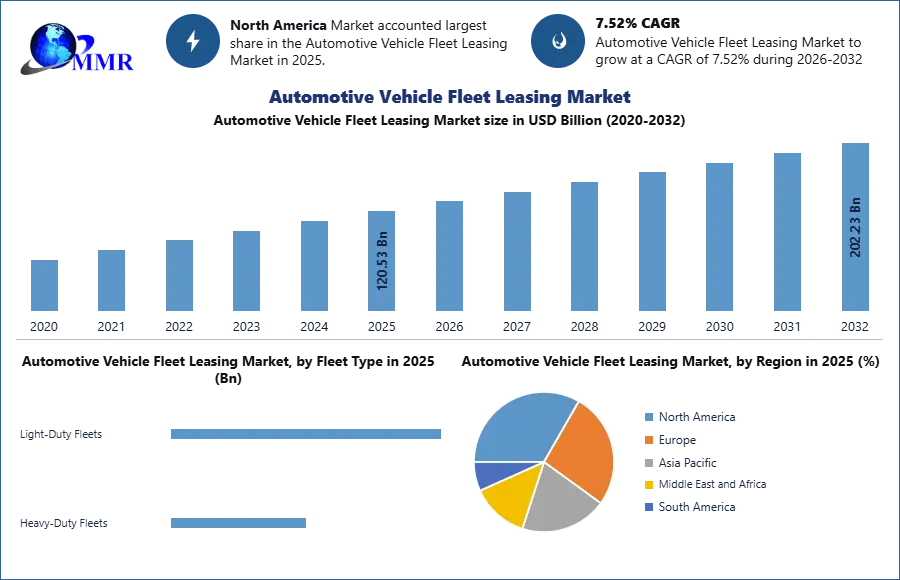
The Automotive Vehicle Fleet Leasing Market was valued at USD 120.53 Billion in 2025 and is estimated to grow at a CAGR of 7.52% over the forecast period, reaching USD 202.10 Billion by 2032.
Automotive Vehicle Fleet Leasing Market: Market Overview
The automotive vehicle fleet leasing market has witnessed significant growth due to the increasing demand for flexible, cost-effective transportation solutions across industries. Fleet leasing allows businesses to access a wide variety of vehicles without the capital burden of ownership, while also providing benefits such as maintenance management, fuel optimization, and real-time fleet tracking. Technological advancements, such as the integration of IoT and telematics into fleet management systems, have further enhanced the attractiveness of fleet leasing by improving vehicle performance monitoring and operational efficiency. Additionally, the growing focus on sustainability and the transition towards electric and hybrid fleets presents new growth avenues for fleet leasing companies. The market continues to evolve with a greater emphasis on flexible lease terms, diverse fleet options, and the integration of innovative technologies to meet the needs of modern businesses.
To know about the Research Methodology :- Request Free Sample Report
Automotive Vehicle Fleet Leasing Market: Market Dynamics
Automotive Vehicle Fleet Leasing Market Drivers
Increasing Demand for Cost Efficiency and Flexibility
The growing demand for cost-effective transportation solutions among businesses is driving the expansion of the automotive vehicle fleet leasing market. Leasing enables businesses to avoid large upfront costs associated with purchasing vehicles, allowing them to allocate capital to other operational needs. Fleet leasing also offers the flexibility to scale the fleet according to market demands, improving operational efficiency. Additionally, leasing provides businesses with predictable monthly costs, helping to manage cash flow better. This model is especially attractive to small and medium-sized enterprises (SMEs) looking to optimize their fleet management without bearing the full financial burden of ownership. As fleet leasing offers a cost-efficient alternative to outright vehicle ownership, its adoption is expected to continue growing across various industries, especially in logistics, transportation, and e-commerce.
Technological Advancements in Fleet Management Solutions
Technological advancements, including the integration of telematics, real-time tracking, and fleet management software, have made fleet leasing more efficient and attractive to businesses. IoT-based fleet management systems allow fleet operators to track vehicle performance, monitor fuel consumption, optimize routes, and manage maintenance schedules remotely. The ability to integrate telematics with vehicle leasing offers fleet operators real-time insights into vehicle usage, driver behavior, and maintenance needs, enhancing the efficiency and productivity of the fleet. As more companies embrace digital tools and automation, the demand for connected fleet leasing solutions is expected to rise, propelling market growth.
Growing Focus on Sustainability and Environmental Regulations
With increasing pressure from governments and environmental organizations to reduce carbon emissions, businesses are shifting toward more sustainable fleet options. Many fleet leasing companies are investing in electric vehicles (EVs) and hybrid vehicles to meet stringent emission regulations. As governments provide incentives for EV adoption and stricter environmental standards are imposed, businesses are opting for green fleet solutions. Leasing allows companies to quickly transition to electric or hybrid vehicles without the long-term commitment of vehicle ownership, thus supporting sustainability goals while remaining cost-effective. This trend is expected to drive growth in the automotive fleet leasing market, especially in regions with strong environmental policies.
Automotive Vehicle Fleet Leasing Market Restraints
High Leasing Costs for Premium Fleets
While leasing offers significant cost savings for businesses, the high leasing costs associated with premium or specialized vehicles remain a significant restraint. Leasing fees can be expensive for high-performance vehicles, electric vehicles, or customized fleets. For businesses with limited budgets, these high leasing costs can deter them from opting for leasing, pushing them to consider alternative options such as vehicle ownership or third-party logistics. Additionally, the increasing maintenance and operational costs for specialized fleets may also drive up the total cost of leasing, limiting the market’s affordability for smaller businesses or startups.
Economic Instability and Market Uncertainty
Economic instability, such as recessions, inflation, or fluctuations in fuel prices, can create market uncertainty, which in turn affects businesses' spending habits. During uncertain economic times, companies may choose to delay fleet expansion, reduce their fleet size, or pause leasing agreements. This can lead to a decline in demand for fleet leasing services, especially for industries that are heavily affected by market volatility. Fleet leasing companies may also face financial challenges if customers default on payments or if vehicle utilization rates decline during economic downturns.
Competition from Ride-Sharing and Car Subscription Models
The rise of ride-sharing services such as Uber, Lyft, and other car subscription models poses a competitive challenge to the automotive fleet leasing market. With the increasing popularity of these services, businesses are moving away from traditional vehicle ownership or leasing models, opting instead for flexible, on-demand transportation solutions. For businesses that do not require vehicles for daily operations or those that have a smaller fleet, the appeal of car subscription services or ride-sharing models is growing, limiting the demand for fleet leasing services. The shift toward shared mobility and flexible transportation options is expected to present a challenge to traditional fleet leasing models.
Automotive Vehicle Fleet Leasing Market Opportunities
Expansion of Electric Vehicle Fleets
With the growing push towards environmental sustainability and stricter emissions regulations, there is a significant opportunity in the automotive vehicle fleet leasing market for electric vehicles (EVs). As fleet operators look to meet environmental goals and reduce operating costs, EVs provide an attractive alternative to traditional internal combustion engine (ICE) vehicles. Fleets are gradually transitioning to electric models, driven by incentives, lower fuel costs, and enhanced regulatory support. The growth of electric vehicle fleets in the leasing market offers a major opportunity for leasing companies to diversify their fleet offerings and cater to the rising demand for green solutions.
Expansion in Emerging Markets
The automotive fleet leasing market is experiencing significant growth in emerging markets, particularly in Asia Pacific, Latin America, and the Middle East. These regions are witnessing rapid urbanization, an increase in e-commerce and logistics activities, and higher disposable incomes. As a result, demand for fleet leasing services is growing rapidly in sectors such as logistics, transportation, and delivery services. Fleet leasing companies can tap into these emerging markets by offering affordable, flexible leasing options and expanding their service offerings to meet the growing demand for efficient fleet management in these regions.
Integration of Autonomous Vehicles in Fleet Leasing
The integration of autonomous vehicles (AVs) into fleet leasing is another emerging opportunity. As the development of self-driving technologies progresses, fleet leasing companies can offer autonomous vehicle fleets for businesses, reducing the need for drivers while improving efficiency. Autonomous vehicles can be particularly beneficial for sectors such as logistics, delivery, and public transportation, where driverless solutions can help lower labor costs, increase operational hours, and improve route optimization. As AV technology matures, fleet leasing companies that integrate these vehicles into their offerings will be well-positioned to capitalize on the growing demand for autonomous transportation solutions.
Automotive Vehicle Fleet Leasing Market: Market Segmentation
Automotive Vehicle Fleet Leasing Market Segmentation, by Fleet Type
The market has been divided into Light-Duty Fleets and Heavy-Duty Fleets. Among these, the Light-Duty Fleets sub-segment is projected to generate the maximum revenue. This sub-segment dominated the market because light-duty vehicles are widely used in urban and suburban areas for delivery services, logistics, and personal transportation. Light-duty fleets provide more cost-effective solutions, have better fuel efficiency, and are less expensive to maintain than heavy-duty fleets. As e-commerce and delivery services expand, the demand for light-duty fleets continues to grow, particularly in urban areas with high delivery demands.
Automotive Vehicle Fleet Leasing Market Segmentation, by End-Use Industry
The market has been divided into Logistics and Transportation, Construction and Mining, Retail and E-commerce, Healthcare and Public Sector, and Others. Among these, the Logistics and Transportation sub-segment generated the maximum revenue in 2025. This segment dominated because logistics companies and transportation firms rely heavily on leased fleets to ensure timely deliveries, manage fuel costs, and maintain operational flexibility. The growing e-commerce industry, combined with an increase in global trade, is expected to drive further demand for fleet leasing in the logistics sector.
Automotive Vehicle Fleet Leasing Market Regional Analysis
North America dominated the market in 2025, and is expected to continue its dominance during the forecast period. The region benefited from a mature automotive leasing market, high demand for commercial vehicles, and a large number of fleet management companies offering diverse leasing options. In 2025, North America had the highest adoption of fleet leasing solutions due to the presence of key players in the market, advancements in fleet management technologies, and strong regulations promoting fleet efficiency and safety. The continued growth of logistics and transportation in North America, coupled with increasing demand for electric and hybrid vehicles, will further solidify its market position.
The objective of the report is to present a comprehensive analysis of the Global Market including all the stakeholders of the industry. The past and current status of the industry with forecasted market size and trends are presented in the report with the analysis of complicated data in simple language. The report covers all the aspects of the industry with a dedicated study of key players that includes market leaders, followers, and new entrants.
PORTER, PESTEL analysis with the potential impact of micro-economic factors of the market has been presented in the report. External as well as internal factors that are supposed to affect the business positively or negatively have been analysed, which will give a clear futuristic view of the industry to the decision-makers.
Recent Developments
January 2025: ALD Automotive launched a new fleet management service platform with integrated telematics solutions, aimed at improving vehicle efficiency and sustainability for fleet operators. The platform includes real-time monitoring of fleet health, driver behavior, and route optimization.
February 2025: Element Fleet Management introduced a flexible, scalable electric vehicle fleet leasing solution, catering to the growing demand for sustainable and green fleet options. The solution integrates with telematics to provide fleet operators with enhanced performance data and insights.
March 2025: LeasePlan Corporation announced its expansion into the electric vehicle market with a new fleet leasing program for businesses transitioning to EVs. The initiative is expected to drive demand in Europe and North America.
April 2025: Ryder System, Inc. launched a fleet leasing program specifically designed for last-mile delivery businesses, featuring a mix of electric and hybrid vehicles to meet the increasing demand for sustainable and efficient delivery solutions.
Scope of the Global Automotive Vehicle Fleet Leasing Market: Inquire before buying
| Automotive Vehicle Fleet Leasing Market | |||
|---|---|---|---|
| Report Coverage | Details | ||
| Base Year: | 2025 | Forecast Period: | 2026-2032 |
| Historical Data: | 2020 to 2025 | Market Size in 2025: | 120.53 USD Billion |
| Forecast Period 2026-2032 CAGR: | 7.52% | Market Size in 2032: | 202.23 USD Billion |
| Segments Covered: | by Fleet Type | Light-Duty Fleets Heavy-Duty Fleets |
|
| by Lease Type | Operating Lease Finance Lease Lease-Purchase |
||
| by Vehicle Type | Passenger Vehicles Commercial Vehicles Electric Vehicles Hybrid Vehicles |
||
| by End-Use Industry | Logistics and Transportation Construction and Mining Retail and E-commerce Healthcare and Public Sector Others |
||
Automotive Vehicle Fleet Leasing Market, by Region
North America (United States, Canada and Mexico)
Europe (UK, France, Germany, Italy, Spain, Sweden, Austria, Turkey, Russia and Rest of Europe)
Asia Pacific (China, India, Japan, South Korea, Australia, ASEAN and Rest of APAC)
Middle East and Africa (South Africa, GCC, Egypt, Nigeria and Rest of ME&A)
South America (Brazil, Argentina, Columbia and Rest of South America)
Key Players/Competitors Profiles Covered in the Automotive Vehicle Fleet Leasing Market Report in Strategic Perspective
-
ALD Automotive
-
ARI Fleet Management
-
LeasePlan Corporation N.V.
-
Wheels, Inc.
-
Hitachi Capital Vehicle Solutions
-
Donlen Corporation
-
Ryder System, Inc.
-
U.S. Bank Fleet Services
-
Car Subscription
-
Europcar Mobility Group
-
Fleet Complete
-
Toyota Fleet Management
-
Daimler Fleet Management
-
SNCF Mobilités
-
AutoFlex
-
Shaheen Transport
-
International Fleet Services
-
Auto Leasing Solutions
-
Penske Automotive
-
SG Fleet
-
VMS Fleet Management
-
FlexiFleet