
Artificial Intelligence in Medicine Market – Global Market Size, Strategic Growth Drivers, Risk Assessment Framework, Regulatory Landscape Review, Competitive Intensity Mapping & Long-Term Industry Outlook to 2030
Overview
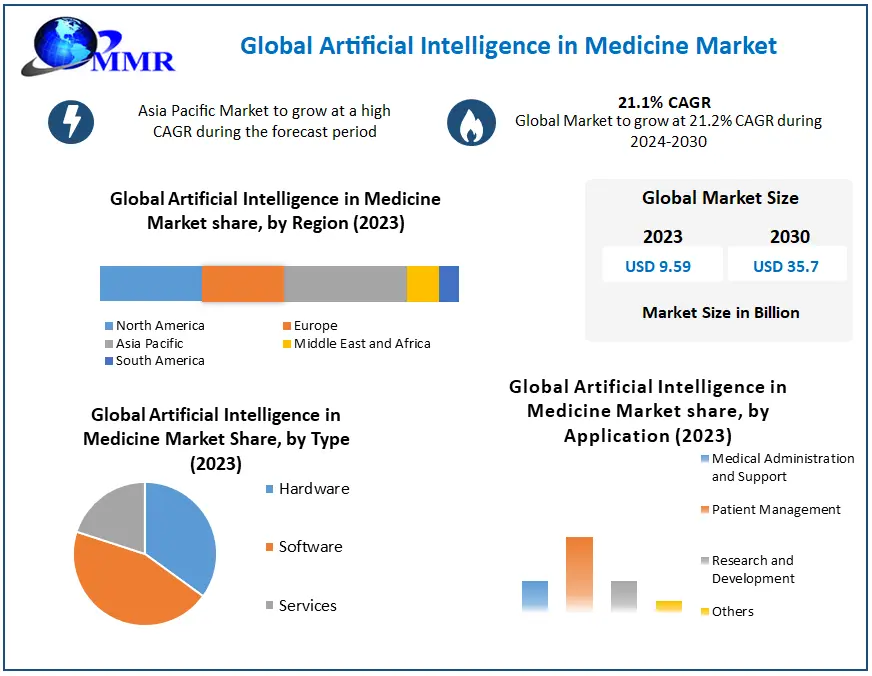
Global Artificial Intelligence in Medicine Market size was valued at USD 9.59 Bn in 2023 and is expected to reach USD 35.7 Bn by 2030, at a CAGR of 21.2%.
Artificial Intelligence in Medicine Market Overview
Machine learning helps to process medical data and give medical professionals important insights by improving health outcomes and patient experiences. AI in medicine is the use of Machine Learning models to improve the search of medical data with advancements in computer science and informatics, AI is becoming an integral part of modern AI. The most common thing for AI in medicine settings are clinical decision support and image analysis. AI in medicine refers to the integration of artificial intelligence technologies, such as machine learning, deep learning, natural language processing, and computer vision, into various healthcare applications. The market has been witnessing substantial growth due to several key drivers such as demand for personalized medicine, medical imaging and diagnostics, Telemedicine and Remote Monitoring, and many more, which are the factors expected to boost the Artificial Intelligence in Medicine Market growth.
 To know about the Research Methodology :- Request Free Sample Report
Artificial Intelligence in Medicine Market Dynamics
Improved Diagnostic Accuracy to boost the Artificial Intelligence in Medicine Market growth
AI algorithms have demonstrated the ability to analyze vast amounts of medical data, including images, genetic data, and patient records, with high precision and accuracy. This capability has led to improved diagnosis and reduced errors in medical decision-making, which is expected to boost the Artificial Intelligence in Medicine Market growth. AI enables the analysis of individual patient data, helping healthcare professionals to tailor treatments and interventions based on a patient's specific characteristics, genetics, and medical history. AI algorithms rapidly analyze and interpret large datasets to identify potential drug candidates and significantly contribute for market growth.
AI-powered chatbots and virtual assistants have been employed to engage with patients, answer their questions, and provide educational resources, thereby promoting patient empowerment and adherence to treatment plans. Integrating AI into EHR systems can aid in data organization, decision support, and clinical documentation, leading to better patient care and workflow efficiency. Increasing investments from both private and public sectors into AI research and development have propelled the technological advancements in the field, leading to more sophisticated AI applications in medicine. As the technology matures, regulatory agencies have been providing clearer guidelines for the development and use of AI in medicine, fostering a more supportive environment for AI-based healthcare solutions, and is expected to boost the AI in Medicine industry growth.
Applications of AI in Medicine
AI in disease detection and diagnosis: Machine Learning models are used to observe the vital signs of patients receiving critical care and alert clinicians if certain risk factors increase. One IBM client has developed a predictive AI model for premature babies that is 75% accurate in detecting severe sepsis.
Personalized disease treatment: Precision medicine are on the way to become easier to support with virtual AI assistance. AI models can learn and retain preferences, Artificial Intelligence has the potential to provide customized real-time recommendations to patients around the clock. Instead of having rapid information from new person each time, a healthcare system offers patients around-the-clock access to an AI-powered virtual assistant, which is able to answer questions based on patient medical history.
AI in medical imaging: AI is having prominent role in Medical imaging. Research and Development activities has indicated that AI-powered by artificial neural network is just effective as human radiologist at detecting signs of breast cancer as well as other conditions. To help clinicians spot early signs of disease, AI help to make a staggering number of medical images that clinicians have to keep track of more manageable by detecting vital pieces.
Clinical trial efficiency: A lot of time is spent during clinical trials assigning medical codes to patient and updating the relevant datasets. Two IBM Watson Health clients recently found that with AI, they could reduce their number of medical code searches by more than 70%.
Accelerated drug development: Drug discovery is longest and most costly parts of drug development. AI reduces the cost of developing new medicines. With the help of Artificial Intelligence, many of the big data challenges facing the life sciences industry could be overcome.
Benefits of Artificial Intelligence in Medicine Market
1. Informed patient care
2. Error reduction
3. Reducing the costs of care
4. Increasing doctor-patient engagement
5. Providing contextual relevance
Ethical and Legal Considerations to Restrain the AI in Medical Market Growth
The use of AI in medicine raises ethical questions around decision-making, responsibility, and liability. Ensuring AI systems make fair and unbiased decisions is a significant challenge. There are concerns about AI displacing certain healthcare jobs or changing the roles of medical professionals, potentially leading to resistance from healthcare workers. Some AI models may perform well in controlled environments but struggle to generalize effectively across different populations, medical centers, or patient cohorts. Implementing AI systems in healthcare can be expensive, particularly for smaller healthcare facilities with limited budgets, and is the reason expected to restrain the Artificial Intelligence in Medicine Market growth.
Some healthcare providers and institutions may be hesitant to adopt AI-based solutions due to a lack of familiarity with the technology or concerns about disrupting existing workflows. Clinicians may be hesitant to fully rely on AI-generated insights or recommendations, preferring to make decisions based on their clinical experience and judgment. The "black box" nature of some AI models makes it challenging to understand and interpret how they arrive at specific conclusions, which can be a barrier to their acceptance in critical healthcare applications and is expected to restrain the market growth over the forecast period.
Artificial Intelligence in Medicine Market Opportunities
The Artificial Intelligence in Medicine Market report published by Maximize Market Research has covered the future impact of Medical imaging, chronic disease management, and healthcare data analytics and research in the AI in Medicine industry. There are lucrative opportunities in the market and is expected to grow at a significant growth rate of 21.2% over the forecast period.
Medical Imaging Analysis: AI algorithms analyze medical images, such as X-rays, MRIs, and CT scans, with high precision and efficiency. This helps radiologists and other specialists in detecting abnormalities and diagnosing conditions more accurately. By acting as a second opinion or support tool, AI systems help reduce diagnostic errors and discrepancies, enhancing the overall quality of patient care.
Predictive Analytics for Healthcare Management: AI-powered predictive analytics help healthcare institutions optimize resource allocation, anticipate patient needs, and streamline healthcare operations, leading to improved efficiency and cost savings.
Assisting in Surgery and Procedures: AI can be integrated into surgical systems to assist surgeons during procedures, providing real-time feedback, and improving surgical precision and outcomes.
Chronic Disease Management: AI plays a significant role in managing chronic diseases, such as diabetes and cardiovascular conditions, by continuously monitoring patients' health metrics and providing personalized interventions.
Healthcare Data Analytics and Research: AI process vast amounts of healthcare data for epidemiological studies, clinical research, and population health management, leading to insights, which can improve public health initiatives and is expected to boost the Artificial Intelligence in Medicine Market growth.
Artificial Intelligence in Medicine Market Regional Insight
North America region dominated the market in 2023 and is expected to hold the largest Artificial Intelligence in Medicine Market share over the forecast period. North America is a significant player in the AI in medicine industry, with the United States and Canada being key contributors to the region's growth. The region has seen substantial investments in AI in medicine. Venture capital firms and government initiatives have been supporting startups and projects aimed at developing AI solutions to enhance healthcare.
North America's healthcare industry has been embracing digital transformation, including the adoption of AI technologies, to improve patient outcomes, reduce costs, and enhance efficiency. The region benefits from access to vast amounts of healthcare data, which is crucial for training and validating AI algorithms. This data includes electronic health records, medical imaging data, and genetic information, which is expected to boost the regional Artificial Intelligence in Medicine Market growth. AI in medicine has the potential to deliver personalized and patient-centric care, which aligns with the growing focus on precision medicine and individualized treatment plans. The COVID-19 pandemic has accelerated the adoption of telemedicine and remote care solutions in North America, creating opportunities for AI-based virtual health assistants and remote patient monitoring.
Artificial Intelligence in Medicine Market Segment Analysis
Based on Application: The market is segmented into Medical Administration and Support, Patient Management, Research and Development and Others. The Patient Management is expected to grow at a high rate during the forecast period. Patient management involves streamlining administrative tasks and storing patient records to boost practice efficiency, provide timely care, and enhance patient knowledge and outcomes. This encompasses tasks like appointment scheduling, managing billing details, and recording patient diagnoses. With the growing accessibility of electronic health data and advancements in analytical techniques, there's vast potential for AI and machine learning methods to revolutionize these services, offering improved quality at reduced costs.
Artificial Intelligence in Medicine Market Competitive Landscape
Numerous startups and companies are solely focused on developing AI solutions for the healthcare industry. These companies often specialize in medical imaging analysis, drug discovery, personalized medicine, and remote patient monitoring. Many healthcare providers and institutions are embracing AI technologies to enhance patient care, improve operational efficiency, and optimize resource allocation. Some larger hospitals and medical centers are developing their in-house AI capabilities. AI in Medicine companies specializing in medical imaging equipment are incorporating AI algorithms into their devices to enhance diagnostic accuracy and efficiency. Venture capital firms and investors play a significant role in funding AI startups and innovative AI technologies in the medical domain to increase Artificial Intelligence in Medicine Market penetration.
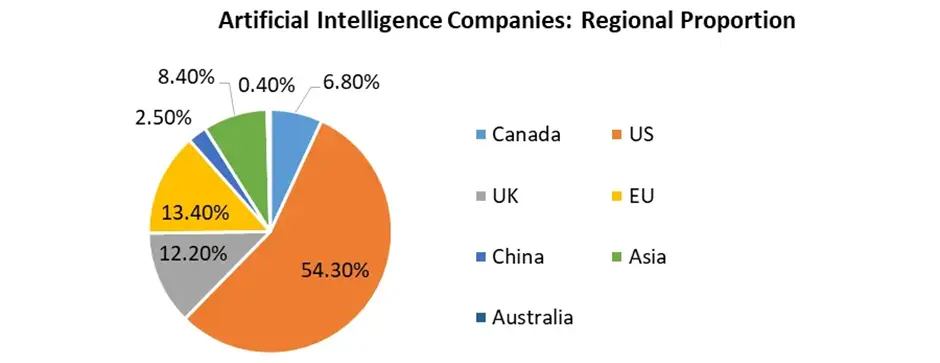
IBM's Watson Health platform had been a frontrunner in the healthcare AI market. IBM Watson Health's AI capabilities are leveraged for various healthcare applications, including medical imaging analysis, oncology, drug discovery, and clinical decision support systems. IBM's extensive experience in AI research and development, along with collaborations with healthcare institutions, has given them an advantage and is expected to be a dominant key player in the Artificial Intelligence in Medicine Market.
Artificial Intelligence in Medicine Market Scope: Inquiry Before Buying
| Global Artificial Intelligence in Medicine Market | |||
|---|---|---|---|
| Report Coverage | Details | ||
| Base Year: | 2023 | Forecast Period: | 2024-2030 |
| Historical Data: | 2018 to 2023 | Market Size in 2023: | US $ 9.59 Bn. |
| Forecast Period 2024 to 2030 CAGR: | 21.2% | Market Size in 2030: | US $ 35.7 Bn. |
| Segments Covered: | by Application | Medical Administration and Support Patient Management Research and Development Others |
|
| by Type | Hardware Software Services |
||
Artificial Intelligence in Medicine Market, by Region
North America (United States, Canada and Mexico)
Europe (UK, France, Germany, Italy, Spain, Sweden, Austria and Rest of Europe)
Asia Pacific (China, South Korea, Japan, India, Australia, Indonesia, Malaysia, Vietnam, Taiwan, Bangladesh, Pakistan and Rest of APAC)
Middle East and Africa (South Africa, GCC, Egypt, Nigeria and Rest of ME&A)
South America (Brazil, Argentina Rest of South America)
Artificial Intelligence in Medicine Key Players
1. IBM
2. Atomwise
3. Aicure Llc
4. Qventus, Inc
5. CloudMedX
6. IQVIA
7. Sense.Ly Inc.
8. Hindsait
9. General Electric (GE) Healthcare
10. Siemens Healthineers
11. Philips Healthcare
12. Microsoft
13. Nvidia
14. Medtronic
15. Intel Corporation
16. Cerner Corporation
Frequently Asked Questions:
1] What is the growth rate of the Global Artificial Intelligence in Medicine Market?
Ans. The Global Artificial Intelligence in Medicine Market is growing at a significant rate of 21.2% over the forecast period.
2] Which region is expected to dominate the Global Artificial Intelligence in Medicine Market?
Ans. North America region is expected to dominate the Artificial Intelligence in Medicine Market over the forecast period.
3] What is the expected Global Artificial Intelligence in Medicine Market size by 2030?
Ans. The market size of the Artificial Intelligence in Medicine Market is expected to reach USD 35.7 Bn by 2030.
4] Who are the top players in the Global AI in Medicine Industry?
Ans. The major key players in the Global Artificial Intelligence in Medicine Market are Hindsait, General Electric (GE) Healthcare, Siemens Healthineers, and Philips Healthcare.
5] Which factors are expected to drive the Global Artificial Intelligence in Medicine Market growth by 2030?
Ans. Improved Diagnostic Accuracy is expected to drive the Artificial Intelligence in Medicine Market growth over the forecast period (2024-2030).