
Antibody Drug Conjugates Market Size by Application, Type, Product, Technology, End User, Region – Segment-Level Market Assessment, Growth Opportunity Analysis, Competitive Mapping & Forecast to 2032
Overview
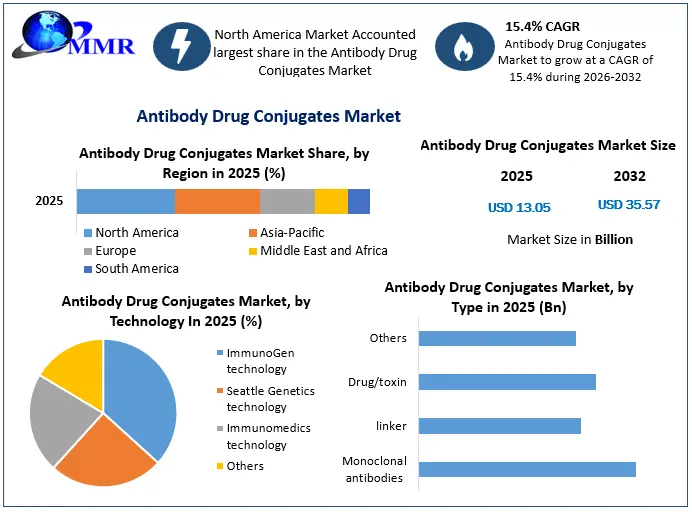
The Antibody Drug Conjugates Market size was valued at USD 13.05 Billion in 2025 and the total Antibody Drug Conjugates revenue is expected to grow at a CAGR of 15.4% from 2026 to 2032, reaching nearly USD 35.57 Billion by 2032.
Antibody Drug Conjugates Market Overview:
An Antibody-Drug Conjugate (ADC) typically consists of a monoclonal antibody (mAbs) covalently linked to a cytotoxic drug through a chemical linker. This innovative therapeutic approach harnesses the benefits of precise targeting capabilities and potent cytotoxic effects, facilitating the accurate and efficient elimination of cancer cells. The development of ADCs has emerged as a focal point in the research and advancement of anticancer drugs, owing to their potential to combine specificity and potency for enhanced therapeutic outcomes. The detailed and constructive formation of key drivers, opportunities, and unique segmentation outputs structural and optimistic data. Validated using primary as well as secondary research methodology and scope of the Global Antibody Drug Conjugates Market.
To know about the Research Methodology :- Request Free Sample Report
Antibody Drug Conjugates Market Competitive Landscapes:
The competitive landscape section in the Antibody Drug Conjugates Market is highly fragmented and offers various strategies such as agreements, new product launches, partnerships, expansions, acquisitions, joint ventures, and other crucial aspects to lessen the competition in the market. The market boasts a major market share holder and key company, Pfizer Inc., with Gemtuzumab being the first FDA approved ADC in 2000 for the treatment of relapsed acute myeloid leukemia. In April 2019, AbbVie, another global market player, announced the acquisition of Stemcentrx, including rovalpituzumab tesirine (Rova-T), for $5.8bn, solidifying its position in the market. Additionally, AbbVie formed a joint venture with CytomX to develop and commercialize a probody-drug conjugate (PDC) against CD71, further establishing itself as a key company in the industry. Regeneron Pharmaceuticals and MedImmune also entered into an acquisition, enhancing Regeneron's capabilities to develop ADCs against various cancer targets. Adcetris (brentuximab vedotin), approved in 2011, is another noteworthy development, contributing to the market dynamics. Furthermore, F. Hoffmann La Roche Ltd collaborated with Syapse in January 2018, aiming to accelerate growth in the cancer segment and solidify its position as a global market player.
The objective of the report is to present a comprehensive analysis of the Global Antibody Drug Conjugates Market, encompassing all stakeholders in the industry. The report covers the past and current status of the industry, providing a forecasted market size and trends. Key players, including market leaders, followers, and new entrants, are examined. The report incorporates PORTER, SVOR, PESTEL analysis, considering the potential impact of micro-economic factors on the market. Both external and internal factors affecting the business are analyzed, offering decision-makers a clear futuristic view of the industry. Recent industry developments showcase advancements in pharmacogenomics, with a major market share held by this technology (24%), followed by genomics. The genomics market is predicted to grow at the highest CAGR of 13.67% during 204-2030, further influencing the competitive landscape. Growing biopharmaceutical players focusing on treating diseases like cancer are expected to drive positive market growth. The report aids in understanding Global Antibody Drug Conjugates Market dynamics and structure by analyzing market segments. It projects the Global Antibody Drug Conjugates Market size and provides a clear representation of competitive analysis of key players. Factors such as technology type, price, financial position, product portfolio, growth strategies, and regional presence are considered, making the report an investor's guide in the dynamic market landscape.
Antibody Drug Conjugates Market Dynamics:
Increasing prevalence of cancer and High demand for Antibody-based Cancer Therapies Driving the
As stringent regulation set by the government for approval and different complication related with drug development besides, not so uniform growth in infrastructure across the region becomes a challenging factor for developing countries and the shortage of skilled IT specialists in healthcare are anticipating to restraints the Antibody Drug conjugates market growth. The Antibody Drug Conjugates (ADC) market is experiencing substantial growth driven by various factors. A significant catalyst is the escalating prevalence of cancer, with global estimates revealing approximately 19.3 million new cancer cases and nearly 10.0 million cancer-related deaths in 2022. As cancer incidence correlates with age, there is an increasing demand for ADCs to mitigate the heightened risk associated with aging populations. This trend contributes significantly to the expansion of the Antibody Drug Conjugates Market potential. A pivotal factor contributing to the market's expansion is the heightened incidence of breast cancer, wherein a majority of approved ADCs find application. Variables such as age, obesity, alcohol consumption, family history, and reproductive history collectively contribute to an augmented risk of breast cancer. Given that breast cancer holds the highest incidence and second-highest overall mortality rate among women in the United States, the demand for ADCs in this specific oncological domain contributes substantially to the Antibody Drug conjugates market penetration of Antibody Drug Conjugates.
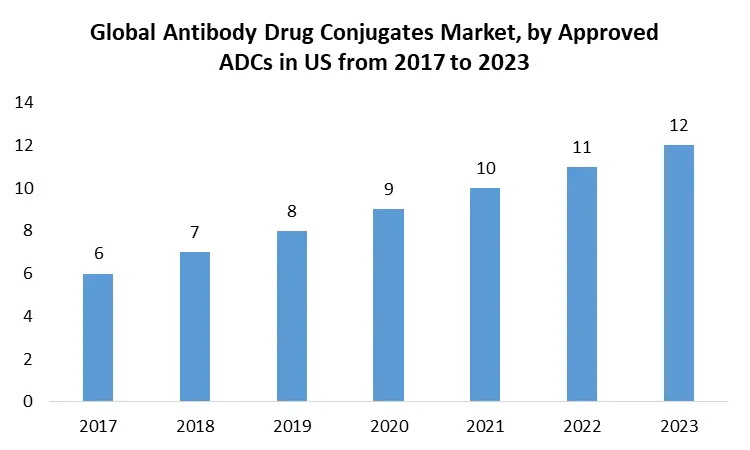
The demand for Antibody-based Cancer therapies is on the ascent, driven by their diverse mechanisms of action, encompassing natural properties, engagement of cytotoxic T cells, and the delivery of cytotoxic payloads. Antibody-drug conjugates (ADCs) constitute a noteworthy share in the clinical pipeline of cancer therapies, accounting for approximately 20%. This underscores the substantial market share held by ADCs within the broader landscape of antibody-based cancer treatments. Technological advancements have played a pivotal role in shaping the Antibody Drug Conjugates market. The transition from first-generation ADCs to second-generation (from 2010 onwards) and third-generation (from 2019 onwards) ADCs exemplifies the market potential for innovations. The introduction of advanced conjugation methods and stable linkers has elevated cytotoxic drug conjugation levels, yielding a more controlled and homogeneous product. This technological progress significantly enhances the potential of the Antibody Drug Conjugates Market. Advancing age remains a critical risk factor for cancer, with approximately 60% of cancers occurring in individuals aged 65 or older. The exponential increase in cancer risk with age underscores the significance of ADCs in addressing healthcare challenges associated with an aging population. This demographic factor constitutes a driving force behind the Antibody Drug Conjugates Market growth. The Antibody Drug Conjugates market is further propelled by intensified research and clinical trials, positioning ADCs as a vital class of anti-cancer drugs. The burgeoning number of ADCs in clinical studies for hematologic malignancies and solid tumors over the past five years reflects the maturation of ADC technology. Notably, nearly 60% of ADCs approved by the Food and Drug Administration in the past three years signify productive clinical outcomes emerging from heightened research and development efforts. Approved ADCs include Polivy (2019), Padcev (2019), EnHertu (2019), Trodelvy (2020), Blenrep (2020), Zynlonta (2021), and Tivdak (2021).
Antibody Drug Conjugates Market Segment Analysis:
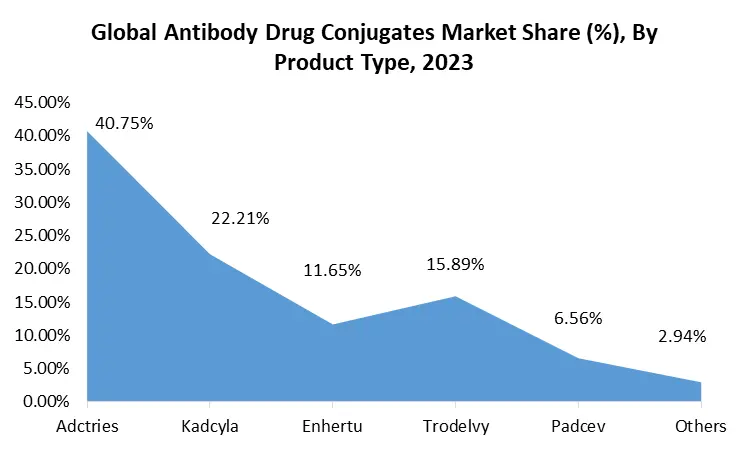
The Antibody Drug Conjugates Market analyzed by different types, including monoclonal antibodies, linker, Drug/toxin, and Others. Monoclonal antibodies, serving as indicators for cancer treatment, are anticipated to play a pivotal role in market growth, with an estimated CAGR of 35.7%, reaching approximately USD 59,110 million by 2030. Monoclonal antibodies are administered by injection and demonstrate high sensitivity, making them integral for targeted therapy and immunotherapy to activate the immune system against cancer. This is expected to significantly contribute to the Antibody Drug Conjugates Market segment share, with regional segments experiencing notable growth. The market is further segmented by product, featuring key players such as Adcertis, Kadcyla, and others. These products contribute significantly to the revenue of the Antibody Drug Conjugates Market. Adcertis, Kadcyla, and other innovative formulations demonstrate the market's diversity and are poised to impact cancer treatment strategies. The Antibody Drug Conjugates Market segment share for these products is expected to vary based on regional segment growth, reflecting the evolving landscape of cancer therapeutics.
The technological landscape of the Antibody Drug Conjugates Market is characterized by various platforms, including ImmunoGen technology, Seattle Genetics technology, Immunomedics technology, and others. These technologies are instrumental in the development of ADCs, contributing to their efficacy and therapeutic potential. The diverse technological approaches provide options for tailored treatment solutions in cancer therapy. The Antibody Drug Conjugates Market segment share for each technology is influenced by regional segment growth, indicating the adaptability of these technologies in different markets. In terms of application, the market exhibits distinctive trends with Breast cancer anticipated to dominate revenue during the forecast period. The high prevalence of Breast cancer, particularly in women, has led to its status as a leading cause of mortality, responsible for half a million deaths globally. Treatment procedures, including ADCs and chemotherapy, are pivotal in targeting Breast cancer, with notable advancements such as Ado-Trastuzumab emtansine (T-DM1) approved for HER2-positive Breast cancer treatment. The market is further segmented into ovarian cancer, lung cancer, blood cancer, and brain tumor, reflecting the diverse landscape of cancer therapeutics. Regional segment growth in these applications influences the Antibody Drug Conjugates Market segment share and overall market dynamics.
Antibody Drug Conjugates Market Recent Developments:
| Date | Company | Development | Impact |
|---|---|---|---|
| 18 January 2025 | Daiichi Sankyo / AstraZeneca | The companies announced the U.S. FDA approval of their TROP2-directed antibody-drug conjugate Datroway (datopotamab deruxtecan) for treating adults with unresectable or metastatic HR-positive, HER2-negative breast cancer. | This clinical milestone establishes the drug as the first approved TROP2-directed therapy for this patient cohort, providing a targeted alternative that achieves a 37% reduction in the risk of disease progression or death compared to conventional chemotherapy. |
| 14 May 2025 | AbbVie | The company secured U.S. FDA accelerated approval for its c-Met protein-targeting antibody-drug conjugate, telisotuzumab vedotin-tllv (Emrelis), specifically for treating advanced or metastatic non-squamous non-small cell lung cancer (NSCLC). | The approval delivers a critical precision option for patients showing high c-Met protein overexpression, broadening the commercial therapeutic scope of microtubule-inhibitor payload ADCs into hard-to-treat solid lung tumors. |
| 15 October 2025 | Boehringer Ingelheim | The company entered a global strategic collaboration and licensing agreement with South Korea-based biotech AimedBio to co-develop a novel, potentially best-in-class antibody-drug conjugate (ADC) therapy targeting tumor-selective markers. | This multi-million-dollar oncology expansion leverages an exatecan-derivative payload platform to escalate specific cytotoxic action against a wide spectrum of treatment-resistant tumors while minimizing tissue toxicity. |
| 03 April 2026 | Eli Lilly | The enterprise agreed to execute a $300 million acquisition of preclinical biotechnology firm CrossBridge Bio to expand its targeted oncology therapeutic footprint. | The transaction directly integrates advanced dual-payload antibody-drug conjugates into its research matrix, reinforcing pipeline capabilities for delivering next-generation dual-mechanism tumor destruction. |
| 14 May 2026 | Piramal Pharma Solutions | The contract organization officially inaugurated a state-of-the-art, high-containment payload-linker development and manufacturing suite at its drug substance facility in Riverview, Michigan. | As a core segment of a broader $90 million infrastructure investment, this expansion maximizes production scale and supply chain security to meet the rapidly rising global contract demand for complex bioconjugates and ADCs. |
Antibody Drug Conjugates Market Regional Insights:
North America stands as the major force in the Antibody Drug Conjugates (ADC) Market, holding the largest market share and projected to attain a value of USD 6.72 billion by 2030, Within North America, the United States is poised to play a central role, exceptional other regional counterparts such as Canada, Mexico, and others. This dominance attributed to the forefront position achieved through advancements in nanotechnology, the presence of well-established biopharmaceutical companies, strategic government initiatives investing significantly in research and development (R&D), and a substantial uptick in product approvals and commercialization of ADCs within the pharmaceutical sector. The proactive regulatory oversight of the U.S. Food and Drug Administration (FDA) further bolsters the growth prospects of the market in North America. The regional growth of the Antibody Drug Conjugates Market in North America is underlined by these influential factors.
In Europe, the Antibody Drug Conjugates Market signifies the second-largest regional segment. The European market is composed for substantial growth, driven by key factors such as a mature pharmaceutical industry, a vigorous healthcare infrastructure, and escalating investments in research and development. Regulatory bodies like the European Medicines Agency (EMA) play an essential role in overseeing approvals and ensuring the safety and efficacy of ADCs. The market dynamics in Europe are characterized by a growing emphasis on precision medicine and targeted therapies, contributing significantly to the overall expansion of the Market in the region. The Antibody Drug Conjugates Market share in the US is a noteworthy contributor to the comprehensive market dynamics.
In the Asia Pacific (APAC) region, the Antibody Drug Conjugates segment emerges as the fastest-growing market, projected to achieve the highest Compound Annual Growth Rate (CAGR) of 13.11% during the forecast period. The APAC region, featuring dynamic economies such as India and China, propels market growth through promising government initiatives, a rising awareness of ADCs, and a burgeoning number of biopharmaceutical companies. Consequently, APAC is anticipated to make a substantial contribution to the global Antibody Drug Conjugates Market, reflecting a transformative shift in the pharmaceutical landscape towards precision medicine and targeted therapeutics. The Antibody Drug Conjugates Market potential in North America and Asia Pacific underscores the pivotal roles these regions play in shaping the future landscape of cancer therapeutics.
Antibody Drug Conjugates Market Scope: Inquire before buying
| Global Antibody Drug Conjugates Market | |||
|---|---|---|---|
| Report Coverage | Details | ||
| Base Year: | 2025 | Forecast Period: | 2026-2032 |
| Historical Data: | 2020 to 2025 | Market Size in 2025: | US $ 13.05 Bn. |
| Forecast Period 2026 to 2032 CAGR: | 15.4% | Market Size in 2032: | US $ 35.57 Bn. |
| Segments Covered: | by Application | Blood Cancer Prostate cancer kidney cancer Pancreas cancer Ovary cancer Glioblastoma lung cancer Colon cancer Breast cancer Skin cancer Solid tumors Other cancers |
|
| by Type | Monoclonal antibodies linker Drug/toxin Others |
||
| by Product | Adcertis Kadcyla Others |
||
| by Technology | ImmunoGen technology Seattle Genetics technology Immunomedics technology Others |
||
| by End User | Hospitals Specialized cancer centers Academic research institutes Biotechnology companies Biopharmaceutical companies Others |
||
Antibody Drug Conjugates Market by Region:
North America (United States, Canada, and Mexico)
Europe (UK, France, Germany, Italy, Spain, Sweden, Austria, and the Rest of Europe)
Asia Pacific (China, South Korea, Japan, India, Australia, Indonesia, Malaysia, Vietnam, Taiwan, Bangladesh, Pakistan, and the Rest of APAC)
Middle East and Africa (South Africa, GCC, Egypt, Nigeria, and the Rest of ME&A)
South America (Brazil, Argentina Rest of South America)
Antibody Drug Conjugates Market, Key Players:
The antibody-drug conjugates (ADC) market is grown by several key players. Roche/Genentech, based in Basel, Switzerland, stands out with its established ADC portfolio, including Kadcyla® (ado-trastuzumab emtansine), showcasing its leadership in integrating targeted therapies. AstraZeneca, headquartered in Cambridge, United Kingdom, is advancing its ADC capabilities through substantial R&D investments and strategic collaborations, enhancing its therapeutic range. Daiichi Sankyo, located in Tokyo, Japan, leverages its proprietary technology platforms to develop innovative ADCs, such as Enhertu® (fam-trastuzumab deruxtecan-nxki), reflecting its commitment to cutting-edge cancer treatments. Pfizer, based in New York, USA, is notable for its recent approval of PADCEV® (enfortumab vedotin-ejfv) and its focus on combining ADCs with immune checkpoint inhibitors to improve efficacy. Together, these companies drive the market with their advanced technologies, strategic initiatives, and dedication to improving cancer therapy outcomes.
North America:
1. AbbVie
2. Stem CentRx
3. Biogen Idec
4. Millennium
5. PDL BioPharma
6. Progenics Pharmaceuticals
7. Seattle Genetics
8. Viventia Biotechnologies
9. ImmunoGen, Inc
10. Pfizer Inc.
11. Immunomedics Inc.
12. Celldex Therapeutics Inc
Europe:
1. Roche
2. UCB
3. Nordic Nanovector
4. Biotest AG
5. Synthon Holding B.V.
6. Sanofi S.A.
7. Bayer Healthcare Pharmaceuticals
Asia Pacific:
1. Novartis
2. Merck
3. AbGenomics Corporation
Global:
1. AstraZeneca
2. Johnson & Johnson
3. Amgen Inc.
4. Gilead Sciences
5. Eli Lilly and Company
6. Takeda Pharmaceutical Company
7. GlaxoSmithKline
FAQs:
1. What are Antibody Drug Conjugates (ADCs)?
Ans: ADCs are a class of targeted therapies combining monoclonal antibodies with cytotoxic drugs to treat various cancers.
2. Who are the major players in the global Antibody Drug Conjugates Market?
Ans: Key global market players include Pfizer Inc., AbbVie, Regeneron Pharmaceuticals, and F. Hoffmann La Roche Ltd.
3. Which ADC gained FDA approval first and for what indication?
Ans: Gemtuzumab, marketed by Pfizer Inc., was the first FDA-approved ADC in 2000 for relapsed acute myeloid leukemia.
4. What significant acquisition took place in the Antibody Drug Conjugates Market?
Ans: AbbVie's acquisition of Stemcentrx, including Rova-T, for USD 5.8 Bn in April 2019, was a notable development.
5. How is the market responding to advancements in pharmacogenomics?
Ans: Pharmacogenomics, holding a major market share (24%), is contributing to drug efficacy based on genetic evidence, fostering market growth.