
Angina Pectoris Drugs Market Size by Type, Drugs, Route of Administration, Distribution Channel, End User, Region – Revenue Pool Analysis, Margin Structure Assessment, Capital Flow Trends, Competitive Benchmarking & Forecast to 2030
Overview
The Angina Pectoris Drugs Market size was valued at USD 13.17 Billion in 2023 and the total Angina Pectoris Drugs revenue is expected to grow at a CAGR of 11.78% from 2024 to 2030, reaching nearly USD 28.72 Billion by 2030
Angina pectoris, a manifestation of coronary heart disease, results from inadequate blood flow to the heart muscle due to narrowed or blocked arteries. Symptoms include chest pressure, fullness, squeezing, or pain, often radiating to the neck, jaw, shoulder, back, or arm. It differs from other chest discomforts like heartburn. The Angina Pectoris Drugs Market is witnessing significant growth globally, driven by various factors. The prevalence of cardiac diseases in America is substantial. According to recent statistics, approximately 121.5 million adults in the United States, which accounts for around 48% of the adult population, suffer from cardiovascular disease. This includes various conditions such as heart attacks (myocardial infarction) and angina pectoris (chest pain). Heart disease, a common form of cardiovascular disease, is the leading cause of death in America, with approximately 695,547 deaths recorded annually. These statistics highlight the significant burden of cardiac diseases on the population and underscore the importance of preventive measures and effective management strategies to reduce the incidence and impact of these conditions. To know about the Research Methodology :- Request Free Sample Report
The Angina Pectoris Drugs Market is growing due to the increasing prevalence of angina pectoris globally, advancements in drug development technologies, rising healthcare expenditure, and a growing geriatric population. Recent developments in the market include the introduction of innovative drugs with improved efficacy and safety profiles by leading pharmaceutical companies. Additionally, collaborations between market players and research institutions for the development of novel therapeutic interventions have been observed, aiming to address the unmet medical needs of patients with angina pectoris. The Angina Pectoris Drugs Market is poised for substantial growth in the coming years, driven by a combination of favorable market dynamics and strategic initiatives undertaken by key industry players.
Angina Pectoris Drugs Market Dynamics:
Rising Prevalence of Cardiovascular Diseases Fuels Angina Pectoris Drug Market Growth
The rising prevalence of cardiovascular diseases worldwide, including angina pectoris, serves as a significant growth driver. With cardiovascular diseases accounting for a substantial portion of global mortality rates, there is a growing demand for effective treatments, propelling the market forward. Moreover, technological advancements in drug delivery systems are enhancing the efficacy and patient compliance of angina pectoris drugs. Innovations such as transdermal patches and sustained-release formulations offer continuous drug delivery, improving symptom management for patients. The increasing geriatric population is contributing to the growth of the angina pectoris drugs market. As the elderly demographic is more susceptible to cardiovascular diseases, there is a heightened demand for treatments targeting angina pectoris symptoms. Strategic collaborations and partnerships between pharmaceutical companies and research institutions are also driving market growth. These collaborations facilitate the development of novel drug formulations and accelerate the drug discovery process. Additionally, increasing healthcare expenditure, particularly in emerging economies, is improving the accessibility of angina pectoris drugs to a broader patient population. Countries like China and India are witnessing significant investments in healthcare infrastructure, leading to improved affordability and availability of these drugs.
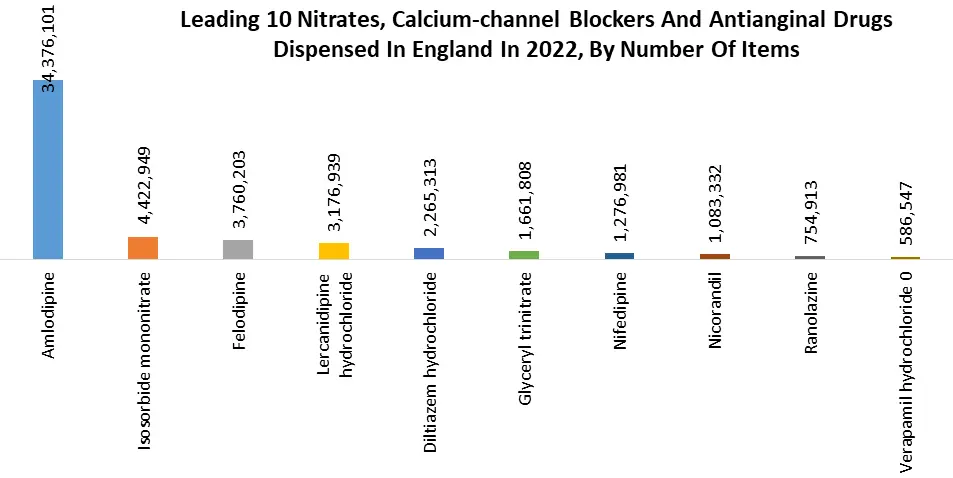
Patent Expiration Challenges Impact on Angina Pectoris Drug Market
The expiration of patents for major angina medications, allows generic versions to enter the market, leading to price competition and reduced revenue for original manufacturers. Additionally, stringent regulatory requirements, such as lengthy approval processes and safety regulations, can delay the introduction of new drugs, hindering market trends. Adverse side effects associated with angina medications also pose a deterrent to their use, as patients and physicians may opt for alternative therapies or treatments with fewer risks. Furthermore, pricing pressures from increasing healthcare costs and reimbursement restrictions can drive down drug prices, impacting pharmaceutical companies' profitability. The limited market access, particularly in underserved regions or healthcare systems, further constrains the angina drug market. Challenges such as reimbursement policies, distribution issues, and infrastructure limitations may hinder patients' access to specialized medications or cardiac care services, limiting the overall market potential. Patent litigation disputes can also disrupt market dynamics, resulting in legal uncertainties and delays in market entry for new drugs. Additionally, the emergence of generic versions of angina medications can rapidly erode market share for branded drugs, leading to price reductions and decreased revenue. Overall, these restraining factors create obstacles for pharmaceutical companies operating in the angina pectoris drugs market, necessitating strategic planning and innovation to overcome challenges and sustain growth.
Telemedicine and Remote Monitoring: Transforming Angina Care Delivery Boost the Angina Pectoris Drugs Market
The significant avenue for growth lies in advancements in drug delivery technology. Innovations such as transdermal patches offer a promising alternative to traditional oral medications by providing sustained release and steady blood levels of drugs like nitroglycerin. These patches not only improve patient convenience but also enhance efficacy and adherence, ultimately leading to better management of angina symptoms and improved quality of life for patients. The expansion into emerging markets presents a lucrative opportunity for pharmaceutical companies operating in the angina pectoris drug market. Regions such as Asia-Pacific and Latin America offer untapped potential, with growing patient populations and increasing healthcare expenditures. By adapting to local regulatory requirements and addressing unmet medical needs, companies can penetrate these markets effectively. For example, the introduction of affordable generic versions of angina medications can cater to the needs of patients in developing countries, thereby increasing market share and driving revenue Angina Pectoris Drugs Market growth.
Personalized medicine approaches also hold promise for the future of angina treatment. Genetic testing and biomarker identification enable tailored treatment regimens based on individual patient profiles, optimizing medication selection and dosing. By identifying genetic variations that influence drug metabolism or response, physicians can prescribe the most appropriate angina medication for each patient, leading to improved efficacy and reduced adverse effects. This personalized approach to treatment not only enhances patient outcomes but also represents a significant opportunity for pharmaceutical companies to differentiate their products in the competitive marketplace. In addition to personalized medicine, combination therapies offer another avenue for growth in the angina pectoris drug market. By targeting multiple pathways involved in angina pathophysiology, combination therapies can enhance efficacy and minimize side effects compared to monotherapy. For example, combining calcium channel blockers with nitrate medications provides synergistic effects in relieving angina symptoms, offering a differentiated treatment option for patients with refractory angina. This innovative approach to treatment not only improves patient outcomes but also expands the market potential for pharmaceutical companies developing combination therapies.
Telemedicine and remote monitoring technologies are also reshaping the landscape of angina management, presenting new opportunities for growth and innovation. By integrating these technologies into clinical practice, healthcare providers can monitor patients remotely, track vital signs and symptoms, and intervene promptly when necessary. For example, smartphone apps that enable patients to monitor their angina symptoms and communicate with healthcare providers in real time lead to improved disease management and reduced healthcare costs associated with hospital admissions. This shift towards telemedicine and remote monitoring represents a significant opportunity for pharmaceutical companies to develop complementary products and services that enhance patient care and improve treatment outcomes for the Angina Pectoris Drugs Market.
Angina Pectoris Drugs Market Dynamics:
Based on Drugs, beta Blockers are dominating the Angina Pectoris Drugs Market with the highest CAGR during the forecast Beta blockers function by blocking the effects of adrenaline on the heart, decreasing the heart rate, and diminishing the force with which the heart muscle contracts. Beta-blockers are considered first-line therapy in patients with stable angina caused by CAD. The segment's rise is mostly due to an increase in the target population and a growing number of strategic advancements among market competitors aimed at improving beta-blocker drug commercial availability.
Calcium Channel Blockers hold the second-largest market share. Calcium channel blockers work by stopping calcium from entering the cells of your heart and arteries, lowering blood pressure. The heart and arteries contract more forcefully when calcium is present. Calcium channel blockers relax and widen blood arteries by inhibiting calcium. Some calcium channel blockers also slow the heart rate, which helps to lower blood pressure, relieve chest pain (angina), and regulate an irregular heartbeat period. Beta-blockers function by blocking the effects of adrenaline on the heart, decreasing the heart rate and diminishing the force with which the heart muscle contracts. Beta-blockers are considered first-line therapy in patients with stable angina caused by CAD. The segment's rise is mostly due to an increase in the target population and a growing number of strategic advancements among market competitors aimed at improving beta-blocker drug commercial availability.
Angina Pectoris Drugs Market Scope: Inquire before buying
| Global Angina Pectoris Drugs Market | |||
|---|---|---|---|
| Report Coverage | Details | ||
| Base Year: | 2023 | Forecast Period: | 2024-2030 |
| Historical Data: | 2018 to 2023 | Market Size in 2023: | US $ 13.17 Bn. |
| Forecast Period 2024 to 2030 CAGR: | 11.78% | Market Size in 2030: | US $ 28.72 Bn. |
| Segments Covered: | by Type | Stable Angina Unstable Angina Prinz-metal’s Angina |
|
| by Drugs | Nitrates Antiplatelet Agents Beta-adrenergic Blocking Agents Calcium Channel Blockers Anti-ischemic Agents Statins Antihypertensive Agents Others |
||
| by Route of Administration | Oral Parenteral Transdermal Others |
||
| by Distribution Channel | Hospital Pharmacy Online Pharmacy Retail Pharmacy |
||
| by End User | Hospitals Homecare Specialty Clinics Others |
||
Angina Pectoris Drugs Market, by Region
North America (United States, Canada and Mexico)
Europe (UK, France, Germany, Italy, Spain, Sweden, Austria, Turkey, Russia and Rest of Europe)
Asia Pacific (China, India, Japan, South Korea, Australia, ASEAN and Rest of APAC)
Middle East and Africa (South Africa, GCC, Egypt, Nigeria and Rest of ME&A)
South America (Brazil, Argentina, Columbia and Rest of South America)
Angina Pectoris Drugs Market Key Players:
Major Contributors in the Angina Pectoris Drugs Market in North America:
1. Pfizer Inc. (New York, United States)
2. Merck & Co., Inc. (Kenilworth, United States)
3. Johnson & Johnson (New Brunswick, United States)
4. Bristol Myers Squibb Company (New York, United States)
5. Abbott Laboratories (Chicago, United States)
6. Eli Lilly and Company (Indianapolis, United States)
7. Mylan N.V. (Canonsburg, United States)
8. Amgen Inc. (Thousand Oaks, United States)
Major Leading Player in the Angina Pectoris Drugs Market in Europe:
1. AstraZeneca plc (Cambridge, United Kingdom)
2. Novartis AG (Basel, Switzerland)
3. Sanofi S.A. (Paris, France)
4. GlaxoSmithKline plc (Brentford, United Kingdom)
5. Bayer AG (Leverkusen, Germany)
6. Boehringer Ingelheim GmbH (Ingelheim am Rhein, Germany)
Major Prmoninant Players in the Angina Pectoris Drugs Market in Asia Pacific:
1. Daiichi Sankyo Company, Limited (Tokyo, Japan)
2. Takeda Pharmaceutical Company Limited (Osaka, Japan)
3. Actelion Pharmaceuticals Ltd. (Allschwil, Switzerland)
4. Sun Pharmaceutical Industries Ltd. (Mumbai, India)
5. Astellas Pharma Inc. (Tokyo, Japan)
FAQ:
1] What segments are covered in the Global Angina Pectoris Drugs Market report?
Ans. The segments covered in the Angina Pectoris Drugs Market report are based on Type, Drugs, Route of Administration, Distribution Channel, End User, and Region.
2] Which region is expected to hold the highest share in the Global Angina Pectoris Drugs Market?
Ans. North America region is expected to hold the highest market share in the Angina Pectoris Drugs Market.
3] What is the market size of the Global Angina Pectoris Drugs Market by 2030?
Ans. The market size of the Angina Pectoris Drugs Market by 2030 is expected to reach USD 28.72 Billion.
4] What is the forecast period for the Global Angina Pectoris Drugs Market?
Ans. The forecast period for the Angina Pectoris Drugs Market is 2024-2030.
5] What was the market size of the Global Angina Pectoris Drugs Market in 2023?
Ans. The market size of the Angina Pectoris Drugs Market in 2023 was valued at USD 13.17 Billion.