
Freight Transportation Management Market Size – Industry Structure Evaluation, Demand Drivers Analysis, Regional Growth Analysis and Identification, Competitive Positioning Review & Global Market Size Forecast to 2029
Overview
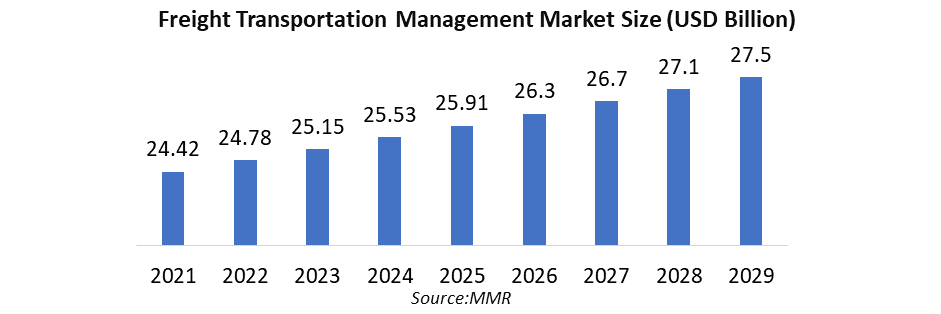
Freight Transportation Management Market size was valued at USD 26.98 Bn. in 2022 and the total Freight Transportation Management revenue is expected to grow by 10.5 % from 2023 to 2029, reaching nearly USD 54.28 Bn.
Freight Transportation Management Market Overview:
Freight transport management includes developing various strategies to improve freight and commercial transportation efficiency. The freight transportation management market focuses on lowering shipper costs while taking into account social costs such as congestion and pollution impacts. It assists shippers in selecting the appropriate mode of transportation. Rail and water transport, for example, are far more efficient than truck transport over long distances.
It aids in the improvement of routing and scheduling in order to increase load factors and reduce freight vehicle mileage. It aids in the implementation of fleet management programs that help us optimally size vehicles for each trip, reduce vehicle mileage, and ensures that fleet vehicles are operated and maintained in ways that reduce external costs.
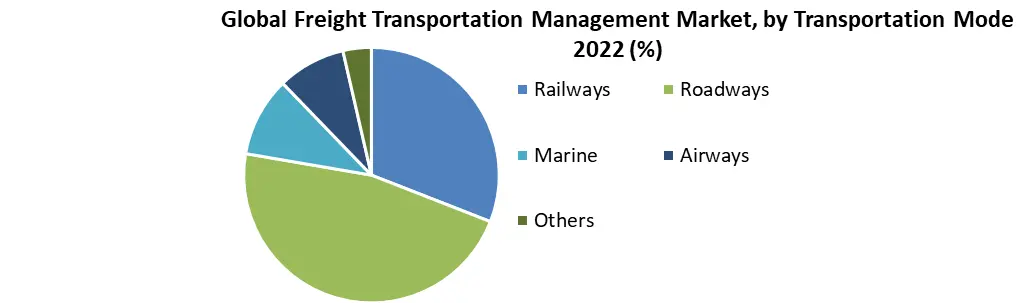
Freight transport management is used for a variety of modes of transportation, including highways, railways, shipping, and airways. The segment refers to freight movement through the path of roads. It is the most common mode of transportation because it only requires one customs document. Railway transportation is extremely fuel-efficient and can be considered a "green" mode of transportation. Marine shipments transport bulk commodities such as coal, agricultural products, iron ore, and wet bulk products such as crude oil and gas.
Airlines are the quickest mode of transportation and are widely used for 'just-in-time' (JIT) inventory replenishment. The high benefits provided by freight transportation management are increasing market demand for freight transportation management solutions. The global freight transportation management market is growing rapidly due to increased globalization, which is resulting in increased freight transportation. Companies are even launching new products in order to increase their market share.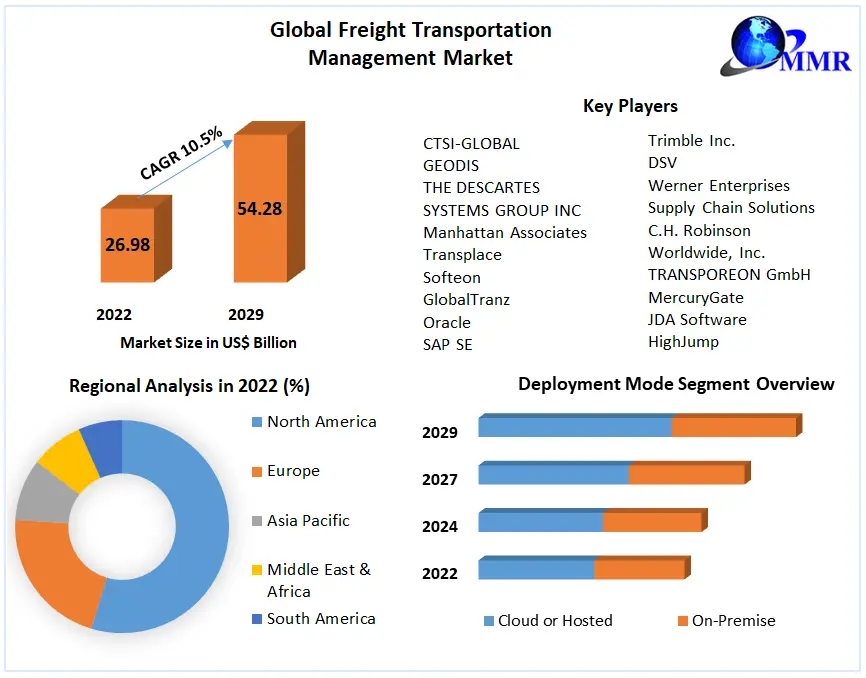 To know about the Research Methodology:- Request Free Sample Report
Freight Transportation Management Market Dynamics:
Bolstering demand for the freight transportation
The demand for freight transportation management systems is rapidly increasing as transportation networks become more global and complex. Freight movement efficiency is critical to any economy and to the quality of life. Introducing a low-cost freight transportation management system allows small and local players to compete effectively on a global scale. Various technologies have been used to improve freight network performance. Freight optimization, route planning, order management, fuel management, and vendor management are terms used by government agencies and industry leaders to describe the systems used in the freight transportation management market.
Because of the increased demand, freight transportation management system products are expected to improve with new forms of optimization, enhancements, mobility, and improved analytics. The increased number of trade blocks and international trade has increased the demand for freight transportation management solutions and services. On-time delivery has become a critical success factor for the logistics industry, and thus innovation in transportation management solutions has become a top priority for this industry. Transportation accounts for one-third of logistics costs, and the freight transportation management market has a significant impact on logistics system performance.
 Growing Demand for Rail Freight Transportation
Rail freight transport uses railways to transport cargo over land. It transports a wide range of cargo, including chemicals, raw construction materials, agriculture, automotive, energy (coal, oil, and wind turbines), and forest products. The railroads are capable of transporting heavy cargo quickly. Railways are one of the most popular modes of transportation, with extensive infrastructure all over the world. The increased use of railways for transportation raises the demand for the freight transportation management market to manage rail freight transportation.
High Use of Roadway Freight Transportation Management
Various industries have undergone a transformation as a result of rising digitalization, which also gave rise to e-commerce. Due to the rise of e-commerce, businesses now need to create highly efficient supply chains, cut down on transit times, and deliver goods to customers immediately. Due to this, there is now more domestic traffic on the roads, and many trucks are being used in this traffic. The development of road technology is accelerating the growth of the global market for freight transportation management market.
Freight Transportation Management Market Restraints
Congestion on Trade Routes
As traffic volumes and congestion on roadways and waterways increase, freight and transportation service operators are increasingly challenged to maintain consistent schedules. This has an impact on supply chains and truck-dependent businesses, both of which are becoming increasingly important for both public and private sector operators. Furthermore, several road accidents or oil spills at sea can pose an unexpected challenge to transportation systems, making them difficult to manage. The most recent COVID-19 also halted several logistics operations, causing severe damage to the entire supply chain. These parameters are a major impediment to the freight transportation management market.
Freight Transportation Management Market Opportunity
The current technological impact of the new advanced age of information technology and communication innovations in the freight business is transforming it to provide more modernized freight solutions. The global increase in the number of transportation vehicles, combined with a significant increase in technological adaptation, indicates the upcoming business opportunities for the freight transportation management market. Moreover, environmental concerns, freight operations security and safety, and the need for operational efficiencies are expected to be major drivers for the freight transportation management market. However, due to advancements in cloud computing, big data, and mobility services, the market has seen accelerated growth in recent years. This research study will also elaborate on the aspects, issues, and trends governing the cloud transition.
Accenture, CTSI-global, Descartes System Group, JDA Software, Manhattan Associates, and DSV SNCF Geodis are among the key vendors in the market. The freight transportation management market research report discusses the strategies and insights of the industry's key vendors, as well as an in-depth analysis of market-driving forces and challenges. The report also examines global trends and future growth prospects in various regions.
Freight Transportation Management Market Segment Analysis:
Based on Transportation Mode, the Railways segment dominates the freight transportation management market, Rail freight transportation has advantages over other modes in terms of safety, energy consumption, land use, and environmental performance. Because of this increased preference, the rail logistics environment has become complex and challenging to manage, and businesses need both knowledges of the rail cargo industry and information technology systems.
As a result, a wide range of rail freight transportation management solutions has emerged, specifically designed for small freight trains, intermodal lines, and private factory rails confronted with increasing operational complexity and a growing need to automate and streamline processes. Companies like DXC Technology and Goal Systems are adjusting their product portfolios to meet these demands. Moreover, increased demand for rail freight transport will be the primary growth enabler for the market, particularly in OECD countries. As a result, rail freight transport management solutions are expected to grow significantly over the forecast period.
In order to significantly increase freight traffic in India, then-Railway Minister Piyush Goyal established an exclusive portal in January 2022 to promote and enhance the railroads' freight sector. Indian Railways freight business development platform will act as a "one-stop, single-window" response to all of its freight customers' needs. In order to increase the amount of freight it transports, both from the traditional segments and by luring new customers into its fold, the Indian Railways has adopted a "freight on priority" policy and is promoting an aggressive customer-centric strategy.
As fleet telematics systems are increasingly used to track the location, condition, and status of physical assets, hackers have more entry points. Even though breaking into a private network reveals private customer data, the most serious concern for transportation companies is the possibility that cybercriminals will physically harm the vehicle or its valuable cargo. As a result, cybersecurity remains a significant challenge for systems that manage freight transportation.
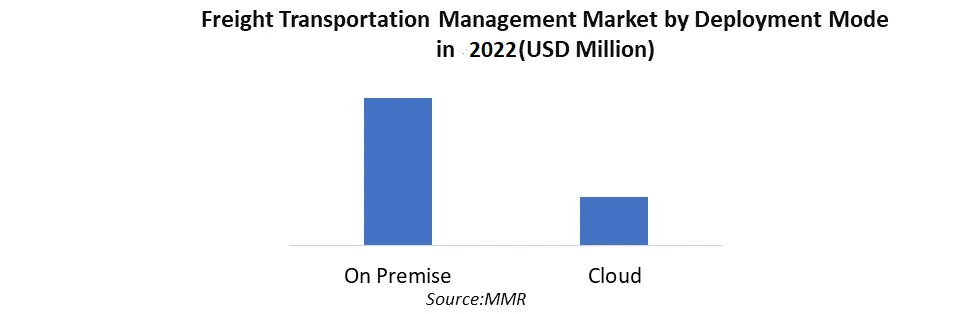
 Based on the Deployment Mode , In 2022, the on-premise segment held the largest freight transportation management market with over 67%. To ensure convenient access to the server, better control over customization, and adequate data security, many businesses continue to favor using on-premise solutions. This has aided in the segment's growth. However, as more people become aware of the advantages of cloud-based solutions, it is expected that incumbents in a variety of industries and industry verticals will aggressively transition to cloud-based transportation management systems.
The cloud segment is expected to grow at the fastest CAGR during the forecast period. As data volumes continue to grow exponentially, shippers, vendors, and logistics providers are increasingly turning to cloud-based transportation management systems for their superior and efficient configuration capabilities, as well as the unique planning and optimization benefits they can provide. Because of the lower licensing and management costs, cloud-based transportation management systems are cost-effective. These systems can also be accessed remotely in real-time from any geographic location.
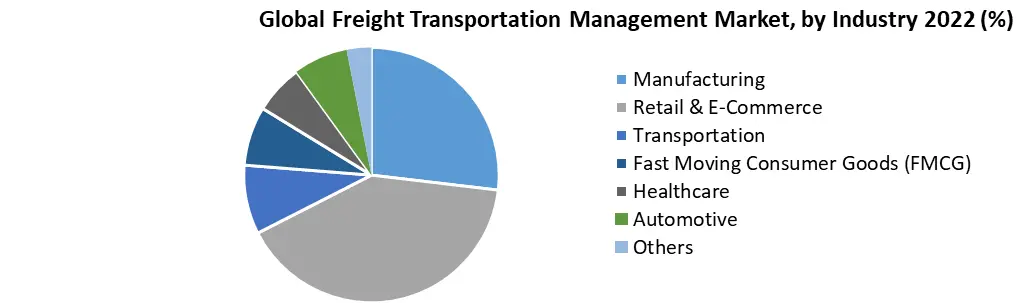
 Based on the Industry, In 2022, the manufacturing sector held the largest market share, at over 35%. The demand for raw materials has increased, which has led to an increase in transportation costs, as more manufacturing facilities are being built in developing nations like India and Mexico. For instance, the "Make in India" initiative of the Indian government places a strong emphasis on promoting domestic manufacturing and, by extension, the growth of the domestic manufacturing sector. Such initiatives are encouraging for the manufacturing segment's growth during the forecast period.
The retail and e-commerce segment is expected to grow at a significant CAGR during the forecast period, owing to the persistent growth of the retail and e-commerce industries in countries such as India and China. While China accounts for nearly 80% of online sales in Asia Pacific, India is on track to become the world's fastest-growing e-commerce market. Some of the largest e-commerce companies, including Alibaba Group Holding Limited, Walmart Inc., and Amazon.com, Inc., are aggressively deploying transportation management systems to strengthen their shipping operations.
 Freight Transportation Management Market Regional Insights:
North America dominated the freight transportation management market and is expected to do the same during the forecast period. A significant contribution from the United States is predicted for the area. The increase in the retail industry and many companies shifting to the online channel are credited with driving the share. The IT and cloud computing industries have seen rapid technological advancements, and the US freight transportation market is continuing to grow.
With globalization, the North American freight transport management market gained traction, particularly in the United States, owing to growing digitalization and increased adoption of the Internet of Things (IoT) by various industries. North America's road freight transportation market is one of the most developed in the world. According to the US Department of Transportation, nearly 72% of the tonnage of freight moved in the country (by trucks) is expected to increase by 2040, necessitating the construction of new roads, railroads, ports, and pipelines as well as upgrades to multi-modal connections that move freight effectively.
It is expected that the increased demand for trucking, particularly as a result of the country's booming e-commerce sector, will increase demand for freight transport management solutions in the area. The Canadian government announced a USD 5 million grant through the National Trade Corridors Fund (NTCF). The funds will be used for a project at the Port of Windsor to increase storage capacity and speed up loading processes, such as moving cargo from a truck to a rail car.
The total investment is USD 11.5 million, with the Essex Terminal Railway Company contributing USD 6.5 million. Through the National Trade Corridors Fund, the Canadian government is funding effective trade routes in order to maintain Canada's supply-chain competitiveness, assist the country in competing in important international markets, and improve trade with foreign partners.
Freight Transportation Management Market Scope: Inquire before buying
| Freight Transportation Management Market | |||
|---|---|---|---|
| Report Coverage | Details | ||
| Base Year: | 2022 | Forecast Period: | 2023-2029 |
| Historical Data: | 2017 to 2022 | Market Size in 2022: | US $ 26.98 Bn. |
| Forecast Period 2023 to 2029 CAGR: | 10.5% | Market Size in 2029: | US $ 54.28Bn. |
| Segments Covered: | by Transportation Mode | 1. Railways 2. Roadways 3. Marine 4. Airways |
|
| by Deployment Mode | 1. Cloud or Hosted 2. On-Premise |
||
| by Industry | 1. Manufacturing 2. Retail & E-Commerce 3. Transportation 4. Fast Moving Consumer Goods (FMCG) 5. Healthcare 6. Automotive 7. Others |
||
| by Organization Size | 1. Large Eterprizes 2. SMEs |
||
Freight Transportation Management Market, by Region
North America (United States, Canada and Mexico)
Europe (UK, France, Germany, Italy, Spain, Sweden, Austria and Rest of Europe)
Asia Pacific (China, South Korea, Japan, India, Australia, Indonesia, Malaysia, Vietnam, Taiwan, Bangladesh, Pakistan and Rest of APAC)
Middle East and Africa (South Africa, GCC, Egypt, Nigeria and Rest of ME&A)
South America (Brazil, Argentina Rest of South America)
Freight Transportation Management Market, Key Players are
1. CTSI-GLOBAL
2. GEODIS
3. THE DESCARTES SYSTEMS GROUP INC
4. Manhattan Associates
5. Transplace
6. Softeon
7. GlobalTranz
8. Oracle
9. SAP SE
10. Accenture
11. Blue Yonder Group, Inc.
12. E2open, LLC
13. Trimble Inc.
14. DSV
15. Werner Enterprises
16. Supply Chain Solutions
17. C.H. Robinson Worldwide, Inc.
18. TRANSPOREON GmbH
19. MercuryGate
20. JDA Software
21. HighJump
22. CEVA Logistics
23. DB Schenker
Frequently Asked Questions:
1] What is freight transportation management?
Ans. Freight Transport Management includes various strategies for increasing the efficiency of freight and commercial transport. Logistics is a technical term for efficient freight management, including shipping practices (e.g., vehicle type, shipment size, frequency, etc.), facility siting, and related activities.
2] What are the 4 main types of freight transportation?
Ans. In the world of freight shipping, there are four major modes of freight transportation available to shippers. The primary modes of transportation are by land (road), rail, ocean, and air.
3] What does freight management include?
Ans. The process of overseeing and managing a cost-effective operation and delivery of goods is known as freight management. Freight management combines logistics experience, human resources, and knowledge to ensure that carriers and shippers work together smoothly.
4] What is a freight management company?
Ans. Typically, a freight management company is hired to handle all aspects of a company's shipping and logistics needs, allowing them to focus on growth, sales, marketing, and customer service.