
Fingerprint Sensor Market Size by Type, Technology, Enterprise Type, End-User, Region – Revenue Pool Analysis, Margin Structure Assessment, Capital Flow Trends, Competitive Benchmarking & Forecast to 2030
Overview
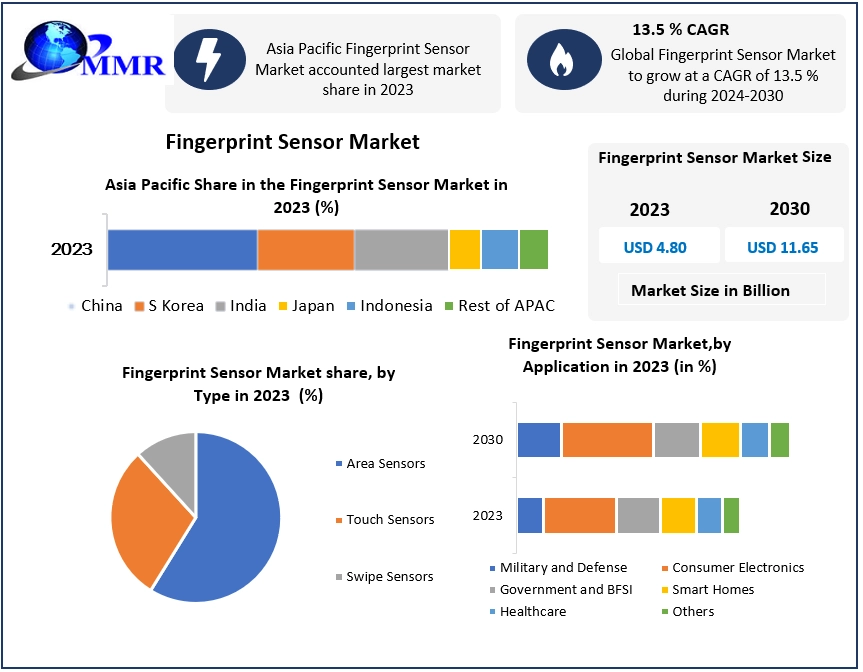
Global Fingerprint Sensor Market size was valued at USD 4.80 Bn in 2023 and is expected to reach USD 11.65 Bn by 2030, at a CAGR of 13.5 %.
Fingerprint Sensor Market Overview
Fingerprint sensors are integral to biometric security systems, providing accuracy, performance, and robustness through advanced fingerprint biometric technology. These sensors are widely used for security and authentication across devices including smartphones, tablets, and laptops, enabling fast and secure unlocking and transactions. The fingerprint sensor market has grown with companies including Apple, Samsung, Huawei, and Xiaomi integrating this technology into their devices. While fingerprint recognition remains a dominant form of biometric security, emerging technologies such as facial recognition and iris scanning are gaining popularity due to their ability to provide even higher security levels.
 To know about the Research Methodology :- Request Free Sample Report
Fingerprint Sensor Market Dynamics
Increasing Adoption of Biometric Authentication in Consumer Electronics to Drive Fingerprint Sensor Market Growth
The widespread use of fingerprint sensors in smartphones, laptops, and tablets has significantly driven Fingerprint Sensor Market growth. With increasing security concerns, manufacturers have incorporated fingerprint authentication for unlocking devices, making payments, and accessing secure apps. As consumers demand more convenience and security, integrating fingerprint sensors has become a standard feature, pushing its adoption further, especially in high-volume markets like mobile phones.
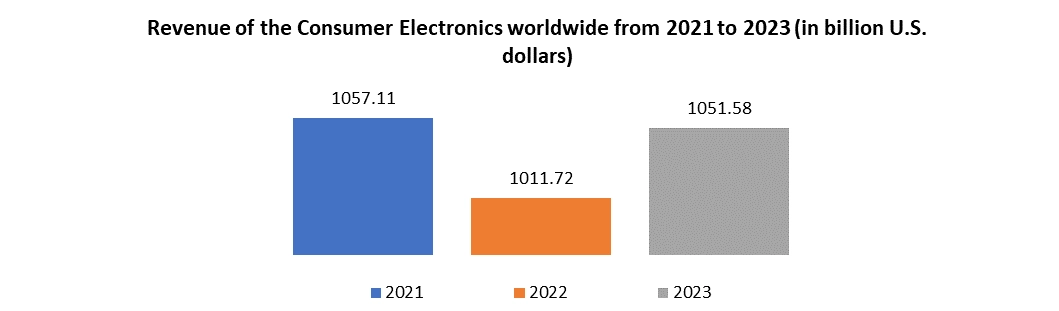
Fingerprints’ biometric solutions are now integrated into more than 40 different laptop models (PC and Chrome books) from leading manufacturers including Dell, Honor, Huawei, Lenovo and Xiaomi. Four of the world’s top 6 PC manufacturers now use Fingerprints technology. Fingerprints’ biometric PC solution was recently added to Microsoft’s approved vendor list (AVL) for Windows Hello Enhanced Sign-in Security. This means that the company now effectively uses fingerprint sensors and boosts the Fingerprint Sensor Market revenue growth.
In May 2022, OPPO unveiled the K9 5G Smartphone, which includes revolutionary technologies such as a Goodix in-display fingerprint sensor, highlighting the company's continuous relationship with the software and integrated chip design solution provider. Fingerprint Cards announced in February 2022 that their compact and curving capacitive touch sensor, FPC1542, would be integrated into Xiaomi's Redmi K40, K40 Pro, and K40 Pro+ Smartphone Applications, allowing for more streamlined mid-frame integration
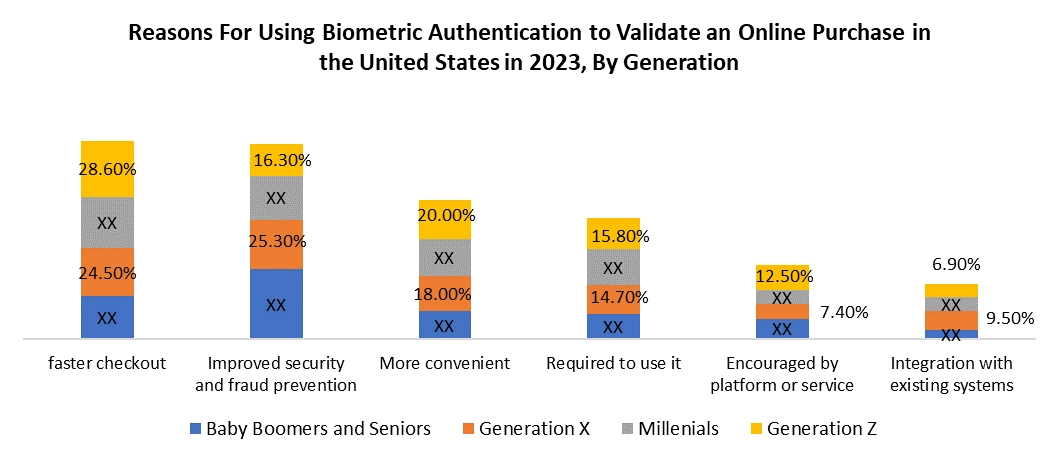
In the realm of home automation, fingerprint sensors are becoming integral to enhancing security and convenience. With the proliferation of smart home technologies, there is a growing trend toward integrating biometric authentication into home security systems. This integration allows homeowners to leverage fingerprint recognition for secure and convenient access to their properties, aligning with the broader movement towards smart, connected living environments and that is key factor of Fingerprint Sensor Market growth. The ability to unlock doors with a simple fingerprint scan not only adds a layer of security but also enhances user convenience, making it an appealing option for modern homeowners. Biometric authentication is rapidly gaining traction for its convenience and security. A substantial 81% of consumers view biometrics as a more secure identity verification method compared to traditional options. Additionally, 72% prefer facial biometrics over passwords for online security. In 2020, 671 million people used facial biometrics for payments and approximately 800 million used it in 2023, and this number is expected to double to 1.4 billion by 2025, highlighting the growing adoption of biometric technology. A growing concern is the security of biometric data, with 57% of experts believing that policy and regulation will struggle to keep pace with biometric development.
Table: Biometric Adoption in Different Sectors
| Industry | Adoption Rate | Key Use Cases | Biometric Application | Trends |
| Manufacturing | ~35%-45% | Time and attendance tracking, secure access, equipment safety | Fingerprint recognition, facial recognition, biometric badges | Growing interest in facial recognition, fingerprint scanning, and biometric badges |
| Retail | ~30%-40% | Customer identification, contactless payments, fraud prevention | Facial recognition, palm scanning | Increased use of facial recognition for self-checkout, customer analytics, palm scanning |
| Healthcare | ~50%-60% | Patient ID, secure medical record access, drug dispensing control | Fingerprint recognition, iris scanning | Fingerprint and iris scanning for identity verification and compliance with privacy laws |
| Financial Services | ~60%-75% | Secure authentication, fraud detection, KYC processes, ATMs | Fingerprint recognition, facial recognition, voice recognition | Widespread use of fingerprint, facial, and voice recognition for authentication |
| Government | ~70%-85% | National ID programs, border control, law enforcement, welfare | Facial recognition, fingerprint recognition, iris scanning | Large-scale use of facial, iris, and fingerprint biometrics for identity management |
Fingerprint Sensor Rising Demand in Government and Law Enforcement Applications
Fingerprint sensors are increasingly utilized in government identification systems, border control, and law enforcement for accurate and quick identification. Governments worldwide are rapidly adopting initiatives such as e-passports, national ID cards, and biometric access control systems. These applications provide enhanced security, streamline processes, and reduce fraud, thereby fueling the demand for fingerprint sensors and driving the Fingerprint Sensor Market growth.
Integration of Fingerprint Sensors in Emerging IoT Devices to Create Lucrative Opportunity for Market Growth
The expanding Internet of Things (IoT) ecosystem presents a unique opportunity for fingerprint sensor technology. As IoT devices proliferate across smart homes, healthcare, and automotive industries, there is a growing need for secure, user-friendly authentication methods. Fingerprint sensors play a critical role in ensuring these connected devices' security and ease of use. Companies focusing on developing compact, energy-efficient sensors for IoT applications gain a competitive advantage in this rapidly growing segment. For instance, in the hospitality sector, fingerprint sensors are transforming guest experiences and operational efficiency. Hotels are increasingly adopting biometric systems for secure room access and streamlined check-in processes. The use of fingerprint sensors enables guests to bypass traditional key cards, reducing check-in times enhancing security and influencing the market growth. This shift is particularly notable as hotels strive to meet the growing demand for digital and contactless solutions, driven by the desire for seamless and secure guest interactions.
Additionally, the rapid evolution of fingerprint sensor technology, including advancements in accuracy, speed, and integration capabilities, is driving market growth. As these sensors become more reliable and cost-effective, their application expands beyond high-security environments to everyday consumer devices, including smartphones and smart locks. The ongoing innovation in biometric recognition technology is further boosting consumer confidence and adoption rates, positioning fingerprint sensors as a key driver of growth in the broader security market. As security concerns escalate globally and technology continues to advance, the fingerprint sensor market is set to benefit from increasing demand for sophisticated and user-friendly security solutions. This trend underscores the growing importance of biometric technology in both residential and commercial applications, fueling the fingerprint sensor market growth and driving innovation in the field.
Table: Key Geographical Factors and Indicators for Fingerprint Sensor Manufacturing
| Key Factor | Description | Key Regions | Key Indication |
| Proximity to Semiconductor Hubs | Access to advanced semiconductor manufacturing facilities. | China, Taiwan, South Korea, Japan | Availability of fabrication plants, skilled labor, and efficient supply chain. |
| Access to Raw Materials | Easy and cost-effective access to silicon wafers and electronic components. | East Asia, US, Europe | Supply chain robustness, availability of specialized components, and raw materials. |
| Technological Expertise & R&D | High-level R&D in biometrics, AI, and microelectronics. | US, South Korea, Japan, Germany | R&D investment, patent filings, and presence of technology hubs. |
| Skilled Workforce Availability | Availability of engineers and technicians skilled in microelectronics and precision engineering. | China, South Korea, Japan, Germany | Engineering graduates, specialized training programs, and labor market expertise. |
| Government Support & Policies | Favorable policies, subsidies, and infrastructure for high-tech manufacturing. | China, India, South Korea | Tax breaks, government incentives, and infrastructure investment. |
| IP Protection | Strong intellectual property laws to protect biometric technology innovations. | US, South Korea, Japan, Germany | Strength of IP laws, enforcement, and patent activity in biometrics and sensors. |
| Market Demand & Consumer Integration | Proximity to major consumer electronics manufacturers and markets. | China, South Korea, Japan | Consumer electronics production, OEM presence, and market demand. |
| Infrastructure & Logistics | Strong transportation, communication, and logistics infrastructure to support manufacturing. | China, Taiwan, South Korea, US | Efficient supply chains, developed ports, and trade agreements. |
| Cost of Production | Lower labor and production costs while maintaining high-quality manufacturing standards. | China, India, Southeast Asia | Affordable labor, competitive operational costs, and manufacturing efficiency. |
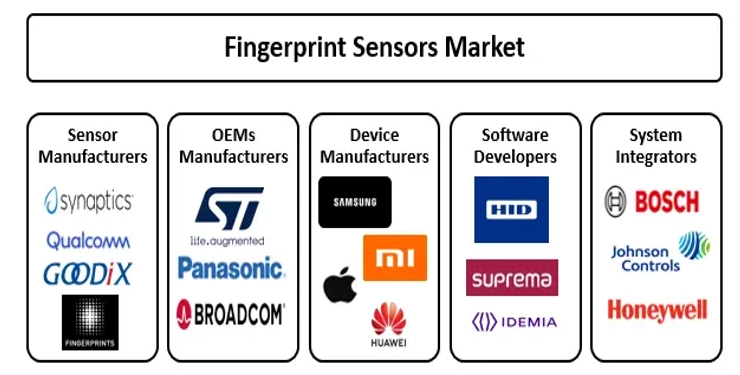
Fingerprint Sensor Industry Ecosystem
Fingerprint Sensor Market Segment Analysis
By Type:
Based on Type, the area and touch sensor segment held the largest market share in 2023. Consumer devices commonly use area and touch sensors because they provide a high level of convenience and precision, allowing them to capture a larger market share. Touch sensors are becoming smaller and more cost-effective, as well as more convenient to use. These sensors are preferred by OEMs over swipe sensors, especially in mobile devices that require smaller sensors to generate more compact products that end-users prefer. Synaptics (US), Fingerprints (Sweden), Apple (US), and IDEX are just a few of the firms that make area and touch sensors (Norway). Samsung (South Korea), Apple (USA), and Xiaomi (China) are among the Smartphone OEMs that use touch sensors.
By Application:
Based on the Application, the market is further segmented into Military and Defense, Consumer Electronics, BFSI, Government, Smart Home, Healthcare and Others. With the increased demand for fingerprint sensors in consumer devices such as smartphones, tablets, laptops, and notebooks, the consumer electronics industry is expected to account for the greatest share of the market for fingerprint sensors in the next years. During the forecast period, consumer IoT devices are projected to present opportunities for the market. Due to the increasing deployment of fingerprint sensors in smartcards used for payments, banking, and finance are predicted to be the fastest-growing applications throughout the forecast period. Several companies across the value chain, including fingerprint sensor makers, smartcard manufacturers, and card issuers, are working to boost the usage of biometric payment cards around the world.
Fingerprint Sensor Market Regional Insight
The fingerprint sensor market in the Asia Pacific is projected to grow at the fastest rate and CAGR during the forecast period. In 2023, the region held the largest share of the global fingerprint sensor market by value and is expected to experience the highest growth moving forward. The region’s vast population, coupled with increasing demand for secure authentication solutions, is driving the fingerprint sensor industry's growth. The widespread adoption of smartphones and the rapidly growing digital payments industry in countries like India, China, and Japan are key contributors to this surge. In December 2023, India’s Ministry of Finance reported that digital payment transactions rose dramatically from USD 252.5 million in 2017-18 to USD 1,643.4 million in 2022-23, reflecting an impressive CAGR of 45%. This growth in digital payments is set to propel the fingerprint sensor market to new heights in the region.
Competitive Landscape Analysis
In the competitive Fingerprint Sensors industry, major players like Apple Inc., Thales Group, and NEC Corporation are heavily investing in R&D to drive market growth and expand product offerings. These companies are focusing on local manufacturing to reduce costs and enhance market presence. Thales Group, known for its solutions in aerospace, defense, and digital security, provides a range of biometric and identity solutions. NEC Corporation integrates IT and electronics, offering services including biometric authentication, big data analytics, and cloud solutions across various industries. As the market becomes more competitive, these players are leveraging technological advancements and strategic collaborations to boost demand and innovation.
Recent Developments in the Fingerprint Sensors Industry
| Date | Development | Details |
| September 2023 | In-Car Payment Partnership | Mastercard and Mercedes launched a collaboration enabling digital payments at over 3,600 service stations in Germany using car-based fingerprint sensors. |
| May 2023 | Breakthrough Biometric Technology Showcase | Samsung Display introduced Sensor OLED Display at SID Display Week 2023, featuring a light-sensing organic photodiode embedded within the panel, eliminating separate sensor modules. |
| April 2023 | Contactless Fingerprint Capture Software | UIDAI partnered with IIT Bombay to develop touchless fingerprint capture technology for phones, integrated with liveness detection and capable of capturing multiple fingers simultaneously. |
| February 2023 | Contactless Microscopic Resolution Fingerprint Scanner | IDloop invented a new contactless fingerprint scanner with microscopic resolution at its Germany headquarters, capable of rapid comparison against large databases. |
Conclusion,
The fingerprint sensor market is poised for robust growth, driven by rising demand for biometric security across consumer electronics, government applications, and smart home systems. Major players like Apple, Thales, and NEC are investing heavily in R&D and local manufacturing to enhance product offerings and reduce costs. Technological advancements, such as improved sensor accuracy and integration with IoT devices, are expanding market applications. The Asia Pacific region, with its large population and growing digital payments sector, is leading market expansion. As the industry evolves, fingerprint sensors will continue to play a crucial role in security and convenience.
Fingerprint Sensor Market Scope: Inquire before buying
| Global Fingerprint Sensor Market | |||
|---|---|---|---|
| Report Coverage | Details | ||
| Base Year: | 2023 | Forecast Period: | 2024-2030 |
| Historical Data: | 2018 to 2023 | Market Size in 2023: | USD 4.80 Bn. |
| Forecast Period 2024 to 2030 CAGR: | 13.5% | Market Size in 2030: | USD11.65 Bn. |
| Segments Covered: | by Type | Area Sensors Touch Sensors Swipe Sensors |
|
| by Technology | Optical Capacitive Thermal Ultrasonic Others |
||
| by Enterprise Type | Large Enterprise Medium Enterprise Small Enterprise |
||
| by End-User | Military and Defense Consumer Electronics Government and BFSI Smart Homes Healthcare Others |
||
Fingerprint Sensor Market, by Region
North America (United States, Canada and Mexico)
Europe (UK, France, Germany, Italy, Spain, Sweden, Austria and Rest of Europe)
Asia Pacific (China, South Korea, Japan, India, Australia, Indonesia, Malaysia, Vietnam, Taiwan, Bangladesh, Pakistan and Rest of APAC)
Middle East and Africa (South Africa, GCC, Egypt, Nigeria and Rest of ME&A)
South America (Brazil, Argentina Rest of South America)
Fingerprint Sensor Key Players
Asia-Pacific Fingerprint Sensor Major Players
1. Goodix Ltd (Shenzhen, China)
2. Egis Technology Inc. (Taipei, Taiwan)
3. Silead Inc. (Shenzhen, China)
4. Shenzhen CAMA Biometrics Co., Ltd (Shenzhen, China)
5. NEC Corporation (Tokyo, Japan)
North America Fingerprint Sensor Manufacturers
6. Qualcomm Technologies Inc. (San Diego, California, USA)
7. HID Global Corporation (Austin, Texas, USA)
8. 3M Cogent Inc. (California, USA)
9. Apple Inc. (Cupertino, California, USA)
10. Synaptics Inc. (San Jose, California, USA)
11. Crossmatch (Jacksonville, Florida, USA)
Europe Fingerprint Sensor Companies
12. Fingerprint Cards AB (Gothenburg, Sweden)
13. IDEX ASA (Oslo, Norway)
14. Infineon Technologies AG (Munich, Germany)
15. NXP Semiconductors N.V. (Eindhoven, Netherlands)
16. Thales Group (Paris, France)
17. Safran Identity & Security (Morpho) (Paris, France)
18. Dermalog Identification Systems GmbH (Hamburg, Germany)
Middle East & Africa (MEA) Fingerprint Sensor Key Vendors
19. IDEMIA (Paris, France) - Operates extensively in MEA.
20. Safran Identity & Security (Morpho) (Paris, France) - Operates extensively in MEA.
21. Suprema Inc. (Seoul, South Korea) - Operates extensively in MEA.
Frequently Asked Questions:
1] What is the growth rate of the Global Fingerprint Sensor Market?
Ans. The Global Fingerprint Sensor Market is growing at a significant rate of 13.5 % during the forecast period.
2] Which region is expected to dominate the Global Fingerprint Sensor Market?
Ans. Asia Pacific is expected to dominate the Fingerprint Sensor Market during the forecast period.
3] What is the expected Global Fingerprint Sensor Market size by 2030?
Ans. The Fingerprint Sensor Market size is expected to reach USD 11.65 Bn by 2030.
4] Which are the top players in the Global Fingerprint Sensor Market?
Ans. The major top players in the Global Fingerprint Sensor Market are Goodix Ltd (Shenzhen, China), Egis Technology Inc. and others.
5] What are the factors driving the Global Fingerprint Sensor Market growth?
Ans. The increasing adoption of consumer electronics is expected to drive the Fingerprint Sensor Market growth.
6] Which country held the largest Global Fingerprint Sensor Market share in 2023?
Ans. The China held the largest Fingerprint Sensor Market share in 2023.