
Europe Veterinary Drugs Market by Product, by Animal Type, by Route of Administration, by Distribution Channel and Regional Insights 2034
Overview
The Europe Veterinary Drugs Market was valued at USD 8.85 Billion in 2025 and is projected to reach USD 16.40 Billion by 2034, growing at a CAGR of 7.1% during the forecast period 2026–2034.
Europe Veterinary Drugs Market Overview
The Europe Veterinary Drugs Market encompasses the development, manufacturing, commercialization, and distribution of veterinary pharmaceuticals, anti-infective medicines, anti-inflammatory drugs, parasiticides, and other prescription animal healthcare products. These treatments support companion animal healthcare, livestock disease prevention, pain management, parasite control, and animal welfare. Increasing pet ownership, growing expenditure on veterinary treatment, demand for specialized animal medicines, and preventive livestock healthcare support the expansion of the European veterinary pharmaceutical industry. The market covers major economies including Germany, France, the United Kingdom, Italy, Spain, the Netherlands, Poland, and other European countries.
The Europe Veterinary Drugs Market experiences demand for companion animal therapeutics, livestock veterinary pharmaceuticals, advanced veterinary biologics, and long-acting injectable treatments. Veterinary hospitals, independent animal clinics, veterinary pharmacies, livestock producers, and specialized pharmaceutical distributors form important channels for animal medicines. Germany, France, and the United Kingdom represent important markets for companion animal pharmaceuticals and veterinary healthcare services, while Spain, Poland, and the Netherlands contribute to livestock medicine demand. Companies such as Boehringer Ingelheim Animal Health, Zoetis, MSD Animal Health, Elanco, Virbac, Ceva Santé Animale, and Vetoquinol compete through pharmaceutical research, therapeutic innovation, product availability, and distribution capabilities.
Maximize Market Research (MMR) examines European veterinary drug demand through market segmentation, pharmaceutical product development, regulatory frameworks, regional treatment requirements, competitive positioning, and investment opportunities. Advancements in monoclonal antibody therapies, veterinary dermatology medicines, osteoarthritis treatments, antiparasitic products, and long-acting pharmaceutical formulations create opportunities for differentiated treatment solutions. The expansion of veterinary diagnostic services, digital prescriptions, and specialized animal healthcare infrastructure also influences the development of European veterinary medicine distribution networks.
Europe Veterinary Drugs Market Growth Analysis

To know about the Research Methodology :- Request Free Sample Report
Europe Veterinary Drugs Market Key Findings
| Key Highlight | Market Insights |
| Strong Market Growth | Market revenue is projected to reach USD 16.40 Billion by 2034, registering a 7.1% CAGR. |
| Growing Companion Animal Healthcare | Rising demand for pet medicines supports veterinary dermatology, pain management, and parasite treatments. |
| Livestock Disease Prevention | Dairy, poultry, and swine industries support demand for veterinary anti-infectives and preventive medicines. |
| Advanced Veterinary Therapeutics | Monoclonal antibodies and long-acting injectable formulations create opportunities for pharmaceutical innovation. |
| Regulatory-Driven Market Development | Animal drug safety regulations and antimicrobial stewardship influence veterinary pharmaceutical strategies. |
Europe Veterinary Drugs Market Dynamics
Rising Companion Animal Healthcare Demand and Livestock Disease Prevention Accelerate Market Growth
The Europe Veterinary Drugs Market experiences steady growth as increasing pet ownership, rising animal healthcare expenditure, and expanding veterinary healthcare infrastructure strengthen demand for veterinary pharmaceuticals, prescription animal medicines, anti-inflammatory drugs, and parasiticides. Germany, France, the United Kingdom, Italy, and Spain represent important markets for companion animal therapeutics, veterinary dermatology medicines, and preventive animal healthcare treatments. Growing awareness of parasite-borne diseases encourages the use of advanced antiparasitic pharmaceuticals, including combination therapies targeting multiple parasites. Products such as Zoetis' Cytopoint, containing the monoclonal antibody lokivetmab, demonstrate the growing importance of specialized veterinary dermatology treatments for allergic and atopic dermatitis in dogs. Meanwhile, Europe's dairy, poultry, and swine industries support demand for livestock veterinary drugs, animal infection treatments, and responsible disease management solutions. Increasing veterinary consultations, specialized animal hospitals, and preventive healthcare practices strengthen pharmaceutical consumption across companion animal and livestock segments.
High Pharmaceutical Development Costs and Strict Veterinary Drug Regulations Restrict Market Accessibility
The Europe Veterinary Drugs Market faces restraints from substantial veterinary pharmaceutical research and development expenditure, complex drug registration procedures, and high prices for specialty animal healthcare treatments. Veterinary pharmaceutical manufacturers require investment in drug discovery, clinical safety evaluation, formulation development, quality assurance, and manufacturing compliance before commercializing new animal medicines. Under Regulation (EU) 2019/6, veterinary medicinal products are subject to harmonized rules covering authorization, manufacturing, importation, distribution, and responsible medicine use across European Union markets. Differences between EU and non-EU veterinary pharmaceutical regulations further increase compliance complexity for manufacturers operating across Europe. Advanced veterinary biologics and species-specific pharmaceutical products also require specialized manufacturing capabilities and clinical expertise. Limited affordability of premium companion animal therapeutics, veterinary monoclonal antibody treatments, and chronic disease medicines restricts adoption among cost-sensitive customers. These factors create challenges for pharmaceutical pricing strategies, regulatory approvals, market entry, and veterinary medicine accessibility across European countries.
Advanced Veterinary Biologics and Long-Acting Injectable Medicines Create High-Value Growth Opportunities
The Europe Veterinary Drugs Market offers significant opportunities through the development of veterinary biologics, monoclonal antibody therapies, long-acting injectable medicines, and targeted animal pharmaceuticals. Increasing demand for convenient treatment solutions encourages pharmaceutical manufacturers to introduce advanced therapies for canine osteoarthritis, allergic skin disorders, chronic pain, and other companion animal health conditions. Zoetis' Librela, containing bedinvetmab, illustrates the commercial relevance of veterinary monoclonal antibody innovation for managing osteoarthritis-associated pain in dogs. The product is available in 5 mg, 10 mg, 15 mg, 20 mg, and 30 mg injectable strengths, supporting weight-based treatment under veterinary supervision. Its once-monthly administration schedule demonstrates the potential of long-acting veterinary drug delivery systems to improve treatment convenience. Expanding specialty veterinary hospitals, advanced animal diagnostic services, and pharmaceutical research capabilities across Germany, France, the United Kingdom, and other European economies create opportunities for veterinary dermatology drugs, osteoarthritis therapeutics, feline-specific medications, and advanced animal pain management solutions. Digital veterinary pharmacies and regulated prescription services also support pharmaceutical distribution innovation.
Antimicrobial Resistance and Veterinary Pharmaceutical Supply Chain Complexity Intensify Industry Challenges
The Europe Veterinary Drugs Market faces challenges from increasing antimicrobial resistance concerns, veterinary pharmaceutical supply chain disruptions, complex animal medication requirements, and regulatory compliance obligations. Excessive or inappropriate veterinary antibiotic use contributes to antimicrobial resistance, creating concerns about effective treatment of infectious diseases in livestock, poultry, aquaculture, and companion animals. European veterinary pharmaceutical regulations restrict routine antimicrobial administration and prohibit the use of antimicrobial medicines for growth promotion. Preventive antibiotic administration is limited to exceptional circumstances involving individual animals, while other antimicrobial preventive applications are subject to defined restrictions. Veterinary pharmaceutical manufacturers also face operational challenges involving active pharmaceutical ingredient procurement, sterile drug manufacturing, product quality assurance, and temperature-sensitive medicine distribution. Weight-specific veterinary drug formulations require accurate product labeling, prescription verification, and appropriate administration. For example, Librela's five injectable strengths ranging from 5 mg to 30 mg demonstrate the importance of dosage differentiation in specialty animal therapeutics.
Increasing demand for medicine traceability, pharmaceutical supply reliability, and responsible antimicrobial stewardship encourages manufacturers and distributors to strengthen quality management systems across European veterinary healthcare markets.
Europe Veterinary Drugs Market Dynamics Key Factors
| Market Drivers | Market Restraints | Market Opportunities | Market Challenges |
| Rising Companion Animal Pharmaceutical Demand | High Veterinary Pharmaceutical R&D Costs | Advanced Veterinary Monoclonal Antibody Therapies | Veterinary Antimicrobial Resistance |
| Increasing Livestock Disease Prevention Needs | Complex Animal Drug Approval Procedures | Long-Acting Veterinary Injectable Medicines | Veterinary Pharmaceutical Supply Chain Disruptions |
| Growing Veterinary Prescription Drug Consumption | Limited Affordability of Specialty Veterinary Medicines | Species-Specific Animal Pharmaceutical Development | Animal Medication Dosage Compliance |
| Expanding Veterinary Hospitals and Clinics | Strict Veterinary Pharmaceutical Regulatory Requirements | Digital Veterinary Pharmacy Market Expansion | Temperature-Controlled Veterinary Medicine Distribution |
Europe Veterinary Drugs Market Trends
| Key Market Trend | Market Development |
| Preventive Animal Healthcare | Increasing demand for veterinary parasiticides and preventive treatments supports companion animal and livestock disease management. |
| Advanced Veterinary Therapeutics | Veterinary biologics and targeted medicines create opportunities in chronic animal disease treatment. |
| Long-Acting Drug Delivery | Extended-release and injectable veterinary medicines improve treatment convenience. |
| Digital Veterinary Pharmacies | Digital prescription management and regulated online medicine services influence distribution. |
| Species-Specific Medicines | Specialized canine, feline, and livestock treatments support pharmaceutical product differentiation. |
| Antimicrobial Stewardship | Regulatory monitoring and responsible antibiotic use influence veterinary drug development and prescribing practices. |
Europe Veterinary Drugs Market Segment Analysis
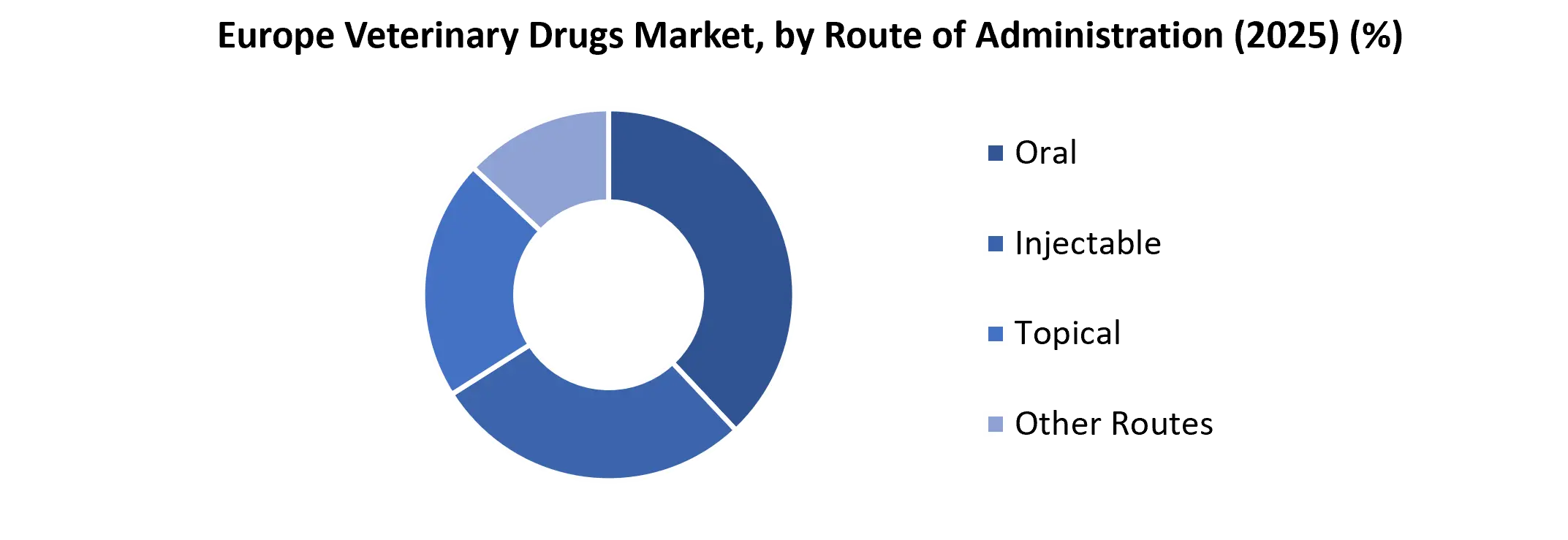
By Route of Administration, The Europe Veterinary Drugs Market, by Route of Administration, includes Oral, Injectable, Topical, and Other Routes. Oral medicines support routine administration of veterinary tablets, capsules, anti-inflammatory drugs, and antiparasitic treatments. Injectable veterinary pharmaceuticals are important for selected anti-infectives, long-acting therapeutics, and advanced biologic treatments. Topical medicines support veterinary dermatology, parasite control, and localized skin treatment. Other routes include ophthalmic, otic, and intranasal formulations. Increasing emphasis on treatment convenience, dosing accuracy, and medication adherence encourages pharmaceutical manufacturers to develop differentiated veterinary drug delivery systems.
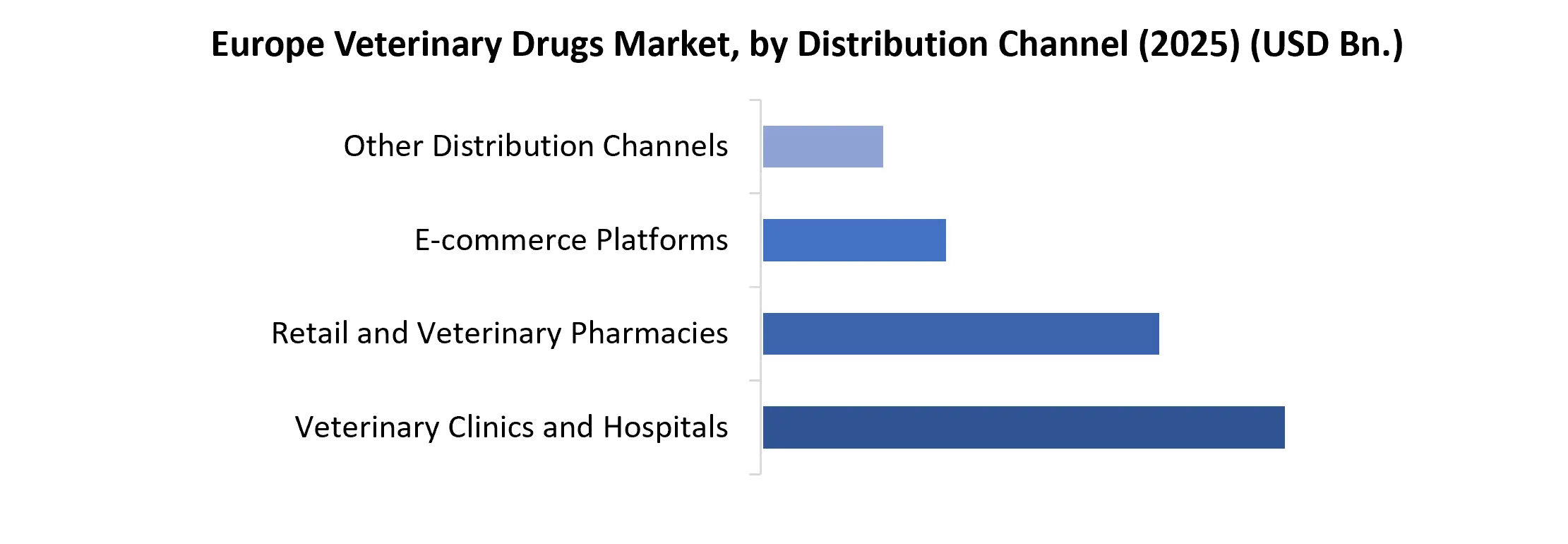
 By Distribution Channel, The Europe Veterinary Drugs Market, by Distribution Channel, includes Veterinary Clinics and Hospitals, Retail and Veterinary Pharmacies, E-commerce Platforms, and Other Distribution Channels. Veterinary clinics and hospitals form an important channel for prescription animal medicines, injectable therapies, and specialized treatments. Veterinary pharmacies and authorized retailers support the availability of animal healthcare products, while regulated e-commerce platforms provide additional opportunities for medicine distribution where permitted. Other channels include pharmaceutical wholesalers, livestock medicine suppliers, and institutional purchasing networks. Digital prescription systems and pharmaceutical supply chain modernization influence veterinary drug accessibility across European economies.
 Europe Veterinary Drugs Market Regional Insights
Germany holds a significant position in the Europe Veterinary Drugs Market, supported by established veterinary healthcare infrastructure, growing companion animal ownership, and increasing demand for advanced animal medicines. The country experiences strong demand for veterinary pharmaceuticals, anti-inflammatory drugs, parasiticides, and specialized companion animal therapeutics. Expanding veterinary hospitals and specialty clinics support the adoption of prescription animal medicines, monoclonal antibody therapies, and long-acting injectable treatments. Germany's pharmaceutical research capabilities encourage innovation in veterinary drug formulations, animal disease management, and preventive healthcare solutions. Increasing attention to animal welfare and responsible antimicrobial use also shapes veterinary pharmaceutical development and distribution.
France represents an important market for veterinary pharmaceuticals, livestock medicines, and companion animal healthcare products, supported by its established animal health industry and agricultural sector. Strong dairy, poultry, and livestock farming activities generate demand for veterinary anti-infectives, antiparasitic medicines, and preventive animal disease treatments. Leading veterinary pharmaceutical companies, including Ceva Santé Animale, Virbac, and Vetoquinol, contribute to product innovation and specialized animal healthcare solutions. Increasing pet healthcare expenditure supports demand for veterinary dermatology medicines, anti-inflammatory treatments, and prescription animal pharmaceuticals. France also emphasizes antimicrobial stewardship, veterinary pharmaceutical quality, and advanced livestock disease management practices.
The United Kingdom maintains a strong presence in the Europe Veterinary Drugs Market, driven by increasing companion animal healthcare expenditure, established veterinary hospitals, and growing demand for specialized pet medicines. Veterinary clinics experience demand for canine osteoarthritis treatments, veterinary dermatology drugs, parasiticides, and advanced pain management pharmaceuticals. Pet insurance coverage and specialist veterinary services support access to prescription animal medicines and innovative therapeutic solutions. Growing adoption of veterinary monoclonal antibodies, long-acting injectable drugs, and targeted companion animal treatments creates opportunities for pharmaceutical manufacturers. The country's veterinary pharmaceutical sector also focuses on animal medicine safety, prescription compliance, and efficient distribution networks.
Italy experiences growing demand for veterinary prescription medicines, companion animal pharmaceuticals, and livestock disease management treatments, supported by increasing pet healthcare awareness and established agricultural activities. Expanding veterinary clinics and animal healthcare services strengthen demand for anti-inflammatory medicines, veterinary antibiotics, parasiticides, and specialized pet therapeutics. Livestock producers require preventive animal medicines and pharmaceutical treatments to support herd health and disease control. Rising demand for convenient veterinary drug formulations encourages innovation in oral, injectable, and topical animal medicines. Italy's veterinary pharmaceutical industry also benefits from improved treatment accessibility, pharmaceutical distribution networks, and increasing focus on responsible animal healthcare practices.
Spain represents an important market for livestock veterinary drugs, animal anti-infectives, parasiticides, and preventive veterinary medicines, supported by extensive swine and poultry production. Livestock farmers increasingly focus on animal disease prevention, effective parasite management, and responsible veterinary pharmaceutical use to maintain animal health and productivity. The country also experiences demand for companion animal therapeutics, veterinary dermatology medicines, and prescription pet healthcare products. Veterinary pharmaceutical manufacturers develop advanced animal drug formulations and targeted treatments to address diverse healthcare requirements. Growing emphasis on antimicrobial resistance management, veterinary medicine regulations, and livestock healthcare monitoring strengthens opportunities for pharmaceutical innovation and compliant distribution.
Europe Veterinary Drugs Market Competitive Landscape
The Europe Veterinary Drugs Market competitive landscape reflects competition among multinational animal health pharmaceutical manufacturers, European veterinary drug developers, and specialized animal medicine providers. Major participants include Zoetis, Boehringer Ingelheim Animal Health, Merck Animal Health (MSD Animal Health), Elanco Animal Health, Virbac, Ceva Santé Animale, Vetoquinol, and Dechra Pharmaceuticals. These companies compete through veterinary drug development, companion animal therapeutics, livestock pharmaceutical portfolios, regulatory approvals, product differentiation, and commercial distribution networks.
European animal health companies such as Ceva Santé Animale, Virbac, and Vetoquinol contribute to competition alongside international pharmaceutical manufacturers. Market development increasingly depends on therapeutic innovation, including dermatology treatments, anti-inflammatory medicines, parasiticides, and specialty animal pharmaceuticals. Manufacturers also need to address regulatory requirements, pricing differences, antimicrobial stewardship, and national veterinary purchasing practices.
Maximize Market Research's competitive assessment can evaluate veterinary pharmaceutical portfolios, company financial performance, R&D investment, product approvals, commercial partnerships, geographic presence, and emerging strategic opportunities across European veterinary medicine markets through 2034.
Europe Veterinary Drugs Market Recent Developments (2026)
| Published Date | Company | Development Type | Brief Information |
| September 2026 | Zoetis Inc. | Product Launch | Zoetis launches Lenivia (izenivetmab) in Great Britain, introducing a long-acting monoclonal antibody injection that provides up to three months of osteoarthritis pain relief in dogs. |
| September 2026 | Boehringer Ingelheim Animal Health | Product Launch | Boehringer Ingelheim launches SCOVELLA in Great Britain, introducing an approved treatment for insulin dysregulation in horses and expanding its equine veterinary therapeutics portfolio. |
| August 2026 | Virbac | Product Launch | Virbac introduces Prevexto flea and tick collars in the United Kingdom, offering up to eight months of parasite protection for cats and dogs. |
| June 2026 | Ceva Santé Animale | Acquisition | Ceva announces the acquisition of Aquilón, a Spanish animal health biotechnology company, strengthening its swine intestinal health portfolio and livestock disease prevention capabilities. |
| January 2026 | Virbac | Acquisition | Virbac completes the acquisition of a feline hyperthyroidism treatment from Norbrook, expanding its specialty veterinary pharmaceutical portfolio. The transaction is valued at approximately GBP 100 million. |
Europe Veterinary Drugs Market Scope: Inquire before buying
| Europe Veterinary Drugs Market | |||
|---|---|---|---|
| Report Coverage | Details | ||
| Base Year: | 2025 | Forecast Period: | 2026-2034 |
| Historical Data: | 2020 to 2025 | Market Size in 2025: | 8.85 USD Billion |
| Forecast Period 2026-2034 CAGR: | 7.1 % | Market Size in 2034: | 16.40 USD Billion |
| Segments Covered: | by Product | Anti-infectives Anti-inflammatory Parasiticides Others |
|
| by Animal Type | Companion Animals Livestock Animals Other Animals |
||
| by Route of Administration | Oral Injectable Topical Other Routes |
||
| by Distribution Channel | Veterinary Clinics and Hospitals Retail and Veterinary Pharmacies E-commerce Platforms Other Distribution Channels |
||
Europe Veterinary Drugs Market, by Country
United Kingdom (London, Manchester, Birmingham, Cambridge, Oxford, Bristol, Edinburgh, Leeds, and Nottingham)
Germany (Berlin, Munich, Frankfurt, Hamburg, Cologne, Hanover, Stuttgart, Leipzig, and Ingelheim am Rhein)
France (Paris, Lyon, Toulouse, Bordeaux, Marseille, Nantes, Strasbourg, Lille, and Carros)
Italy (Rome, Milan, Bologna, Turin, Florence, Naples, Parma, Verona, and Padua)
Spain (Madrid, Barcelona, Valencia, Zaragoza, Seville, Bilbao, Murcia, Valladolid, and Girona)
Sweden (Stockholm, Gothenburg, Malmö, Uppsala, Lund, Linköping, Örebro, and Umeå)
Austria (Vienna, Graz, Linz, Salzburg, Innsbruck, Klagenfurt, St. Pölten, and Wiener Neustadt)
Switzerland (Zurich, Basel, Geneva, Bern, Lausanne, Lucerne, St. Gallen, and Winterthur)
Netherlands (Amsterdam, Rotterdam, Utrecht, The Hague, Eindhoven, Leiden, Wageningen, Nijmegen, and Groningen)
Turkey (Istanbul, Ankara, Izmir, Bursa, Antalya, Konya, Adana, Gaziantep, and Kayseri)
Russia (Moscow, Saint Petersburg, Kazan, Novosibirsk, Yekaterinburg, Krasnodar, Rostov-on-Don, Nizhny Novgorod, and Voronezh)
Rest of Europe (Belgium, Denmark, Norway, Finland, Poland, Portugal, Ireland, Czech Republic, Hungary, Romania, Greece, Slovakia, Croatia, Serbia, Bulgaria, Ukraine, and Other European Countries)
Europe Veterinary Drugs Market Key Players
1. Zoetis Inc.
2. Boehringer Ingelheim Animal Health
3. Merck Animal Health (MSD Animal Health)
4. Elanco Animal Health Incorporated
5. Ceva Santé Animale
6. Virbac
7. Vetoquinol S.A.
8. Dechra Pharmaceuticals
9. Norbrook Laboratories
10. Bimeda Animal Health
11. Huvepharma
12. Phibro Animal Health Corporation
13. HIPRA
14. ECO Animal Health Group
15. KRKA d.d.
16. Orion Corporation
17. Chanelle Pharma
18. Animalcare Group plc
19. Fatro S.p.A.
20. Laboratorios Calier
21. Dopharma
22. Bioveta, a.s.
23. Kela N.V.
24. Prodivet Pharmaceuticals
25. LIVISTO
26. Bela-Pharm GmbH & Co. KG
27. CP-Pharma Handelsgesellschaft mbH
28. Chevita GmbH
29. Veyx-Pharma GmbH
30. SELECTAVET Dr. Otto Fischer GmbH
31. Serumwerk Bernburg AG
32. Alfavet Tierarzneimittel GmbH
33. Almapharm GmbH & Co. KG
34. Audevard
35. Dômes Pharma
36. Vet-Agro Sp. z o.o.
37. Laboratorios Syva S.A.U.
38. Divasa-Farmavic S.A.
39. Industrial Veterinaria S.A. (Invesa)
40. Laboratorios Karizoo S.A.
41. SP Veterinaria S.A.
42. Kernfarm B.V.
43. Univet Limited
44. Nimrod Veterinary Products Ltd.
45. Vetcare Oy
46. Emdoka
47. Alfasan Nederland B.V.
48. Laboratorios Ovejero S.A.U.
49. Laboratorios Maymó S.A.
50. Candioli Pharma
FAQ
1. What is the Europe Veterinary Drugs Market size in 2025?
The Europe Veterinary Drugs Market size is USD 8.85 Billion in 2025, based on the supplied MMR market estimate.
2. What is the expected Europe Veterinary Drugs Market size by 2034?
The Europe Veterinary Drugs Market is projected to reach USD 16.40 Billion by 2034, expanding at a 7.1% CAGR during 2026–2034.
3. What factors drive the Europe Veterinary Drugs Market growth?
Increasing companion animal healthcare demand, livestock disease prevention requirements, veterinary prescription medicine consumption, and advancements in specialized animal therapeutics drive market growth.
4. Which countries are important in the Europe Veterinary Drugs Market?
Germany, France, the United Kingdom, Italy, Spain, the Netherlands, and Poland are important countries for evaluating European veterinary pharmaceutical demand and industry opportunities.
5. What are the major segments of the Europe Veterinary Drugs Market?
The Europe Veterinary Drugs Market includes anti-infectives, anti-inflammatory medicines, parasiticides, and other pharmaceuticals. It is also segmented by animal type, route of administration, and distribution channel.
6. Who are the major players in the Europe Veterinary Drugs Market?
Prominent companies include Boehringer Ingelheim Animal Health, Zoetis, MSD Animal Health, Elanco, Ceva Santé Animale, Virbac, Vetoquinol, and Dechra Pharmaceuticals.
7. What are the emerging opportunities in the European veterinary pharmaceutical industry?
Veterinary monoclonal antibody therapies, long-acting injectable medicines, specialized companion animal therapeutics, pharmaceutical manufacturing innovation, and digital veterinary distribution services offer potential growth opportunities.