Elevators Market Industry Structure Evaluation, Demand Drivers Analysis, Regional Growth Analysis and Identification, Competitive Positioning Review & Global Market Size Forecast to 2032

6.6%
CAGR (2026-2032)
110.01 USD Bn.
Market Size
303
Report Pages
127
Market Tables

Overview

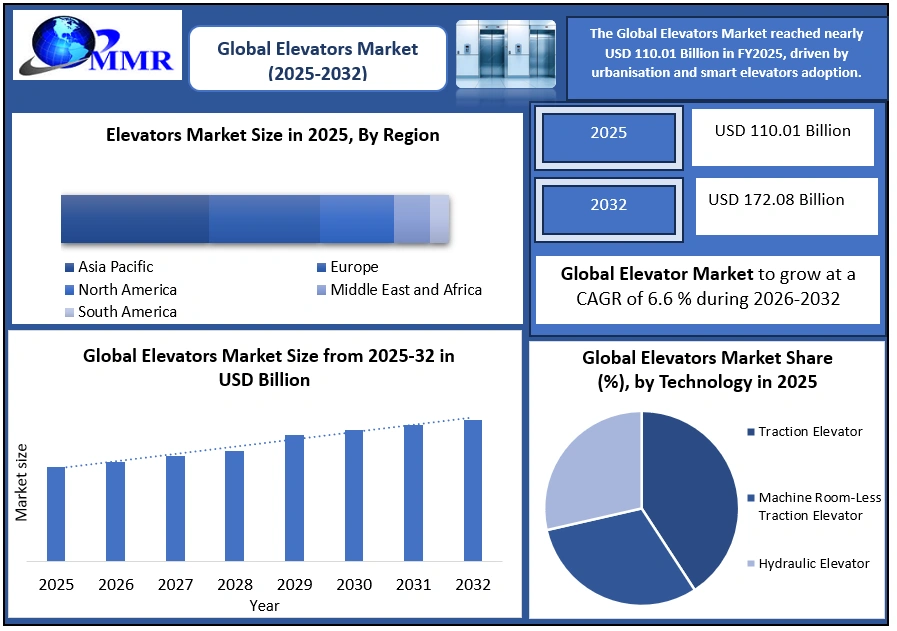
Elevators Market was valued at USD 110.01 Bn. in 2025 and is expected to reach USD 172.08 Bn. by 2032, at a CAGR of 6.6 % during the forecast period mainly due to growing service market, improving economic indicators, rapid urbanization and boom in high rise construction projects.

Global Elevators Market Overview

Elevators form a critical component of modern urban infrastructure, enabling vertical mobility across residential buildings, commercial complexes, hospitals, airports, metros, and mixed-use developments. Rapid urban density, limited horizontal expansion in cities, and rising building heights are structurally increasing reliance on Elevators systems worldwide.

A key trend in the Elevators industry analysis is the growing importance of the Elevators installation and maintenance market. The Elevators maintenance services segment was valued at approximately USD xx Billion in 2025 and is projected to grow at a CAGR of 6.6%, faster than new installations. Despite starting from a lower base, Modernization segment will develop the fastest. For global OEMs such as Otis, KONE, Schindler, and TK Elevators, services account for 40–60% of total revenues, driven by long-term contracts, digital monitoring, and predictive maintenance solutions.

Technological advancement is reshaping the market, with rising adoption of smart Elevators and IoT integration, destination control systems, Intelligent Elevators Dispatch, AI-based traffic optimisation, AI-Powered Predictive Elevators Maintenance and energy-efficient drives aligned with green building standards.
Elevators Market 2026-2032

To know about the Research Methodology :- Request Free Sample Report

Key Highlights (2025)

• Elevators Market Growth: The global Elevators market forecast indicates sustained expansion supported by urbanisation, infrastructure spending, and aging installed base
• Service-Led Revenue Model: Maintenance and modernisation contributed 40–60% of OEM revenues, providing recurring cash flows.
• Passenger Elevators Market Dominance: Passenger Elevatorss accounted 65.8% of global revenue, reflecting residential and commercial building demand.
• Traction Elevators Market Leadership: Traction technology held xx % market share due to energy efficiency and suitability for mid- and high-rise buildings.
• Labour Constraints: Technician shortages are estimated to reduce potential growth by 2.5% in emerging markets.

Global Elevators Market Segment Analysis:

By Product Type Analysis

The Product Type segmentation of the Global Elevators Market is primarily driven by building usage intensity, passenger flow requirements, and vertical transport efficiency. Among all product categories, Passenger Elevatorss dominated the global Elevators market, accounting for approximately xx % of total market revenue in 2025.

Globally, over 1.1 million Elevators units are installed annually, of which more than 70% are passenger Elevatorss. Asia-Pacific leads passenger Elevators installations with over 66% volume share, driven by China followed by India with a double-digit CAGR of xx%. In mature markets such as Europe and North America, passenger Elevators demand is increasingly replacement-driven, as over 50.2% of installed Elevators exceed 15-18 years of operational life.

Freight Elevatorss accounted for xx% of global revenue, supported by industrial manufacturing facilities, logistics warehouses, hospitals, and large retail infrastructure. Dumbwaiters and other specialized Elevators systems collectively represent 10–14% of the market, with steady demand from hotels, healthcare facilities, and food service environments.

By Technology Analysis

The Technology segmentation highlights a decisive shift toward energy-efficient, high-performance systems. The Traction Elevators Market dominates the global landscape, accounting for approximately 71–72% of total installations. Traction Elevatorss are preferred for mid-rise to high-rise buildings due to their 35–40% lower energy consumption compared to hydraulic systems and superior speed capabilities.

Hydraulic Elevators, though declining in relative share, still account for 22–23% of global installations, especially in low-rise residential and institutional buildings across North America and parts of Europe. However, regulatory pressure on energy efficiency and space optimization continues to shift demand toward traction systems. As a result, traction technology remains central to Elevators market growth, smart Elevatorss and IoT integration, and long-term global Elevators market forecast.

Global Elevators Market – Regional Analysis

The Asia-Pacific region led the global Elevators market in 2025 driven by rapid urbanisation and high-rise construction. China dominated with over 650,000 new installations annually, contributing 70% of APAC demand, while India is the fastest-growing market with a CAGR of xx %, supported by metro rail and smart city projects. Europe held xx % share in 2025, characterised by a mature installed base of over x.8 million Elevators, nearly xx.5 % of which are over 20 years old, driving modernization demand. North America accounted for xx % in 2025, supported by smart buildings & maintenance in light of the developed installed base in the region, while Middle East & Africa benefits from mega-projects.

Pricing, Trade, and Market Structure

Elevators pricing varies significantly by technology, capacity, speed, and regional cost structures. In emerging markets, standard residential Elevators systems are typically priced between USD 7500 and USD 17,500 per unit, while premium and customised Elevatorss range from USD 18,000 to USD 35,000. In commercial and high-rise applications, machine-room-less (MRL) Elevatorss for mid-rise buildings are generally priced between USD xx and USD xx per unit, while high-speed Elevators for skyscrapers frequently exceed USD 450,000 per unit.

From a global trade standpoint, Elevators import export analysis highlights China as the largest exporter, with annual exports exceeding USD xx Billion, followed by Spain (USD xx Million) and Italy (USD xx Million). On the import side, the United States, United Kingdom, and Germany each import approximately USD xx Million worth of Elevators systems annually, reflecting strong demand for advanced and high-specification equipment.

Liquid Elevators Exports divided by a Country's Total Exports (2025)
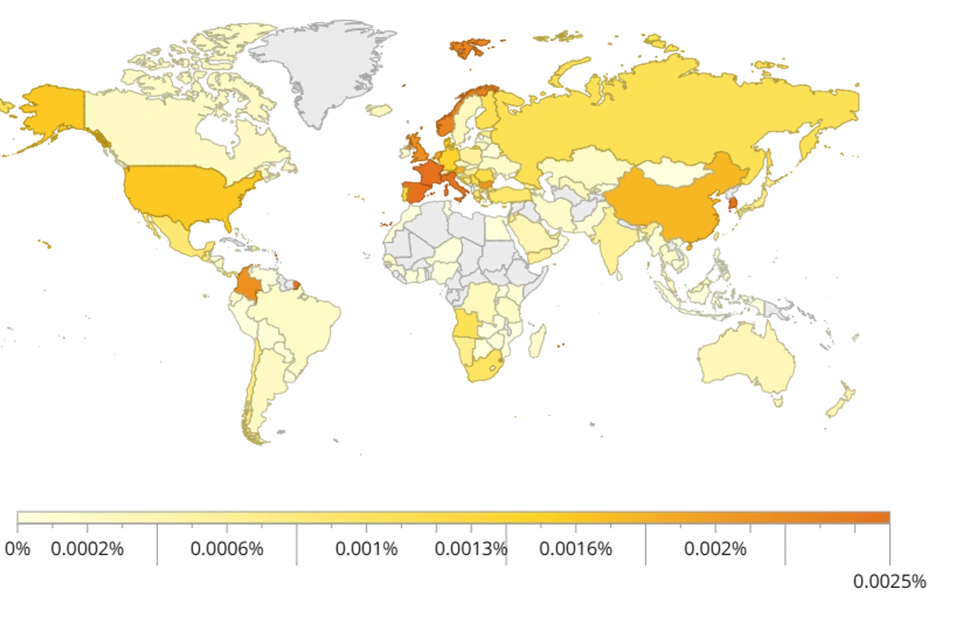
Liquid Elevators Exports divided by a Country's Total Exports (2025)

Recent Developments

Otis World

• In 2024, Otis projected annual net sales of USD xx billion, with the service segment up 3.5% year-over-year and new equipment sales declining in some regions due to construction slowdowns in North America and China.
• In late 2025, Otis reported 25.5% growth in modernization orders and an xx % rise in service net sales, demonstrating resilience in aftermarket demand.
• Innovation Highlights — Introduction of Gen3 Comfort, Skyrise Mod, and Link Mod, along with an upgraded smart cab, the Otis AI inspection robot, and the Otis AI agent. Subscription revenue from connected units rose by 35% in 2025, while Otis One connected units reached nearly 1.1 million worldwide.

Schindler Group

• In 2024, Schindler generated USD 12.2 billion in revenue, with margins improving through pricing and digital initiatives.
• In 2025, Schindler raised its operating profit margin forecast to 11.5%, even as new orders in China and other regions softened.
• In 2025, Schindler launched the Schindler X8, an Elevators solution designed to overcome longstanding architectural and into the Swiss and Italian markets.

Competitive Landscape:

The global Elevators market is largely dominated by six major multinational companies — Otis, Kone, Schindler, TKE, and Mitsubishi.
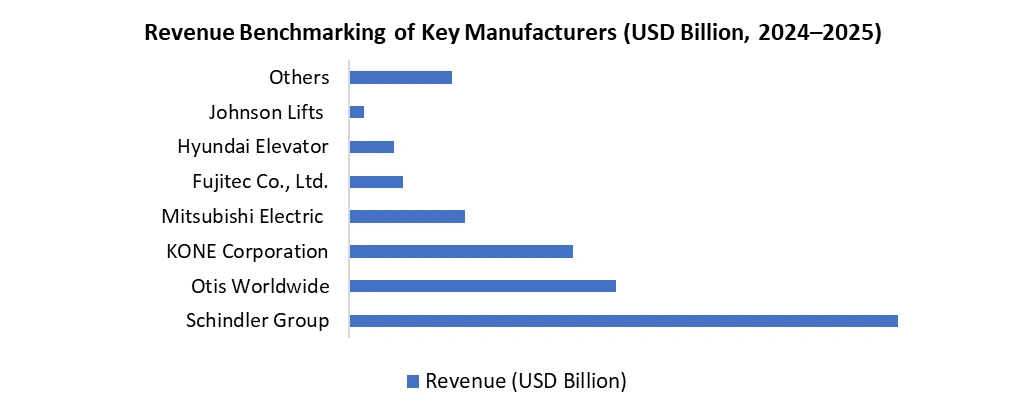
Revenue Benchmarking of Key Manufacturers (USD Billion, 2024–2025)

Elevators Market Scope: Inquiry Before Buying

Global Elevators Market
Report Coverage Details
Base Year: 2025 Forecast Period: 2026-2032
Historical Data: 2020 to 2025 Market Size in 2025: USD 110.01 Bn.
Forecast Period 2026 to 2032 CAGR: 6.6% Market Size in 2032: USD 172.08 Bn.
Segments Covered: by Product Type Passenger Elevatorss
Freight Elevatorss
Dumbwaiter
Others
by Technology Traction Elevators
Machine Room-Less Traction Elevators
Hydraulic Elevators
by Machine Type Geared Machine
Gearless Machine
by Deck Type Single deck
Double deck
by Door Type Automatic
Manual / Swing Doors
by Destination Control Conventional
Smart
by Business Type New Equipment
Maintenance & Repair
Modernization
by Speed Up to 1.0 m/s
1.1 – 2.5 m/s
2.6 – 4.0 m/s
Above 4.0 m/s
by Capacity 450 – 1150 kg
1151 – 1500 kg
1501 – 2000 kg
2001 – 3000 kg
Above 3000 kg
by End User Residential
Commercial
Industrial
Others

Elevators Market, by Region

North America (United States, Canada and Mexico)
Europe (UK, France, Germany, Italy, Spain, Sweden, Austria and Rest of Europe)
Asia Pacific (China, South Korea, Japan, India, Australia, Indonesia, Malaysia, Vietnam, Taiwan and Rest of APAC)
Middle East and Africa (South Africa, GCC, Egypt, Nigeria and Rest of ME&A)
South America (Brazil, Argentina Rest of South America)

Global Elevators Market, Key Players

1. Kone Corporation
2. Johnson Lifts Private Limited
3. Schindler.
4. Otis World
5. Tk Elevators
6. Mitsubishi Electric
7. Fujitec Co., Ltd.
8. Hitachi Elevators.
9. Blue Star Elevatorss Ltd.
10. Beacon Elevators Co. Pvt. Ltd.
11. City Lift India Ltd.
12. Avt Beckett
13. Escon Elevatorss Pvt. Ltd.
14. Orona Group
15. Delfar Elevators
16. Sepl India Ltd.
17. Toshiba Corporation
18. Ningbo Hosting Elevators Co., Ltd. .
19. Stannah
20. Dazen
21. Hyundai Elevators Co., Ltd.
22. Kleemann
23. Canny Elevators Co., Ltd.
24. Others

Frequently asked Questions:

1. What are elevators?
Ans: Elevators, also known as lifts in some regions, are vertical transportation devices used to move people or goods between different floors or levels within a building or structure. They consist of a car (or platform) that travels along vertical rails or shafts, usually enclosed within a shaft or hoistway.

2. How is the elevator industry evolving?
Ans: The elevator industry is transforming with the integration of advanced technologies such as IoT (Internet of Things), AI (Artificial Intelligence), and smart sensors. These innovations aim to improve efficiency, safety, and user experience, leading to enhanced elevator systems and services.

3. What are the key drivers of the elevators market?
Ans: High-rise construction, technological advancements, energy efficiency, safety regulations, urban mobility solutions, and market expansion in emerging economies are among the key drivers of the elevators market. These factors contribute to the growing demand for elevators in various residential, commercial, and industrial sectors worldwide.

4. What are the challenges faced by the elevators market?
Ans: High initial costs, long development cycles, technical challenges, economic uncertainty, and regulatory compliance are some of the challenges faced by the elevators market. These factors impact the growth and profitability of elevator manufacturers and developers, requiring them to navigate complex market dynamics effectively.

5. How is the elevators market segmented?
Ans: The elevators market is segmented based on type (residential, freight, passenger), deck type (single deck, double deck), and geography (region-wise). Each segment represents distinct market opportunities and dynamics within the elevator industry, catering to different customer needs and preferences across various applications and regions.

Table of Contents

1. Global Elevators Market Introduction 1.1. Executive Summary 1.2. Market Size (2025) & Forecast (2026-2032) 1.3. Market Size (Value in USD Billion and Volume in 000’Units) - By Segments, Country and Region 2. Global Elevators Market: Competitive Landscape 2.1. MMR Competition Matrix 2.2. Competitive Landscape 2.3. Key Players Benchmarking 2.3.1. Company Name 2.3.2. Product Portfolio 2.3.3. Production Volume (Units) 2.3.4. Urban vs. Rural Demand 2.3.5. Pricing Strategy 2.3.6. Safety & Compliance Certifications 2.3.7. Warranty Claim Ratio 2.3.8. Customer Satisfaction 2.3.9. Brand Recognition 2.3.10. Smart Elevators Adoption (%) 2.3.11. R&D Investment (%) 2.3.12. Revenue (2025) 2.3.13. Market Share (%) (2025) 2.3.14. Global Presence 2.4. Market Structure 2.4.1. Market Leaders 2.4.2. Market Followers 2.4.3. Emerging Players 2.5. Mergers and Acquisitions Details 3. Global Elevators Market: Dynamics 3.1. Global Elevators Market Trends 3.2. Global Elevators Market Dynamics 3.2.1. North America 3.2.2. Europe 3.2.3. Asia Pacific 3.2.4. Middle East and Africa 3.2.5. South America 3.3. PORTER’s Five Forces Analysis 3.4. PESTLE Analysis 4. Regulatory & Certification Landscape 4.1. International building codes and Elevators safety standards (EN, ASME, ISO) 4.2. Certification and compliance requirements across major regions 4.3. Regional regulatory frameworks: North America, Europe, Asia-Pacific, Middle East 4.4. Import–export regulations for Elevators kits, components, and systems 4.5. Inspection regimes, maintenance mandates, and lifecycle safety compliance 5. End-Use Segmentation & Buyer Analysis 5.1. Residential sector demand: high-rise apartments, mid-income housing, luxury towers 5.2. Commercial real estate: office complexes, business parks, co-working spaces 5.3. Hospitality & retail: hotels, malls, mixed-use developments 5.4. Institutional infrastructure: healthcare, education, airports, public transit 5.5. Industrial & logistics facilities: factories, warehouses, distribution hubs 5.6. Comparative demand analysis: government-funded vs private-sector projects 5.7. Global real estate and construction outlook (2026–2032) 5.7.1. CAGR of Elevators demand from new construction supply 5.7.2. Developed vs emerging market contribution 5.7.3. Elevators demand in smart cities, green buildings, and vertical urbanization 6. Kit Sales vs Turnkey Installations Analysis 6.1. Regional demand for Elevators kits by developer and contractor category 6.2. Application-level trends: mid-rise residential, hotels, and commercial buildings 6.3. Key kit buyers: OEMs, EPC contractors, local assemblers, and system integrators 6.3.1. Entry of Asian kit suppliers into global mid-market segments 6.3.2. Cost comparison: kit-based installations vs OEM turnkey solutions 6.3.3. Global pricing trends for core kit components (motors, controllers, doors) 6.4. Localization, nearshoring, and global sourcing strategies for Elevators components 7. Global Buyer Landscape & Sales Intelligence 7.1. Buyer segmentation by organization type 7.1.1. Real estate developers, infrastructure contractors, hospitality chains, retail groups 7.2. Country- and city-level Elevators demand hotspots (top global markets) 7.2.1. Mature vs high-growth urban clusters 7.3. Procurement preferences by buyer category 7.3.1. Kit-based sourcing, OEM turnkey models, maintenance-led contracts 7.4. Sales intelligence dataset structure 7.4.1. Key fields: company, geography, sector, project type, timeline, tender status, budget, ownership 7.4.2. Lead prioritization framework based on project stage, scale, and readiness 8. Pricing & Cost Structure Analysis (2025) 8.1. Elevators pricing benchmarks by technology, speed, and capacity 8.2. Installation cost structure and margin comparison by region 8.3. Maintenance contract pricing models and escalation trends 8.4. Modernization economics vs full replacement decisions 8.5. End-user price sensitivity analysis across regions and applications 9. Technology & Innovation Landscape 9.1. Adoption trends of MRL, gearless, and high-speed Elevators technologies 9.2. Energy-efficient systems, regenerative drives, and low-carbon solutions 9.3. Smart Elevatorss, IoT-enabled monitoring, and predictive maintenance platforms 9.4. Destination control systems and advanced traffic optimization 9.5. Global technology roadmap for high-rise and super-tall buildings 10. Investment, Expansion & Strategic Opportunity Assessment 10.1. Identification of high-growth segments and global white-space opportunities 10.2. Market entry strategies for new OEMs, technology providers, and investors 10.3. Expansion strategies for established players across mature and emerging markets 10.4. Risk assessment: regulatory, cost, demand cyclicality, and technology risks 10.5. Strategic recommendations for OEMs, suppliers, investors, and stakeholders 11. Component & Subsystem Supply Chain Analysis 11.1. Global supply chain overview of key Elevators components 11.2. Regional sourcing dynamics: domestic manufacturing vs imports 11.3. Tier 1 and Tier 2 supplier landscape and competitive positioning 11.4. Impact of localization, trade policies, and geopolitical risks 11.5. Supply chain vulnerabilities, bottlenecks, and resilience strategies 11.6. Component cost contribution to overall Elevators system pricing 12. Installed Base & Replacement Cycle Analysis 12.1. Global installed Elevators base by region and end-user segment 12.2. Average operational lifespan by building type and geography 12.3. Replacement vs modernization triggers across mature and emerging markets 12.4. Maintenance intensity and lifecycle revenue implications 12.5. Forecast of global replacement and modernization demand (5–10 years) 12.6. Installed base concentration and priority retrofit markets 13. Sustainability & Energy Efficiency Analysis 13.1. Energy consumption benchmarks across Elevators technologies 13.2. Adoption of regenerative drives and energy-saving innovations 13.3. Influence of ESG frameworks and green building mandates on procurement 13.4. Certification trends: LEED, BREEAM, WELL, ISO standards 13.5. Cost–benefit assessment of sustainable vs conventional Elevators systems 13.6. Impact of sustainability regulations on new installations and modernization 14. Global Elevators Market: Size and Forecast by Segmentation (By Value USD Million and Volume 000’Units) (2025-2032) 14.1. Global Elevators Market Size and Forecast, By Product Type 14.1.1. Passenger Elevatorss 14.1.2. Freight Elevatorss 14.1.3. Dumbwaiter 14.1.4. Others 14.2. Global Elevators Market Size and Forecast, By Technology 14.2.1. Traction Elevators 14.2.2. Machine Room-Less Traction Elevators 14.2.3. Hydraulic Elevators 14.3. Global Elevators Market Size and Forecast, By Machine Type 14.3.1. Geared Machine 14.3.2. Gearless Machine 14.4. Global Elevators Market Size and Forecast, By Deck Type 14.4.1. Single deck 14.4.2. Double deck 14.5. Global Elevators Market Size and Forecast, By Door Type 14.5.1. Automatic 14.5.2. Manual / Swing Doors 14.6. Global Elevators Market Size and Forecast, By Destination Control 14.6.1. Conventional 14.6.2. Smart 14.7. Global Elevators Market Size and Forecast, By Business Type 14.7.1. New Equipment 14.7.2. Maintenance 14.7.3. Modernization 14.8. Global Elevators Market Size and Forecast, By Speed 14.8.1. Up to 1.0 m/s 14.8.2. 1.1 – 2.5 m/s 14.8.3. 2.6 – 4.0 m/s 14.8.4. Above 4.0 m/s 14.9. Global Elevators Market Size and Forecast, By Capacity 14.9.1. 450 – 1150 kg 14.9.2. 1151 – 1500 kg 14.9.3. 1501 – 2000 kg 14.9.4. 2001 – 3000 kg 14.9.5. Above 3000 kg 14.10. Global Elevators Market Size and Forecast, By End User 14.10.1. Residential 14.10.2. Commercial 14.10.3. Industrial 14.10.4. Others 14.11. Global Elevators Market Size and Forecast, By Region 14.11.1. North America 14.11.2. Europe 14.11.3. Asia Pacific 14.11.4. Middle East and Africa 14.11.5. South America 15. North America Elevators Market Size and Forecast By Segmentation (By Value USD Million and Volume 000’Units) (2025-2032) 15.1. North America Market Size and Forecast, By Product Type 15.2. North America Market Size and Forecast, By Technology 15.3. North America Market Size and Forecast, By Machine Type 15.4. North America Market Size and Forecast, By Deck Type 15.5. North America Market Size and Forecast, By Door Type 15.6. North America Market Size and Forecast, By Destination Control 15.7. North America Market Size and Forecast, By Business Type 15.8. North America Market Size and Forecast, By Speed 15.9. North America Market Size and Forecast, By Capacity 15.10. North America Market Size and Forecast, By End User 15.11. North America Market Size and Forecast, By Country 15.11.1. United States 15.11.2. Canada 15.11.3. Mexico 16. Europe Elevators Market Size and Forecast By Segmentation (By Value USD Million and Volume 000’Units) (2025-2032) 16.1. Europe Market Size and Forecast, By Product Type 16.2. Europe Market Size and Forecast, By Technology 16.3. Europe Market Size and Forecast, By Machine Type 16.4. Europe Market Size and Forecast, By Deck Type 16.5. Europe Market Size and Forecast, By Door Type 16.6. Europe Market Size and Forecast, By Destination Control 16.7. Europe Market Size and Forecast, By Business Type 16.8. Europe Market Size and Forecast, By Speed 16.9. Europe Market Size and Forecast, By Capacity 16.10. Europe Market Size and Forecast, By End User 16.11. Europe Market Size and Forecast, By Country 16.11.1. United Kingdom 16.11.2. France 16.11.3. Germany 16.11.4. Italy 16.11.5. Spain 16.11.6. Sweden 16.11.7. Russia 16.11.8. Rest of Europe 17. Asia Pacific Elevators Market Size and Forecast By Segmentation (By Value USD Million and Volume 000’Units) (2025-2032) 17.1. Asia Pacific Market Size and Forecast, By Product Type 17.2. Asia Pacific Market Size and Forecast, By Technology 17.3. Asia Pacific Market Size and Forecast, By Machine Type 17.4. Asia Pacific Market Size and Forecast, By Deck Type 17.5. Asia Pacific Market Size and Forecast, By Door Type 17.6. Asia Pacific Market Size and Forecast, By Destination Control 17.7. Asia Pacific Market Size and Forecast, By Business Type 17.8. Asia Pacific Market Size and Forecast, By Speed 17.9. Asia Pacific Market Size and Forecast, By Capacity 17.10. Asia Pacific Market Size and Forecast, By End User 17.11. Asia Pacific Market Size and Forecast, By Country 17.11.1. China 17.11.2. Japan 17.11.3. South Korea 17.11.4. India 17.11.5. Australia 17.11.6. Malaysia 17.11.7. Thailand 17.11.8. Vietnam 17.11.9. Indonesia 17.11.10. Philippines 17.11.11. Rest of Asia Pacific 18. Middle East and Africa Elevators Market Size and Forecast By Segmentation (By Value USD Million and Volume 000’Units) (2025-2032) 18.1. Middle East and Africa Market Size and Forecast, By Product Type 18.2. Middle East and Africa Market Size and Forecast, By Technology 18.3. Middle East and Africa Market Size and Forecast, By Machine Type 18.4. Middle East and Africa Market Size and Forecast, By Deck Type 18.5. Middle East and Africa Market Size and Forecast, By Door Type 18.6. Middle East and Africa Market Size and Forecast, By Destination Control 18.7. Middle East and Africa Market Size and Forecast, By Business Type 18.8. Middle East and Africa Market Size and Forecast, By Speed 18.9. Middle East and Africa Market Size and Forecast, By Capacity 18.10. Middle East and Africa Market Size and Forecast, By End User 18.11. Middle East and Africa Market Size and Forecast, By Country 18.11.1. South Africa 18.11.2. GCC 18.11.3. Nigeria 18.11.4. Egypt 18.11.5. Turkey 18.11.6. Rest of ME&A 19. South America Elevators Market Size and Forecast By Segmentation (By Value USD Million and Volume 000’Units) (2025-2032) 19.1. South America Market Size and Forecast, By Product Type 19.2. South America Market Size and Forecast, By Technology 19.3. South America Market Size and Forecast, By Finish 19.4. South America Market Size and Forecast, By Deck Type 19.5. South America Market Size and Forecast, By Door Type 19.6. South America Market Size and Forecast, By Destination Control 19.7. South America Market Size and Forecast, By Business Type 19.8. South America Market Size and Forecast, By Speed 19.9. South America Market Size and Forecast, By Capacity 19.10. South America Market Size and Forecast, By End User 19.11. South America Market Size and Forecast, By Country 19.11.1. Brazil 19.11.2. Argentina 19.11.3. Colombia 19.11.4. Chile 19.11.5. Rest Of South America 20. Company Profile: Key Players 20.1. KONE Corporation 20.1.1. Company Overview 20.1.2. Business Portfolio 20.1.3. Financial Overview 20.1.4. SWOT Analysis 20.1.5. Strategic Analysis 20.1.6. Recent Developments 20.2. Kone Corporation 20.3. Johnson Lifts Private Limited 20.4. Schindler. 20.5. Otis World 20.6. Tk Elevators 20.7. Mitsubishi Electric 20.8. Fujitec Co., Ltd. 20.9. Hitachi Elevators. 20.10. Blue Star Elevatorss Ltd. 20.11. Beacon Elevators Co. Pvt. Ltd. 20.12. City Lift India Ltd. 20.13. Avt Beckett 20.14. Escon Elevatorss Pvt. Ltd. 20.15. Orona Group 20.16. Delfar Elevators 20.17. Sepl India Ltd. 20.18. Toshiba Corporation 20.19. Ningbo Hosting Elevators Co., Ltd. . 20.20. Stannah 20.21. Dazen 20.22. Hyundai Elevators Co., Ltd. 20.23. Kleemann 20.24. Canny Elevators Co., Ltd. 20.25. Others 21. Key Findings 22. Industry Recommendations 23. Global Elevators Market: Research Methodology

Custom Market Research Services

We Will Customise The Research For You, In Case The Report Listed Above Does Not Meet With Your Requirements