
Cut Flower Market Size by Flower Type, Colour, Occasion, Application, Distribution Channel, Region, Industry-Wide Analysis, Competitive Landscape Assessment & Long-Term Forecast to 2032
Overview
The Global Cut Flower Market was valued at USD 41.21 Billion in 2025 and is projected to reach USD 57.21 Billion by 2032, growing at a CAGR of 4.8%.
Cut Flower Market Overview:
The Cut Flower Market is entering a dynamic growth phase as consumers shift toward premium floral décor, hyper-personalized gifting, and sophisticated event styling. Weddings, festive celebrations, luxury hospitality spaces, and high-profile corporate events are increasingly relying on curated flower concepts, creating strong and consistent market demand. Global leaders such as the U.S., India, China, Japan, the Netherlands, Colombia, and Kenya continue to shape the industry through advanced cultivation practices and export excellence. At the same time, the surge of online flower delivery platforms, AI-driven bouquet recommendations, subscription boxes, and express delivery options is transforming digital floristry into a mainstream retail channel.
Innovation is redefining production with automated greenhouses, precision hydroponics, and next-gen cold-chain systems that preserve freshness and elevate color intensity. Sustainability remains at the center of consumer preferences, accelerating the shift toward organic flowers, biodegradable packaging, recyclable floral foams, and chemical-free growing methods. Globally loved varieties roses, lilies, carnations, orchids, tulips, and gerberas retain their dominance as designers and consumers seek both aesthetic charm and long-lasting quality. This combination of technology, sustainability, and premiumization positions the market for strong, long-term growth.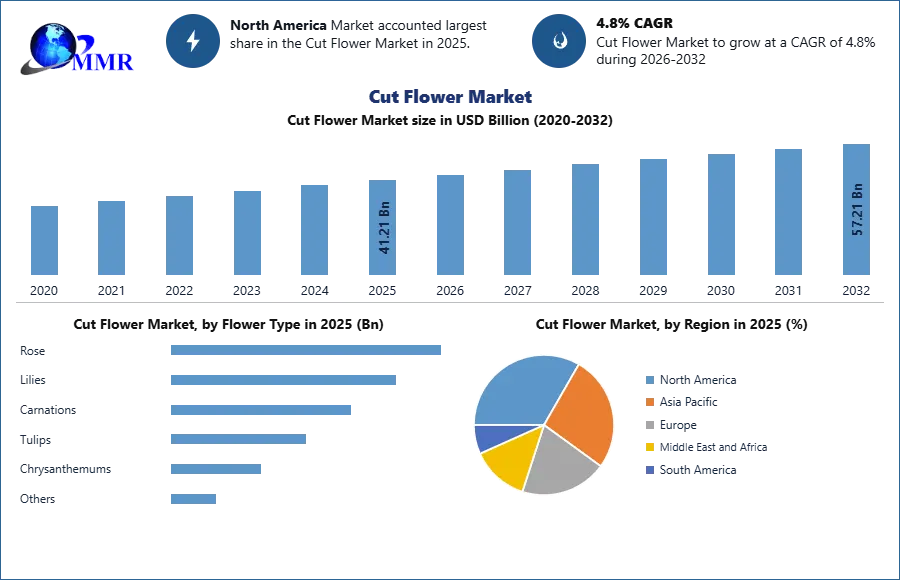 To know about the Research Methodology :- Request Free Sample Report
Cut Flower Market Dynamics:
Growing Global Trade & Event-Driven Floral Demand to drive the Cut Flower Market Growth
The cut flower market is strongly driven by the expansion of global flower trade and rising consumption across weddings, festivals, and corporate events. International shipments of cut flowers have grown steadily, with global exports increasing by more than 6% in 2025, supported by strong demand from Europe, North America, and Asia. The Netherlands remains the dominant global hub, exporting flowers worth over USD 4.5 billion in 2025, while Kenya exported nearly 111,000 tons of cut flowers, mainly to the UK, Germany, and the Middle East. Event culture is another powerful driver.
Countries such as India, where the wedding industry conducts more than 3 million weddings annually, generate massive floral demand for stage setups and premium décor. Luxury hotels in the U.S., such as Marriott and Hilton, replace fresh floral arrangements weekly, increasing recurring consumption. The rise of online flower delivery platforms such as Ferns N Petals, Interflora, and 1-800-Flowers has further accelerated market expansion, offering same-day delivery, AI-based bouquet customization, and subscription flower boxes. Together, these trade flows, digital platforms, and event-driven needs continue to push global demand for premium, fresh-cut flowers.
High Supply Chain Costs, Perishability & Infrastructure Gaps limits the Cut Flower Market Growth
The biggest restraint faced by the cut flower market is the high perishability of flowers, which significantly increases logistics and storage costs. Fresh-cut flowers lose quality rapidly and require strict temperature control typically 0–4°Cfrom farm to final delivery. In many developing regions, cold-chain infrastructure is limited, leading to post-harvest losses of 30–40% during handling, transport, or retail display. This results in discoloration, wilting, and reduced vase life, affecting both profitability and customer satisfaction.
Export-driven countries like Kenya and Ethiopia face additional challenges due to high air-freight costs and shipment delays. Even though Kenya exports over 110,000 tons of flowers annually, producers often face cost pressure due to rising fuel, energy, and labor expenses. European growers, particularly in the Netherlands, also report higher production costs due to increased electricity prices for greenhouse heating and lighting. Weather fluctuations, heat waves, and irrigation challenges further impact flower quality and yield in India and China. These combined issues high logistics expenses, perishability risks, unstable weather, and expensive greenhouse operations act as major restraints limiting operational efficiency and profit margins across the entire cut flower supply chain.
Sustainable Floriculture & Technology-Led Production Creates Lucrative growth opportunities to the Cut Flower Market Growth
A major opportunity in the cut flower market lies in the rapid shift toward sustainable floriculture and technology-enabled greenhouse farming. Consumers in Europe, North America, Japan, and Australia increasingly prefer eco-friendly flowers grown without harmful chemicals, creating strong demand for organic, low-carbon, and naturally cultivated varieties. Many producers are already transitioning: Colombia’s major floriculture farms are using precision irrigation systems that reduce water use by up to 40%, while growers in the Netherlands and Japan have adopted AI-controlled greenhouses to optimize humidity, light, and nutrient cycles.
Cold-chain improvements in Kenya have reduced spoilage rates and helped maintain higher stem strength and longer vase life. Packaging innovation is also creating opportunities biodegradable sleeves, recycled kraft paper wraps, and eco-friendly floral foams are becoming mainstream as global regulations tighten. The cut flower packaging industry is seeing strong growth, with demand for damage-resistant and sustainable materials increasing at double-digit percentages annually. Subscription-based floral services offered by brands like Bloom & Wild in the UK and The Bouqs Co. in the U.S. are gaining popularity, creating consistent recurring revenue streams. Together, these sustainability and technology trends are transforming floriculture into a more efficient, profitable, and environmentally responsible sector.
Cut Flower Market Segment Analysis:
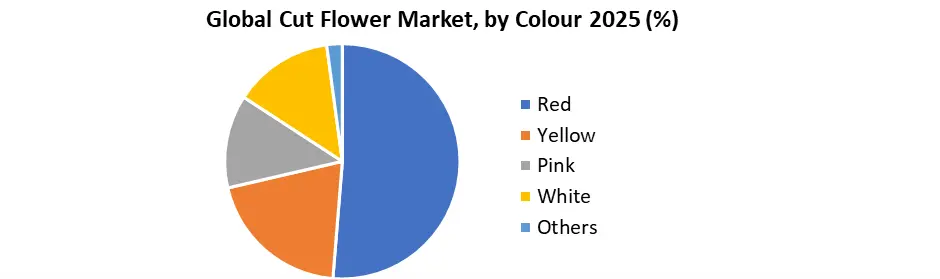
Based On Color, The Cut Flower Market is segmented into Red, Yellow, Pink, White and Others. The Red color segment dominates the Cut Flower Market in 2025, driven by its strong emotional association with love, passion, and celebration. Red flowers especially roses remain the global top choice for occasions such as Valentine’s Day, weddings, anniversaries, and festive gifting. For example, during Valentine’s Day 2024, red roses accounted for more than 55% of global rose sales, highlighting their unmatched consumer preference. Florists and retailers also prioritize red blooms because they offer higher profit margins and consistent year-round demand compared to other colors.
Countries such as the U.S., the U.K., Germany, India, and China report peak seasonal spikes in red flower sales during major festivals and cultural events. Additionally, red flowers are widely used in corporate gifting, luxury floral arrangements, and hotel décor, further boosting their market presence. Strong symbolism, emotional value, and universal appeal keep the red segment firmly in the leading position across global markets.
Based On Occasion, The Cut Flower Market is segmented into Weddings, Festivals, Corporate Events, Funerals / Memorials and Others. The Wedding segment dominates the Cut Flower Market in year 2025. Due to its consistently high demand for premium, large-volume floral arrangements. Weddings require a wide variety of flowers including roses, lilies, orchids, peonies, carnations, and tulips for décor, bridal bouquets, centerpieces, stage setups, and photo backdrops. On average, a single wedding can require 5–10 times more flowers than festivals or corporate events, making it the most revenue-generating application globally.
Countries like India, the U.S., China, Italy, and France host millions of weddings annually, each influenced by cultural traditions that heavily rely on floral decoration. India alone conducts over 10 million weddings per year, with flowers being an essential part of rituals, mandap décor, and garlands, driving massive seasonal sales. Weddings also support premium pricing, as consumers prefer high-quality, fresh, and often imported flowers. This combination of volume, variety, cultural importance, and willingness to spend keeps the wedding segment firmly at the top.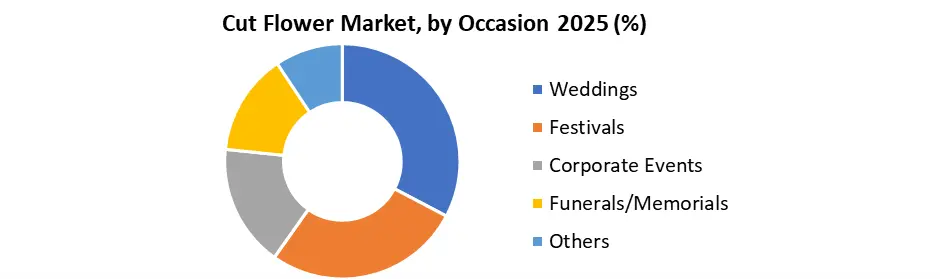
Cut Flower Market Competitive Landscape:
The Cut Flower Market remains highly competitive, driven by leading players focusing on innovation, sustainability, and global distribution expansion. Companies such as Dümmen Orange, Syngenta Flowers, Karen Roses, Esmeralda Farms, and Floricultura are strengthening their portfolios through new varieties, advanced breeding, and eco-friendly cultivation. In 2025, Dümmen Orange introduced disease-resistant chrysanthemum and rose varieties to boost yield and vase life. Syngenta Flowers launched its new “Xpression Series” gerberas, enhancing color intensity and shelf durability. Karen Roses continued expanding its solar-powered greenhouse systems to meet rising demand for sustainable floral production. Esmeralda Farms invested in cold-chain optimization and opened a new distribution hub in Miami to accelerate exports to the U.S. and Europe. Floricultura expanded its orchid breeding programs in the Netherlands and Brazil.
Evolving as companies focus on sustainable farming, premium floral varieties, value chain efficiency, and global market penetration, supporting strong growth in the Cut Flower Market across retail, weddings, décor, and gifting applications.
Cut Flower Market Recent development:
1. Selecta One (Germany) – Moraglia Breeding Partnership (2022)
Selecta One entered a strategic partnership with Moraglia Breeding (Italy) to strengthen logistics and improve genetic innovation. This collaboration supports the development of new carnation varieties by combining Moraglia’s breeding expertise with Selecta’s global distribution capabilities.
2. Selecta One (Germany) – Armada Strategic Alliance (2021)
In 2021, Selecta One also formed a strategic alliance with Armada (Netherlands) to advance the Colombian and Kenyan chrysanthemum markets. The partnership enhances breeding programs, improves plant quality, and strengthens supply efficiency across key floriculture regions.
3. Danziger Group – Expansion of North American Cutting Stations (2018)
Danziger expanded its North American Rooted Cutting Station network by adding four partners: Devan Greenhouses Ltd., Wenke/Sunbelt Young Plants Division, Plantpeddler, and Headstart. This expansion strengthened its propagation capabilities and improved supply reliability for growers across North America.
4. Marginpar BV – New Headquarters in the Netherlands (2022)
Marginpar BV completed its new headquarters setup in the Netherlands and relocated to Aalsmeer-Oost by the end of 2022. This move enables the company to streamline operations, develop new product lines, and benefit from the logistical ecosystem of Royal FloraHolland.
Recent Industry Developments
| Exact Date | Company | Development | Impact |
|---|---|---|---|
| 06 January 2026 | Danziger | Launched the 2026–2027 Cut Flowers Catalog featuring 60 new varieties and three entirely new crops including Sorghum and Phlox. | Strengthens market differentiation by providing growers with high-productivity, disease-resistant genetics tailored for global retail. |
| 17 March 2026 | Dianwang Flowers | Announced the completion of a full-chain industrial project in Myanmar, securing a 65% local market share. | Expands regional supply chain integration and establishes China’s "beautiful economy" across Southeast Asian trade hubs. |
| 10 May 2025 | National Retail Federation | Reported record floral spending of $3.2 billion for Mother's Day, with 40% of shoppers purchasing bouquets. | Demonstrates strong consumer resilience and the high-value impact of holiday-driven spikes on annual revenue. |
| 22 February 2025 | Suntory Flowers | Established Suntory Flowers Europe B.V. following the successful acquisition of Dutch partner Moerheim New Plants. | Enhances direct distribution capabilities in the European market, the world's largest hub for cut flower consumption. |
Cut Flower Market Scope: Inquire before buying
| Cut Flower Market | |||
|---|---|---|---|
| Report Coverage | Details | ||
| Base Year: | 2025 | Forecast Period: | 2026-2032 |
| Historical Data: | 2020 to 2025 | Market Size in 2025: | 41.21 USD Billion |
| Forecast Period 2026-2032 CAGR: | 4.8% | Market Size in 2032: | 57.21 USD Billion |
| Segments Covered: | by Flower Type | Rose Lilies Carnations Tulips Chrysanthemums Others |
|
| by Colour | Red Yellow Pink White Others |
||
| by Occasion | Weddings Festivals Corporate Events Funerals / Memorials Others |
||
| by Application | Decorative Gifting Institutional Use Religious/Spiritual Others |
||
| by Distribution Channel | Supermarkets and Hypermarkets Specialty Stores/Florists Online Retail Kiosks / Local Vendors Others |
||
Cut Flower Market, by Region
North America (United States, Canada, and Mexico)
Europe (UK, France, Germany, Italy, Spain, Sweden, Austria, and the Rest of Europe)
Asia Pacific (China, South Korea, Japan, India, Australia, ASEAN, Indonesia, Philippines, Malaysia, Vietnam, Thailand, ASEAN, Rest of Asia Pacific)
Middle East & Africa (South Africa, GCC, Nigeria, Rest of ME&A)
South America (Brazil, Argentina, Rest of South America)
Key Players / Competitors Profiles Covered in Brief in Global Cut Flower Market Report in Strategic Perspective:
- Dümmen Orange
- Syngenta Flowers
- Karen Roses
- Esmeralda Farms
- Floricultura
- Oserian Development Company Ltd.
- Karuturi Global Ltd.
- Floret LLC
- Danziger
- Selecta Cut Flowers
- 1-800-Flowers
- Interflora
- FTD Companies
- Euroflorist
- Fleurop
- Teleflora
- Ball Horticultural Company
- The Queen's Flowers
- Washington Bulb Co.
- Rosebud Ltd.
- Carzan Flowers
- The Kariki Group
- Multiflora Corp
- ProFlowers
- Benary