
Chronic Kidney Disease Market Size by Type of Treatment, End User, Route of Administration, Diagnostic Methods, Region, Industry-Wide Analysis, Competitive Landscape Assessment & Long-Term Forecast to 2034
Overview
The Global Chronic Kidney Disease Market was valued at USD 76.67 Billion in 2025 and is projected to reach USD 120.99 Billion by 2034, growing at a CAGR of 5.2% during 2025–2034.
The Chronic Kidney Disease (CKD) market is witnessing a significant paradigm shift in the current healthcare landscape. As of the latest available data in, the global CKD market has been steadily growing, primarily due to the increasing prevalence of CKD, a rise in aging populations, and a surge in risk factors such as hypertension and diabetes. The market's growth is further driven by advances in early detection and management, emphasizing the importance of disease awareness and education, and the development of novel therapies and treatments. Key players in the market, such as Amgen, AstraZeneca, and Bayer, have been actively involved in research and development of innovative drugs, including SGLT2 inhibitors, mineralocorticoid receptor antagonists, and erythropoiesis-stimulating agents. These efforts aim to not only slow the progression of CKD but also reduce the associated risks and complications, such as cardiovascular events and end-stage renal disease. Moreover, the introduction of precision medicine and telehealth solutions to monitor CKD patients remotely signifies a shift towards more personalized and accessible care, which is expected to further shape the CKD market's future trajectory as it continues to address the growing global burden of chronic kidney disease.
Chronic kidney disease is a significant global health problem, affecting around 1 in 10 people worldwide. According to the Centres for Disease Control and Prevention in the United States, approximately 37 million people are estimated to have chronic kidney disease. Nearly 786,000 people in the United States are living with end-stage renal disease (ESRD), 71% on dialysis and 29% with a kidney transplant. CKD is more common in older adults, women, and people of African American, Hispanic, or Native American descent. Early detection and treatment of CKD slow the progression of the disease and improve outcomes for affected individuals. The Chronic Kidney Disease market is segmented into various categories such as diagnostic tests, pharmaceuticals, and dialysis equipment. The increasing prevalence of CKD, rise in the number of patients requiring dialysis and kidney transplants, and the increasing adoption of novel treatments and therapies are expected to drive the chronic kidney disease market during the forecast period.
Chronic Kidney Disease Market Growth and Share Analysis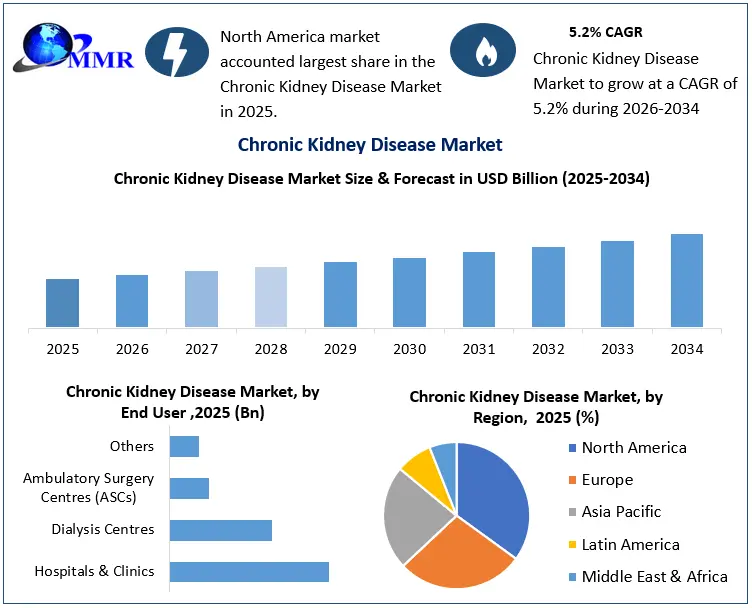 To know about the Research Methodology :- Request Free Sample Report
Chronic Kidney Disease Market Dynamics
Growing Animal Injuries and Veterinary Treatments Drive Market Growth
A rise in the incidence of animal injuries, surgeries, burns, cuts, wounds, and post-surgery wounds is augmenting the demand for wound care products. The surge in pet care expenses, growth in veterinary clinics and hospitals, and evolving awareness about animal health care are also contributing to a rise in the consumption of sutures, staplers, dressings, wound spray, hydrogel, and other wound care products. Moreover, the growing awareness regarding animal wound cleaning, infection prevention, tissue protection, and faster healing is also fueling the demand for animal wound care products. These factors are collectively boosting the animal wound care market size and creating a positive outlook for the industry.
High Cost of Advanced Products Limits Market Expansion
The high cost of sophisticated wound care products and treatments, including hydrogel, antimicrobials, dressings, surgical staplers, and tissue adhesives, is hampering the market growth. The availability and affordability of these products and treatments are a matter of concern in developing economies, where veterinary hospitals, clinics, and sophisticated treatments are not highly penetrated. In addition, livestock animals may also not justify the cost of high-end treatments and products and opt for low-cost conventional treatments, given the high expense versus the economic value of the animal. Such factors may adversely impact the demand for high-end products and leave a significant gap between low-cost and high-cost product segments, thereby affecting the overall market growth and forecast.
Advanced Wound Healing Products Create Market Opportunities
The rising demand for innovative antimicrobial, bioactive, regenerative, and rapid-healing wound care products to manage complicated and chronic wounds is creating new growth opportunities for market vendors. Advanced antimicrobial dressings, hydrogels, and foam dressings, tissue adhesives, hemostatic dressings, and regenerative wound care products are highly useful in managing chronic and complex wounds. The emerging awareness among veterinarians regarding advanced wound care management is also escalating the demand for innovative products. Moreover, the growing availability of products across veterinary hospitals, retail pharmacies, distributors, and e-commerce platforms is also supporting the market growth and aiding vendors in meeting the demand for complex and chronic wounds.
Infection Risks and Unequal Veterinary Access Challenge Market Development
The rising incidences of chronic wounds, delayed healing, infections, and high variability in veterinary infrastructure and facilities across developed and developing nations are some of the hindering factors that could impact the market growth. Difficulties in managing chronic, severe wounds and infections require proper washing, excising dead tissue, infection management, suture, and appropriate dressings, which may not always be readily available. In addition, veterinarians and veterinary infrastructure vary across different nations and regions, and it may pose a challenge in terms of product penetration and competition. Thus, market vendors must emphasize product safety, application ease, clinical provenience, cost-effectiveness, and compliance with regulations to mitigate the risks and capitalize on the market opportunities.
Chronic Kidney Disease Market Segment Analysis
Chronic Kidney Disease Market, by Route of Administration
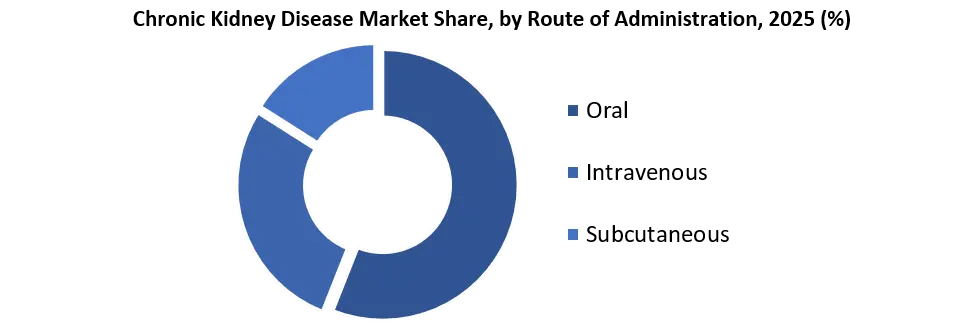
Oral administration accounts for the biggest market share as many of the medicines which are utilized in managing CKD related complications can be administered in the form of tablets, capsules and other dosage forms. Intravenous administration is prominent in hospitals and dialysis centers where majority of the medicines, fluids and supplements are directly introduced into the blood stream. Subcutaneous administration has also gained significant ground as there are therapeutics which can be delivered without going to hospitals. There are variations in the market size, market gap and market opportunities for the different routes of administration as they vary in terms of stage, patient need and hospital requirements.
Chronic Kidney Disease Market, by Diagnostic Methods
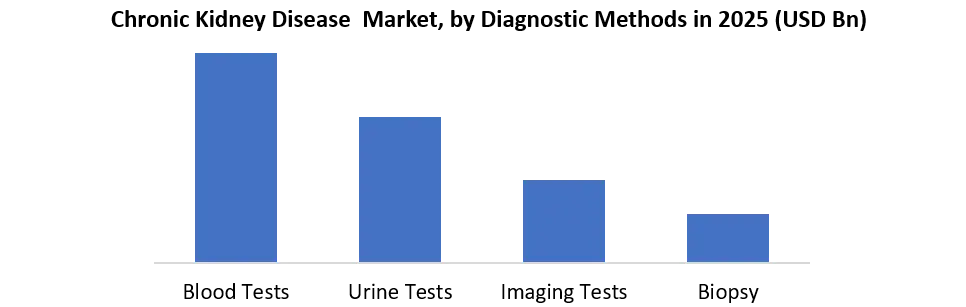
Blood Tests occupy the biggest market as it is possible to determine kidney function by examining levels of creatinine and eGFR in the blood. Urine tests also play a significant role in diagnosis due to the fact that it is possible to examine the presence of albumin and other indicators of kidney disorder. Imaging tests aid in the determination of the extent of disorder and its impact on the kidneys and biopsy helps understand the exact cause of the kidney disorder. Focus on early diagnosis and management is increasing and hence contributes towards market potential and opportunities in the near future. This segment is likely to see considerable opportunities as compared to the current state of kidney disorder diagnosis.
| Treatment | Description |
| Home Dialysis | Home dialysis allows kidney disease patients to receive treatment at home. There are two main types: peritoneal dialysis (PD) and home hemodialysis (HHD). Peritoneal dialysis uses the patient's abdominal lining to filter waste, while home hemodialysis uses a machine for filtering, similar to in-center hemodialysis. |
| Artificial Intelligence (AI) | AI has the potential to revolutionize kidney disease diagnosis and treatment. It can analyze medical data, identify patterns, and predict the risk of developing kidney disease, aiding in early detection. AI can also predict disease progression and personalize treatment plans. |
| Immersive Technology | Immersive technologies like virtual reality (VR) and augmented reality (AR) can assist in kidney disease diagnosis, treatment, and education. They allow for practicing procedures, such as kidney transplantation, and provide real-time guidance during surgeries. |
| Advanced Renal Testing | Advanced renal testing comprises diagnostic tests to assess kidney function and detect abnormalities. Common tests include Glomerular Filtration Rate (GFR) testing to evaluate filtration efficiency, Blood Urea Nitrogen (BUN) testing as an indicator of kidney function, and urinalysis to detect abnormal substances in urine. |
| Genomic Engineering | Genomic engineering methods like CRISPR-Cas9 gene editing can correct mutations responsible for inherited kidney diseases. Gene therapy can introduce healthy genes into deficient kidney cells, potentially restoring normal function. |
| Kidney Diseases Statistics | Worldwide, chronic kidney disease (CKD) affects 13.4% of the population. In the US, over 1 in 7 adults (37 million) have CKD, with 1 in 3 people with diabetes and 1 in 5 with high blood pressure affected. It's noteworthy that 9 in 10 CKD patients are unaware of their condition. |
Chronic Kidney Disease Market Regional Insights
North America has the highest share in the Chronic Kidney Disease Market mainly due to the presence of highly developed healthcare infrastructure, widespread diagnostic procedures, nephrology treatment availability and dialysis services. Europe is also a major market for Chronic Kidney Disease Management due to highly developed healthcare systems and emphasis on early diagnosis and management of CKD. Asia Pacific has a great potential for market growth due to the huge patient base, improved healthcare accessibility and availability of advanced diagnostic procedures. Latin America and Middle East & Africa also have considerable potential for market growth with enhanced healthcare accessibility and increased attention towards chronic kidney disease.
Report Scope:
The report provides a quantitative analysis of the current chronic kidney disease market drivers, restraints, trends, estimations, and opportunities of the market to identify the prevailing opportunities in the market during the forecast period. PORTER's five forces analysis shows the ability of buyers and suppliers to make profit-oriented strategic decisions and build their supplier-buyer network. In-depth analysis as well as the market size and segmentation assist in determining the current chronic kidney disease market potential. Some factors that are supposed to affect the business positively or negatively have been analyzed in this report which will give a clear futuristic view of the industry to the decision-makers.
The report presents a comprehensive analysis of the global chronic kidney disease market to the stakeholders who want to invest in this market. The report includes past and current scenarios of the market with the forecasted market size. The report covers all the aspects of the market with a thorough study of key players that include market leaders, followers, and new entrants.
The report contains strategic profiling of top key players in the market, a wide-ranging analysis of their core competencies, and their strategies like new product launches, growths, agreements, joint ventures, partnerships, and acquisitions that apply to the businesses. Clear representation of competitive analysis of key players by product, price, financial position, product portfolio, growth strategies, and regional presence in the internal or local market make the report investor’s guide. They are continuously strategizing on mergers & acquisitions for the expansion of their market share and growth opportunities during the forecast period.
Chronic Kidney Disease Market Competitive Landscape:
Renowned pharmaceutical companies such as Amgen, Roche, and Pfizer dominate the landscape, leveraging their research and development capabilities to introduce innovative therapies for CKD patients, including novel medications that target specific pathways and address unmet medical needs. Furthermore, established medical device manufacturers such as Fresenius Medical Care and Baxter International play a crucial role in the CKD market, providing dialysis equipment and services vital for end-stage renal disease (ESRD) patients. Additionally, the market hosts an assortment of biotech companies like Ardelyx, FibroGen, and Reata Pharmaceuticals, which are dedicated to advancing CKD treatment options, including small molecules and biologics. This competitive environment is also witnessing the emergence of startups specializing in digital health, telemedicine, and remote patient monitoring, facilitating comprehensive CKD management and patient engagement.
The collaboration between these diverse players, along with academic institutions, fosters a dynamic ecosystem that promotes innovation and the development of advanced therapies and treatment modalities, thus enhancing the quality of life and outcomes for CKD patients worldwide. The competitive landscape in the CKD market is shaped by a relentless pursuit of groundbreaking therapies and holistic care approaches, driven by the collective commitment to mitigate the burden of this pervasive and complex disease.
Chronic Kidney Disease Market Scope: Inquire before buying
| Chronic Kidney Disease Market | |||
|---|---|---|---|
| Report Coverage | Details | ||
| Base Year: | 2025 | Forecast Period: | 2026-2034 |
| Historical Data: | 2020 to 2025 | Market Size in 2026: | USD 76.67 Bn. |
| Forecast Period 2026 to 2034 CAGR: | 5.2% | Market Size in 2034: | USD 109.33 Bn. |
| Segments Covered: | by Type of Treatment | Medication ACE inhibitors Angiotensin II receptor blockers (ARBs) Diuretics Others Dialysis Kidney Transplantation Other Therapies |
|
| by End User | Hospitals & Clinics Ambulatory Surgery Centres (ASCs) Dialysis Centres Others |
||
| by Route of Administration | Oral Intravenous Subcutaneous |
||
| by Diagnostic Methods | Blood Tests Urine Tests Imaging Tests Biopsy |
||
Chronic Kidney Disease Market, by Region
North America (United States, Canada and Mexico)
Europe (UK, France, Germany, Italy, Spain, Sweden, Austria and Rest of Europe)
Asia Pacific (China, South Korea, Japan, India, Australia, Indonesia, Malaysia, Vietnam, Taiwan, Bangladesh, Pakistan and Rest of APAC)
Middle East and Africa (South Africa, GCC, Egypt, Nigeria and Rest of ME&A)
South America (Brazil, Argentina Rest of South America)
Chronic Kidney Disease Market, Key Players
1. Amgen Inc.
2. ProKidney
3. Reata Pharmaceuticals, Inc
4. Abbott Laboratories
5. F. Hoffmann-La Roche Ltd
6. Fresenius Medical Care AG & Co. KGaA
7. Siemens Healthineers
8. Cincor Pharma
9. Allena Pharmaceuticals
10.DiaMedica Therapeutics Inc
11.Lexicon Pharmaceuticals
12.AbbVie Inc.
13.AstraZeneca plc
14.Bayer AG
15.Bristol-Myers Squibb Company
16.GlaxoSmithKline plc
17.Johnson & Johnson
18.Keryx Biopharmaceuticals, Inc.
19.Kissei Pharmaceutical Co., Ltd.
20.Merck & Co. Inc.
21.Novartis International AG
22.Pfizer Inc
23.Sanofi SA
24.Teva Pharmaceutical Industries Ltd.
25.Roche Holding AG
Frequently Asked Questions:
1. Who are the key players in the market?
Ans. Pfizer Inc., Amgen, Inc. and Abbott are the major companies operating in the chronic kidney disease market.
2. Which Type of Treatment segment dominates the chronic kidney disease market?
Ans. The Drug segment accounted for the largest share of the global chronic kidney disease market in 2025.
3. What was the Global Chronic Kidney Disease Market size in 2025?
Ans: The Global Chronic Kidney Disease Market size was USD 76.67 Billion in 2025.
4. What are the key regions in the global chronic kidney disease market?
Ans. Based On the region, the Chronic Kidney Disease Market has been classified into North America, Europe, Asia Pacific, the Middle, East and Africa, and Latin America. North America dominates the global market.
5. What is the study period of this market?
Ans. The Global Market is studied from 2026 to 2034.