
Chronic Cough Market Size by Drug Class, Diagnosis, Route of Administration, End-Users, Distribution Channel, Region – Revenue Pool Analysis, Margin Structure Assessment, Capital Flow Trends, Competitive Benchmarking & Forecast to 2029
Overview
Global Chronic Cough Market size was valued at USD 6.59 Bn in 2022 and is expected to reach USD 11.44 Bn by 2029, at a CAGR of 8.2 %.
Chronic Cough Market Overview
A chronic cough is a persistent cough that lasts for at least eight weeks and is usually much longer. The common causes of chronic cough such as asthma, postnasal drip and acid reflux due to gastroesophageal reflux disease (GERD). It is also caused by smoking tobacco by breathing secondhand tobacco smoke over a long period of time. Chronic cough has a high global health burden, affecting about 10 percent of general adult populations. Chronic cough has a substantial impact on quality of life and thus it is a significant health issue. The report includes historical data, present and future trends, competitive environment of the Chronic Cough industry. The bottom-up approach was used to estimate the Chronic Cough market size. The market revenue is determined by the primary and secondary data collection methods. For a deeper knowledge of Chronic Cough market penetration, competitive structure, pricing and demand analysis are included in the report. The market report focuses on the drivers, challenges and major restraints of the Chronic Cough industry. The report contains a comprehensive analysis of the global Chronic Cough market's trends, forecasts, and monetary values.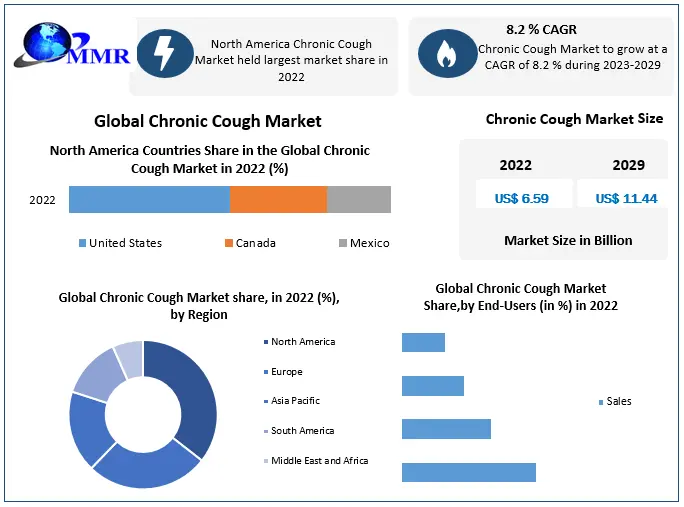 To know about the Research Methodology :- Request Free Sample Report
Chronic Cough Market Dynamics
Increasing prevalence of Chronic Cough to boost the market growth.
Chronic Cough is commonly caused due to smoking, chronic obstructive pulmonary disease (COPD) and chest radiographic abnormalities. Smoking is a significant cause of Chronic Cough. Over 40 percent of the participants who smoked daily and 27 percent who smoked occasionally experiences the production of phlegm and chronic cough. The prevalence of chronic cough is related to smokers. Smoking is the cause of 5-40 percent of chronic bronchitis and in the general population, chronic cough is the most common disease. The people who suffer from Chronic Cough are older, smokers and male-predominant. Hyperlipidemia, COPD, hypertension, diabetes, history of tuberculosis, cardiac disorders and stroke are also associated with chronic cough. The more prevalent causes of Chronic Cough are postnasal drip, asthma and acid reflux. For example, postnasal drip is caused due to the secretions produced in the nose dripping. These secretions include microbes and bacterial components which affect the throat and trigger a cough. This has been mainly occurring in people who grow rhinitis, allergies, colds and sinusitis. The increasing respiratory tract infection and bacterial tracheobronchitis also lead to increased incidences of Chronic Cough. All these factors contribute to the growth of the Chronic Cough market.
The growing advancements in the treatment of Chronic Cough and increasing preference for Nonpharmacologic therapies to fuel the market growth
The development of the “anatomic diagnostic protocol” is the systematic evaluation of the causes which are based on the anatomical distribution of the vagal afferent sensory nerves that regulate the cough. This improves the management of patients undergoing chronic disease. By using the anatomic diagnostic protocol, the cause of the chronic cough has been determined 88 % to 100%. Gastroesophageal reflux disease (GERD) is the most common cause of Chronic Cough and the most specific and sensitive test is 24-hour esophageal pH monitoring. This test evaluates the frequency as well as the duration of the reflux episodes and also determines the temporal relationship between the reflux events of the cough. Recently, non-pharmacological cough control therapy and pathology therapy is the more prominent treatment option for patients with chronic refractory cough. Nonpharmacologic therapies improve the health of individuals without interfering with the use of any medicine or drugs. For example companionship, exercise, massage therapy, medication and pastoral counseling. More people are precisely using non-pharmacologic therapies due to people experiencing alcohol and use drug disorders, suicidal ideation, self-inflicted injuries, and accidental or poisonings intentional drugs. As a result, rising advancements in Chronic Cough treatment and increasing preference for Nonpharmacologic therapies to fuel the growth of the
Chronic Cough Market Restraints
High Cost of Drugs and Treatments
The high costs of the drugs associated with chronic cough are due to an increase in the number of incidences of chronic cough. The unnecessary repeated testing and multiple referrals to polypharmacy and development of the comorbidities due to the deficiency of the proper treatment. The diagnosis treatments for chronic cough are very costly. The annual medical cost per patient with chronic cough including prescription medications, office visits and hospitalization is an average of USD 3266.
Lack of skilled Professionals
Sometimes the chronic cough has been complicated and the professionals cannot handle the patients and do not understand the cause of the chronic cough. This results in a negative effect on the patient’s health. Thus, the Lack of skilled and trained professionals hamper the growth of the market.
Chronic Cough Market Segment Analysis
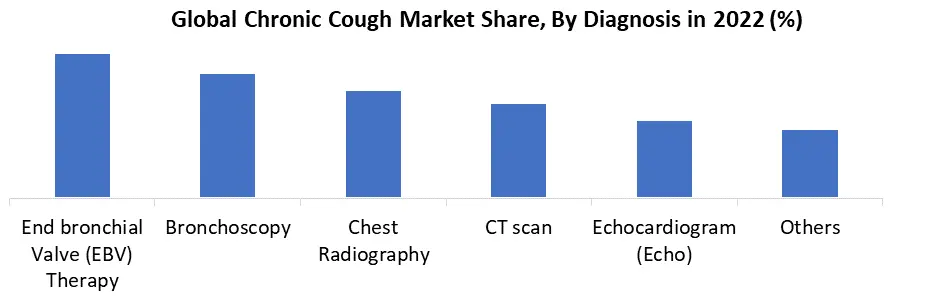
On the basis of the drug class, the market is divided into Antihistamines, Corticosteroids, Decongestants, Combination Drugs, Antibiotics, Acid Blockers and Others. The Antihistamines segment dominated the market in 2022 with the largest market share and is expected to continue its dominance over the forecast period. Diphenhydramine is an antihistamine that is used to relieve the symptoms of hay fever, allergies and the common cold. It is a more effective drug used to prevent and treat nausea, vomiting and dizziness. This drug works by blocking certain natural substances that the human body makes while allergic reactions. Antihistamines show Broncho dilatory effects, exercise, and effects on allergen and adenosine-monophosphate-challenge testing. It is also used to prevent allergen-induced nonspecific airway hyperresponsiveness. It also plays a major role to reduce the risk of pollen allergy triggering asthma.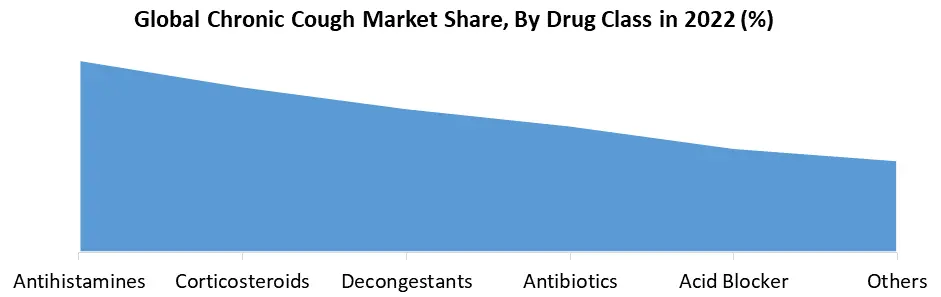 Based on the diagnosis, the market is categorized into End bronchial Valve (EBV) Therapy, Bronchoscopy, Chest Radiography CT scan, Echocardiogram (Echo), and Others. In 2022, End Bronchial Valve (EBV) Therapy held the market with largest revenue. End Bronchial Valve (EBV) Therapy is a removable therapy, the one-way valve that reduces lung hyperinflation by permitting the trapped air to escape. EBV therapy experiences a faster recovery and returns to normal activities with fewer complications and less pain. EBV therapy is a minimally invasive procedure and provides enormous benefits including improved lung function, and reduces less short of breath without taking the risk and recovering the traditional surgical treatment.
 On the basis of the End users, the market is segmented into Hospitals, Homecare, Speciality centres and others. The hospital segment is expected to lead the market with a significant CAGR during the forecast period. The increasing prevalence of chronic cough has pushed patients to enter hospitals for the treatment of it. A more advanced diagnosis process, medications and treatments are available in hospitals. In hospitals, the more effective drugs are provided with their levels of the cough and for the high level of the chronic cough, doctors offer the diagnosis process to find out the better solution of the chronic cough.
Chronic Cough Market Regional Insights
North America held the Chronic Cough Market in 2022 with the largest market share and is expected to continue its dominance over the forecast period. The regional market is driven by the increasing prevalence of chronic cough, technological developments in the pharmaceuticals and biopharmaceutical industry to innovate more effective drugs for chronic cough, the increasing geriatric population and growing consumer preference towards fast food.
The United States is expected to grow significantly for the chronic cough market during the forecast period. In the United States, the prevalence of chronic cough is approximately 5 % of adults. The development of Gefapixant in the US is an investigational and selective P2X3 receptor antagonist for the treatment of chronic cough. The inhibition of the binding of the Adenosine triphosphate (ATP) to P2X3 receptors reduces chronic cough.
Asia Pacific is expected to have a significant CAGR for the Chronic Cough Market over the forecast period. The increasing incidences of chronic cough, the presence of the key players, the development of drugs for the treatment of chronic cough and growing government initiatives for the improvement of the healthcare infrastructure. India has the major market for chronic cough and leads the regional market. The prevalence of chronic cough was reported to be 2.7 % among women in rural areas according to the definition of chronic bronchitis. The increasing number of smokers and the rapidly growing population are also factors that help to drive the growth of the market.
Competitive Landscape
The Competitive Landscape of the Chronic Cough market covers a number of key companies. It also focuses on the power of the company’s competitive rivals, potential, new market entrants, customers, suppliers and substitute products that drive the profitability of the companies in the Chronic Cough industry. The global Chronic Cough markets include various market players at the country, regional and global levels. The global markets include several market players at country, regional and global levels. These key players are adopting several strategies including investments, partnerships, mergers and acquisitions and joint ventures. The many companies investing in the development of new drugs for the treatment of chronic cough.
NeRRe: NeRRe developing orvepitant, a neurokinin (NK)-1 receptor antagonist used for the daily treatment of cough hypersensitivity disorders. The NeRRe has been continuing for the development of the chronic cough caused by the terminal and rare lung disease pulmonaryic pulmonary fibrosis (IPF). This is the class of antiemetic drugs which possess unique antidepressant, anxiolytic, and antiemetic properties. It is the most effective receptor to treat postsurgical nausea and vomiting which are the causes of chronic cough.
Chronic Cough Market Scope: Inquire before buying
| Chronic Cough Market | |||
|---|---|---|---|
| Report Coverage | Details | ||
| Base Year: | 2022 | Forecast Period: | 2023-2029 |
| Historical Data: | 2018 to 2022 | Market Size in 2022: | US $ 6.59 Bn. |
| Forecast Period 2023 to 2029 CAGR: | 8.2% | Market Size in 2029: | US $ 11.44 Bn. |
| Segments Covered: | by Drug Class | Antihistamines Corticosteroids Decongestants Combination Drugs Antibiotics Acid Blockers Other |
|
| by Diagnosis | End bronchial Valve (EBV) Therapy Bronchoscopy Chest Radiography CT scan Echocardiogram (Echo) Others |
||
| by Route of Administration | Oral Injections Inhalation Others |
||
| by End-Users | Hospitals Homecare Specialty Centres Others |
||
| by Distribution Channel | Hospital Pharmacy Online Pharmacy Retail Pharmacy |
||
Chronic Cough Market, by Region
North America (United States, Canada and Mexico)
Europe (UK, France, Germany, Italy, Spain, Sweden, Austria and the Rest of Europe)
Asia Pacific (China, South Korea, Japan, India, Australia, Indonesia, Malaysia, Vietnam, Taiwan, Bangladesh, Pakistan and the Rest of APAC)
South America (Brazil, Argentina Rest of South America)
Middle East & Africa (South Africa, GCC, Egypt, Nigeria and the Rest of ME&A)
Chronic Cough Key Players
1. Cipla Inc.
2. Reckitt Benckiser Group plc.
3. Hikma Pharmaceuticals Plc
4. NeRRe Therapeutics (U.K.)
5. Merck
6. Novartis
7. Bellus Health
8. Teva Pharmaceutical Industries Ltd.
9. Sun Pharmaceutical Industries Ltd. (India)
10. Aurobindo Pharma (India)
11. Bristol-Myers Squibb Company (U.S.)
12. Biocon (India)
13. Shionogi
14. Bayer
15. Micro Labs Ltd
16. Apotex Inc.
17. Amneal Pharmaceuticals LLC
18. Aurobindo Pharma
19. Glenmark Pharmaceuticals Ltd
Frequently Asked Questions:
1] What is the growth rate of the Global Chronic Cough Market?
Ans. The Global Chronic Cough Market is growing at a significant rate of 8.2 % during the forecast period.
2] Which region is expected to dominate the Global Chronic Cough Market?
Ans. North America is expected to dominate the Chronic Cough Market during the forecast period.
3] What is the expected Global Chronic Cough Market size by 2029?
Ans. The Chronic Cough Market size is expected to reach USD 11.44 Bn by 2029.
4] Which are the top players in the Global Chronic Cough Market?
Ans. The major top players in the Global Chronic Cough Market are Cipla Inc. , Reckitt Benckiser Group plc., Hikma Pharmaceuticals Plc, NeRRe Therapeutics (U.K.), Merck, Novartis, Bellus Health, Teva Pharmaceutical Industries Ltd. And others.
5] What are the factors driving the Global Chronic Cough Market growth?
Ans. The increasing prevalence of chronic cough and developments of the drugs treating chronic cough are expected to drive market growth during the forecast period.