
Biobatteries Market – Global Market Size, Strategic Growth Drivers, Risk Assessment Framework, Regulatory Landscape Review, Competitive Intensity Mapping & Long-Term Industry Outlook to 2032
Overview
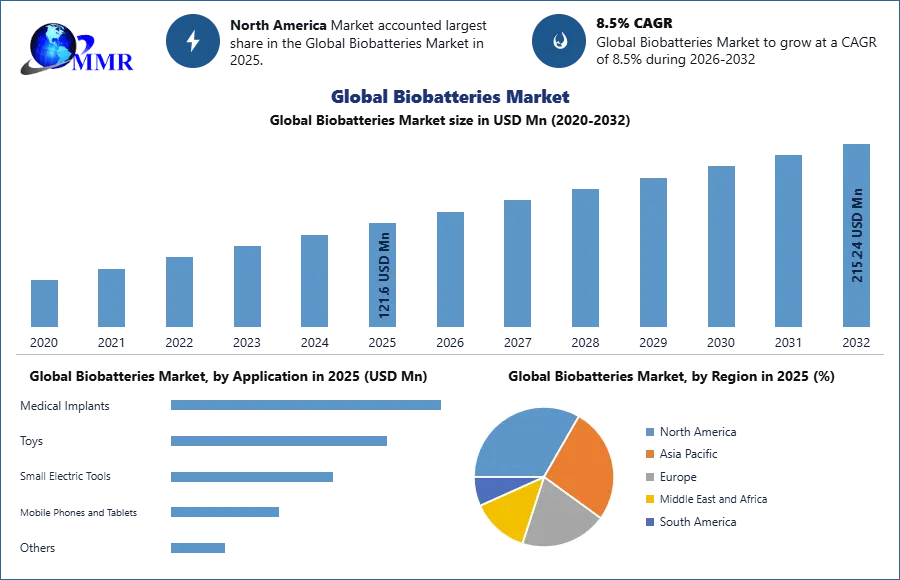
The Biobatteries Market size was valued at USD 121.6 Million in 2025 and the total Biobatteries revenue is expected to grow at a CAGR of 8.5% from 2026 to 2032, reaching nearly USD 215.24 Million.
Biobatteries Market Overview:
The biobatteries market is an emerging field in the energy sector that uses living organisms or their components to generate electricity. Biobatteries provide sustainable and environmentally friendly alternatives to traditional batteries that rely on non-renewable resources. The biobatteries market is expected to grow significantly in the forecast years, driven by increasing demand for clean and sustainable energy sources. Biobatteries have applications in various fields, including medical implants, sensors, and portable electronics.
Currently, the market is dominated by research and development efforts, with many universities, research institutes, and companies exploring different types of biobatteries and their applications. However, the commercialization of biobattery technology is still in the early stages, and several challenges need to be overcome before it can become a viable alternative to traditional batteries. One of the major challenges in the biobattery market is improving the efficiency and scalability of the technology. Biobatteries currently have lower energy density and power output compared to traditional batteries, which limits their application in high-energy applications. Despite the challenges, the biobatteries market holds significant potential for growth and innovation in the energy sector. As research and development efforts continue, biobattery technology is expected to become more efficient and cost-effective, making it a promising alternative to traditional batteries.
To know about the Research Methodology :- Request Free Sample Report
Biobatteries Market
Market Dynamics:
Competitive Landscape: The biobatteries market is an emerging field in the energy sector that uses living organisms or their components to generate electricity. Biobatteries provide sustainable and environmentally friendly alternatives to traditional batteries that rely on non-renewable resources. Currently, the biobatteries market is dominated by research and development efforts, with many universities, research institutes, and companies exploring different types of biobatteries and their applications.
Living Batteries: The UK-based company has raised £1.2 million ($1.6 million) in seed funding in 2021 to develop its biobattery technology. The company is focused on developing a prototype biobattery that uses bacteria to generate electricity.
Bioo: The Spanish company has raised $2.2 million in funding to develop its biobattery products. The company's flagship product is a plant pot that generates electricity from the photosynthesis process of plants. Bioo has also developed a range of other biobattery products, including a smart bench that uses solar energy and biobattery technology to charge mobile devices.
FullCycle Bioplastics: The US-based company has raised $58 million in funding to develop its biodegradable plastics and biobattery technology. FullCycle Bioplastics has developed a biobattery technology that uses organic waste as a fuel source to generate electricity. The company aims to use its technology to address the global plastic waste crisis and provide sustainable energy solutions.
Cell-Free Technology: The US-based company has raised $4.5 million in funding to develop its biobattery technology. Cell-Free Technology has developed a biobattery that uses cell-free systems to generate electricity. The company's technology has potential applications in the medical device and wearable markets, where a reliable power source is crucial for the safe and effective operation of devices.
Moreover, the biobatteries market is expected to grow significantly in the forecast period, driven by increasing demand for clean and sustainable energy sources. While there are still challenges to be overcome in improving the efficiency and scalability of biobattery technology, the market is attracting significant investment from both established companies and startups. As more companies and research institutions enter the market and develop new biobattery technologies, we can expect to see increased competition and innovation in this space, leading to more efficient and cost-effective biobattery products in the future.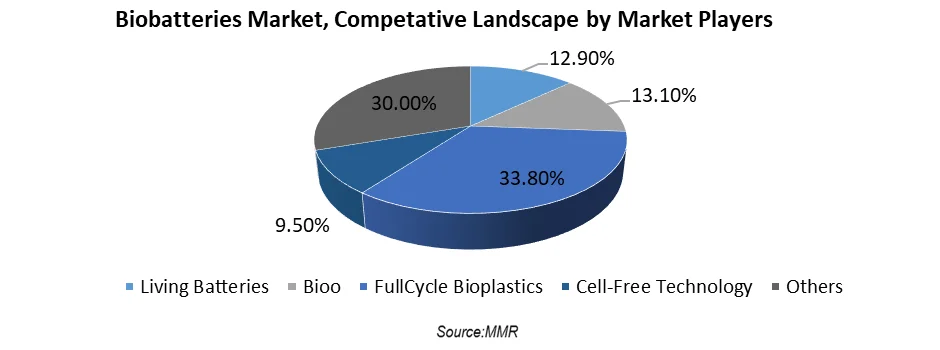 Biobatteries Market Trend
Organic Waste Emerges as a Sustainable Fuel Source for Biobattery Technology, Driving Growth in the Biobatteries Market
Organic waste, including agricultural waste, food waste, and animal waste, is abundant and widely available, making it an attractive and cost-effective alternative to traditional battery fuels. Additionally, using organic waste as a fuel source for biobattery technology helps reduce the amount of waste that ends up in landfills, providing an additional environmental benefit. For example, FullCycle Bioplastics, a US-based company, has developed a biobattery technology that uses organic waste as a fuel source to generate electricity. The company aims to use its technology to address the global plastic waste crisis and provide sustainable energy solutions.
Another example is the Biobattery Waste Treatment (BWT) system developed by researchers at the University of South Wales in Australia. The BWT system uses organic waste as a fuel source to generate electricity while simultaneously treating the waste. The researchers estimate that the system has the potential to offset up to 4% of Australia's greenhouse gas emissions. Moreover, the trend towards using organic waste as a fuel source for biobattery technology is expected to drive growth in the biobatteries market, providing a sustainable and environmentally friendly alternative to traditional battery fuels.
Biobatteries Market Drivers
Growing Demand for Clean Energy Sources Drives Growth in the Biobatteries Market
Biobatteries offer a sustainable and environmentally friendly alternative to traditional batteries that rely on non-renewable resources. Additionally, biobatteries have the potential to be more cost-effective and efficient than traditional batteries, particularly for low-power applications. For example, the automotive industry has been exploring biobattery technology as a potential alternative to traditional batteries for electric vehicles. Toyota has developed a biobattery that uses sugar as a fuel source to generate electricity, while researchers at the University of Maryland have developed a biobattery that uses wood as a fuel source. Similarly, biobatteries have been used in wearable devices and medical implants, where a reliable and sustainable power source is essential. Moreover, the growing demand for clean and renewable energy sources is expected to drive the adoption of biobattery technology, particularly in the transportation and electronics industries, leading to significant growth in the biobatteries market.
Biobatteries Market Restraint
Limited Scalability and Commercial Viability of Biobattery Technology Impedes Market Growth.
Although biobatteries offer several advantages over traditional batteries, such as sustainability and cost-effectiveness, the technology is still in its early stages of development and has yet to achieve widespread commercialization. One of the primary challenges facing biobattery technology is scalability. Biobatteries are typically less efficient than traditional batteries and are difficult to scale up to meet the energy demands of larger applications.
Additionally, biobattery technology is still relatively new, and there is a lack of established infrastructure for manufacturing, testing, and commercializing the technology. Furthermore, the lack of regulatory frameworks and standards for biobattery technology poses a challenge to commercialization. This makes it difficult for companies to demonstrate the safety and effectiveness of their biobattery products, hindering their ability to secure investments and scale up their operations. In conclusion, while biobattery technology offers significant potential as a sustainable and eco-friendly alternative to traditional batteries, the limited scalability and commercial viability of the technology remain a key restraint for the biobatteries market.
Biobatteries Market Opportunity
Rising Demand for Wearable Technology and Implantable Medical Devices Creates Opportunities for biobatteries market growth
Wearable technology and medical devices require a reliable and long-lasting power source that can be integrated seamlessly into the device or implant. Biobatteries offer several advantages over traditional batteries in these applications. Biobatteries are made from biocompatible materials, reducing the risk of rejection or adverse reactions when used in implantable medical devices. They are also designed to be flexible and conform to the shape of the device, making them ideal for use in wearable technology.
Biobatteries provide a reliable and sustainable power source for these applications, offering an opportunity for growth in the biobattery market. For example, researchers at the University of Connecticut have developed a biobattery that can be used to power implantable medical devices, such as pacemakers, using glucose from the patient's own body as a fuel source. Moreover, the growing demand for wearable technology and implantable medical devices presents a significant opportunity for the biobatteries market to grow and provide sustainable energy solutions for these applications.
Biobatteries Market Segment Analysis:
Based on Type, the microbial bio-battery segment appears to be one of the most promising and rapidly developing areas within the biobattery market. Microbial bio-batteries use microorganisms such as bacteria to convert organic matter into electricity. They offer several advantages over other types of biobatteries, including higher energy density, longer lifespan, and scalability. According to the analysis of MMR, the microbial fuel cells (MFC) segment of the biobatteries market is expected to grow at a compound annual growth rate (CAGR) of 7.0% This growth is driven by the increasing demand for clean and sustainable energy sources, as well as ongoing research and development activities in the field. Additionally, there are several ongoing research projects focused on improving the efficiency and scalability of microbial bio-batteries. For example, researchers at the University of California, Santa Barbara, have developed a new type of microbial fuel cell that uses nanowires to improve the efficiency of the energy conversion process.
Based on the Application, the medical implants segment dominated the biobatteries market in the year 2023 and is expected to do the same during the forecast period. Biobatteries are increasingly being explored as a potential power source for medical implants, such as pacemakers, defibrillators, and other implantable medical devices. This is due to their biocompatibility and ability to generate electricity from bodily fluids, such as blood or sweat.
According to a report by MMR, the medical implants segment of the biobattery market is expected to grow at a compound annual growth rate (CAGR) of 16.5% from 2023 to 2030. This growth is driven by the increasing prevalence of chronic diseases and the growing demand for implantable medical devices. Moreover, the adoption of wearable devices for healthcare monitoring is also driving the demand for biobattery-powered devices. For instance, a team of researchers from the University of California, San Diego, has developed a wearable biobattery that generates power from sweat to power a Bluetooth low-energy transmitter.
Recent Development: Biobatteries Market
| Exact Date | Company | Development | Impact |
|---|---|---|---|
| 29 January 2025 | Sony Group Corporation | Restructured its management and appointed Shinji Sashida as CEO to prioritize sustainable component innovation, including its ongoing bio-material R&D. | This leadership shift accelerates the commercialization of eco-friendly energy storage solutions derived from biocompatible organic materials. |
| 28 April 2025 | Blue Solutions | Formed a two-year collaborative R&D partnership in Shanghai to advance the development of biopolymer electrolytes for next-generation solid-state cells. | The collaboration focuses on sustainable energy management, providing high-performance bio-based battery alternatives for the global electric mobility market. |
| 25 November 2025 | BeFC (Bioenzymatic Fuel Cells) | Launched a strategic partnership with ONiO to integrate bioenzymatic fuel cells with batteryless microcontrollers for green electronics. | This commercialization milestone enables a new era of metal-free, recyclable power sources for low-power IoMT and smart packaging applications. |
| 02 February 2026 | Stora Enso | Announced the full integration of its Lignode® bio-carbon anode material into a new line of circular battery solutions for European partners. | Utilizing lignin from wood pulp as a renewable carbon source significantly reduces the environmental footprint of large-scale energy storage systems. |
| 13 February 2026 | e-TRNL Energy | Secured ₹27.4 crore in seed funding led by IAN Alpha Fund to scale its chemistry-agnostic battery architecture. | The capital infusion will be used to demonstrate sustainable cell manufacturing at scale, focusing on safety and cycle life for emerging markets. |
| 05 March 2026 | BeFC (Bioenzymatic Fuel Cells) | Presented its latest paper-based bio-battery prototype for real-time environmental monitoring at the 2026 Tech & Fest. | The event showcased the viability of enzymatic power for disposable logistics trackers, driving market adoption in the sustainable supply chain sector. |
Biobatteries Market Regional Insights:
North America holds the largest share of 42% in the biobatteries market in 2023, followed by Europe and the Asia Pacific. This growth is attributed to the increasing adoption of biobattery-powered devices in various applications, such as medical implants, consumer electronics, and automotive, among others. The biobattery market in North America is expected to grow at a significant rate in the forecast years, driven by the increasing demand for renewable energy sources, the need for sustainable technologies, and the rising adoption of biobattery-powered devices in various applications.
The presence of several key players in the region, such as Bioo Scientific, Inc., E3 Technologies, LLC, and BlueSolutions, among others, is driving the growth of the biobattery market in North America. These companies are focusing on developing innovative biobattery products and expanding their market presence through strategic partnerships and collaborations. Moreover, the increasing investments in research and development activities in the region are further driving the growth of the biobattery market. For instance, the United States Department of Energy (DOE) has invested heavily in the development of sustainable and renewable energy technologies, including biobattery technology. Additionally, the increasing adoption of biobattery-powered devices in various applications, such as consumer electronics, medical implants, and automotive, among others, is further driving the growth of the biobattery market in North America.
The biobatteries market in Europe is expected to witness significant growth in the forecast years, driven by the increasing focus on renewable energy sources and sustainable technologies, along with the increasing investments in research and development activities in the region. The European Union has set a target to achieve a 32% share of renewable energy by 2030, which is expected to drive the growth of the biobatteries market in the region. Moreover, the increasing awareness about the adverse effects of fossil fuels on the environment and the need for sustainable energy sources are further driving the growth of the biobatteries market in Europe.
Furthermore, the increasing investments in research and development activities in the region are further driving the growth of the biobattery market in Europe. For instance, the European Commission has invested heavily in the development of sustainable and renewable energy technologies, including biobattery technology. Moreover, the biobatteries market in both North America and Europe is expected to witness significant growth in the coming years, driven by the increasing demand for renewable energy sources, the need for sustainable technologies, and the rising adoption of biobattery-powered devices in various applications.
Global Biobatteries Market Scope: Inquire before buying
| Global Biobatteries Market | |||
|---|---|---|---|
| Report Coverage | Details | ||
| Base Year: | 2025 | Forecast Period: | 2026-2032 |
| Historical Data: | 2020 to 2025 | Market Size in 2025: | 121.6 USD Billion |
| Forecast Period 2026-2032 CAGR: | 8.5% | Market Size in 2032: | 215.24 USD Billion |
| Segments Covered: | by Type | Enzymatic Bio-Battery Sugar Microbial Others |
|
| by Material Type | Carbon Nanotubes Graphene Enzyme-based Materials Others |
||
| by Application | Medical Implants Toys Small Electric Tools Mobile Phones and Tablets Others |
||
| by End User | Healthcare Consumer Electronics Industrial Defense & Military Others |
||
Biobatteries Market, by Region
North America (United States, Canada and Mexico)
Europe (UK, France, Germany, Italy, Spain, Sweden, Austria and Rest of Europe)
Asia Pacific (China, South Korea, Japan, India, Australia, Indonesia, Malaysia, Vietnam, Taiwan, Bangladesh, Pakistan and Rest of APAC)
Middle East and Africa (South Africa, GCC, Egypt, Nigeria and Rest of ME&A)
South America (Brazil, Argentina Rest of South America)
Biobatteries Market Key Players
- Panasonic Corporation
- Sony Corporation
- Siemens AG
- Fujifilm Corporation
- Hitachi Chemical Co. Ltd.
- NEC Corporation
- Murata Manufacturing Co. Ltd.
- Maxell Holdings Ltd.
- Sanyo Electric Co. Ltd.
- Aisin Corporation
- Johnson Matthey
- Greenlight Biosciences
- Enzinc Inc.
- Nokia Bell Labs
- Nippon Telegraph and Telephone Corporation (NTT)
- Cambrian Innovation Inc.
- Aquacycl Inc.
- Emefcy Ltd. (Fluence Corporation)
- Microbial Energy Inc.
- Protonex Technology Corporation
- Prongineer R&D Ltd.
- Triqua International B.V.
- MICROrganic Technologies Inc.
- Microbial Robotics LLC
- Sainergy Tech Inc.
- Frontis Energy GmbH
- FuturoLEAF Oy
- Electro-Active Technologies Inc.
- Cascade Clean Energy Inc.
- Kurita Water Industries Ltd.
Frequently Asked Questions:
1] What segments are covered in the Global Biobatteries Market report?
Ans. The segments covered in the Biobatteries Market report are based on Type, Application, and Region.
2] Which region is expected to hold the highest share in the Global Biobatteries Market?
Ans. The North America region is expected to hold the highest share of the Biobatteries Market.
3] What is the market size of the Global Biobatteries Market by 2032?
Ans. The market size of the Biobatteries Market by 2032 is expected to reach US$ 215.24 Mn.
4] What is the forecast period for the Global Biobatteries Market?
Ans. The forecast period for the Biobatteries Market is 2026-2032.
4] What was the Global Biobatteries Market size in 2025?
Ans: The Global Biobatteries Market size was USD 121.6 Million in 2025.