
Australia Dermatology Drugs Market Size by Disease, Route Of Administration, Distribution Channel and Region – Segment-Level Market Assessment, Growth Opportunity Analysis, Competitive Mapping & Forecast to 2030
Overview
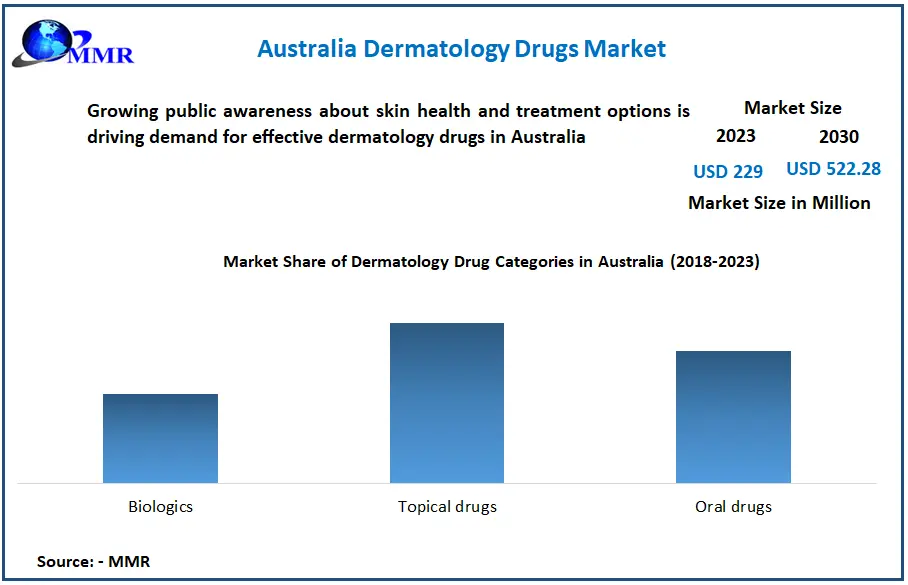
The Australia Dermatology Drugs Market size was valued at USD 229 million in 2023. The total Australian Dermatology Drugs Market revenue is expected to grow at a CAGR of 12.5% from 2023 to 2030, reaching nearly USD 522.28 Million in 2030.
Australia Dermatology Drugs Market Analysis
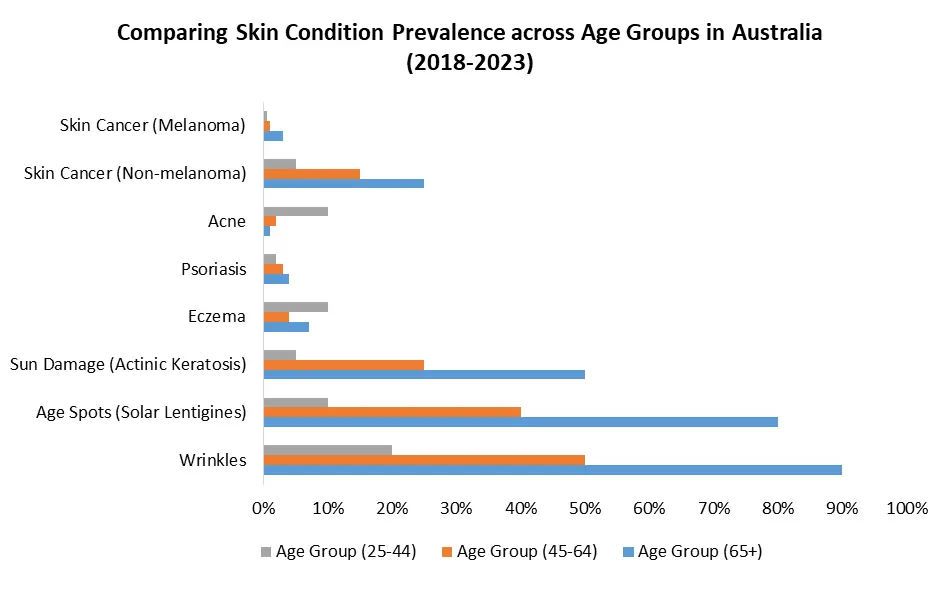
The Market Research (MMR) research report highlights the substantial growth that has been seen in the dermatology drug market in the past few years. Factors such as an increased incidence of skin illnesses, a growing aging population, and an increase in demand for cosmetic operations have been identified as important drivers of the market's growth. The report focuses on the market dynamics influenced by demographic trends and customer choices, which confirms the sector's strong growth potential. The growing market for biologics that are personalized medicines with great efficacy represents an excellent chance to invest in the dermatological sector. Teledermatology provides a convenient and accessible service approach for skin consultations. Personalized medicine, which tailors therapies based on genetic profiles, and preventive skincare, which focuses on early intervention and skin health product creation, are both attractive potential. The Australian dermatology Drugs Market is driven by a high prevalence of skin problems, such as psoriasis in 300,000 Australians, eczema in 10%, and prevalent acne in adolescents. Increased consumer spending on healthcare, attributed to a growing focus on personal well-being, is consistent with government efforts to improve healthcare availability and affordability. Significant investments in research and development help to build a dynamic pipeline of new dermatology treatments.
| 1.Employment: - The healthcare sector employs about XX% of the Australian workforce (More than XX million people), which indirectly includes dermatology medications. |
| 2.Average net profit margin: - The Australian pharmaceutical industry is estimated to be around 15%. |
| 3.Higher Profit Margin Segment: - Biologics is considered a high-profit margin segment, it is up to XX%. |
 To know about the Research Methodology :- Request Free Sample Report
Biologics and Targeted Therapies
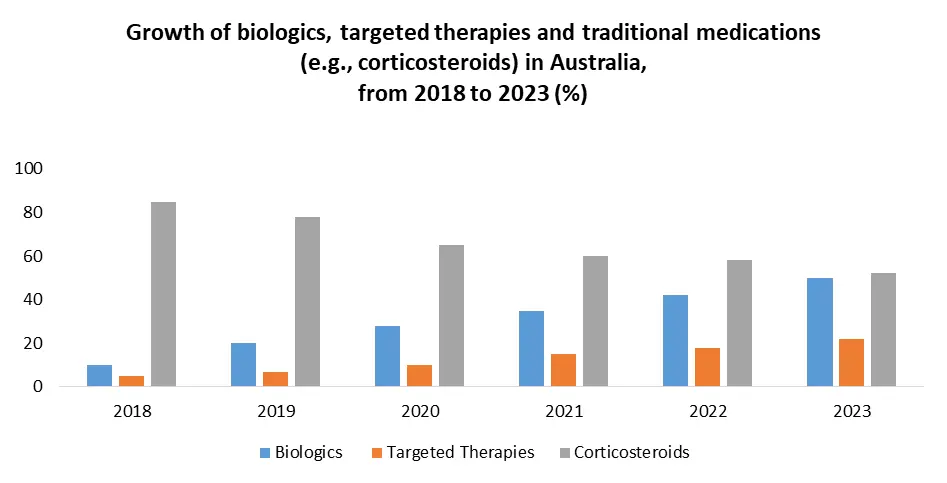
The Australian dermatology landscape is witnessing a significant shift towards biologics and targeted therapies, particularly for chronic and severe skin conditions like psoriasis. Biologics, which are generated from living organisms, excel in treating skin disorders by targeting specific immunological pathways, outperforming standard pharmaceuticals such as corticosteroids. The personalized method allows medicines to be customized based on individual illness characteristics and genetic profiles, hence increasing the overall effectiveness. Biologics have generally better safety profiles than previous systemic drugs such as methotrexate, providing patients with more and safer therapy alternatives as new biologics for diverse skin disorders are introduced through ongoing research. The biologics movement has had a significant impact on dermatology. Research reveals that psoriasis sufferers have better disease control, which leads to clearer skin and a higher quality of life. The efficiency translates into lower hospitalization rates, which reduces healthcare expenses. The specific approach leads to greater patient satisfaction and mental well-being. Beyond individual benefits, there are greater economic and societal benefits, such as higher production and lower expenditures for disability and lost workdays.
1. According to MMR analysis, in 2023, the use of biologics for psoriasis increased by 20% as compared to 2018
2. In 2023, 87% of patients treated with biologics for psoriasis achieved significant improvement in skin clearance.
3. The Australian Pharmaceutical Benefits Scheme (PBS) currently lists 10 different biologics for various skin conditions, highlighting the growing accessibility of these therapies.
High Development Cost
The difficulty of high medicine pricing in dermatology originates from the need for pharmaceutical corporations to recover significant research and development expenditures, which frequently results in pricey medications. The monetary dynamics limit patients' access to breakthrough treatments. Also, as a result of smaller patient populations, there is less investment in investigating rare skin illnesses, resulting in disparities in treating the varied spectrum of dermatologic needs. Industries target high-profit illnesses, perhaps overlooking individuals with less prevalent skin ailments in their research and development efforts.
Factors contributing to these high costs
1. Skin conditions involve intricate biological processes, requiring extensive research to understand and target effectively.
2. Compared to chronic diseases such as diabetes and cancer, dermatological conditions affect smaller patient populations, potentially decreasing potential financial returns.
Australia Dermatology Drugs Market Segment Analysis
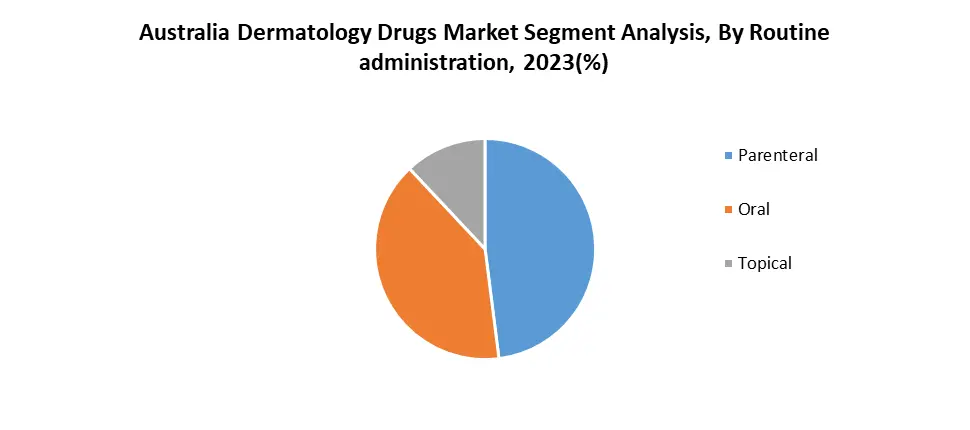
By Routine Administration, The Topical segment occupies about 48 percent of the total Australian Dermatology Drugs Market. The effects of topical dermatological treatments are diverse. Their convenience, as seen with ease of use and self-management, increases patient preference and compliance. Affordability is a significant advantage, putting topicals as more cost-effective alternatives to other therapy sectors, and enhancing market accessibility. Topical treatments, which range from moisturizers to corticosteroids, are versatile and can address a variety of skin issues. However their efficacy is limited for severe or systemic illnesses, limiting market penetration. In addition, topical steroids may have potential side effects, impacting certain patients' choices and underlining the necessity of informed decision-making in dermatological care.
Australia Dermatology Drugs Market Scope: Inquire Before Buying
| Australia Dermatology Drugs Market | |||
|---|---|---|---|
| Report Coverage | Details | ||
| Base Year: | 2023 | Forecast Period: | 2024-2030 |
| Historical Data: | 2018 to 2023 | Market Size in 2023: | US $ 229 Mn. |
| Forecast Period 2024 to 2030 CAGR: | 12.5% | Market Size in 2030: | US $ 522.28 Mn. |
| Segments Covered: | by Disease | Psoriasis Acne Vulgaris Atopic Dermatitis Eczema Rosacea Ichthyosis Vitiligo |
|
| by Route Of Administration | Parenteral Oral Topical |
||
| by Distribution Channel | Online Pharmacies Hospital Pharmacies Retail Pharmacies |
||
Key Players in the Australia Dermatology Drugs Market
1. Alpha pharms
2. Aspen Pharmacare
3. Bioscience International
4. Faulding
5. Medical Developments International
6. SDA Pharmaceuticals
7. Vision Pharma
8. Galderma.
FAQs:
1. What are the key drivers influencing the growth of the Dermatology Drugs Market in Australia?
Ans. Factors such as an increasing prevalence of skin disorders, rising awareness about skincare, advancements in dermatological research, and a growing aging population are among the key drivers.
2. Which dermatological conditions have a significant impact on the market?
Ans. Conditions such as psoriasis, acne, eczema, and skin cancer contribute significantly to the demand for dermatology drugs in Australia. Market trends may shift based on the prevalence of these conditions.
3. What is the projected market size & and growth rate of the Australian Dermatology Drugs Market?
Ans. The Australia Dermatology Drugs Service Market size was valued at USD 229 Million in 2023. The total Australia Dermatology Drugs market revenue is expected to grow at a CAGR of 12.5% from 2023 to 2030, reaching nearly USD 522.28 Million By 2030.