
Watches Market by Segments and Region – Global Market Size Estimation, Industry-Wide Analysis, Competitive Landscape Assessment & Long-Term Forecast to 2032
Overview
Watches Market size was valued at USD 120.05 billion in 2025, and the total Revenue is expected to grow at a CAGR of 5.17% from 2026 to 2032, reaching nearly USD 170.85 billion.
Watches Market Overview
Watches are designed to measure and display time accurately and conveniently. The watches market is influenced by consumer trends and preferences, such as the growing demand for smartwatches, customization options, sustainable and ethically produced watches, and vintage or retro-inspired designs. The Watches market experiences shifts in demand based on cultural, fashion, and lifestyle influences. The rise of online retail has significantly impacted the watches market, allowing consumers to explore a vast array of options and make purchases from the comfort of their homes. Well-established luxury watches brands coexist with emerging and mid-range brands. Brand reputation, heritage, and innovation are crucial factors influencing consumer choices in the Watches Market.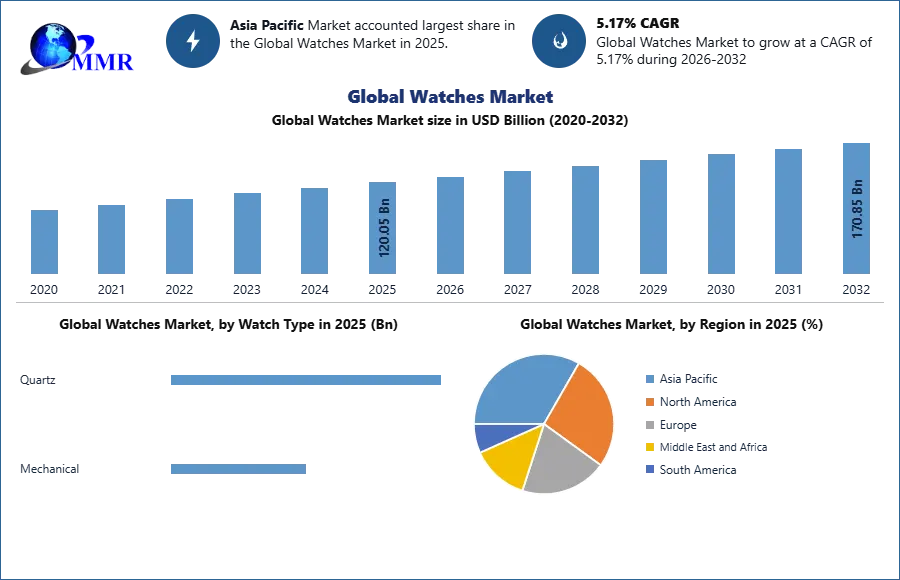 To know about the Research Methodology :- Request Free Sample Report
Watches Market Dynamics
Fashion and Style Trends to boost the Watches market growth
Watches are not just functional timekeeping devices but also fashion accessories that reflect personal style and taste. Fashion trends play a significant role in driving consumer demand for watches, as people seek timepieces that align with current fashion aesthetics, whether it's classic, minimalist, sporty, or trendy. The influence of fashion icons, celebrities, and influencers can also drive watch trends. Luxury watches, particularly those from renowned brands, carry a status symbol and prestige value. A high-end luxury watch is often associated with wealth, success, and luxury lifestyle, which appeals to consumers seeking a symbol of social status and exclusivity.
The integration of advanced technology into watches has driven the growth of the smartwatch segment. Smartwatches offer features beyond timekeeping, such as fitness tracking, smartphone connectivity, health monitoring, and app integration. The culture of gifting watches, especially for significant milestones, is expected to drive the Watches market. Additionally, limited-edition and commemorative watches attract collectors and enthusiasts who value watches as collectible items.
Continuous innovation in watchmaking techniques, materials, and design fuels consumer interest and desire for new and improved watches. From advancements in precision and accuracy to the use of innovative materials, such as ceramic or carbon fiber, technological innovations, and captivating designs contribute to the appeal and desirability of watches. Strong brand positioning, effective marketing campaigns, and brand recognition play a crucial role in driving consumer demand for watches. Established watch brands with a rich heritage and reputation often enjoy a loyal customer base, while effective marketing strategies help create awareness and desire for watches among potential buyers.
Economic factors to restrain the Watches market growth
Economic fluctuations, recessions, or unstable economic conditions can impact consumer spending habits, including the purchase of luxury goods like watches. During periods of economic uncertainty or downturns, consumers may prioritize essential expenses over discretionary purchases, leading to a decline in demand for watches. The watches market is susceptible to counterfeit and imitation products. Counterfeit watches can negatively affect consumer trust, brand reputation, and Watches market share.
Counterfeit products often mimic the appearance of genuine watches but lack the quality, craftsmanship, and reliability of authentic timepieces. This poses a challenge for legitimate watch brands and Watch manufacturers. The watches market is highly competitive, and many brands offer similar styles and features, which is expected to restrain the Watches market growth. Consumer preferences and demographics are subject to change over time. The preferences of younger generations, such as millennials and Gen Z, may differ from older generations, impacting the demand for specific watch styles, features, and brands. Brands must adapt to evolving consumer preferences and target their marketing efforts accordingly.
Watches span a wide range of price points, from affordable fashion watches to high-end luxury timepieces. Price sensitivity can affect consumer purchasing decisions, particularly during economic downturns or when alternative options are available. Consumers may opt for lower-priced alternatives or delay their purchase of expensive watches, impacting the market's overall revenue. Increasingly, consumers are becoming conscious of sustainability and ethical factors when making purchasing decisions. Concerns about the environmental impact of watch manufacturing, the sourcing of materials, and labor practices can influence consumer choices. Brands that prioritize sustainability initiatives and transparent supply chains have a competitive advantage and limit Watches market share.
Trends in Watches Market
Customization and Personalization: Consumers are seeking watches that reflect their individuality and personal style. Brands are responding by offering customization options, allowing customers to select dial designs, case materials, strap variations, and other personalized elements. Customization enhances the uniqueness and emotional connection between the consumer and the watch.
Vintage and Retro-Inspired Designs: There is a growing appreciation for vintage and retro-inspired watches. These timepieces often draw inspiration from classic designs of the past, incorporating nostalgic elements, such as domed crystals, vintage dial layouts, and retro color palettes. Vintage watches hold a charm and timeless appeal that resonates with collectors and enthusiasts.
Sustainable and Ethical Practices: Consumers are increasingly conscious of sustainability and ethical considerations when making purchasing decisions. This trend has led to a rise in sustainable watch brands that focus on responsible sourcing of materials, ethical manufacturing processes, and reduced environmental impact. Recycled materials, renewable energy use, and fair-trade practices are becoming more prevalent in the watches industry.
Hybrid and Analog-Digital Watches: Hybrid watches combine traditional analog watch elements with smartwatch features. These watches offer the aesthetics of a traditional timepiece while providing limited smart functionalities such as activity tracking, notification alerts, and smartphone connectivity. Hybrid watches cater to consumers who appreciate the classic design but still desire some smart features.
Minimalist and Bauhaus-Inspired Designs: Minimalist watch designs have gained popularity in recent years. Inspired by the Bauhaus movement, these watches focus on clean lines, simplicity, and functionality. Minimalist watches often feature sleek dials, uncluttered designs, and understated aesthetics that appeal to those seeking a timeless and versatile timepiece.
Collaboration and Limited Editions: Collaborations between watch brands and other industries, such as fashion, sports, or entertainment, have become prevalent. Limited edition watches resulting from such partnerships create excitement among collectors and enthusiasts. These collaborations offer unique designs, special branding, and limited availability, making them highly sought after.
Reimagined Classics: Brands are reinventing their iconic watch models by incorporating modern features and design elements. These reimagined classics retain the essence of the original timepiece while incorporating contemporary materials, color schemes, and improved functionality. This trend appeals to both watches market enthusiasts and new consumers looking for a blend of heritage and modernity.
Retrograde and Unconventional Time Displays: Leading watches manufacturers are experimenting with unconventional time displays, such as retrograde hands, jumping hours, or alternative dial layouts. These unique timekeeping mechanisms offer a distinct visual appeal and attract those who appreciate horological craftsmanship and innovative design.
Watches Market Regional Insight
Increasing Urbanization and Fashion Consciousness to boost Asia Pacific Watches Market growth
Asia Pacific is expected to hold the largest Watches market share over the forecast period. Rapid urbanization and the influence of global fashion trends have contributed to a rise in fashion-conscious consumers in the Asia Pacific region. The desire to stay updated with the latest fashion and style trends has boosted the demand for fashionable and trendy watches is expected to boost the regional market growth. The Asia Pacific region has a rich cultural heritage and appreciation for traditional watchmaking.
Countries like Japan and Switzerland have a strong presence in the market, renowned for their craftsmanship and precision. Traditional mechanical watches and complications continue to hold value and appeal for watch enthusiasts. The Asia Pacific region has witnessed the emergence of local watch brands that cater to specific markets and consumer preferences. These brands often incorporate cultural elements, unique designs, and affordable price points to cater to the local market demands.
Rolex is a luxury watches brand in Switzerland valued at USD 8.053 Billion and produces more than 1,000,000 watches every year. Rolex holds 30 percent of the Swiss Watch industry share and a turnover of 8 billion CHF. Switzerland is prominent for its watchmaking industry and is an exporter of watches. Swiss watches, often associated with luxury and precision, are highly required after globally.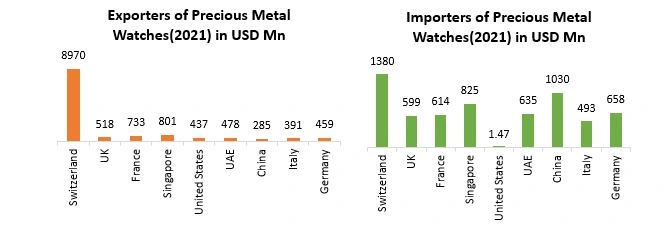 Asia-Pacific Watches market is becoming more environmentally conscious and socially responsible. Consumers are increasingly concerned about the sustainability and ethical practices of watch brands, favoring those that prioritize responsible sourcing, recycling, and reduced environmental impact. Influencers and celebrities play a significant role in shaping consumer preferences in the Asia Pacific region. Endorsements and collaborations with popular figures help create awareness and drive demand for specific watch brands and models.
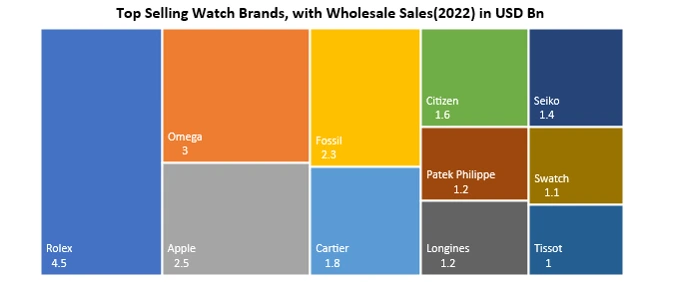 The growth of e-commerce has influenced the watch industry, allowing brands to reach a broader audience. Some watch companies have adopted direct-to-consumer models, cutting out intermediaries and selling directly to customers through their websites. This approach enhances profit margins and provides a more personalized buying experience. Certain watch brands in the U.S. have leveraged their heritage and history to appeal to consumers seeking classic and timeless designs.
Vintage-inspired timepieces have gained popularity, and brands often highlight their historical significance as part of their marketing strategy. The United States is both a significant consumer and importer of watches. It also exports watches, including those produced by American watchmakers. The UK watches market is known for both luxury and fashion watches. They import watches from various countries, including Switzerland, and also export watches globally.
Watches Market Segment Analysis
Based on Gender, the market is segmented into Men's Watches, Women's Watches, and Unisex Watches. Men’s segment held the largest market share in 2025 and is expected to dominate the Watches market over the forecast period. Men's watches encompass a variety of styles, including sporty, formal, casual, and luxury designs. Sport watches feature rugged and durable designs with features like chronographs, tachymeters, and water resistance for active individuals and sports enthusiasts. Men's watches often include various functional features like chronographs, dual time zones, date displays, and specialized functions for specific activities like diving or aviation. Men's watches reflect current fashion trends, with brands introducing new designs, color combinations, and materials to stay in line with men's fashion preferences. Retro and vintage-inspired designs are often popular in men's watches, evoking a sense of nostalgia and classic style, and are expected to boost the segment growth in the Watches market.
Based on Display Type, the market is segmented into Analog Watches, Digital Watches, and Smartwatches. The Smartwatches segment held the largest watches market share in 2025 and is expected to dominate the market over the forecast period. Health tracking features, app integration, and increasing consumer focus on connectivity are expected to drive watch industry growth. Digital watches continue to hold a strong share due to their simplicity, affordability, and user-friendly features. Analog watches, while more traditional, retain steady demand for their classic appeal and association with fashion and luxury.
Watches Market Competitive Landscape
The watches market is highly competitive and several watches manufacturers and brands are in the watch industry. The market is diverse and includes affordable watch brands. The watches market key players are focused on media platforms and online distribution channel for marketing purpose and branding of their products to capture a maximum attention of the customers. The watch manufacturers and brands are majorly focused to increase the watches market penetration. The market report includes key purchase criteria and drivers of the price sensitivity to help watches companies evaluate and develop their growth strategies.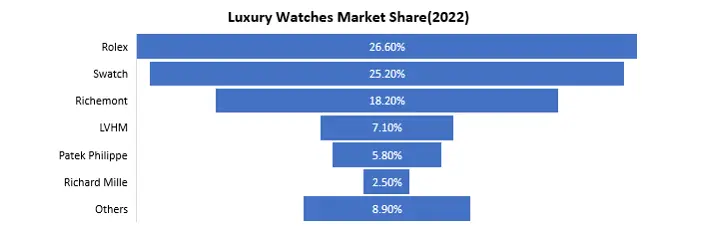 Rolex Group held 26.8 % Watches Market Share bigger than the whole 25.2% share held by the swatch group with all of its multiple brands. All companies are following the same technique used by Rolex, which is leading the way: a progressive “premiumization” of the products, as the entry-level and mid-level niches are becoming more and more challenging due to the competition of high-end smartwatches.
Watches Market Recent Develoment:
| Exact Date | Company | Development | Impact |
|---|---|---|---|
| 19 January 2026 | LVMH Watch Division | The seventh edition of LVMH Watch Week launched in Milan, featuring new timepieces from nine prestigious Maisons. | This event highlights the Group’s creative dynamism and strengthens market positioning through innovative product launches. |
| 01 January 2026 | Rolex | The company implemented an average price increase of 7% globally, with steel models rising by 5.6% and gold models by 8.7%. | This adjustment underscores the brand’s unique pricing power and desirability, sustaining high-end market value amidst economic shifts. |
| 01 January 2026 | Tudor | The brand enacted a strategic price increase of 5.6% in the U.S. and 5.8% in the UK across its core collection. | By aligning pricing with strong demand for models like the Black Bay Chronograph, Tudor optimizes brand positioning. |
| 03 September 2025 | Timex Group India | The company signed a licensing partnership with Aston Martin to manufacture and distribute branded luxury watches. | This move expands the brand's lifestyle portfolio and targets performance-oriented consumers in the growing Indian luxury segment. |
Watches Market Scope: Inquire before buying
| Global Watches Market | |||
|---|---|---|---|
| Report Coverage | Details | ||
| Base Year: | 2025 | Forecast Period: | 2026-2032 |
| Historical Data: | 2020 to 2025 | Market Size in 2025: | 120.05 USD Billion |
| Forecast Period 2026-2032 CAGR: | 5.17% | Market Size in 2032: | 170.85 USD Billion |
| Segments Covered: | by Watch Type | Quartz Mechanical |
|
| by Display Type | Analog Watches Digital Watches Smart Watches |
||
| by Gender | Men Women Unisex |
||
| by Price Range | Mass Premium Luxury |
||
| by Distribution Channel | Offline Retail Online Retail |
||
Watches Market by Region
North America(United States, Canada and Mexico)
Europe (UK, France, Germany, Italy, Spain, Sweden, Austria and Rest of Europe)
Asia Pacific (China, South Korea, Japan, India, Australia, Indonesia, Malaysia, Vietnam, Taiwan, Bangladesh, Pakistan and Rest of APAC)
Middle East and Africa (South Africa, GCC, Egypt, Nigeria and Rest of ME&A)
South America (Brazil, Argentina Rest of South America)
Watches Market Key Companies are:
- Apple Inc.
- Rolex S
- Samsung Electronics Co. Ltd.
- Casio Computer Co. Ltd.
- Citizen Watch Co. Ltd.
- Seiko Group Corporation
- Swatch Group Ltd.
- Fossil Group Inc.
- Garmin Ltd.
- Huawei Technologies Co. Ltd.
- Xiaomi Corporation
- Omega SA
- TAG Heuer
- Tissot SA
- Patek Philippe SA
- Audemars Piguet Holding SA
- Breitling SA
- Hamilton International Ltd.
- Bulova Corporation
- Orient Watch Co. Ltd.
- Panerai
- Movado Group Inc.
- Timex Group
- Titan Company Limited
- Junghans Uhren GmbH
- Sinn Spezialuhren GmbH
- Shinola Detroit LLC
- Skagen Denmark
- Fastrack (Titan Company)
- Grand Seiko
Others
Frequently Asked Questions:
1] What segments are covered in the Watches Market report?
Ans. The segments covered in the Watches Market report are based on Watch type, Display Type, Gender, Price Range, Distribution Channel, and region
2] Which region is expected to hold the highest share of the Watches Market?
Ans. The Asia Pacific region is expected to hold the highest share of the Watches Market.
3] What is the market size of the Watches Market by 2032?
Ans. The market size of the Watches Market by 2032 is USD 170.85 Bn.
4] What is the growth rate of the Watches Market?
Ans. The Global Watches Market is growing at a CAGR of 5.17% during the forecasting period 2025-2032.
5] What was the market size of the Watches Market in 2025?
Ans. The market size of the Watches Market in 2024 was USD 120.05 Bn.
6] Who are the key players in the Global Watches Market?
Ans. The important key players in the Global Watches Market are Apple, Rolex, Casio, Omega, Samsung, Citizen, Seiko, Swatch, TAG Heuer, Garmin ,Grand Seiko, Tissot, Fossil, Timex, Patek Philippe Others