
Recreation Clubs Market - Industry Structure Evaluation, Demand Drivers Analysis, Regional Growth Analysis and Identification, Competitive Positioning Review & Global Market Size Forecast to 2032
Overview
The Recreation Clubs market size was USD 58.92 billion in 2025 and is expected to reach USD 93.26billion by 2032, growing at a CAGR of 6.78% during the forecast period.
Recreation Clubs activities include physical activity, interaction, and play with other people. Recreation Clubs provide facilities for indoor, and outdoor games, sports, and other organized welfare activities. Recreational activities play an important role in communities. Americans support a diverse range of athletic and recreational clubs that provide a variety of sports and leisure activities such as yachting, archery, and tennis. Many of these businesses are independent clubs that are privately owned by the club membership and have no other affiliations.
Recreation Clubs Market growth is primarily driven by a 6.2% increase in the number of clubs across all countries, supported by an increase in the average membership per club. An increase in consumers’ disposable income, the growth of the country club industry, and the trend of golf tourism across the world are the major driver for the Recreation Clubs market growth. However, high investment costs for fitness facilities, high membership prices, and sedentary lifestyles are expected to hamper Recreation Clubs' market growth.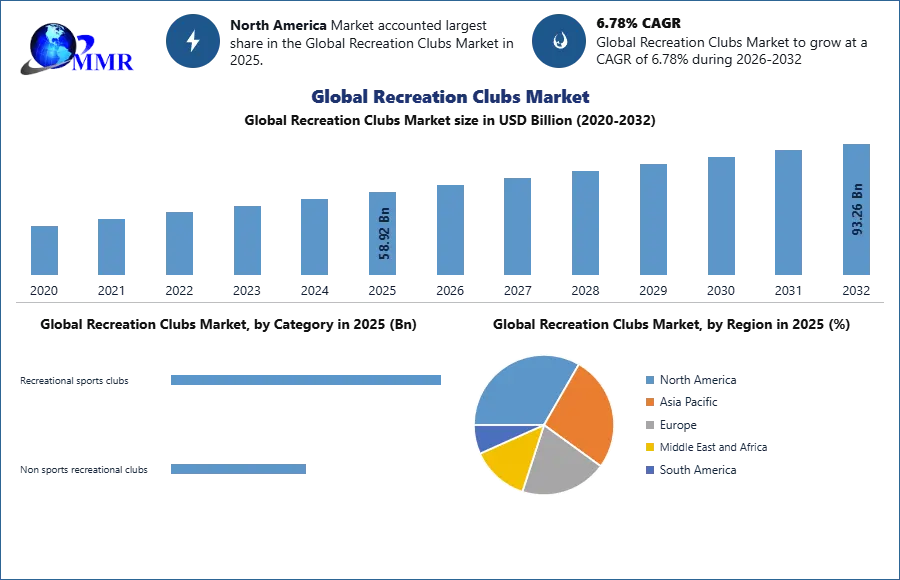 To know about the Research Methodology :- Request Free Sample Report
Recreation Clubs Market Dynamics:
Increase in the average membership per club to boost Recreation Club market growth
Recreational physical activities are mostly driven by private expenditures. Individuals and families are increasingly choosing to spend money on leisure activities that interest them, such as joining a gym or YMCA, attending a fitness class, doing mindful movement (e.g., yoga, Pilates), participating in a recreational sports team, swimming laps, running marathons, and so on. About 190 million people spend money on memberships, classes, and training at commercial gyms, health clubs, and fitness studios to maintain their fitness.
According to MMR, recreational physical activities generated $859.2 billion in private sector economic activity in 2025. Within this market, 44% represents direct consumer expenditures on activity participation (fitness, sports, active recreation, and mindful movement). The remaining 56% represents the enabling sectors (apparel and footwear; fitness equipment, sporting goods, and related supplies; and fitness- and exercise-related technologies). In terms of membership, Germany remains the largest market in Europe with a total of 10.6 million members followed by the UK, France, Italy, and Spain. Health clubs and gyms have experienced tremendous global expansion over the last decade, with over 50% growth in revenues.
Rising disposable incomes and growing awareness of the benefits of exercise
Consumer awareness of the importance of exercise and fitness is growing, especially among the younger population, across the world. Growing public awareness of fitness and a healthy lifestyle is expected to boost the number of individuals who use gyms and participate in recreational sports. Healthcare expenditures have risen due to rising prices for prescribed drugs, medical equipment, and hospital services. As a result, individuals are turning to exercise as a preventative measure to increase muscle mass, bone health, and weight loss. Regular exercise boosts energy and stamina while also decreasing the risk of developing chronic diseases. As a result, the market for recreation clubs is expected to grow significantly throughout the forecast period.
Saudi Arabia now has modern gyms and fitness centers throughout the country, and the number of private/commercial gyms has risen by 120%in the last five years. Around the world, rising concerns about obesity and chronic disease and the awareness of their link to inactivity are expected to push governments, nonprofits, medical systems, employers, and consumers to pay more attention to physical activity. In lower- and middle-income countries and regions, demand for exercise opportunities is fueled by growing populations with rising disposable incomes, who are increasingly embracing healthier and more active lifestyles.
Rise in healthcare expenditure to boost the market growth
Recreation clubs have grown in popularity as leisure and sports activities have grown in popularity. The government is promoting sports and conducting awareness campaigns, such as the rediscover summer campaign, which encourages families to get out and enjoy sports and other creative activities related to the environment and heritage. Furthermore, physical exercise is beneficial to people of all ages, and active play and recreation activities are helpful to children's early development as well as their healthy growth and development. The government's support for health and fitness, as well as the availability of a wide variety of instruments and personalized fitness training programs at fitness and recreation sports centers. These factors are propelling the growth of the Recreation clubs market during the forecast period.
Increase in integrated workout formats for group fitness sessions
GOLDS GYM offers group exercise services in the majority of its fitness centers, with qualified trainers conducting group yoga and Zumba sessions. These teachers provide their students with effective exercise. These new formats provide the instructors and trainers with new ways to motivate participants and achieve results, namely in the fields of weight loss and improved physical stamina and strength. Furthermore, several NGOs and social workers have stepped forward to encourage people on the importance of physical health and exercise.
The Recreation Clubs market is expected to be hampered by high investment costs for opening fitness centers, high membership costs, and a sedentary lifestyle.
Recreation Clubs Market Segment Analysis:
Based on Category, the recreation sports club segment held the largest market share in 2025. A recreation sports club includes a country club, a golf club, and a yacht club. Tennis, swimming, badminton, basketball volleyball, and golf are some of the sports that have recreation sports clubs. In general, it focuses on the sport's teaching aspects as well as a recreational activity. Recreational and sports clubs offer a more social and less competitive environment. Growing consumer awareness of fitness and a healthy lifestyle is expected to boost the number of individuals joining country clubs.
Based on Age Group, the millennials segment led the market and accounted for 42.9% of the global recreation club market in 2024, and is expected to maintain its dominance throughout the forecast period. Millennials are a group of people, who visit recreation clubs for entertainment every day. Millennials visit recreation clubs for releasing stress and enjoy all the high-tech facilities. Millennials are mostly got attracted by the ambiance of the recreation clubs and they like to book tickets online and plan longer stays at recreation clubs.
Based on Travelers Type, the group segment held the largest Recreation Clubs Market Share in 2025. Stakeholders provide various offers related to rides, games, waterparks, and others in recreation clubs when travelers visit in groups. There are family theme parks that started as a miniature golf courses and now include go-karts, batting caps, bumper boats, water slides, and bumper cars. There are other parks that provide entertainment as well as professional training to attract visitors.
Recreation Clubs Market Regional Insights
In North American countries such as the United States and Canada, urban regions contain a high percentage of the population. This market is likely to be boosted by growth in disposable income among the population. Tourism, travel, and sightseeing activities are rising exponentially in nations such as the United States and Canada. These factors promote market growth in the region, making it home to some of the country's most significant recreational centers.
The Asia Pacific region dominated the global Recreation Clubs market share in 2025. Asia-Pacific has one of the largest Recreation Clubs markets in the world. Governments in these countries are also active in promoting physical activity through public education. Steady government investment has been supporting the development, diversification, and upgrading of active recreation infrastructure in this region. Exercise at public outdoor gyms is quite popular in China, particularly among seniors. governments in this region invest in a robust physical activity infrastructure that supports community sports among children and youth.
This study focuses on the major driving factors and restraints that affect the Recreation Clubs market. Global and regional players in the Recreation Clubs industry are discussed in depth, including revenue data and market share information. The Recreation Clubs market analysis includes trends in Recreation Clubs, information about the potential market and needs, and lists of potential competitors. MMR has segmented the global Recreation Clubs Market report based on Category, Age Group, Travelers Type, and region. The report contains strategic profiling of top key players in the market, a wide-ranging analysis of their core competencies, and their strategies like new product launches, growths, agreements, joint ventures, partnerships, and acquisitions that apply to the businesses. Our team of analysts can also provide you with data in excel files and pivot tables or can assist you in creating presentations from the data sets available in the report.
Recreation Clubs Market Scope: Inquiry Before Buying
| Global Recreation Clubs Market | |||
|---|---|---|---|
| Report Coverage | Details | ||
| Base Year: | 2025 | Forecast Period: | 2026-2032 |
| Historical Data: | 2020 to 2025 | Market Size in 2025: | 58.92 USD Billion |
| Forecast Period 2026-2032 CAGR: | 6.78% | Market Size in 2032: | 93.26 USD Billion |
| Segments Covered: | by Category | Recreational sports clubs Non sports recreational clubs |
|
| by Age Group | Baby Boomers Generation X Millennials Generation Z |
||
| by Travelers Type | Solo Group |
||
Recreation Clubs Market, by Region
North America (United States, Canada and Mexico)
Europe (UK, France, Germany, Italy, Spain, Sweden, Austria and Rest of Europe)
Asia Pacific (China, South Korea, Japan, India, Australia, Indonesia, Malaysia, Vietnam, Taiwan, Bangladesh, Pakistan and Rest of APAC)
Middle East and Africa (South Africa, GCC, Egypt, Nigeria and Rest of ME&A)
South America (Brazil, Argentina Rest of South America)
Recreation Clubs Market, Key Players are:
1. Life Time Group Holdings Inc. (USA)
2. ClubCorp / Invited Clubs (USA)
3. Soho House & Co. (UK)
4. David Lloyd Leisure Ltd. (UK)
5. Virgin Active (UK)
6. Equinox Holdings Inc. (USA)
7. The Bay Club Company (USA)
8. Troon International (USA)
9. Club Med (France)
10. Center Parcs Europe (France / UK)
11. Village Hotels Leisure Clubs (UK)
12. Fitness First (UK / Global)
13. Anytime Fitness (USA)
14. Planet Fitness (USA)
15. GymNation (UAE)
16. Dubai Marina Yacht Club (UAE)
17. Singapore Recreation Club (Singapore)
18. United Services Recreation Club (Hong Kong)
19. Shanghai Racquet Club (China)
20. Asia Adventure Sport (Hong Kong)
21. New York Yacht Club (USA)
22. Carolina Country Club (USA)
23. Northwood Club (USA)
24. Club Atlético River Plate (Argentina)
25. Club de Golf Los Leones (Chile)
26. Disneyland Paris Recreation Facilities (France)
27. Jebel Ali Recreation Club (UAE)
28. Tuckahoe Swim & Tennis Club (USA)
29. Stowmarket Meadlands Recreation Club (UK)
30. Bounds Green Bowls and Tennis Club (UK)
Others