
Probiotic Supplements Market - Industry Structure Evaluation, Demand Drivers Analysis, Regional Growth Analysis and Identification, Competitive Positioning / Landscape Review & Global Market Size Forecast to 2029
Overview
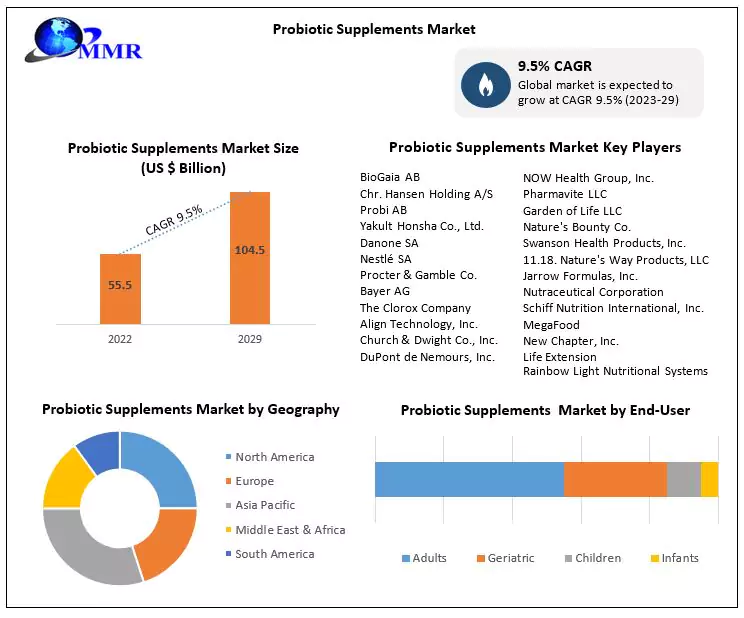
Probiotic Supplements Market size was valued at USD 55.5 Billion in 2022 and is expected to grow at a CAGR of 9.5% from 2023 to 2029, reaching nearly USD 104.5 Billion.
Live bacteria or yeast present in probiotic supplements help maintain intestinal microbes. They improve digestion, immunity, and well-being. Health food stores, pharmacies, and internet retailers carry these supplements as capsules, pills, powders, and liquids. The market offers items for diverse demographics and health demands. Some probiotic supplements assist digestive and immunological health, while others target specific disorders, including irritable bowel syndrome, lactose intolerance, or vaginal health. Functional foods, infant formulae, and animal feed are also adding probiotics.
Several factors fuel the market's growth. First, people are favoring natural and holistic health and wellness. Second, scientific evidence supporting the health advantages of probiotics is growing, boosting consumer trust. Probiotic products are also in demand due to increased gastrointestinal diseases and related health difficulties. E-commerce has made probiotic supplements more accessible to customers. Manufacturers introduce new strains, delivery forms, and combination formulas.
Probiotic supplement efficacy depends on strain, dosage, and gut flora. Consumers should consult healthcare professionals and choose brands with scientific proof or third-party quality certifications. As more people realise the benefits of probiotics, the global probiotic supplements market will continue to develop.
To know about the Research Methodology :- Request Free Sample Report
Probiotic Supplements Market: Dynamics
Probiotic Supplements Market: Drivers
Multiple factors drive the market growth of the probiotic supplements market. Firstly, increasing consumer awareness of the benefits of probiotics for digestive health and overall well-being has propelled demand. The rising prevalence of digestive disorders like IBS and IBD has fueled the market. Emphasis on preventive healthcare has led individuals to seek natural methods to enhance gut health, thereby driving the market's expansion. The availability of probiotic supplements through various distribution channels, including pharmacies and online platforms, has significantly contributed to their popularity. Scientific research supporting the health benefits of probiotics has boosted consumer confidence and stimulate market growth. Continuous product innovations, such as new formulations and delivery technologies, have attracted consumers. The demand for natural and organic probiotic supplements has increased due to the growing preference for these products. Lastly, the supportive regulatory environment ensures product safety and quality, fostering consumer trust and facilitating market expansion. All these findings are detailed in a comprehensive research report.
Probiotic Supplements Market: Opportunities
Probiotic supplement industry research indicates numerous critical conclusions. First, consumer knowledge of probiotic health advantages is rising, driving demand for natural remedies. Second, athletes, professionals, and older persons have joined the market's health-conscious consumers. Diversification offers manufacturers new opportunities. Thirdly, customers are increasingly interested in organic, high-quality probiotic supplements. Fourthly, microencapsulation has greatly improved probiotic products' efficacy. Pharmacies, internet platforms, and supermarkets sell probiotic supplements, which boosts the business. Manufacturers can build personalized probiotic compositions thanks to personalized nutrition. Research and development unearth novel strains and formulations, enabling innovation and market growth. The report suggests that seizing these opportunities can significantly develop probiotic supplement companies.
Probiotic Supplements Market: Restraints & Challenges
The probiotic supplements market addresses the various restraints and challenges that impact its dynamics. The report delves into the regulatory constraints, including varying regulations and complex compliance requirements, which pose barriers to market growth and entry for new players. It shows the significance of maintaining product quality and probiotic viability throughout the shelf life, as inadequate quality control measures can undermine consumer trust. The lack of standardized dosage recommendations is discussed, emphasizing the confusion that arises from varying potency across different strains. The report emphasizes the limited research on strain-specific benefits, which hampers the development of targeted formulations. Competition from natural sources and fortified functional foods is examined, considering their impact on the demand for probiotic supplements. The report also highlights the need for targeted marketing efforts to raise awareness among skeptical consumer groups. Lastly, it addresses the probiotic shelf-life and stability challenges, such as temperature and moisture sensitivity. The report concludes by stressing the importance of overcoming these challenges to ensure sustained market growth and effectively meet consumer needs.
Probiotic Supplements Market: Trends
Research on the probiotic supplements market provides valuable insights into the industry's current landscape. The report shows several notable trends driving the growth and development of the market. It reveals that consumers are increasingly drawn to natural and organic products, emphasizing their preference for clean and sustainable options. A discernible shift towards specific probiotic strains and formulations enables consumers to select supplements that address their specific health concerns. This trend underscores the growing demand for scientifically-supported products, prompting manufacturers to invest in rigorous testing and quality control measures. Application areas of probiotics have expanded beyond digestion, encompassing immune support, mental well-being, skin health, and women's health. This diversification has attracted new consumer segments, further fueling market growth. The report also identifies the rising popularity of combination products that integrate multiple strains or include additional ingredients like prebiotics or vitamins to offer a holistic approach to gut health. Furthermore, the significant surge in online sales reflects the convenience, product information accessibility, and wide variety provided by e-commerce platforms. Lastly, personalized probiotics have gained traction as consumers seek customized formulations based on their unique health profiles. These trends collectively demonstrate the evolving consumer preferences in the probiotic supplements industry, necessitating manufacturers' adaptation to meet changing demands and sustain competitiveness.
Probiotic Supplements Market: Segmentation
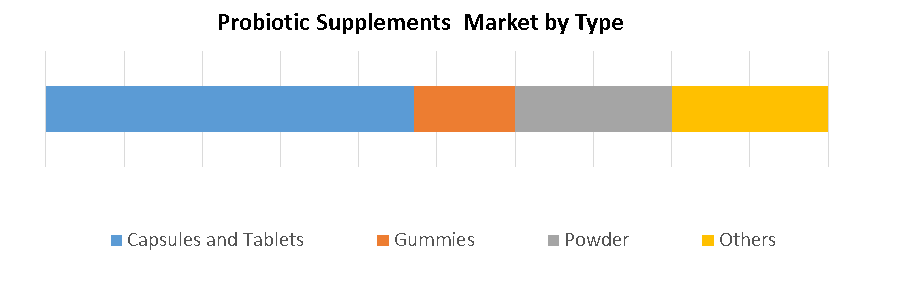
An in-depth analysis of the probiotic supplements market. The findings of the report provide a comprehensive overview of the market segmentation. The report covers market variables such as strain types, product forms, distribution channels, applications, and geographies. The report emphasizes Lactobacillus, Bifidobacterium, Streptococcus, and Saccharomyces boulardii as strains. Probiotic supplement capsules, tablets, liquids, etc were studied. According to studies, these supplements are sold by pharmacies, supermarkets, health food, and online businesses. The report discusses the benefits of probiotic supplements for digestive, immunological, women's, and weight management. Finally, North America, Europe, Asia Pacific, South America, the Middle East, and Africa are examined. The study helps industry experts and stakeholders understand the probiotic supplements industry with its extensive details.
 Probiotic Supplements Market: Regional Insights
The report provides in-depth insights into the regional dynamics of the probiotic supplements market. The report shows the variations in demand, consumer preferences, and market dynamics across different regions. It identifies North America as a prominent market driven by increasing consumer awareness, the prevalence of digestive disorders, and a strong emphasis on preventive healthcare. The region benefits from a well-established distribution network and robust research and development activities. The report also examines the mature market in Europe, where countries like Germany, the United Kingdom, and France lead in consumption. Factors such as a growing aging population, rising health consciousness, and a strong tradition of functional foods and dietary supplements contribute to the market growth. The stringent regulatory frameworks in Europe ensure product safety and quality. The report highlights the Asia Pacific region's rapid market growth attributed to increasing disposable incomes, changing dietary preferences, and a growing awareness of gut health. Key contributors to the market growth in this region include China, Japan, and India. The report emphasizes that local manufacturers are introducing innovative probiotic products tailored to regional preferences. South America is witnessing a rising demand for probiotic supplements driven by increasing health awareness and a growing middle-class population. Major regional markets include Brazil, Mexico, and Argentina, with large-scale food and beverage companies incorporating probiotics into their product offerings. Due to expanding health awareness, disposable incomes, and interest in preventative healthcare, probiotic supplements are gaining popularity in the Middle East and Africa. The research names Saudi Arabia, South Africa, and the UAE regional markets. Understanding the regional dynamics, consumer preferences, and regulatory landscapes presented in this report is essential for probiotic supplement manufacturers and market players to tap into these markets and drive growth effectively.
Probiotic Supplements Market: Competitive Landscape
The presence of numerous players striving for a competitive advantage in the industry. It emphasizes the fragmented market, with established companies and emerging players competing for market share. Key players such as Danone SA, Nestlé S.A., Probi AB, Yakult Honsha Co., Ltd., and Chr. Hansen Holding A/S are identified, along with their respective probiotic supplement offerings. The report outlines the strategies employed by these companies, including product launches, partnerships, mergers and acquisitions, and geographical expansion, to strengthen their market position. It also acknowledges the importance of research and development in driving innovation and marketing activities to create brand awareness. Quality assurance and regulatory compliance are highlighted as essential factors for ensuring the safety and efficacy of probiotic supplements. The report provides a comprehensive overview of the competitive landscape in the probiotic supplements market. It predicts continued growth and competition as companies cater to the rising consumer demand for probiotic products and capitalize on increasing awareness of their health benefits.
 Probiotic Supplements Market Scope: Inquire before buying
| Probiotic Supplements Market | |||
|---|---|---|---|
| Report Coverage | Details | ||
| Base Year: | 2022 | Forecast Period: | 2023-2029 |
| Historical Data: | 2017 to 2022 | Market Size in 2022: | US $ 5.55 Bn. |
| Forecast Period 2023 to 2029 CAGR: | 9.50% | Market Size in 2029: | US $ 104.5Bn. |
| Segments Covered: | by Application | 1.Food & Beverages 2.Dietary Supplements 3.Animal Feed |
|
| by Function | 1.Regular 2.Preventative Healthcare 3.Therapeutic |
||
| by End-User | 1.Adults 2.Geriatric 3.Children 4.Infants |
||
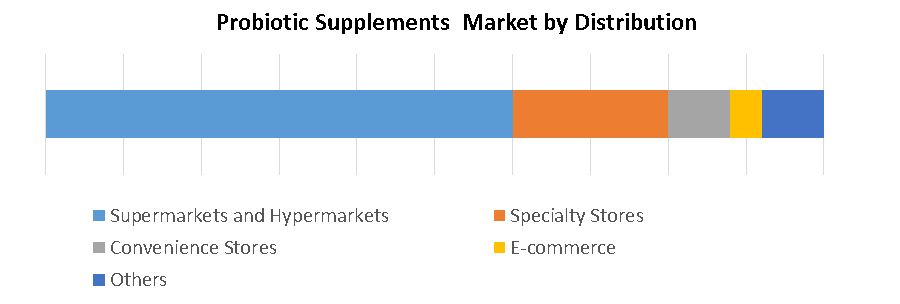
| by Distribution | 1.Supermarkets and Hypermarkets 2.Convenience Stores 3.E-commerce 4.Specialty Stores 5.Others |
||
| by Ingredient | 1.Bacteria 2.Yeast |
||
| by Type | 1.Capsules and Tablets 2.Powdered Supplements 3.Probiotic Drinks and Shots 4.Gummies and Chews |
||
Probiotic Supplements Market Key Players
1.BioGaia AB (Sweden)
2.Chr. Hansen Holding A/S (Denmark)
3.Probi AB (Sweden)
4.Yakult Honsha Co., Ltd. (Japan)
5.Danone SA (France)
6.Nestlé SA (Switzerland)
7.Procter & Gamble Co. (United States)
8. Bayer AG (Germany)
9.The Clorox Company (United States)
10. Align Technology, Inc. (United States)
11.Church & Dwight Co., Inc. (United States)
12.DuPont de Nemours, Inc. (United States)
13.NOW Health Group, Inc. (United States)
14.Pharmavite LLC (United States)
15.. Garden of Life LLC (United States)
16.Nature's Bounty Co. (United States)
17.Swanson Health Products, Inc. (United States)
18. Nature's Way Products, LLC (United States)
19.Jarrow Formulas, Inc. (United States)
20. Nutraceutical Corporation (United States)
21.Schiff Nutrition International, Inc. (United States)
22.MegaFood (United States)
23. New Chapter, Inc. (United States)
24.Life Extension (United States)
25. Rainbow Light Nutritional Systems (United States)
26.Solgar Inc. (United States)
27.SmartyPants Vitamins (United States)
Probiotic Supplements Market, by Region
• North America (United States, Canada and Mexico)
• Europe (UK, France, Germany, Italy, Spain, Sweden, Austria and Rest of Europe)
• Asia Pacific (China, South Korea, Japan, India, Australia, Indonesia, Malaysia, Vietnam, Taiwan, Bangladesh, Pakistan and Rest of APAC)
• Middle East and Africa (South Africa, GCC, Egypt, Nigeria and Rest of ME&A)
• South America (Brazil, Argentina Rest of South America)
FAQs
1. What is the forecast market size of the Probiotic Supplements Market by 2029?
Ans: The market size of the Probiotic Supplements Market by 2029 is expected to reach USD 104.5 Billion
2. What is the growth rate of Global Probiotic Supplements Market?
Ans: The Global Probiotic Supplements Market is growing at a CAGR of 9.5% during forecasting period 2023-2029
3. Who are the key players in Global Probiotic Supplements Market?
Ans: BioGaia AB, Chr. Hansen Holding A/S, Probi AB, Yakult Honsha Co., Ltd., Danone SA, Nestlé SA, Procter & Gamble Co., Bayer AG, The Clorox Company, Align Technology, Inc., Church & Dwight Co., Inc., DuPont de Nemours, Inc., NOW Health Group, Inc., Pharmavite LLC, Garden of Life LLC, Nature's, Bounty Co.
4. What is the study period of Probiotic Supplements Market?
Ans: The Global Probiotic Supplements Market is studied from 2017 to 2029
5. What was the market size of the Probiotic Supplements Market in 2022??
Ans: The market size of the Probiotic Supplements Market in 2022 was valued at USD 55.5 Billion