
Oil Spill Management Market - Industry Structure Evaluation, Demand Drivers Analysis, Regional Growth Analysis and Identification, Competitive Positioning Review & Global Market Size Forecast to 2029
Overview
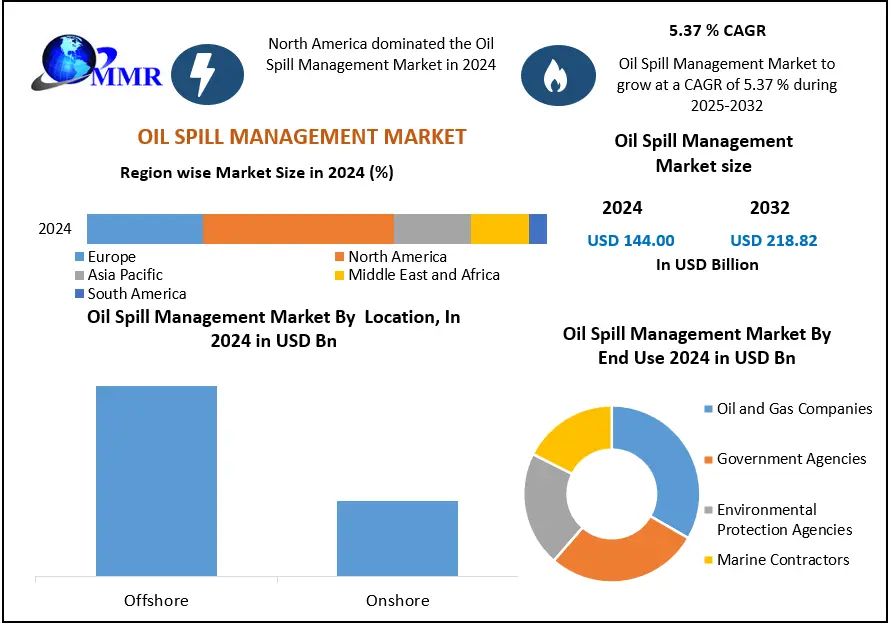
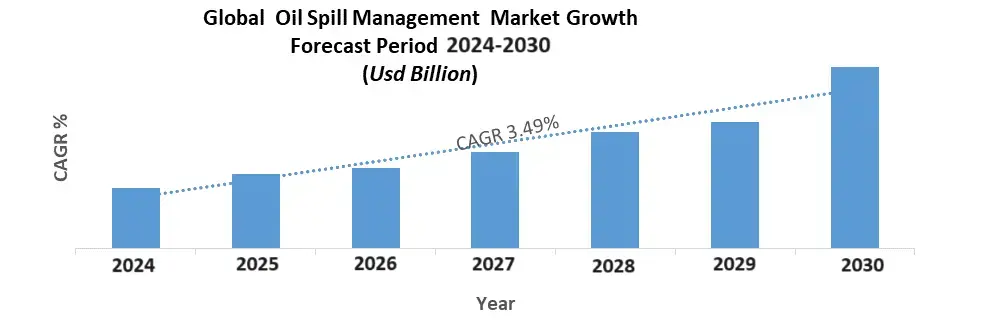
The Oil Spill Management Market size was valued at USD 144.00 Billion in 2024, and the total revenue is expected to grow at CAGR of 5.37 % from 2025 to 2032, reaching nearly USD 218.82 Billion.
The MMR report provides a assessment of the Oil Spill Management Market, covering advanced scenario modeling across high-risk offshore drilling zones, regional spill response readiness, and climate-induced risk escalation. It analyzes government and regulatory grant structures, including U.S. EPA and OPA 90 funding, IMO and MARPOL adoption, and country-wise contingency planning. Technology investment priorities are evaluated across autonomous skimmers, drones, bioremediation, digital twins, and AI-based leak prediction, alongside cost–benefit benchmarking. The study further profiles risks at global ports and terminals, mapping spill history, vulnerability, and on-site technology adoption. It also explores the insurance and liability ecosystem, highlighting regional frameworks, reinsurance costs, ESG-linked incentives, and operator claim histories. Strategic buyer behavior of NOCs, IOCs, and marine contractors is detailed, focusing on procurement trends, outsourcing, and digital integration. Finally, the report emphasizes ESG and sustainability alignment, reviewing low-toxicity dispersants, carbon offset strategies, green compliance mandates, and certification-driven vendor selection.
The Oil Spill Management Market encompasses use of advanced technologies, services, and solutions aimed at preventing, containing, and cleaning up oil spills in marine and terrestrial environments. Oil spills, resulting from offshore drilling, transportation accidents, or natural disasters, pose significant threats to ecosystems, wildlife, and human health.
The market is driven by factors such as the global demand for oil and gas, stringent environmental regulations, and increasing environmental awareness. Stakeholders in the market include oil spill response organizations, equipment manufacturers, specialized service providers, and consulting firms. They offer a wide range of products and services, including containment and recovery equipment, dispersants, sorbents, and remote sensing technologies. With the need for effective oil spill management being a priority, the market presents opportunities for growth, innovation, and environmental protection. The rising demand for crude oil and petroleum products from Europe and Asia-Pacific energy industries is forecasted to drive the market growth.
 To know about the Research Methodology :- Request Free Sample Report
Research Methodology
The research methodology adopted for study of the global oil spill management market is the amalgamation of systematic and comprehensive approach to gather primary and secondary data and derive meaningful insights to bolster the business in investing in the of the opportunities. The research objectives and scope are defined to study specific market segments. A literature review of the industry is analyzed to the back the existing knowledge and insights from published articles, reports, academic papers, industry publications, and regulatory frameworks to bridge the solid foundation and understand of the current state of the market, key trends, challenges, and opportunities.
Primary research is conducted through interviews with industry experts, stakeholders, and market participants, along with surveys and questionnaires to collect original data. The collected data is analyzed using both quantitative and qualitative techniques, such as statistical analysis and thematic coding to identify patterns, trends, and correlations. The analysis provides valuable insights into market dynamics, drivers, restraints, competitive landscape, and growth opportunities. Based on the findings, conclusions are drawn, summarizing key insights, and recommendations are formulated to guide stakeholders in capitalizing on opportunities or addressing challenges in the oil spill management market.
Market Dynamics
Market Drivers
The Oil Spill Management Market drivers have led to the widespread adoption of advanced technologies and solutions. The key drivers of the global market are the increasing number of oil spills that occur globally resulting in a greater need for effective oil spill management solutions and technologies that help prevent, contain, and clean up oil spills. As concerns about environmental pollution continue to grow, governments and organizations are investing more heavily in oil spill management solutions to prevent the environmental and economic damage caused by oil spills.
Other major driver of oil spill management industry is the stringent regulations put in place by governments to ensure environmental safety and protection. Global Oil Spill Management Companies are now required to have comprehensive oil spill management plans in place to mitigate the effects of oil spills. These regulations have led to the adoption of various technologies such as booms, skimmers, dispersants, and sorbents to clean up oil spills, as well as the development of new technologies and solutions that is preventive to occurrence of oil spills. Together, the increasing demand for offshore drilling activities has led to a higher risk of oil spills, especially in areas with harsh environmental conditions.
As a result, companies involved in offshore drilling activities are investing heavily in oil spill management industry for innovative solutions and adoption of new technologies to ensure environmental safety and minimize the risks associated with oil spills. The oil spill management market grows as the demand for oil and gas exploration and production activities increases, and the need for effective oil spill management solutions becomes even more critical.
Oil Spill Management Market Opportunities
The Oil Spill Management Market opportunities for the new entrants are increasing with the rise of global demand for oil and gas due to risk of oil spill, also creating a need for effective spill management solutions. The regulations governing the oil and gas industry present an opportunity for companies specializing in sustainable and environmentally-friendly solutions to comply with these regulations. Companies competes in the development of innovative solutions that meet the requirements to gain a competitive advantage in the market and gain competitive positon in the industry.
The investment in research and development of advanced technologies such as UAVs, remote sensing, and real-time monitoring systems, enhances spill response times and increase the effectiveness of spill containment and recovery efforts to provide a competitive edge to the companies. Companies with cost-effective and efficient spill management solutions beg the leading positon with the growing demand for such services, and as offshore drilling activities grows. Companies with expertise in offshore spill response and management, experiences increasing demand in the market. Together, the oil spill management market provides significant opportunities for companies that offer effective, sustainable, and cost-efficient solutions to the challenges of managing oil spills.
Global Oil Spill Management Market Restraints and Challenges
The oil spill management market has restraints that impede its growth and progress. High costs associated with spill response and cleanup efforts pose a significant challenge, especially for smaller companies with limited budgets. The complexity and unpredictability of oil spill scenarios, particularly in remote or challenging environments, add logistical hurdles to effective spill management. The legal and regulatory landscape adds complexity, with compliance requirements and permitting processes that slows down the response time and increase costs. Negative public perception and scrutiny of the industry due to environmental consequences of spills place additional pressure on companies, impacting their reputation. The availability of trained personnel and specialized equipment requires investment and access to resources. Addressing these restraints requires innovative approaches, collaboration, and continued research and development efforts to overcome the challenges faced by the oil spill management market.
The oil spill management market challenges are the lack of effective coordination among agencies involved in oil spill management that leads to delays and ineffective responses and severe environmental and economic damage. High costs associated with developing and deploying oil spill management technologies discourage investment, particularly for the new entrants. Additionally, there is a shortage of infrastructure and trained personnel in many areas, resulting in delayed response times and inadequate management of spills. Furthermore, the unpredictable nature of oil spills makes preparedness and response difficult, despite technological advancements. These challenges are compounded by restraints such as the complexity and variability of oil spill scenarios. Overcoming these obstacles requires improving coordination, reducing costs, enhancing infrastructure and personnel capabilities, and advancing predictive technologies.
Global Oil Spill Management Market Trends
The oil spill management market is undergoing significant changes and the key trends of the industry are, advanced technologies, such as UAVs, remote sensing, and real-time monitoring systems, are being developed to improve spill response times and increase the effectiveness of containment and recovery efforts. The oil spill management industry is also experiencing an increasing demand for sustainable and eco-friendly solutions, including the use of bioremediation agents and the development of containment and recovery technologies that minimize environmental impact.
Collaboration and partnerships among industry players are on the rise, with a focus on improving the speed and effectiveness of spill response efforts and enhancing knowledge sharing. Moreover, there is a shift towards more proactive and preventative approaches to spill management, with increasing investment in spill prevention measures such as regular maintenance and inspections, and the development of contingency plans and emergency response protocols. The oil spill management market is forecasted to grow bolstering the trends and emerging market environment.
 Segmentation
Based on the Spill Type, In 2024, Marine Spills are expected to dominate the global Oil Spill Management Market by spill type, accounting for the largest market share due to the extensive scale of offshore drilling, shipping traffic, and tanker accidents that pose severe environmental and economic risks. Their high visibility and complexity in open-water cleanup make them the most critical focus for advanced containment and recovery solutions. Pipeline Spills follow closely, supported by the widespread use of onshore and subsea pipeline infrastructure where risks such as corrosion, mechanical failures, and third-party damages continue to drive investments in monitoring, leak detection, and rapid response technologies. Rail Spills, while comparatively smaller in market share, remain an important segment as crude oil and petroleum products are increasingly transported by rail in regions with limited pipeline coverage. Despite strengthened safety regulations, derailments and accidental discharges sustain the need for specialized spill response measures, ensuring this niche continues to contribute to overall market demand.

Based on the Technology, In 2024, Oil Spill Dispersants are expected to dominate the Oil Spill Management Market by technology, primarily due to their extensive use in large-scale marine spill incidents where rapid chemical dispersion is critical to minimize surface slicks and environmental impact. Oil Spill Recovery Systems follow closely, driven by the growing deployment of skimmers, booms, and in-situ burning solutions that provide effective physical containment and removal across both offshore and onshore operations. Oil Spill Detection and Monitoring Systems are witnessing steady adoption as regulatory authorities and operators increasingly invest in satellite imaging, remote sensing, and IoT-enabled surveillance to enable faster response and compliance with stringent environmental standards. Oil Spill Modeling and Simulation holds a smaller yet vital share, supporting risk assessment, preparedness, and training for spill scenarios, with rising demand from governments, research institutions, and oil companies to strengthen preventive strategies and emergency planning.
The oil spill management industry is divided in 5 regions: North America, Europe, Asia Pacific, Middle East and Africa, and South America.
Oil Spill Management Market Regional Insights
North America, South America, Europe, Asia-Pacific, Middle East and Africa, and South America are the five geographic divisions of the market. North America accounted for more than 40% of the oil spill management market in 2024. The region is forecasted to gain market share as oil and gas exploration and production operations rise. Oil spill mishaps in the region, such as the Marathon Oil, Exxon Valdez, and Deepwater Horizon, have also resulted in the development of a severe regulatory framework for both onshore and offshore oil and gas production activities.
The Asia Pacific oil spill management market is worth USD 21.54 billion in 2024. From 2025 to 2032, the market in the region is forecasted to grow at CAGR of 3.9%. At present, the majority of the region's oil and gas exploration and production activities are centered in India, China, and South Korea. Encouraging government actions and policies, such as tax breaks and other financial incentives for the discovery of hydrocarbon reserves, will likely fuel industry growth in these countries over the forecasted period from 2025-2032.
The Xingang Port disaster in China, the ExxonMobil leak in Nigeria, the Lac-Megantic derailment in Canada, and the Trans-Israel pipeline have all been major oil spill incidents in recent years. Stringent environmental rules, along with large-scale spills, have been the key drivers in the development of post-oil spill management technologies in recent decade.
Global Oil Spill Management Market Competitive Analysis
The Oil Spill Management industry exhibits high competitiveness as key players strive to gain market share by offering a range of services, technologies, and equipment to prevent, respond to, and mitigate the environmental impact of oil spills. Clean Harbors, Inc., a leading provider of environmental, energy, and industrial services, stands out as a notable player with extensive experience, a global presence, and strong industry partnerships, positioning it as a prominent competitor. Oil Spill Response Limited (OSRL), a global oil spill response cooperative, is renowned for its preparedness, response, and intervention services, operating a wide network of oil spill response equipment and personnel, which enables swift mobilization and effective response.
Lamor Corporation, a Finnish company specializing in oil spill response and environmental solutions, is recognized for its innovative technologies and equipment, such as oil recovery systems, skimmers, and boom systems. Regional and local players also contribute to the competitive landscape, catering to specific markets or offering specialized services. The industry is characterized by intense competition, demanding continuous innovation, strategic partnerships, and a strong commitment to environmental stewardship as key factors for success. Technological advancements, regulatory changes, and industry collaborations significantly impact the competitive dynamics of the market. Overall, players in the Oil Spill Management Market constantly enhance their capabilities, expand market reach, and provide effective solutions for oil spill response and management.
Oil Spill Management Market Scope: Inquire before buying
| Global Oil Spill Management Market | |||
|---|---|---|---|
| Report Coverage | Details | ||
| Base Year: | 2024 | Forecast Period: | 2025-2032 |
| Historical Data: | 2019 to 2024 | Market Size in 2024: | USD 144 Bn. |
| Forecast Period 2025 to 2032 CAGR: | 5.37% | Market Size in 2032: | USD 218.82 Bn. |
| Segments Covered: | by Management Type | Pre-Oil Spill Management Double Hull Blowout Preventers Pipeline Leak Detection Others Post-Oil Spill Management Mechanical Containment booms Hard booms Sorbent booms Fire booms Others Skimmers Weir skimmers Oleophilic skimmers Non-oleophilic skimmers Sorbent Others Chemical Dispersing agents Gelling agents Others Biological Others |
|
| by Spill Type | Marine spills Pipeline spills Rail spills |
||
| by Type of Spill | Tier 1 Spills (1,000 bbl) Tier 2 Spills (1,000 to 10,000 bbl) Tier 3 Spills (>10,000 bbl) |
||
| by Service Type | Spill Response Preventive Contingency Planning |
||
| by Technology | Oil Spill Dispersants Oil Spill Recovery Systems Oil Spill Detection and Monitoring Systems Oil Spill Modeling and Simulation |
||
| by Location | Onshore Offshore |
||
| by End User | Government Agencies Oil and Gas Companies Environmental Protection Agencies Marine Contractors |
||
Oil Spill Management Market, by Region
North America (United States, Canada and Mexico)
Europe (UK, France, Germany, Italy, Spain, Sweden, Austria and Rest of Europe)
Asia Pacific (China, South Korea, Japan, India, Australia, Indonesia, Malaysia, Vietnam, Taiwan, Bangladesh, Pakistan and Rest of APAC)
Middle East and Africa (South Africa, GCC, Egypt, Nigeria and Rest of ME&A)
South America (Brazil, Argentina Rest of South America)
Key players in the Global Oil Spill Management Market
1. Vikoma International Ltd
2. Oil Spill Response Limited (OSRL)
3. OPEC Limited
4. ExxonMobil Corporation
5. Clean Harbors, Inc.
6. Thermo Fisher Scientific Inc
7. Lamor Corporation Plc
8. Elastec Inc.
9. NRC Group (National Response Corporation)
10. Ecolab Inc.
11. CURA Emergency Services
12. Omni Environmental Group, LLC
13. SkimOIL, LLC
14. Osprey Spill Control
15. Fender & Spill Response Services L.L.C
16. DESMI A/S
17. Polygreen
18. InterOcean Systems
19. BubbleTubing
20. NorLense AS
21. Kenrods Oil Services Limited.
22. SpillTech Environmental Incorporated
23. Adler and Allan Ltd.
24. Briggs Marine & Environmental Services
25. Petrofac Ltd.
26. Chevron Corporation
27. BP PLC
28. Resolve Marine Group
29. ACME Environmental
30. Thadhani Safety & Co
31. Others
Frequently Asked Questions:
1] What segments are covered in the Oil Spill Management Market report?
Ans. The segments covered in the Oil Spill Management Market report are based on Management Type, Spill Type, Type of Spill, Service Type, Technology, Location, End-use, and region
2] Which region is expected to hold the highest share of the Oil Spill Management Market?
Ans. The North America region is expected to hold the highest share of the Oil Spill Management Market.
3] What is the market size of the Oil Spill Management Market by 2032?
Ans. The market size of the Oil Spill Management Market by 2032 is USD 218.82 Bn.
4] What is the growth rate of the Oil Spill Management Market?
Ans. The Global Oil Spill Management Market is growing at a CAGR of 5.37 % during the forecasting period 2025-2032.
5] What was the market size of the Oil Spill Management Market in 2024?
Ans. The market size of the Oil Spill Management Market in 2024 was USD 144.00 Bn.