
Nanotechnology Clothing Market Size – Industry Structure Evaluation, Demand Drivers Analysis, Regional Growth Analysis and Identification, Competitive Positioning Review & Global Market Size Forecast to 2032
Overview
Global Nanotechnology Clothing Market was valued at USD 6.8 Bn in 2025 and is expected to reach USD 10.06 Bn by 2032, growing at a CAGR of 5.75% during the forecast period.
Nanotechnology Clothing Market: “Promote Style with Nano-Inspired Fashion"
The transformative impact of nanotechnology on the clothing industry. It underscores the fusion of wearable technology innovation with fashion design, resulting in clothing filled with functional materials, emerging communication devices, flexible electronics, and nanomaterials. The game-changing potential of nanotechnology is evident through nanofibers, exceptionally thin fibers with remarkable properties, including strength, and breathability. The strategic integration of nanotechnology into Clothing not only enhances mechanical attributes while preserving comfort and flexibility but also helps to lighter, more versatile designs that offer improved protection and performance. This revolution in clothing production extends to sustainability by minimizing material consumption and waste through nanofiber textiles. This factor significantly helps to accelerate the Nanotechnology Clothing Market Growth.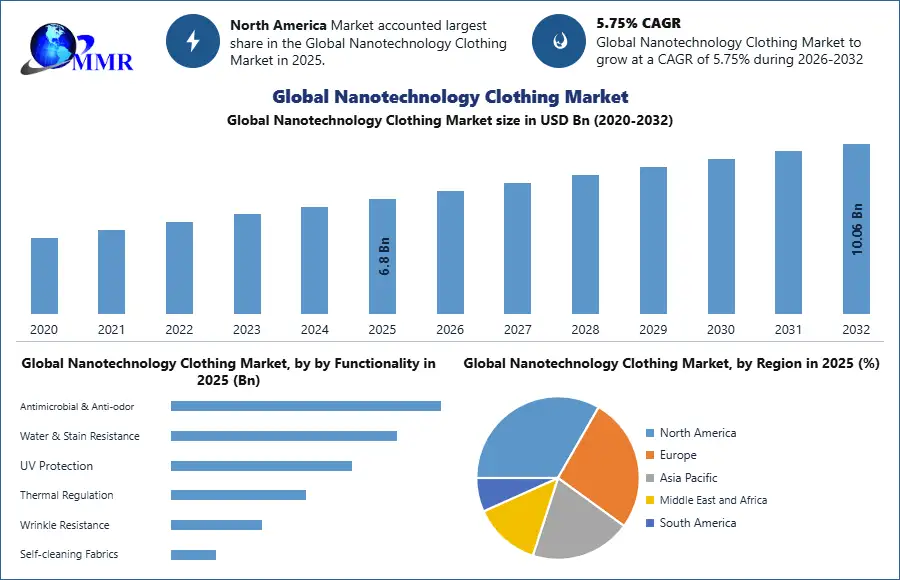 To know about the Research Methodology :- Request Free Sample Report
Nanotechnology Clothing Market Future Trend
Nanotechnology serves as a transformative force, enhancing the efficiency and effectiveness of existing applications as an enabling technology. A great scope in the future is possessed by nanomaterial due to their potential of being used for various advanced applications in numerous sectors notably, companies are presently channeling their efforts into producing nano-textile goods that not only possess traditional attributes but also focus on global safety, health, and environmental standards.
| Exact Date | Company | Development | Impact |
|---|---|---|---|
| 14 January 2026 | Nanotex (Crypton) | Introduced a new range of breathable, moisture-wicking fabrics utilizing nanofibers for the high-performance athletic apparel segment. | The technology significantly improves evaporative cooling and durability, addressing the growing demand for smart sportswear. |
| 12 November 2025 | Graphene Manufacturing Group | Collaborated with a major textile manufacturer to commercialize graphene-coated thermal clothing designed for extreme cold environments. | This partnership enhances heat retention and electrical conductivity in garments, paving the way for advanced heated wearable technology. |
| 15 September 2025 | Goat Organics | Launched a sustainable line of nanotechnology-infused cotton apparel that features permanent antimicrobial and stain-resistant properties. | By reducing the need for frequent washing, the product line promotes water conservation and extends the lifespan of eco-friendly textiles. |
| 22 July 2025 | Directa Plus | Secured a major supply agreement for its G+ Graphene technology to be integrated into high-end protective workwear for industrial safety. | The integration provides superior abrasion resistance and UV protection, setting a new benchmark for worker safety in hazardous environments. |
| 10 April 2025 | Schoeller Textil AG | Unveiled an upgraded NanoSphere finish that provides enhanced self-cleaning properties inspired by the lotus effect for outdoor gear. | This innovation allows for high-scale production of dirt-repellent fabrics that maintain softness and breathability without chemical leaching. |
Upholding elevated standards in nano-textile production is now an ethical imperative for textile companies due to escalating consumer awareness and stringent environmental regulations. The convergence of technology and textiles has been an ongoing trend. Nanotechnology makes the current applications work more efficiently and effectively. Despite the obstacle of high associated costs, and the expansion of nano-textiles faces, the technology's virtues remain manifold. Nanotechnology endows textile products with heightened durability, reduced weight, increased strength, and augmented corrosion resistance. Although facing some drawbacks, nanotechnology's ongoing research aimed at refining its potential in clothes points to a bright future for the clothes industry.
Properties of Nanofibers Cloths 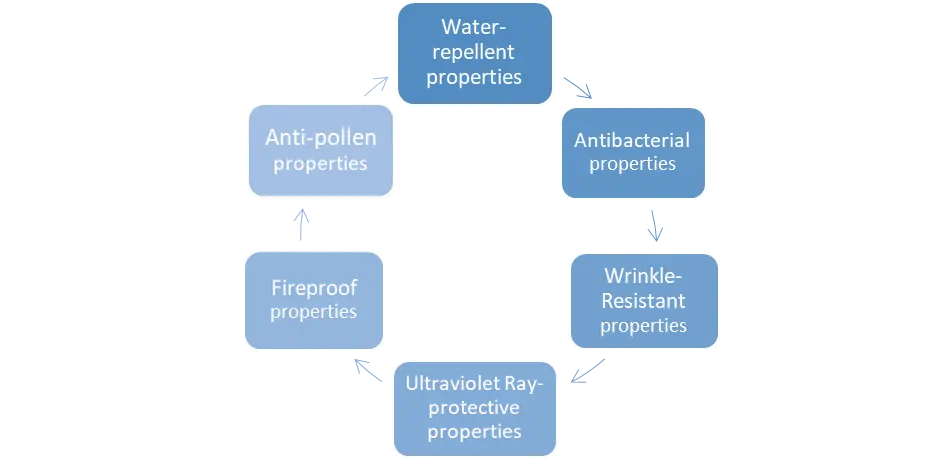
Nanotechnology Clothing Market Dynamics:
Enhanced Performance and Functionality boost Market growth.
Enhanced performance and functionality are important driving factors in the growth of the nanotechnology clothing market. Nanotechnology facilitates the manipulation of materials at the nanoscale, resulting in clothes with exceptional properties that provide consumers with demands for high-performance apparel. For example, nano-coatings applied to sportswear create water-repellent surfaces, keeping athletes dry and comfortable during intense activities. Nanofibers integrated into outdoor clothing enhance breathability and insulation, making garments suitable for varying weather conditions.
Moreover, nanotechnology is used to embed antimicrobial nanoparticles in fabrics, preventing bacterial growth. This technology finds application in activewear and healthcare attire, ensuring prolonged freshness and hygiene. The ability to engineer textiles at the molecular level enables the creation of clothing that goes beyond conventional attributes, offering wearers superior comfort, protection, and utility. For Example, According to MMR Study Report the market value of nanofiber products worldwide in 2018, with a forecasted figure for 2023. Nanofibers are fibers with a diameter in the nanometer range. It is forecasted that the global market value of nanofiber products will be 4.3 billion U.S. dollars in 2023.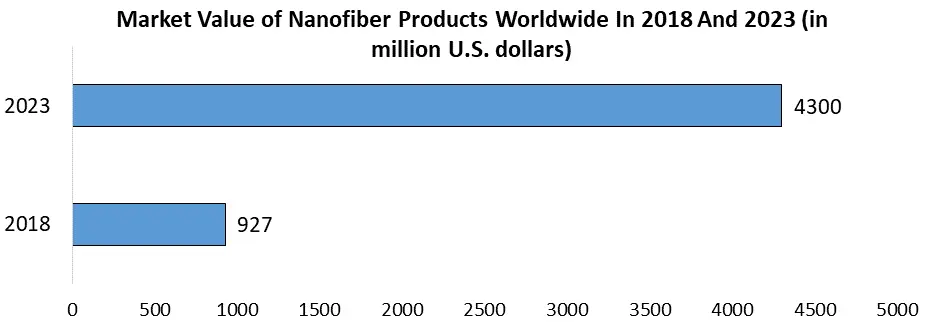
Health and Comfort properties drive the growth of Nanotechnology Clothing Market
The application of nanotechnology in clothing significantly enhances health and comfort by introducing innovative properties and functionalities. Nanotechnology enables the incorporation of antimicrobial nanoparticles into cloths, which effectively hinders the proliferation of bacteria and other microscopic organisms. This innovation fosters improved hygiene and minimizes the chances of infections. For Example, garments like socks and undergarments that have been infused with silver nanoparticles are effective in preventing the multiplication of bacteria responsible for causing unpleasant odors. Nanofibers with ultrafine diameters create fabrics with exceptionally smooth and soft surfaces.
This minimizes friction against the skin, reducing irritation and potential abrasions. Clothing made from nanofiber-based textiles is especially comfortable for those with sensitive skin. Phase-changing materials, such as microencapsulated PCM nanoparticles, are incorporated into clothing to regulate body temperature. These nanoparticles absorb and release heat as the body's temperature changes, helping to keep the wearer comfortable in varying conditions. Such clothing is especially useful for outdoor activities and sports. Nanotechnology-infused clothing not only offers enhanced health benefits by preventing microbial growth and skin irritation but also enhances comfort through improved temperature regulation, moisture management, flexibility, and allergen resistance. These advancements contribute to a more enjoyable and functional wearing experience for individuals across various contexts.
Limited Consumer Awareness Restrains the Nanotechnology Clothing Market Growth
Limited consumer awareness is a significant barrier to the growth of the Nanotechnology Clothing Market. Many consumers lack an understanding of the concept and benefits of nanotechnology in clothing. This leads to perceived risks, uncertainty about advantages, and resistance to paying higher prices. Moreover, the absence of established brands incorporating nanotech features and insufficient educational initiatives further hinders adoption. Without clear information, consumers see the value in nanotech clothing and might associate it with health or environmental risks. Overcoming this challenge requires comprehensive education campaigns, collaborations with influencers, transparent communication, and gradually introducing nanotech features in accessible and affordable ways. Without addressing these issues, the market's potential for growth remains restricted due to consumers' limited awareness and misconceptions about nanotechnology in clothing.
Rising trend of Smart Textiles creates lucrative growth opportunities for the Nanotechnology Clothing Market Growth
The rising trend of smart textiles, combined with advancements in nanotechnology, creates lucrative growth opportunities for the nanotechnology clothing market. Nanotechnology plays a crucial role in enabling these functionalities by offering unique properties at the Nano scale level. Nanotechnology allows for the integration of Nano scale materials and structures into textiles. These materials offer a wide range of functionalities such as moisture-wicking, UV protection, antimicrobial properties, and even energy generation. For example, nanoparticles embedded in fabrics enhance the ability to repel water, resist stains, and control temperature. These added functionalities provide consumers with a demand for high-performance clothing.
The convergence of smart textiles and nanotechnology offers a wealth of opportunities for the clothing market. The integration of Nano scale materials and technologies into textiles enhances their functionalities, flexibility, and aesthetics. As consumers increasingly seek innovative and value-added products, the nanotechnology clothing market stands to benefit from the growing demand for smart textiles that cater to a wide range of applications, from fashion to healthcare and beyond. For Instance, smart clothing unit shipments worldwide from 2018 to 2022. Global smart clothing unit shipments are to around 4.86 million units in 2018 and it was increasing and reached 26.87 Million in the year 2022.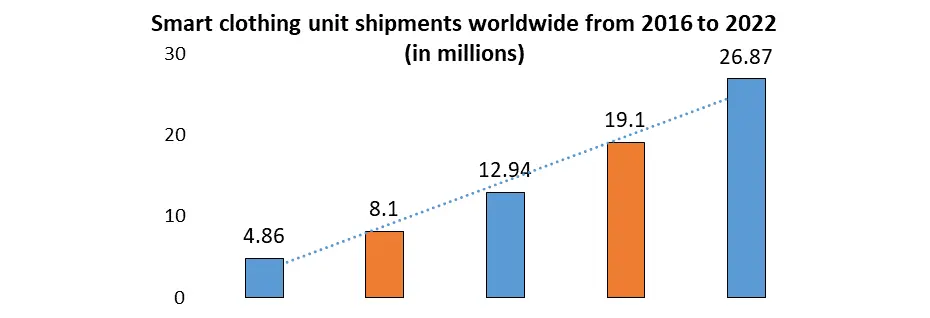
Nanotechnology Clothing Market Segment Analysis:
Based on Type, The nanocoated textile sub-segment dominates Nanotechnology Clothing Market in the year 2025. Nanocoated textiles involve the application of a thin layer of nanomaterial onto fabric surfaces, imparting enhanced functionalities such as waterproofing, stain resistance, and UV protection. This dominance is attributed to the versatility and practicality of nanocoatings, as they are applied to a wide range of existing textile materials without drastically altering their appearance or texture. Nanocoatings provide immediate benefits to consumers, such as improving the durability and performance of textiles in various environments. Additionally, their relatively straightforward integration into existing manufacturing processes has likely contributed to their prominence in the market. As a result, the combination of tangible benefits, compatibility with conventional textiles, and ease of application has propelled nanocoated textiles to the forefront of the advanced textiles industry.
Based on Application, The Healthcare sub-segment dominated the application segment of the Nanotechnology Clothing Market in the year 2025. The increasing demand for advanced textiles in healthcare settings is due to their unique properties, such as antimicrobial coatings, and moisture management. These textiles find applications in surgical gowns, wound dressings, bed linens, and more, where their specialized functionalities contribute to patient comfort, infection control, and overall healthcare efficiency. Moreover, the continuous advancements in medical textile technology, driven by the need for improved patient outcomes and infection prevention, have accelerated the growth of healthcare. The combination of critical medical requirements and consistent innovation in healthcare textiles has accelerated the demand for Nanotechnology Clothing in the healthcare sector.
| Global Nanotechnology Clothing Market | |||
|---|---|---|---|
| Report Coverage | Details | ||
| Base Year: | 2025 | Forecast Period: | 2026-2032 |
| Historical Data: | 2020 to 2025 | Market Size in 2025: | 6.8 USD Bn |
| Forecast Period 2026-2032 CAGR: | 5.75% | Market Size in 2032: | 10.06 USD Bn |
| Segments Covered: | by Functionality | Antimicrobial & Anti-odor Water & Stain Resistance UV Protection Thermal Regulation Wrinkle Resistance Self-cleaning Fabrics |
|
| by Material Type | Nano-silver Nano-titanium dioxide Nano-zinc oxide Carbon nanotubes Graphene-based materials Nanoclay & others |
||
| by Technology | Nano-coating Plasma treatment Electrospinning Sol-gel technology Layer-by-layer assembly |
||
| by Distribution Channel | Online Retail Offline Retail Specialty Stores Direct-to-Consumer (D2C) Industrial/Institutional Sales |
||
Nanotechnology Clothing Market Regional Insight
Based on Region, North America leads the global nanotechnology clothing market in 2025, driven by high consumer awareness, strong demand for performance apparel, and advanced textile innovation capabilities. Europe follows closely, with significant adoption in sustainable and high-performance textiles, supported by stringent regulations and environmental standards. Asia Pacific is the fastest-growing region due to expanding textile manufacturing hubs in countries like China and India, along with rising consumer demand for functional apparel. Meanwhile, regions such as the Middle East & Africa and South America show moderate growth, primarily influenced by increasing urbanization and gradual adoption of advanced textile technologies.
Global Nanotechnology Clothing Market Scope: Inquire before buying
Nanotechnology Clothing Market by Region
North America (United States, Canada, and Mexico)
Europe (UK, France, Germany, Italy, Spain, Sweden, Austria, and the Rest of Europe)
Asia Pacific (China, South Korea, Japan, India, Australia, Indonesia, Malaysia, Vietnam, Taiwan, Bangladesh, Pakistan, and the Rest of APAC)
Middle East and Africa (South Africa, GCC, Egypt, Nigeria, and the Rest of ME&A)
South America (Brazil, Argentina Rest of South America)
Key Players /Competitor Profiles Covered in the Global Nanotechnology Clothing Market Report from a Strategic Perspective
- BASF SE
- Toray Industries Inc.
- Teijin Frontier Co. Ltd.
- Nanotex LLC
- Patagonia Inc.
- Helly Hansen AS
- Schoeller Textil AG
- Odegon Technologies AG
- Osmotex AG
- GoGoNano
- Spiber Inc.
- Nano Textile Ltd.
- Nanotech Industrial Solutions Inc.
- PurThread Technologies Inc.
- Bolt Threads Inc.
- eSpin Technologies Inc.
- NanoHorizons Inc.
- Bionic Yarn
- Nolla Antimicrobial Oy
- Nanogate SE
- Nanophase Technologies Corporation
- Aspen Aerogels Inc.
- Nantero Inc.
- Modern Meadow Inc.
- Shanghai Huzheng Nano Technology Co. Ltd.