
Military Thermal Imaging Market– Industry Structure Evaluation, Demand Drivers Analysis, Regional Growth Analysis and Identification, Competitive Positioning Review & Global Market Size Forecast to 2030
Overview
The Global Military Thermal Imaging Market size was valued at USD 781.65 Million in 2023 and the total Military Thermal Imaging revenue is expected to grow at a CAGR of 5.6% from 2024 to 2030, reaching nearly USD 1144.61 Million.
Thermal imaging is a boon to the armed forces namely the army, navy, and airforce because of its day-night working capability and ability to perform well in all weather conditions. Thermal detectors capture the infrared radiation produced by all substances above absolute zero temperature. The temperature variations of the captured part are characterized as a thermogram. The introduction of infrared detector technology has revolutionized thermal imaging systems by replacing large, complex cooled thermal detectors with smaller and more affordable uncooled microbolometers. These new detectors eliminate the need for moving parts and cryogenic temperatures, resulting in more durable systems that require less maintenance.
Thanks to its various advantages, thermal imaging technology has a large number of applications and is thus widely adopted in the military and defense sectors. It is generally used by the Army and Navy for border surveillance and law enforcement. It is also utilized in ship collision avoidance and guidance systems, ensuring safe navigation at sea. Thermal imaging has significantly reduced the risks associated with flying in low light and night-time conditions within the aviation industry however, in the military aviation sector, it plays a crucial role in identifying, locating, and targeting enemy forces. Besides that, thermal imaging is now being integrated into civil aviation for aircraft health monitoring purposes. As a result, the military thermal imaging market is witnessing substantial growth during the forecast period.
In addition, increasing global security threats, Continuous Advancements in thermal imaging technology, and Integration with other technologies such as drones, unmanned ground vehicles, and augmented reality systems are further some of the major factors increasing the adoption of thermal imaging technology in the military sector and driving the military thermal imaging market growth. This feature is expected to increase its effectiveness, operation capabilities situational awareness, and decision-making capabilities. Besides that, Governments around the world are investing in defense modernization programs to upgrade their military capabilities. These initiatives often include the procurement of advanced thermal imaging systems to enhance the effectiveness of their armed forces, further supporting market growth.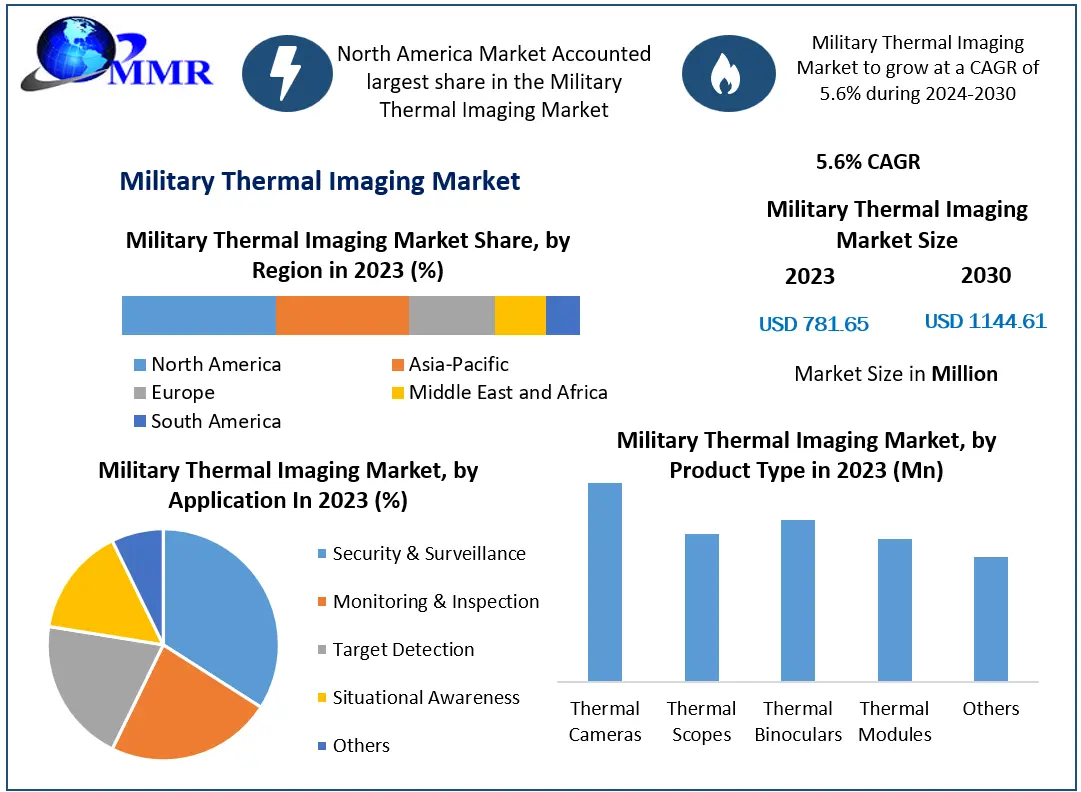 To know about the Research Methodology :- Request Free Sample Report
Military Thermal Imaging Market Dynamics:
Increasing Focus on Border Security
Protecting countries' borders from the illicit movement of weapons, drugs, contraband, and people, while promoting lawful entry and exit, and lawful trade, is essential to homeland security, economic prosperity, and national sovereignty. Ensuring the safety of a country's borders is of utmost importance for national security. However, detecting potential intruders or smugglers under challenging conditions such as complete darkness and diverse weather conditions can be extremely difficult. Thermal imaging cameras offer a valuable solution for border control professionals, enabling them to effectively address the demands they encounter during nighttime operations and in low-light situations. By detecting heat signatures, these cameras enhance situational awareness and enable the identification of individuals or objects that may be hidden from the naked eye.
As a result, thermal imaging technology greatly enhances the capabilities of border control personnel in maintaining border security. Thus, the demand for these devices is increasing significantly and driving the military thermal imaging market growth. Many thermal imaging cameras/device manufacturers have provided thermal imaging systems for various border control programs all across the world. Major border programs are running in Africa, the Middle East, Asia, countries that border the Schengen area, and other European countries that want to protect their border against e.g. illegal immigration. Both land- and coastal surveillance programs exist. Thermal imaging is an important component in many border safety programs and, when integrated into a system with other sensors, such as radar, it provides an effective approach to border control.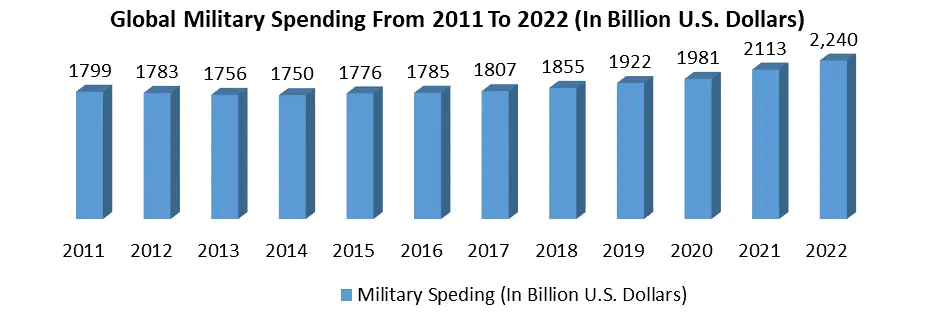 Increasing Demand for Unmanned Ariel Systems
Airspace nowadays is becoming more and more crowded with flying objects such as light airplanes, helicopters, and unmanned aerial vehicles (drones) of various types and sizes for security purposes. Drones are widely used in various applications in the military sector to detect illicit movements such as smuggling, industrial espionage, theft, hacking, and unauthorized data access.
Unmanned Aerial Vehicles (UAVs) are aircraft that operate without a human pilot onboard and could be controlled remotely or flown autonomously using pre-programmed flight plans or automated guidance systems. Initially used primarily in military operations, UAVs are increasingly being utilized in civil applications such as firefighting, law enforcement, disaster assessment, and environmental monitoring. Today, both public service agencies and private corporations all across the world heavily depend on UAVs for a wide range of civil and commercial purposes. The defense industry recognizes the growing potential of UAVs as a business sector, particularly as militaries around the globe seek to reduce spending on high-cost items like fighter jets and naval vessels. Combined with the aforementioned applications, the demand for UAVs in general and imaging cameras, in particular, is growing, driving the military thermal imaging market growth.
Military Thermal Imaging Market Segment Analysis:
Based on the type, the Fixed Thermal Cameras segment is expected to dominate the global military thermal imaging market with the highest market share of over 70% by 2030. This growth is attributed to the increasing adoption of fixed thermal cameras to automatically monitor and control stationary or ongoing targets, which use line electricity and are mounted in a single position in the military and defense sectors. Often, Ethernet is used to send images and videos over long distances. Fixed thermal imaging systems offer the advantage of providing continuous monitoring of a process state. Unlike handheld cameras where the operator needs to move the camera to the desired area for monitoring, fixed cameras are stationary and provide ongoing data. Recent advancements in fixed thermal cameras enable the transmission of multiple frames of imaging data per second through standard Ethernet interfaces, facilitating efficient networking over long distances. In addition, the use of fiber optic Ethernet accessories eliminates the need to install PC operating system software in hazardous locations, ensuring safer operations. These developments enhance the usability and versatility of fixed thermal imaging systems in various industrial applications.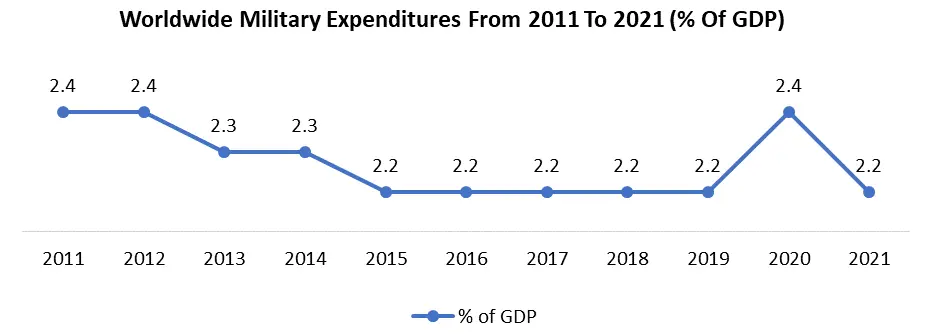 Based on Product type, the thermal cameras segment led the global military thermal imaging market with the highest revenue share in 2023 and is expected to grow at a CAGR of 5.25% during the forecast period. Thermal network cameras create images based on the principles of infrared (IR) radiation. The thermal camera serves as a heat sensor that detects temperature differences between objects and the scene itself. Rather than a picture of light, the thermal image is a visual capture of heat. The more heat an object emits, the brighter it appears in a thermal image. Thermal imaging cameras are a much more effective approach to catching would-be intruders before they inflict damage or steal items when used in conjunction with security personnel or monitoring service.
Conventional security cameras rely on visible light to capture images, making them more noticeable to burglars or intruders. In contrast, thermal cameras can operate effectively without relying on visible light, as they capture the heat signatures emitted by objects or individuals. This characteristic allows thermal cameras to be hidden more easily than regular cameras since they can still function even if partially concealed from view. The ability of thermal cameras to operate in darkness or low-light conditions, combined with their potential for discreet placement, enhances their effectiveness in surveillance and security applications.
Thermal cameras play a significant role in military tasks due to their ability to detect and capture thermal energy emitted by objects and individuals. It provides enhanced situational awareness by allowing military personnel to see and identify targets, obstacles, or potential threats in environments with low visibility or camouflage. In addition, their effectiveness is often combined with other technologies, such as radar, optics, and intelligence-gathering systems, to provide a comprehensive operational picture and enhance military capabilities across various domains. Besides that, Thermal cameras are widely integrated into military aircraft, UAVs, and maritime vessels to enhance reconnaissance and surveillance capabilities. They enable the detection of heat signatures on the ground or at sea, supporting missions such as monitoring enemy positions, maritime interdiction, or search and rescue operations in major areas.
Military Thermal Imaging Market Regional Insights:
North America led the military thermal imaging market with the highest market share of 35.4% in 2023. The region is further expected to grow at a CAGR of 5.8% and dominate the market by 2030. United States in particular is expected to be the lucrative country, generating significant revenue share by 2030. Thermal imaging systems have witnessed a paradigm shift in recent years due to their increasing use in military and defense applications. The army and navy widely adopt thermal imaging technology for border surveillance and law enforcement. In addition, the technology further finds application in ship collision avoidance and guidance systems, ensuring safer navigation at sea. Similarly, in the aviation industry, it has significantly reduced the hazards associated with flying during low light and nighttime conditions.
The military and defense industries were among the first to use infrared and thermal imaging devices, thereby increasingly boosting the military thermal imaging market revenue growth. With the defense sector's increased investment in surveillance, the use of infrared and thermal imaging equipment is expected to grow rapidly. Governments all across the region are heavily investing in next-generation technology by providing better and additional accurate information to military troops. The use of IR thermography tools in the military industry has grown, influencing the rise of infrared cameras, particularly short-wavelength IR cameras.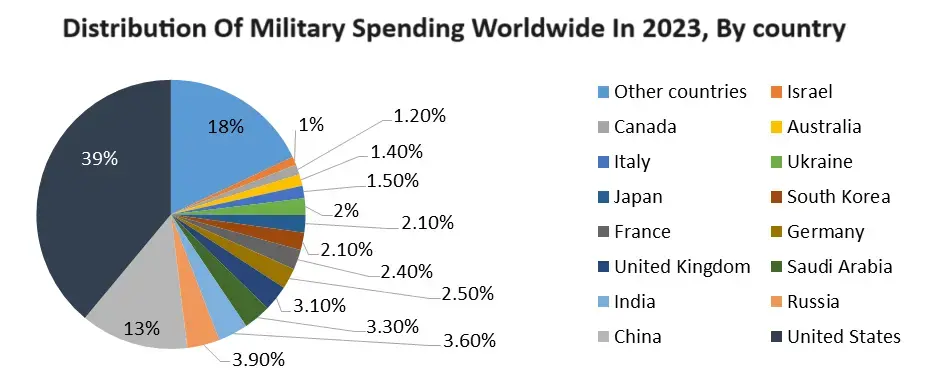 Further to that, there is increasing crime and violent activities in the region. As a result of this element, the budgets of the homeland security forces have increased in order to purchase advanced protection systems and devices. With an expanding number of non-lethal and deadly weapons, modern combat has grown increasingly asymmetric. The US spends more heavily on its military sector than any other country across the world.
The major application of handheld thermal imaging is increasing in the defense and security sector. The US Army has set its sights on equipping its soldiers involved in combat operations with a substantial number of new goggles. In March 2021, the IAVS goggles were developed by the US Army for close-combat forces. IAVS system can integrate with troops’ weapons through a rifle-mounted thermal imaging night vision scope. According to MMR analysis, the new goggles are expected to help enhance infantry troops' situational awareness. Thus, above mentioned factors are expected to drive the military thermal imaging market growth in North America.
Military Thermal Imaging Market Scope: Inquire before buying
| Military Thermal Imaging Market | |||
|---|---|---|---|
| Report Coverage | Details | ||
| Base Year: | 2023 | Forecast Period: | 2024-2030 |
| Historical Data: | 2018 to 2023 | Market Size in 2023: | US $ 781.65 Mn. |
| Forecast Period 2024 to 2030 CAGR: | 5.6% | Market Size in 2030: | US $ 1144.61 Mn. |
| Segments Covered: | by Type | Fixed Thermal Cameras Handheld Thermal Cameras |
|
| by Product Type | Thermal Cameras Thermal Scopes Thermal Binoculars Thermal Modules Others |
||
| by Technology | Cooled Uncooled |
||
| by Detection Range | Short-Range Thermal Imaging Systems (Up To A Few Hundred Meters) Medium-Range Systems (Below 10 Kilometers) Long-Range Systems (Above 10 Kilometers) |
||
| by Application | Security & Surveillance Monitoring & Inspection Target Detection Situational Awareness Others |
||
| by End-User | Land Marine Airborne |
||
Military Thermal Imaging Market by Region:
North America (United States, Canada, and Mexico)
Europe (UK, France, Germany, Italy, Spain, Sweden, Austria, and the Rest of Europe)
Asia Pacific (China, South Korea, Japan, India, Australia, Indonesia, Malaysia, Vietnam, Taiwan, Bangladesh, Pakistan, and the Rest of APAC)
Middle East and Africa (South Africa, GCC, Egypt, Nigeria, and the Rest of ME&A)
South America (Brazil, Argentina Rest of South America)
Military Thermal Imaging Market Key Players:
1. FLIR Systems, Inc. (United States)
2. L3Harris Technologies, Inc. (United States)
3. BAE Systems plc (United Kingdom)
4. Leonardo S.p.A. (Italy)
5. Raytheon Technologies Corporation (United States)
6. Thales Group (France)
7. Safran S.A. (France)
8. Lockheed Martin Corporation (United States)
9. Elbit Systems Ltd. (Israel)
10. HGH Infrared Systems (France)
11. Collins Aerospace (United States)
12. ULIS (France)
13. Excelitas Technologies Corp. (United States)
14. Sofradir (France)
15. Seek Thermal (United States)
16. Xenics (Belgium)
17. ULIRVISION Technology Co., Ltd. (China)
18. Opgal (Israel)
19. Optronics Ltd. (Israel)
20. Nippon Avionics Co., Ltd. (Japan)
21. Tonbo Imaging (India)
22. DRS Technologies, Inc. (United States)
23. General Dynamics Corporation (United States)
24. Roketsan A.S. (Turkey)
25. Hikvision Digital Technology Co., Ltd. (China)
FAQs:
1. What are the growth drivers for the Military Thermal Imaging market?
Ans. The increasing global security threats, Continuous Advancements in thermal imaging technology, and Integration with other technologies are expected to be the major driver for the Military Thermal Imaging market.
2. What is the major restraint for the Military Thermal Imaging market growth?
Ans. Stringent government regulations are expected to be the major restraining factor for the Military Thermal Imaging market growth.
3. Which region is expected to lead the global Military Thermal Imaging market during the forecast period?
Ans. North America is expected to lead the global Military Thermal Imaging market during the forecast period.
4. What is the projected market size & growth rate of the Military Thermal Imaging Market?
Ans. The Global Military Thermal Imaging Market size was valued at USD 781.65 Million in 2023 and the total Military Thermal Imaging revenue is expected to grow at a CAGR of 5.6% from 2024 to 2030, reaching nearly USD 1144.61 Million.
5. What segments are covered in the Military Thermal Imaging Market report?
Ans. The segments covered in the Military Thermal Imaging market report are Type, Product Type, Technology, Detection Range, Application, End-User, and Region.