
Intimate Wash Care Products Market - Industry Structure Evaluation, Demand Drivers Analysis, Regional Growth Analysis and Identification, Competitive Positioning Review & Global Market Size Forecast to 2032
Overview
Intimate Wash Care Products Market was valued at USD 3.88 Billion in 2024, and is expected to reach USD 7.90 Billion by 2032, exhibiting a CAGR of 9.3 % during the forecast period (2024-2030)
Feminine hygiene has become of great importance to maintain intimate health. Intimate wash and care products have become popular among women across the world. Approximately 40% of American females use an intimate wash to maintain hygiene. Therefore, the increasing popularity of the product has been contributing to the intimate wash care products market growth. Lifestyle changes and increasing working women population have boosted the adoption of handy on-the-go products, contributing to the growth of the intimate wash care products market. A large number of women residing in America use wipes, out of which, Latina women are the prime users of the product.
The increasing risk of health issues in the intimate area leading to various skin diseases has fueled the adoption of intimate wash care products. Rising awareness about the products offered by manufacturers has influenced female consumers to prioritize their genital hygiene, which is contributing to the growth of women’s intimate wash care products market. Growing usage of intimate wash care products among sportswomen and several publicity campaigns are encouraging women to trust these products. Additionally, the financial independence of working women has empowered them to spend more on personal hygiene.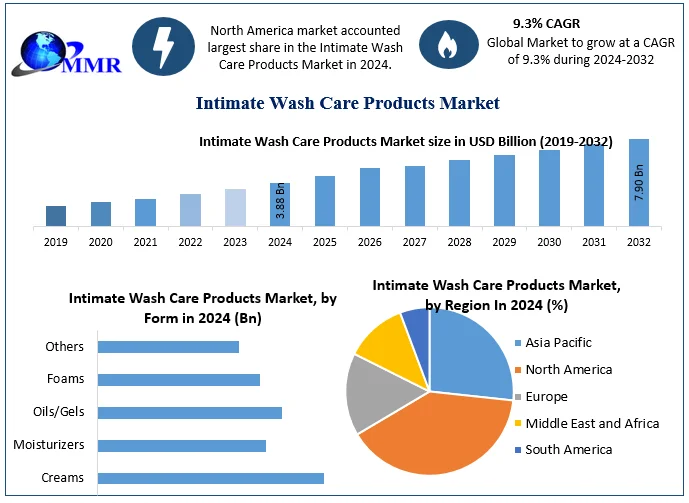 To know about the Research Methodology :- Request Free Sample Report
The demand for intimate hygiene products is also increasing due to rising cases of early puberty. Unhealthy food habits, obesity, and stress are the main reasons responsible for early puberty in girls. Moreover, reproductive tract infections (RTIs) are becoming common among adolescents as a result of poor genital hygiene. These factors are expected to drive the intimate wash care products market.
Asia Pacific is expected to be the fastest-growing region with a highest CAGR from 2025 to 2032. An increase in spending power of young consumers and rising awareness of intimate hygiene, along with a rise in disposable income in developing countries such as India and China, are factors accelerating the growth of the intimate wash care products market in Asia Pacific. The region accounts for a major share in the intimate wash care products market, which is encouraging manufacturers to invest in the region to expand their business.
The intimate wash care products industry is dominated by leading players such as Sanofi; Unilever; The Himalaya Drug Company; Wet and Dry Personal Care.; Combe Incorporated; SweetSpot Labs USA.; Sliquid, LLC.; and The Honey Pot. Companies operating in intimate wash care products market primarily depend on product launches to gain a competitive advantage.
Intimate Wash Care Products Market Dynamics
Rising Awareness About Feminine Hygiene to Boost Intimate Wash Care Products Market Growth
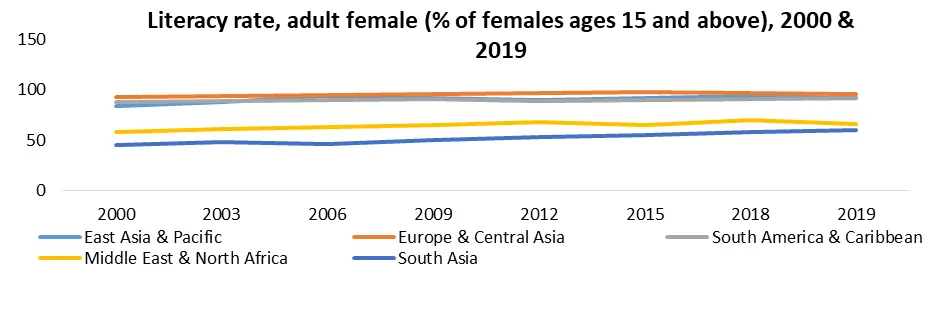
Increasing female literacy rate, rapid urbanization, and rising purchasing power of females are factors accelerating awareness and adoption of feminine hygiene products across the world. Over the past few years, women across the globe have become more informed about their personal hygiene needs and the products available in the market. For a large number of consumers, intimate care products have become an important part of the daily hygiene routine. Governments, NGOs, and several other organizations are continuously launching new campaigns to increase awareness about feminine hygiene and its importance. These initiatives play a crucial role in promoting intimate care products in developing and underdeveloped countries.
For example, in July 2020, V-Bath, a feminine intimate hygiene brand by Lupin, launched the campaign #IssuedInPubicInterest in India to focus on the importance of intimate hygiene and health. The brand had launched its digital campaign “Sahi Baat, V-Bath” in 2019. Such campaigns are expected to create awareness about the importance and benefits of an intimate wash in the country, and hence, promote intimate wash care products market growth. The continuous progress in female literacy rates and developments in rural areas have enhanced the awareness about hygiene among females over the world. This scenario has been opening up opportunities for intimate wash care products market.
Increasing Spending Capability of Women to Drive the Growth of Intimate Wash Care Products Market
The increased spending capability of women due to rising disposable incomes is a major factor triggering the growth of the intimate wash care products market. Another reason for this growth is the increase in the number of working mothers, which in turn, has led to a rise in disposable income, primarily in the emerging economies of Asia Pacific, South America, and the Middle East & Africa. Working mothers spend a significant part of their income on personal care products. Thus, the growing participation of women in the workforce in developing regions such as Asia Pacific and the Middle East and Africa has been widening the growth opportunity for feminine intimate care products.
 Furthermore, emerging economies such as China, India, Mexico, South Africa, and Brazil are witnessing a paradigm shift in the purchasing behaviour and habits of customers. Rapid industrialization and urbanization, as well as the growth of the middle class, in the aforementioned countries, has resulted in changing lifestyles and an increase in the expenditure on personal care goods. As a result, the intimate wash care products market is expected to witness strong growth over the forecast period.
Labor force participation rate, female (% of female population aged 15+)
| Afghanistan | Albania | UAE | Argentina | Australia | Bangladesh | |
| 2017 | 21.0 | 47.6 | 52.5 | 49.4 | 59.8 | 35.9 |
| 2018 | 21.4 | 50.6 | 52.4 | 50.8 | 60.4 | 36.2 |
| 2019 | 21.8 | 52.5 | 52.1 | 51.3 | 60.8 | 36.4 |
Labor force participation rate, female (% of female population aged 15+)
| Brazil | Germany | U.K. | Ireland | Japan | Kenya | |
| 2017 | 54.1 | 55.0 | 57.3 | 55.8 | 51.4 | 71.9 |
| 2018 | 54.4 | 55.2 | 57.6 | 56.2 | 52.8 | 71.9 |
| 2019 | 55.1 | 55.6 | 58.1 | 56.3 | 53.6 | 72.0 |
Labor force participation rate, female (% of female population aged 15+)
| Mexico | Panama | Saudi Arabia | Sweden | U.S. | South Africa | |
| 2017 | 43.6 | 51.0 | 22.6 | 61.0 | 56.3 | 49.6 |
| 2018 | 44.1 | 53.4 | 22.0 | 61.2 | 56.4 | 49.5 |
| 2019 | 45.6 | 54.9 | 22.1 | 61.2 | 56.8 | 49.6 |
Market Challenges for Natural and Organic Intimate Care Manufactures to Hamper the Growth of Intimate Wash Care Products Market
Several issues continue to challenge the intimate wash care products market, with manufacturers of natural skincare products facing the most significant challenges within the industry. Manufacturing natural and sustainable formulations is a difficult task in the skincare market as it limits the total number of raw materials or ingredients available for use. As formulators, brands are required to get a specific direction on which ingredients to employ and which to avoid. This factor is particularly challenging when the average consumer’s perception of ‘natural’ is different from that of a brand. Although consumers worldwide are increasingly becoming aware of the health benefits associated with herbal and natural products, various studies suggest that this factor does not necessarily translate into higher sales of green products.
Furthermore, natural & organic intimate care brands have been struggling to achieve a mass-market appeal for their products. Another challenge intimate care brands encounter when trying to achieve natural formulations is that they are more expensive than synthetic formulations. While the difference in product performance may be minimal, there is a significant difference in the final cost of products. Making health claims is another prominent challenge in the industry. If the safety of products is not fully determined, making health claims on their products can be a challenge to the brands.
Furthermore, in developed regions such as North America and Western Europe, companies face high product penetration and intense competition. On the other hand, in emerging regions such as South Asia and Africa, product penetration is low and manufacturers have been finding ways to establish growth among areas in the developing world where the topic of menstruation can be considered taboo.
Intimate Wash Care Products Market Segment Analysis
Sales Channel In Europe, the level of accessibility of synthetic and organic products has increased over the past few years thanks to the widening of distribution networks of manufacturers and suppliers. There has also been an increase in availability of organic products in supermarkets, malls, and drugstores. In addition, the growing prevalence of the online marketplace where consumers can access a wide range of products has been one of the primary reasons for the increase in the level of accessibility and this trend is expected to continue over the forecast period.
With an expected increase in growth of e-commerce and growing access to digital alternatives, a significant number of consumers are attracted to online shopping, which has accelerated the product adoption through online platforms. The growing level of comfort associated with the purchasing of intimate care products through online channels is likely to increase the demand through this channel. Onlynaturals, Sainsbury’s, Cult Beauty, and Superdrug are a few prominent online platforms for purchasing feminine intimate care products in the U.K.
With the growing presence of supermarkets/hypermarkets such as Tesco, Costco, Company PLC, Roxie Cosmetics LTD, Walmart, and other offline retail channels such as grocery stores and departmental and general stores in Europe, there is a rapid increase in the number of consumers purchasing intimate wash care products such as moisturizers, creams, washes, and wipes from these stores. These stores stock an array of natural as well as chemical-based intimate care products from several brands, which increases product visibility and captures a larger consumer base.
Several players in the intimate wash care products market are offering their products through online platforms such as Amazon, Target Brands, Inc., Nordstrom, Inc., Vitacost.com, iHerb, LLC, and Thrive Market, which is increasing product visibility and accessibility.
Intimate Wash Care Products Market Regional Insights
North America region dominated the global intimate wash care products market in 2024 and is expected to grow at a significant CAGR during the forecast period. The easy availability of intimate care products due to their growing popularity and high spending in the region are some key reasons driving the North America Intimate Wash Care Products market growth. The main factors boosting the product demand in the region include the increasing awareness of intimate care among women and the rising number of initiatives for product promotions to spread awareness about the adverse effects of unclean intimate areas such as skin disorders, itching, odor, and the possibility of cervical cancer.
For example, Rael, a U.S.-based startup established in 2017, is dedicated in educating and creating awareness regarding the women intimate hygiene, especially during menstrual cycles, is further expected to boost the intimate wash care products market demand. Various companies in this space are trying to gain their market share thorough new innovations and approaches. On a similar business model, Honeypot offers plant-based feminine wipes that contain herbs, which are used to clean, hydrate, and balance the pH level.
The feminine intimate wash is one of the most used products in America. 20% to 50% of the Americans use intimate wash on a daily basis, with use rates considerably higher among black, Latina, and low-income women. Increase in spending on feminine health and hygiene products to maintain pH levels and reduce discomfort, bad odor, itchiness, and burning sensation in private areas is driving the intimate wash care products market growth. Personal care products, such as intimate wash products, are increasingly adopted by women involved in sports and fitness activities. With changing perceptions about the use of feminine hygiene products, the intimate wash care products market is expected to witness an increased demand for feminine intimate wash products during the forecast period.
Asia Pacific region is expected to grow at a highest CAGR and hold a significant share of the intimate wash care products market during the forecast period. An increase in the use of feminine intimate care products by young consumers and a rise in awareness about intimate hygiene in developing countries such as India and China are driving the intimate wash care products market in Asia Pacific. The region accounts for a significant share in the global feminine intimate care market, which is encouraging manufacturers to invest in the region to expand their businesses.
China and India are two of the leading feminine intimate care markets in Asia Pacific due to their high female population. In April 2020, China had one of Asia Pacific’s highest labor force participation rates for women. Increasing working women population enables women to choose from a variety of products according to suitable price ranges and as per their comfort. Major market players like Namyaa Skincare and Unilever have a strong presence in the region due to the low cost of production and increasing demand for these products.
Intimate Wash Care Products Market Scope: Inquiry Before Buying
| Intimate Wash Care Products Market | |||
|---|---|---|---|
| Report Coverage | Details | ||
| Base Year: | 2024 | Forecast Period: | 2025-2032 |
| Historical Data: | 2019 to 2024 | Market Size in 2024: | USD 3.88 Bn. |
| Forecast Period 2025 to 2032 CAGR: | 9.3 % | Market Size in 2032: | USD 7.90 Bn. |
| Segments Covered: | by Form | Creams Moisturizers Oils/Gels Foams Others |
|
| by Price Range | Economy Mid-Range Premium |
||
| by Nature | Organic Conventional |
||
| by Sales Channel | Supermarkets/Hypermarkets Pharmacies and Drug Stores Specialty Outlets Independent Small Stores E-Retailers Others |
||
| by End-User | Men Women |
||
Intimate Wash Care Products Market, by Region
North America (United States, Canada and Mexico)
Europe (UK, France, Germany, Italy, Spain, Sweden, Austria and Rest of Europe)
Asia Pacific (China, South Korea, Japan, India, Australia, Indonesia, Malaysia, Vietnam, Taiwan, Bangladesh, Pakistan and Rest of APAC)
Middle East and Africa (South Africa, GCC, Egypt, Nigeria and Rest of ME&A)
South America (Brazil, Argentina Rest of South America)
Intimate Wash Care Products Market, Key Players are
North America
1. Combe Incorporated (United States)
2. Kimberly-Clark Corporation (United States)
3. The Honey Pot Company, LLC (United States)
4. Organic Glide Company (United States)
5. Prestige Consumer Healthcare Inc. (United States)
6. SweetSpot Labs USA, Inc. (United States)
7. DS Healthcare Group Inc. (United States)
8. Sliquid, LLC (United States)
9. Lemisol Corporation (United States)
Asia Pacific
10. The Himalaya Drug Company (India)
11. Body Cupid Private Limited (India)
12. Svish On The Go Private Limited (India)
13. Millennium Herbal Care Limited (India)
14. Sirona Hygiene Private Limited (India)
15. BeYouPlus Healthcare Private Limited (India)
16. Sangopan Tendercare Private Limited (India)
17. Rama Herbal Private Limited (India)
18. Wet and Dry Personal Care Private Limited (India)
Europe
19. Church & Dwight UK Limited (United Kingdom)
20. VAGENTLE Limited (United Kingdom)
21. Avon Products, Inc. (United Kingdom)
Middle East and Africa
22. Sensicare Arabia FZ-LLC (United Arab Emirates)
23. Church & Dwight Co., Inc. (United States)
South America
24. Que Fresca S.A. (Argentina)
25. Vico Food Box SRL (Italy)
Frequently Asked Questions:
1] What is the growth rate of the Global Market?
Ans. The Global Market is growing at a significant rate of 9.3% during the forecast period(2025-2032).
2] Which region is expected to have the highest growth rate in the Global Intimate Wash Care Products Market?
Ans. The Asia Pacific region is expected to hold the highest growth rate in the Market during the forecast period.
3] What is the market size of the Global Intimate Wash Care Products Market by 2032?
Ans. The market size of the Market by 2032 is expected to reach USD 7.90 Bn.
4] What are the major key players of the Global Intimate Wash Care Products Market?
Ans. The major key players of the Global Market are Sanofi, Kao Corporation, Combe Incorporated, Kimberly-Clark Corporation, The Honey Pot Company, LLC, Organic Glide Company, Unilever, and Prestige Consumer Healthcare Company.
5] What factors are driving the growth of the Global Intimate Wash Care Products Market in 2024?
Ans. Rising awareness about hygiene and increasing spending capability are the major factors expected to drive the Global Market during the forecast period.