
High Temperature Overhead Conductor Market – Industry Structure Evaluation, Demand Drivers Analysis, Regional Growth Analysis and Identification, Competitive Positioning / Landscape Review & Global Market Size Forecast to 2032
Overview
Global High Temperature Overhead Conductor Market size was valued at USD 217.53 Million in 2024 and the total High Temperature Overhead Conductor revenue is expected to grow at a CAGR of 5.32% from 2025 to 2032, reaching nearly USD 329.32 Million.
High-temperature conductors designed for overhead power lines offer a cost-effective solution for upgrading existing electrical grids. These innovative conductors address the challenges associated with constructing new power lines, including limited available land, permitting difficulties, and environmental constraints. By replacing only the conductors in the existing lines, these high-temperature conductors significantly increase ampere capacity, typically by 1.5 to 2 times. This approach not only simplifies the upgrade process but also ensures a more favorable total cost of ownership. These advanced conductors utilize a combination of materials to achieve their enhanced performance.
They feature a core made of aluminium-clad Invar, a specialized Fe-Ni alloy known for its exceptionally low thermal expansion coefficient. This core material provides stability and minimizes the impact of temperature variations. To further enhance their thermal resistance and conductivity, these conductors incorporate a layer of super thermal-resistant Al-Zr alloy. To know about the Research Methodology :- Request Free Sample Report
The High Temperature Overhead Conductor Market is expected to be a critical segment within the broader energy and electrical transmission industry. It revolves around the development and utilization of advanced conductors designed to enhance the efficiency and reliability of electrical grids. These high-temperature overhead conductors are engineered to operate at elevated temperatures, making them suitable for regions with extreme weather conditions or those experiencing high electrical loads. The increasing global demand for electricity, the focus on renewable energy integration, and the need for grid modernization are expected to be the major factors driving the high temperature overhead conductor market growth.
Governments and utility companies are investing in upgrading existing infrastructure, which often involves the replacement of traditional conductors with high-temperature alternatives. These advanced conductors not only offer improved thermal resistance but also facilitate increased ampere capacity, allowing for more efficient power transmission. As a result, they play a crucial role in reducing energy losses and enhancing grid reliability, particularly in regions where infrastructure upgrades are essential.
High Temperature Overhead Conductor Market Competitive Landscape:
The high temperature overhead conductor industry is expected to be highly fragmented with established players and new start-ups. Established industry leaders such as Nexans, Lamifil, and Sumitomo Electric Industries have a significant presence in the market. They have a track record of innovation and a wide range of high-temperature overhead conductor products. These companies often collaborate with utility companies and governments to implement advanced grid solutions. These players are continuously adopting various strategies to increase their market presence including mergers and acquisitions, joint ventures, partnerships, product launches,
In January 2020: LS Cable & System achieved the successful establishment of its inaugural cable manufacturing plant in Africa, situated in Egypt. This accomplishment resulted from a collaborative venture with MAN, a Cairo-based cable manufacturer. The newly established manufacturing facility will focus on the production of overhead transmission lines, crucial components that span the distance between substations and power plants while mounted on pylons. This strategic move underscores LS Cable & System's commitment to expanding its global presence and enhancing its capacity to meet the demand for essential electrical infrastructure components.
In addition, the market also witnesses the emergence of innovative start-ups and smaller enterprises, bringing new perspectives and proprietary solutions for the high temperature overhead conductor industry growth. These active newcomers focus on developing novel alloys and technologies, with the aim of further improving the performance of high-temperature conductors. Their contributions in terms of technological advancements and heightened competition inject vitality into the industry landscape. The global reach of numerous significant companies is one notable feature of this competitive environment. This widespread presence allows them to cater to diverse markets and regions worldwide, effectively addressing the mounting demand for high-temperature overhead conductors. This global expansion is instrumental in meeting the specific needs of regions grappling with increased electricity demands and the necessity for resilient grid infrastructure.
To cater to the unique requirements of different regions and projects, the high temperature overhead conductor market players offer an array of high-temperature overhead conductor solutions. These solutions often include alloys with varying conductivity and strength characteristics, allowing for tailored applications that precisely match the needs of specific projects. Collaborations between industry players, utility companies, and government entities are expected to be the major prospect in the high temperature overhead conductor industry growth. These partnerships frequently lead to pilot projects and real-world implementations of high-temperature overhead conductors, serving to further bolster the high temperature overhead conductor market's growth.
High Temperature Overhead Conductor Market Dynamics:
Increasing Electricity Demand across the World
The rising demand for electricity across the world is expected to be the significant factor driving the high temperature overhead conductor market growth during the forecast period. This ever-increasing need for electricity is driven by various factors, such as rising population, increasing urbanization, industrial expansion, the growing reliance on technology, etc. This growth is putting a strain on existing power grids and infrastructure, and it is creating a need for new and innovative ways to generate and transmit electricity. As societies and economies develop, the demand for electrical power continues to surge, prompting the energy industry to adapt and expand its capabilities. For instance, in the past decade,
Asia has witnessed a remarkable growth in electricity consumption, driven by rapid industrialization and urban migration. According to the MMR analysis, in 2020, China stood as the world's largest electricity consumer, where its ambitious industrial and infrastructure projects have heightened the need for electricity. China is the world's largest consumer of electricity, and its demand is growing rapidly. In 2021, China consumed over 8,400 terawatt-hours of electricity, up from 5,300 terawatt-hours in 2010. This growth is being driven by China's rapid economic development and its growing population. Similarly, India has experienced a substantial rise in electricity demand due to its burgeoning population and economic growth, leading to a heightened focus on energy infrastructure development and diversification.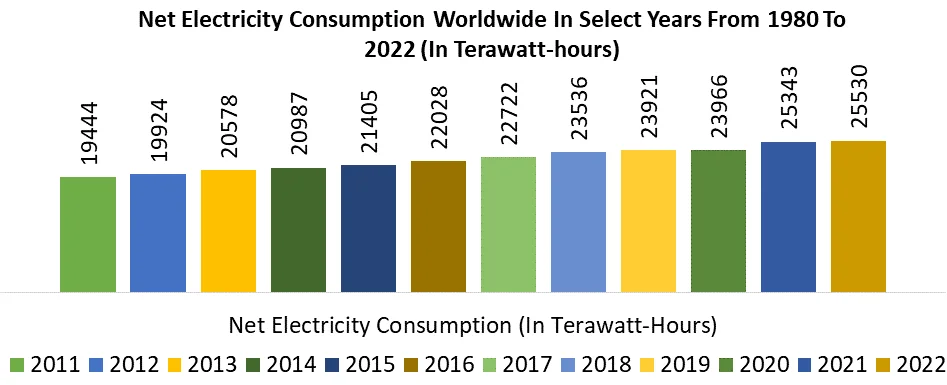 Additionally, the proliferation of electronic devices and the digitalization of various aspects of modern life have led to an increased need for electricity. Smartphones, computers, and various gadgets have become integral to daily living, and the data centers that support the digital infrastructure require substantial energy input.
As a result, electricity consumption has grown exponentially over the last few decades. Moreover, the push for sustainable energy sources and the electrification of various sectors, such as transportation, are also driving up electricity demand. Governments and organizations all across the world are investing in renewable energy technologies like solar and wind power, which are replacing fossil fuels and increasing overall electricity generation. Electric vehicles, too, are on the rise, requiring more charging infrastructure and electricity generation. Thus, the increasing need for electricity is expected to increase the conductor demand, thereby driving the high temperature overhead conductor market growth.
Rising Government Investments in Infrastructure
The rising government investments in infrastructure are driving the growth of the high temperature overhead conductor market. HTLS conductors are used in power transmission lines to carry electricity over long distances. They are made of materials that can withstand high temperatures, which makes them ideal for use in hot climates or areas with a lot of overhead power lines. Governments around the world are recognizing the importance of upgrading and expanding their infrastructure to ensure energy security and sustainable development. Investment initiatives in electric grid modernization, particularly in emerging economies, are propelling the demand for high-temperature overhead conductors. For example, the United States initiated the "Grid Modernization Initiative" in 2016, which aimed to improve the reliability and resilience of the nation's electrical grid, leading to substantial investments in advanced conductors.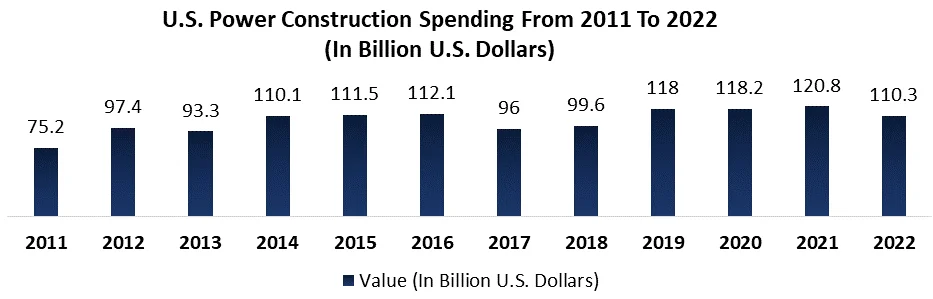 In addition, the rising focus of governments and utility companies on upgrading existing infrastructure to improve efficiency and reduce transmission losses has indeed prompted the replacement of old conductors with high-temperature overhead conductors. This transition reflects a broader commitment to enhancing the reliability and performance of electrical grids while minimizing energy wastage, thereby driving the high temperature overhead conductors penetration in the industry. Older transmission lines often use conventional conductors that are less efficient in carrying electricity over long distances. They experience higher resistance, leading to increased transmission losses and reduced overall grid efficiency.
To address these issues, governments and utility companies have embarked on infrastructure improvement projects that involve the replacement of outdated conductors with high-temperature overhead conductors. In recent years, the U.S. government, through the Department of Energy (DOE) and state-level initiatives, has supported the modernization of the country's electrical grid. Part of this modernization effort includes the replacement of traditional conductors with high-temperature overhead conductors, which operate at elevated temperatures without sacrificing efficiency. This switch has a direct impact on reducing transmission losses and improving the overall performance of the grid.
Similar initiatives have been observed in countries like China, where substantial investments have been made in upgrading the electrical infrastructure to accommodate the increasing electricity demand. This includes the adoption of high-temperature overhead conductors to improve the efficiency and capacity of power transmission lines. The replacement of old conductors with high-temperature overhead conductors aligns with global efforts to create more sustainable and resilient electrical grids. By reducing transmission losses and enhancing grid performance, this transition not only leads to energy savings but also supports the integration of renewable energy sources and contributes to the overall stability and reliability of power supply. As governments and utility companies continue to prioritize infrastructure upgrades, the adoption of high-temperature overhead conductors is likely to remain a crucial strategy in achieving these objectives, thus boosting the high temperature overhead conductor market growth.
High Initial Costs
High initial costs are expected to limit the high-temperature overhead conductor’s penetration in the field of electrical power transmission, thereby hampering the high temperature overhead conductor market. These conductors, designed to enhance the efficiency and reliability of electrical grids, come with a price tag that often exceeds that of traditional conductors. The primary contributors to these elevated costs lie in both the materials used and the installation processes involved. The materials required for high-temperature overhead conductors are specialized and engineered to withstand extreme conditions, making them inherently more expensive. The addition of elements like zirconium in aluminum alloys, which grants these conductors their thermal resistance, contributes to the increased material costs. These alloys are carefully crafted to ensure the conductor can handle higher temperatures without degradation, a feature that traditional conductors lack.
In addition, the installation process for high-temperature overhead conductors is expected to be more complex and labor-intensive than that of conventional options. These conductors are installed with precision to maximize their benefits, and the labor costs associated with skilled technicians add to the overall expense. Additionally, the installation of these conductors may require adjustments or reinforcements to the existing infrastructure, further raising the initial investment, and limiting the high temperature overhead conductor market growth during the forecast period. This higher upfront expenditure can be a substantial barrier, particularly in regions with limited budgets, where utilities and governments must carefully allocate resources.
High Temperature Overhead Conductor Market Segment Analysis:
By Product, the Thermal Aluminum Alloy Conductors (TAl) segment led the global high temperature overhead conductor market with the highest market share of 62% in 2024. The segment is further expected to grow at a CAGR of 5.45% during the forecast period. TAl conductors are known for their ability to withstand high temperatures, making them suitable for areas with extreme weather conditions. Their adoption is driven by the need to enhance grid efficiency and reduce power losses. In regions with high-temperature climates, such as parts of the Middle East and North America, TAl conductors have been widely deployed to minimize line losses and improve transmission efficiency.
For instance, in 2019, a major U.S. utility company initiated a project to replace traditional conductors with TAl conductors in Texas to enhance the grid's performance during hot summer months.
Advantages and Versatile Applications of Aluminum Zirconium (ALZr) Alloys
| Advantages of Aluminum Zirconium (AlZr) Alloys | Applications |
| Enhanced Thermal Resistance | 1. High-Temperature Overhead Conductors (HTLS) for electrical grids.
2. Overhead conductors with excellent sag behavior at high operating temperatures. |
| Improved Conductivity | 1. Grid upgrades to double line capacity without altering tower infrastructure.
2. Replacement of traditional aluminum steel or ACSR conductors with thermal-resistant alternatives. |
| Strength and Sag Behavior Optimization | 1. Alloy selection for specific conductor designs based on boundary conditions.
2. Hard aluminum for improved strength and sag resistance under wind and ice loads. 3. Annealed aluminum for higher conductivity and sag improvement at elevated temperatures. |
|
Innovative Alloys (AT0 and AT⅟2) |
1. Patented AT0 (Softal) alloy with high tensile strength and good conductivity.
2. AT⅟2 (Semital) alloy with doubled tensile strength and maintained conductivity. |
| Alternative for Copper Wires | 1. Weight reduction in copper-based cables used in the automotive and aerospace industries.
2. Potential applications in battery cables and small power cables with momentary thermal loads. |
However, Zero Thermal Aluminum Alloy Conductors (ZTAl) conductors are expected to be a growing segment in the high-temperature overhead conductor market. The segment's market share is increasing as utilities and grid operators seek even higher temperature resistance and reduced sagging. ZTAl conductors are designed to provide enhanced performance under extreme temperature conditions, offering low sag and reduced line losses. Their adoption is driven by the need for maximum efficiency and sustainability in power transmission. In 2024, a significant utility company in the United Arab Emirates (UAE) initiated a groundbreaking project that exemplifies the growing prominence of ZTAl conductors.
Located in a region known for its scorching desert heat, the UAE faces the challenge of maintaining reliable power transmission during extreme temperature conditions. To address this issue, the utility company decided to replace its existing conductors with ZTAl conductors. These advanced conductors were chosen for their exceptional thermal performance, designed to withstand the relentless heat of the desert while minimizing line losses. This project underscores the importance of ZTAl conductors in ensuring the continuous and efficient supply of electricity in regions with extraordinarily high temperatures.
Thus, the adoption of ZTAl conductors reflects the industry's commitment to pushing the boundaries of high-temperature overhead conductor technology. As the demand for even higher temperature resistance and reduced sagging continues to rise, ZTAl conductors are positioned to play a vital role in enhancing the efficiency and sustainability of power transmission systems, especially in regions with extreme climate challenges, benefiting the high temperature overhead conductor market growth.
High Temperature Overhead Conductor Market Regional Insights:
Asia Pacific region is expected to lead the global high temperature overhead conductor market with the highest market share of over 50% in 2032. The region is expected to grow at a CAGR of 5.98% and offer lucrative growth opportunities for the high temperature overhead conductor manufacturers during the forecast period. This is due to factors such as rapid economic development, increasing electricity demand, and government investments in infrastructure. In China, the colossal expanse of the country, coupled with its diverse climate conditions, has boosted a substantial demand for high-temperature conductors. Infrastructure development and grid modernization projects have been instrumental in driving the High Temperature Overhead Conductor market growth.
For instance, as of 2024, China embarked on a nationwide effort to upgrade its transmission infrastructure, deploying advanced HTLS conductors in various provinces to enhance efficiency and capacity.
India is also a significant player in the Asia-Pacific high temperature overhead conductor market. The country's surging energy demand, coupled with the integration of renewable energy sources, has created a significant requirement for efficient high-temperature conductors. Especially in regions with elevated temperatures, high-temperature conductors are pivotal to ensuring uninterrupted and efficient power transmission. India's adoption of HTLS conductors has been particularly pronounced in the western state of Maharashtra, where extreme weather conditions necessitate the use of advanced conductors.
As of 2022, several projects in the state have incorporated high-temperature conductors to bolster the resilience and efficiency of the electrical grid. Across Southeast Asia, including countries like Malaysia and Indonesia, high-temperature conductors are increasingly vital for efficient power transmission. The tropical climates in these countries pose unique challenges, including high ambient temperatures and humidity, which are expected to affect the performance of conventional conductors. As a response, utilities, and infrastructure developers have turned to high-temperature overhead conductors to enhance the reliability and capacity of power transmission systems.
In Indonesia, for instance, as of 2021, the installation of Aluminum Conductor Composite Core (ACCC) conductors has been undertaken to improve grid performance and reduce line losses, particularly in areas prone to extreme weather conditions. Thus, this factor is expected to boost the High Temperature Overhead Conductor market growth in the region.
The United States is expected to be the lucrative region for high temperature overhead conductor manufacturers. The country's mature and well-established electrical grid boosted the demand for conductors, hence supporting the high temperature overhead conductor market. The aging infrastructure often requires upgrades to maintain reliability and efficiency. High-temperature conductors are a strategic choice in many regions, particularly those with high electrical demand and transmission lines that suffer from line losses.
For example, several projects in the U.S. have leveraged high-temperature conductors to address aging infrastructure concerns. As a case in point, in 2020, American Electric Power (AEP) announced an initiative to install high-capacity, high-temperature conductors in Ohio and Indiana to enhance transmission capacity and reduce line losses in the power grid.
In addition, Conductors aimed for greater efficiency and decreased sagging help Western European nations such as Spain, Italy, and Greece, which have high-temperature zones. High-temperature conductors are integral to maintaining the reliability and performance of electrical grids in these nations. For example, in Spain, high-temperature overhead conductors have been implemented in various projects to mitigate the impact of soaring temperatures and maintain consistent power transmission. As of 2020, the Spanish utility, Red Eléctrica de España, embarked on a project to upgrade its transmission lines with advanced high-temperature conductors, enhancing the grid's capacity to withstand extreme weather conditions.
Global High Temperature Overhead Conductor Market Scope: Inquire before buying
| Global High Temperature Overhead Conductor Market | |||
|---|---|---|---|
| Report Coverage | Details | ||
| Base Year: | 2024 | Forecast Period: | 2025-2032 |
| Historical Data: | 2019 to 2024 | Market Size in 2024: | USD 217.53 Mn. |
| Forecast Period 2025 to 2032 CAGR: | 5.32% | Market Size in 2032: | USD 329.32 Mn. |
| Segments Covered: | by Product | TAl ZTAl Others |
|
| by Voltage | 132 kV to 220 kV 220 kV to 660 kV > 660 kV |
||
| by Rated Strength | High Strength Extra High Strength Ultra High Strength |
||
| by End-Use Industries | Commercial Residential Others |
||
| by Sales Channel | Direct Sales Distribution Channels |
||
High Temperature Overhead Conductor Market, by Region
North America (United States, Canada and Mexico)
Europe (UK, France, Germany, Italy, Spain, Sweden, Austria and Rest of Europe)
Asia Pacific (China, South Korea, Japan, India, Australia, Indonesia, Malaysia, Vietnam, Taiwan, Bangladesh, Pakistan and Rest of APAC)
Middle East and Africa (South Africa, GCC, Egypt, Nigeria and Rest of ME&A)
South America (Brazil, Argentina Rest of South America)
High Temperature Overhead Conductor Market, Key Players
North America
1. Southwire Company (United States)
2. CTC Global Corporation (United States)
3. Midal Cables (United States)
Asia Pacific
4. Sumitomo Electric Industries, Ltd. (Japan)
5. Shanghai Cable Group (China)
6. ZTT Group (China)
7. Sterlite Power (India)
8. LS Cable & System (South Korea)
9. LZ Cable (China)
10. ZMS Cable (China)
11. Shashi Cables (India)
12. Lumino Industries Ltd (India)
13. Epsilon Cable (India)
Europe
14. Prysmian Group (Italy)
15. Nexans (France)
16. NKT (Denmark)
17. Lamifil NV (Belgium)
18. Tratos Group (Italy)
19. Pfisterer Group (Germany)
Middle East and Africa
20. Alfanar (Saudi Arabia)
FAQs:
1. What are the growth drivers for the High Temperature Overhead Conductor Market?
Ans. The increasing electricity demand, renewable energy integration, grid modernization, reduction in transmission losses, environmental regulations, cost savings, global infrastructure development, and a focus on sustainability are expected to be the major drivers for the High Temperature Overhead Conductor market.
2. What is the major restraint on the High Temperature Overhead Conductor market growth?
Ans. The major restraint on the High Temperature Overhead Conductor market growth is the high initial costs associated with the installation and deployment of these advanced conductors.
3. Which region is expected to lead the global High Temperature Overhead Conductor market during the forecast period?
Ans. APAC is expected to lead the global High Temperature Overhead Conductor market during the forecast period.
4. What is the projected market size & and growth rate of the High Temperature Overhead Conductor Market?
Ans. The Global High Temperature Overhead Conductor Market size was valued at USD 217.53 Million in 2024 and the total High Temperature Overhead Conductor revenue is expected to grow at a CAGR of 5.32% from 2025 to 2032, reaching nearly USD 329.32 Million.
5. What segments are covered in the High Temperature Overhead Conductor Market report?
Ans. The segments covered in the High Temperature Overhead Conductor market report are Machine Type, Product, Voltage, Rated Strength, End-Use Industries, Sales Channel, and Region.