
High Protein Coffee Market - Industry Structure Evaluation, Demand Drivers Analysis, Regional Growth Analysis and Identification, Competitive Positioning Review & Global Market Size Forecast to 2032
Overview
The High Protein Coffee Market size was valued at USD 3117.59 Million in 2025 and the total High Protein Coffee revenue is expected to grow at a CAGR of 18.9% from 2025 to 2032, reaching nearly USD 10473.52 Million by 2032.
High Protein Coffee Market Overview:
High protein coffee is a brewed beverage made by combining coffee beans with protein powder. The majority of high protein coffees are made by combining Arabica beans with protein powder. Demand for high protein coffee is increasing dramatically among customers all over the world, since everyone enjoys the refreshing flavour of coffee. Manufacturers have created high protein coffee to appeal to the health-conscious and fitness-obsessed consumers. High protein coffees are available in both ready-to-drink and premixed forms on the market. There are also several kinds of high protein coffee on the market, such as vanilla, mocha, and chocolate.

To know about the Research Methodology :- Request Free Sample Report
The Global High Protein Coffee Market is segmented by product type, flavor, end-users and distribution channel. Based on product type, the market is segmented into premix and RTD (ready to drink). Based on flavor, the market is segmented into plain, flavoured, vanilla, mocha, and peanut butter. Based on end-users, the market is segmented into horeca and household. Based on distribution channel, the market is segmented into B2B, B2C, store-based retailing, hypermarkets/supermarkets, grocery stores, convenience stores, specialty stores, and online retailing. Based on region, the market is segmented into North America, Asia Pacific, Europe, Middle East & Africa, and South America.
The Global High Protein Coffee Market report provides an evaluation of the market for the forecast period. The report comprises various segments as well as an analysis of the trends and factors that are playing a substantial role in the market. In the report, the market outlook section mainly encompasses fundamental dynamics of the market which include drivers, restraints, opportunities, and challenges faced by the industry. Based on the understanding of requirements, a secondary research is conducted to identify the segment specifications, qualitative and quantitative data along with the factors responsible for the growth of the market. The secondary source referred for the research are press releases, company annual reports, government websites, and research papers related to market. Moreover, quantitative and qualitative data is extracted from paid database like Reuters, Bloomberg, Hoovers, etc. The secondary research carried out at primary level is verified by primary research.
COVID-19 Impact on High Protein Coffee Market
The COVID-19 pandemic is affecting the major coffee consuming and importing markets in North America, Asia, and Europe. Governments have enacted policies such as lockdowns and social distancing, which have had a significant influence on cafes and restaurants. As a result, the majority of coffee consumers purchase coffee through online retailing; this factor is expected to increase global consumption of ready-to-drink coffee. Many internet polls have revealed an increase in daily coffee consumption due to increase at-home consumption. The report provides a thorough examination of the COVID 19 pandemic and its influence on industry, global and regional markets, and raw material suppliers.
The COVID-19 pandemic has put further strain on the high protein coffee market, which is already sensitive to variations in global high protein coffee prices, poor production levels, climate change impacts, and pest and disease damage all over the world. Furthermore, governments have implemented restrictions such as social distance and lockdowns, which have had a significant influence on cafés, micro-roasters, restaurants, and other out-of-home businesses, resulting in a dynamic market. The present trend toward internet purchase for at-home consumption, on the other hand, is driving merchants, roasters, and consumers to adjust to this new reality. As a result, this factor is expected to increase global high protein coffee consumption.
Increase Popularity of Protein Coffee over Social Media: In 2025, Proffee or protein coffee was a viral tik tok sensation. Consumers made their own caffeinated, protein drink by adding a scoop of protein powder to espresso and pouring it over ice. Protein drinks have grown in popularity over the years, even before current social media craze. Protein coffees are pushing the protein beverage frontier beyond sports drinks and smoothies, providing protein-seeking coffee drinkers with a tasty and healthy alternative to traditional coffee that helps them wake up and power through the day. Ready-to-drink (RTD) protein coffee choices also provide consumers with the ease of drinking it whenever and wherever they choose.
Rising Demand for Protein Coffee Products: Protein coffee products are exploding in the global market, owing to customer preferences for outstanding flavour, diversity, and the nutritional advantages of added protein for a healthy, active lifestyle. In the United States, supermarket shelves are stocked with an increasing variety of RTD canned and bottled protein coffee alternatives, including espresso and mocha. Protein coffees are also available in the United States as ready-to-mix powders in single and multi-serve sizes. Protein coffee is becoming popular in Asia as well. To suit customer aspirations for excellent protein-added drinks with a caffeine rush, Japan offers both ready-to-drink and ready-to-mix choices.
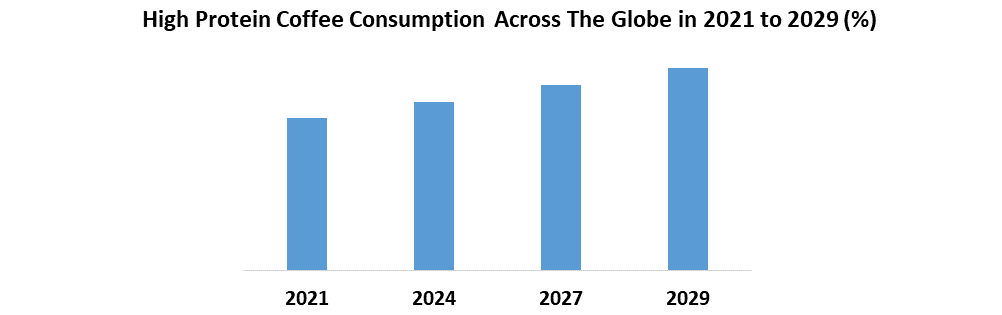
Refreshing Protein Supplement for Muscle Builders: The expanding fitness and muscle-building trend among consumers is driving up demand for high protein coffee throughout the world. The increased demand for high protein coffee stems from younger customers, whose consumption of coffee is increasing. High protein coffee makers have a fantastic chance to market their goods in a variety of tastes. There is also a potential for new market entrants to sell ready-to-drink high protein coffee in a variety of tastes. Manufacturers should concentrate on emerging markets such as India and China, where demand for high protein coffee is likely to be significant due to the growing trend of muscle building.
Increasing Opportunities for Market Players: High Protein Coffee a Refreshing Protein Supplement for Muscle Builders. High Protein Coffee Protein content in high protein coffee is between 15 and 17% per 25 gram serving. With a delightful, refreshing coffee flavour, high protein coffee might be regarded an alternative to protein powders. As a mild digesting product, high protein coffee can be eaten before or after exercise. Bodybuilding is becoming more popular throughout the world, and because protein is required to grow body or muscle, bodybuilders are consuming protein-rich meals, which are predicted to drive the high protein coffee market in the near future.
Rising Prices of Coffee Bean: The rising cost of agricultural inputs has a significant influence on the price of coffee beans. According to the International Coffee Organization, the cost of coffee beans has been decreasing since 2016. As a result, the frequent fluctuation in the price of beans has had a detrimental influence on the product's manufacturing cost. Furthermore, the cost of RTD coffee is higher than that of ordinary coffee, which is a key impediment to the expansion of the high protein coffee industry.
High Protein Coffee Market Segment Analysis
By Product Type:
The high-protein coffee market is segmented by product type, catering to varying consumer preferences for convenience and preparation methods. Premix protein coffee is popular among fitness enthusiasts who prefer customizable protein intake, often mixing it with water or milk for a tailored experience. RTD (Ready-To-Drink) protein coffee is rapidly growing due to its on-the-go convenience, making it a preferred choice for busy professionals and gym-goers. Coffee pods offer a seamless experience for those using single-serve coffee machines, combining ease of preparation with consistent flavour and protein content. Additionally, the Others category includes emerging formats such as protein-infused cold brews and espresso shots, reflecting the industry's push for innovation in response to evolving consumer demand.
By Flavour:
The market is also divided by flavour preferences, with both classic and innovative options available. Plain protein coffee appeals to those who enjoy the natural taste of coffee without added flavours, while flavoured varieties such as caramel and hazelnut attract consumers looking for a more indulgent experience. Vanilla remains a top choice for its smooth and versatile profile, often combined with almond or cinnamon for a richer taste. Mocha, blending chocolate and coffee, is particularly popular among those seeking a more dessert-like experience while still meeting their protein needs. The "Others" category includes seasonal and niche flavours like pumpkin spice or matcha-infused protein coffee, catering to evolving taste trends and expanding market opportunities.
High Protein Coffee Market Regional Insights
Because of the increased use of protein drinks among the health-conscious population, North America holds a larger part of the global high protein coffee industry. Furthermore, the significant presence of key manufacturers in the United States is likely to add to the target market's revenue growth. The health and fitness business in the United States is expected to develop at a quicker rate between 2025 and 2032. This increase is attributable to an increase in the number of US consumers adopting a healthy lifestyle. Currently, around 20% of American people belong to a fitness club, and this figure is expected to climb in the future.
Although RTD protein coffees are not yet widely available in Asia Pacific, the region's coffee habit is deeply ingrained. Coffee flavour preferences are often stronger in this region, which is often tempered by the creamy addition of condensed or evaporated milk. There are several varieties of hot and iced coffees that are popular across the region. Businesses could turn to the coffee or kopi sector, which offers an appealing prospect for innovative protein-added concoctions. Asia Pacific formulators may regionalize the protein coffee trend by developing new products that are customised to local flavour, texture, and package format preferences. In 2021, 36.2 percent of Indonesian consumers and 35.1 percent of Thai consumers were actively looking at food and drink labels to check if the product contains protein.
According to the Institute for Scientific Information on Coffee (ISIC), 68 percent of respondents said they frequently drank coffee while working. As customers become more sensitive of the quality of their coffee, this trend is driving up demand for coffee in European nations such as Germany, Italy, Spain, the United Kingdom, and others. Furthermore, technological improvements (such as table-top equipment and traceability tools) are paving the way for bean-to-cup solutions. Nestle's Nespresso dominates the German coffee pods and capsules industry, having a vast product reach across the nation. Keurig Green Mountain combined with JAB Holding with an intention to extend its reach. Nestle SA's expansion in Germany is projected to be hampered as a result of this. According to a Nestle Nespresso SA survey, a growing feeling of coffee connoisseurship was especially visible among younger generations in Germany. Approximately 24.1 percent of 18-29-year-olds want to sample new types of coffee and coffee recipes, as well as see diversity in the coffee business.
High protein coffee consumption is expected to be strong in Japan, the United States, France, Italy, and Germany, where demand for regular coffee is already high. Coffee is exported in great quantities to India, Indonesia, Vietnam, Colombia, and Brazil. Emerging economies such as China, Turkey, Russia, and South Korea have significant room for expansion. To broaden their market base, several producers provide high protein coffee that is vegetarian, gluten-free, and soy-free.
High Protein Coffee Market Scope: Inquire before buying
| Global High Protein Coffee Market | |||||
|---|---|---|---|---|---|
| Report Coverage | Details | ||||
| Base Year: | 2025 | Forecast Period: | 2026-2032 | ||
| Historical Data: | 2020 to 2025 | Market Size in 2025: | USD 3117.59 Mn. | ||
| Forecast Period 2026 to 2032 CAGR: | 18.9 % | Market Size in 2032: | USD 10473.52 Mn. | ||
| Segments Covered: | by Product Type | Premix RTD (Ready to Drink) Coffee pods Others |
|||
| by Flavor | Plain Flavored Vanilla Mocha Others |
||||
| by Packaging Type | Cans & Bottles (RTD) Stick Packs & Sachets Tubs & Jars (Powdered) Coffee Pods |
||||
| by Distribution Channel | B2B B2C Store-Based Retailing Hypermarkets/Supermarkets Grocery Stores Convenience Stores Specialty Stores Online Retailing |
||||
| by End User | HoReCa Household Others |
||||
High Protein Coffee Market, by Region:
North America (United States, Canada and Mexico)
Europe (UK, France, Germany, Italy, Spain, Sweden, Austria and Rest of Europe)
Asia Pacific (China, South Korea, Japan, India, Australia, Indonesia, Malaysia, Vietnam, Taiwan, Bangladesh, Pakistan and Rest of APAC)
Middle East and Africa (South Africa, GCC, Egypt, Nigeria and Rest of ME&A)
South America (Brazil, Argentina Rest of South America)
High Protein Coffee Market, Key Players:
1. Eight O’ Clock
2. Ripped Up Nutrition
3. Tchibo
4. Starbucks
5. MariGold Foods
6. A1 Physique
7. Amerpharma
8. Progo Foods
9. Complete Nutrition
10. CLICK
11. Chike Nutrition
12. Bang Energy
13. Iconic Protein
14. Premier Protein
15. MusclePharm
16. Garden of Life
17. Orgain
18. Vega
19. Lean Body
20. Protein Coffee Co.
21. FitMiss
22. Dymatize
23. Quest Nutrition
24. Optimum Nutrition
25. BSN
26. Isopure
27. Kitu Life
28. Stoke Cold Brew
29. Califia Farms
30. Svelte
Frequently Asked Questions:
1] What segments are covered in the Global High Protein Coffee Market report?
Ans. The segments covered in the High Protein Coffee Market report are based on Product Type, Flavor, End-Users and Distribution Channel.
2] Which region is expected to hold the highest share in the Global High Protein Coffee Market?
Ans. The North America region is expected to hold the highest share in the High Protein Coffee Market.
3] What is the market size of the Global High Protein Coffee Market by 2032?
Ans. The market size of the High Protein Coffee Market by 2032 is expected to reach USD 10473.52 Mn.
4] What is the forecast period for the Global High Protein Coffee Market?
Ans. The forecast period for the High Protein Coffee Market is 2026-2032.
5] What was the market size of the Global High Protein Coffee Market in 2025?
Ans. The market size of the High Protein Coffee Market in 2025 was valued at USD 3117.59 Mn.