
Global Virtual Reality Headset Market – Industry Structure Evaluation, Demand Drivers Analysis, Regional Growth Analysis and Identification, Competitive Positioning Review & Global Market Size Forecast to 2030
Overview
Global Virtual Reality Headset Market size was valued at USD 16.45 Bn. in 2023 and the total Virtual Reality Headset revenue is expected to grow by 23.2 % from 2024 to 2030, reaching nearly USD 93.62 Bn.
Virtual Reality Headset Market Overview:
A virtual reality headset is also known as a VR headset. These nifty gadgets are worn on your head and transport you into a virtual reality experience. VR headsets are not just for gaming; they find applications in various fields like simulators and training programs. What makes this headset cool is its features like a stereoscopic display (giving each eye a separate image), stereo sound, and sensors such as accelerometers and gyroscopes. These sensors track your head movements, syncing the virtual camera's orientation with your real-world eye positions for an immersive experience. Some VR headsets also have eye-tracking sensors and gaming controllers. The demand for virtual reality headset market is attributed to several factors. First and foremost is the growing interest in immersive experiences across various industries, from gaming to education and beyond. People are seeking more engaging and realistic interactions, and VR headsets offer just that.
Technological advancements have also played an important role in the virtual reality headset market. The capabilities of VR headsets improve such as higher resolutions, more realistic graphics, and enhanced sensory features the overall user experience becomes increasingly appealing. Asia Pacific region dominated the market in the year 2023 and is expected to dominate during the forecast period. Major market players such as Samsung Electronics Ltd., Sony Corporation, Qualcomm, HTC Corporation, Google, Facebook, Microsoft Corporation, etc are focusing on creating immersive gaming experiences and its global gaming community contributes to its competitive standing.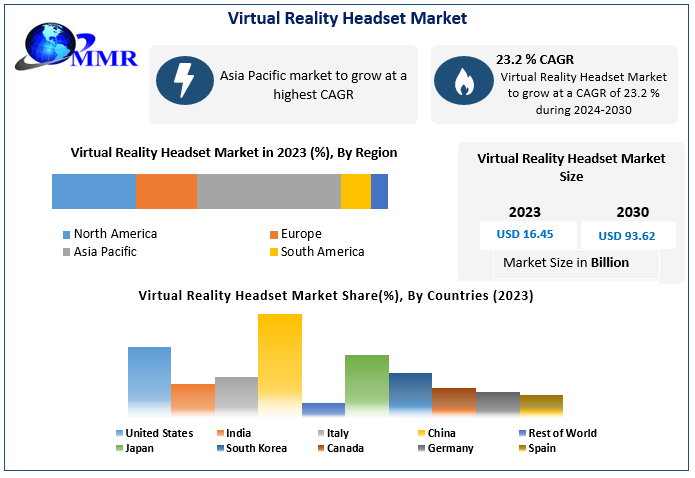 To know about the Research Methodology :- Request Free Sample Report
Virtual Reality Headset Market Dynamics
The Virtual Reality Headset Market is witnessing substantial growth driven by diverse market dynamics and industry fluctuations. The widespread adoption of virtual reality (VR) technology, particularly in the military and automotive sectors, is a key market driver. The heightened demand for gaming consoles is further propelling the market forward. VR technology's versatile applications in medical training, industrial prototyping, and education contribute to its increasing relevance. Economic factors, such as increased investments by both businesses and consumers during the forecast period, are anticipated to fuel product demand.
In the landscape of consumer behavior trends, the introduction of simple, beautiful, and elegant VR headsets reflects the evolving face of VR technology and its immediate impact on the VR headset market. The infusion of Artificial Intelligence (AI) and machine learning into VR is poised to elevate demand, with major industry players consistently investing in Research and Development (R&D) for cutting-edge technologies. Amidst the challenges posed by Covid-19, businesses resorting to online platforms have driven market dynamics, particularly the rising use of VR technology in virtual events. This innovative approach enables businesses to engage potential customers in their homes, providing a realistic experience of products and services.
The demand for VR Head-Mounted Devices (HMDs) is on the rise, particularly in the gaming and entertainment industries, with companies continually releasing new technologies for immersive entertainment experiences. Competitive forces within the industry drive major players to acquire gaming companies, enhancing their product offerings and gaining a competitive advantage. For instance, the acquisition of Sanzaru, Inc. by Facebook LLC demonstrates a strategic move to explore technological benefits in VR-based content creation.
The Virtual reality headset market is witnessing an emerging trend where virtual reality becomes more social and collaborative, complemented by increased smartphone adoption, presenting a myriad of growth prospects. The advantages of VR devices, such as creating realistic environments, immersive experiences, profound visualization, and accessibility to various locations, contribute to the market's upward trajectory. Amid the Covid-19 pandemic, these instruments experienced high demand across various industries, notably in teaching and learning activities. Government initiatives, like the United Kingdom utilizing virtual reality headsets for trauma care professional training, exemplify innovative applications during challenging times. The industry is poised for continuous innovation, marked by technological advancements and regulatory influences, offering numerous market opportunities in the evolving landscape of virtual reality
Virtual Reality Headset Market Segment Analysis
Based on the End Device, the market is segmented into Low-end Devices, Mid-range Devices, and High-end Devices. The High-end Device segment held the largest market share of 58% in 2023 and is expected to continue its dominance by 2030. The segment is expected to grow due to the enhanced features of High-end Devices, such as high-quality visual effects, self-tracking, and increased performance. In large corporations, high-tech equipment is frequently used to provide better service to their clients and employees. These devices are mostly equipped with cutting-edge technologies that provide viewers with increased engagement and great quality. During the forecast period, major firms like as Sony Corp., Facebook, Inc., Samsung, and Google LLC are expected to make significant and ongoing investments in high-end devices, boosting demand for the virtual reality headset market.
The Low-end Device segment is expected to grow rapidly at a CAGR of 35.0% during the forecast period 2023-2030. The accelerated growth of this segment attributed to the inherent advantages of low-cost equipment, offering a significant immersive experience and high propulsion. These cost-effective devices cater to the broader consumer base, providing an affordable and accessible entry point for individuals seeking to explore basic VR technologies. Amid ongoing innovations, the Mid-range Device market is poised for substantial growth, driving demand, particularly from small corporate organizations.
In this dynamic scenario, market share by segment, segment growth analysis, and a keen understanding of segment attractiveness and emerging market segments become crucial elements in navigating the competitive segment landscape. The multifaceted approach encompasses behavioral segmentation and facilitates targeted segment-based marketing strategies, ensuring a comprehensive and strategic outlook in the ever-evolving Virtual Reality Headset Market.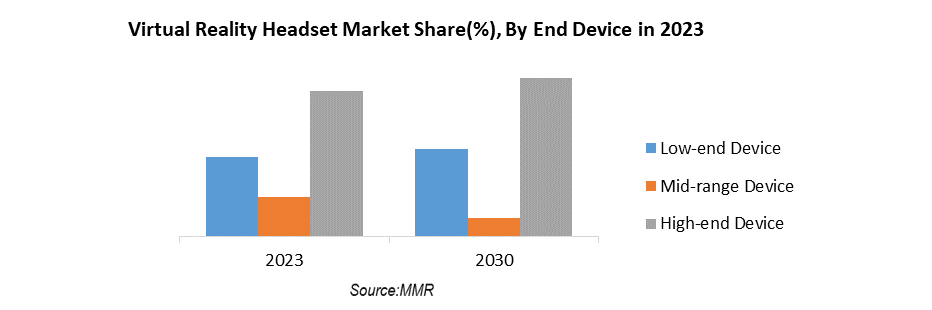
Based on the Product Type,
The accelerated growth of this segment is propelled by the unique capability of standalone devices to deliver a high-quality experience at a cost-effective rate. The integration of diverse mechanisms, encompassing processing control and hardware components, plays a pivotal role in driving the segment's upward trajectory. Notably, major industry players contribute to the dynamic landscape by offering a diverse range of application-oriented devices, each characterized by varying features and price points. An illustrative instance of innovation within this segment is Facebook, Inc.'s addition of a hand-tracking feature to the Oculus Quest VR standalone headset in December 2019, showcasing the industry's commitment to evolving technology and enhancing user experiences.
This intricate interplay of market subsegments, niche markets, and customer profiling is fundamental in shaping targeted strategies for segment-based marketing initiatives. In-depth market share analysis by segment, coupled with segment growth analysis, underscores the competitive segment landscape, emphasizing the strategic positioning of each product type. The overarching goal is to align with emerging market segments and ensure segment attractiveness, fostering a holistic understanding of consumer demographics through behavioral segmentation. In essence, the Virtual Reality Headset Market showcases a dynamic and evolving landscape, characterized by an amalgamation of technological innovation, consumer preferences, and strategic market segmentation approaches that collectively contribute to the industry's growth and adaptability.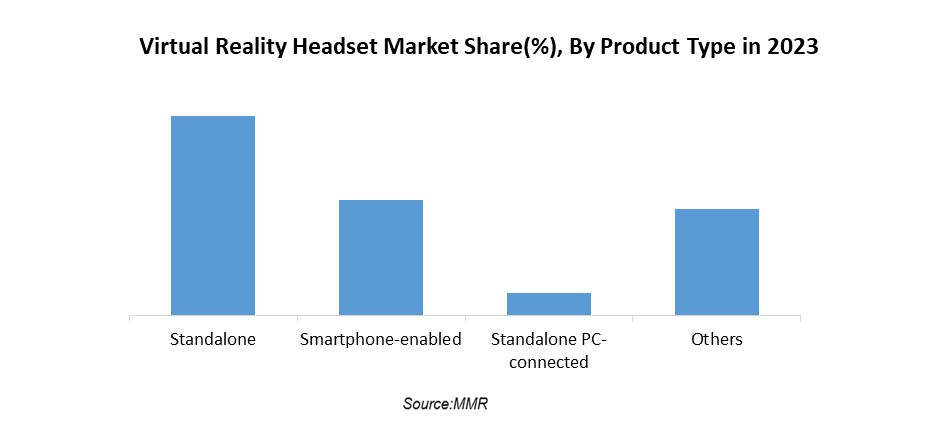 Based on the Application,
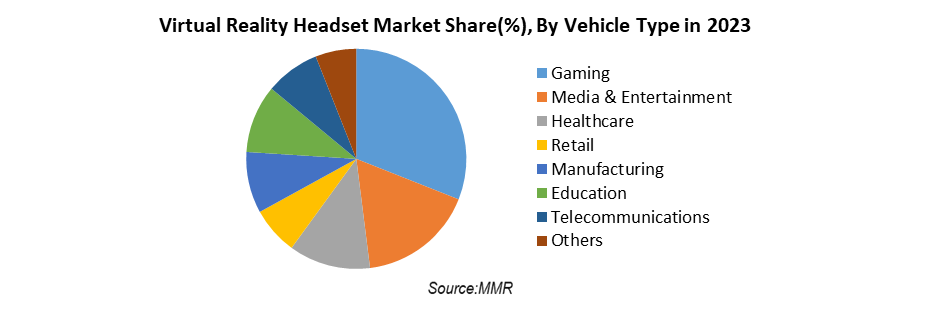
The segmentation spans Gaming, Media and Entertainment, Healthcare, Retail, Manufacturing, Education, Telecommunications, and Others, each representing a distinct target Virtual Reality Headset Market. Within this spectrum, the gaming segment takes center stage, poised for rapid growth with a projected Compound Annual Growth Rate (CAGR) of xx% during the forecast period from 2023 to 2030. Notably, the gaming segment already commands a significant market share, holding 31% in 2023, reflecting its prominence and potential.
Delving into consumer demographics, it's discerned that gamers, compared to their non-gaming counterparts, exhibit a proclivity for substantial expenditures to enhance their gaming consoles or desktops. This behavioral segmentation emphasizes the Virtual Reality Headset Market dynamism and the need for tailored strategies, prompting companies to strategically leverage cost-effective Virtual Reality (VR) headset games to cater to this distinctive consumer profile. The ensuing market subsegments and niche markets further underscore the opportunities for targeted segment-based marketing initiatives.
Simultaneously, the retail segment emerges as a focal point for significant growth as merchants strategically integrate VR devices into their storefronts, revolutionizing the purchase experience. This trend aligns with the evolving landscape of new online shopping patterns adopted by retail and e-commerce organizations. Such endeavors involve offering potential customers immersive real-life shopping experiences, ultimately facilitating more informed purchasing decisions. In the competitive segment landscape, market share by segment becomes pivotal, with a keen eye on segment attractiveness and emerging market segments.
The overall growth narrative is augmented by segment growth analysis, emphasizing the market's resilience and adaptability in response to consumer preferences and technological advancements. In essence, the Virtual Reality Headset Market showcases a nuanced interplay of behavioral segmentation, targeted marketing strategies, and a forward-looking approach to capture the diverse opportunities within each Virtual Reality Headset Market segment.
Virtual Reality Headset Market Regional Insights:
Asia Pacific region is expected to dominate the Virtual Reality Headset market during the forecast period 2023-2030. Asia Pacific region held the largest Virtual Reality Headset Market share of 59 % in 2023 and is expected to continue its dominance by 2030. The dominance of this region is due to an increase in digitalization and virtual reality technology developments, especially in the gaming and entertainment sectors. China is the country with the largest revenue share. This is attributed to the advent of 5G and policy support for virtual reality progress from the government of China.
The major market players in the region are broadly utilizing virtual reality technology for various purposes, thus contributing to the regional market growth. The gaming industry in this region is increasing the demand for the virtual reality headset market. The craze of the gaming industry among the young generation is at its peak, particularly in countries including China, Japan, South Korea, and India.
North America is poised for robust growth, exhibiting a projected Compound Annual Growth Rate (CAGR) of xx% from 2023 to 2030. The demand for Virtual Reality Headsets is experiencing an upswing in the United States and Canada, driven by factors such as increasing disposable income and the declining prices of VR headsets integrated with advanced processors and high-quality screens. This surge finds notable attribution to major tech players, including Google LLC, Microsoft, and Facebook LLC, who are channeling substantial investments into VR technology. The United States, with its thriving tech ecosystem, takes the lead as the primary contributor to the overall regional market expansion.
Delving into regional market trends, Europe anticipates rapid growth with a CAGR of xx% during the forecast period from 2023 to 2030. The European market is primed for a significant uptick, propelled by the widespread integration of smart devices, notably VR headsets, across diverse industries such as Defense, entertainment, and education. This integration is geared towards enhancing and developing the visual experience for users. Notably, various establishments, including gaming arcades, cafes, amusement parks, and exhibitions, are increasingly adopting VR technology, thereby exerting a positive impact on the overall growth of the regional Virtual Reality Headset Market.
The dynamics within each region are influenced by area-specific market dynamics, local market influences, and market performance by region. Geographical trends, regional economic factors, and local consumer behavior play pivotal roles in shaping the landscape. Amidst these trends, regional market challenges emerge as factors that necessitate attention and strategic adaptation for sustained growth in both North America and Europe.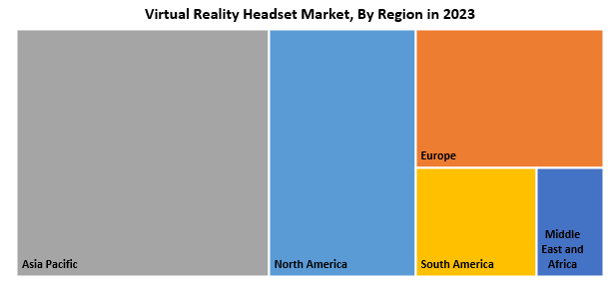
Competitive Landscape:
Sony holds a strong position in the virtual reality market with its PlayStation VR headset and a diverse range of content offerings, leveraging its extensive experience in entertainment electronics. The company's global presence and innovative products contribute to its competitiveness, while its focus on creating immersive gaming experiences gives it a unique edge. Fove distinguishes itself with its eye-tracking technology integrated into VR headsets. Although a smaller player compared to industry giants, Fove's specialization in eye-tracking technology provides a niche competitive advantage, particularly in research and development. Qualcomm, a key player in the semiconductor industry, dominates the VR market with its cutting-edge Snapdragon processors.
These processors power many VR devices, ensuring high performance and efficiency. Qualcomm's strategic collaborations with various VR headset manufacturers solidify its standing as a vital technology provider in the competitive landscape. Samsung has a significant presence in the VR space with its Gear VR headset and collaboration with Oculus. The company's diverse product portfolio further enhances its competitive position. HTC, renowned for its Vive VR headset, competes strongly in the premium VR segment. The Vive series is acclaimed for its advanced features and immersive experiences.
The objective of the report is to present a comprehensive analysis of the Global Virtual Reality Headset Market to the stakeholders in the industry. The past and current status of the industry with the forecast market size and trends are presented in the report with the analysis of complicated data in simple language. The report covers all the aspects of the industry with a dedicated study of key players that include market leaders, followers, and new entrants.
PORTER, PESTEL analysis with the potential impact of micro-economic factors of the market has been presented in the report. External as well as internal factors that are supposed to affect the business positively or negatively have been analyzed, which gives a clear futuristic view of the industry to the decision-makers.
The reports also help in understanding the Global Virtual Reality Headset Market dynamic, and structure by analyzing the market segments and projecting the Global Virtual Reality Headset Market size. Clear representation of competitive analysis of key players by Type, price, financial position, product portfolio, growth strategies, and regional presence in the Global Virtual Reality Headset Market make the report investor’s guide.
Virtual Reality Headset Market Scope: Inquire before buying
| Global Virtual Reality Headset Market | |||
|---|---|---|---|
| Report Coverage | Details | ||
| Base Year: | 2023 | Forecast Period: | 2024-2030 |
| Historical Data: | 2018 to 2023 | Market Size in 2023: | US $ 16.45 Mn. |
| Forecast Period 2024 to 2030 CAGR: | 23.2% | Market Size in 2030: | US $ 93.62 Mn. |
| Segments Covered: | By End Device | Low-end Device Mid-range Device High-end Device |
|
| By Product Type | Standalone Smartphone-enabled Standalone PC-connected Others |
||
| By Application | Gaming Media & Entertainment Healthcare Retail Manufacturing Education Telecommunications Others |
||
Global Virtual Reality Headset Market, by Region
North America (United States, Canada and Mexico)
Europe (UK, France, Germany, Italy, Spain, Sweden, Austria and Rest of Europe)
Asia Pacific (China, South Korea, Japan, India, Australia, Indonesia, Malaysia, Vietnam, Taiwan, Bangladesh, Pakistan and Rest of APAC)
Middle East and Africa (South Africa, GCC, Egypt, Nigeria and Rest of ME&A)
South America (Brazil, Argentina Rest of South America)
Virtual Reality Headset Market Key Players
1. Sony Corporation - Japan
2. Qualcomm - United States
3. Samsung Electronics Ltd. - South Korea
4. HTC Corporation - Taiwan
5. Facebook - United States
6. Google - United States
7. Microsoft Corporation - United States
8. Fove, Inc. - United States
9. Oculus VR, LLC - United States
10. LG Electronics, Inc. - South Korea
11. Avegant Corporation - United States
12. Carl Zeiss AG - Germany
13. Razer Inc. - Singapore
Frequently Asked Questions:
1] What segments are covered in the Global Virtual Reality Headset Market report?
Ans. The segments covered in the Virtual Reality Headset Market report are based on End Device, Product Type, Application, and Region.
2] Which region is expected to hold the largest share of the Global Virtual Reality Headset Market?
Ans. The Asia Pacific region is expected to hold the largest share of the Virtual Reality Headset Market. The adoption of virtual reality headsets in countries such as China, Japan, South Korea, and India among the young generation is increasing and hence the demand for the virtual reality headset market is increasing.
3] What is the market size of the Global Virtual Reality Headset Market by 2030?
Ans. The market size of the Virtual Reality Headset Market by 2030 is expected to reach US$ 93.62 Mn.
4] What is the forecast period for the Global Virtual Reality Headset Market?
Ans. The forecast period for the Virtual Reality Headset Market is 2024-2030.
5] What was the market size of the Global Virtual Reality Headset Market in 2023?
Ans. The market size of the Virtual Reality Headset Market in 2023 was valued at US$ 16.45 Mn.