
Urothelial Carcinoma Treatment Market Size – Industry Structure Evaluation, Demand Drivers Analysis, Regional Growth Analysis and Identification, Competitive Positioning Review & Global Market Size Forecast to 2034
Overview
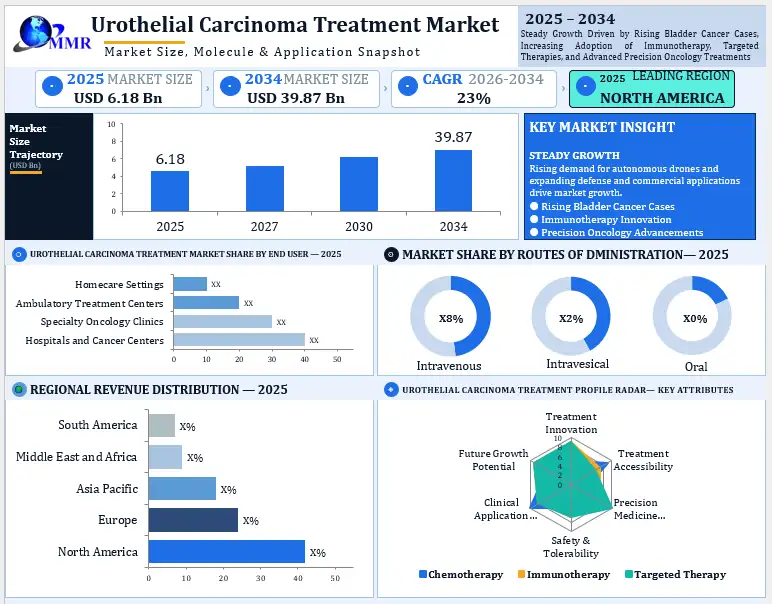
The Global Urothelial Carcinoma Treatment Market was valued at USD 6.18 Billion in 2025 and is projected to reach USD 39.87 Billion by 2034, growing at a CAGR of 23% during the forecast period 2026–2034.
| Parameter | Value |
| Market Size (2025) | USD 6.18 Billion |
| Market Size (2034) | USD 39.87 Billion |
| CAGR | 23% |
| Historical Period | 2020 to 2025 |
| Forecast Period | 2026 to 2034 |
Global Urothelial Carcinoma Treatment Market Overview:
The Urothelial Carcinoma Treatment Market is experiencing a surge due to the rising application of immunotherapy, personalized medication, targeted therapy, and combination treatments. The Urothelial Carcinoma Treatment Market Report consists of manufacturers, distributors, and suppliers of cancer treatment drugs and medication, and healthcare organizations. The North American region leads the Urothelial Carcinoma Treatment Market, primarily driven by the presence of high-quality healthcare units, extensive cancer treatment research, and higher accessibility to novel medication and treatment options. The Asia Pacific region is the most promising market for Urothelial Carcinoma Treatment due to the rising investment in the healthcare sector and enhanced access to treatment. Key players in the Urothelial Carcinoma Treatment Market are Merck & Co., Pfizer, Astellas Pharma, Bristol Myers Squibb, and F. Hoffmann-La Roche among others. Key products include Keytruda by Merck & Co, and Padcev by Astellas Pharma. The Urothelial Carcinoma Treatment Market potential is high, and a major challenge is the limitation of medication cost and access to quality healthcare.
The Urothelial Carcinoma Treatment Market Report highlights the pharmaceutical and therapeutic market involved in the treatment options for Urothelial Carcinoma, a form of cancer affecting the urinary bladder and the tract. The Urothelial Carcinoma Treatment Market deals in chemotherapy drugs, immunotherapy, targeted therapy, and advanced treatment options and combinations which aid in the management of the condition. The Urothelial Carcinoma Treatment Market importance is determined by the increasing demand for treatment for the disease as well as the need for enhanced medication. Hospitals, Cancer Treatment Clinics, and healthcare organizations employ these treatments and medication to manage and control the condition and ensure improved survival rates and quality of life. Enhanced cancer awareness and accessibility to modern healthcare treatment options contribute to the overall increase in the Urothelial Carcinoma Treatment Market size and expansion.
Maximize Market Research (MMR) provides market expertise and research on the Urothelial Carcinoma Treatment Market report that determines the overall market size, growth, forecast, treatment, region, and competition. The Urothelial Carcinoma Treatment Market Report emphasizes the changing landscape of pharmaceuticals and treatments for Urothelial Carcinoma and presents vital information for manufacturers, investors, and other key players. The report also provides insights into the Urothelial Carcinoma treatment gap, healthcare treatment options, and the overall market potential. The Urothelial Carcinoma Treatment Market analysis highlights the effect of new drug discovery, increased demand for treatment, and enhanced healthcare access on the market. It also uncovers the key treatment segments with high potential and scope for additional research and profitable investment.
Urothelial Carcinoma Treatment Market Growth and Share Analysis
To know about the Research Methodology :- Request Free Sample Report
Global Urothelial Carcinoma Treatment Market Key Highlights
• Strong Market Growth: The Urothelial Carcinoma Treatment Market is projected to grow from USD 6.18 billion in 2025 to USD 39.87 billion by 2034, at a CAGR of 23%, driven by rising bladder cancer cases and advanced oncology treatments.
• Dominant Cancer Type: Bladder Urothelial Carcinoma leads the market, supported by increasing demand for chemotherapy, immunotherapy, targeted therapies and personalized cancer treatments.
• Emerging Treatment Trends: Growing adoption of KEYTRUDA, PADCEV, antibody-drug conjugates and combination therapies drive innovation in advanced bladder cancer treatment.
• Regional Market Leadership: North America dominates the market through advanced oncology infrastructure, while Asia Pacific offers significant growth opportunities through expanding healthcare access and pharmaceutical investment.
• Competitive Landscape: Leading players, including Merck & Co., Pfizer, Astellas Pharma and AstraZeneca, focus on drug development, regulatory approvals and strategic collaborations to strengthen their market presence.
Global Urothelial Carcinoma Treatment Market Report Scope
The goal of the study is to provide market participants with a comprehensive understanding of the complementary and alternative medicine market. The research covers the historical and current state of the market together with expected market size and trends and analyses complex data in simple terms. The research conducted by the significant players, including new entrants, industry leaders, and followers, is active and comprehensive.
The study displays the PORTER and PESTEL assessments as well as the potential outcomes of the market's microeconomic elements. Analysis of internal and external elements that may have a favourable or negative impact on the company will provide decision-makers with a clear futuristic view of the market.
The research also aids readers in understanding the structure and dynamics of the complementary and alternative medicine market by examining market segmentation and estimating market size. With its clear demonstration of the competitive analysis of the leading firms in the complementary and alternative medicine industry by price, financial situation, product, product portfolio, expansion goals, and geographical presence, the research serves as an investor's guide.
Global Urothelial Carcinoma Treatment Market Research Methodology
As part of our research approach, MMR first gathered information on the primary vendors' revenue through secondary research in order to evaluate and forecast the market for unified monitoring market segments will be separated, by Cancer type (Sutures – Absorbable, Non-absorbable, Strips - Sterile, Non-Sterile, Sealants – Synthetic, Non-synthetic, Collagen-based, Staples, Adhesives, Mechanical wound closure devices) by Treatment Type (Acute, Chronic) by Distribution Channels (Hospital, Clinics, Trauma centers, Others) vendors' offerings are taken into account. To confirm these divisions through primary research, in-depth interviews with important people, including chief executive officers (CEOs), vice presidents (VPs), directors, and executives, were later done.
The market size is determined using bottom-up approaches. Primary and secondary research are carried out in order to identify the leading market participants in the Urothelial Carcinoma Treatment market and to calculate their market revenues. A primary research method was used as opposed to secondary research, which involved reading the annual and financial reports of the leading manufacturers and interviewing prominent opinion leaders and business leaders in the industry, such as CEOs and marketing executives.
Merck & Co.,Inc, Astrazenec Plc ,Pfizer Inc, Bristol-Myers Squibb Company, GlaxoSmithKline plc, Novartis AG. is a few of the top significant competitors in the global Urothelial Carcinoma Treatment Market For the duration of the forecast period, they are continually strategizing about mergers and acquisitions to increase their market shares and growth potential.
Global Urothelial Carcinoma Treatment Market Dynamics
Rising Bladder Cancer Cases and Growing Demand for Effective Cancer Treatment
Increasing cases of urothelial carcinoma, a rise in cigarette smoking, occupational risks in specific industries, and an aging population are crucial for the growth of the Urothelial Carcinoma Treatment Market. People working in rubber, textile, paints, dyes, and chemical manufacturing companies have higher chances of developing cancer due to their occupational risks. Moreover, enhanced awareness of bladder cancer symptoms and early detection leads to the higher utilization of advanced treatment techniques.
Urothelial carcinoma is the most common type of bladder cancer occurring in almost 90% of cases in the Western world. It creates a continuous demand for oncology-related medicines and healthcare services. The treatment of urothelial carcinoma involves chemotherapy drugs such as cisplatin and gemcitabine, immunotherapy medicines like pembrolizumab, and several other procedures for cancer management. An increase in healthcare spending, advancements in cancer treatment, and a rise in the number of insurance coverage options propel the market growth. North America is an important region for the market due to the availability of advanced treatment facilities and higher healthcare spending. The market growth in the Asia Pacific region is attributed to an increase in healthcare expenditure. These growth drivers highly impact the market forecast and promote the expansion of the treatment base for urothelial carcinoma.
High Treatment Expenditure and Limited Affordability of Advanced Cancer Medicines
The extreme affordability of treatment for urothelial carcinoma is one of the major market restraint factors. Advanced immunotherapy, antibody drug conjugates, surgical procedures, and cancer management techniques are expensive and create a financial burden on the patients. Compared with conventional chemotherapy, novel cancer treatments require higher spending on drug acquisition, physician visits, and hospital management. In addition, cancer treatment involves additional diagnostic screening and scanning, which adds to the overall cost.
For instance, bacillus Calmette Guérin treatment involves six weekly instillations followed by maintenance therapy depending on the risk stratification of the patient. Such treatment creates an economic burden on the patient due to an increase in the number of visits to the hospital and physician. The limited insurance coverage, higher costs of imported medicines, and reduced accessibility to healthcare services in developing countries impact the overall market growth. Moreover, the difference in the availability of treatment options between developed and developing countries becomes a barrier in the equal distribution of oncology-related services. In addition, the overall market share of innovative cancer treatments is impacted by the lower affordability of advanced bladder cancer treatments, thereby restricting the market growth.
Expansion of Precision Medicine, Molecular Diagnostics, and Targeted Drug Development
The rise in the popularity of personalized cancer treatment and drugs creates lucrative opportunities for the players in the Urothelial Carcinoma Treatment Market. A significant number of pharmaceutical companies are investing in molecular testing, molecular cancer markers, and targeted drugs for the treatment of bladder cancer. For instance, the use of FGFR genetic testing enables the identification of patients who are good candidates for the use of FGFR inhibitors like erdafitinib. The emergence of novel cancer treatment modalities such as the combination of enfortumab vedotin and pembrolizumab promotes the market growth.
For instance, a phase III trial on enfortumab vedotin approved the use of combination therapy for previously untreated locally advanced or metastatic urothelial carcinoma, where the median overall survival rate was 31.5 months as compared with 16.1 months for platinum-based regimens. These advancements provide significant opportunities for pharmaceutical companies, clinical laboratories, biotechnology firms, and specialized hospitals to invest in the R&D process of novel cancer treatment techniques. An increase in the number of clinical research initiatives in China, India, and other emerging nations creates a higher scope for novel drug development and market entry. A significant number of collaborations between hospitals and pharmaceutical companies promote the introduction of advanced cancer treatment modalities in new markets. Furthermore, the overall gap in the provision of affordable biomarker-related testing and personalized treatment is a significant opportunity for the market players, which impacts the market forecast.
High Cancer Recurrence, Drug Resistance, and Complex Long-Term Patient Management
One of the major challenges of the Urothelial Carcinoma Treatment Market is the high chances of cancer recurrence following treatment. For instance, patients with non-muscle-invasive bladder cancer require repeated cystoscopies, urine tests, and physician visits to detect cancer recurrence at an early stage. These cancer screenings are conducted for a prolonged period depending on the patient’s risk stratification. Another major challenge includes the development of resistance to cancer drugs and treatment techniques such as surgery and chemotherapy.
In addition, geriatric patients with impaired renal function and co-morbid conditions face difficulties in undergoing cancer treatments. The adverse effects of cancer drugs and treatment procedures also impact the management of the disease. Clinical trials for novel cancer drugs and combination therapies are expensive and time-consuming, thereby deterring pharmaceutical companies from investing in their development. In addition, regulatory approval for novel cancer drugs is a challenging and time-consuming process. Such restrictions create a significant hindrance in the equal distribution of bladder cancer treatment in different regions and impede the market growth. The overall cost of treatment increases significantly due to post-surgery complications, which negatively impacts the overall market growth.
Global Urothelial Carcinoma Treatment Market Trends
Growing Adoption of Combination Immunotherapy and New Treatment Technologies
The growing adoption of combination immunotherapy and advanced treatment technologies significantly drives Immunotherapy Market Growth, as healthcare providers increasingly focus on improving treatment effectiveness, patient survival rates, and personalized cancer care. Combination immunotherapy integrates immune checkpoint inhibitors, targeted therapies, chemotherapy, and radiation therapy to enhance immune responses and overcome treatment resistance. The increasing prevalence of cancer and autoimmune diseases strengthens Immunotherapy Market Size, while continuous research and development activities support innovative therapeutic solutions. Leading pharmaceutical and biotechnology companies expand their Immunotherapy Market Share through strategic collaborations, clinical trials, regulatory approvals, and new drug development. Emerging technologies such as CAR-T cell therapy, bispecific antibodies, cancer vaccines, and AI-driven precision medicine create substantial Immunotherapy Market Opportunities across oncology and other therapeutic applications.
However, high treatment costs, limited accessibility, complex manufacturing processes, and inconsistent patient responses highlight a significant Immunotherapy Market Gap, particularly in developing economies. Growing investments in biotechnology infrastructure, biomarker research, and next-generation immunotherapies strengthen Immunotherapy Market Potential globally. Additionally, advancements in drug delivery systems, personalized treatment approaches, and combination therapy protocols improve clinical outcomes and encourage wider adoption. Increasing healthcare expenditure and expanding clinical research activities further support long-term market expansion and technological innovation.
| Market Dynamics | Key Factors | Market Impact |
| Drivers | • Rising bladder cancer cases • Aging population and smoking risks • Growing demand for advanced cancer treatment • Increasing healthcare expenditure |
• Drives market growth • Increases treatment demand |
| Restraints | • High immunotherapy and drug costs • Limited insurance coverage • Expensive diagnostic procedures • Low treatment affordability |
• Restricts market growth • Limits treatment accessibility |
| Opportunities | • Precision medicine and targeted therapies • FGFR biomarker testing • Antibody-drug conjugates • Increasing pharmaceutical R&D |
• Creates new market opportunities • Increases revenue potential |
| Challenges | • High cancer recurrence rates • Drug resistance and adverse effects • Complex patient management • Lengthy clinical trials and regulatory approvals |
• Increases treatment complexity • Raises development costs |
| Trends | • Combination immunotherapy • AI-powered cancer diagnostics • Personalized oncology treatments • Advanced drug delivery technologies |
• Accelerates treatment innovation • Supports advanced therapy adoption |
Global Urothelial Carcinoma Treatment Market Segment Analysis
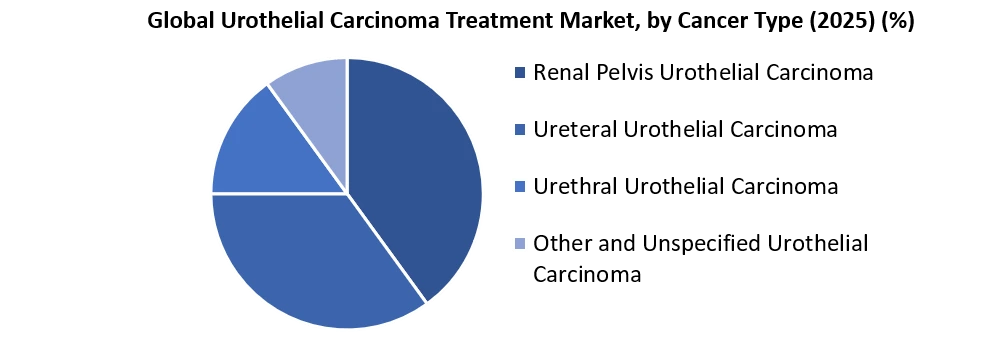
Global Urothelial Carcinoma Treatment Market, by Cancer Type
The Bladder Urothelial Carcinoma segment dominates the Global Urothelial Carcinoma Treatment Market, driven by rising bladder cancer incidence, an aging population, and increasing demand for advanced oncology therapies. Growing adoption of chemotherapy, immunotherapy, targeted therapies, antibody-drug conjugates, and combination treatments supports segment growth and market share. Advanced treatments such as pembrolizumab, enfortumab vedotin, and erdafitinib improve therapeutic options for eligible patients. Meanwhile, Renal Pelvis, Ureteral, and Urethral Urothelial Carcinoma segments contribute to market expansion through improved diagnosis, precision oncology, and personalized cancer treatment. Increasing pharmaceutical R&D and healthcare expenditure strengthen the overall Urothelial Carcinoma Treatment Market forecast through 2034.
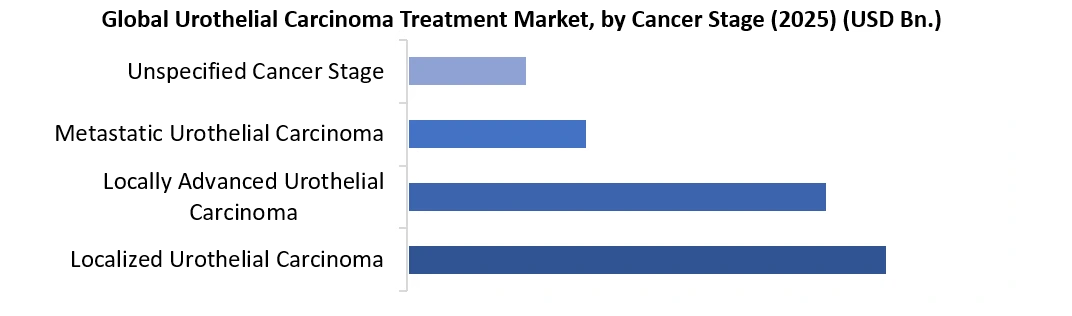
Urothelial Carcinoma Treatment Market, by Cancer Stage
The Localized Urothelial Carcinoma segment represents a major segment of the Global Urothelial Carcinoma Treatment Market, supported by early bladder cancer diagnosis, increasing cancer screening, and growing demand for effective oncology treatments. Rising adoption of intravesical immunotherapy, chemotherapy, and bladder-preserving treatments supports segment growth. Meanwhile, the Locally Advanced and Metastatic Urothelial Carcinoma segments drive demand for advanced immunotherapy, targeted therapies, antibody-drug conjugates, and combination treatments such as pembrolizumab and enfortumab vedotin. Increasing precision oncology adoption, pharmaceutical R&D, and personalized cancer treatment contribute to Urothelial Carcinoma Treatment Market growth, market opportunities, and the global market forecast through 2034.
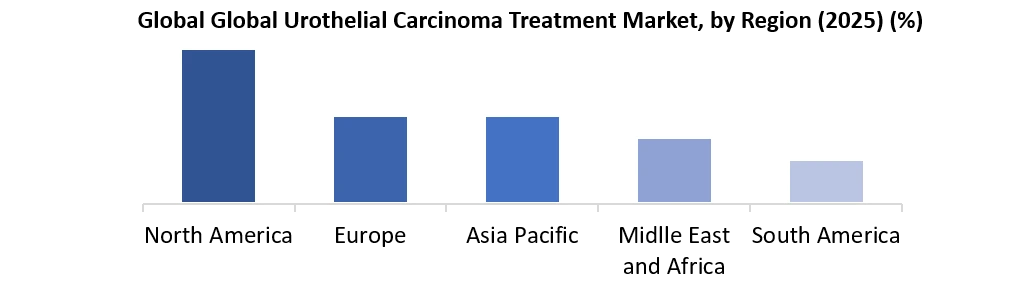
Global Urothelial Carcinoma Treatment Market Regional Insights
North America – Leading Region in Urothelial Carcinoma Treatment Market
North America leads the Urothelial Carcinoma Treatment Market through advanced healthcare infrastructure, high bladder cancer awareness, and a strong pharmaceutical sector. The United States drives the regional market through its increasing use of immunotherapy, targeted therapy, and advanced cancer diagnostics. Growing healthcare expenditure, clinical research, and access to innovative medicines supports market size and secures the region’s strong market share.
Europe – Growing Adoption of Advanced Cancer Therapies
Europe is a significant Urothelial Carcinoma Treatment Market, with established healthcare systems, government cancer care programs, and increasing demand for personalized treatments. Germany, France, the United Kingdom, Italy, and Spain are key markets for chemotherapy, immunotherapy, and targeted cancer medicines. Increasing investments in cancer research, early diagnosis, and advanced oncology facilities support market growth and provide growth opportunities for innovative treatment providers.
Asia Pacific – High Market Growth Potential
Asia Pacific has strong growth potential in the Urothelial Carcinoma Treatment Market due to its large patient population, improving healthcare infrastructure, and increasing access to cancer treatment. China, India, Japan, and South Korea contribute to the regional demand through their expanding oncology services and increasing investment in pharmaceutical research. Rising healthcare expenditure, increasing cancer awareness, and demand for affordable treatment options create significant market opportunities, while differences in access to advanced medicines highlight an important market gap.
Middle East & Africa – Expanding Cancer Care Infrastructure and Treatment Accessibility
The Middle East & Africa Urothelial Carcinoma Treatment Market is growing slowly due to increased investments in healthcare infrastructure and greater access to cancer treatment services. Saudi Arabia, the UAE, and South Africa are key markets for advanced oncology facilities and specialized cancer care. Government healthcare initiatives, cancer awareness, and the expansion of private hospitals create opportunities for the market. Limited access to advanced medicines and high treatment costs create market gaps in several countries.
South America – Increasing Demand for Affordable Cancer Treatment
South America is an emerging market for urothelial carcinoma treatment through improving healthcare services and growing demand for cancer medicines. Brazil and Argentina contribute to the regional demand through their established hospital networks and expanding oncology treatment programs. Increasing investment in cancer diagnosis, wider availability of chemotherapy, and growing interest in immunotherapy support market growth. Limited healthcare budgets, treatment affordability, and unequal access to specialized cancer facilities create opportunities for cost-effective treatment solutions.
Urothelial Carcinoma Treatment Market Recent Development
| Published Date | Company | Development Type | Recent Development |
| July 10, 2026 | Pfizer Inc. and Astellas Pharma Inc. | FDA Approval Product, Expansion | Pfizer and Astellas announce FDA approval of PADCEV (enfortumab vedotin) in combination with KEYTRUDA (pembrolizumab) or KEYTRUDA QLEX for neoadjuvant and adjuvant treatment of muscle-invasive bladder cancer. |
| May 28, 2026 | AstraZeneca PLC | FDA Approval, Portfolio Expansion | AstraZeneca announces FDA approval of IMFINZI (durvalumab) in combination with BCG for eligible patients with BCG-naïve, high-risk non-muscle-invasive bladder cancer. |
| May 16, 2026 | ImmunityBio Inc. | Strategic Agreement | ImmunityBio announces an exclusive U.S. development and supply agreement with Japan BCG Laboratory for the Tokyo-172 BCG strain to support bladder cancer treatment. |
| August 20, 2026 | UroGen Pharma Ltd. | Strategic Collaboration, Licensing Agreement | UroGen Pharma announces a research licensing and investment agreement with IntraGel Therapeutics to develop additional oncology products using its sustained-release SRGel technology. |
| March 10, 2026 | Ferring Pharmaceuticals | Commercial Expansion | Ferring Pharmaceuticals reports growing U.S. commercialization of ADSTILADRIN (nadofaragene firadenovec), a gene-based therapy for eligible patients with BCG-unresponsive non-muscle-invasive bladder cancer. |
Global Urothelial Carcinoma Treatment Market Competitive Landscape
The Global Urothelial Carcinoma Treatment Market demonstrates a competitive landscape driven by increasing pharmaceutical R&D investments, advanced oncology drug development, strategic collaborations, regulatory approvals, and growing demand for innovative bladder cancer therapies. Leading market players, including Merck & Co., Pfizer, Astellas Pharma, AstraZeneca, Bristol Myers Squibb, F. Hoffmann-La Roche, Johnson & Johnson, UroGen Pharma, Ferring Pharmaceuticals, and ImmunityBio, focus on expanding their urothelial carcinoma treatment portfolios through chemotherapy, immunotherapy, targeted therapies, antibody-drug conjugates (ADCs), and combination treatments. The growing adoption of precision oncology, FGFR inhibitors, immune checkpoint inhibitors, personalized cancer medicine, and novel intravesical drug delivery technologies strengthen competition across the bladder cancer therapeutics market. Pharmaceutical companies invest in clinical trials, drug commercialization, product launches, licensing agreements, and strategic partnerships to expand their geographic presence and competitive positioning.
North America maintains a strong competitive presence due to its advanced oncology infrastructure and pharmaceutical innovation, while Europe and Asia Pacific offer significant opportunities for market expansion. Increasing demand for advanced metastatic urothelial carcinoma treatment, bladder-preserving therapies, and biomarker-guided cancer treatment supports the Urothelial Carcinoma Treatment Market growth, competitive strategies, investment opportunities, and global market forecast through 2034.
Urothelial Carcinoma Treatment Market Scope: Inquire before buying
| Global Urothelial Carcinoma Treatment Market | |||
|---|---|---|---|
| Report Coverage | Details | ||
| Base Year: | 2025 | Forecast Period: | 2026-2034 |
| Historical Data: | 2020 to 2025 | Market Size in 2025: | US $ 6.18 Bn. |
| Forecast Period 2026 to 2034 CAGR: | 23 % | Market Size in 2034: | US $ 39.87 Bn. |
| Segments Covered: | by Cancer type | Bladder Urothelial Carcinoma Renal Pelvis Urothelial Carcinoma Ureteral Urothelial Carcinoma Urethral Urothelial Carcinoma Other and Unspecified Urothelial Carcinoma |
|
| by Treatment Type | Chemotherapy Immunotherapy Antibody-Drug Conjugates (ADCs) Molecularly Targeted Therapy Gene Therapy Other Therapeutic Drugs |
||
| by Cancer Stage | Localized Urothelial Carcinoma Locally Advanced Urothelial Carcinoma Metastatic Urothelial Carcinoma Unspecified Cancer Stage |
||
| by Routes of Administration | Intravenous Intravesical Oral Other Routes of Administration |
||
| by Distribution Channel | Hospital Pharmacies Retail Pharmacies Specialty Pharmacies Online Pharmacies Other Distribution Channels |
||
| by End User | Hospitals and Cancer Centers Specialty Oncology Clinics Ambulatory Treatment Centers Homecare Settings Other End Users |
||
Global Urothelial Carcinoma Treatment Market, by region
North America: United States; Canada; Mexico
Europe: Germany; France; United Kingdom; Italy; Spain; Sweden; Austria; Netherlands; Switzerland; Turkey; Russia; Rest of Europe
Asia Pacific: China; Japan; India; South Korea; Australia; Singapore; Malaysia; Thailand; Indonesia; Vietnam; Rest of Asia Pacific
Middle East & Africa: Saudi Arabia; United Arab Emirates; Qatar; Rest of GCC; South Africa; Egypt; Nigeria; Rest of Middle East & Africa
South America: Brazil; Argentina; Colombia; Chile; Rest of South America
Global Urothelial Carcinoma Treatment Market Key Players
1. Merck & Co., Inc. (United States)
2. Pfizer Inc. (United States)
3. Astellas Pharma Inc. (Japan)
4. Johnson & Johnson (United States)
5. Bristol Myers Squibb (United States)
6. AstraZeneca PLC (United Kingdom)
7. F. Hoffmann-La Roche Ltd. (Switzerland)
8. Gilead Sciences, Inc. (United States)
9. UroGen Pharma Ltd. (United States/Israel)
10. Ferring Pharmaceuticals (Switzerland)
11. Immunity Bio, Inc. (United States)
12. CG Oncology, Inc. (United States)
13. Eisai Co., Ltd. (Japan)
14. BeiGene Ltd. (Switzerland)
15. Novartis AG (Switzerland)
16. AbbVie Inc. (United States)
17. Eli Lilly and Company (United States)
18. Bayer AG (Germany)
19. GSK plc (United Kingdom)
20. Sanofi S.A. (France)
21. Incyte Corporation (United States)
22. Exelixis, Inc. (United States)
23. Bicycle Therapeutics plc (United Kingdom)
24. TYRA Biosciences, Inc. (United States)
25. Protara Therapeutics, Inc. (United States)
26. Aura Biosciences, Inc. (United States)
27. enGene Holdings Inc. (Canada)
28. Nektar Therapeutics (United States)
29. QED Therapeutics (United States)
30. Abbisko Therapeutics Co., Ltd. (China)
31. Hengrui Pharmaceuticals (China)
32. Mabwell Bioscience Co., Ltd. (China)
33. CSPC Pharmaceutical Group Limited (China)
34. Akeso, Inc. (China)
35. Bio-Thera Solutions, Ltd. (China)
36. Sichuan Kelun-Biotech Biopharmaceutical Co., Ltd. (China)
37. Sun Pharmaceutical Industries Ltd. (India)
38. Hikma Pharmaceuticals PLC (United Kingdom)
39. Aurobindo Pharma Limited (India)
40. Lupin Limited (India)
Frequently Asked Questions
1. Market Size and Forecast: What is the Global Urothelial Carcinoma Treatment Market size by 2034?
The Global Urothelial Carcinoma Treatment Market is projected to reach USD 39.87 billion by 2034, growing from USD 6.18 billion in 2025 at a CAGR of 23%.
2. Market Growth Drivers: What factors drive the Urothelial Carcinoma Treatment Market growth?
Rising bladder cancer incidence, an aging population, increasing healthcare expenditure and growing adoption of chemotherapy, immunotherapy and targeted therapies drive market growth.
3. Leading Treatment Segments: Which therapies dominate the Urothelial Carcinoma Treatment Market?
Chemotherapy and immunotherapy are major treatment segments, while antibody-drug conjugates, targeted therapies and combination treatments create new market opportunities.
4. Regional Market Share: Which region leads the Global Urothelial Carcinoma Treatment Market?
North America leads the market due to advanced oncology infrastructure and pharmaceutical innovation, while Asia Pacific offers significant growth potential through improving healthcare access.
5. Competitive Landscape: Who are the leading companies in the Urothelial Carcinoma Treatment Market?
Major players include Merck & Co., Pfizer, Astellas Pharma, AstraZeneca, Bristol Myers Squibb and Roche, focusing on oncology drug development, precision medicine and strategic partnerships.